
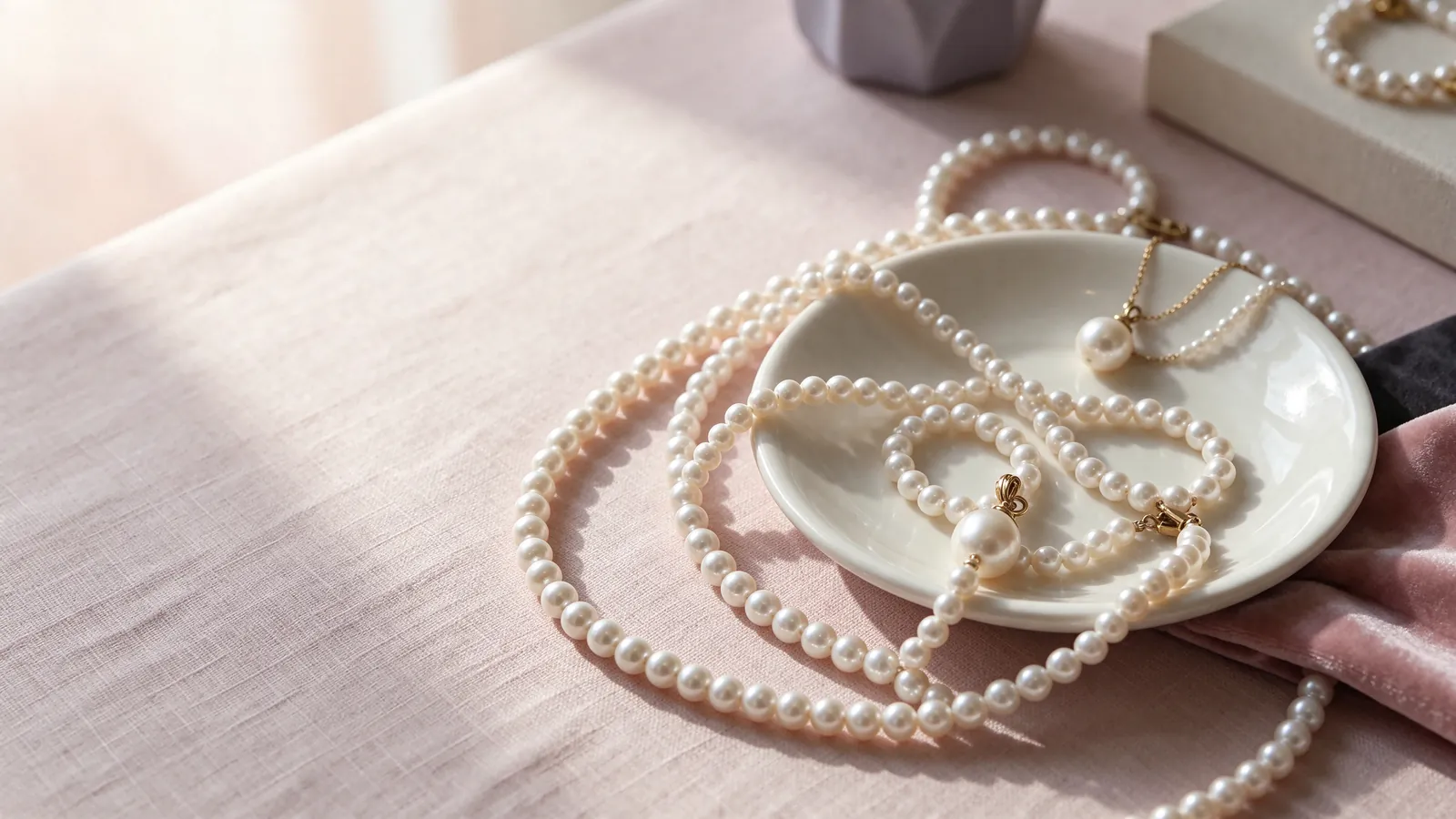
Flint Jewelry guide: How can length and neckline change the styling of a toggle clasp pearl necklace, T bar clasp pearl necklace or mantel pearl necklace?
Begin with the position you want on your body, then compare measurements. Ask whether the complete length includes the clasp; the pearl portion alone does not tell you where a necklace will land. With a crew-neck shirt, look for a deliberate choice between wearing the strand above the neckline and letting it fall fully onto the fabric. A clasp caught halfway on the collar edge can be both visually unclear and distracting in use.
A flat photograph cannot show every aspect of drape. Your shoulders, clothing thickness and the necklace's weight distribution all influence its curve. Compare a single strand pearl necklace to understand the continuous outline before considering the extra visual weight of a front clasp. A necklace you already enjoy wearing can help locate a preferred length, provided you account for differences in the fastening and measurement method.
Flint Jewelry guide: Does the fastening complement your neckline when you try on a toggle clasp pearl necklace, T bar clasp pearl necklace or mantel pearl necklace?
Button a shirt the way you normally wear it and let the necklace settle without holding it in place. Check whether the bar overlaps the placket or competes with a button. With a V-neck, compare the clasp's position to the tip of the opening. Take a side view too: fabric may lift the fastening even when its front position initially appears balanced.
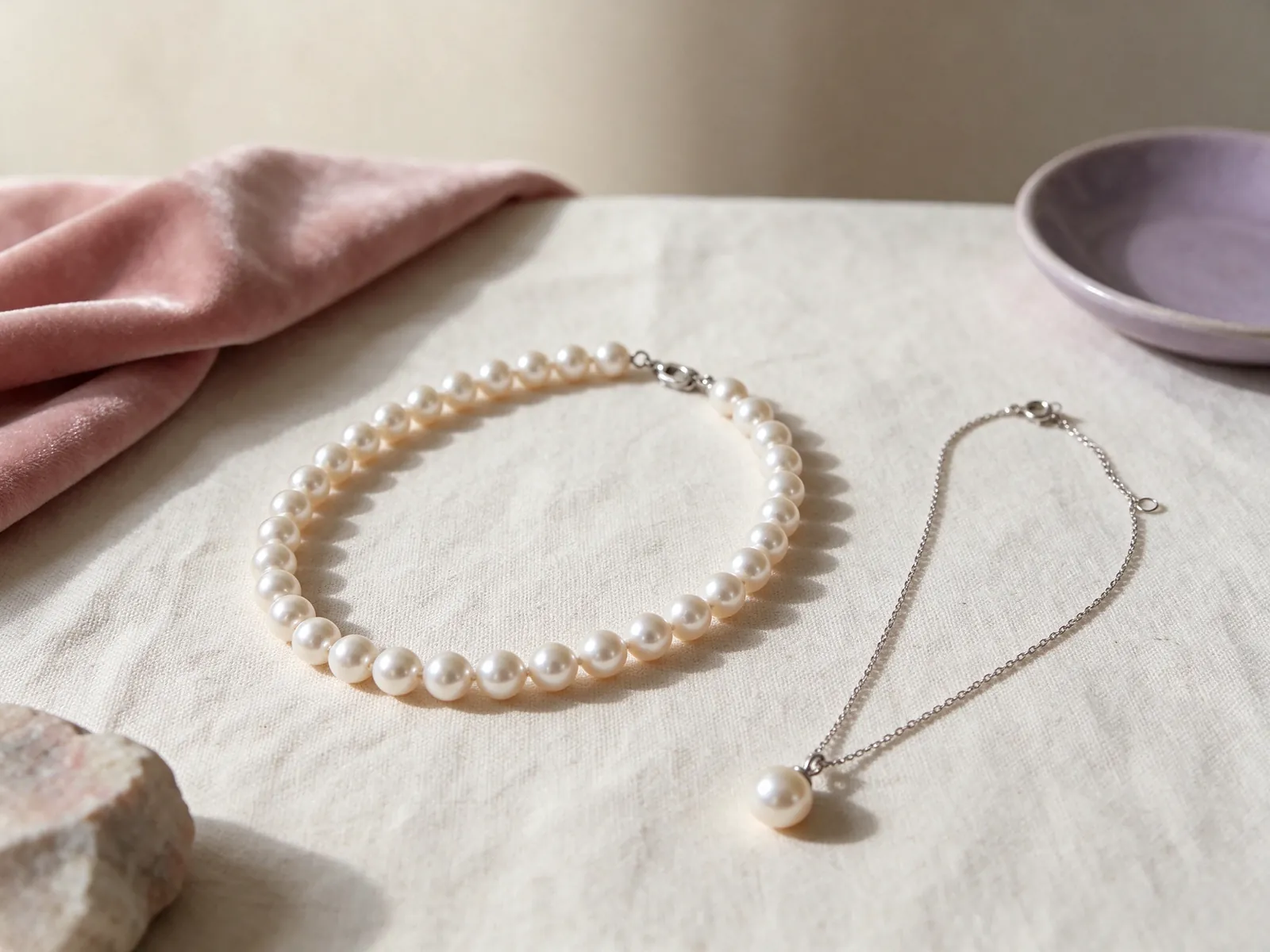
Understand what the closure actually does
A typical bar-through-ring closure works by orienting the bar so it passes through the opening, then allowing it to rest crosswise on the opposite side. Do not extend that description to every necklace called toggle, T bar or mantel. Look for the ring's shape, the bar's movement and the connections at both ends. An unobstructed back view is often as useful as the front view.
Ask to see the closure opened and fastened from start to finish. Notice how much finger space you have and whether the action requires awkwardly pulling the strand. A clicker clasp pearl necklace provides a different fastening comparison if you prefer an opening-and-closing action. Compare ease of operation and the position on the body separately from decorative appearance; similar visual prominence does not mean the mechanisms are interchangeable.
Check ordinary movement rather than tugging
Once fastened, sit down, turn your upper body and lift your arms gently. Look for clothing moving the bar or the closure changing orientation when the strand relaxes. Forcefully pulling the pearls is not a suitable test. If an ordinary movement creates uncertainty, learn more about that fastening's intended use before selecting it. A long-looking bar alone cannot promise a closure will remain fastened in every situation.
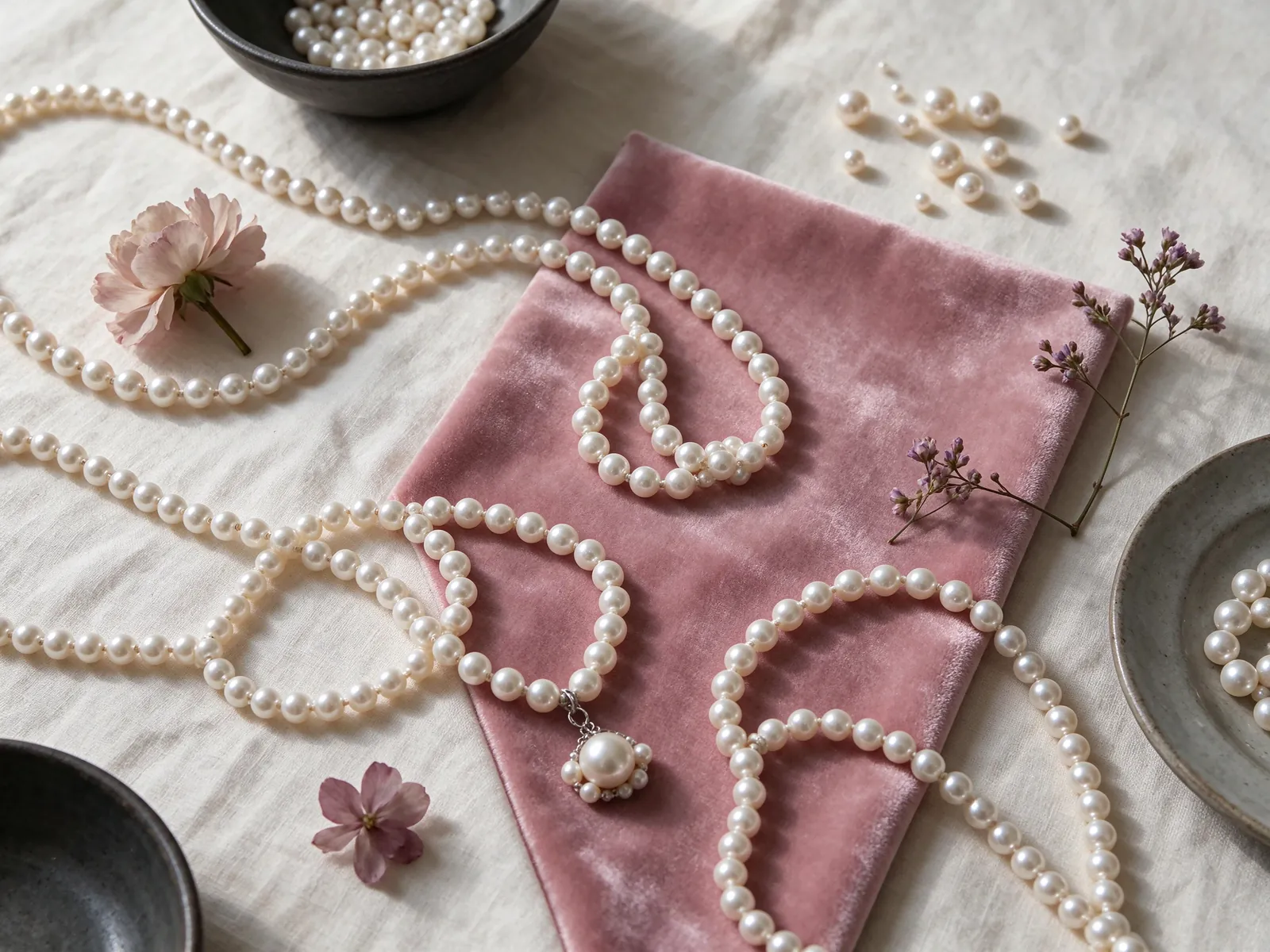
Give the outfit one clear point of emphasis
When a bar is visible at the front, its straight line contrasts with the strand's curve. That can read clearly against a plain sweater, but a print, zipper or decorative buttons may compete with it. Try restrained earrings first and look at the full arrangement, not just a close-up of the clasp. You can then decide whether an additional jewelry detail contributes something or simply adds visual noise.
Compare a ribbon clasp pearl necklace if you want to explore a softer outline around the neckline. A tie or bow and a straight bar place emphasis differently; neither automatically determines how dressy the outfit will be. Also try your usual hairstyle. Hair worn down may hide a side detail, while an updo can expose both the necklace and the surrounding space.
Try the clasp under and beside a jacket lapel
Wear the jacket you expect to use with the necklace. Check whether a lapel partly covers the bar and whether fastening the jacket brings fabric against it. If the clasp, buttons and another accessory all demand attention, simplify one part of the outfit. This clothing-based test helps you make a personal choice without relying on generalized rules about age, face shape or formal occasions.
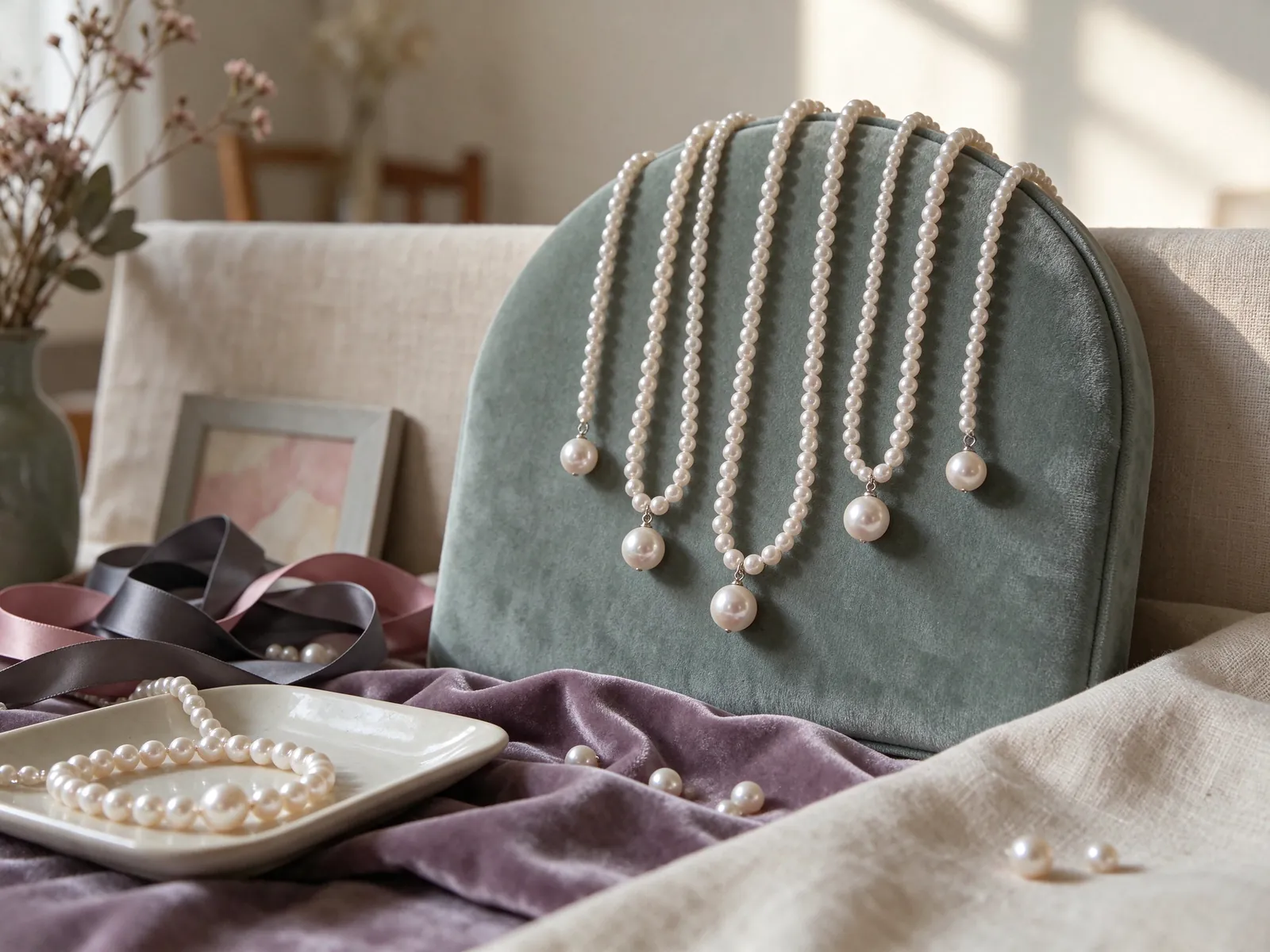
Evaluate the pearls as well as the metal detail
GIA identifies seven pearl value factors: size, shape, color, luster, surface quality, nacre quality and matching. A striking clasp does not answer those questions for the strand. Look closely at the pearls next to the fastening, where changes in shape and visual weight are particularly noticeable. Decide whether the arrangement creates an appealing progression; matching does not always mean every pearl must look identical. GIA notes that designers sometimes intentionally mix colors, shapes and sizes, but most multiple-pearl jewelry calls for matching across the quality factors.
For luster, compare the definition of reflections in similar light rather than assuming a bright white image proves stronger luster. Irregular pearl outlines and a straight bar create a different contrast from a more consistent strand. Explore a gray Akoya pearl necklace as a separate color topic, while remembering that a gray appearance or fastening name alone cannot identify pearl type, origin or natural-versus-cultured status.
Pay attention to the pearls nearest the closure
Check whether the end pearls crowd the space needed to handle the clasp and whether the connections feel comfortable against your skin. Let the necklace hang to see the angle at each end. These observations concern fit and construction, not gem identification. Read the individual necklace's description for any pearl identity or treatment information you need; shape, color and surface marks are not substitutes for that information.
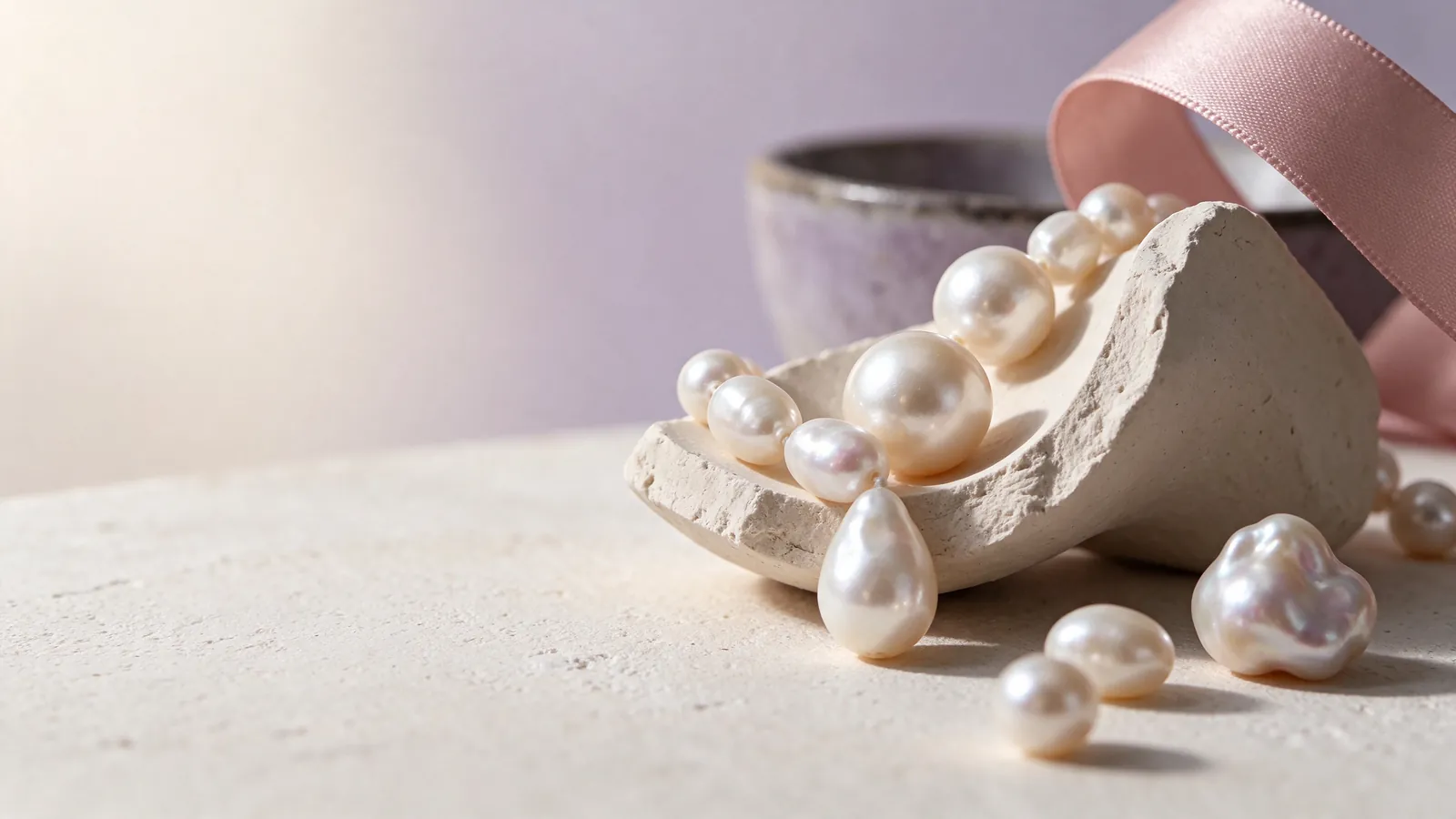
Layer necklaces without obscuring the ring and bar
Establish the pearl necklace's natural position before adding another strand. When two necklaces fall at nearly the same level, they can overlap or move toward the fastening during wear. Look for distinct layers, then observe whether that separation remains when you sit down. Avoid adjusting the string or end connections yourself to change the length, especially if the alteration would change how the bar approaches the ring.
A half chain pearl necklace is useful for comparing how pearl and chain sections share visual weight. A multicolor pearl necklace introduces another decision: the overall rhythm of colors across the strand. Look at the complete arrangement before concentrating on one pearl. These are ways to clarify your preferred design language, not evidence that every closure is suitable for every combination of chains and pearls.
Make a seated comparison part of the fitting
Sit at a desk and watch whether the longer layer is pushed up by fabric or the table edge. Notice if a fine chain moves close to the ring opening. If you must keep separating the necklaces, simplify the combination or try more clearly separated positions. A useful layered look is comfortable during everyday activity, rather than dependent on standing perfectly still for a photograph.
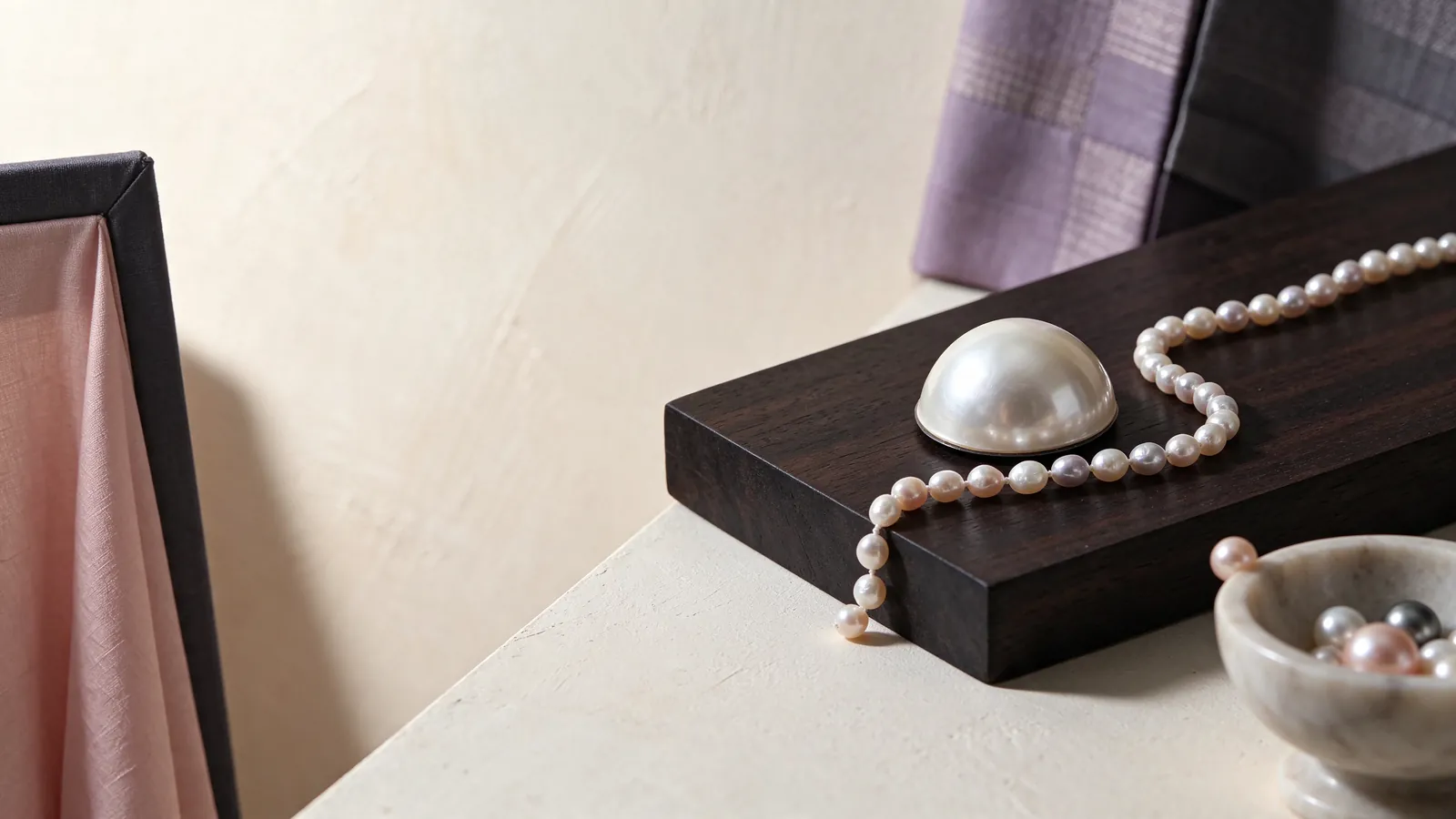
Use care methods suitable for the complete necklace
Pearl is listed by GIA at 2.5 on the Mohs hardness scale. The pearls need consideration even if the metal clasp is the part you want to clean. After wearing, use a very soft, clean cloth to wipe them. Avoid acids, perfume, hair spray and excessive heat. GIA says pearls should never be cleaned in ultrasonic or steam cleaners, so do not place the complete necklace in one to clean the fastening.
When taking the necklace off, operate the closure rather than pulling the strand apart. Store it away from jewelry that could scratch the pearls, with the strand resting naturally and the bar not pressed underneath a pearl. If a strung necklace has been cleaned with water, its string must be completely dry before wearing, according to GIA. Surface dryness does not tell you whether moisture remains inside the drill holes.
Respond to changes in the string or clasp
Before wearing, look for fraying, unexpected gaps or a fastening action that feels different. A visibly distorted connection or a bar that no longer settles normally is a reason to stop and seek an appropriate inspection, not to reshape it with pliers. Construction and use affect maintenance needs. Visible condition alone cannot establish a universal servicing schedule or guarantee the outcome of a repair.
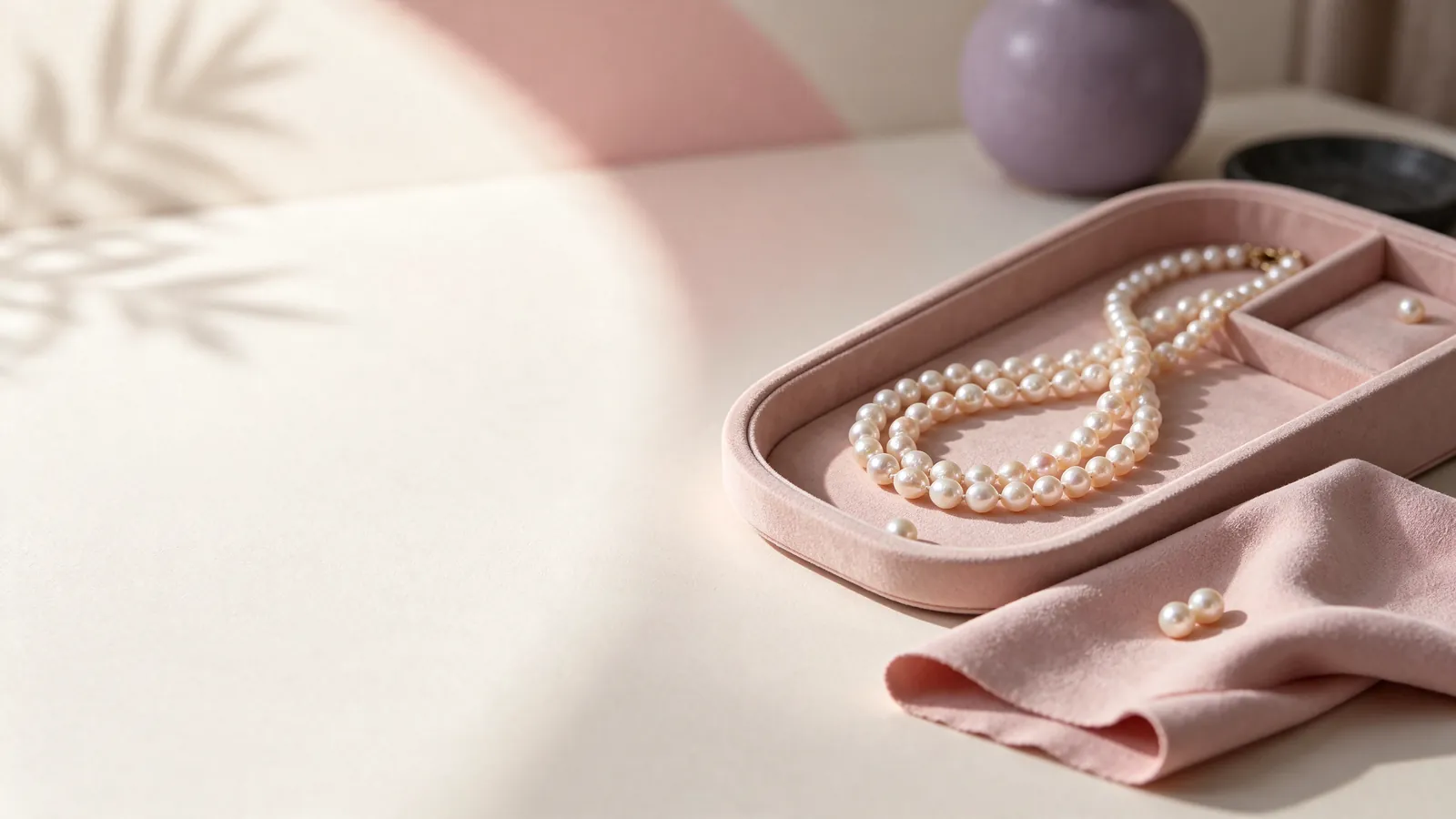
Choose by the way you actually wear necklaces
Write down the necklines you use most, the position you would like the clasp to occupy and how easily you handle small closures. For daily work, comfort at a desk and compatibility with outerwear may take priority. For a particular event, compare the necklace with the planned earrings and clothing details. Keeping practical needs separate from styling preferences helps prevent a photogenic feature from overshadowing an inconvenient fit.
Use the same shirt, hairstyle and similar lighting when comparing your favorites. Note whether measurements include the clasp, the direction it takes after fastening and the arrangement of the pearls beside it. These details provide a useful basis for discussing a necklace choice. A style name is only a starting point; a preference for clear neckline space or easy handling gives a more precise description of what you need.
Put your main requirement ahead of minor differences
Rank neckline balance, ease of operation and strand appearance in your own order. Someone who fastens a necklace unaided each morning may value comfortable handling more than a bar that is perfectly centered in photos. Clothing with prominent details may call for a simpler outline. This sequence is not a quality grade: it is a way to choose the design that meets your main requirement before comparing smaller differences.
Ready to describe the necklace look you have in mind? Talk with Flint Jewelry on WhatsApp and share a favorite outfit image, your regular necklines and the clasp actions you find comfortable. Include the position you want the fastening to occupy and whether you expect to add another chain. That information gives a discussion of fit and styling a clear direction, rather than relying on a name to stand for every construction detail.
| Feature | What to compare | Neckline question | Movement observation | Selection priority |
|---|---|---|---|---|
| Overall length | Confirm whether the clasp is included | Does the clasp overlap the fabric edge? | Watch for upward movement when seated | Use your regular clothing for the comparison |
| Bar-through-ring action | Orientation and space for your fingers | Check nearby buttons and plackets | Notice bar movement when the strand relaxes | Choose an action you can manage comfortably |
| Pearl strand | Shapes and arrangement beside the clasp | Plain fabric makes outlines easier to see | Observe the angle of both ends | Use GIA's seven value factors, not clasp appearance alone |
| Additional layers | Clear separation between necklaces | Avoid crowding one neckline edge | Check whether a chain approaches the ring | Add one layer at a time |
| Routine care | Pearl has Mohs hardness 2.5 | Avoid direct contact with perfume and hair spray | Check fraying and changes in closure action | Follow GIA guidance; avoid ultrasonic and steam cleaners |
Pearl knowledge and authoritative references
GIA uses seven pearl value factors: size, shape, color, luster, surface quality, nacre quality and matching. These help evaluate the pearl strand of a necklace with a prominent fastening; the bar's appearance does not determine pearl quality.
Read the reference for this factFrequently asked questions
Does the word mantel prove a necklace has a T bar closure?
No. A name does not establish the complete fastening design. Look at clear front and back views and the full fastening action to determine how an individual necklace closes and whether it has additional moving parts.
Is a front-facing bar always the best styling position?
Not always. Follow the intended wearing method and compare the natural position with your neckline. If the design allows different orientations, side placement may create a different balance. Avoid constantly pulling the strand to force the clasp into a photographic position.
Should necklace length be compared with or without the clasp?
For fitting, the complete length matters. Confirm the measurement method before comparing two necklaces. Also try them on: weight distribution and the way clothing supports the strand can change the actual position even when measurements are similar.
What should I check before layering a chain with the pearls?
Locate the pearl necklace's natural drape first, then add the chain. Turn and sit to check whether the layers overlap or the chain moves toward the ring opening. If the arrangement needs constant correction, fewer layers or clearer separation may suit everyday wear better.
How should I handle a clasp that suddenly sits differently?
Stop wearing the necklace if you notice visible distortion or an unexpected change in operation, and seek an appropriate inspection. Do not bend the connection back with household tools. Also examine the string for fraying or unusual gaps, since the strand and closure work together.
Updated: