
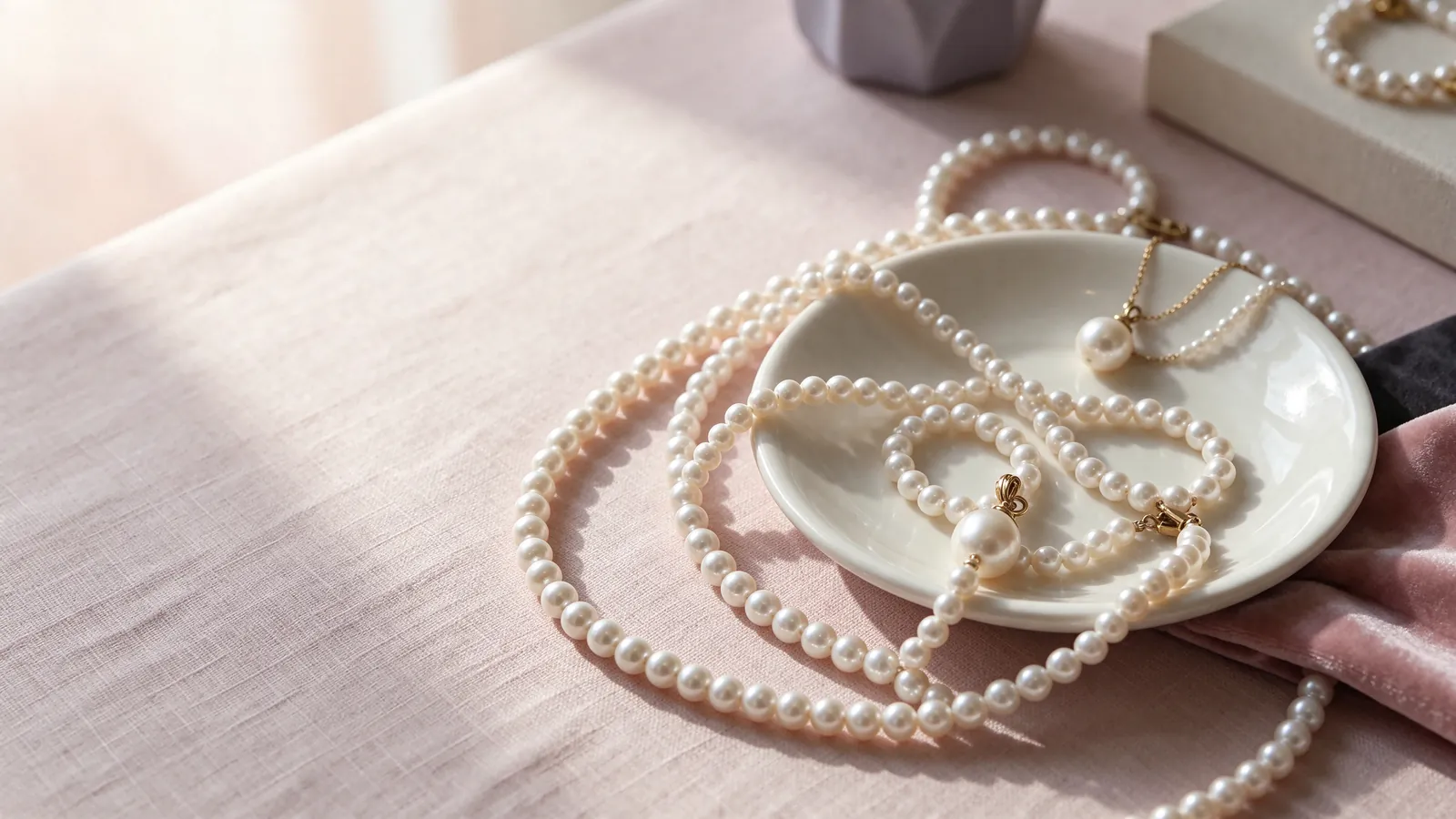
Flint Jewelry: Matching a platinum clasp pearl necklace to your neckline: length considerations for a PT950 clasp pearl strand or a PT900 clasp pearl necklace
Picture the necklace with a specific outfit before deciding where it should sit. A rounded neckline offers a fabric edge to work above or below, while an open blouse creates a different frame around the strand. Wear the blouse as you normally would, rather than opening extra buttons for the fitting. Thinking about a single strand pearl necklace helps define the curve you want, but your garment and body proportions determine its final appearance.
Check the necklace from behind once the front looks right. The clasp may meet a raised collar or sit beneath hair that makes it harder to reach. A fitting should include sitting, looking over your shoulder and raising your hands in normal movements. Notice whether the strand settles back into a position you like. Choosing extra length or less length is not automatically a solution; consider appearance and access to the fastening together. Use the pearl necklace length guide to organize your preferred resting position, then compare the necklace with the actual blouse or top you expect to wear.
Flint Jewelry fitting questions: At a fitting for a platinum clasp pearl necklace, how does clasp placement feel on a PT950 clasp pearl strand or a PT900 clasp pearl necklace?
For a PT950 clasp pearl strand or a PT900 clasp pearl necklace, start by learning the intended direction of wear. Find the opening with your own fingers and remove the necklace as well as fastening it. Observe whether the clasp rests flat and whether its connections remain aligned. A neat rear photograph does not replace this hands-on check.
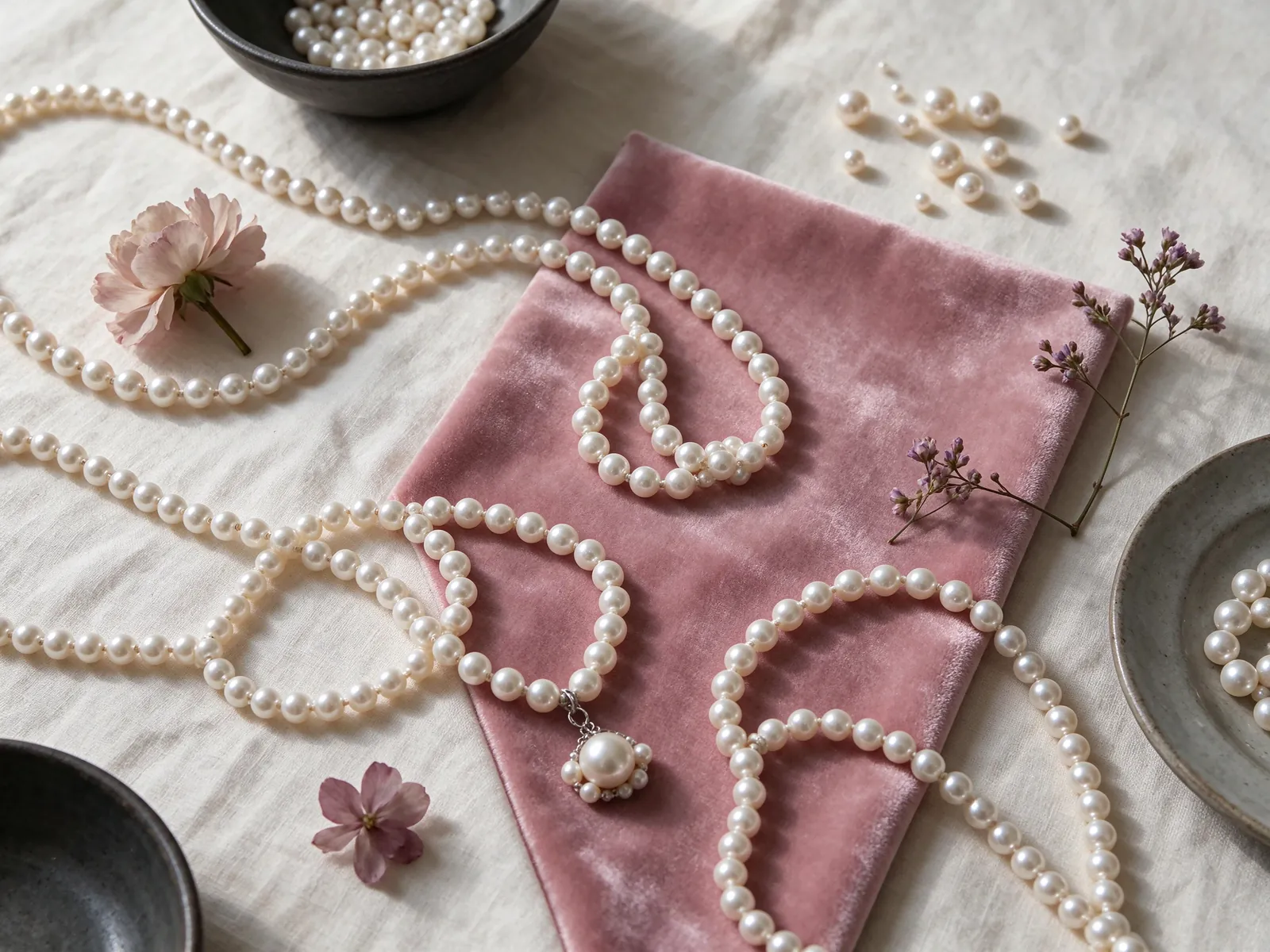
Read a material description without confusing it with function
The words PT950 platinum and PT900 platinum do not specify an opening action or a clasp silhouette. Break the decision into the metal appearance you prefer, the mechanism you can operate and the way the clasp joins the strand. Write down your preferred metal color separately from the fastening action you find comfortable. For everyday use, examine where you grip the clasp and whether its closing action is clear without having to force it.
An 18K gold clasp pearl necklace offers another way to consider the fastening's visual role, particularly if your usual accessories have warm tones. Material options can be discussed as 18K 750 white gold, 18K 750 yellow gold, 18K 750 rose gold, PT950 platinum and PT900 platinum. Avoid making a matching color the sole priority. A hidden fastening still needs accessible operation, and an exposed one needs a proportion that makes sense beside the pearls.
Ask which part the metal description actually covers
A clasp's material description should not be used to infer the materials of every other component. Discuss the fastening and adjoining connections specifically. When comparing designs, keep the outfit and wearing position consistent so that a difference in shape or access is not mistakenly attributed to the platinum label.
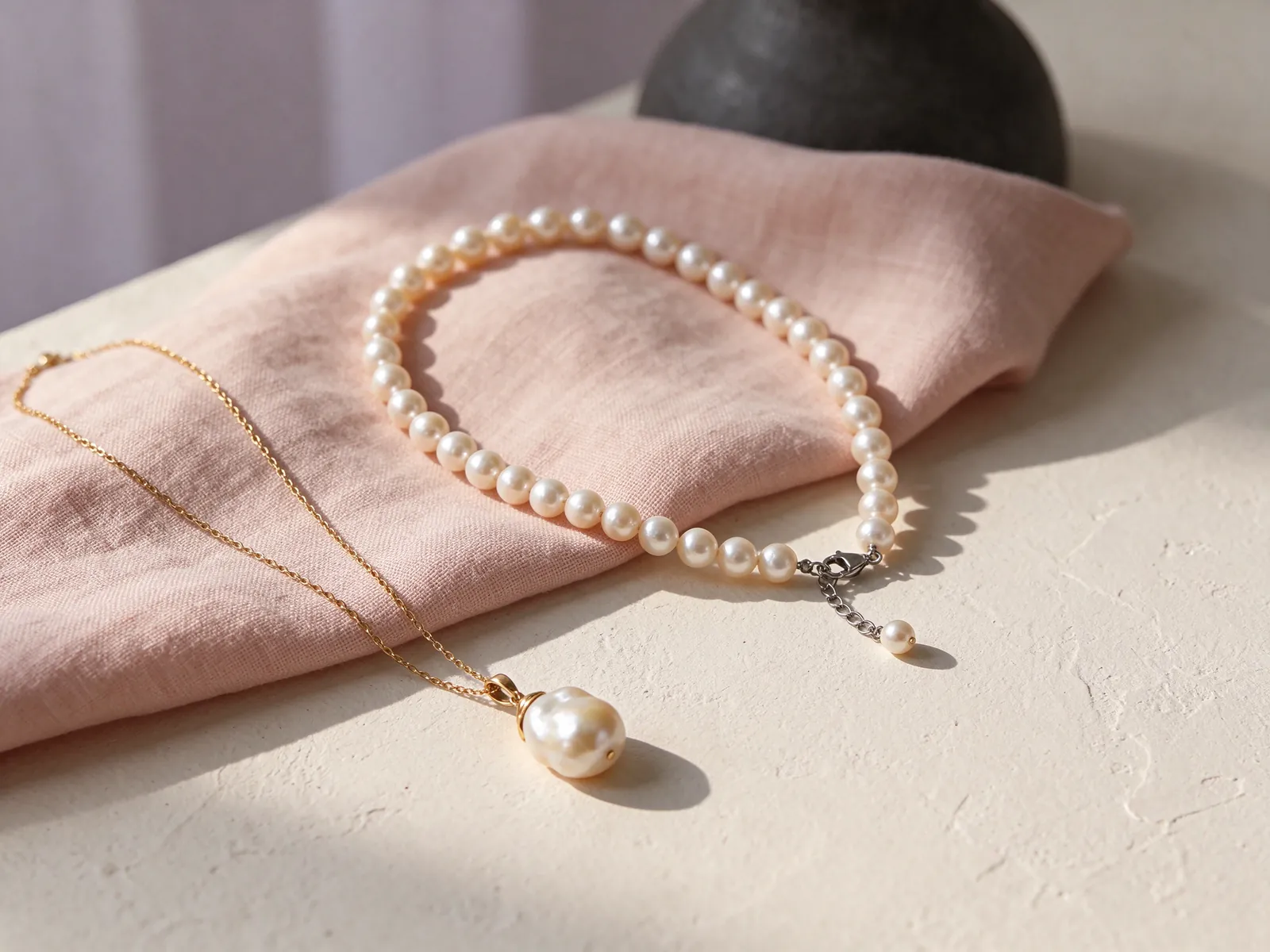
Practice the whole fastening sequence yourself
A clasp can seem effortless when another person operates it, so make room for your own trial. Begin where you can see the mechanism, with the strand supported over a soft surface. Identify the part that moves and the point that needs support from your fingers. If opening requires unfamiliar pressure, stop and learn the action rather than using a nail to pry or pulling on the pearls for leverage.
After fastening the clasp correctly, check that it is fully closed in the manner intended by the design. Assess it through normal wearing movements, not by applying a strong pulling test. If the design includes another securing component, learn the order of operation rather than assuming extra parts are always preferable. Your usual nail length, ability to reach behind your neck and need for a mirror are all relevant to choosing a practical arrangement.
Identify the specific step that feels awkward
Describe whether the difficulty is holding the clasp, finding its opening, closing it or reaching it in place. A mechanism that works easily in front but not behind the neck presents an access question. A mechanism that remains unclear in plain view presents an operating question. Naming the step makes the fitting conversation more useful.
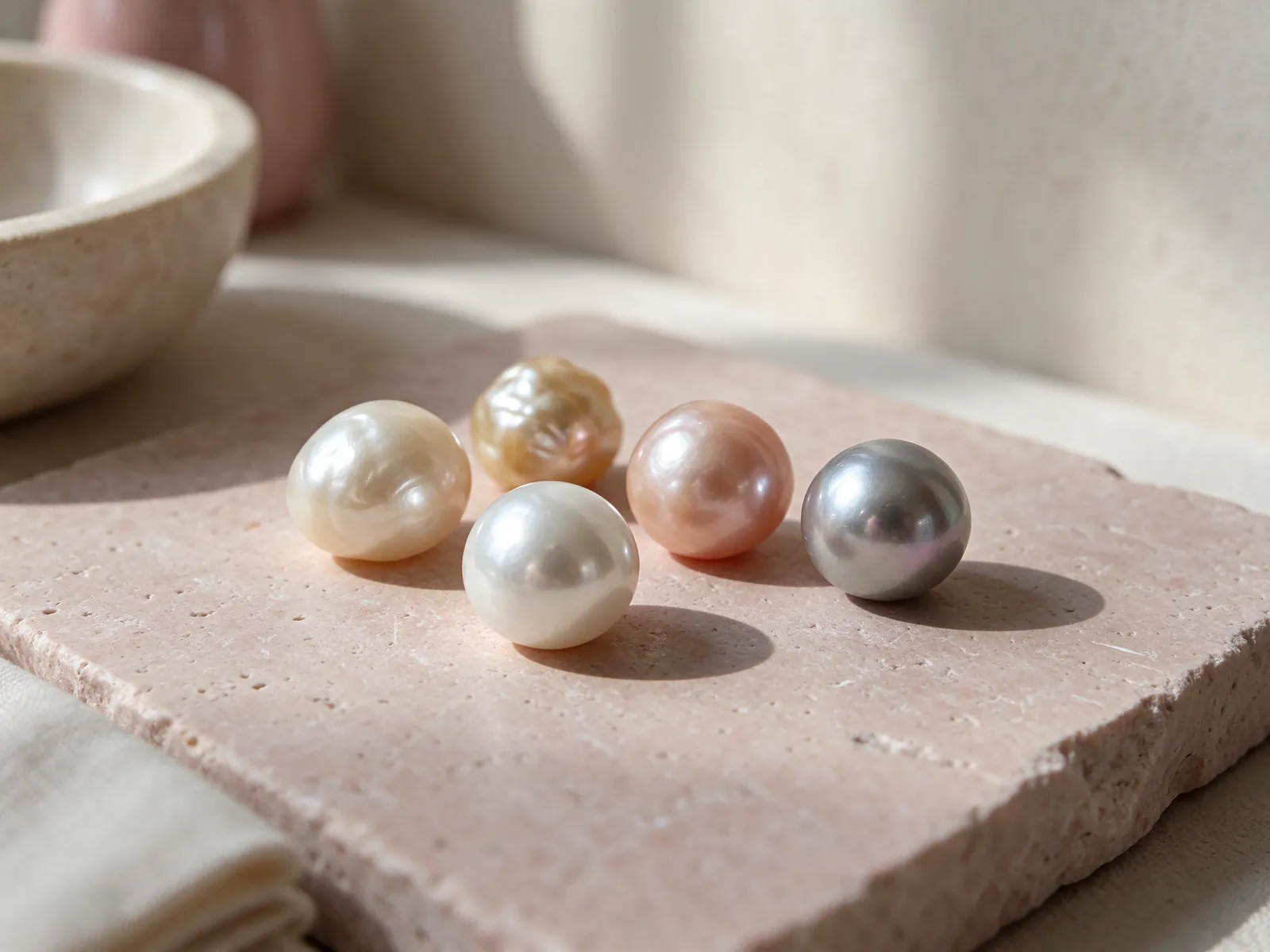
Judge the pearls and their arrangement independently
A distinctive clasp should not distract from the strand it completes. GIA identifies seven pearl value factors: size, shape, color, luster, surface quality, nacre quality and matching. For a necklace, matching helps explain how pearls relate across the arrangement. A deliberate progression in shape or size can create its own rhythm; the goal is to understand the design, not to assume every pearl must look identical for the necklace to be appealing.
Study the transition from the fastening to the adjacent pearls, then compare that area with the center of the strand. Consider reflections, color relationships and the curve as separate observations. The Akoya pearl necklace and freshwater pearl necklace pages explore different pearl-selection contexts. Neither a platinum clasp nor a round white appearance identifies a pearl type. Keep pearl details separate from metal details, then bring the two together when evaluating the necklace as a wearable whole.
Use a close view and a full-outfit view
Close inspection shows the connections and the visual transition beside the clasp. A full-outfit view shows whether the strand has the balance you want. If the fastening is meant to be visible, check its relationship to the neckline opening. If it sits behind the neck, observe whether a collar changes the front curve.
Plan for a blazer, a scarf or an evening wrap
For a work outfit, choose between a partial curve within an open collar and a complete strand on top of the fabric. Check the back of a structured jacket as carefully as the front of the blouse: a collar can contact the fastening even when the pearls look well placed. If you use a scarf, put the necklace in position first, add the scarf without crowding it and remove the fabric without catching the clasp.
With an evening neckline, look at the intended hairstyle and wrap during the same fitting. Hair can cover the clasp or cross its opening, and a wrap can brush the connection as you put it on. Decide whether the necklace or earrings will be the main visual focus. A simple earring can leave the pearl curve clear, while a more noticeable earring may call for a strand position that does not compete around the face.
Do not assume every clasp can become a front ornament
Front placement depends on the specific design and its wearing direction. If allowed, check that the opening remains usable and that the connections are not twisted. Also look at the garment edge: a partly concealed fastening may look accidental. When front placement is unsuitable, another accessory can echo the metal color without changing the necklace arrangement.
Choose care methods for pearls, string and metal together
The fastening is only one part of the necklace, so care should not be based on platinum alone. GIA lists pearl at 2.5 on the Mohs hardness scale and states that pearls should never enter ultrasonic or steam cleaners. A familiar cleaning method for separate metal jewelry is therefore not a suitable default for a pearl strand. After wearing, use a very soft clean cloth and keep the clasp from rubbing across the pearls.
Keep perfume, hair spray, acids and excessive heat away from pearls. Complete hair styling and apply perfume before putting on the necklace to reduce direct contact. When taking it off, release the clasp by its intended action instead of pulling on the string. If water cleaning has left the string wet, GIA advises waiting until it is completely dry before wearing. In storage, give the strand space so hard accessories and the clasp do not press against pearl surfaces.
A clean surface is not the same as a sound closure
Pause wearing if the clasp no longer closes properly, a connection shifts or the string shows visible wear. Set the necklace down and arrange an assessment rather than testing it with repeated pulls. Note where the change occurred and which action feels different. Surface shine alone cannot tell you whether the fastening functions as intended.
Build a decision around your actual wearing priorities
After the fitting, write down where the strand sat, which neckline you wore and how opening and closing felt. If you are comparing a PT950 clasp pearl strand and a PT900 clasp pearl necklace, first establish whether their clasp shapes and strand arrangements are comparable. An easier action in one design may reflect a different mechanism or location, not the material name. Photos can capture outfit proportions; short notes capture handling preferences more effectively.
For a conversation with Flint Jewelry, bring a neckline photo or describe the position of a necklace you already enjoy wearing. Explain whether you want the fastening concealed, whether you normally dress without assistance and whether scarves or an updo are part of your routine. These details create a focused discussion about length and clasp structure. They are more useful than asking which platinum option is universally better without considering the design or your daily habits.
Make the final trade-off explicit
Decide what must work and what can change. Independent fastening may be essential, while complete concealment of the clasp may be a preference. If the strand needs repeated rearranging during ordinary movement, return to placement and the outfit before choosing. The strongest decision is one you can explain in terms of your own appearance and use, not a label alone.
Ready to make your necklace priorities more specific? Talk with Flint Jewelry on WhatsApp (https://wa.me/85260106207). Share your usual neckline, where you like a strand to rest and which fastening steps feel comfortable or awkward. Those details create a useful starting point for discussing design and styling without choosing by a material name alone.
| Fitting context | Where to look | Clasp question | Movement to try | What to prioritize |
|---|---|---|---|---|
| Rounded neckline | The curve relative to the fabric edge | Does the back collar lift it? | Sit and look over your shoulder | A settled, intentional position |
| Blouse and blazer | Usual button opening and rear collar | Does structured fabric contact it? | Raise your arms normally | Appearance with real clothing |
| Fastening without help | The opening and finger grip | Which operating step is awkward? | Open and close over a soft surface | Clear, repeatable handling |
| Evening outfit | Hair, neckline and wrap together | Is visible placement allowed? | Put on and remove the wrap | Design-led placement without catching |
| Home care | Pearls, connections and string | Does it still close as intended? | Soft wiping and visual inspection | Pearl-aware care, not metal-only cleaning |
Pearl knowledge and authoritative references
GIA lists pearl at 2.5 on the Mohs hardness scale and says pearls should never be cleaned with ultrasonic or steam cleaners; an attached platinum clasp does not change that care guidance.
Read the reference for this factFrequently asked questions
Can a PT950 label tell me how the clasp opens?
No. It describes a material option, not the opening sequence. Learn the actual mechanism and try it yourself. The grip, position and clarity of closure matter alongside your preferred metal appearance.
Why should I try the necklace with a blazer instead of a bare neckline?
A blazer or blouse can change both the visible curve and the clasp's resting position. Testing normal clothing reveals rear-collar contact and partly hidden pearls that may not appear in a bare-neck fitting.
What if a clasp works in front but is difficult behind my neck?
That points to an access issue rather than necessarily an opening problem. Check your reach, hair and collar in the intended position. Discuss placement and handling separately before changing a strand length you otherwise like.
Can the clasp material identify the pearls in a necklace photo?
No. Pearl identity is separate from clasp material, and roundness or white color is not enough to establish it. Ask about the pearls independently, then evaluate the complete arrangement during a fitting.
Is ultrasonic cleaning suitable if I only want to brighten the clasp?
Not for the assembled pearl necklace. GIA advises against ultrasonic and steam cleaning for pearls. Use a very soft clean cloth for routine care, and let any string wetted by water cleaning dry completely before wearing.
Updated: