
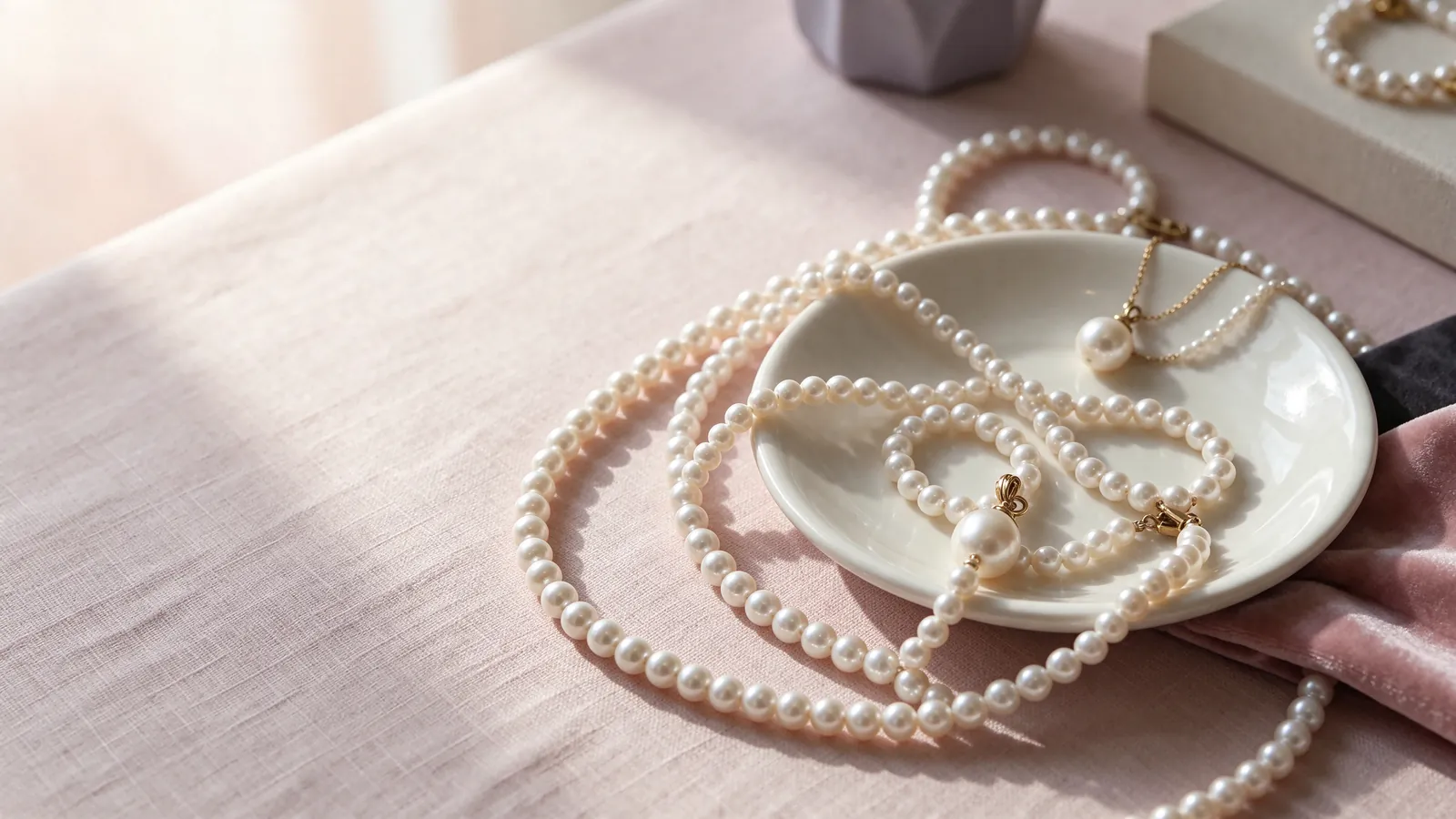
Flint Jewelry — Neckline and length in pearl necklace layering: how to layer pearl necklaces for well-balanced layered pearl necklace styling
Think of the neckline as the boundary of your composition. A round opening gives the upper strand a curve to echo, but the necklace should remain visible rather than partly disappear behind the fabric edge. A V-neck introduces a downward direction. Check whether the lower strand continues that direction or lands exactly at the point, creating two competing focal points. Adjust the resting position before introducing a third necklace.
Set shirt buttons and collars as you intend to wear them before trying the jewelry. A strand that looks balanced with an open shirt may become crowded when the next button closes. High-neck clothing offers a fabric background, where texture and thickness influence movement. Instead of choosing a length category first, identify the spaces where an upper and lower line can be seen clearly on the actual garment.
Flint Jewelry — Comfort and movement in pearl necklace layering: how to layer pearl necklaces with wearable layered pearl necklace styling in mind
View the outfit standing, then sit in a chair and reach forward as you would during the day. Turn your shoulders and look down. Watch whether the short strand rides upward or the long one reaches a table edge. Check a side view as well as the front. A successful arrangement should suit your movement and preferences, not just hold a specific spacing for a still photograph.
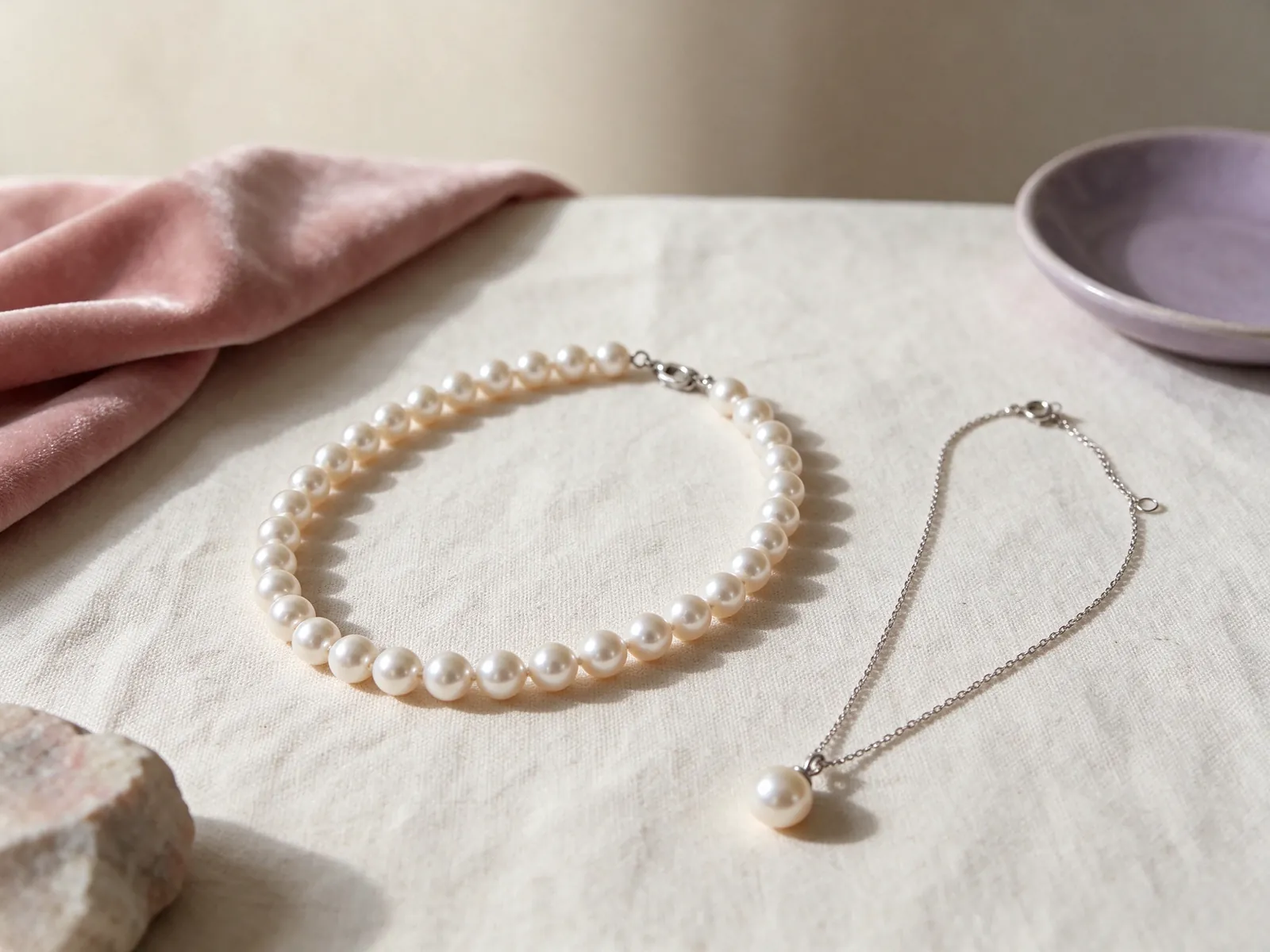
Use the necklace you already enjoy as your reference point
Begin with a single strand pearl necklace that you know how to wear comfortably. Its position gives you a reference for deciding what another layer should contribute. Perhaps you want a closer frame near the neck, or a longer line below the first strand. Measure the complete necklace along its actual path, then compare it on the body. Different pearl outlines and closures can change drape even when the listed lengths seem comparable.
Consider whether you want several independent pieces or the joined arrangement of a multi strand pearl necklace. Independent necklaces can be worn separately and combined with different outfits. A multi-strand item has its own connecting structure, which affects where the strands hang and how the closure feels. Try the complete arrangement rather than judging it only on a display surface, and choose according to how you actually plan to wear it.
Create a fitting note that helps your next purchase
Write down the garment, each necklace's resting point and the movement that causes overlap. A quick outfit photo can help explain the effect you want to repeat. When considering a new strand, compare it with the existing necklace if possible and inspect both closures. This makes the question more useful than simply asking which length is best: you are choosing a specific role within a specific outfit.
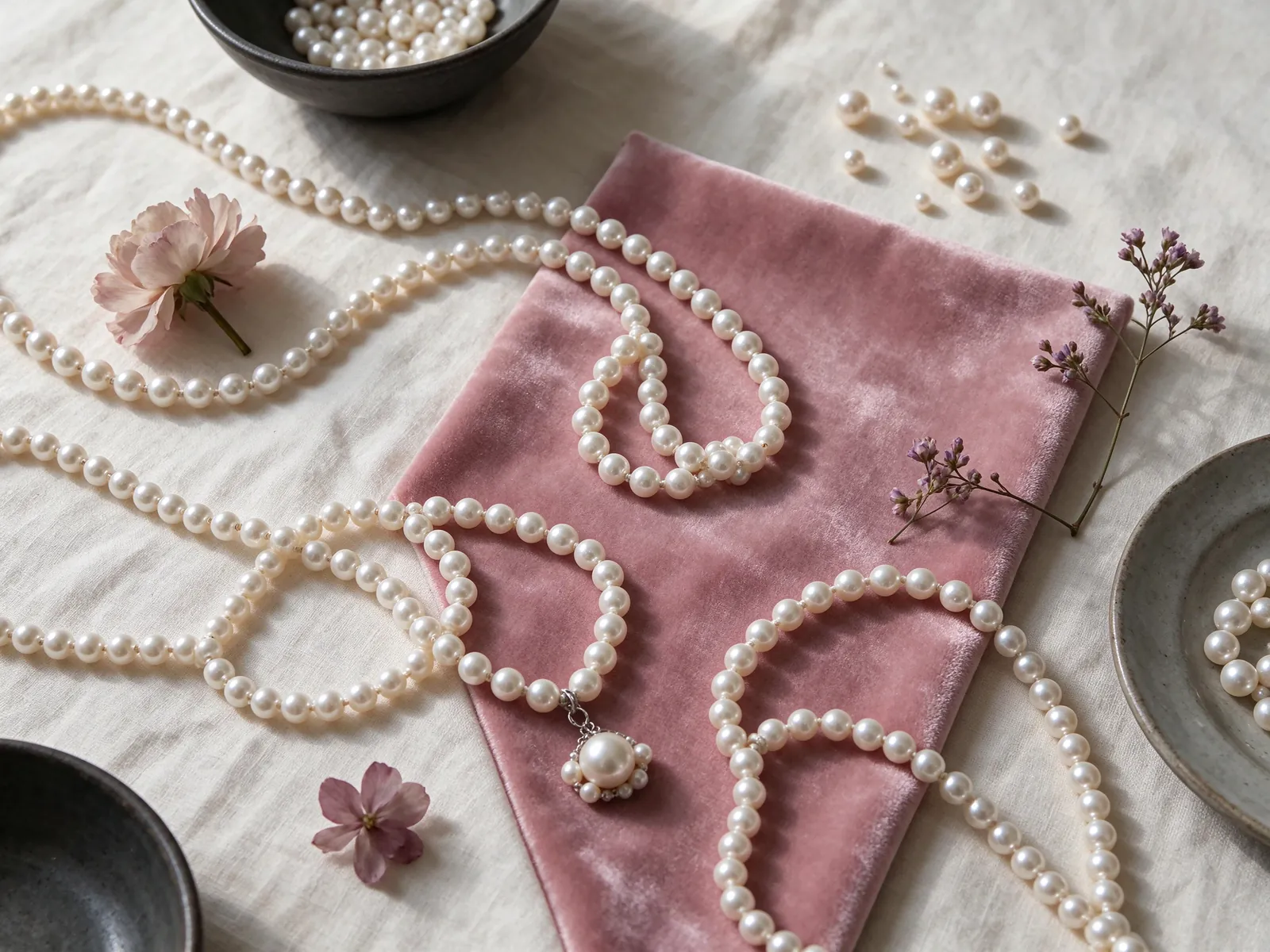
Choose a leading strand and a quieter supporting line
A layered look can use contrast without making every strand equally prominent. Start by identifying the necklace you want people to notice first. The second might add a finer outline near the collar or a more relaxed line below it. If both compete, reduce the contrast in one layer or simplify other accessories. Adding more strands rarely clarifies a focal point that is already difficult to see.
GIA identifies seven pearl value factors: size, shape, color, luster, surface quality, nacre quality and matching. It also recognizes that designers sometimes deliberately mix colors, shapes and sizes. Matching within a pearl jewel and coordinating two separate necklaces are different judgments. For your outfit, compare reflected light and color impressions under the same conditions, then decide whether the differences support a clear focal point. Visual coordination does not establish equal quality or shared origin, and neither shape nor color alone establishes natural versus cultured identity.
Compare pearls against the garment, not separate photographs
Different lighting can make two photos a poor guide to how necklaces look together. Place the pieces beside the planned top, then wear them and see how skin and fabric affect the contrast. A patterned garment already supplies rhythm, so a restrained supporting strand may be enough. With a plain top, differences in pearl shape can become a deliberate feature rather than competing with fabric detail.
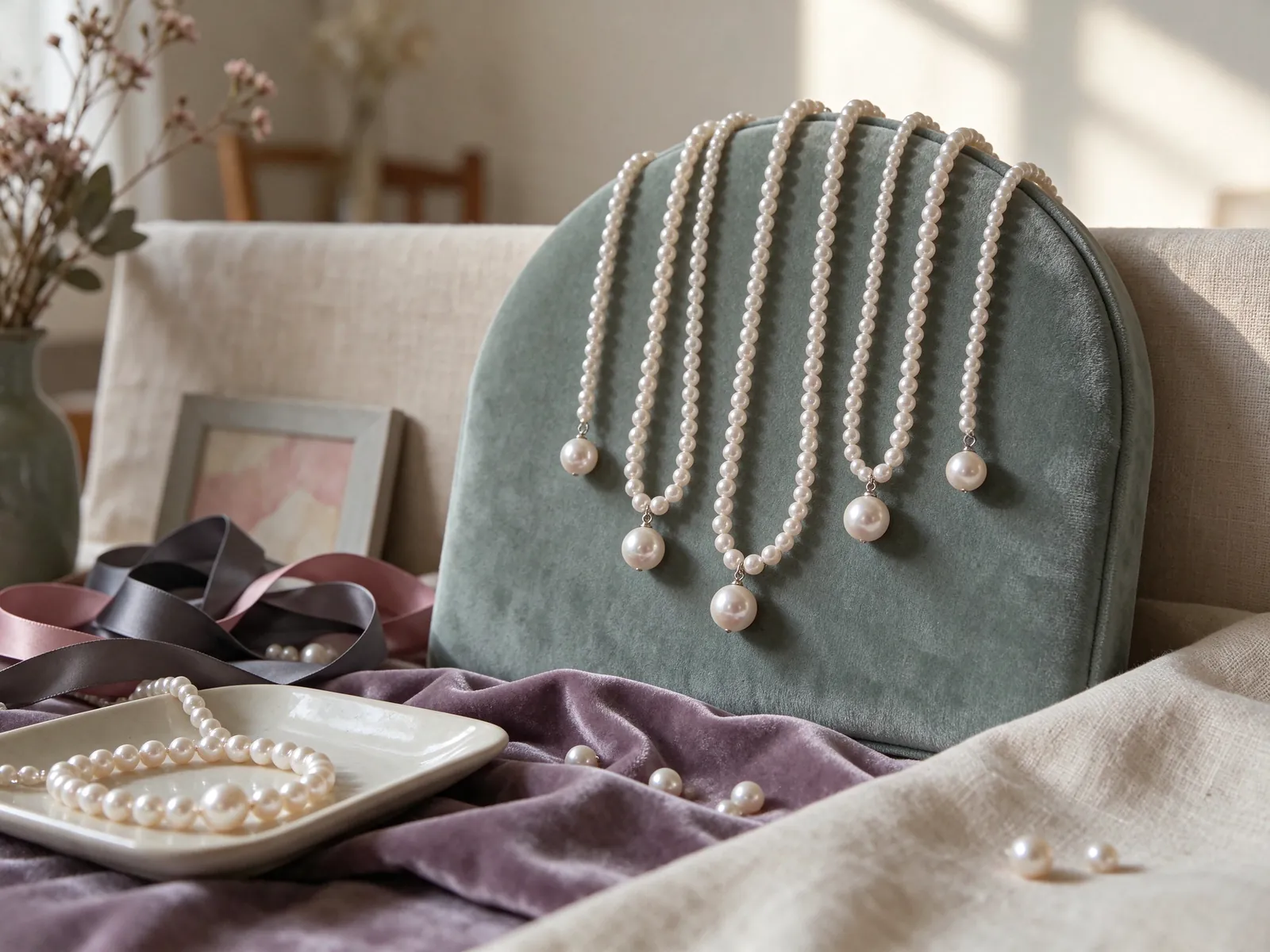
Bring chain details into the mix with attention to contact points
A half chain pearl necklace combines pearl and chain sections within one silhouette. When you layer it, note where the junctions sit and whether they rotate toward the center. The junction can lead the composition, but it may crowd a button, pendant or another closure. Test a different resting position or a simpler companion necklace if too many details collect in the same small area.
Inspect the parts that can move against the second strand: chain edges, clasp shapes and any hanging extension. A piece that seems visually delicate can still cross over the pearls when you turn. A heavier strand may press a lighter one against the top. Arrange them gently, walk and check again. If the same components repeatedly rub, change the combination instead of relying on occasional straightening.
Make mixed metal colors feel intentional
An earring, ring or small detail on the clothing can echo a contrasting metal color without requiring every accessory to match. Keep a clear order of attention so the eye is not pulled equally toward several centers. Judge the effect in the outfit's lighting. Color coordination describes appearance; it does not establish the metal identity of a component or the quality of the pearls beside it.
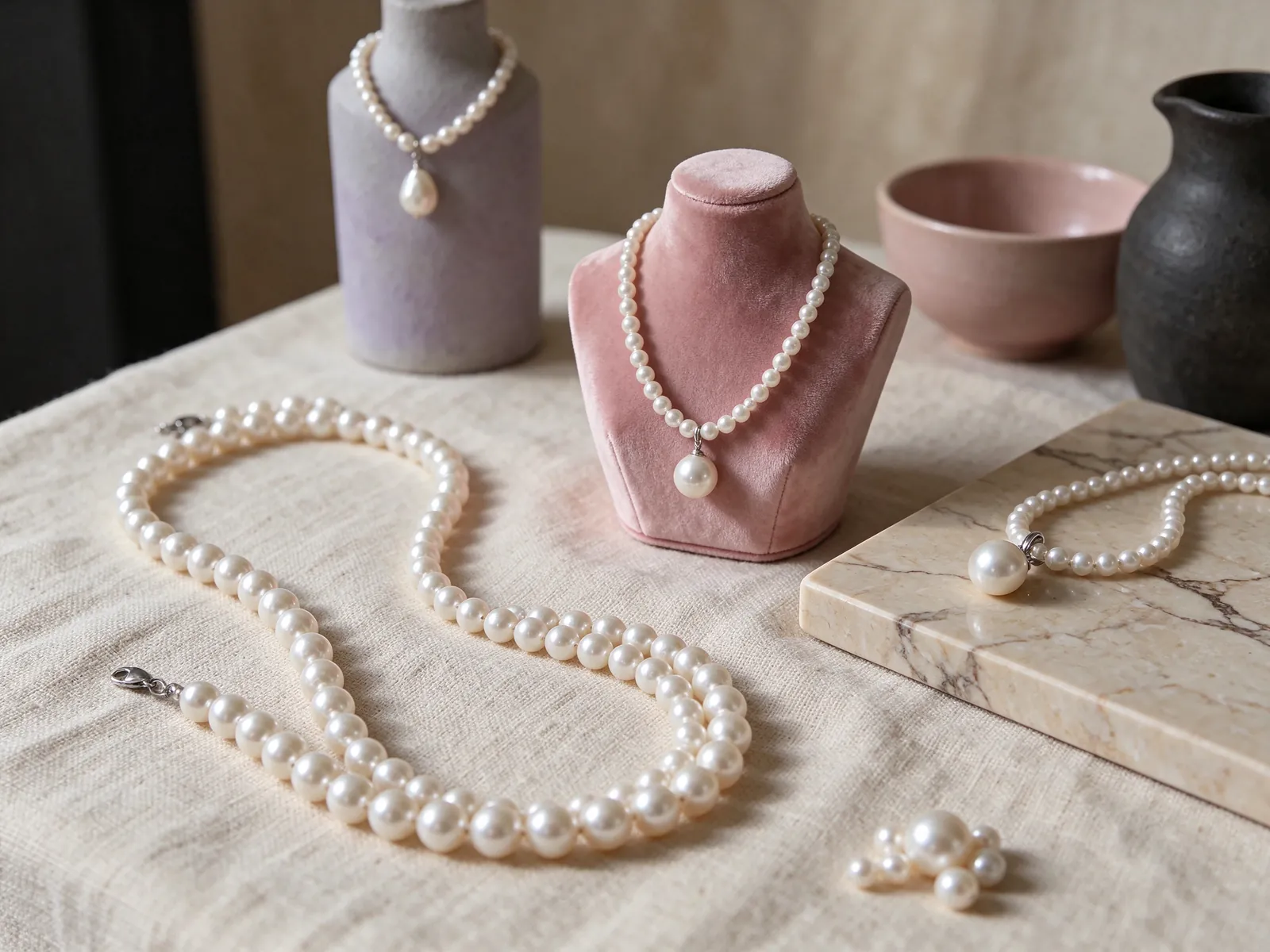
Evaluate lower layers with jackets, bags and seated movement
A long pearl necklace can extend the silhouette well below the neckline, so test the surrounding space as carefully as the neck area. Put on your jacket and carry your usual bag. Check whether the strand enters a pocket, sits under a lapel or meets a shoulder strap. Sit near a table and reach forward. A lower line that repeatedly touches the tabletop may need a different pairing for that setting.
Compare a matinee pearl necklace if you want an extended supporting line but prefer the lowest point to sit higher. No length label determines the final separation on every body. Weight, closure orientation, fabric contact and motion can all influence overlap. Even with the clasps at the back, the strands may exchange positions. Observe the actual behavior during reaching and turning before deciding that a pairing suits your routine.
Change one variable when layers twist
Check each necklace alone first, so you can see whether one already twists independently. Then try the pair and change only the garment or one strand's position. This helps isolate the cause. If a tangle has formed, open the closures and ease the pieces apart on a soft surface without pulling. A spacer requires compatible attachment points and cannot be assumed to solve every combination.
Match the layering approach to the wearer and occasion
For everyday use, test the motions you repeat: reading, working at a computer, handling a bag and taking off a coat. A clear two-strand arrangement may serve better than several competing lines. For dinner or an evening event, an open neckline can give more display space, but the seated view still matters. Extra formality does not require extra necklaces when the outfit already includes prominent embellishment or a detailed neckline.
Personal style matters more than assigning a pearl shape or length to a gender. When considering a men's pearl necklace, compare the shoulder line, neckline, visible weight and the wearer's usual movements. A plain T-shirt and a tailored shirt offer different frameworks. Make the first strand work on its own, then add another only if it contributes a distinct line or emphasis to that person's chosen outfit.
Step back to assess earrings, rings and the full silhouette
Strong necklace layers can benefit from quieter earrings, while prominent earrings may call for less contrast at the neck. Rings can support the overall mood without copying every pearl detail. Check the full-length view with shoes, jacket and bag included. Close inspection tells you about individual pieces; stepping back helps reveal whether too much visual weight has gathered around one part of the outfit.

Protect the individual necklaces before and after layering
Before buying a supporting strand, identify the existing necklace and the tops it should accompany. Check overall length, closure operation and the weight of the complete pairing. If you want to vary the arrangement, ask about the intended wearing methods for the specific construction. Do not assume every long necklace can be doubled or knotted. Support the strand while handling it rather than lifting or pulling it only by the clasp.
Pearl is listed by GIA at 2.5 on the Mohs hardness scale, so repeated contact with harder jewelry components deserves attention. After wearing, wipe pearls with a very soft clean cloth and store each necklace separately. Put on perfume and hair products before the necklaces. Never use ultrasonic or steam cleaners for pearls. Separating the pieces for care is particularly helpful when the outfit combines pearls with chain sections or prominent closures.
Keep each piece organized for the next wear
Individual storage makes it easier to notice a knot, twist or loose connection before dressing. If water has been used to clean strung pearls, the string needs to dry completely before the necklace is worn. Keep a brief note of combinations that slide or rub against a particular garment. Use that observation to revise the pairing next time rather than repeatedly wearing an arrangement that needs constant correction.
If you would like to discuss a second layer for an existing necklace, have its length, a clear clasp photo and your usual neckline choices ready. Contact Flint Jewelry on WhatsApp: https://wa.me/85260106207. Explain which strand should lead the look and where overlap occurs, so your inquiry can focus on the arrangement and the way you intend to wear it.
| Clothing choice | Upper strand | Lower strand | Fitting action | Adjustment cue |
|---|---|---|---|---|
| Round neckline | Keep the curve fully visible | Add a distinct line below | Look down, then sit | The fabric conceals part of the pearls |
| V-shaped neckline | Frame the top of the opening | Continue the downward direction | Inspect front and side views | The strand and V point compete |
| Buttoned shirt | Clear the collar points | Avoid the placket and buttons | Set buttons, then turn | A connection catches near the front |
| Textured high-neck top | Build an upper line on fabric | Extend the visible outline | Walk with outerwear on | Texture pushes strands into overlap |
| Jacket with shoulder bag | Leave room near the collar | Clear pockets and straps | Reach forward at a table | Repeated contact with a strap or tabletop |
Pearl knowledge and authoritative references
GIA lists pearl at 2.5 on the Mohs hardness scale. Repeated contact with harder jewelry parts is relevant when strands overlap, so inspect contact points and store each necklace separately.
Read the reference for this factFrequently asked questions
Should I buy the second necklace using length alone?
Use length to narrow the comparison, then test the actual pairing. Pearl outlines, closures, garment texture and body movement change where each strand rests. An outfit photo and the measurements of your existing necklace help, but neither replaces checking the complete arrangement on the wearer.
Must both necklaces have matching pearl shapes?
No. Different shapes can establish a lead strand and a supporting one. Look for a connecting element such as color impression, luster or overall visual weight. If both demand attention, simplify one layer or the surrounding accessories. Shape alone does not identify pearl origin or natural versus cultured status.
Can a chain section sit directly over another pearl strand?
Check what happens during movement rather than judging the position once. Edges, closures and chain tails can move across pearl surfaces. If the same parts repeatedly rub or the heavier piece presses on the other strand, alter the drape, select a different pairing or wear the pieces separately.
Is a longer lower strand always better for an evening outfit?
Not necessarily. The neckline, garment details and seated position should guide the choice. A lower strand can provide an extended line, but it may compete with embellishment or contact the table. A simpler pairing can be more effective when the outfit already has a strong focal point.
How should I put layered necklaces away after wearing them?
Unfasten and separate the necklaces gently, wipe pearls with a very soft clean cloth and give each piece its own storage space. Avoid leaving them in a tangled pile. If strung pearls were cleaned with water, wait until the string is completely dry before wearing them again.
Updated: