
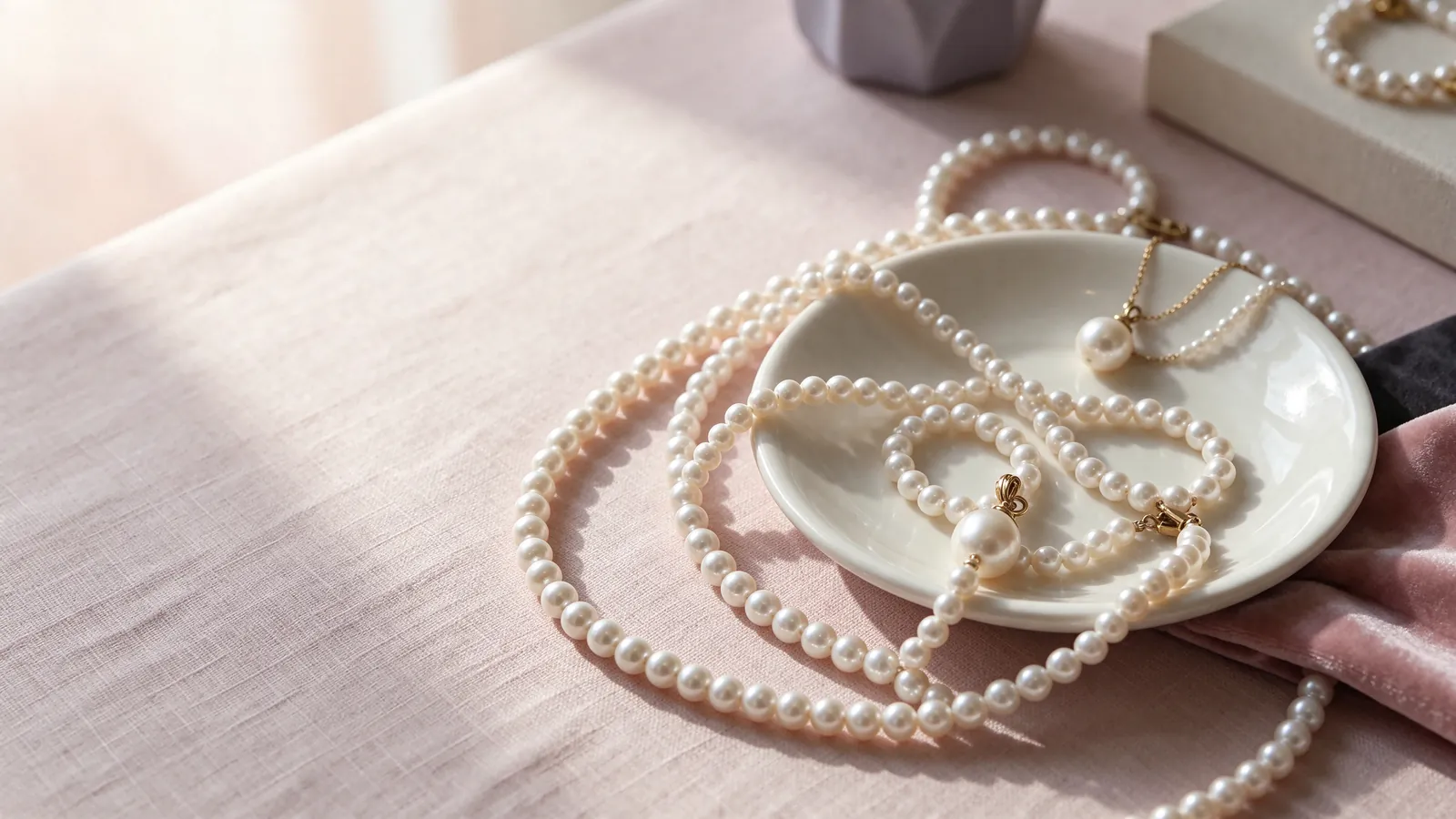
What length works with your neckline for a South Sea pearl necklace, whether it is a golden South Sea pearl strand or a white South Sea pearl strand? | Flint Jewelry
Not sure whether white or golden tones will work with your favorite neckline? Send Flint Jewelry a familiar outfit photograph, the color relationship you prefer and your intended landing point on WhatsApp: https://wa.me/85260106207. Starting with a specific styling question can be more useful than choosing from one necklace photograph.
Treat your neckline as the frame for the necklace. Lay out an everyday crew-neck shirt, an open blouse and an outfit for dressier occasions, then decide where the arc should be visible in each. Above the fabric, the pearls can read as a separate line. On the fabric, their outline depends more on contrast and texture. A necklace that repeatedly meets the neckline edge may look less settled than one with a clearly separate landing point.
The same stated length does not guarantee the same look on the body. When comparing a golden South Sea pearl strand with a white South Sea pearl strand, pay attention to the arrangement, curve and location of the clasp as well as your neck and shoulder proportions. Try the necklace standing and sitting, then add a jacket. Lapels may hide the sides or change the visible opening, which matters if that is how you plan to wear it.
How can you check the neckline balance of a South Sea pearl necklace when trying on a golden South Sea pearl strand or a white South Sea pearl strand? | Flint Jewelry
Compare the necklace inside a V-neck opening, above a crew-neck edge and on top of fabric, keeping your posture and clothing consistent for photographs. Turn slightly to check the sides, not just the front. There is no single position that suits everyone. If you want to separate the category name from these fitting questions, begin with what are South Sea pearls and then return to the way the necklace works with your own clothes.
Choose the color relationship you want, not a fixed skin-tone formula
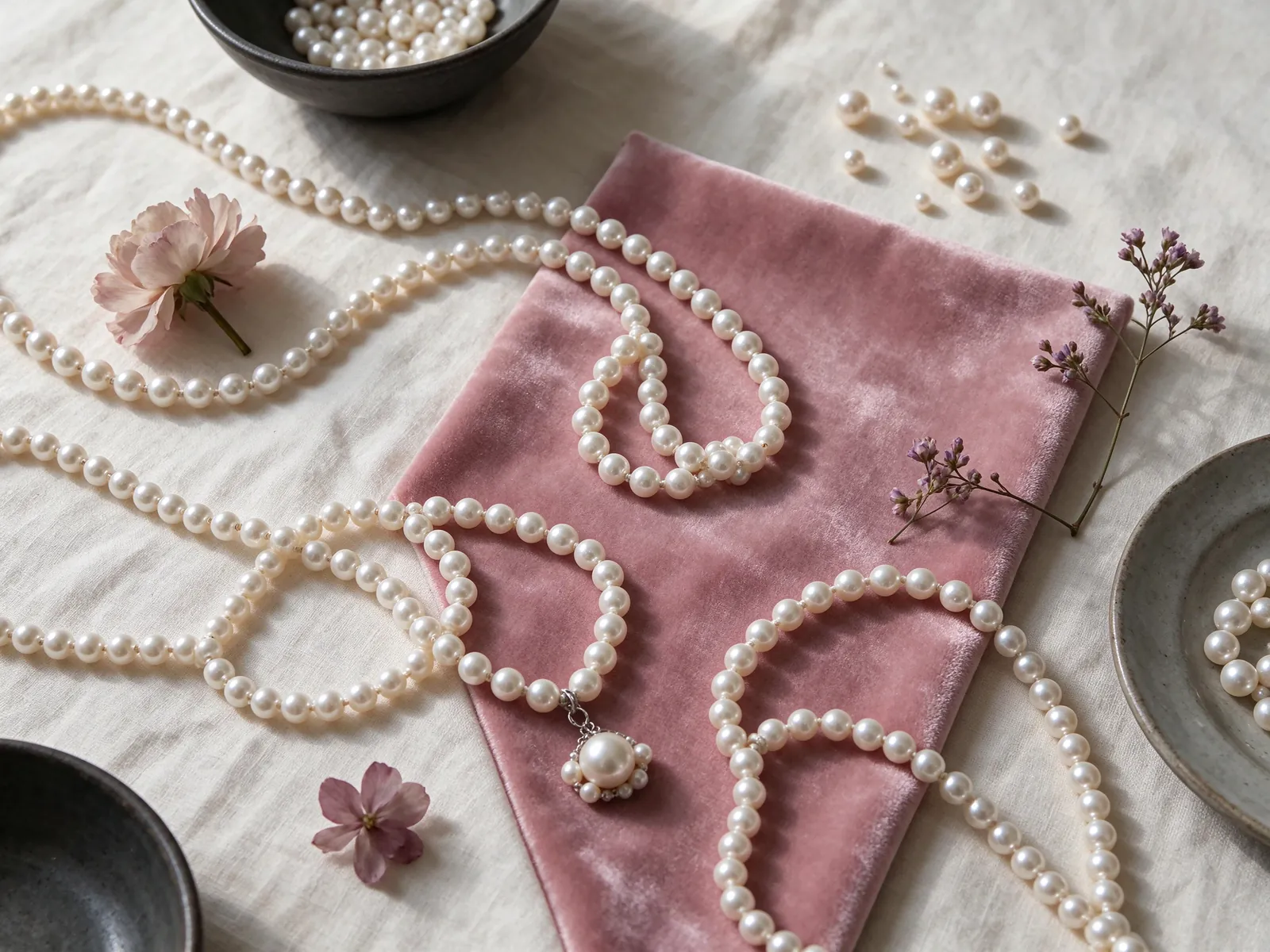
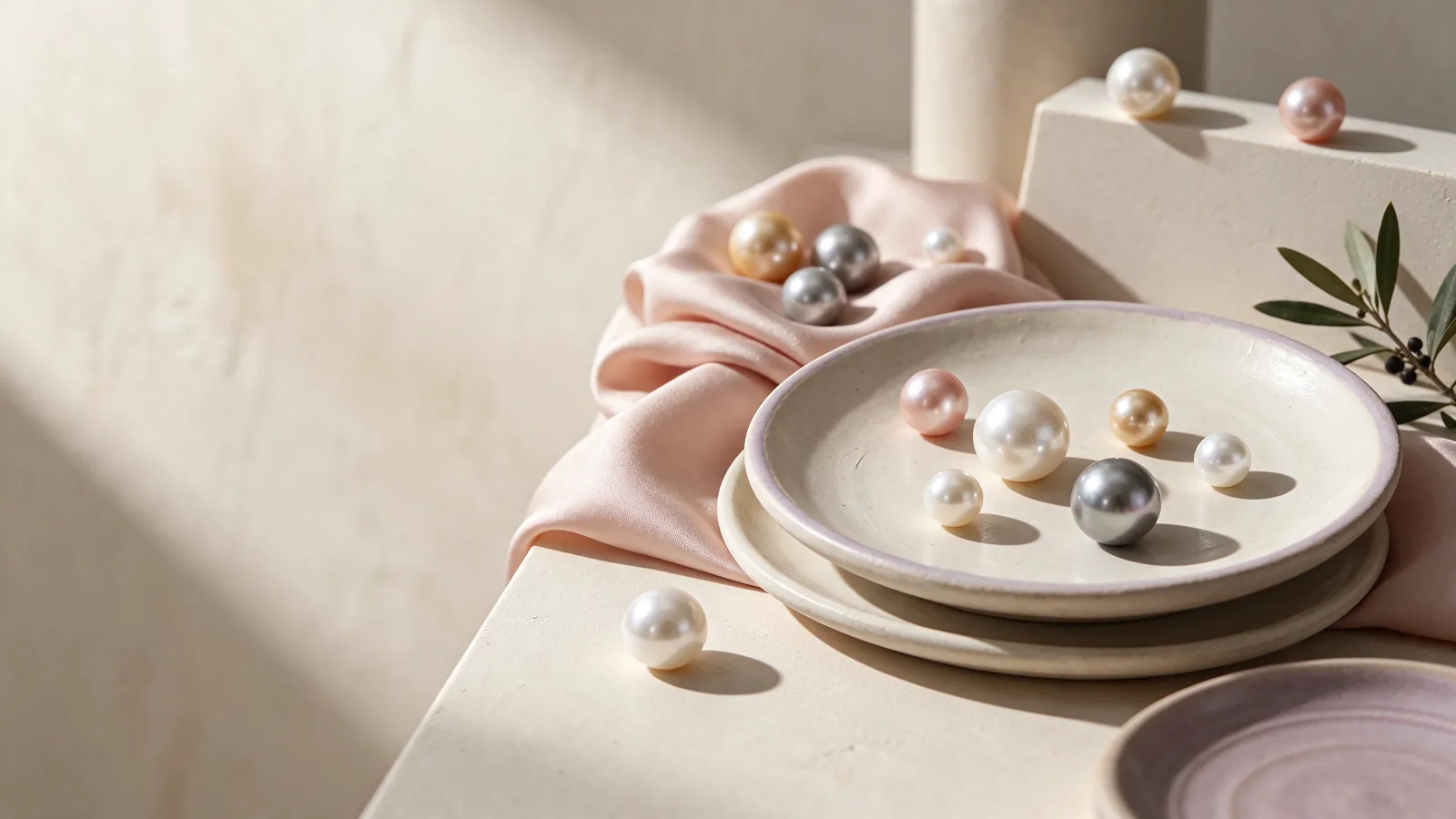
GIA explains that South Sea cultured pearls can be white to silver or golden, depending on the type of oyster. White and golden are therefore useful directions for comparing a South Sea pearl necklace, without making the color name a full description of any particular piece. When considering a white South Sea pearl strand, observe whether its overall effect feels soft or silvery. With a golden South Sea pearl strand, look at how its warmth relates to your wardrobe. Learn identity and treatment details from information about the actual object rather than assuming them from a color or an illustrative image.
A white-toned strand can feel integrated with cream clothing or create a stronger light-dark boundary against navy. Try more than one pale top: white fabric and warm ivory do not provide identical backgrounds. Ask whether you prefer the necklace to soften into the outfit or become a noticeable focal point. A bright studio image alone cannot tell you which result you will see beside your skin and the colors you regularly wear.
For golden tones, begin with a warm palette such as camel, brown or ivory, then test a dark top for a more distinct outline. Consider hair color, earrings, makeup and fabric sheen together rather than relying on skin tone alone. An easy fitting method is to remove other statement accessories, decide whether you enjoy the strand by itself, and then add each accessory back. This reveals whether the necklace needs more space in the outfit.
How do lighting and phone settings affect a color comparison?
A warm lamp and a phone's automatic white balance can make a strand appear different from its appearance near a window. Compare alternatives under the same lighting and against the same background before making a color judgment. GIA distinguishes bodycolor, overtone and orient; not every pearl displays all three. It is useful to describe both the main color and the surface effects you can actually see rather than assuming a single color word explains the entire strand.
Follow the whole arc: arrangement matters as much as the center pearl
An even-looking arrangement can create a continuous line, while a more prominent center with a gradual change toward the sides can draw the eye forward. Choose between those effects by looking at your neckline and the emphasis you want, not by assuming one arrangement is superior. The single strand pearl necklace guide provides another way to think about that structure. In either case, the sides contribute to the worn appearance and should not be overlooked.
Study neighboring pearls for changes in color, luster and outline as well as apparent size. If one pearl looks darker, change the viewing angle to see whether the impression comes from reflected light. Look at the strand straight on and from the side so that the transitions are visible. A particularly striking center does not answer whether the whole necklace is balanced; that judgment requires looking beyond the focal pearl.
What if you prefer an organic silhouette to an even outline?
A baroque pearl strand necklace offers a useful comparison when irregular contours appeal to you. Notice how the direction of the shapes, spacing and color relationships build coherence, and whether the most noticeable forms sit at the center or along the sides. A plain top often makes those outlines easier to see. Shape is part of the styling decision, but a round or irregular appearance alone cannot determine origin or natural-versus-cultured identity.
Assess quality through seven factors rather than one impressive label
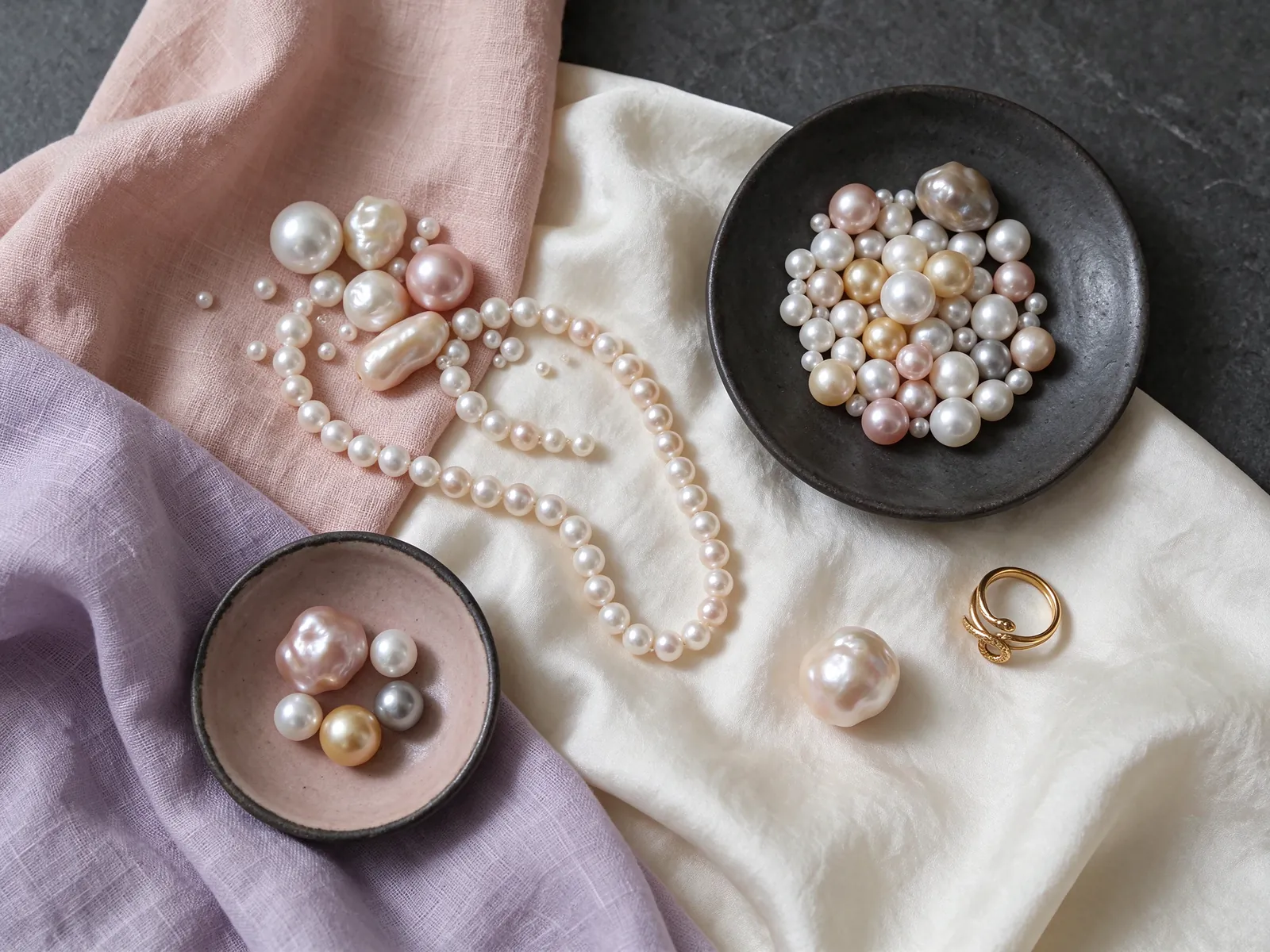
GIA lists seven pearl quality factors: size, shape, color, luster, surface quality, nacre quality and matching. A strand brings matching into particular focus, yet the other factors still matter. Larger-looking pearls may create more visual presence without making the necklace a better fit for your wardrobe. A smooth-looking surface and strong luster are also different observations. Use the seven factors to ask focused questions instead of treating a grade word as a complete description.
Observe the clarity of reflections and the way brightness continues across the necklace as it moves. For surface features, consider where they occur and how they affect the appearance at ordinary viewing distance. Intense spotlights and enlarged phone images each show only part of the picture. Move from the whole strand to individual details, then back to the necklace on the body so that a small feature does not replace the overall assessment.
How should you read a pearl description and any accompanying documents?
Identify what the pearl name describes, what the necklace construction information says and what any document actually concludes. Check whether a document concerns one pearl or the strand, and whether it corresponds to the object in front of you. Color is not proof of origin or treatment status, and photographs do not establish natural-versus-cultured identity. GIA pearl report services record characteristics and detectable treatments, so read the actual report type and its findings. A laboratory name alone is not a substitute for understanding what the document says about that necklace.
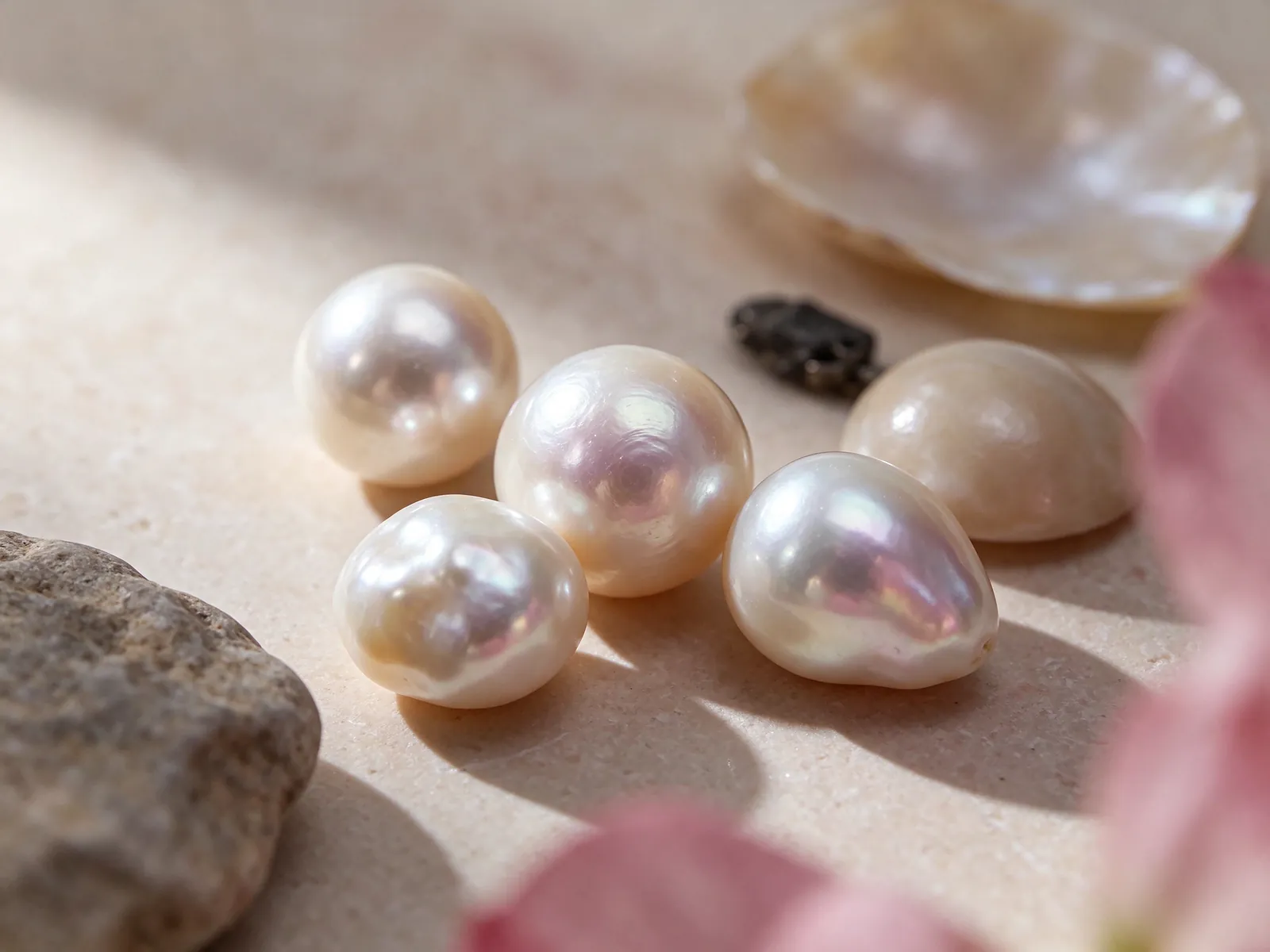
Use other necklace styles to clarify your preferred visual presence
If your favorite effect is a darker outline against clothing, compare the styling approach of a Tahitian pearl necklace with the white or golden palette you are considering. Keep the top, posture and earrings unchanged. The point is not to rank pearl categories by color, but to discover whether you want an integrated palette or a distinct boundary. Notice how each approach affects the space around your face, collar and shoulders.
For another strand-focused comparison, read about an Akoya pearl necklace and then assess the actual pieces rather than assigning every example the same dimensions. Your preference might be a delicate curve, a more noticeable center or a softer color relationship. State that preference first. A photograph's model and framing can change apparent proportions, so category names and images should not replace information about the particular necklace and how it feels when worn.
How can you compare a quieter everyday look without guessing comfort?
The small pearl necklace topic can help you think about visual spacing and a less prominent arc, but apparent pearl size does not establish weight or comfort. Consider construction and your routines too. High collars, desk work and bag straps can change where jewelry contacts clothing or the body. Reproduce those movements during a fitting instead of expecting one pearl category to be suitable for everyone's everyday use.
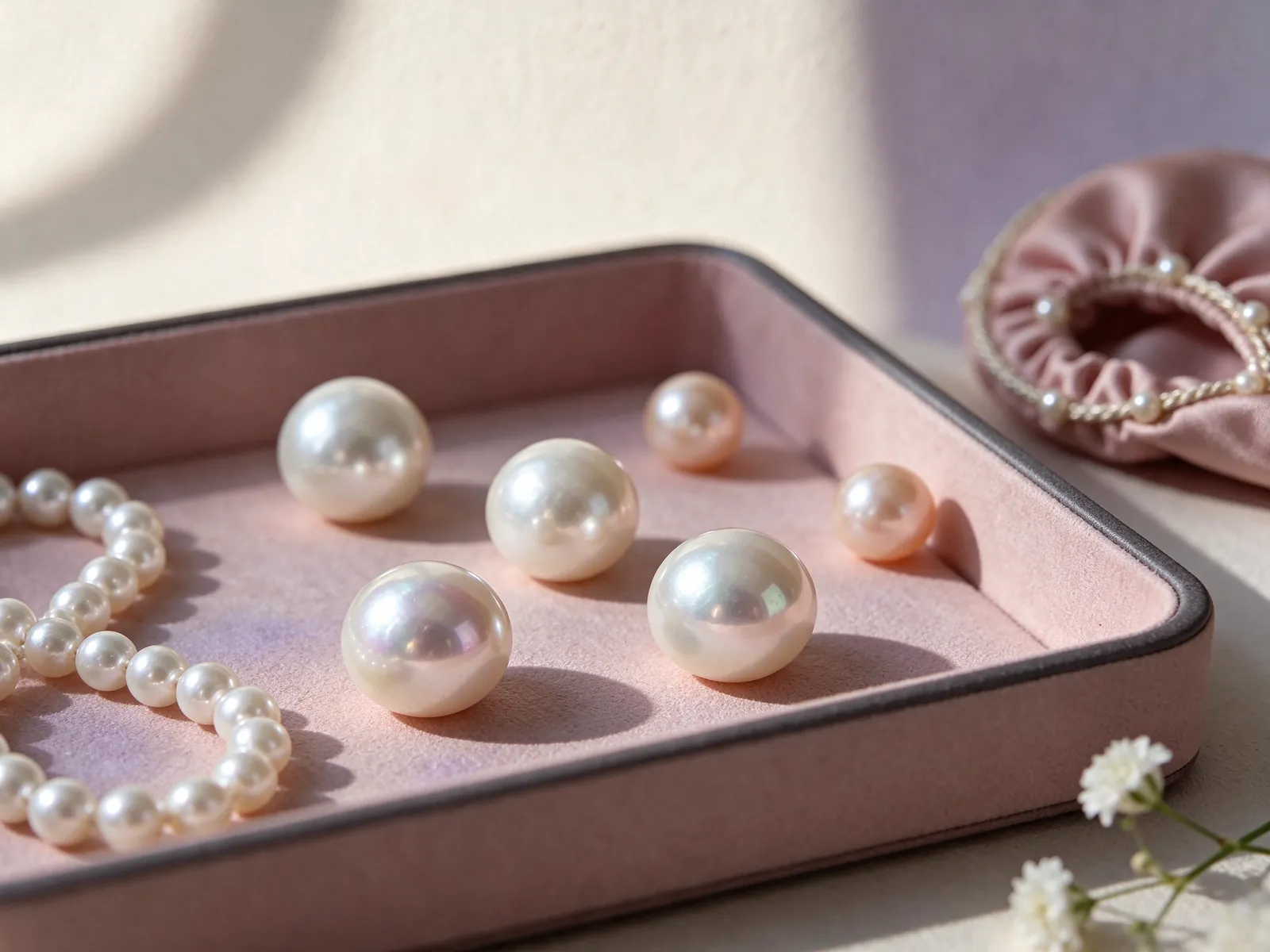
Test the clasp and the outfit in motion before deciding
Fasten the necklace yourself if that is how you intend to wear it. Notice the opening action, the feel under your fingers and whether the clasp settles where expected. Then reach up to adjust your hair, sit and turn. These movements can reveal twisting or repeated contact with the neckline that is invisible in a posed image. If you have long hair, check the effect with it both down and tied back.
Let the strand be the starting point for accessories. Add earrings only after assessing the full arc, especially if the earrings are already a strong feature. With an open blouse, observe the color against skin; with knitwear, consider whether texture blurs the outline. When layering, check that the necklaces remain visually separate and do not come together as you move. More jewelry does not necessarily improve a neckline that already has a clear focal point.
What information helps when the necklace is a gift?
Start with the recipient's usual tops, favorite pale or warm-toned accessories and the landing point of a necklace they already like. A styling brief based only on age leaves out those useful details. Consider whether their earrings are usually simple or prominent, and whether they often wear a jacket. A familiar outfit photograph can help explain the intended look, while questions about the pearls themselves still require reading the object's description and any relevant documents.
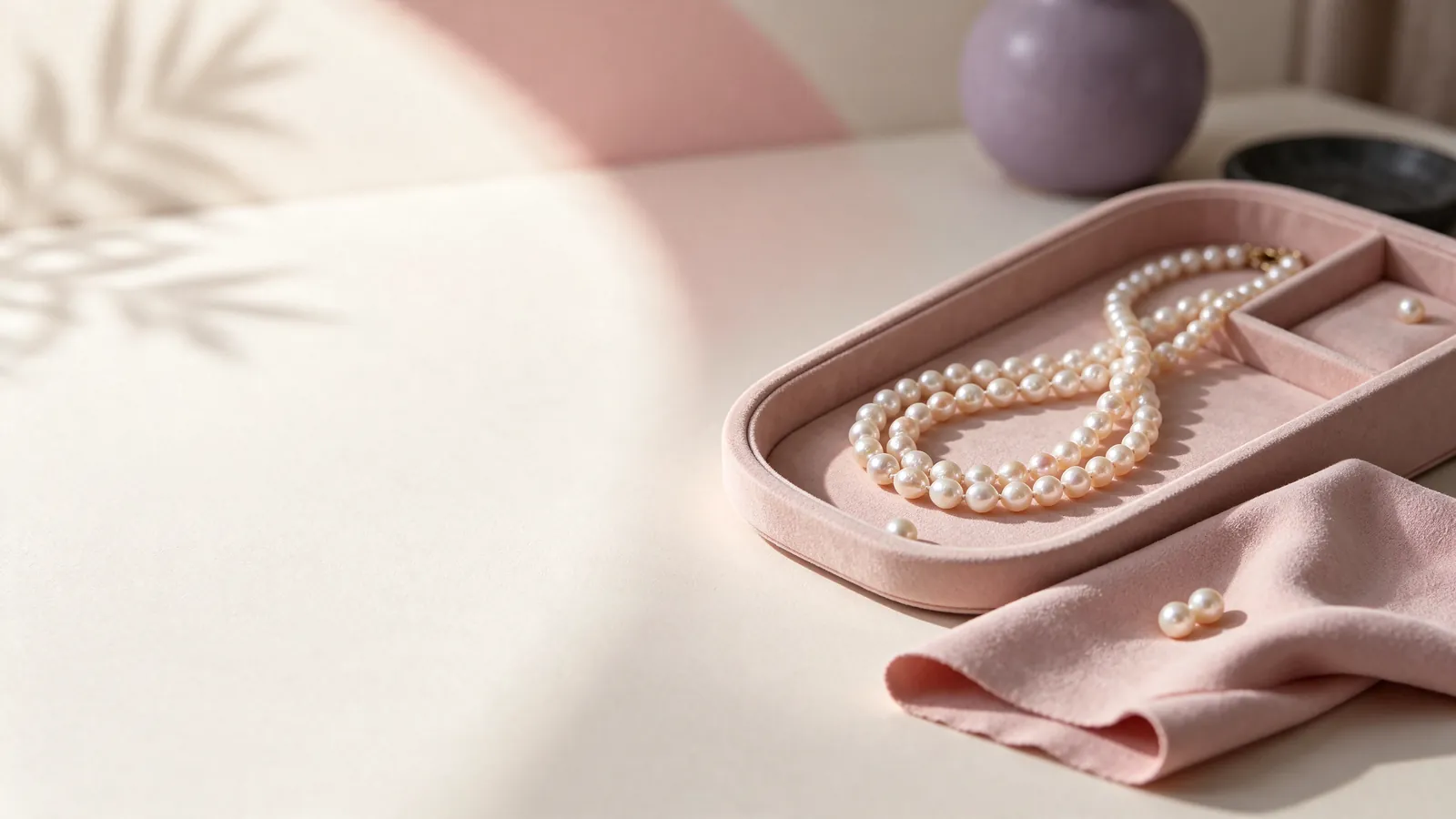
Make care of the pearls and string part of the final choice
GIA gives pearl a Mohs hardness of 2.5 and advises that ultrasonic and steam cleaners should never be used. Wipe after wearing with a very soft, clean cloth and avoid acids, perfume, hair spray and excessive heat. Applying makeup and fragrance before putting on the necklace helps reduce direct contact. That practical sequence should not be mistaken for waterproofness or a guarantee that the necklace can tolerate every substance encountered in daily life.
If a strung necklace is cleaned with water, allow the string to dry completely before wearing it. The pearls feeling dry does not establish that the string is dry. Keep the strand apart from jewelry that could scratch it, and look for changes near the clasp, drill holes or string. Unusual movement or a fastening that behaves differently calls for attention rather than harder pulling. Condition and wearing habits matter more than a universal maintenance interval.
What should your final comparison record contain?
Write down the preferred landing point, white or golden color relationship, arrangement, matching, clasp handling and care needs. Read the description and any documents without filling in missing details from appearance alone. Then return to your most familiar outfit and check the necklace while sitting, turning and wearing the outer layer. A decision grounded in those observations is more closely connected to your wardrobe than choosing by one especially bright-looking pearl.
Ready to narrow down the color and neckline relationship? Contact Flint Jewelry on WhatsApp: https://wa.me/85260106207. Share a photograph of an outfit you wear often, the curve you like and the occasions you have in mind. Include any question about handling a clasp or an existing necklace, so the discussion can focus on your everyday preferences and the details that matter to you.
| Wardrobe or care setting | Look for in white tones | Look for in golden tones | Shared practical check |
|---|---|---|---|
| Cream or warm ivory top | A visible outline within a soft color relationship | A connected warm palette without competing fabric sheen | Use the same background and lighting for comparison |
| Dark crew-neck shirt | The amount of light-dark contrast you want | A color boundary that suits the outfit | Keep the arc distinct from the neckline edge during movement |
| Open blouse | The effect beside skin compared with the effect on fabric | Balance with hair color, skin and earrings | Check the center and sides while turning |
| Dressy outfit with a jacket | How matching and arrangement work within the opening | Whether other warm-toned accessories crowd the focal point | Compare with the jacket on and while seated |
| Cleaning and storage | Pearl surfaces as well as the condition of the string | The same precautions against perfume, acids and heat | Never use ultrasonic or steam cleaners; a wet string must dry completely |
Pearl knowledge and authoritative references
GIA describes seven pearl quality factors: size, shape, color, luster, surface quality, nacre quality and matching. Matching is important when comparing a strand, but should be assessed together with the other factors.
Read the reference for this factFrequently asked questions
Do I need warm-colored clothing for a golden South Sea pearl strand?
No. Warm ivory or brown can connect the palette, while a dark top can give a more defined outline. Try both against your own skin, hair and accessories. The choice depends on whether you prefer integration or contrast rather than a fixed matching rule.
How do I decide between a white South Sea pearl strand above the neckline and one on the fabric?
Try both with a familiar top. Check whether the arc remains visible, whether fabric texture competes and whether the necklace overlaps the neckline edge when you sit or turn. The better position is the one that preserves the balance you want in that outfit.
Should I choose a necklace because its center pearl looks especially large?
A prominent center can create a focal point, but it does not settle the quality or styling choice. Look at the transition toward the sides, matching in color and luster, and the way the full curve fits your neckline. Size is one of GIA's seven factors, not the only one.
Can a photograph tell me whether golden pearls are treated or where they originated?
No. Color and shape alone cannot establish origin, treatment status or natural-versus-cultured identity. Read the particular object's description and any accompanying documents, checking what they concern and what their conclusions cover. An attractive image is not documentary evidence.
Why should I wait after cleaning if the pearls already look dry?
Water may have reached the string, which must be completely dry before the necklace is worn again. Pearl surfaces appearing dry do not answer that question. GIA also cautions against ultrasonic and steam cleaning and recommends a very soft, clean cloth for routine wiping.
Updated: