
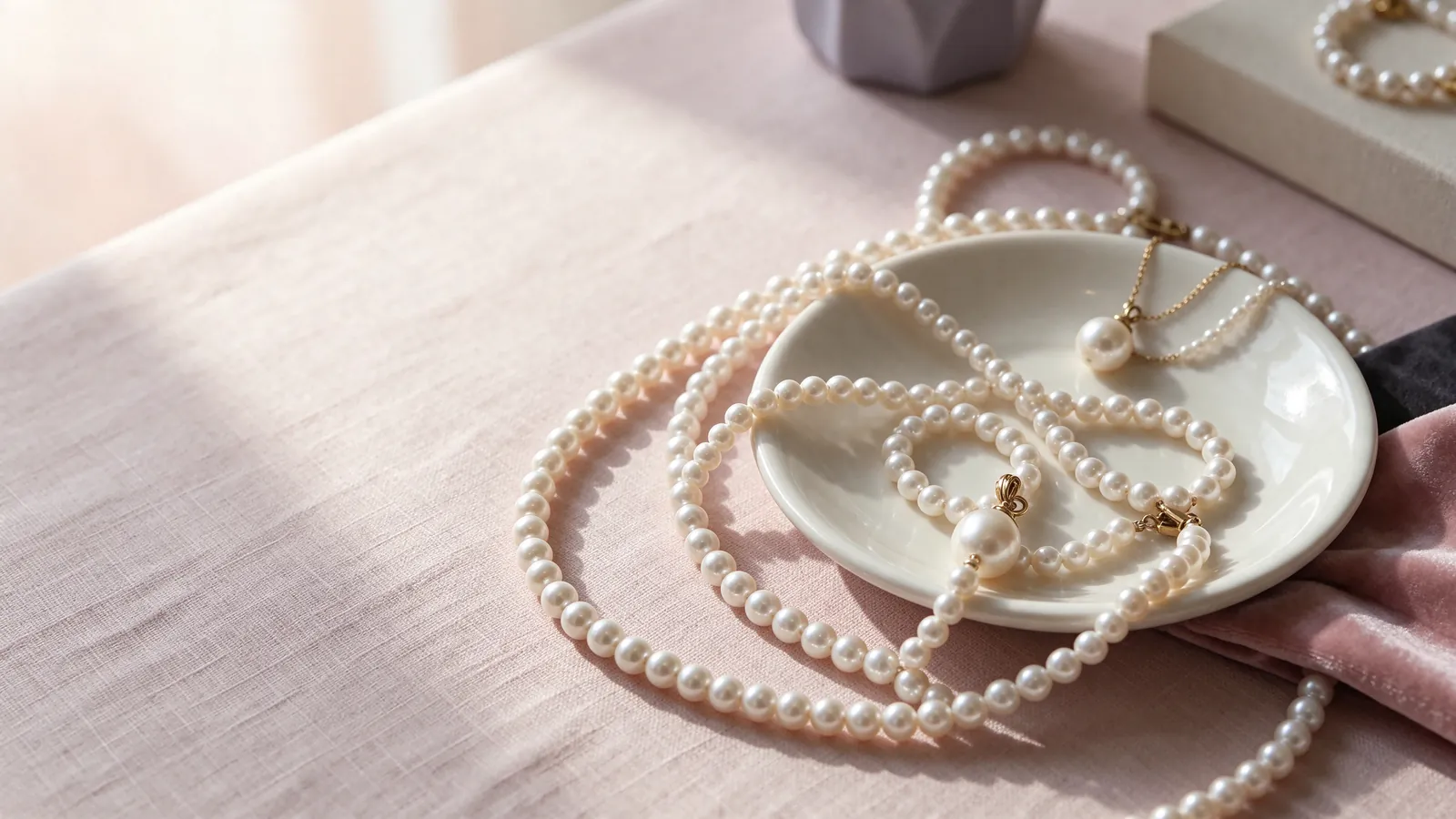
How can an 18K gold clasp pearl necklace or a 750 gold clasp pearl strand complement your neckline when planning the length of a pearl necklace with 18K gold clasp? | Flint Jewelry
Choose a familiar outfit as your starting point. A crew-neck top gives you a fabric edge to compare with the pearl curve; a V-neck introduces an opening that the necklace might cross or sit above. Neither requires one universal length. Look at whether the two outlines have enough space to feel intentional. Then sit, lean forward gently and turn your head. The necklace's resting point during ordinary movement matters as much as its position in a standing mirror view.
When planning an 18K gold clasp pearl necklace, explain where you want the closed necklace to rest rather than asking only for a short or long look. Include the fastening and end connections in that discussion. The single strand pearl necklace topic helps you think about a continuous arc and its relationship to clothing. If you often switch between an open collar and a buttoned shirt, compare both arrangements before deciding which one should be the priority.
Would you keep the clasp discreet on an 18K gold clasp pearl necklace or a 750 gold clasp pearl strand, or make it part of the look of a pearl necklace with 18K gold clasp? | Flint Jewelry
Decide whether you want an uninterrupted pearl outline or a second visual accent. A clasp worn at the back can still interact with hair and collars, so discreet does not mean irrelevant. For a side or front position, first determine whether the specific design permits it. Watch the end connections and whether the necklace rotates. If the fastening becomes the focus, leave some visual space around it with a simpler neckline or less prominent earrings.
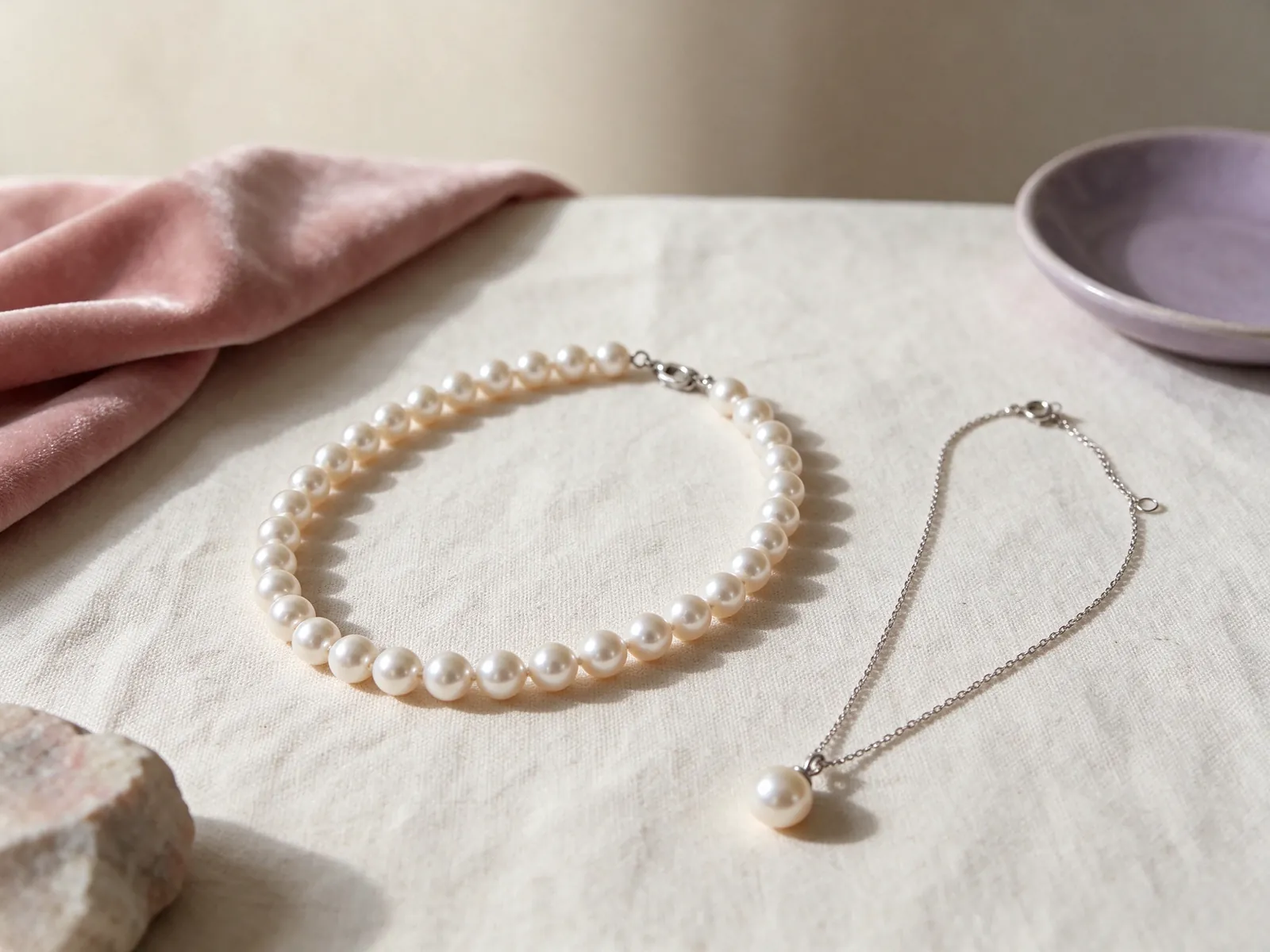
Give clasp color a clear role in the outfit
Instead of choosing a gold color from a skin-tone rule, compare it with the jewelry you actually reach for. A yellow-gold tone may stand out against a dark top, a white-metal appearance may make a quieter transition to cool clothing, and a rose-gold tone may echo warm neutrals. You can mix colors if the combination feels deliberate. Let one color occupy the larger visual area and use the other as a smaller repeated detail rather than expecting every accessory to match exactly.
For gold-clasp color discussions, use the names 18K 750 white gold, 18K 750 yellow gold or 18K 750 rose gold, then consider the clasp's outline separately. A broad visible shape introduces more color than a compact rear fastening. Describe the color you enjoy and how much of the metal you want to see. On the necklace itself, compare metal brightness with pearl luster and fabric texture; choosing only from a close-up can hide the proportions that matter when worn.
Compare the whole look in more than one lighting setting
Keep the same outfit in place while observing the strand in soft daylight and typical indoor light. Notice whether the clasp blends into the composition or becomes more prominent than you expected. Photos can help you remember the outline, but a phone may change color and reflections. Use direct observation to judge the color relationship, especially if the photo and what you see in person do not agree.
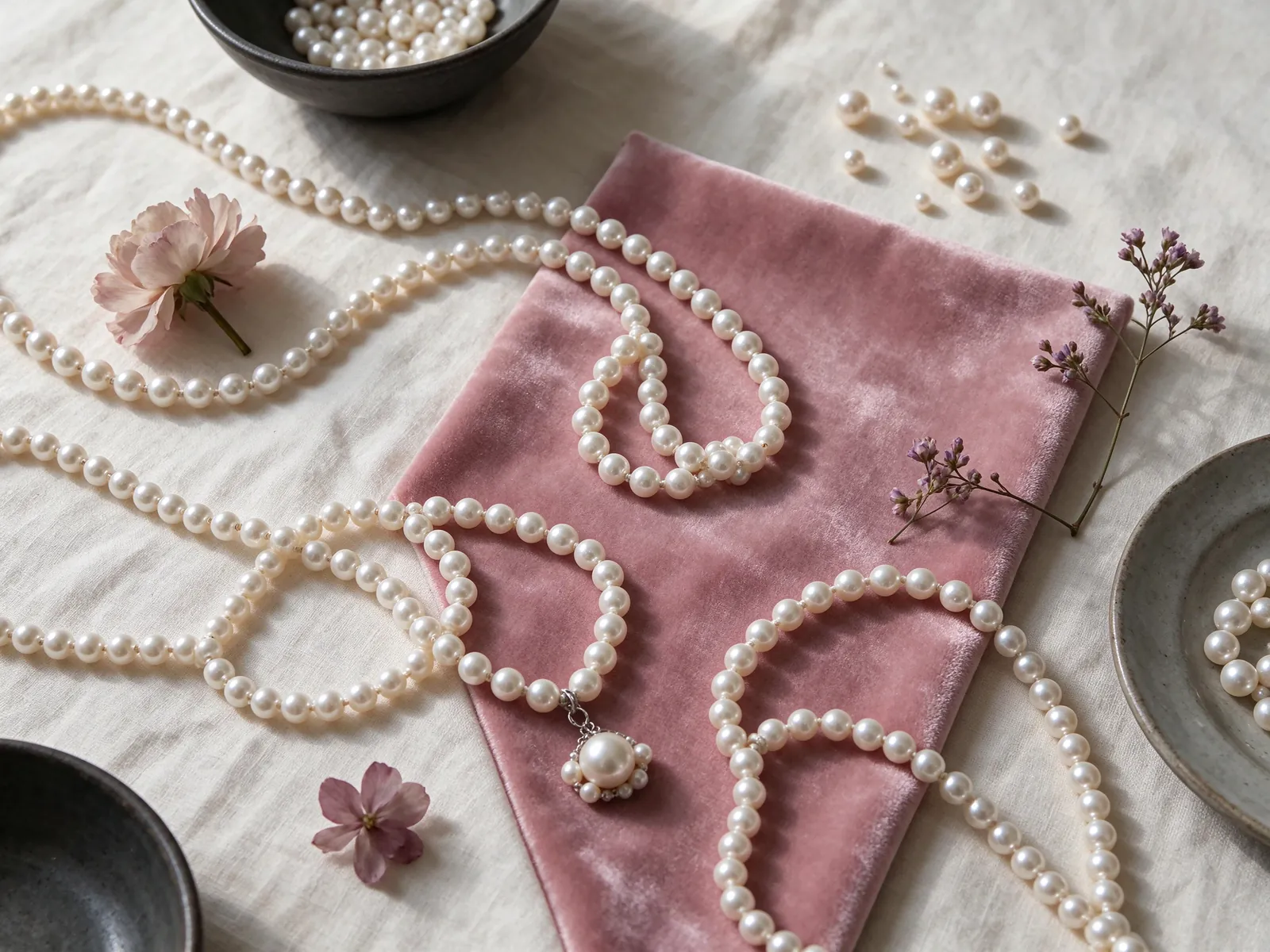
Check how the clasp works before judging convenience
A gold-clasp description does not identify an opening mechanism or tell you what the closed state looks like. Have the particular fastening demonstrated, then try the correct movement over a stable surface. Consider how much room your fingers have near the end pearls, whether the operating angle feels natural and whether you can confirm closure. Do not pull hard on the strand to test it. The useful question is how the design works in your hands, not how forcefully you can tug it.
Look beyond the clasp body to the places where it meets the strand. When worn, do the ends sit as intended, and does the necklace maintain the desired orientation? The clicker clasp pearl necklace guide offers another way to explore opening and placement ideas. It does not mean every shorter necklace supports the arrangements shown for a long strand. Adding an accent or changing clasp position should be discussed with the actual attachment system in mind.
Use everyday motions to identify fit issues
Once the clasp is properly closed, try sitting at a table, turning to speak and putting on an outer layer. Observe any contact with the collar, hair or the back of your neck. These motions help you describe fit; they are not a guarantee against every possible movement. If something catches or presses, identify the location and the action that causes it. A precise observation is more useful than a general request for a strong clasp.
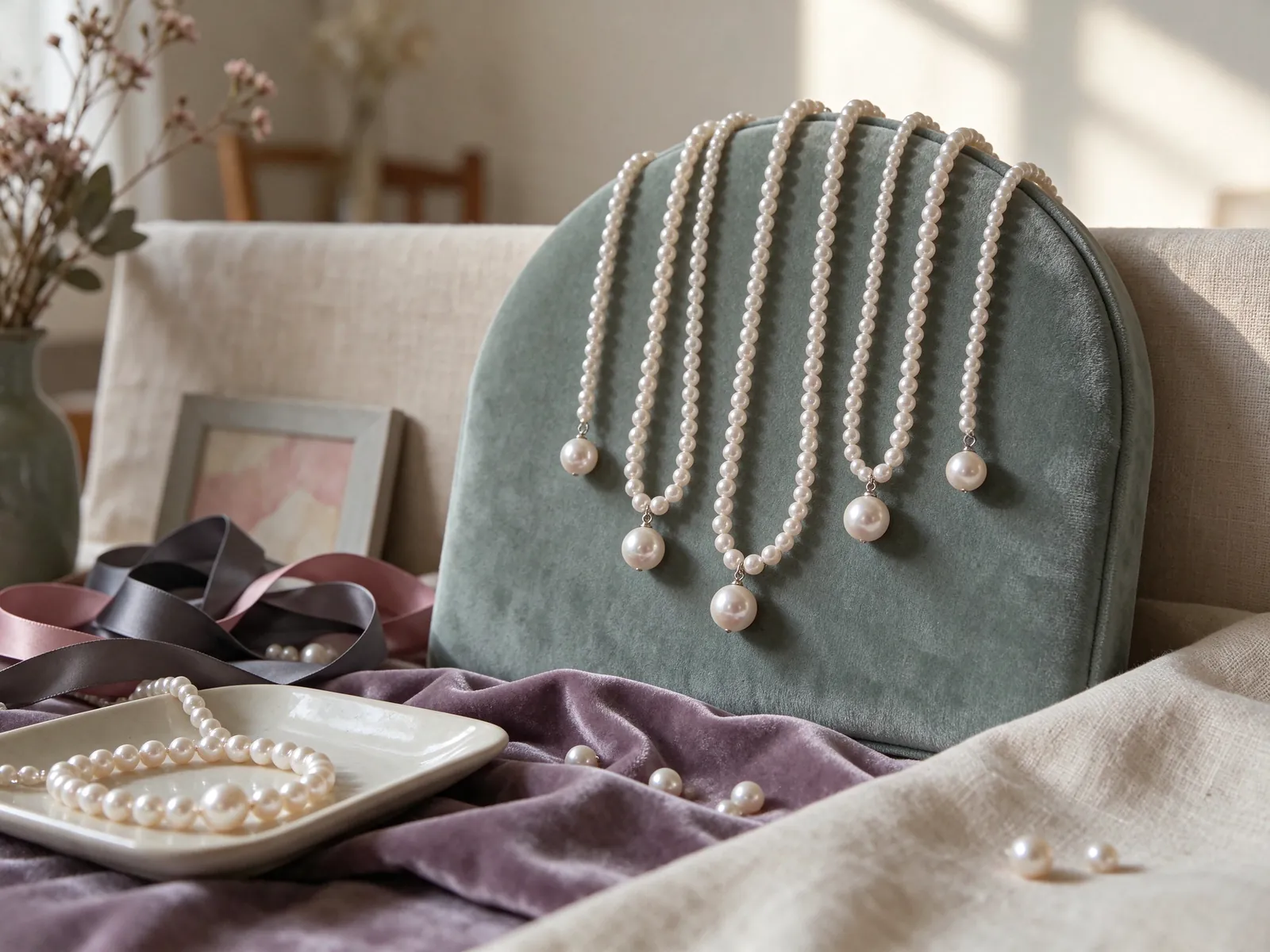
Compare styling alternatives without assuming interchangeability
A ribbon clasp pearl necklace introduces a softer finishing idea that may suit someone who enjoys a visible tie. Consider the back view, the collar and whether arranging a tie fits your habits. Treat it as a styling comparison rather than an instruction to replace a metal clasp yourself. The end attachments and wearing length have to work with the fastening method; two attractive looks do not necessarily share the same construction.
If your preference is a restrained white-metal look, the platinum clasp pearl necklace topic provides another comparison, with PT950 platinum or PT900 platinum kept distinct from white-gold terminology. The silver pearl strand necklace topic helps you consider another market material and its visual effect. Separate your color preference from the particular fastening design being discussed. Use the differences to identify your priorities in visible shape and handling. Avoid assigning universal comfort or convenience to a material name without considering the specific clasp design.
For an existing strand, define the problem before a change
If you want a different clasp on a necklace you already own, begin with the reason: an overly visible color, an awkward reach or a placement that clashes with your clothing. Record the present closed length and photograph the connections without dismantling them. Do not cut string or force another clasp into place. Separating an appearance goal from an operating problem makes it easier to see what actually needs to be discussed.
Keep pearl assessment separate from the 750 gold-clasp name
A 750 gold clasp pearl strand description is not a grade for the pearls. GIA identifies seven pearl value factors: size, shape, color, luster, surface quality, nacre quality and matching. For a strand, start with the whole arrangement and consider how matching contributes to a coherent look. A transition in shape or color may be part of a style you enjoy, so the question is not simply whether everything appears identical.
Place the necklace against a plain background and look at the reflections along the arc, then examine individual surface features and shape changes. An eye-catching fastening can make it easy to overlook the pearls next to it. Visual comparison helps establish your appearance preferences, but roundness, a white color or a gold clasp cannot establish pearl species, origin or certification. Read the information connected to the particular piece when those details are important to your choice.
Make sure descriptions refer to the right part of the necklace
Organize your questions into clasp information and pearl information. The former includes stated material, closure, attachments and intended orientation; the latter concerns the identity and quality descriptions given for the pearls. If there is documentation, establish whether it describes individual pearls, the fastening or the complete piece. Neither a prominent metal term nor a decorative clasp substitutes for understanding that scope or observing the condition of the string.
Choose care for pearls, string and clasp as one piece
Pearls connected to a gold clasp still need pearl-appropriate care. GIA lists pearl at 2.5 on the Mohs hardness scale and says never to clean pearls with ultrasonic or steam cleaners. Gently wipe them with a very soft, clean cloth after wearing, and avoid acids, perfume, hair spray and excessive heat. A cleaner selected for the metal alone should not be used as a whole-necklace bath. Keep tools intended for the clasp away from pearl surfaces and string.
GIA advises that a string must be completely dry before wearing strung pearls that have been cleaned with water. Do not assume the string is dry because the pearl surfaces look dry. Store the necklace separately from other jewelry that could rub it, with the fastening positioned so it does not press on the pearls. Remove it by opening the clasp, not pulling the strand. If you notice worn ends, loose string or a changed closure feel, pause wearing and arrange an inspection.
Make putting on and taking off the necklace deliberate
Apply fragrance and hair products and finish dressing before putting on the necklace. At the end of the day, remove it before taking clothing over your head, wipe it gently and return it to separate storage. This gives you a regular chance to look at the end connections and closure. The routine reduces unnecessary contact; a gold fastening does not turn a pearl strand into an accessory to leave on throughout every activity.
Create a short brief for your preferred necklace look
Summarize your most common neckline, desired resting point, preferred gold color and choice of a hidden or visible clasp. Add a handling requirement, such as being able to operate it yourself at the back of your neck. If those preferences compete, rank them. A completely hidden clasp and a strong front accent are different goals; choosing the main use first makes the discussion more focused and avoids chasing incompatible features in one look.
When comparing an 18K gold clasp pearl necklace and a 750 gold clasp pearl strand, explain the look and handling you mean rather than treating the names as proof of different mechanisms. A WhatsApp styling discussion with Flint Jewelry can start with your wardrobe and clasp-placement preferences. For an existing necklace, photographs of the whole strand, closed fastening and connections help explain the question. They are a visual aid, not a substitute for inspecting the actual string or mechanism.
Resolve trade-offs using your real wearing routine
If a necklace sits well in a photograph but moves into your collar when seated, revisit the resting point or the outfit. If the design does not support a visible clasp where you wanted it, let another accessory supply the accent. Compare comfort, manageable operation and color preference in the order that matters to you. A considered choice should feel coherent in everyday movement as well as look appealing from the front.
Ready to discuss your preferred combination? Message Flint Jewelry on WhatsApp at +85260106207 with your everyday neckline, preferred resting point and clasp color. If you already own a strand, share clear photographs of the whole necklace and closed fastening, together with the handling or styling question that matters most to you.
| Wearing goal | Main question | How to compare | Mistake to avoid |
|---|---|---|---|
| Fit with a crew neck or open collar | Where does the closed necklace rest? | Observe your usual outfit standing and seated | Assuming one length name fits everyone alike |
| A quiet rear fastening | Does it meet hair or the collar? | Turn your head and add an outer layer | Ignoring a clasp because it is out of sight |
| A visible metal accent | Does the design permit that orientation? | Look at attachments and position after movement | Turning every rear clasp to the front |
| Coordinated gold color | How does it relate to jewelry and fabric? | Keep the outfit constant across lighting settings | Choosing solely from a close-up phone photo |
| Appropriate care | What do the pearls and string require? | Wipe, store separately and watch for end changes | Treating the complete necklace as metal alone |
Pearl knowledge and authoritative references
GIA places pearl at 2.5 on the Mohs hardness scale and advises against ultrasonic or steam cleaning. A gold-clasp strand must be cared for with its pearls, not only its metal, in mind.
Read the reference for this factFrequently asked questions
Does a 750 gold-clasp description identify the closure mechanism?
No. It does not tell you how the fastening opens, connects to the strand or sits when worn. Ask to see the correct operating movement and the closed position on the particular necklace, keeping the material description separate from the mechanism.
How do I decide whether a visible clasp will overwhelm my neckline?
Compare the whole outfit rather than a clasp close-up. Look at the size of the visible metal area, the space around the neckline and the prominence of your earrings. First confirm the design permits your intended clasp position, then simplify other accents if you want it to lead.
Can a yellow-gold clasp work with white-metal jewelry?
Yes, as a styling choice you can let one color dominate and repeat the other in a smaller detail. Use clothing you often wear as the background and consider clasp size and pearl luster alongside color. Exact matching is not the only way to make a combination look intentional.
What information helps when discussing a clasp change on my own necklace?
Explain what you want to improve, record the current closed length and photograph the full strand, closed clasp and end connections. Distinguish a color preference from an operating difficulty. Do not dismantle the necklace for photographs; images explain the question but do not replace physical inspection.
Why should I wait after cleaning a strung pearl necklace with water?
GIA says the string must be completely dry before the necklace is worn again. The pearls may look dry while the string is not. This requirement concerns the complete strand and still applies when its fastening is gold. Never use ultrasonic or steam cleaning on the pearls.
Updated: