
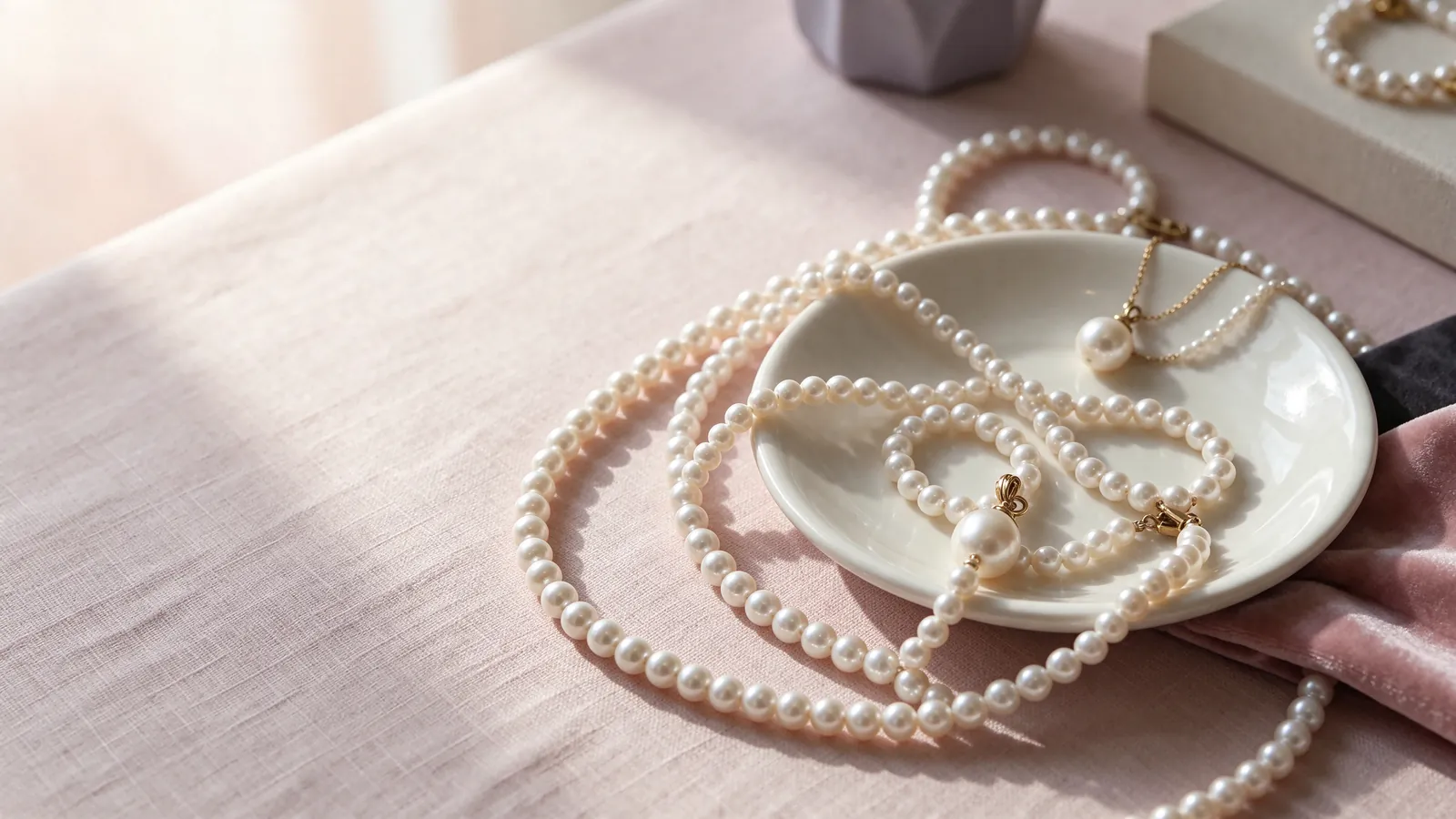
How does neckline balance guide the length of an 18K gold clasp pearl necklace or a 750 gold clasp pearl strand when styling a pearl necklace with 18K gold clasp? | Flint Jewellery
Start with a blouse or top that represents your usual wardrobe, not an imagined occasion. With a round neckline, look for enough separation between the edge of the fabric and the pearl arc to make both outlines readable. With an open shirt collar, compare the necklace with the top button fastened and unfastened. Sit down as well as stand: a strand that looks neatly placed in the mirror may slip into the opening when your posture changes.
When discussing an 18K gold clasp pearl necklace, describe the desired resting point and ask how the closed fastening is included in the overall wearing length. The shape of the end connections can affect the outline near the neck. The single strand pearl necklace guide offers a useful starting point for a continuous pearl arc. Bring that idea back to your chosen neckline rather than treating a length label as a guarantee of the same fit on every person.
Should the clasp be visible on an 18K gold clasp pearl necklace or a 750 gold clasp pearl strand when wearing a pearl necklace with 18K gold clasp with your chosen neckline? | Flint Jewellery
A discreet fastening keeps attention on the pearls, while a visible clasp introduces another focal point. Before moving a clasp towards the front or side, establish whether that particular design allows that wearing position. Check the connections and whether the strand twists or the clasp repeatedly travels away from the intended spot. If the clasp is visually prominent, simpler earrings or a quieter collar can give it space without making the whole outfit feel crowded.
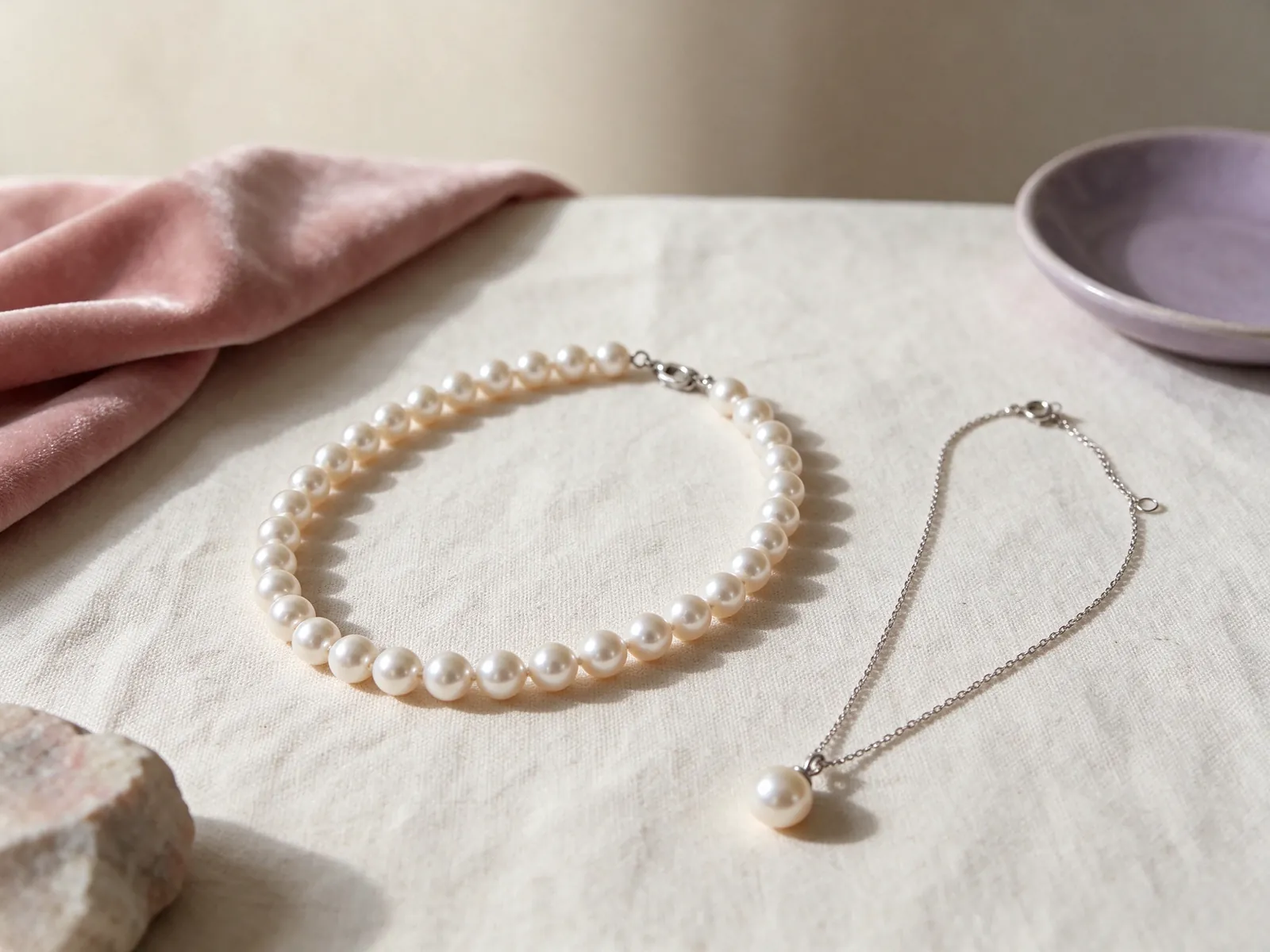
Compare gold colour against clothing and existing jewellery
Place your usual earrings, rings or watch beside the necklace when thinking about clasp colour. A white-metal appearance may blend into pale or cool clothing, while a yellow-gold tone can create a clear accent against dark fabric. A rose-gold tone can echo warm pinks and muted neutrals. These are styling possibilities, not rules assigned to a skin tone. For mixed-metal dressing, decide which colour should lead and let the other appear in smaller details.
Use precise names when discussing gold-colour directions: 18K 750 white gold, 18K 750 yellow gold or 18K 750 rose gold. Then compare colour separately from clasp size and outline; a small hidden fastening and a prominent decorative shape will not read alike. Describing both your preferred colour and the amount of visible metal helps keep the conversation focused. On the actual strand, also look at the contrast between the metal's brightness, the pearl lustre and the texture of your clothes.
Use consistent backgrounds when comparing lighting
Observe the necklace in soft daylight and in the indoor lighting where you expect to wear it, keeping the same top as a background. A phone photograph is helpful for remembering proportions, but it may alter colour and reflections. If the image and your direct observation differ, do not choose a metal colour from the photograph alone. Look for a contrast you enjoy rather than trying to make clasp and pearls appear identical.
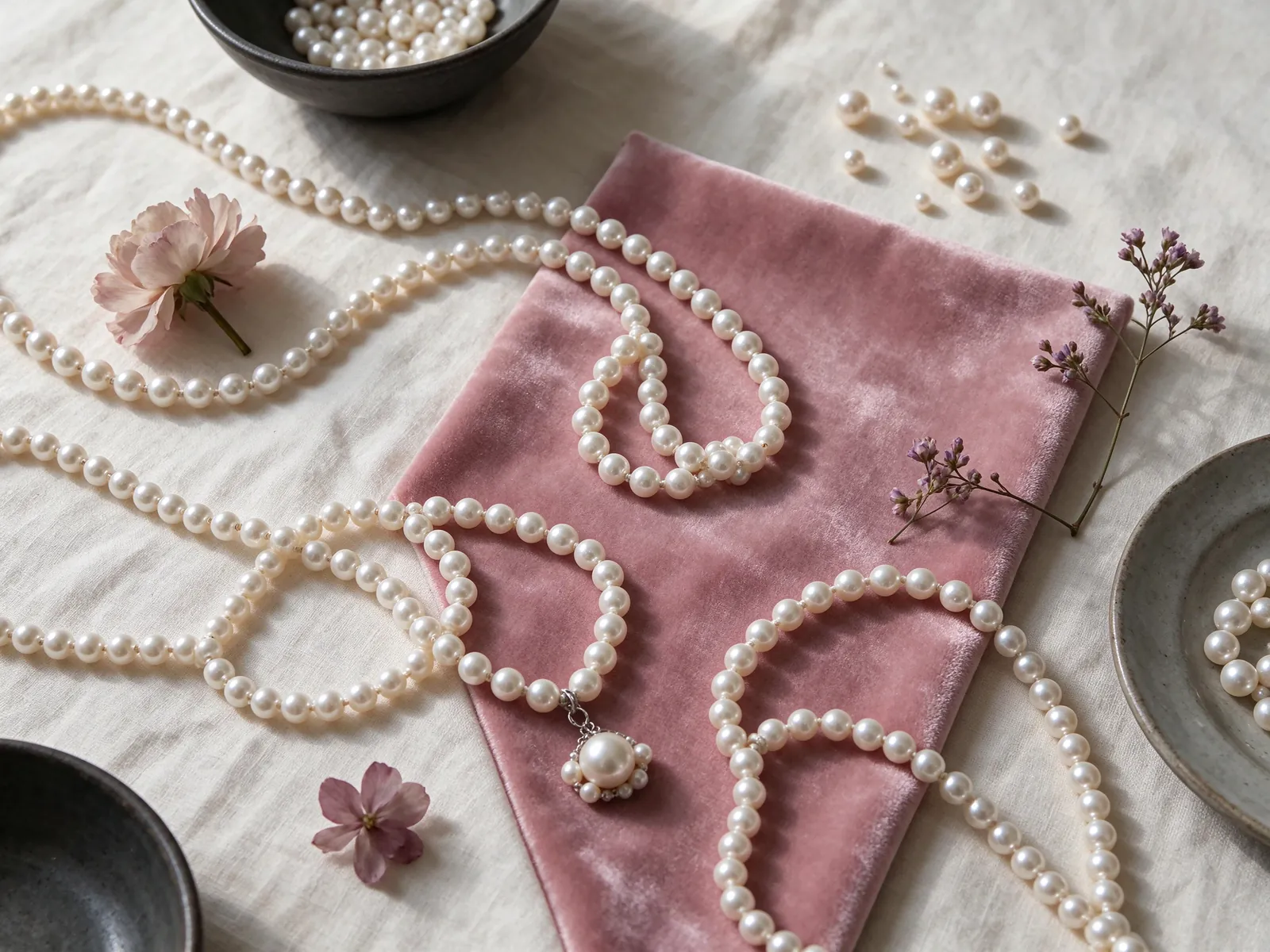
Judge the fastening by operation, connections and balance
The words gold clasp do not explain how a fastening opens or how you recognise a fully closed position. Ask for a demonstration of the particular mechanism, then try it over a stable surface. Notice the finger angle, the available space beside the end pearls and whether you can see the closure clearly. Do not use a forceful pull as a test. A fastening that conflicts with your usual hand movements may be inconvenient even when its appearance is appealing.
Once worn, look at both end connections as well as the clasp itself. The strand should be assessed as a complete outline: does it turn, does the fastening drift and do the ends sit as intended? A clicker clasp pearl necklace offers another topic for understanding opening and positioning ideas, but a long-necklace arrangement cannot simply be transferred to a shorter strand. Discuss changes in wearing direction or the addition of a pendant in relation to the specific connections.
Rehearse ordinary movements, not a strength test
After checking the closure, sit as you would at a desk, turn your head and put on your usual jacket. Watch for contact with the collar or hair and describe any uncomfortable edge or awkward operating angle. This is a fit observation, not proof of resistance to every movement. If the clasp catches fabric or the connection presses against your neck, identify the exact action involved rather than asking only whether the necklace is secure.
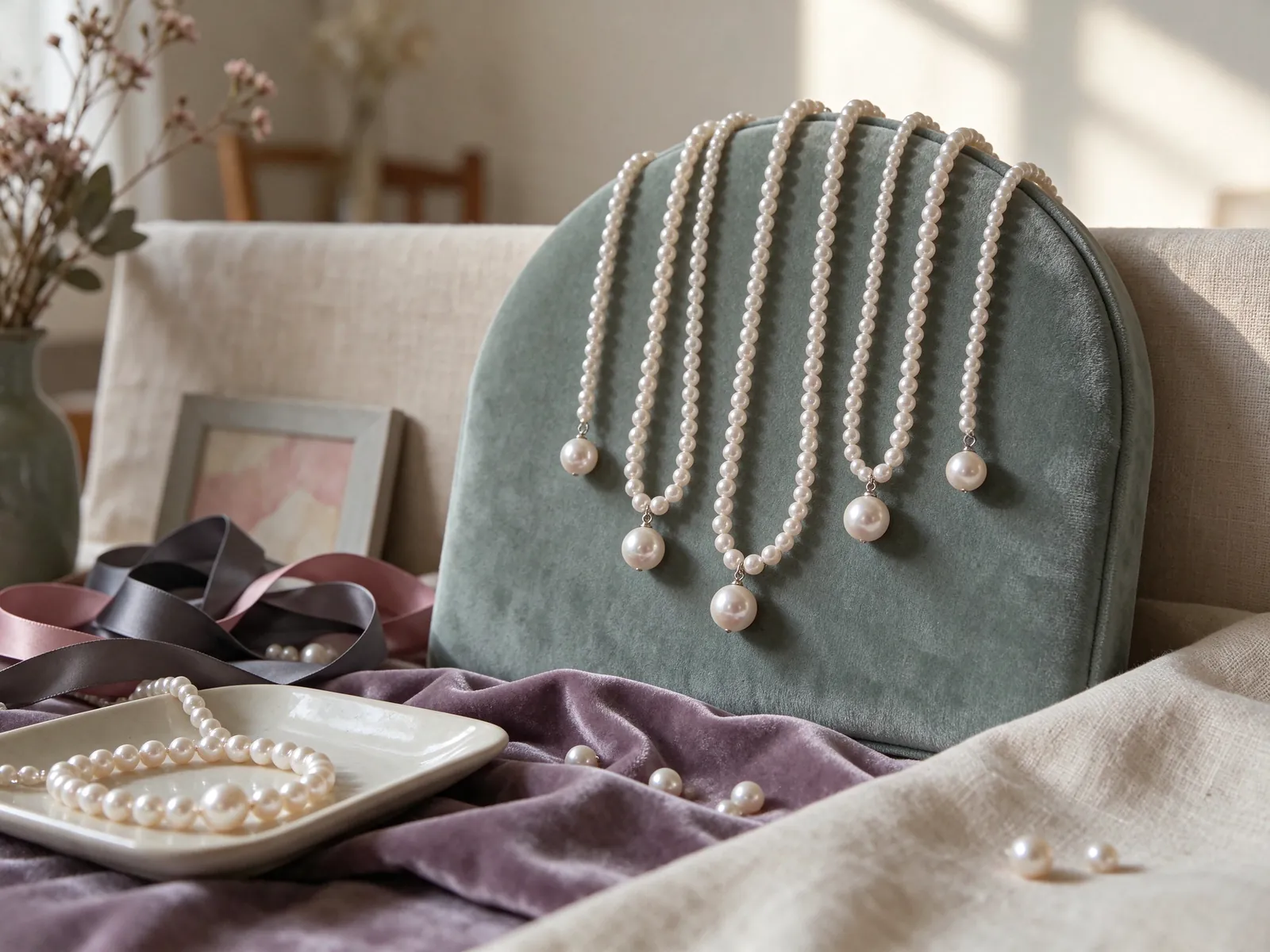
Separate alternative clasp styles from material comparisons
If you prefer a softer-looking finish at the back, the ribbon clasp pearl necklace topic explores a different styling direction. Consider whether you like the visible tie and the idea of arranging it with your collar. This is not a reason to replace an existing clasp with ribbon yourself. End attachments, closed length and the intended wearing method must be considered together; an attractive photograph does not make two connection systems interchangeable.
For a white-metal comparison, a platinum clasp pearl necklace provides another direction to explore; keep PT950 platinum or PT900 platinum distinct from a white-gold description. A silver pearl strand necklace offers a comparison with another market material and its visual effect. Keep the colour you prefer separate from the fastening design described for each piece. Use these comparisons to clarify whether your priority is a restrained outline or ease of operation. A metal name on its own does not establish how an individual fastening feels or whether it fits your routine.
Describe a replacement goal before considering a new clasp
For an existing necklace, record what you want to improve: perhaps the colour is too noticeable, or the fastening is difficult to reach. Photograph the whole strand, the end connections and the closed clasp without cutting the string or opening connecting parts. Separate a wish for a different colour from a wish for a different mechanism. That distinction helps reveal whether the issue is the clasp, the necklace's resting point or its interaction with clothing.
Assess the pearls separately from the gold-clasp description
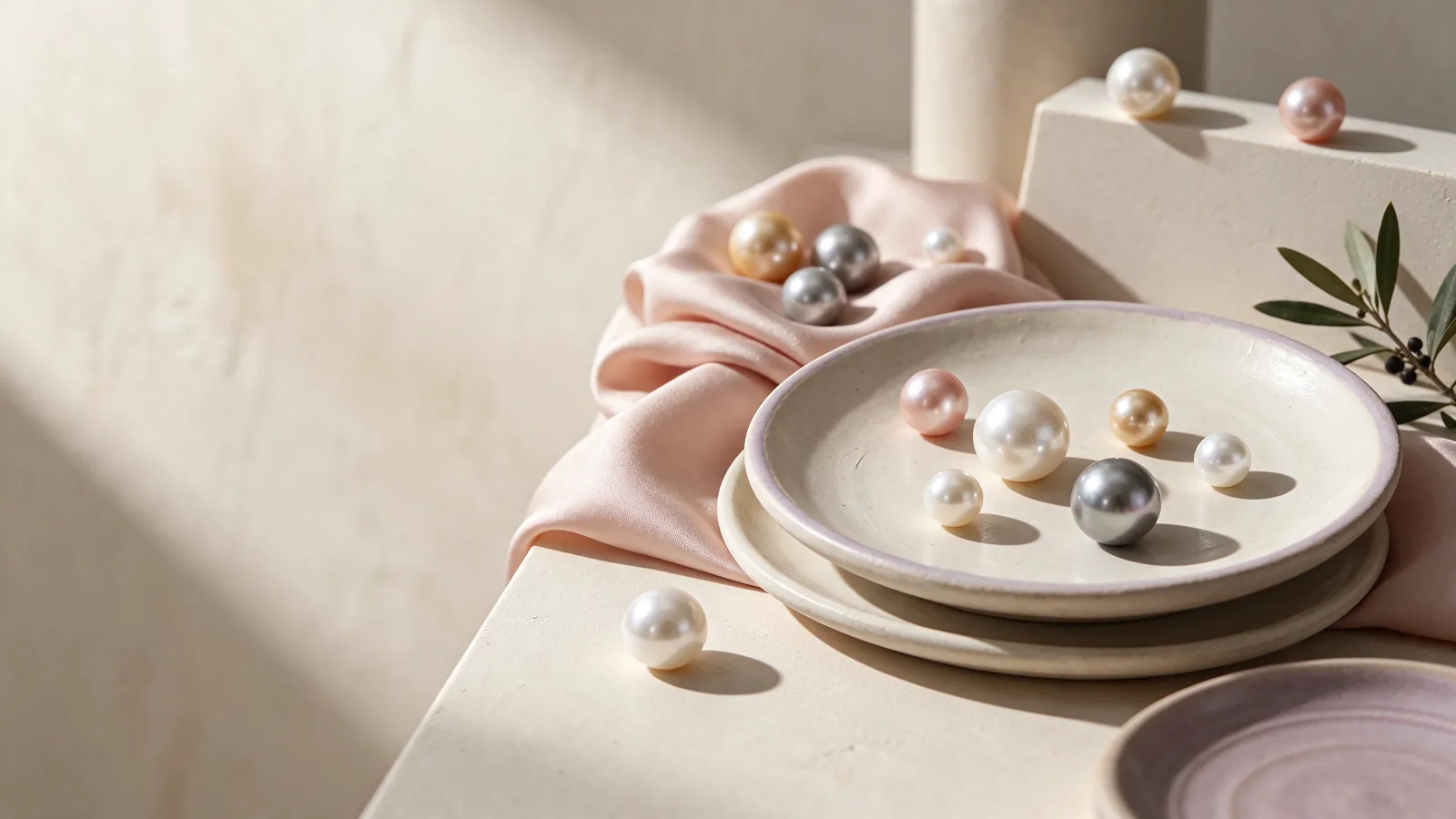
The name 750 gold clasp pearl strand is not a pearl-quality grade. GIA identifies seven pearl value factors: size, shape, colour, lustre, surface quality, nacre quality and matching. Matching is especially useful when considering the coherence of a strand. Look at the overall rhythm of colour and reflections before concentrating on a single pearl or a striking clasp. Decide whether the transitions support the appearance you want rather than assuming that every variation is undesirable.
A plain background makes it easier to see how the whole necklace reads. Examine the relationship between surface features, shape variations and the areas most visible when worn. Styling observation helps you decide what you enjoy seeing, but a white appearance, round shape or gold fastening cannot establish pearl species, origin or certificate status. Where those details matter to your decision, read the description or documentation associated with the particular piece rather than drawing conclusions from its photograph.
Read metal and pearl information as separate descriptions
For the clasp, ask about its stated material, operation, connections and intended placement. For the pearls, look at the identity and quality information actually given for the piece. If a document is provided, determine whether it refers to the fastening, individual pearls or the complete necklace. A prominent metal term is not a substitute for that distinction, and an attractive clasp should not distract from the condition of the string and end attachments.

Care for the complete strand, not only the metal
A cleaning method suitable for a metal clasp is not automatically suitable for the pearls beside it. GIA lists pearl at 2.5 on the Mohs hardness scale and says pearls must never be cleaned with ultrasonic or steam cleaners. After wearing, use a very soft, clean cloth to wipe the pearls gently. Avoid acids, perfume, hair spray and excessive heat. Do not immerse the whole necklace in a cleaning solution chosen only to brighten the clasp.
If strung pearls are cleaned with water, GIA advises letting the string dry completely before wearing them again. A dry-looking pearl surface does not necessarily mean that the string is dry. Store the necklace separately from jewellery that could rub against it, without letting the clasp press against the pearls. Open the fastening before removing the necklace rather than pulling on the strand. Changes in closure feel, loose string or worn ends are reasons to stop wearing it and arrange an inspection.
Build care into the order of dressing
Finish with perfume, hair products and clothing before putting on the necklace. Take it off before removing garments, then wipe and place it in its separate storage position. This routine reduces unnecessary contact and gives you a chance to notice changes at the closure and end pearls. Care is about treating the pearls, string and fastening as one piece, not assuming that a gold clasp makes the necklace suitable for uninterrupted wear.
Turn your preferences into a practical styling conversation
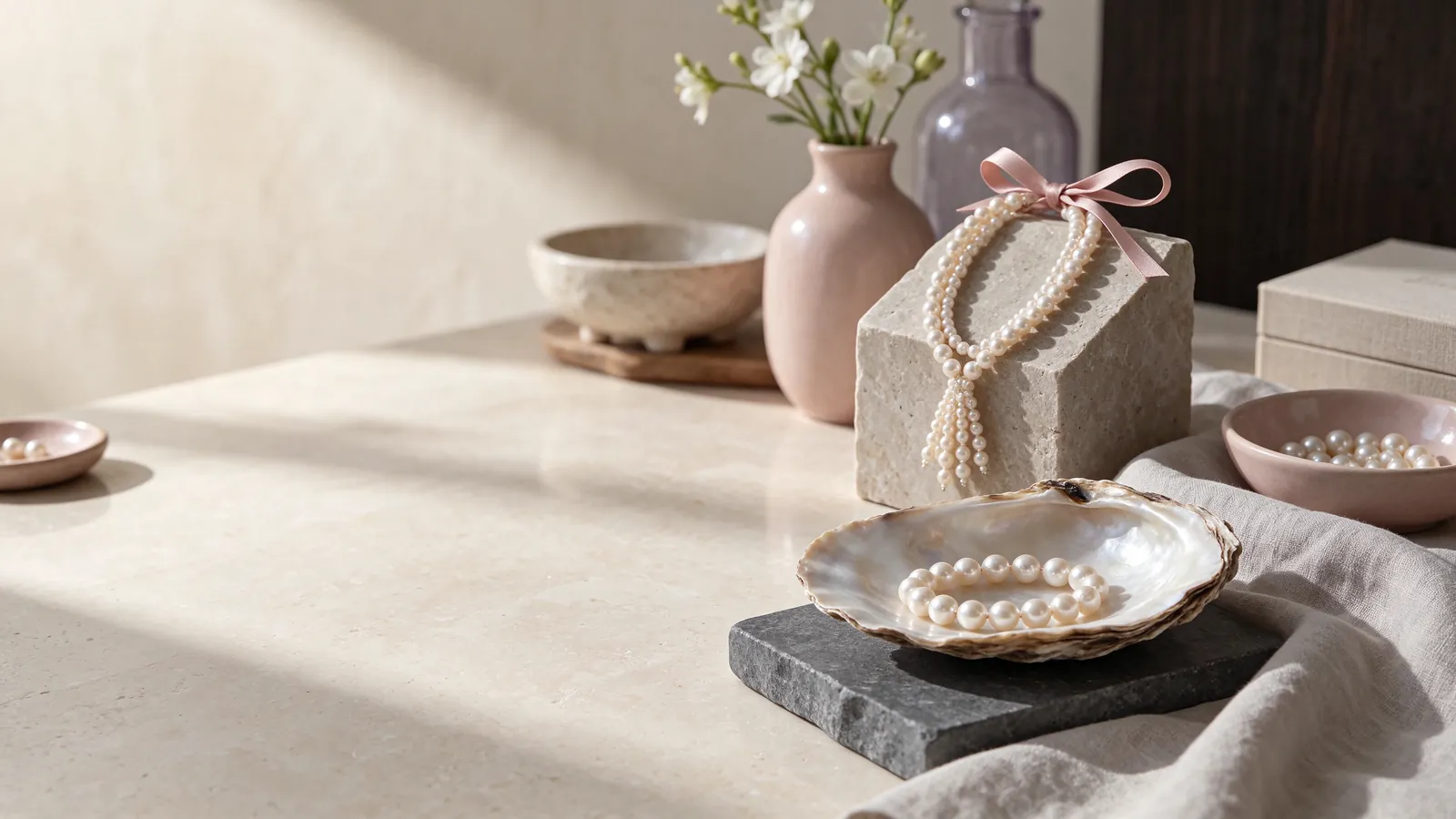
Write down your usual neckline, preferred resting point, gold colour and whether you want a discreet or visible clasp. Add the practical detail that matters most, such as operating the fastening yourself behind your neck or keeping it clear of a shirt collar. This helps resolve competing preferences. A clasp cannot be both completely hidden and a strong front-facing accent in the same look; decide which aim should lead for your main wearing occasion.
When comparing an 18K gold clasp pearl necklace with a 750 gold clasp pearl strand, list the appearance and handling qualities you mean rather than assuming the names describe different mechanisms. A WhatsApp styling conversation with Flint Jewellery can begin with your clothing choices, neckline photographs and preferred clasp placement. If you already own a strand, clear photographs can explain the visual question, but they cannot replace an in-person assessment of the fastening or string.
Rank fit, operation and appearance before making a choice
Put comfortable placement, manageable operation and your preferred colour in order of importance. If a strand looks good standing but catches the collar when seated, reconsider the resting point or outfit. If a front-facing clasp does not suit the design, use another accessory as the focal point. The strongest choice is a necklace that works with real movements and familiar clothes, not only one that produces an appealing still photograph.
Ready to narrow down your preferred look? Contact Flint Jewellery on WhatsApp at +85260106207 with your usual neckline, preferred resting point and clasp colour. For a necklace you already own, add clear photographs of the full strand and closed fastening, and describe the wearing detail you most want to improve.
| Situation | What to consider | Useful observation | Assumption to avoid |
|---|---|---|---|
| Round neck or shirt collar | Separation between strand and fabric edge | Compare standing and seated positions in a usual top | A length label guarantees the same fit |
| Discreet clasp | Contact with hair and the back of the collar | Turn your head and put on a jacket | A hidden fastening needs no attention |
| Visible clasp | Intended wearing direction and end balance | Observe front, side and position after moving | Every rear clasp can be worn at the front |
| Metal colour | Relationship with existing jewellery and pearl lustre | Use the same clothing background in different lighting | Phone colour is an exact record of the piece |
| Care after wearing | Pearls, string and the closure together | Wipe gently, store separately and notice end changes | Choose whole-strand cleaning by metal alone |
Pearl knowledge and authoritative references
GIA lists pearl at 2.5 on the Mohs hardness scale and says pearls must never be cleaned with ultrasonic or steam cleaners; a connected gold clasp does not change the pearl-care requirement.
Read the reference for this factFrequently asked questions
Do 18K and 750 clasp descriptions tell me how the fastening works?
No. Those names do not describe the opening mechanism, the end attachments or the intended wearing direction. Keep the stated material separate from the design discussion, ask for a demonstration and identify what a fully closed fastening looks like on the particular necklace.
Can I move the clasp to the front for an evening outfit?
First establish whether the design allows that placement. Check how the end connections sit and whether the strand twists or the clasp drifts. If the intended direction does not suit a front accent, a different accessory can provide the focal point without forcing the fastening into an unsuitable position.
Must yellow-gold clasp colour match every other accessory?
Not necessarily. You can let yellow gold lead and repeat another metal colour only in a small detail. Try the combination with your usual clothing and consider clasp size as well as colour. Simplifying the earrings may help if you want the clasp to be the main accent.
What should I ask someone before choosing a pearl strand as a gift?
Ask which necklines they wear most, where they like a necklace to rest and whether they prefer a visible fastening. Also ask whether they are comfortable operating a clasp behind their neck. A preferred colour alone does not address fit or handling.
Can I clean the whole strand using a method for the gold clasp?
Do not choose cleaning by the metal alone. Pearls must not go into ultrasonic or steam cleaners. GIA recommends a very soft, clean cloth for routine wiping and says a string cleaned with water must dry completely before the necklace is worn again.
Updated: