
How does length shape the proportions of a small pearl necklace, baby pearl necklace or dainty pearl strand necklace? | Flint Jewellery
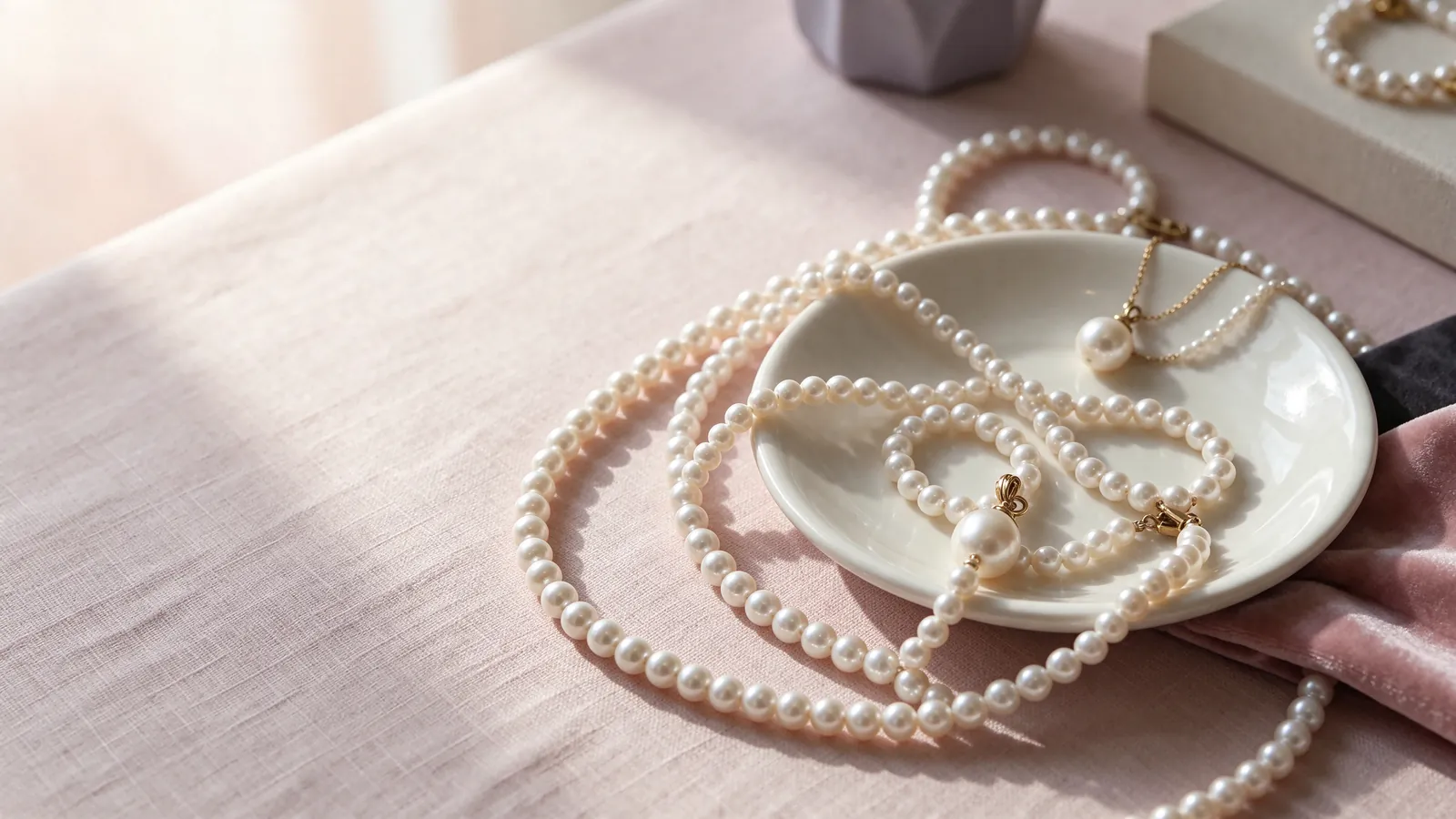
A fine strand can read as a quiet line around the neck or as a soft curve above a blouse. Length changes that relationship, but a length label cannot tell you exactly where the necklace will sit on your body. Start with an outfit you actually wear. Look for a complete visible curve rather than a strand that rests directly on the neckline edge and disappears whenever the fabric moves.
Try the necklace standing and sitting, then gently turn your head. Check whether the strand remains comfortable and whether the neckline pushes it upwards. The pearl necklace length guide is useful for thinking about wearing positions, but your own neckline, neck circumference and posture remain part of the decision. Record the position you prefer on your body, as well as any stated length, so that later comparisons have a practical reference.
Necklines and layering for a small pearl necklace: styling a baby pearl necklace or dainty pearl strand necklace | Flint Jewellery
With a round neck, compare a strand sitting fully inside the opening with one resting fully over the fabric. With a V-neck, notice how its curve relates to the point of the opening. If you prefer a closer outline, consider the pearl choker necklace styling discussion, without treating tightness as a requirement for delicacy. Find a comfortable position for the pearl strand before introducing another necklace.
Separate the baby-pearl description from the actual necklace construction
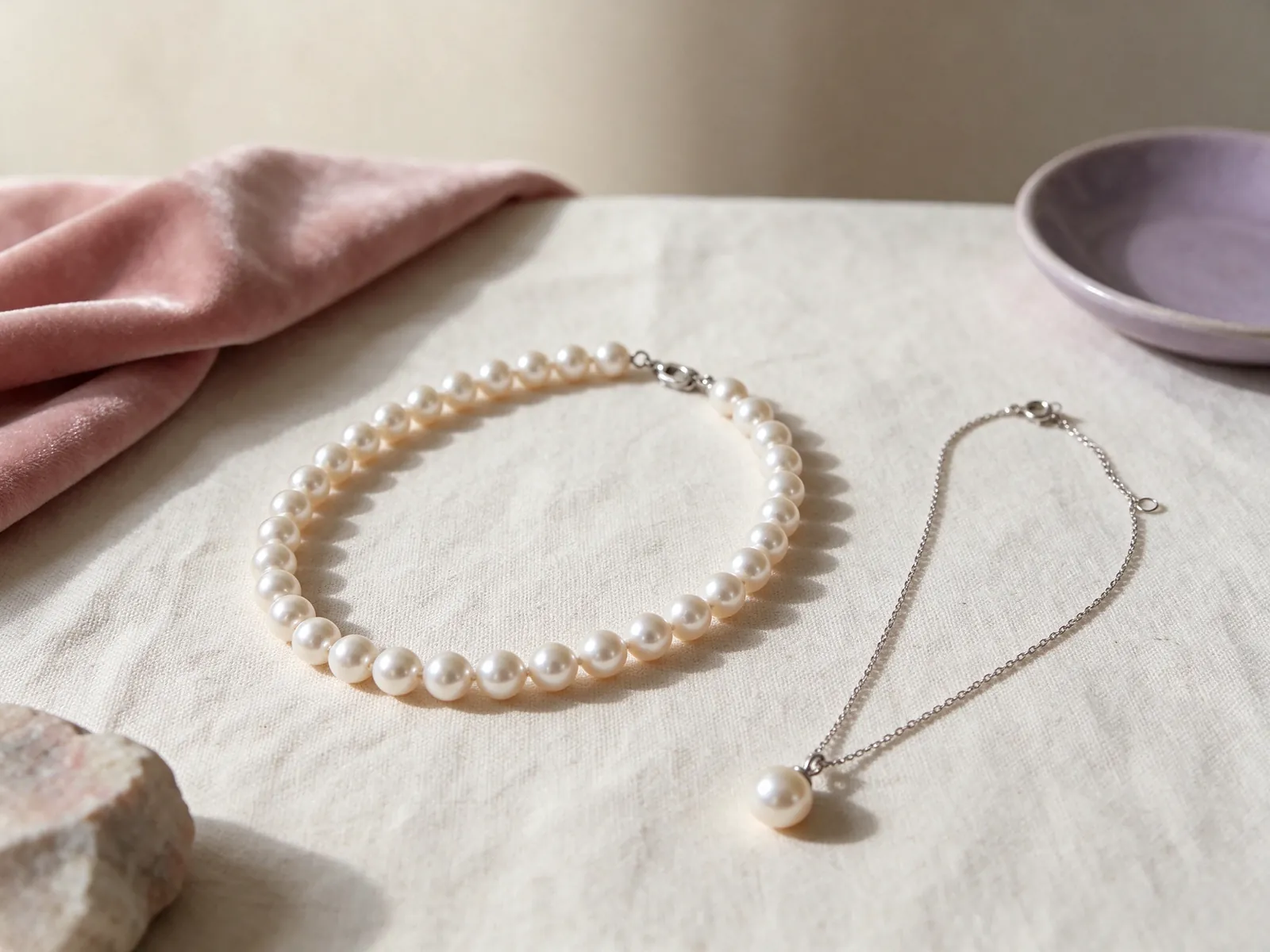
The phrase baby pearl necklace describes a size impression or style, not a distinct pearl species. It does not establish origin, natural or cultured identity, or a quality grade. Read the description of the pearl category separately from the description of the design. Baby is not a statement that the necklace is suitable for babies or young children. Compare the actual specifications, intended use and complete strand rather than relying on a delicate-sounding name.
Also distinguish a continuous strand from pearls positioned between sections of chain or other components. Both can look restrained, yet they create different rhythms. A continuous strand asks you to consider the whole pearl line; an arrangement with spaces asks you to consider the empty areas and connecting parts too. A similar name is not enough to make two necklaces equivalent. Look at the complete design and the fastening, not just an isolated pearl.
Choose between an uninterrupted pearl line and deliberate spaces
If your aim is a single, continuous curve, the single strand pearl necklace guide provides a useful structural starting point. If you want a few pearl accents around an open collar, a spaced arrangement may express that intention differently. Describing the effect as a complete pearl line or a line with visible gaps makes your preference clearer than asking only for something small or dainty.
Look beyond small size to lustre and matching across the strand
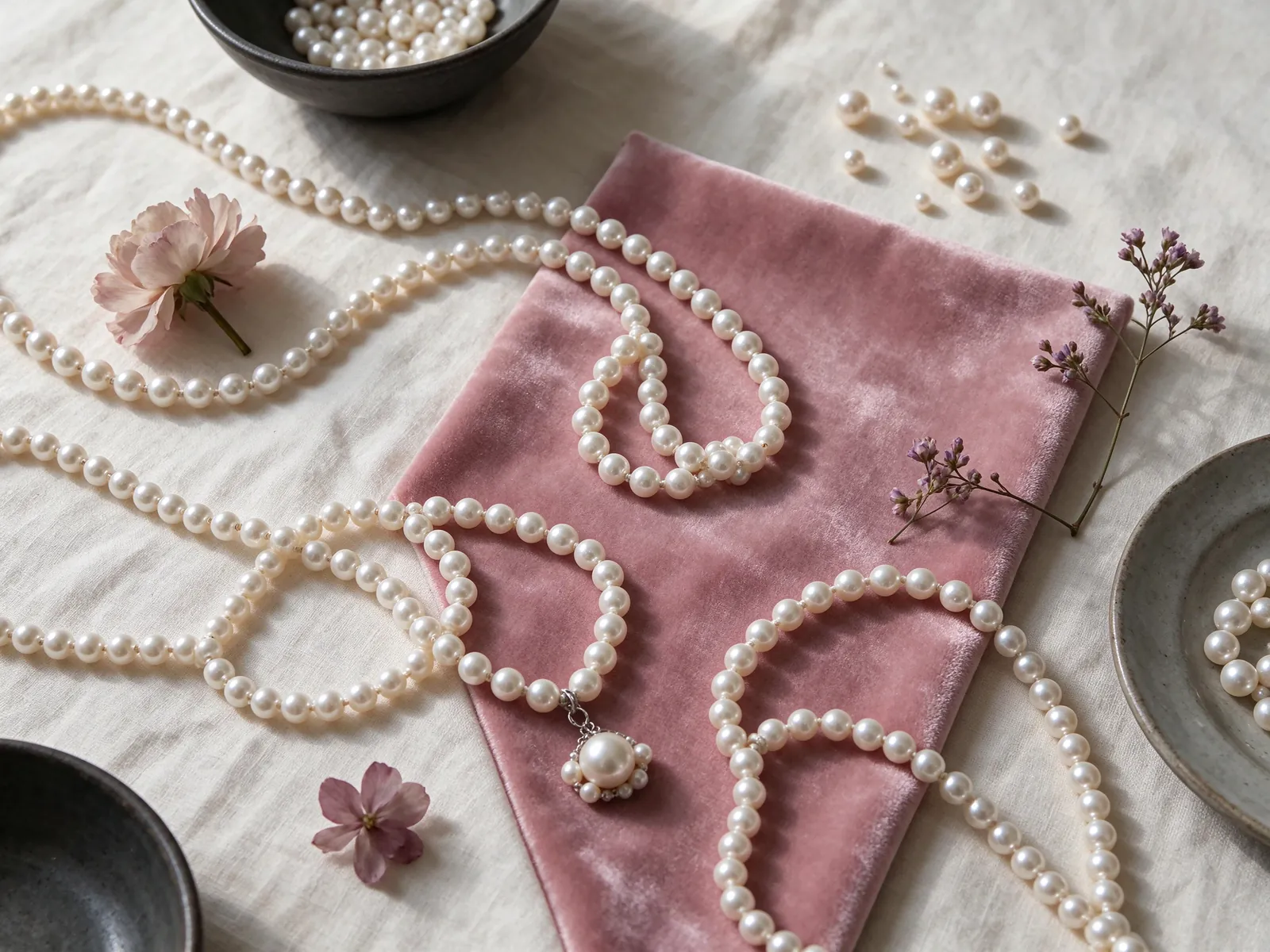
GIA describes seven pearl value factors: size, shape, colour, lustre, surface quality, nacre quality and matching. Small size does not replace the others. In soft, even light, look at the reflections on neighbouring pearls and then at the strand as a whole. Are the changes in brightness pleasing, or does one area interrupt the effect you wanted? A brightly exposed photograph alone cannot show every aspect of a pearl.
Matching concerns how the pearls work together, not an assumption that every pearl must look identical. Examine the centre, both sides and the ends for the relationship between shape, colour and size. A deliberate progression may suit one design while a more even arrangement suits another. Inspect surface details at a closer distance, but do not infer nacre thickness from a bright reflection or treat a distant image as a complete surface assessment.
Compare at normal wearing distance before studying close-ups
Use the same blouse and similar lighting when comparing alternatives. A close-up makes tiny pearls appear visually dominant, while an ordinary mirror view shows how the strand relates to your face and clothes. If you discover that you want the individual pearls to be more prominent, compare the proportions discussed in the large pearl necklace guide. The useful distinction is your preferred visual emphasis, not a hierarchy based on size alone.
Check fastening, thread and end details for everyday handling
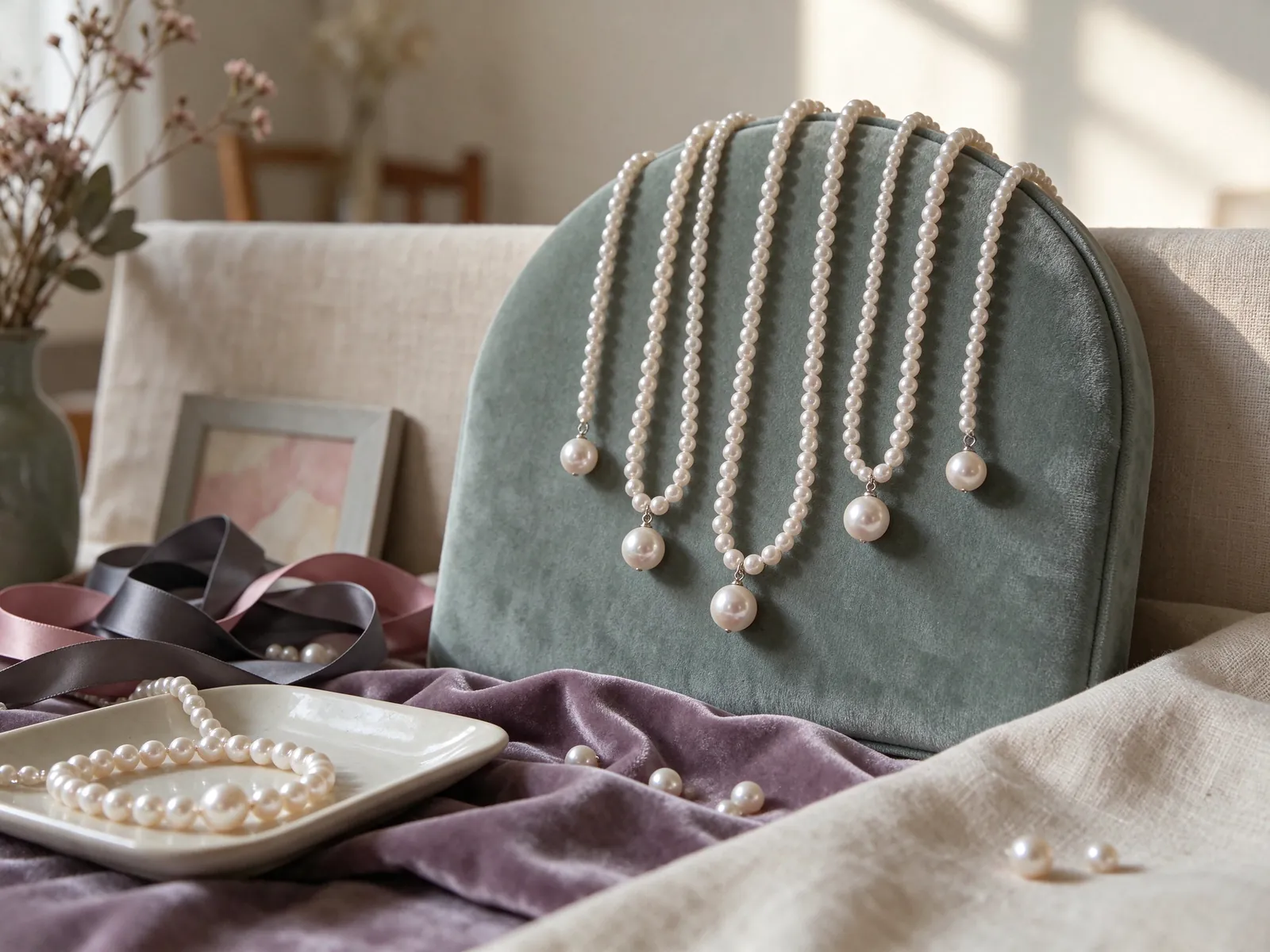
A small-looking clasp should still be manageable for you. Practise opening and closing it, and check the way the necklace ends sit against your neck. With long hair, repeat the check with your hair down to notice any contact around projecting details. A discreet fastening is not automatically an easy fastening. If daily use requires assistance, include that practical point in the decision rather than judging only the front view.
Strands can use different connection arrangements, including knots between pearls in some constructions. Look closely rather than assuming a method from a distant image. The spaces between pearls, the thread tension and the end connections all contribute to the way the strand curves. Notice any local stiffness, bunching or unusual slackness. If a thread appears frayed or a fastening behaves abnormally, stop wearing the necklace and arrange an appropriate inspection.
Test handling after deciding that you like the appearance
Once the mirror view appeals, put on a jacket or adjust the collar and notice whether the necklace catches or is pulled. Do not drag a strand around your neck to bring the clasp forwards. Locate the fastening before wearing it, and undo it before removing the necklace. Dressing first also reduces the chance of repeatedly drawing a close-fitting garment across the pearls. A delicate appearance is not a promise of resistance to pulling.
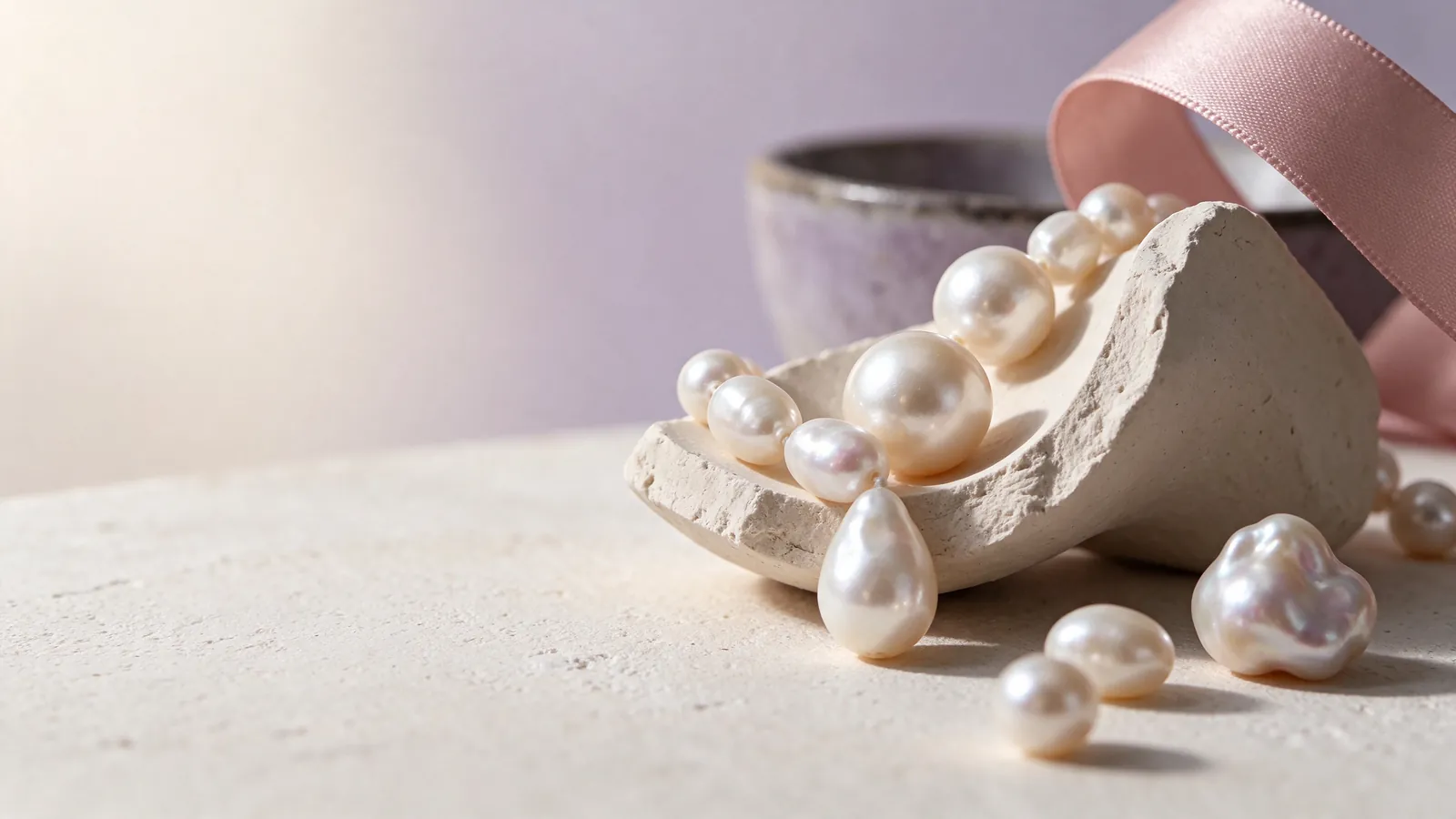
Give the fine pearl line room against shirts and textured fabrics
With a shirt, decide whether the pearl line belongs inside the collar or over the fabric. Inside, look at the opening created by the buttons and the position of the collar points. Outside, check whether the strand lies smoothly or is visually interrupted by the placket. A plain background makes a fine line easier to assess; a busy pattern may let it blend in. Neither effect is wrong, but they serve different styling aims.
Knitwear introduces another question: can you still see the necklace clearly against the raised texture? Check for contact with loose fibres and for sections that disappear into the fabric's surface. With evening clothing, consider embroidery, sequins or decorative edges before adding jewellery. A fine strand may complement a detailed neckline, but the wearing position should also keep the pearls from repeatedly rubbing against those details as you move.
Distinguish fine scale from an irregular visual rhythm
Sometimes the appeal is not smaller pearls themselves but a necklace that leaves the clothing's lines in charge. Compare the arrangement as well as the scale. The baroque pearl strand necklace topic offers another way to consider shape and rhythm. View the complete necklace with the outfit, and avoid ranking regular and irregular outlines as inherently better or worse. Shape alone cannot establish pearl origin or natural-versus-cultured identity.
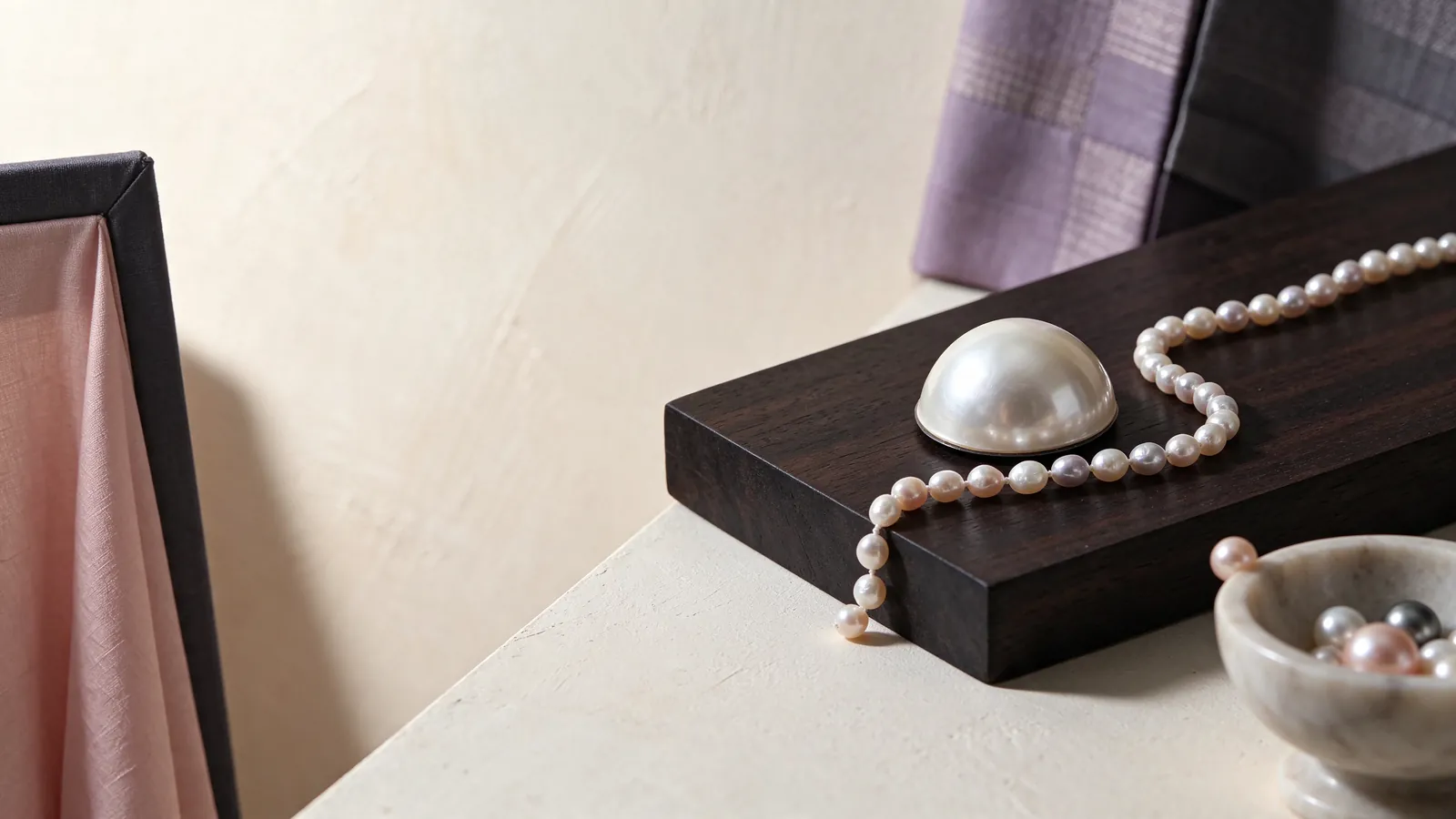
Layer with a clear purpose and check what happens in motion
Begin by deciding whether the dainty pearl strand necklace is the upper framing line or a lower curve beneath another necklace. Each layer should remain visually understandable. If the lines continually overlap, or one pushes the other against the neckline, change their positions or remove a layer. More necklaces do not necessarily create more useful depth. A clear relationship between the pieces is often easier to wear than several competing lines. The pearl necklace layering guide offers a further comparison of visual emphasis and neckline space; use it alongside your own movement checks rather than treating a photograph as a fixed formula.
Move beyond the still photograph. Sit down, turn gently and adjust your clothing, then check whether clasps meet at the back or a metal chain slides onto the pearls. A pendant that repeatedly contacts the strand is another reason to reconsider the arrangement. Include earrings in the mirror view too: when the neckline already carries several lines, a simpler ear silhouette may leave the face area less crowded.
Use the necklace worn alone as your baseline
Ask what the second necklace adds: a vertical direction, a colour contrast or a way to fill an open neckline. If the answer is unclear, the pearl strand alone may express the delicate style more effectively. Add and remove pieces one at a time with the same clothes. Keep the combination that remains comfortable without frequent repositioning, rather than forcing an arrangement that works only while you stand perfectly still.
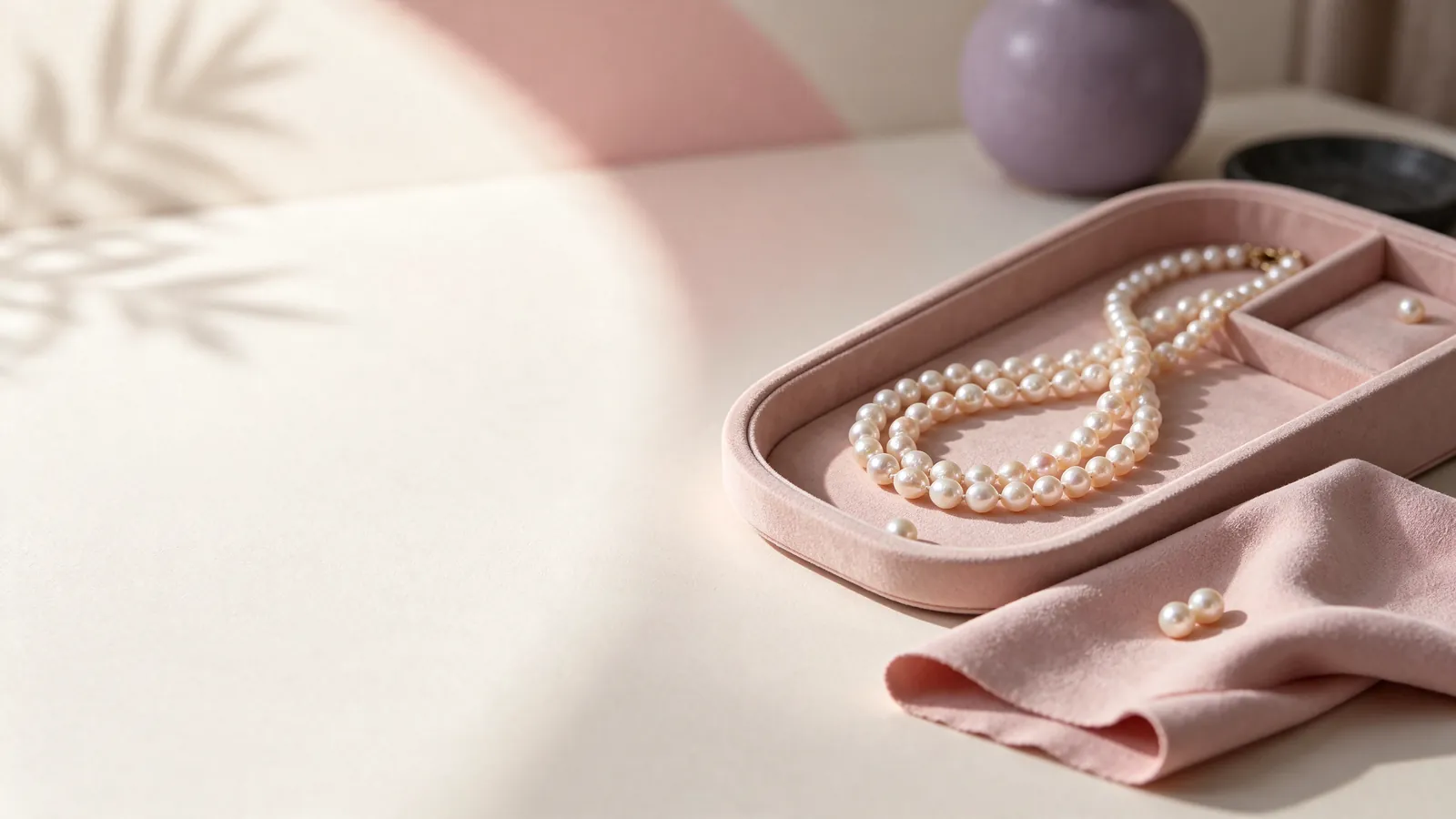
Care for small pearls with gentle wiping and thoughtful storage
GIA places pearl at 2.5 on the Mohs hardness scale. Small pearls therefore deserve the same attention to rubbing and storage as other pearl jewellery. After wearing, wipe gently with a very soft, clean cloth and keep the strand apart from harder jewellery. Let it rest naturally instead of forcing it into a tight coil. Take the opportunity to notice changes in the thread or clasp before the next wear.
Avoid contact with acids, perfume, hair spray and excessive heat. Finish cosmetics and hair styling before putting on the necklace to reduce direct spray exposure. GIA advises that pearls must never be cleaned using ultrasonic or steam cleaners. If a strung necklace is cleaned with water, the string must be completely dry before wearing. Do not substitute a prolonged soak for appropriate cleaning of the pearls, fastening and connecting materials.
Keep a short record of your own wearing preferences
Note your usual necklines, preferred wearing position, whether you liked the strand alone or layered, and how easily you operated the clasp. These details turn a general wish for delicacy into a useful buying brief. Then review the strand's lustre, matching and construction together. The best direction for you is a coherent wearing experience, not simply a necklace with a small-sounding name. If you are still comparing silhouettes, discuss them with Flint Jewellery on WhatsApp. Share the neckline you wear most, the position you liked and any clasp-handling preferences, so the conversation starts with your actual wearing needs.
| Comparison | What to observe | Clothing context | Try-on check | Decision focus |
|---|---|---|---|---|
| Visual scale | The complete pearl line | A familiar plain blouse | Look from normal mirror distance | Fine but still visibly coherent |
| Wearing position | The strand relative to the neckline edge | Inside or outside an open collar | Sit and raise your head | No repeated covering or displacement |
| Lustre and matching | Brightness, colour and shape relationships | The same background and lighting | Inspect the centre and both sides | A rhythm you find pleasing |
| Fastening and thread | Handling, end details and thread condition | Hair and collar points | Open, close and adjust clothing | Manageable operation without pulling |
| Layering | Whether each necklace keeps its own line | Include earrings and the neckline | Turn and inspect contact points | Clear emphasis without repeated rubbing |
Pearl knowledge and authoritative references
GIA lists pearl at 2.5 on the Mohs hardness scale and advises against ultrasonic and steam cleaning; a fine strand needs gentle handling and protection from repeated rubbing.
Read the reference for this factFrequently asked questions
Does baby pearl necklace identify a particular pearl species?
No. Baby is a size or style expression. Read the pearl category separately from the size, shape and necklace construction. The phrase does not establish origin, natural or cultured identity, or a quality grade.
Must small pearls be worn close to the neck?
No. A fine strand can form different wearing silhouettes. Choose the position around your neckline and comfort, then test it sitting and turning your head. A close fit is a styling option, not a requirement for a delicate look.
How can I decide whether to wear the strand inside a shirt collar?
Compare both positions with the shirt you intend to wear. Inside, check that the opening reveals the pearl line. Outside, check that the strand lies smoothly over the fabric. Avoid a position that repeatedly lands on or slips beneath the collar edge.
What if a layered chain keeps sliding across the pearls?
Return to the pearl necklace alone and establish a comfortable position. Add the other necklace again and test movement. If contact continues, change the arrangement or wear them separately instead of forcing layers that repeatedly rub together.
Can an ultrasonic cleaner be used for a fine pearl strand?
No. GIA advises against both ultrasonic and steam cleaning for pearls. Routine care uses a very soft, clean cloth after wearing. If a strung necklace is cleaned with water, its string must be completely dry before it is worn again.
Does baby pearl mean the necklace is intended for a baby?
No. Here, baby describes visual scale or style, not age suitability. Neither small pearls nor the wording establishes that a necklace is intended for infants or young children. Consider the actual product purpose and the intended wearer separately.
Updated: