
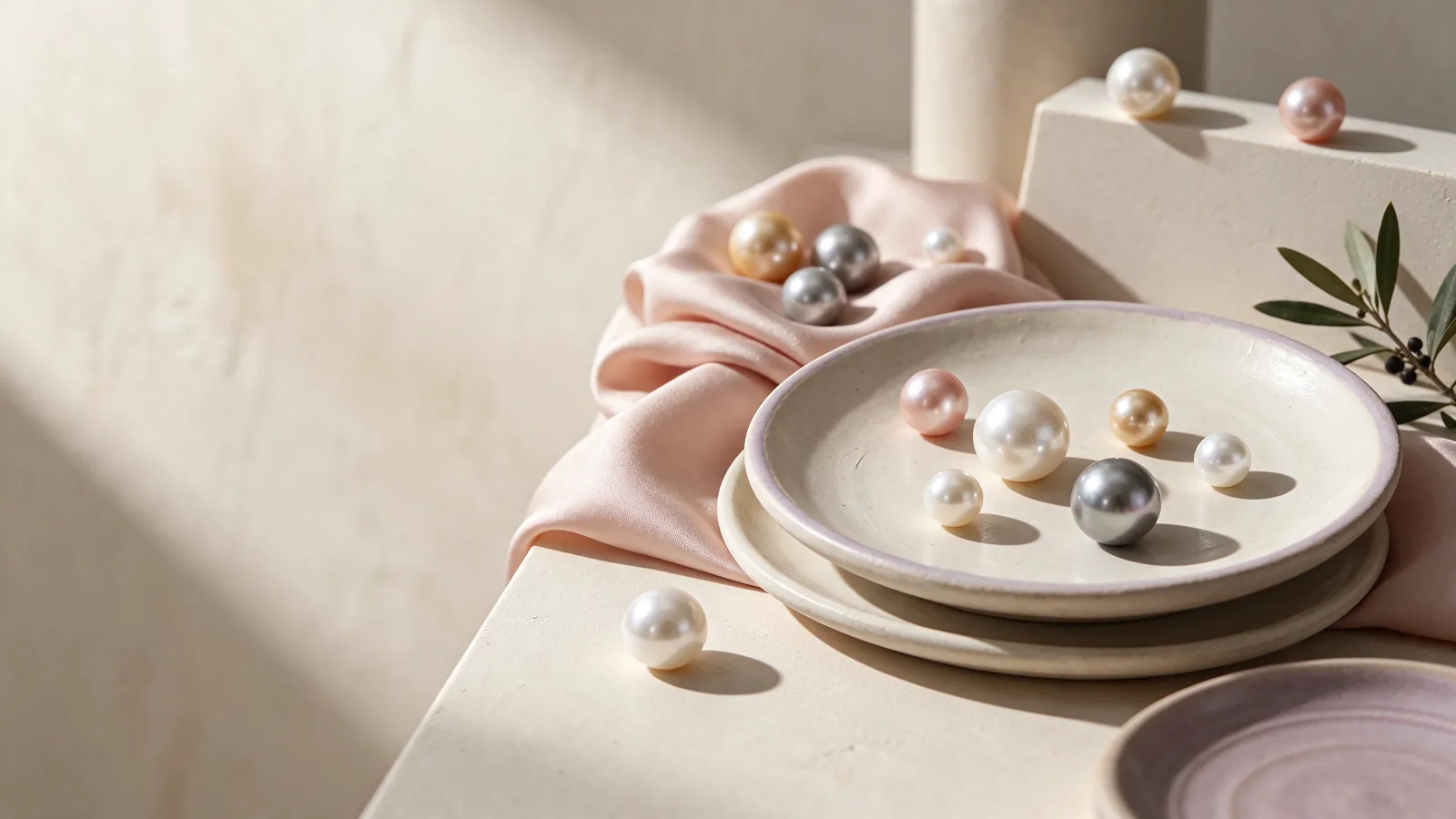
How do soft transitions and bold contrasts shape a mixed colour pearl strand in a multicolour pearl necklace or multicolor pearl necklace? | Flint Jewellery
Start with the shape of a multicolour pearl necklace as a whole. Arrange it in a curve resembling its position when worn and notice where your eye settles first. A gradual change between neighbouring shades can read as one continuous band, while strong light and dark contrasts create separate visual accents. Neither arrangement is automatically better. The useful question is whether you want the necklace to support an outfit quietly or provide its main point of interest.
A mixed colour pearl strand does not need every pearl to compete for attention. Look for a dominant colour relationship and decide whether the other shades support it or interrupt it deliberately. A necklace described as a multicolor pearl necklace may appear balanced when laid flat yet look heavier on one side when worn. View the front, sides and clasp area together before judging the arrangement from a single close-up.
Where should lighter and darker pearls sit in a mixed colour pearl strand to balance a multicolour pearl necklace or multicolor pearl necklace with your neckline? | Flint Jewellery
A darker central group can attract attention at the front, whereas darker pearls towards the sides leave a lighter centre against skin or fabric. Test the arrangement with the neckline you actually wear. A shirt opening may hide the centre, and a round neckline may cut across a transition. Sit down and turn your head as well as standing still: the preferred colour emphasis should make sense during ordinary movement, not only in a posed mirror view.
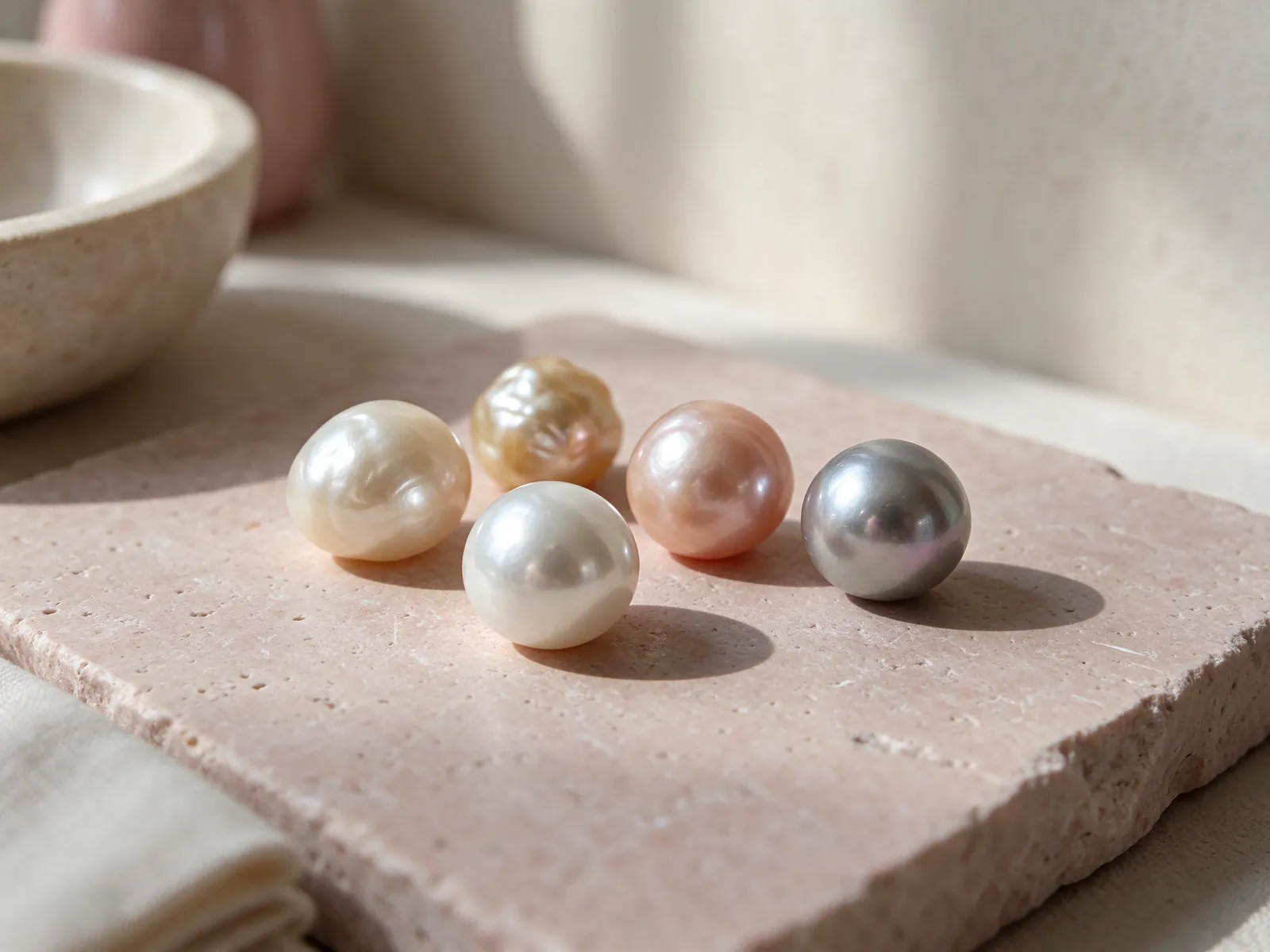
Read colour components before relying on a photograph
One colour word may not fully describe a pearl. GIA distinguishes bodycolour, the dominant overall colour; overtone, one or more translucent colours over that bodycolour; and orient, a shimmer of iridescent rainbow colours on or just below the surface. Every pearl has bodycolour, but only some display overtone or orient. Begin with the whole colour impression, then gently change the viewing angle to observe secondary effects. Pink, purple or grey can describe appearance without establishing pearl type, origin or treatment status.
Use the same lighting and background when comparing alternatives. A warm indoor lamp, a different camera setting or a screen display can change the colour impression you receive. It is not a fair comparison to judge one necklace photographed beside a window against another photographed in a dim restaurant. An overall view shows placement; closer views show local differences. Written information about pearl identity and treatment answers a different question from either photograph.
GIA notes in its care guidance that pearls may be dyed, impregnated or coated, and that some treatments can alter over time. This gives context for asking about colour; it does not mean every multicolour strand has undergone the same treatment. Ask separately about the individual necklace's treatment information and suitable care. Neither a varied palette nor a vivid colour name is a reliable declaration of natural colour or dyeing.
Compare against familiar clothing rather than an abstract skin-tone rule
Try a pale top and a dark jacket from your own wardrobe. Against a light background, the darker sections may become more prominent; against a dark background, the pale sections may stand out first. Look at the boundary between your face, neckline and jewellery. Whether you enjoy a gentle blend or a distinct outline is a practical styling preference, not something that needs to be decided by a universal rule about flattering colours.
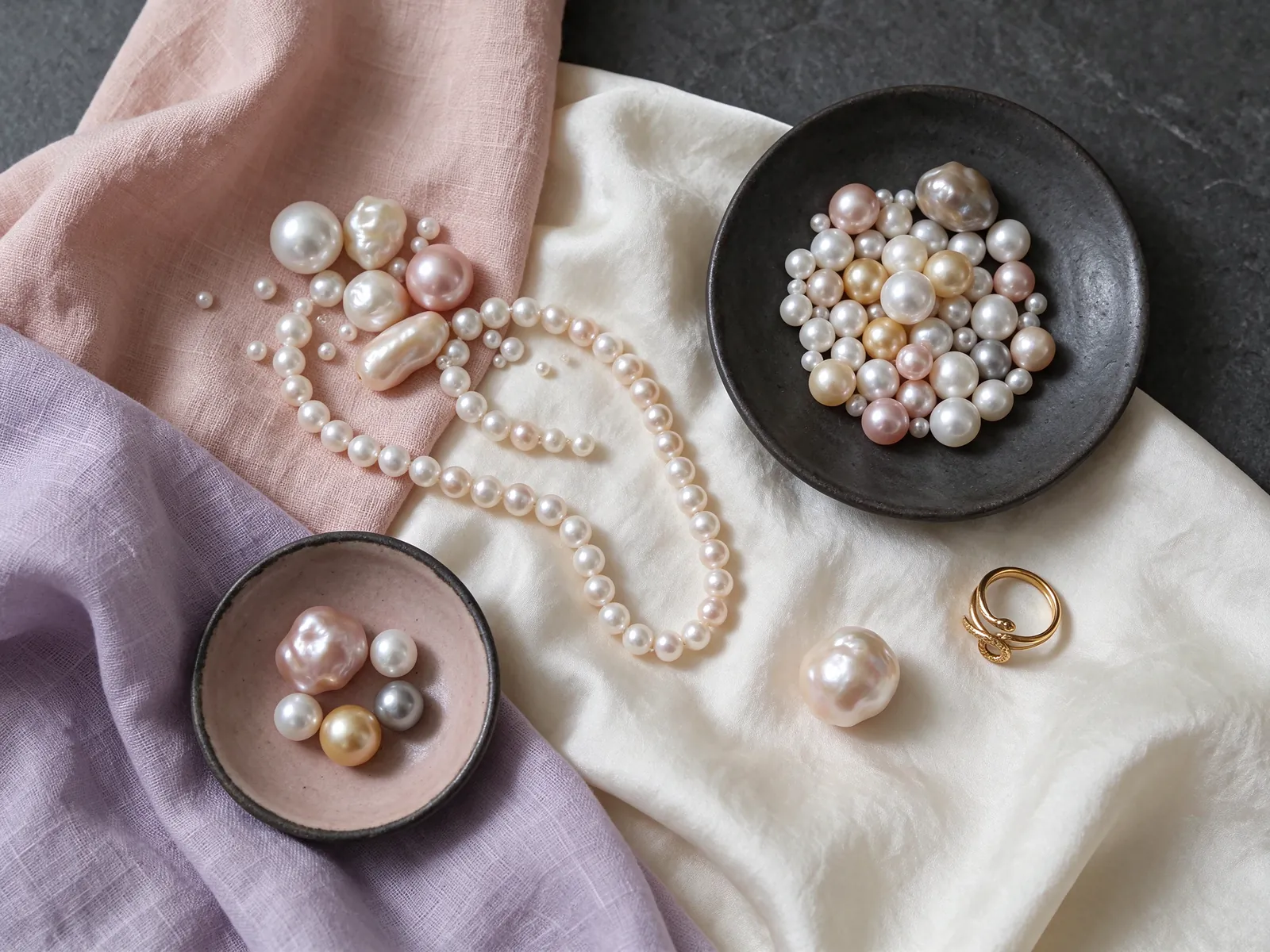
Judge the rhythm of the strand, not just its palette
Colour variation can be intentional while other features remain visually connected. Notice whether differences in lustre distract from the colour sequence, whether changes in shape feel deliberate and whether the apparent sizes create the rhythm you enjoy. A bright reflection on one pearl can draw attention before its colour does. Look at the necklace from an ordinary viewing distance first, then examine the section that interrupts the overall effect.
GIA describes seven pearl value factors: size, shape, colour, lustre, surface quality, nacre quality and matching. It also notes that designers sometimes deliberately mix colours, shapes and sizes for unique effects. In a multicolour arrangement, matching need not mean making every pearl identical; consider how the chosen differences work together. Attractive colour does not replace assessment of the other factors. A clear overall image and careful examination of surface details serve complementary purposes rather than proving the same thing.
Separate construction questions from colour preferences
If a single pearl looks unusually dark, gently change the viewing angle to see whether bodycolour or the current reflection is drawing your attention. If you like an irregular sequence, check that you enjoy it as a daily feature rather than only in a striking photograph. For questions about pearl structure, the nucleated freshwater pearl necklace guide offers a separate reading route; its subject should not be inferred merely because a strand contains several colours.
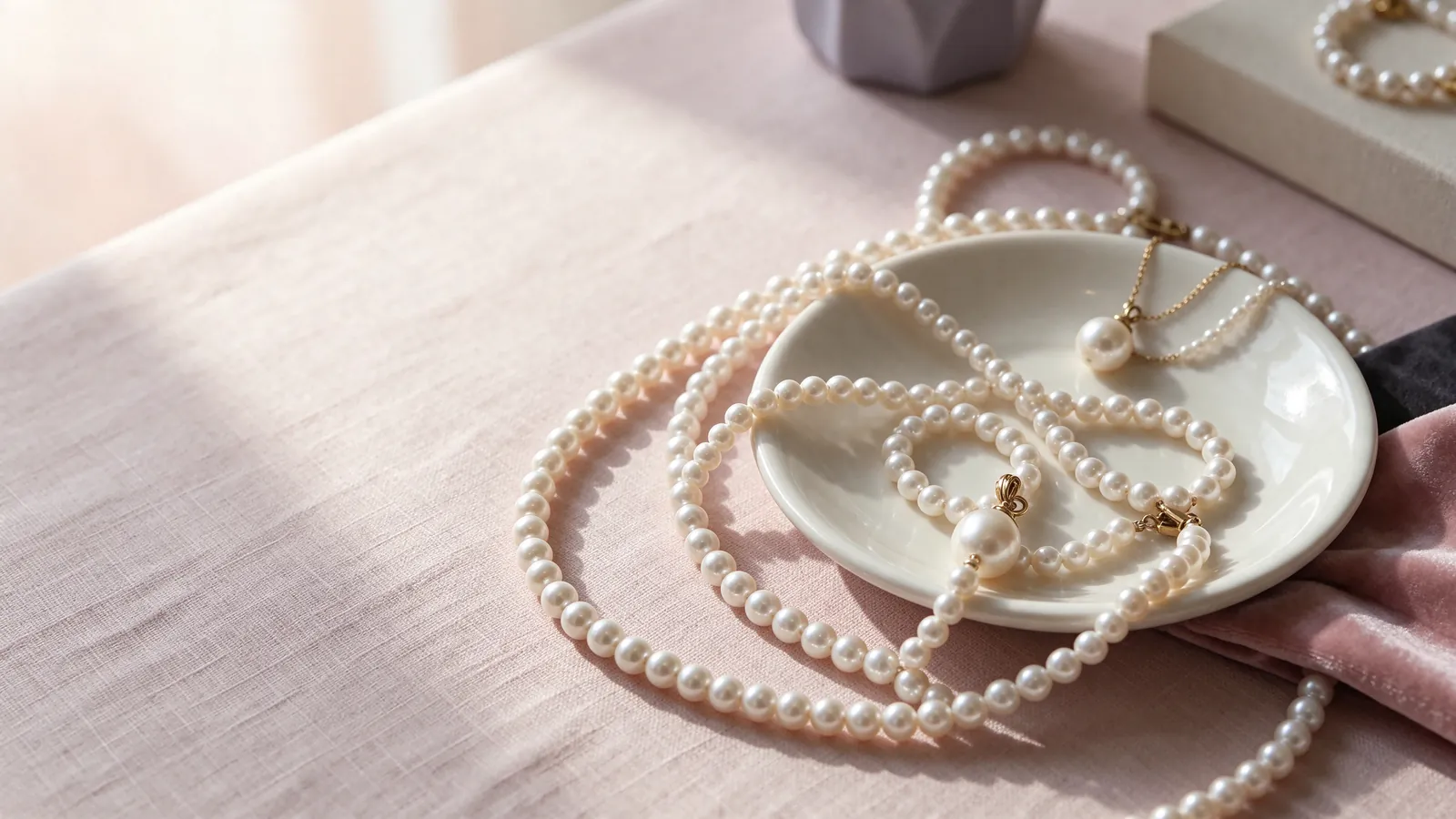
Let the neckline and fabric set the context
Decide whether the necklace will sit mainly against skin or clothing. A round neckline touching the strand can interrupt its colour band, while shirt lapels may conceal the area you intended to show. The single strand pearl necklace guide is useful for considering the curve itself: a clear front outline, a natural fall at the sides and a position that remains visible when you sit. Choose by the actual resting position rather than a length name alone.
Fabric finish matters alongside fabric colour. A plain matte top makes it easier to see reflections from the pearls, while glossy fabric asks you to check whether the necklace still has a readable outline. With patterned clothing, choose one smaller colour detail to echo rather than attempting to repeat every colour. Earrings, glasses and a necklace occupy the same area around the face, so it helps to decide which element leads the composition.
Explore warm accents without committing to an entirely warm palette
If beige, brown or warm patterned clothes are common in your wardrobe, compare a small warm accent with a strand whose overall impression is warm. The orange pearl necklace guide provides a focused way to think about that colour relationship, not a shortcut to identifying pearl type. Check where the warmest area sits at the front, then change into a cooler jacket to see whether the necklace still suits the range of clothes you actually wear.
Compare dark accents, grey transitions and asymmetry deliberately
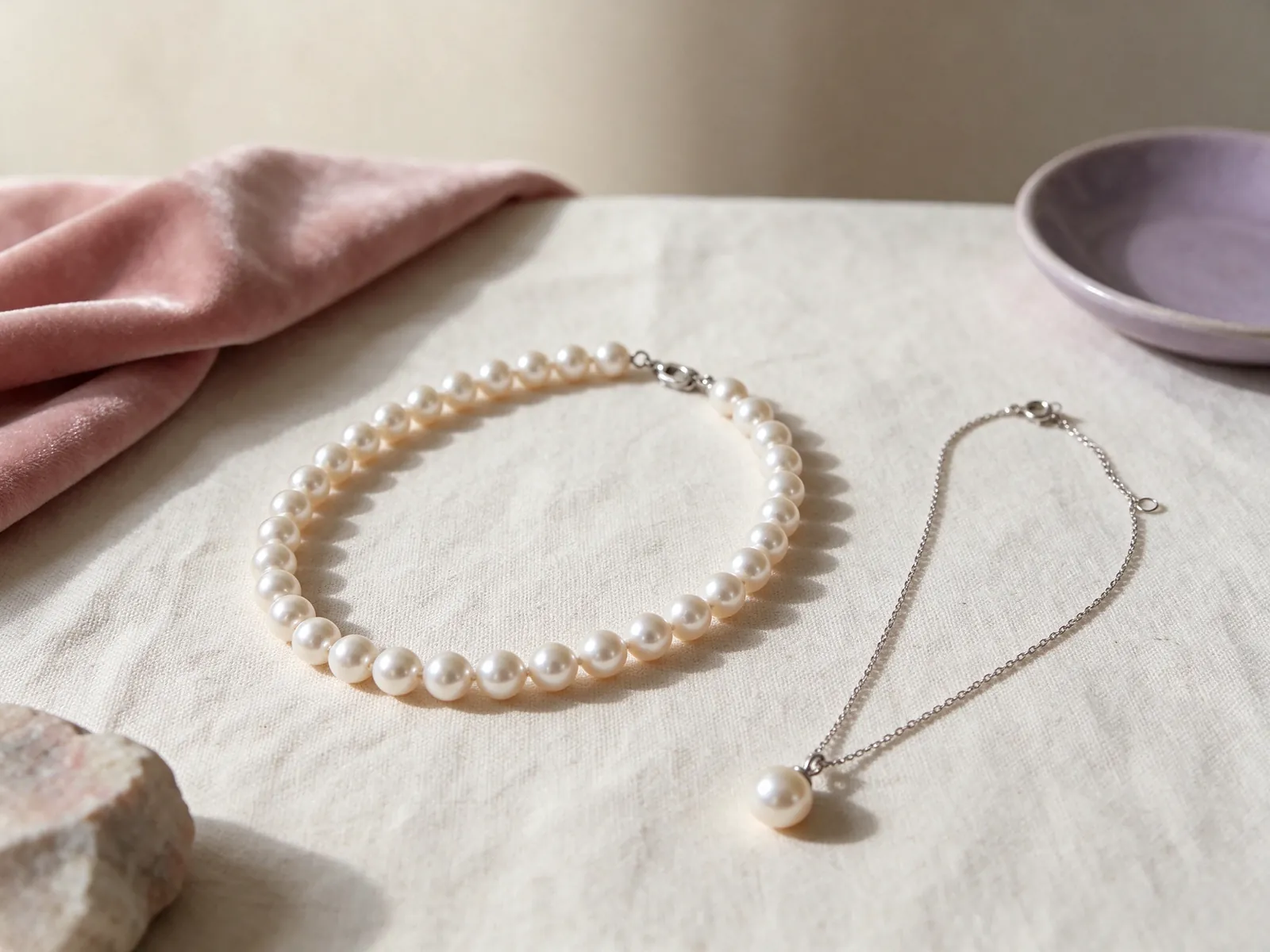
Keep the clothing background unchanged while comparing pale, dark and mixed arrangements. Dark sections can create a visual pause, but many scattered dark points may make your eye jump around the strand. The black Akoya pearl necklace guide is a related topic for exploring a predominantly dark style. Use it to distinguish an all-over dark impression from a dark accent in a mixed arrangement, not to assign another necklace a pearl identity by colour.
A grey area can be considered as a transition, but its effect depends on neighbouring shades and lustre. Do not assume every grey is neutral against every garment. The grey Akoya pearl necklace guide offers another focused colour topic. Returning to your mixed strand, notice whether adjacent shades connect gently or form a boundary. A soft transition and a crisp division can both work when their positions support your intended focal point.
Use your everyday hairstyle to assess an uneven colour balance
Symmetry is easy to read, but asymmetry may be the feature you value most. Check whether a stronger side overlaps with a shirt opening, side-parted hair or another accessory. A straight-on photograph with hair pulled back may not show the necklace as you normally wear it. Rather than insisting on equal colour distribution, identify the visual centre of gravity and decide whether it feels intentional with your everyday presentation.
Turn a styling preference into useful buying questions
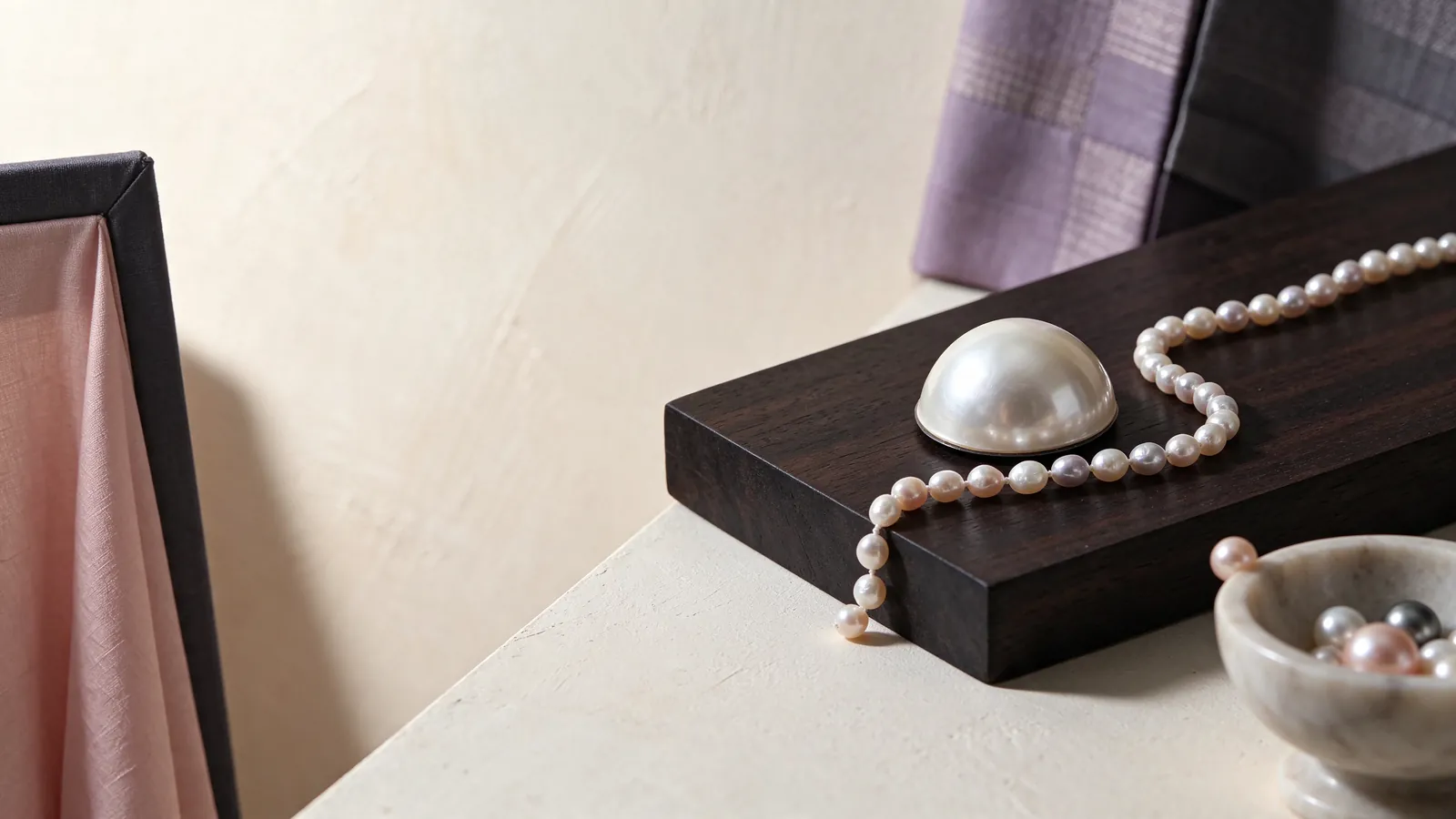
Describe the effect you want in practical terms: a gentle gradient or alternating contrast, a central dark group or side accent, and the neckline you wear most. Then ask separately about pearl type, colour treatment and the written information supplied for the individual piece. This keeps appearance and identity from becoming confused. A pleasing image cannot establish origin, natural colour, diameter or certification, and a broad colour label cannot answer those questions either.
The clasp and stringing also deserve attention. Check which side faces outward when fastened, whether you can operate the clasp comfortably and whether the fastening shifts to the front during movement. An exposed decorative clasp becomes part of the composition rather than simply a hidden component. The toggle clasp pearl necklace guide can help you consider that visual role, while the suitability of an individual fastening depends on its actual construction and your wearing habits.
Record the reason you prefer each arrangement
Make a short comparison using the same clothing background and lighting. Note the most appealing feature and the main hesitation for each strand. For a gift, look at the recipient's existing clothing and jewellery rather than assuming age determines taste. This record helps distinguish an arrangement that suits regular wear from one that only looks dramatic in a particular photograph, and makes a later styling conversation more precise.
Care for the strand without mistaking dark colour for dirt
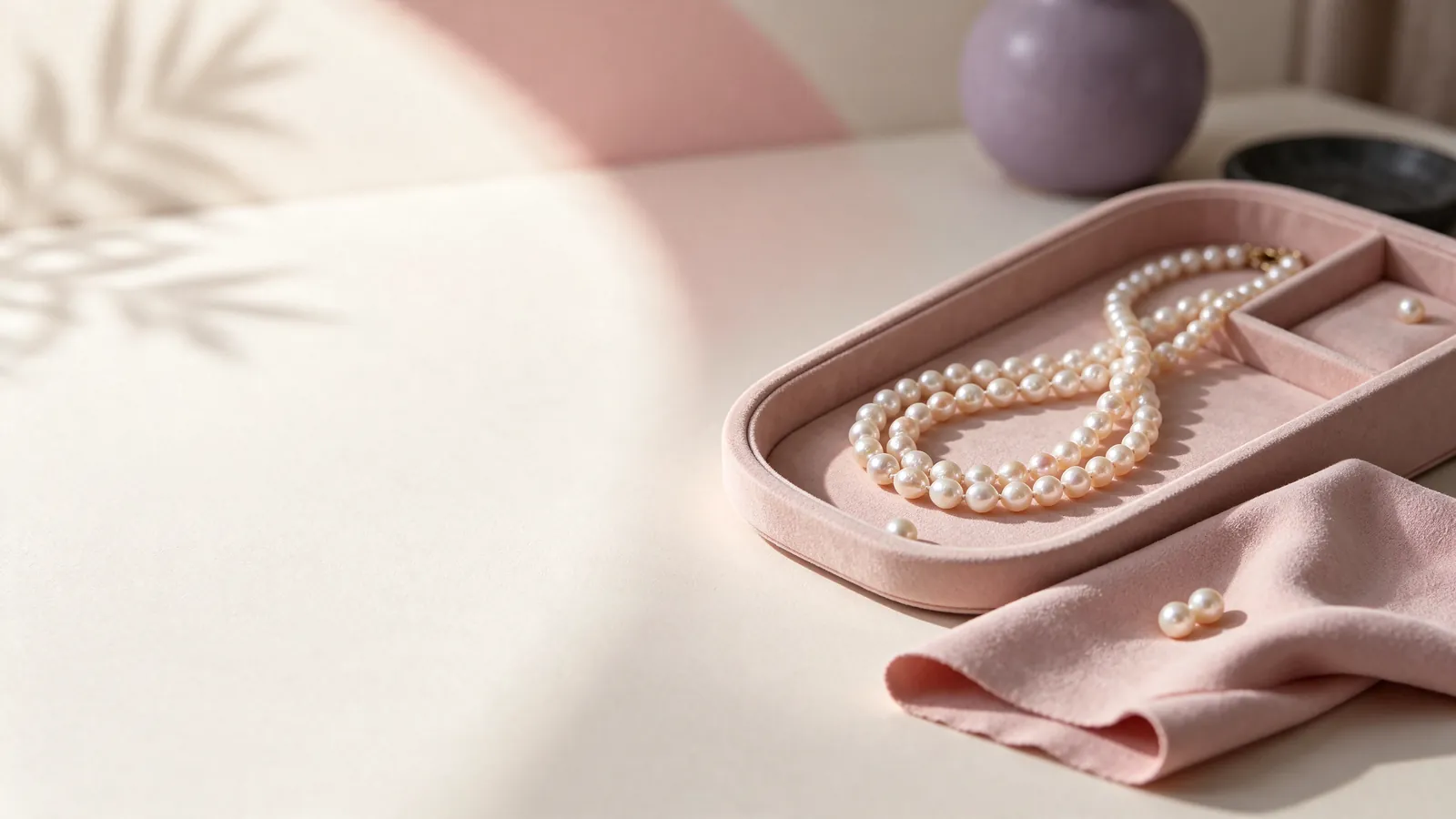
A varied palette does not change the need for careful pearl care. GIA places pearl at 2.5 on the Mohs hardness scale and says never to use ultrasonic or steam cleaners. After wearing, wipe gently with a very soft, clean cloth rather than rubbing forcefully. Avoid contact with acids, perfume and hair spray, as well as excessive heat. Finishing your cosmetics and hair preparation before putting on the necklace helps manage these contacts.
Store the strand separately from harder jewellery so that pieces are not rubbing or tangling together. A darker pearl within the arrangement is not automatically a stain that needs extra cleaning. If a strung necklace is cleaned with water, GIA advises allowing the string to become completely dry before wearing it. If you notice loose stringing or an unstable clasp, pause wear instead of forcing the necklace to remain in use.
Keep an arrangement photograph for future styling discussions
A clear photograph of the whole strand and a front wearing view can record the light and dark positions you prefer. It may help a later discussion about stringing or arrangement, but it is not proof of pearl type, treatment or quality. If the necklace seems less prominent after a change of season, compare a different neckline and background first: a changed styling impression is not by itself evidence that the pearls have changed colour.
Would you like to narrow down the colour arrangement for your wardrobe? Contact Flint Jewellery on WhatsApp: https://wa.me/85260106207. Tell us your usual neckline, whether you prefer a soft transition or clear contrast, and whether the necklace should blend in or lead the outfit. If convenient, include a clothing or colour reference photograph so your pearl styling enquiry starts with a specific visual preference.
| Arrangement | Visual emphasis | Clothing context | Buying observation | Wearing check |
|---|---|---|---|---|
| Gentle gradient | Neighbouring shades connect | Plain fabric reveals the transition | Look for abrupt interruptions | Keep the transition clear of the neckline |
| Alternating contrast | Separate light and dark accents | Begin with a simple background | Compare the continuity of lustre | Check the accent after turning your head |
| Central grouping | A focal point at the front | Shirt openings may hide the centre | Consider the relationship to both sides | Observe the necklace while seated |
| Side emphasis | An intentional uneven balance | Consider hair and lapels together | Compare visual weight on each side | Try your usual hairstyle |
| Dispersed mixture | A freer sequence of colour points | Patterns need a clear leading element | Identify any distracting local section | Step back to view the whole curve |
Pearl knowledge and authoritative references
GIA identifies seven pearl value factors, including colour and matching. When comparing a multicolour strand, consider how the arrangement works together alongside its other quality characteristics, rather than simply counting its colours.
Read the reference for this factFrequently asked questions
Does a multicolour pearl necklace need to match every colour in my outfit?
No. It is often easier to choose one colour relationship to echo and let the remaining shades support the arrangement. With patterned clothing, a small colour detail can provide the connection without making the necklace compete with every part of the print.
Can the name mixed colour pearl strand tell me which pearl type is used?
No. It describes an arrangement of colours. Pearl type and colour treatment require separate information for the individual necklace, and should not be inferred from a colour name or photograph.
Should the darkest pearls always be at the centre?
Only if you want that central emphasis. Darker pearls at the sides can leave a lighter front or create an asymmetric effect. Check the position against your neckline and usual hairstyle, including after ordinary movement.
Why does the same strand seem different with a jacket?
The background changes which sections stand out first. Pale pearls may be clearer against dark fabric, while darker areas can become more prominent against a light top. Compare in the same lighting before treating the change in impression as a change in the pearls themselves.
Is a dark pearl a reason to clean that section more vigorously?
Not by itself; the darkness may be part of the intended colour arrangement. Use a very soft, clean cloth and gentle wiping. Avoid ultrasonic and steam cleaning, and let any water-cleaned string dry completely before wearing the necklace.
Updated: