
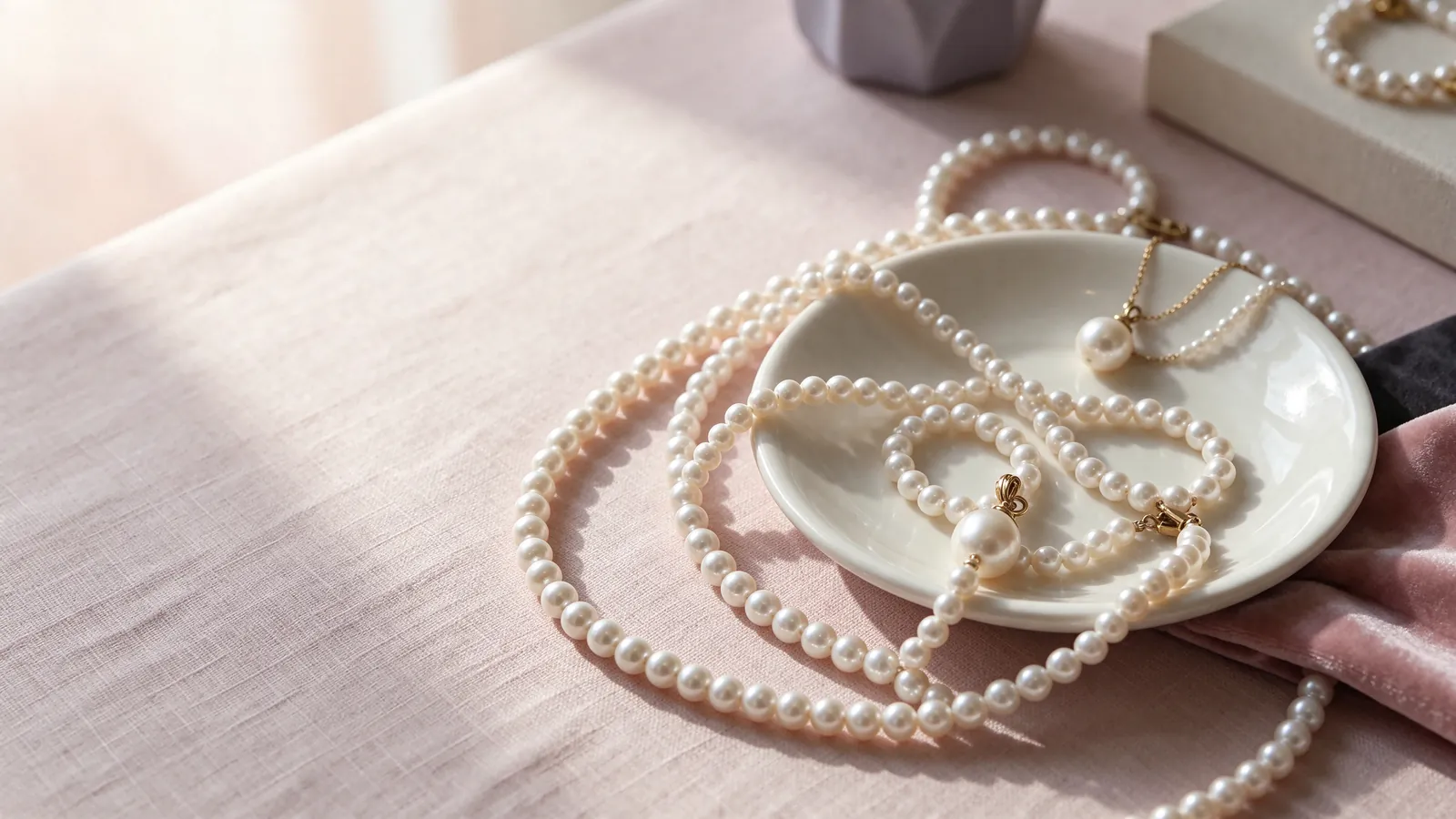
Flint Jewellery: Length and drape matter whether you search for a grey Akoya pearl necklace, a silver grey Akoya pearl strand or a gray Akoya pearl necklace
Begin with where you want the necklace to sit, rather than a length category. A strand near the base of the neck creates a different outline from one resting on the upper chest. Neck shape, pearl volume and the clasp all affect that outline, so a listed length cannot tell you exactly how it will look on you. Try it with your shoulders relaxed, then sit down and turn gently. The single strand pearl necklace guide offers a useful starting point for thinking about one continuous curve rather than a flat product arrangement.
Grey can be distinct against exposed skin yet quieter over grey fabric. Bring a work shirt and a favourite evening top into the comparison. Look for a position that makes sense with both, rather than assuming longer always means more versatile. When considering an Akoya pearl necklace, treat drape, matching and fastening as connected decisions: changing one can alter the balance of the whole strand.
Flint Jewellery: How can you check neckline clearance for a grey Akoya pearl necklace, a silver grey Akoya pearl strand or a gray Akoya pearl necklace?
Arrange the collar as you normally wear it and watch whether the lowest pearls catch on its edge. With a round neck, aim for a clearly visible curve either within the opening or over the fabric. With a V-neck, check that the necklace does not repeatedly slide into the point. Avoid pulling the collar down or tightening the strand for the mirror; neither represents ordinary wear. The pearl necklace length guide can help you compare resting positions with the collars you actually wear, without treating a length category as a guaranteed fit.
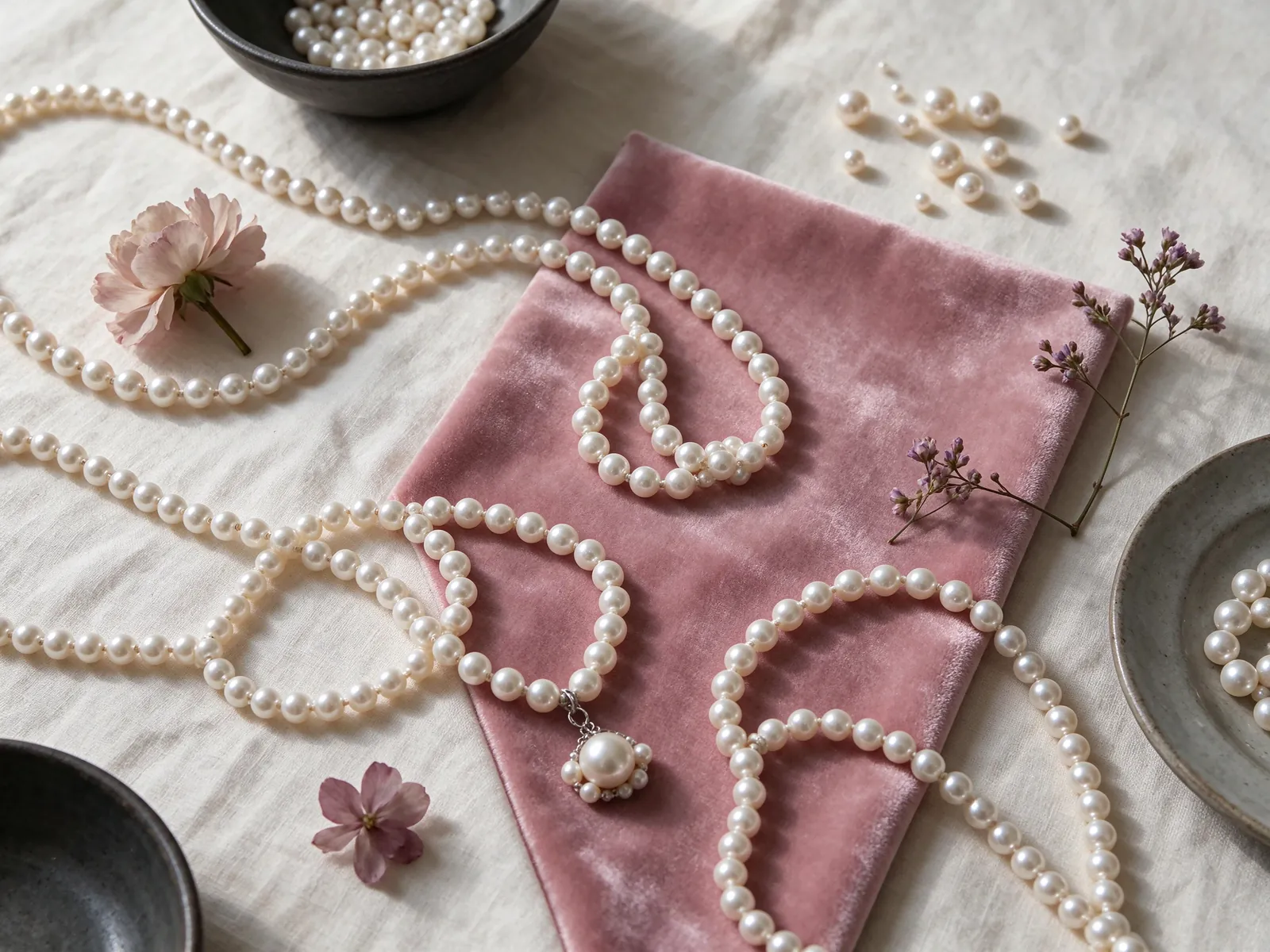
Separate a silver-grey description from pearl identity
A colour phrase answers a visual question, not an origin question. Read the pearl type, cultured identity, geographical origin and colour-treatment information as separate parts of the description. A title combining Japanese and silver grey does not make every detail self-evident. If the terminology is unfamiliar, start with what are Akoya pearls before comparing colour preferences. That sequence keeps the identity of the pearls distinct from the mood you want the necklace to create.
Grey and gray do not name different pearl varieties. Likewise, a grey Tahitian pearl is not an Akoya pearl simply because its colour is similar, and baroque is a shape description rather than a substitute for pearl type. If you are also considering a black Akoya pearl necklace, compare the identity and treatment descriptions first, then decide how light or dark a strand suits your wardrobe.
Ask a precise question about the grey colour
Ask whether the colour has been treated and whether the answer applies to the complete strand. If a laboratory document accompanies a necklace, read which item it describes and what its conclusions actually cover. A photograph, a particularly bright reflection or a price does not identify natural colour. Clear questions are more useful than asking whether a strand is simply a good grey. In a 2024 Akoya study, GIA found irradiation evidence in its samples and dye-treatment evidence in some of them. Those findings concern the tested samples, not every grey strand. They are a reason to read item-specific treatment information rather than diagnose a necklace from its colour.
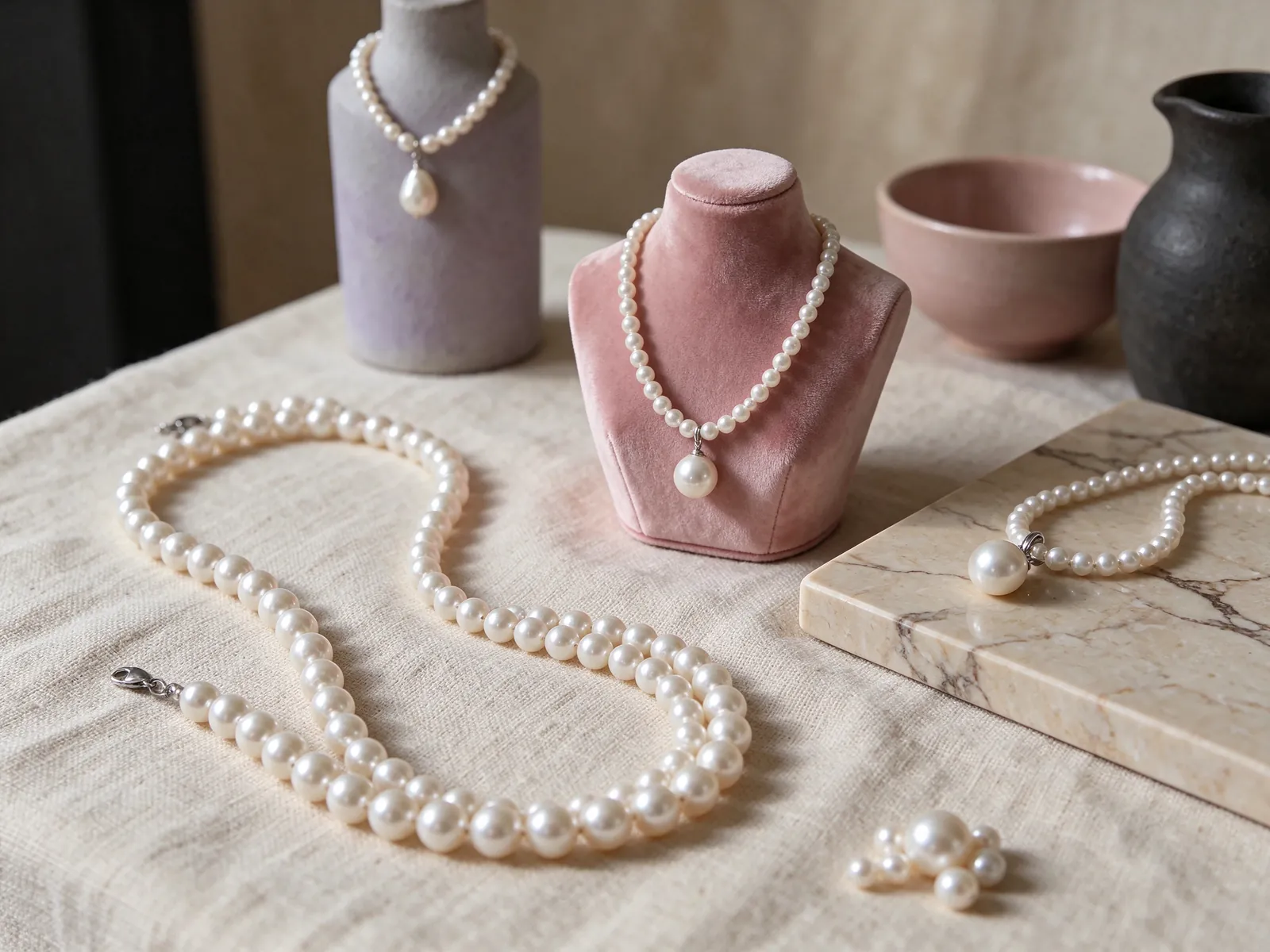
Observe bodycolour, overtone and the full strand
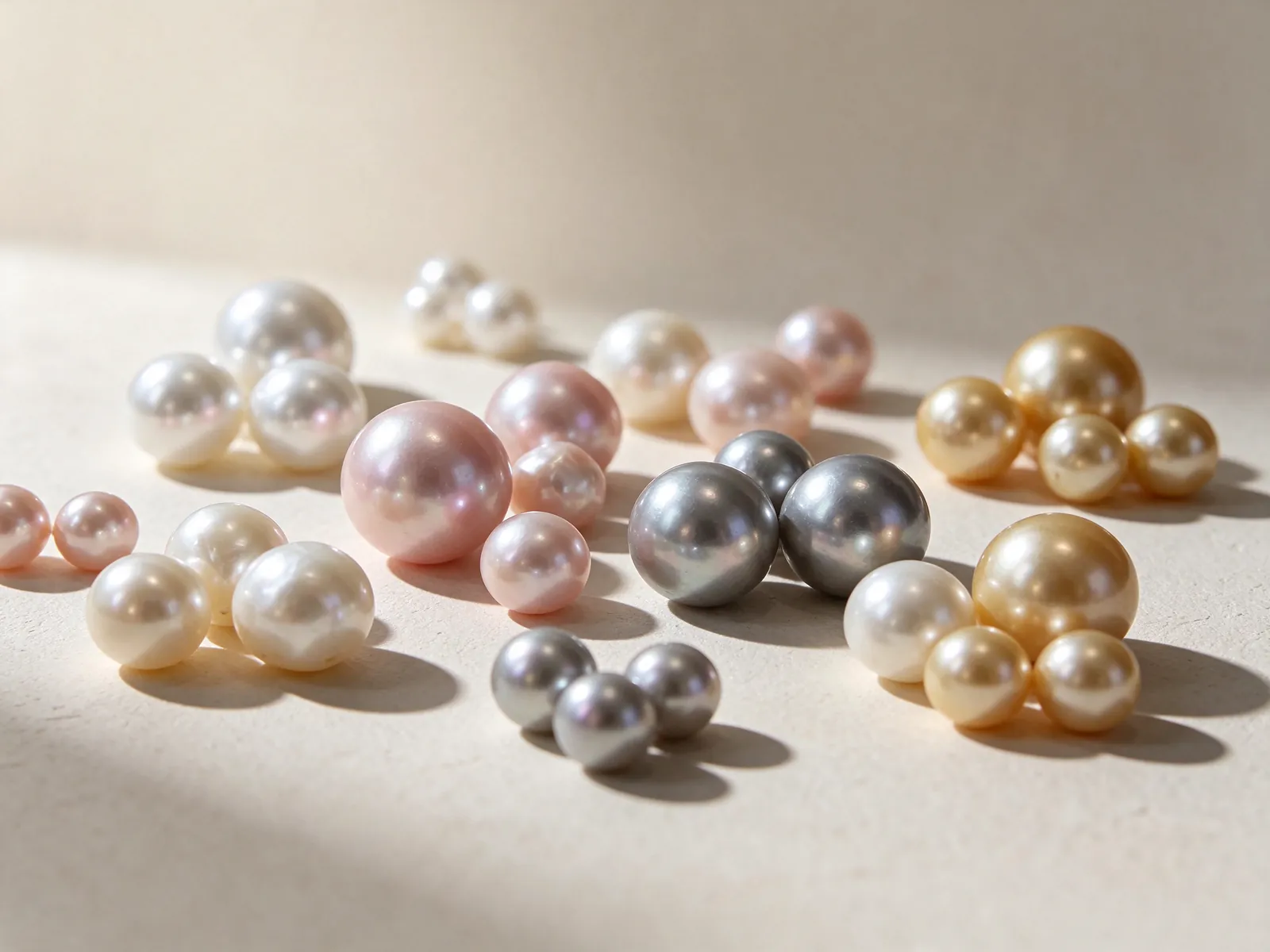
GIA distinguishes bodycolour, overtone and orient, and notes that not every pearl displays all three. For practical comparison, first look at the main colour from a comfortable distance, then examine any colour visible over the surface. View the strand against a neutral background before placing it beside your clothing. This helps distinguish a colour preference from a reflection of surrounding fabric or lighting, especially when a pale grey looks nearly white in one image.
Compare soft window light with ordinary indoor lighting, without treating a bright highlight as the pearl's entire colour. Exposure and white balance can change how grey appears in photographs. Ask for views of the complete strand, not only the most appealing central pearl. If changing colours are part of what attracts you, the multicolour pearl necklace guide can help you distinguish an intentional palette from a strand whose pearls do not work together visually.
Judge matching along the curve you will wear
Follow the pearls from the centre towards both sides. Notice whether one stands out because of bodycolour or lustre, rather than trying to make every pearl identical at every angle. Small variations can still form a coherent necklace. If your preference is a quiet silver-grey effect, describe that overall balance rather than demanding a fixed colour appearance under all lighting conditions.
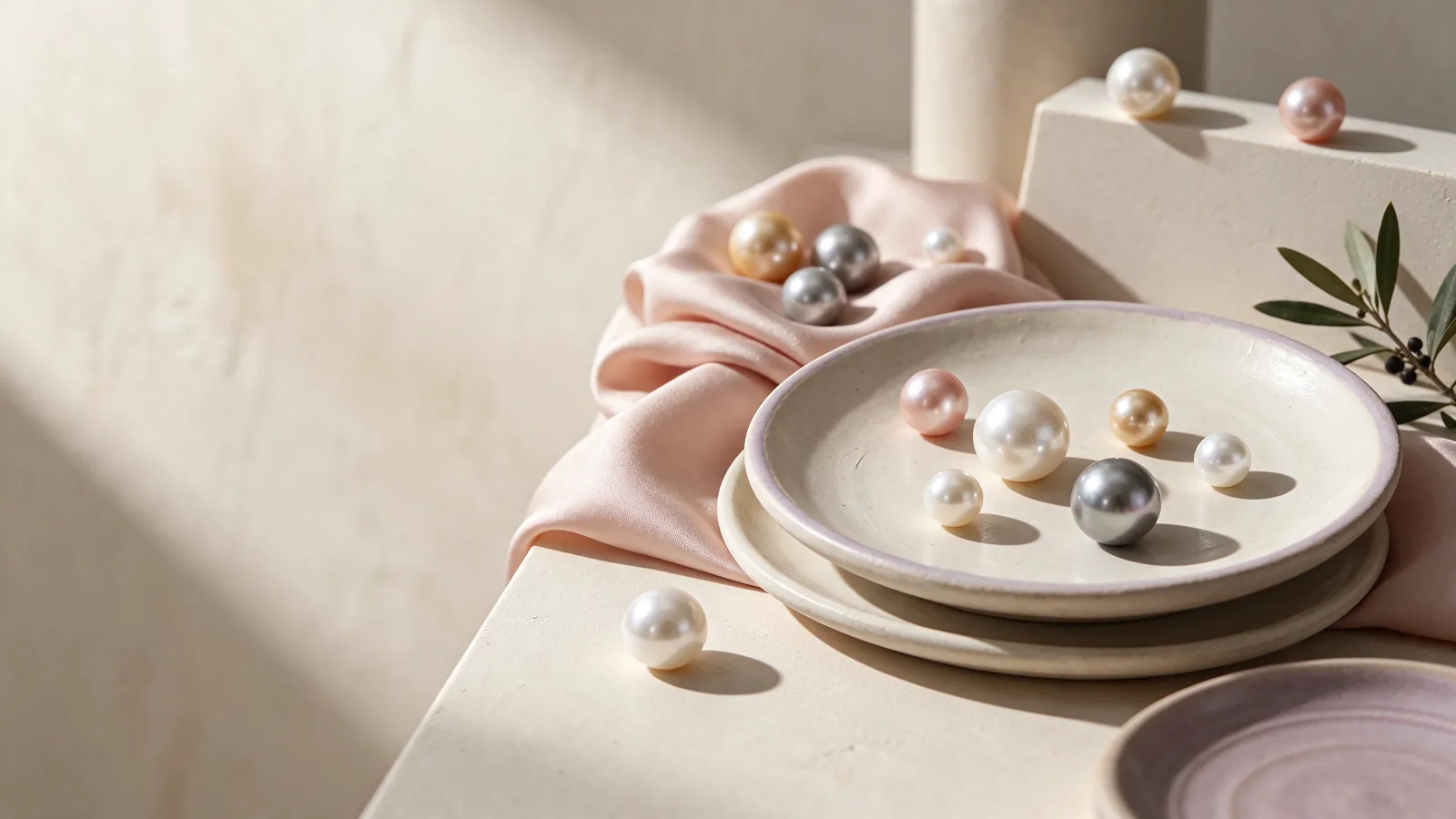
Use quality factors rather than colour alone
GIA describes seven pearl quality factors: size, shape, colour, lustre, surface quality, nacre quality and matching. The framework makes grey-strand comparisons more complete. Examine whether reflections look clear and whether their strength is consistent across the necklace. On the surface, distinguish visible texture or small marks from shadows created by reflections. A close-up is useful, but it should support your view of the whole necklace rather than replace it.
Larger pearls are not automatically a better choice for your neck or clothes. Compare their visual presence, the smoothness of the curve and the space around your collar. Nacre quality cannot be measured from a styling photograph or inferred from grey colour. Where a description uses a letter grade, ask what characteristics it covers instead of assuming every seller uses the same system. Specific descriptions make a meaningful comparison easier.
Do not let one brilliant pearl decide the necklace
Check the centre, the shoulder-facing sections and the area near the clasp. A striking central pearl may suit the design, but a large difference in lustre elsewhere can interrupt the overall effect. A slowly moving view can reveal how reflections change as the strand turns. That is a more useful companion to a still photograph than another image taken at the same flattering angle.
Build a grey-strand look around familiar clothes
A white shirt can make the grey outline easier to see, while black knitwear may emphasise lighter pearls. Grey clothing can create a quieter combination, provided the strand remains visible through its lustre or position. Warm ivory is worth trying if you enjoy a contrast between a cool-looking accessory and a softer background. These are styling options, not rules assigning one pearl colour to every person with a particular complexion.
Patterned tops introduce another visual rhythm. Try a plain inner layer or a little open space around the neckline so that the strand's curve remains readable. Earrings and rings need not match every pearl exactly, but they should not all compete for attention. Put on the necklace first and add the other pieces gradually. This simple order makes it easier to see which addition improves the outfit and which makes it busy.
Layer without losing the necklace's outline
Keep the curves of layered necklaces distinct and notice whether metal chains or clasps repeatedly touch the pearls. If the pieces cross or tangle during normal movement, wearing the strand alone may be the better everyday choice. Do not attach a heavy charm to a necklace that was not designed for it. Test the combination in ordinary posture rather than arranging it solely for a photograph.
Check fastening and stringing as part of selection
The clasp influences more than the view at the back of the neck. Consider whether you can operate it comfortably and whether hair or a high collar catches around it. Learn the opening method before trying it, then check that it closes fully without pulling hard on the strand. A toggle clasp pearl necklace offers a different design conversation, but a grey necklace should not be assumed suitable for front fastening merely because you like that look.
Look at how the pearls sit beside one another and whether the strand bends naturally. Visible thread wear, unusual looseness near holes or persistent snagging deserves attention. Do not cut the thread, add a clasp or twist the pearls to test strength. If an existing necklace has a fastening or stringing problem, stop forcing it into use and discuss its condition with someone experienced in pearl jewellery.
Make a consultation about your actual wearing habits
Prepare a photograph of a favourite neckline, describe your preferred resting position and mention whether long hair or layering affects your necklaces. An existing piece that feels comfortable can be a useful reference for wearing experience without turning its length into a universal prescription. General pearl-selection questions can be discussed with Flint Jewellery through WhatsApp; clear styling priorities are more informative than a colour word alone.
Protect the surface rather than trying to polish the grey
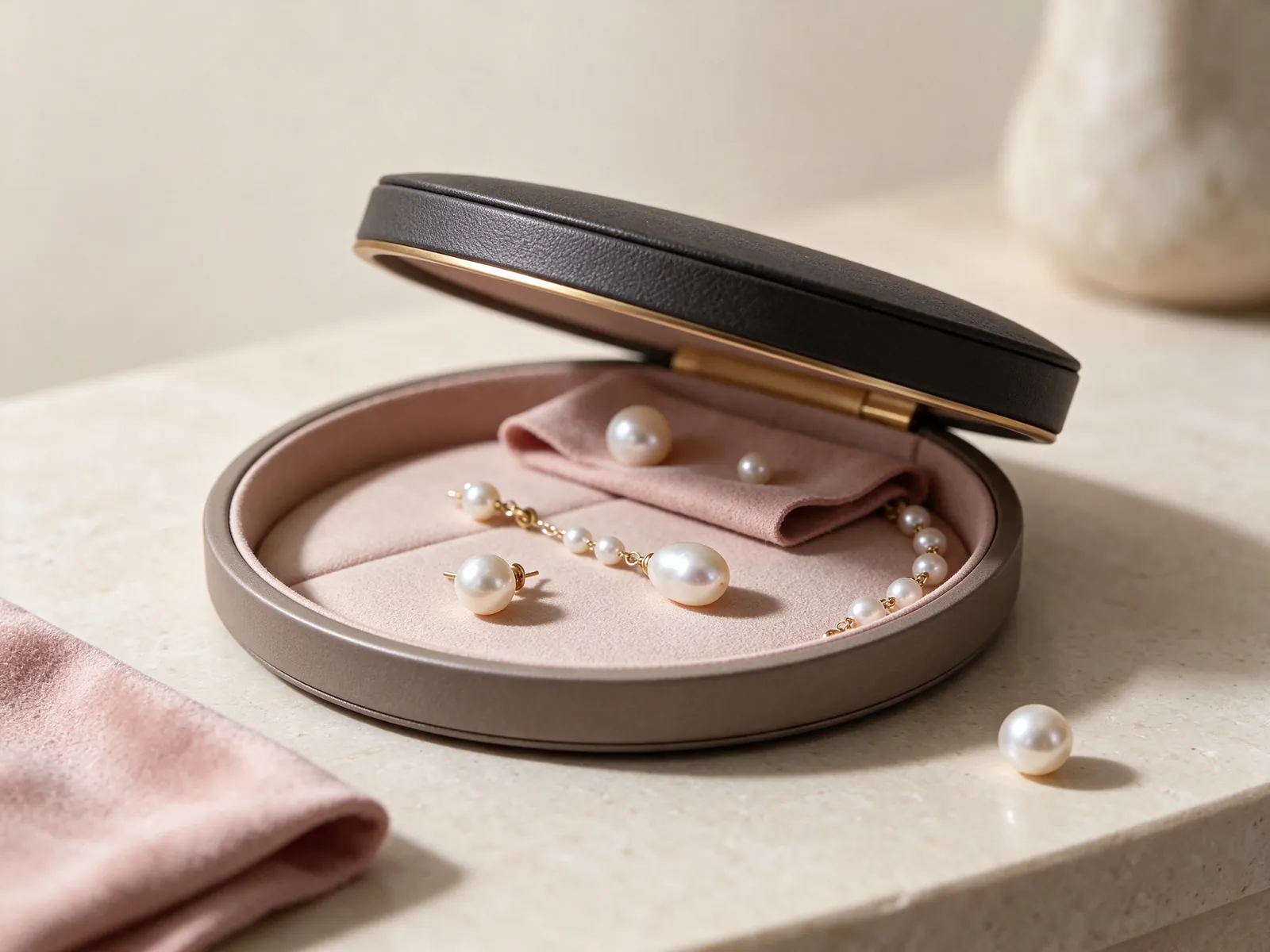
GIA places pearl at 2.5 on the Mohs hardness scale. Grey appearance does not make it suitable for aggressive cleaning. After wearing, use a very soft, clean cloth and keep the strand away from harder jewellery that could rub against it. Avoid acids, perfume, hair spray and excessive heat. Completing your grooming before putting on the necklace helps keep everyday products away from the pearl surface.
Never clean pearls with ultrasonic or steam cleaners. If a strung necklace is cleaned with water, the string must be completely dry before wearing again, even when the pearl surfaces already feel dry. Store it separately from sharp edges and other stones. If it appears dull, do not use polishing compounds or heavy rubbing to chase a brighter silver-grey finish; surface residue and a change of lighting are different issues.
Compare appearance in a consistent setting
Before concluding that a colour has changed, look at the necklace under similar soft lighting and against the same background as before. An outdoor image and a warm indoor image are poor evidence of a lasting change. Persistent surface irregularities or thread problems are better assessed professionally than tackled with chemical cleaners. Good care supports the material without promising an unchanging colour or unlimited wear. Want to turn a silver-grey preference into a clearer selection conversation? Share the neckline you wear most often and explain your preferred drape or clasp operation. Ask Flint Jewellery about general pearl selection on WhatsApp: https://wa.me/85260106207.
| Feature | What to observe | Useful question | Styling relevance | Avoid assuming |
|---|---|---|---|---|
| Name and identity | Read colour and pearl type separately | How is colour treatment described? | Choose a visual preference after identity | Silver grey proves origin |
| Drape | Try the usual collar and sit down | Does the stated length include the clasp? | Keep the curve clear of the collar edge | One length fits everyone alike |
| Colour harmony | Compare the entire curve in different light | Can I see complete-strand views? | Test white, black and ivory backgrounds | One photograph fixes the colour |
| Lustre and matching | Follow the centre towards the sides | What does the quality description cover? | Look for a coherent rhythm | The brightest pearl represents all |
| Fastening and care | Operate the clasp without pulling | How should this clasp be opened? | Consider hair, collars and layering | Grey colour means greater durability |
Pearl knowledge and authoritative references
GIA describes seven pearl quality factors: size, shape, colour, lustre, surface quality, nacre quality and matching. Grey colour is therefore only one part of a complete strand comparison.
Read the reference for this factFrequently asked questions
Are grey Akoya pearl necklace and gray Akoya pearl necklace different categories?
No. Grey and gray are spelling variants. The useful distinctions concern the individual pearls' identity, appearance and treatment information, not which spelling a title uses.
Does silver grey mean the necklace contains silver?
In a pearl colour description, silver grey describes appearance. It does not establish the material of the clasp or any other component. Read those component descriptions separately.
Can a grey strand work with a patterned work shirt?
Yes, if the strand retains a clear outline. Try the shirt with its collar in the usual position and consider a plain inner layer. The most useful test is whether the curve and the pattern remain distinct during normal movement.
Should every pearl show the same grey under every light?
That is not a practical matching test. Compare bodycolour, lustre, size and shape across the worn curve, while allowing for changing reflections. Decide whether you prefer quiet harmony or an intentionally varied palette.
Will a photograph establish whether the grey is natural or treated?
No. Lighting and image settings affect appearance. Read the treatment description and, where supplied, the conclusions of a laboratory document that applies to the individual item.
Updated: