Flint Jewellery terminology guide: When reading about a Tennyo pearl necklace, why separate Aurora Tennyo Akoya pearl strand or TEN-NYO pearl necklace wording from report evidence?
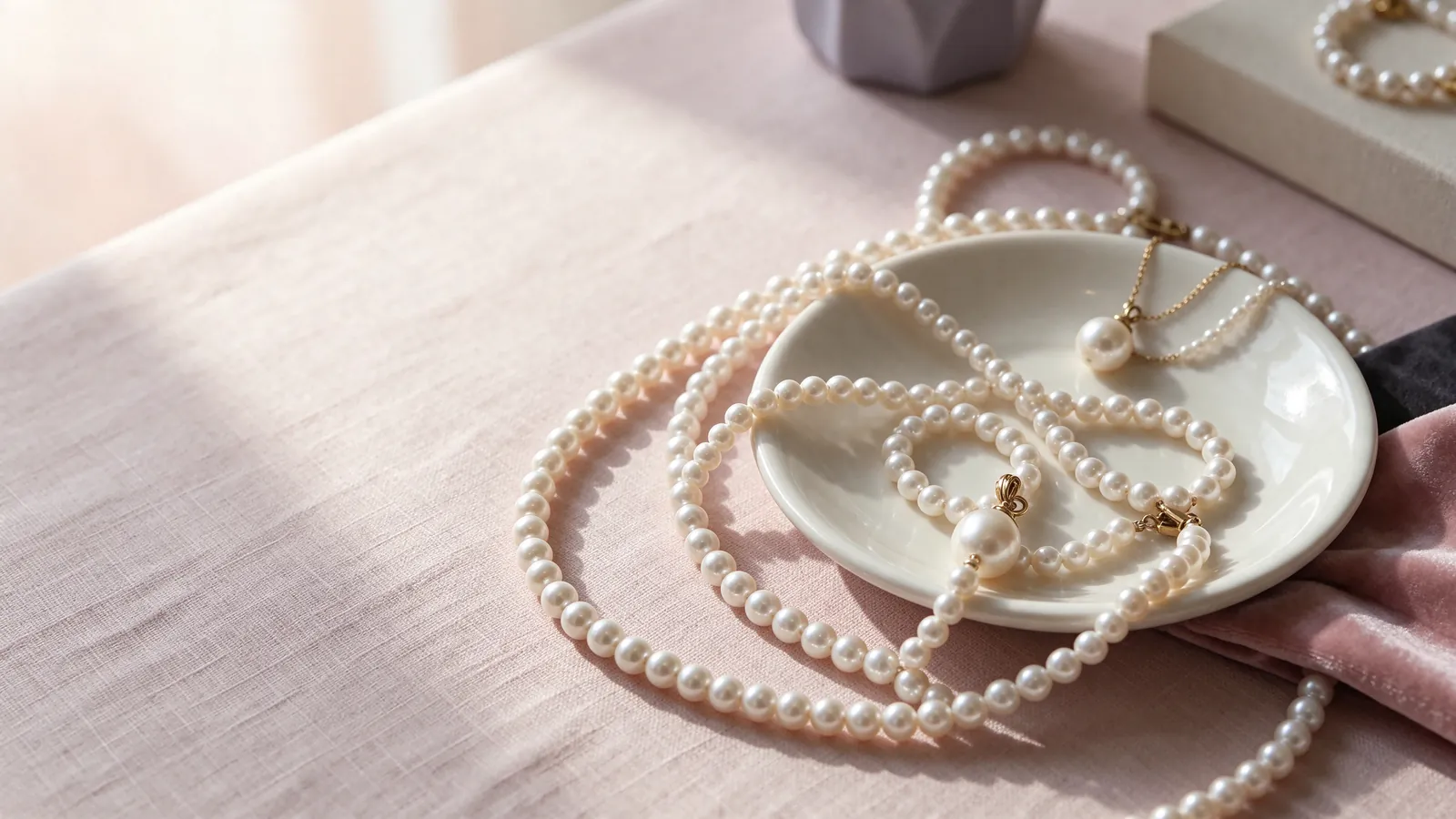
A Tennyo pearl necklace search often begins with a memorable name, but a title and a report perform different jobs. WSP's public product-page titles include Aurora TEN-NYO Akoya Pearl Necklace and Aurora Tennyo Double Strand Pearl Necklace. These examples show how names and strand arrangements are expressed in a listing. They do not, by themselves, establish the contents of a document accompanying another necklace. Read an Aurora Tennyo Akoya pearl strand or TEN-NYO pearl necklace description in separate layers: wording, item details and documentation.
GIA identifies seven pearl quality factors: size, shape, colour, lustre, surface quality, nacre quality and matching. The Akoya pearl necklace guide can help you turn a name into practical selection questions: which factors are actually described, and which deserve a closer look? An especially bright photograph may attract you, for example, while telling you little about matching along the whole strand. Keep visual impressions distinct from conclusions recorded in a report.
Flint Jewellery comparison questions: When comparing Tennyo pearl necklace descriptions, which names and item details should you check if a report accompanies an Aurora Tennyo Akoya pearl strand or TEN-NYO pearl necklace?
Read the issuing organisation, date, item description and wording actually present on the document. Where an identifier or photograph is included, compare it with the necklace being discussed. Establish whether the document describes an individual pearl, a whole strand or another object before extending its statements. Preserve the original terminology rather than translating it into a different grade of your own.
How do you connect a document to the necklace in front of you?
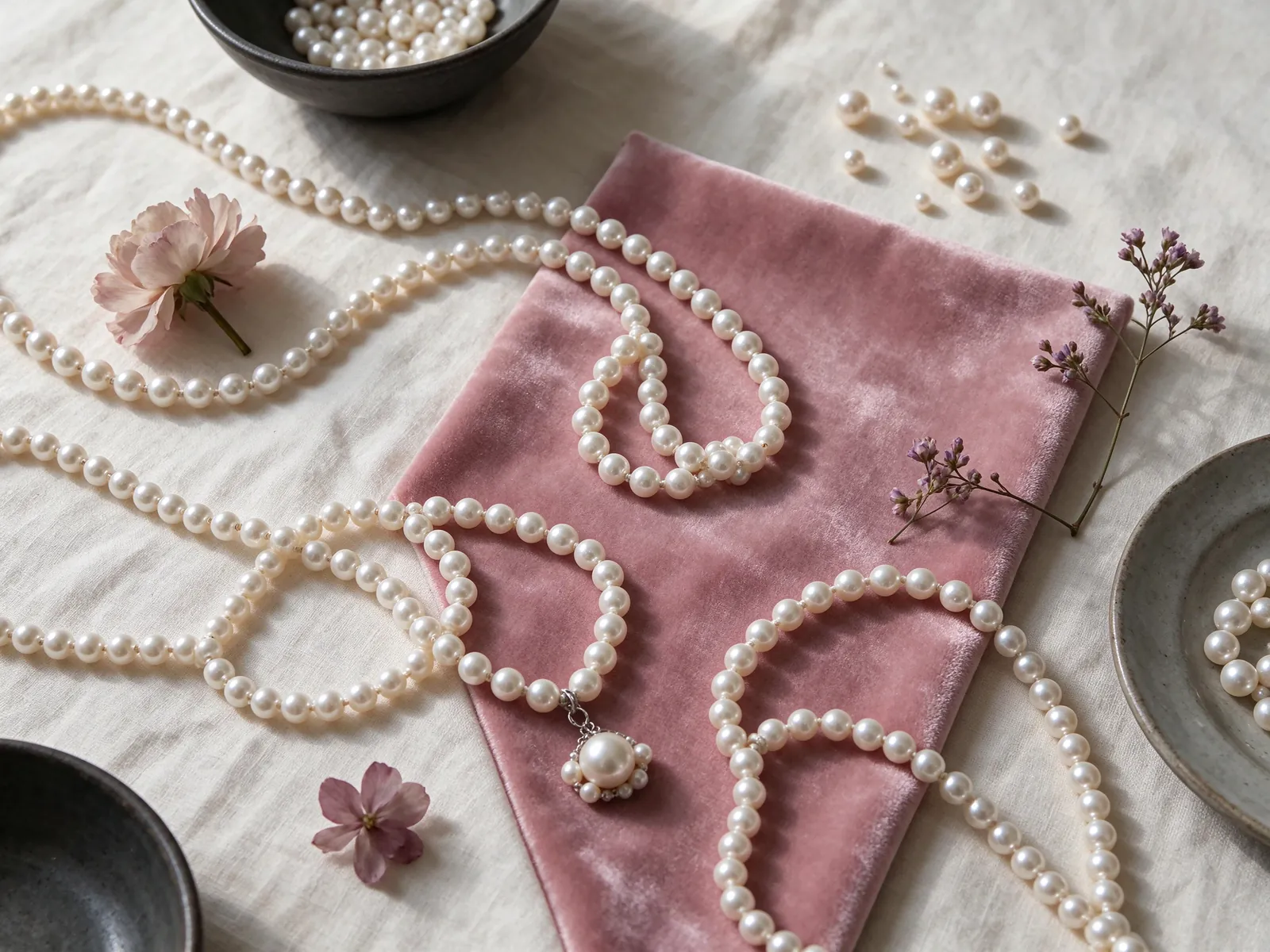
Ask to see a readable complete document rather than a cropped name or a close-up of a stamp. The item description, conclusion and any notes need to be considered together. Then compare the identifying details it actually contains with the necklace: strand arrangement, general appearance and any listed measurements or quantities. Not every document contains the same fields, so use the information provided instead of assuming a standard checklist has been completed on your behalf.
A pearl necklace with GIA report is a separate document-reading subject, not another spelling of Tennyo. An institution's name and a necklace title should not be treated as interchangeable credentials. Equally, documentation for one object does not become evidence for another simply because their photographs look similar. Keep practical questions beside the document questions: whether the necklace sits comfortably, whether you can operate the clasp, and whether its position works with the clothes you normally wear.
What should you ask if the strand has been altered?
Ask whether pearls have been replaced, the number of strands changed or the necklace reassembled after the document was issued, and what information connects the present item to that document. A clasp change and a pearl change are different alterations. Clarifying them helps establish what the document describes without expecting a single photograph to answer every identification question.
How can you compare Tennyo with other names without inventing a ranking?
Keep each full name intact when comparing descriptions. A Hanadama Akoya pearl necklace is another terminology topic; the appearance of both names in pearl listings does not establish identical documentation or a common grading scale. Apply the same practical questions to each description: what object is being discussed, what document accompanies it, how the conclusion is worded and how the item can be compared with that description. This creates a clearer comparison than collecting impressive adjectives.
An Aurora Akoya Queen pearl necklace should also be read on its own terms, rather than placed above or below Tennyo from the title alone. First understand the evidence attached to each particular item, then consider the appearance you prefer. Do not infer origin, treatment status or a proportion of higher-quality pearls from an appealing name. Those are item-specific questions. A shared word in two titles is not enough to fill in information that their documents do not state.
Does a spelling difference change the evidence?
Record Tennyo, TEN-NYO and any capitalisation exactly as they appear in the full title. A spelling difference alone neither proves that two documents are equivalent nor establishes that they describe different items. When comparing English and Chinese descriptions, retain both versions alongside the document wording. Structural terms such as double strand may be more immediately relevant to your choice than typography.
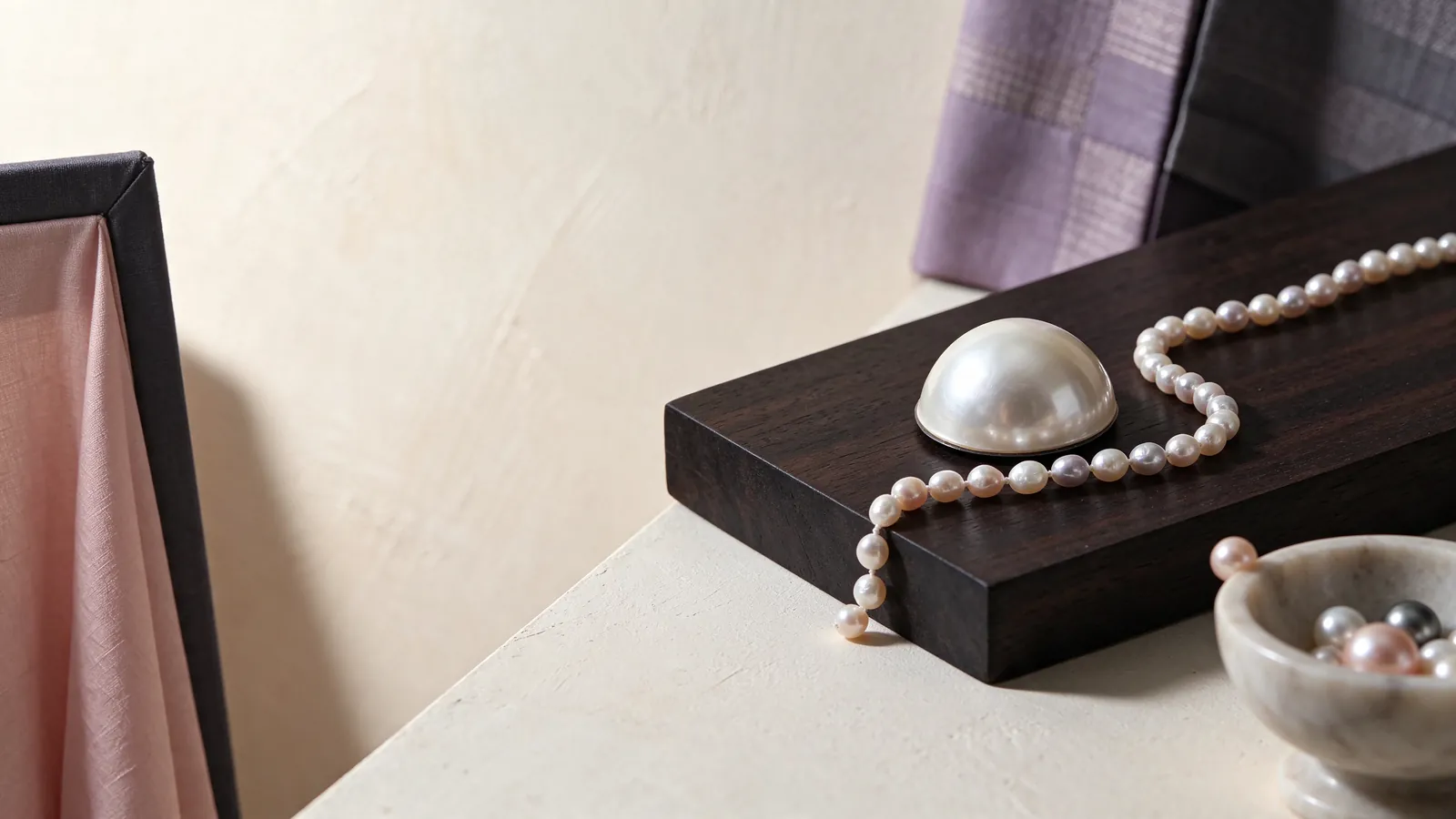
What should you examine across the whole strand and clasp?
Look beyond the most striking pearl in the centre. Examine how lustre, colour and shape relate along both sides of the necklace, and whether the overall rhythm appeals to you. Some wearers prefer a highly consistent appearance; others enjoy more visible variation. Compare images under similar lighting and against similar backgrounds where possible. A spotlighted strand and a shaded strand are difficult to judge fairly, even before differences in camera exposure are considered.
The 18K gold clasp pearl necklace guide addresses a different part of the buying decision: how a fastening affects appearance and use. Decide whether you want the clasp concealed behind the neck or visible as part of the composition, then consider its operation and position against clothing. The clasp's material cannot establish a pearl grade. If you can try the necklace, opening and closing it yourself reveals more about convenience than a photograph of the clasp's decorative face.
What makes a double strand work on the body?
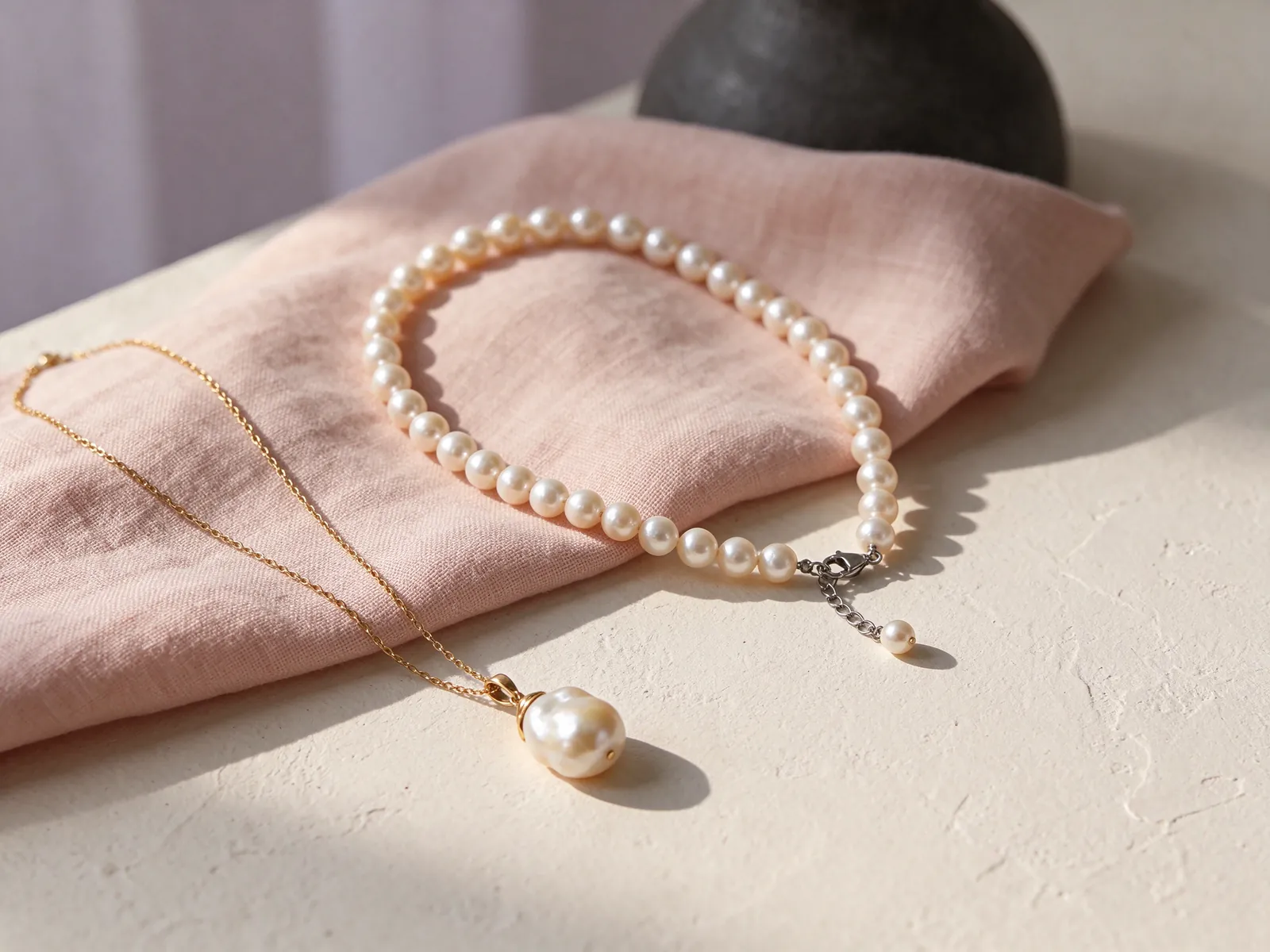
Check whether the inner and outer arcs remain visibly separated and whether the arrangement changes when you turn your head. A double strand is not automatically a better formal choice. Its success depends on the neckline, the way the strands settle and the comfort of the fastening. Try it with different collar shapes rather than judging its layers only on a display stand.
How can a Hong Kong work wardrobe guide necklace placement?
For office wear, bring the comparison back to a shirt or blouse you actually use. Check the necklace with the collar both open and closed: does the strand remain visible, or does it disappear against the collar edge as you move? With knitwear, see whether the pearls create a clean arc above the neckline or sit more effectively over the fabric. A commonly quoted length is not a substitute for observing the landing point on your own body.
For a dinner or wedding reception, begin with the open space created by the outfit. A rounded neckline can frame a strand differently from a more open one, and earrings may already provide the strongest visual feature. Try a quieter necklace arrangement if your earrings have a pronounced drop or outline. These are styling decisions rather than rules attached to the Tennyo name. The aim is a piece of jewellery that works with your wardrobe, not simply a title that sounds suitably formal.
The pearl necklace length guide is useful when translating an intended landing point into a fitting question. Note whether the strand falls above, below or against a familiar collar edge, then check what changes when you sit down or turn your head. These observations communicate your preferred wearing effect more clearly than a name alone.
Which fitting photographs are most useful?
Take a front view, a side view and a view with the head slightly turned, keeping the neckline and shoulders in the frame. These reveal placement and changes in the arrangement better than a tight crop of the pearls. For layering, try the necklace alone first, then add each other piece separately and observe where metal chains repeatedly touch the strand.
Which questions make an online enquiry or gift choice more useful?
Divide an online enquiry into documentation, appearance and use. Ask for the full document description where one is provided, clear views of the whole strand and clasp, and an explanation of the necklace's stated length and fastening. A question such as 'Is it the highest grade?' tends to collapse several different issues into one answer. More specific questions make it easier to distinguish documented information from a seller's description or your own preference for the look.
For a gift, observe the recipient's habits before concentrating on a name. Does she wear full pearl strands, favour consistent outlines or enjoy visible variation? Does she usually choose high necklines? If she has a frequently worn necklace, ask what she likes about its position and fastening rather than assuming its length will work with every outfit. When discussing selection with Flint Jewellery, these practical details provide a useful starting point without presuming that a particular named necklace is available.
What can you judge from only a title and an image?
You can begin with visible arrangement and styling direction, then identify the unanswered questions. Do not fill in pearl identity, dimensions, price or report conclusions from appearance alone. A clear request for a whole-strand view or a readable document is more productive than trying to extract every answer from one polished photograph.
How does care belong in the buying decision?
GIA gives pearl a Mohs hardness of 2.5, making storage and everyday handling worth considering alongside appearance. Wipe pearls after wear with a very soft, clean cloth and keep them apart from jewellery that could scratch them. Apply perfume and hair spray first and let the contact areas dry before wearing the necklace, and avoid acids and excessive heat. These are general pearl-care considerations; a Tennyo title does not make the strand exempt from the handling appropriate to pearls.
Never use an ultrasonic or steam cleaner on pearls. If strung pearls are cleaned with water, allow the string to dry completely before wearing them again; a dry-feeling pearl surface does not establish that the string is dry. Notice changes in knots or clasp operation rather than forcing a troublesome fastening. Considering how you will store, wipe and remove the necklace helps connect the buying decision to real daily use, rather than leaving care until a problem appears.
What simple routine supports frequent wear?
Choose a separate soft storage space and make gentle wiping easy to remember after an evening out. If you layer the necklace, watch the points of contact with other pieces. Avoid dropping it into a pile of jewellery when taking it off. A suitable necklace should make sense together with your document questions, clothing choices and willingness to care for the strand.
Comparing Tennyo wording, a single strand and a double strand, or questions about an accompanying document? Contact Flint Jewellery on WhatsApp +85260106207 with your occasion and preferred neckline. Share only document details you are entitled to disclose, with personal information concealed, so the selection conversation can begin with the details that matter to you.
| Comparison layer | What to read | Question to ask | Wearing consideration | What not to assume |
|---|---|---|---|---|
| Listing name | Full wording and spelling | What does this name describe here? | A title does not choose a neckline | A title is a certificate |
| Accompanying document | Conclusion and item description | Does it cover one pearl or the strand? | Documentation does not replace a fitting | Another item's document applies |
| Lustre and matching | The whole necklace, including both sides | Can images use comparable lighting? | Observe the strand as it moves | Photographic brightness proves a grade |
| Arrangement and clasp | Strand structure and fastening | How does the clasp operate? | Test the arcs against familiar collars | Strand count or clasp material proves pearl quality |
| Daily care | GIA lists pearl at Mohs hardness 2.5 | How will it be stored and cleaned? | Plan separate soft storage | A name removes the need for care |
Pearl knowledge and authoritative references
GIA identifies seven pearl quality factors: size, shape, colour, lustre, surface quality, nacre quality and matching. They provide a comparison framework, not a certification conclusion for a Tennyo title.
Read the reference for this factFrequently asked questions
Can a Tennyo title establish what a whole-strand report says?
No. Read the actual accompanying document and establish the object it describes. The title may help you find a description, but it cannot replace the document's conclusion or extend information from an individual pearl to the whole necklace.
Should TEN-NYO and Tennyo spellings be treated as different certificates?
Spelling alone does not establish that distinction. Keep the full wording, then compare the item description and document terminology. Do not turn capitalisation or punctuation into a grading conclusion.
Is a double strand necessarily the more formal option?
Not necessarily. Check whether the two arcs settle clearly, work with the outfit and feel comfortable at the clasp. A single strand can create a strong formal focal point without extra layers.
Can a report for one pearl answer questions about matching?
A document describing one pearl should not be extended automatically to a whole strand. Matching requires attention to how size, shape, colour and lustre relate across the necklace, alongside any information specifically describing the strand.
Why ask to operate the clasp during a fitting?
It affects everyday removal, direction and comfort against clothing. Trying the mechanism and viewing its side and back can reveal practical considerations not visible in a front-facing photograph. These are separate from the pearl name and report wording.
Updated: