
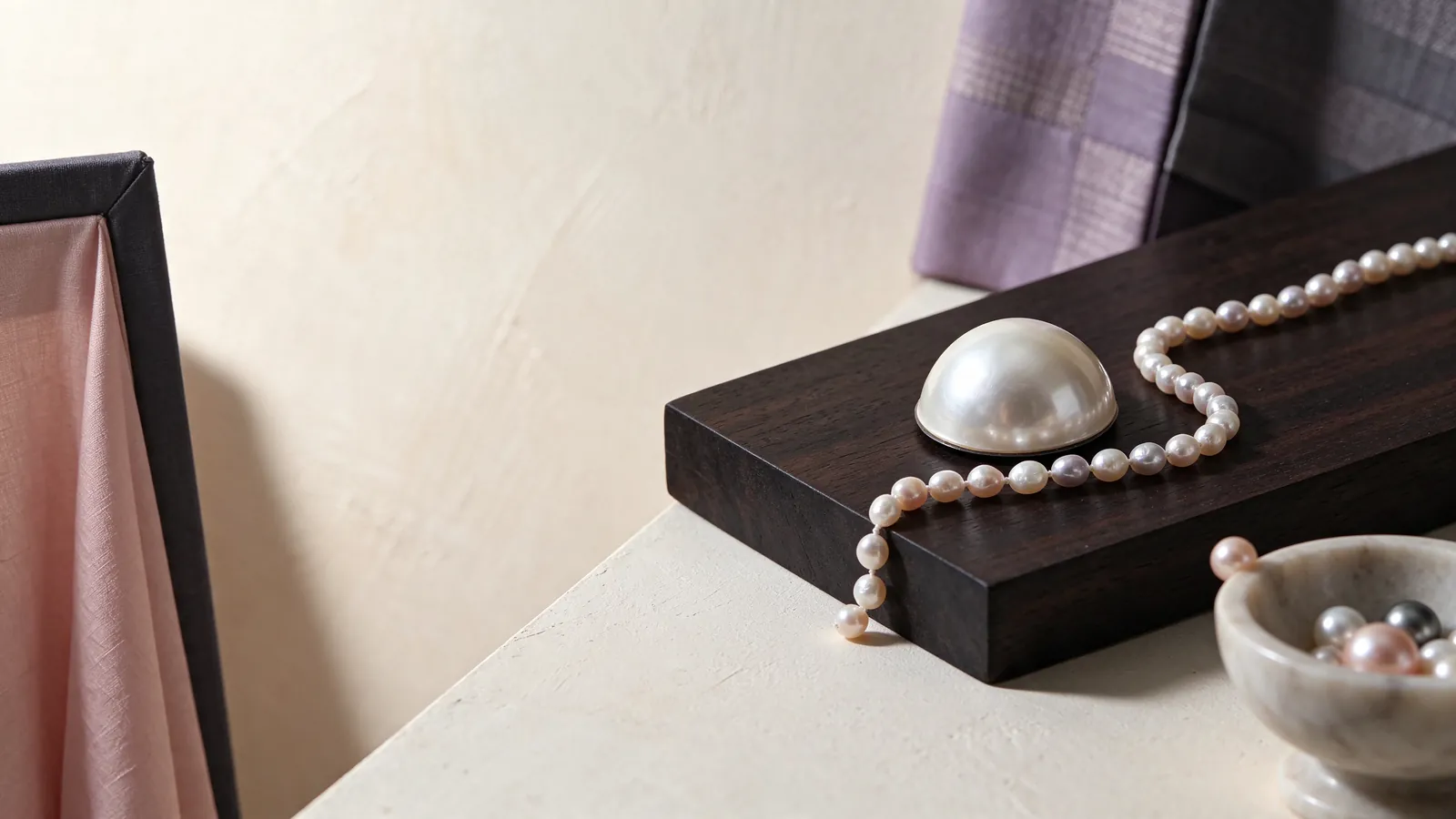
Reading report scope for a pearl necklace with GIA report: looking beyond “GIA certified pearl necklace” when considering an Akoya pearl strand with GIA report | Flint Jewellery
When considering a pearl necklace with GIA report, begin with the object described in the document. One loose pearl, several pearls and a finished necklace are different objects. Find the wording that establishes what was examined before applying any conclusion to the whole strand. A description of one pearl does not automatically answer questions about neighbouring pearls, the threading or the clasp.
The phrase GIA certified pearl necklace is a search label, not a substitute for the document’s actual title and conclusions. The same reading discipline applies to an Akoya pearl strand with GIA report: inspect the stated object and scope rather than expanding the wording in a listing. When comparing an Akoya pearl necklace, separate the appearance and wearing questions from the report questions. The necklace name alone does not establish species, origin or coverage of every pearl.
How do the report number and description relate to a pearl necklace with GIA report labelled “GIA certified pearl necklace”, including an Akoya pearl strand with GIA report? | Flint Jewellery
Keep the report number with the full document, not just a screenshot of the listing. Compare the description with the necklace in front of you and, where provided, check photographs or measurements as well. A number identifies a document; it is not a quality score. If the description and piece differ, ask whether pearls have been removed, rearranged or replaced, or whether the clasp has changed.
GIA lists a Pearl Identification Report, a Pearl Identification & Classification Report and a Cultured Pearl Classification Report as separate services. The Identification Report describes quantity, weight, size, shape and colour, alongside origin, mollusk, environment and detectable treatments. The Identification & Classification Report adds lustre, surface and matching where applicable. The Cultured Pearl Classification Report classifies cultured pearls using the seven pearl value factors. Begin with the formal report title, then read the information actually recorded in that particular document. Do not assume that every type of pearl report provides identical information.
GIA Report Check lets you confirm whether information on a report matches the information archived in GIA’s report database. Use the report number and compare the returned details with your complete document. A database match is not a remote examination of the necklace in front of you. Continue to compare the description with the physical piece, and refer an unresolved difference to the issuing organisation rather than treating a searchable number as proof of a match to your strand.
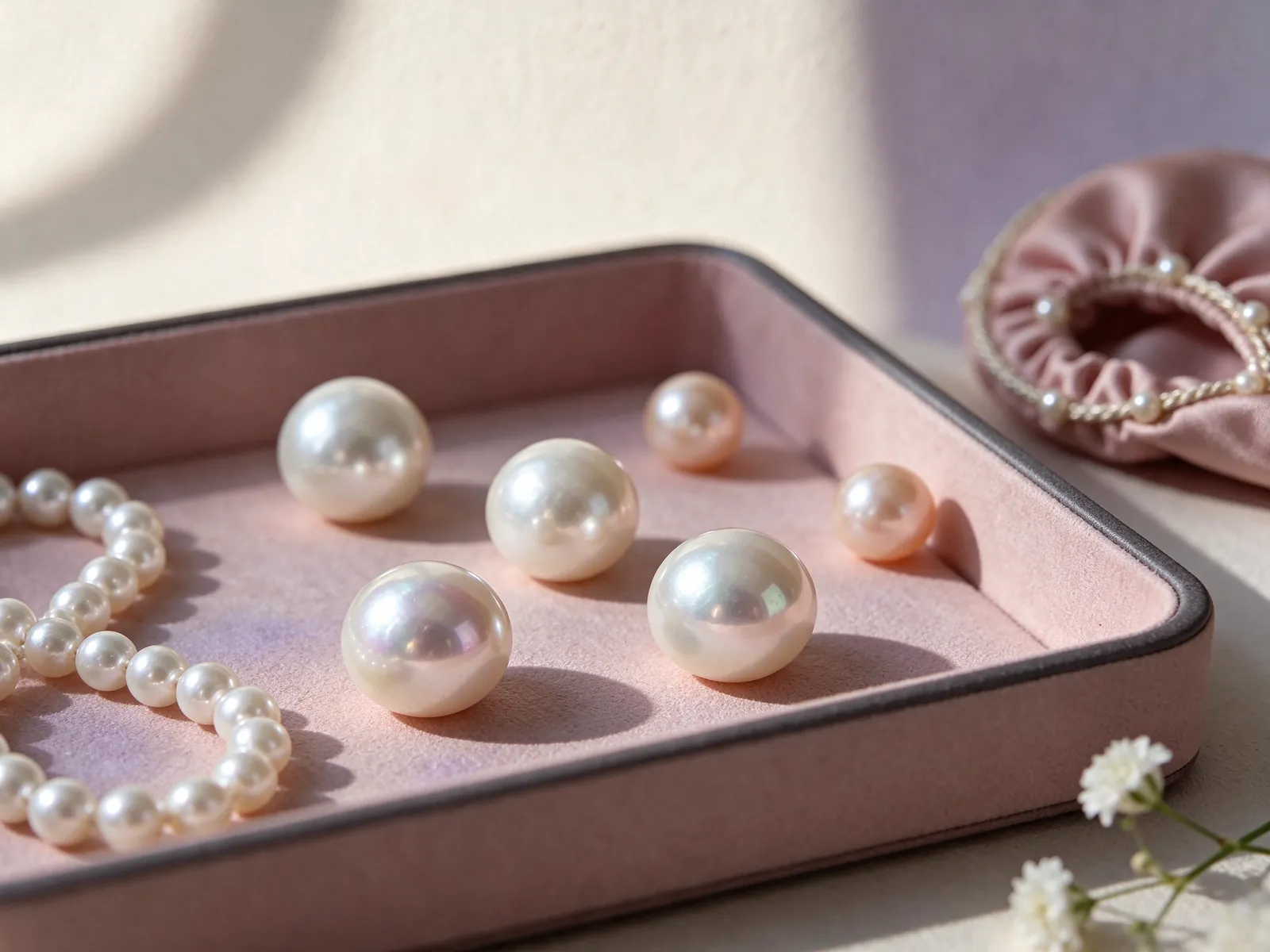
Separate pearl information from the construction of the necklace
A necklace brings together pearls, a threading arrangement and a fastening. Information about one component should not be treated as evidence for another. A clasp mark cannot establish the identity of the pearls, and a pearl description does not automatically establish the clasp material. Make separate notes for the report’s wording, the jewellery description and the construction details you can inspect in person.
A single-pearl pendant concentrates attention on one principal pearl; a strand also asks you to consider the arrangement on both sides and around the neck. Reading about a single strand pearl necklace helps frame questions about the full line of pearls, but cannot expand a single pearl’s report to cover a necklace. Ask to see the entire strand rather than only a close-up of its central pearls, and establish whether the photographed and proposed piece are the same one.
Keep a clear history when a strand is altered
If pearls are removed, their sequence changes or a fastening is replaced, retain photographs and a description of the alteration alongside the original report. The original document may not describe the later configuration. Whether a new examination is appropriate depends on the actual change and should be discussed with the report’s issuing organisation. Keeping records does not mean that every restringing automatically requires a new report.
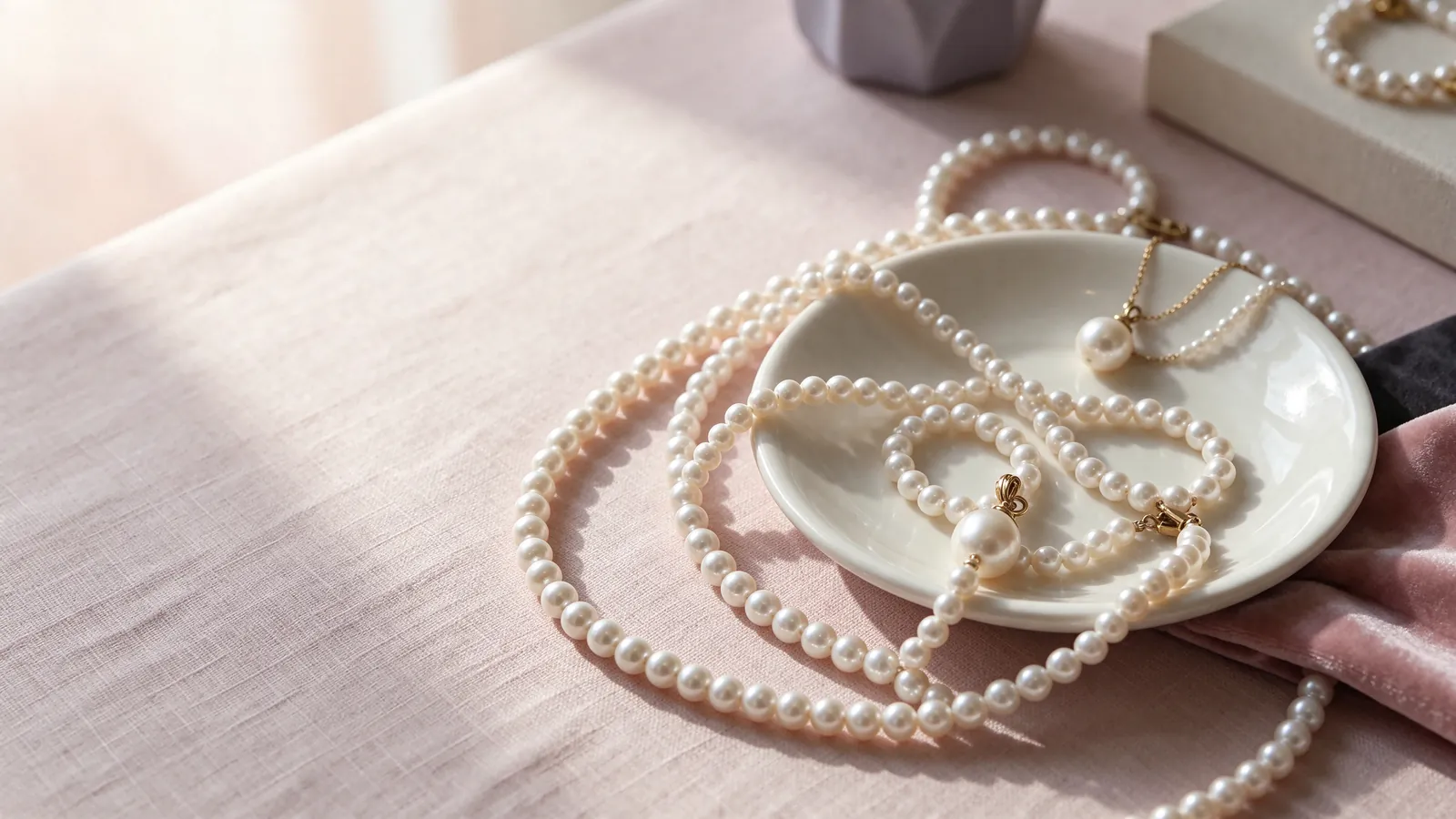
Use seven quality factors to assess the strand beyond its label
GIA describes seven pearl value factors: size, shape, colour, lustre, surface quality, nacre quality and matching. Matching deserves particular attention in a strand: individually attractive pearls can look less harmonious together. Begin with the necklace as a whole, then examine individual differences. An intentionally varied multicolour pearl necklace calls for considering harmony within its design, rather than assuming every pearl must have the same colour. Turn these observations into specific questions without reducing every aspect of the jewellery to a single commercial grade.
Compare necklaces under similar lighting against the same background, rather than placing one beneath a spotlight and another in shadow. Then hold the strand near the colours you regularly wear. Bodycolour, overtone and orient are distinct colour components, and not every pearl displays all three. A reflection or colour seen in a photograph cannot, by itself, establish origin, natural-versus-cultured identity or the existence of a particular report.
Read the necklace name separately from the report
When reading about a Hanadama Akoya pearl necklace, separate the name from the issuer, wording and object of any accompanying document. If the listing also mentions GIA, still read the actual report title and conclusions. Two terms appearing together do not establish that every component of the strand receives the same assessment. Compare what each document explicitly states, and raise questions about any part you do not understand. A familiar-sounding name cannot replace observation of the complete necklace.
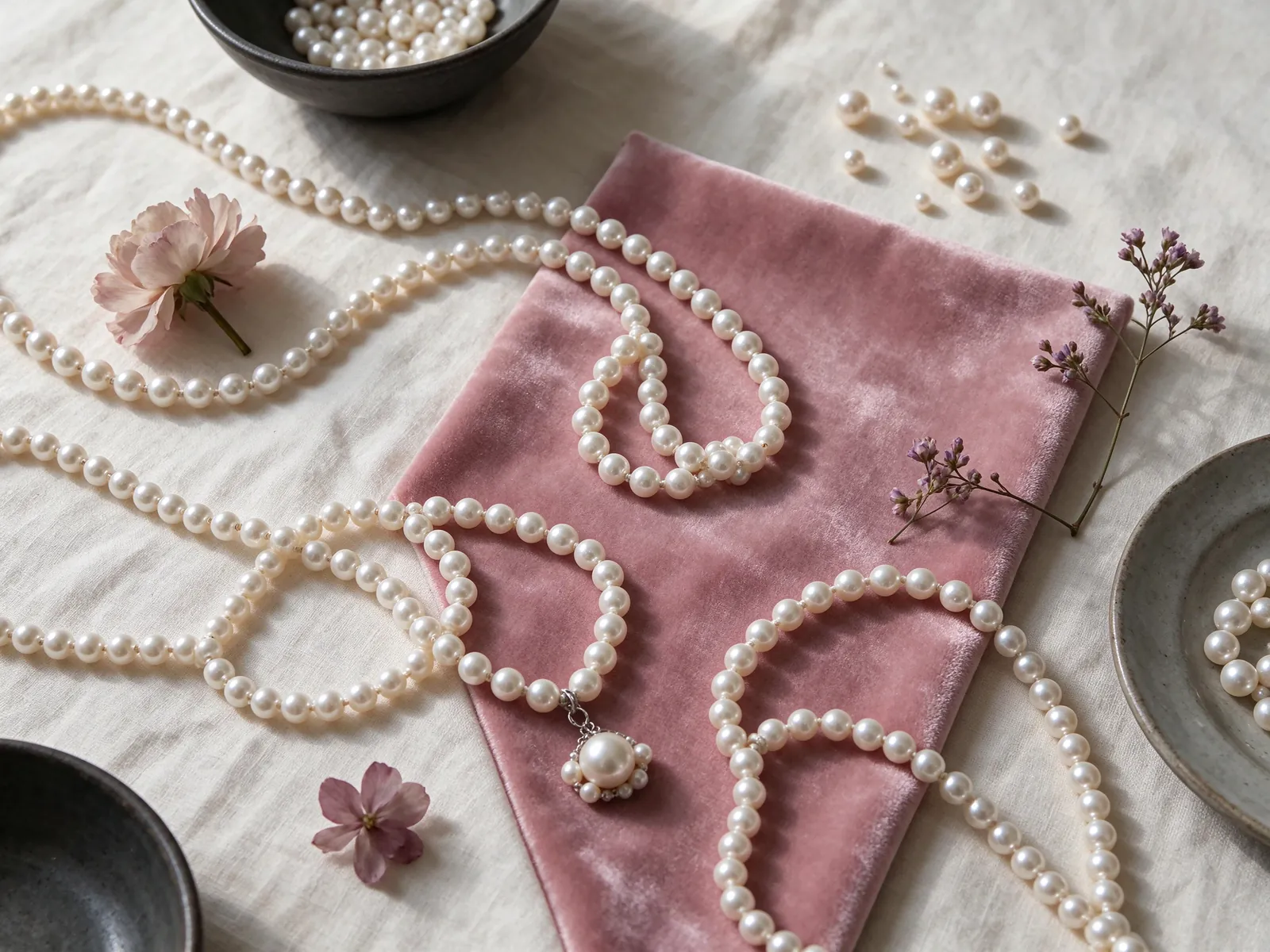
Try the neckline, movement and fastening before deciding
A report cannot tell you whether a necklace sits comfortably at your collarbone. Wear a top close to the intended outfit when trying a strand. With a round neckline, check whether the pearls catch on the edge; with a shirt, consider the space between the open collar points. Stand, sit and turn your head to see whether the centre shifts or the fastening presses against the back of your neck.
The clasp contributes to practical handling as well as appearance. The 18K gold clasp pearl necklace guide can help you think about fastening design separately from pearl documentation. Check whether you can open and close it comfortably, whether hair catches and whether it tends to move towards the front. If considering a length change, explain the desired resting position and usual neckline before discussing the altered arrangement.
If you are considering shortening or lengthening a strand, use the pearl necklace length guide to organise your usual neckline and preferred resting position. Then ask whether the adjustment involves removing, adding or rearranging pearls, and retain a record of the change. Length is a wearing decision; matching the altered piece to its documentation is a separate reading task. Discussing them together helps you find a proportion you enjoy without overlooking what the original report actually describes.
Let the outfit set the visual balance
For formal wear, a clear pearl line can work with simpler earrings; for an everyday shirt, compare wearing the strand inside and outside the collar. If combining it with a pendant, watch for rubbing or tangling between the pieces. Documentation and fit have different jobs: the document provides its stated information, while trying on the necklace reveals proportion, comfort and personal preference.
Make every buying answer refer to the same physical piece
Organise buying questions around three areas: which piece the document describes, which quality details are explicitly stated, and whether the necklace suits your use. Request a readable complete document rather than relying on a blurred cover photograph. Two listings with similar report wording can still refer to different objects and different content. A comparison based only on titles leaves the most important distinctions unresolved.
For a gift, consider the recipient’s wardrobe as well as their willingness to keep documents and observe the condition of the strand. Store the report, an identifying necklace photograph and later alteration records together in a clearly labelled folder. The report should not be treated as a promise about a future resale price. Make the choice on understandable information, an appearance the recipient enjoys and realistic wearing needs.
Resolve a specific discrepancy before relying on the report
Ask about the precise difference you can see, such as a changed arrangement or a description that seems to refer to another object. Request an explanation and the relevant supporting information instead of accepting a repeated assurance that the necklace is certified. If the answer still does not connect the document to the same piece, pause before using it as the basis for a purchase.
Care for the pearls and preserve the paperwork separately
GIA places pearl at 2.5 on the Mohs hardness scale and advises against ultrasonic and steam cleaning. After wearing, use a very soft, clean cloth and avoid acids, perfume, hair spray and excessive heat. These precautions concern the physical pearls; having a report does not make a stronger cleaning method appropriate. Keep the paperwork away from water and cleaning materials when caring for the necklace.
Store the strand away from jewellery that could scratch or knock against it, rather than packing the clasp, paperwork and other objects tightly together. Before wearing, look for visible looseness or wear around the threading and fastening. If a strung necklace has been cleaned with water, GIA advises that the string must be completely dry before wearing. A dry-looking pearl surface alone does not establish that the string has dried.
Maintenance records are not identification reports
A record of cleaning, restringing or clasp adjustment helps explain how a necklace has been maintained, but cannot replace a pearl report’s conclusions. Equally, an older report does not establish the current condition of the string or fastening. Date and distinguish the two types of record so that original identification information and later practical changes remain easy to understand.
Prepare a focused question about the wording you want to understand
Have the report title, number and a readable description page ready, together with photographs of the full strand and clasp. Cover unrelated personal information before sharing images. Point to the exact wording that concerns you: asking whether a description covers the whole necklace is more useful than asking only whether it is certified. If the strand has changed, explain the change rather than leaving it to be inferred from photographs.
You can discuss pearl report terminology with Flint Jewellery on WhatsApp, beginning with the kind of document you are reading and your wearing priorities. Formal verification, examination scope and requirements for any subsequent examination should be understood through information from the issuing organisation. Bring document reading, visual comparison and the fitting experience together rather than asking a prominent report label to answer every buying question.
Turn the discussion into a useful comparison note
Record the described object, the statements you understand, any specific unresolved difference and the aspects you liked or disliked during fitting. Use the same order when considering another necklace. The purpose is to make an explainable decision, not to rank unrelated certificate names as though they were one shared scoring system. Clear notes help retain the distinction between evidence, observation and preference.
For a focused discussion, contact Flint Jewellery on WhatsApp +85260106207 with the relevant description page, unrelated personal details covered, and the question you want to explore. We can discuss report terminology alongside your wearing priorities; rely on the issuing organisation for formal document verification and examination matters.
| Comparison area | Document check | Physical observation | Do not assume | Next question |
|---|---|---|---|---|
| Examined object | Read the stated description and scope | View the entire necklace | One pearl’s conclusion covers the whole strand | Which piece does this describe? |
| Document matching | Keep the number with the complete report | Compare wording and any supplied photograph | A report number is a quality score | Has the arrangement or clasp changed? |
| Strand quality | Distinguish explicit statements from labels | Consider GIA’s seven factors, including matching | A listing name replaces the actual report | Are colour and lustre harmonious together? |
| Wearing suitability | Separate pearl information from construction details | Try the neckline, movement and opening action | A reported necklace necessarily fits well | Is the resting position comfortable? |
| Later maintenance | Keep original and alteration records distinct | Observe the threading, clasp and storage conditions | An old report establishes current wear condition | How will changes be recorded? |
Pearl knowledge and authoritative references
GIA describes seven pearl value factors: size, shape, colour, lustre, surface quality, nacre quality and matching. Matching is particularly useful to consider alongside the other factors when viewing a complete strand.
Read the reference for this factFrequently asked questions
Can I rely on a listing that says the necklace comes with a GIA report?
Use that wording as a reason to read the document, not as a replacement for it. Check the object, description and scope, then match them to the actual necklace. A cover photograph alone does not reveal the complete conclusions.
Does a report for a central pearl cover all the other pearls?
Not automatically. A single pearl and a completed strand are different objects. Apply the document only to its stated scope, and ask separately about the remaining pearls and construction.
Can a report number show which necklace has better quality?
No. The number identifies a document rather than assigning a quality score. Read the actual statements and compare the whole strand’s visual factors and fit instead of ranking numbers.
Should I discard the original document if I shorten the strand?
Keep it to explain the original configuration, with photographs and dated alteration records alongside it. Whether another examination is appropriate depends on the change and should be discussed with the issuing organisation.
Can a Hanadama name replace reading the accompanying GIA report?
No. Read the formal report title, issuer, description and scope separately from the necklace name. Even when Hanadama and GIA appear together in a listing, that wording should not be treated as a blanket quality promise or coverage of every component.
Updated: