
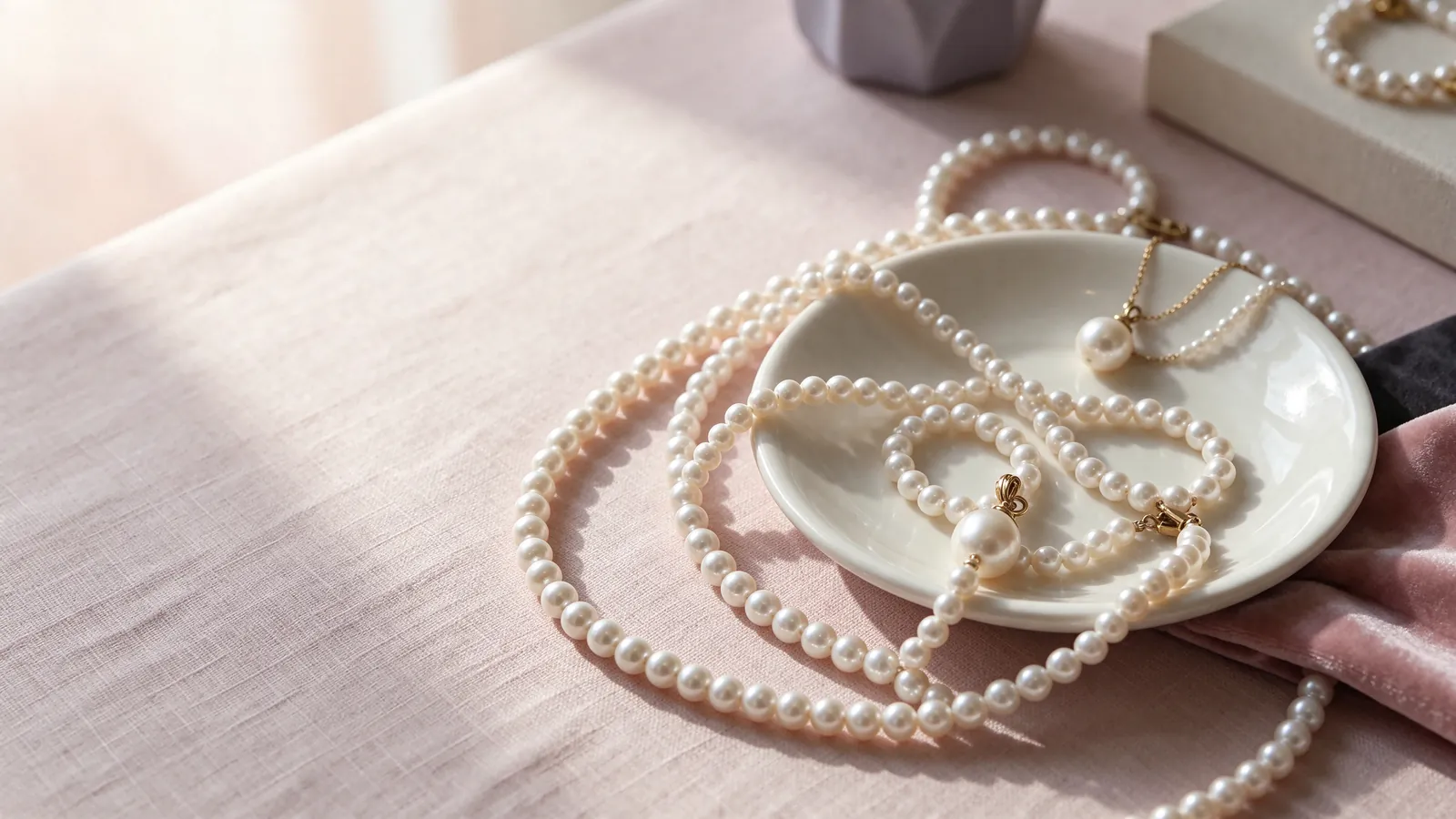
Flint Jewellery guide: how do length and proportion shape a half chain pearl necklace or half pearl half chain necklace within pearl and chain necklace styling?
A half chain pearl necklace changes the rhythm of a necklace by bringing a continuous pearl section together with a metal chain section. The name does not establish an exact equal split, nor does it tell you which section will face forward. Start with a view of the whole necklace laid out, then compare the joins when it is worn. A single strand pearl necklace offers a useful point of comparison: a continuous pearl line keeps a more consistent texture, while the joined design asks the eye to move between rounded forms and directional links.
When judging length, ask where the joins land rather than looking only at the lowest point. A flexible ribbon can help you explore a possible outline over your usual top, although it cannot reproduce the weight or movement of jewellery. Check the front and side in a mirror with your hair both raised and lowered. A pearl and chain necklace may look balanced on an open neckline but lose one section beneath a collar. Treat those differences as practical information about how you dress, rather than as a reason to seek a supposedly universal length.
Flint Jewellery styling questions: which necklines frame a half chain pearl necklace or half pearl half chain necklace best when layering a pearl and chain necklace?
Decide whether the line should sit on exposed skin or entirely over fabric. If a crew neck crosses a join, try a different landing point before adding anything else. With a V-neck, compare the necklace curve with the point of the opening so that both details remain readable. For layering, place the half pearl half chain necklace first and let the simpler second piece occupy a distinct level; two focal points do not need to meet at the same spot.
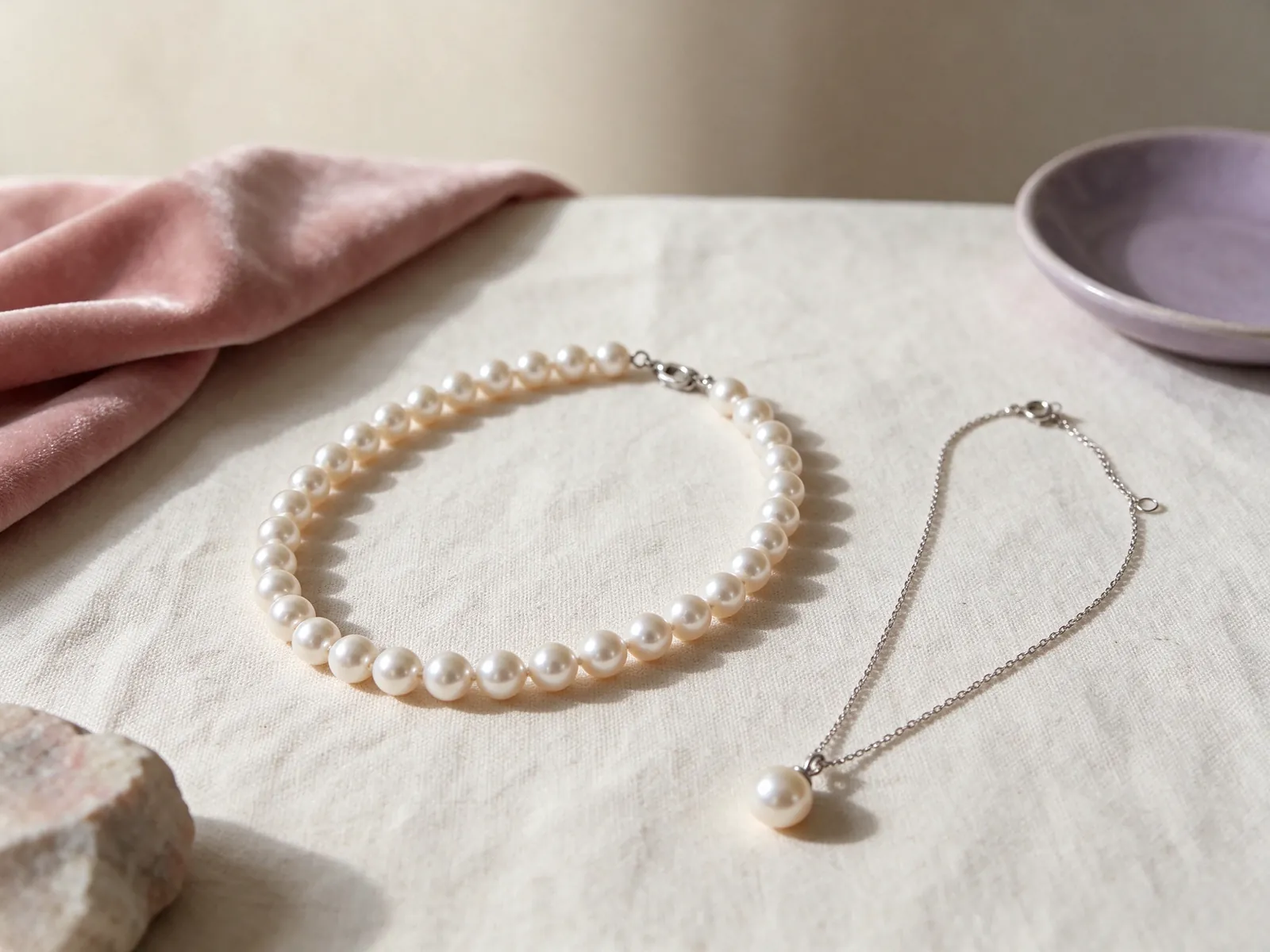
Make movement part of the fitting decision
A still photograph cannot show how the two sections behave as you turn your head or sit down. During a fitting, walk naturally, look to either side and check the necklace again. Notice whether a join moves into the collar, whether the pearl section shifts behind the shoulder, or whether a clasp becomes more visible. A little rotation may suit someone who enjoys a changing asymmetric line; it may be distracting for someone who wants a specific join to remain centred.
Comfort also depends on contact with clothing and hair. An open link or prominent connector may interact differently with fine knitwear than with a smooth shirt. Gently move the necklace near the fabric you normally wear and check for catching without pulling on the links or pearl string. With long hair, make the same comparison after letting it fall naturally. Smooth-looking construction in a photograph is not enough to establish that every contact point will feel comfortable.
Compare standing, seated and side views
Keep the clothing and lighting consistent when taking fitting photographs. Once seated, check for contact with buttons or a zip pull and look for a pearl section that disappears into the neckline. Separate a positioning problem from a clothing problem before changing the entire look. Moving a collar or choosing a clearer landing point can be more effective than filling the apparent gap with another piece.
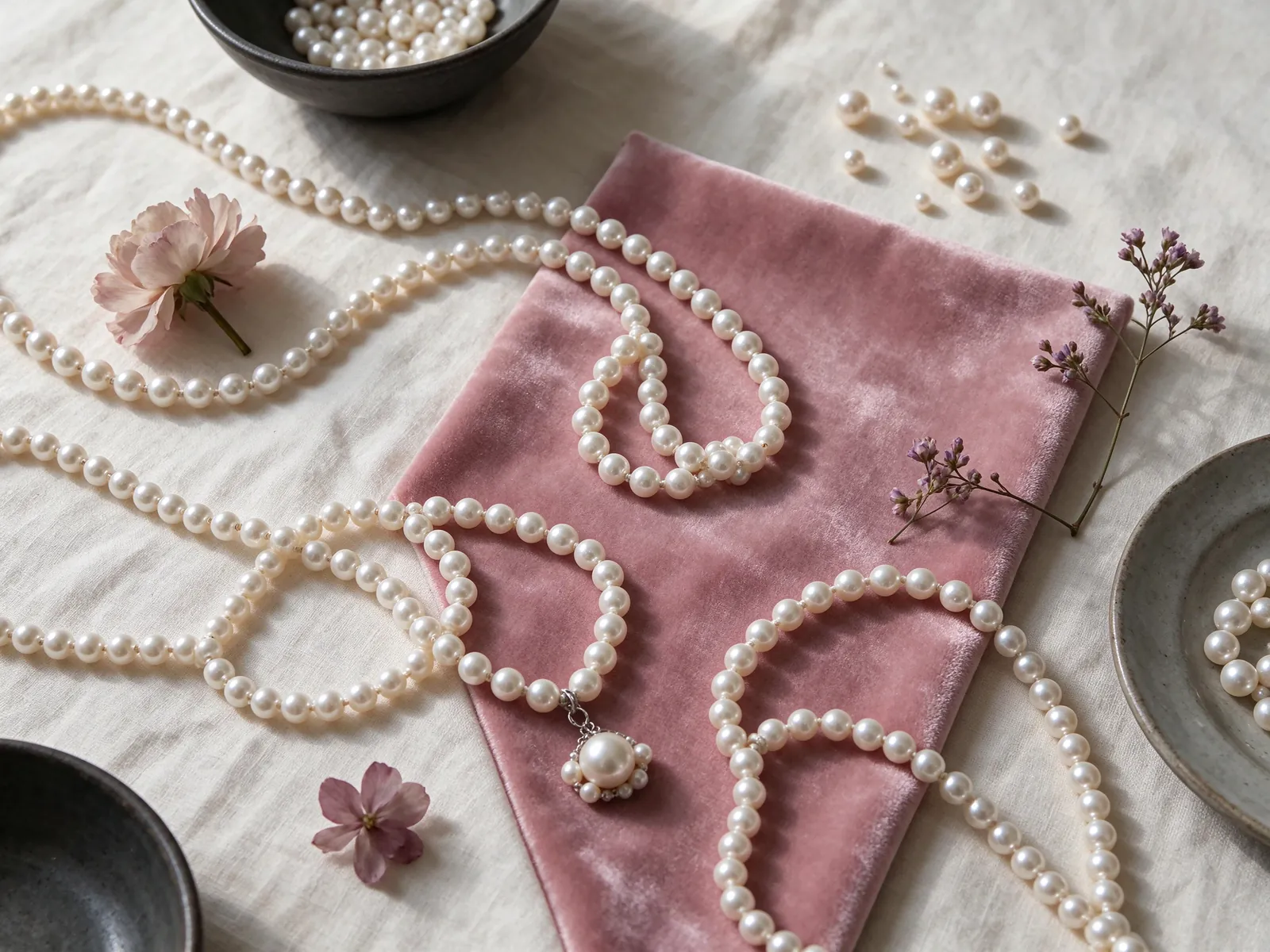
Read texture and pearl quality as separate questions
Visual balance is not a count of pearls against a count of chain links. Pearl volume, spacing, reflected light and the openness of the chain all affect how much attention a section attracts. A visibly varied pearl outline paired with elaborate links can create a busy line; that may be intentional, but it should be compared with a quieter combination. First decide whether the pearl section or the chain is the main feature, then assess whether the other section supports it.
GIA describes seven pearl value factors: size, shape, colour, lustre, surface quality, nacre quality and matching. This framework is useful because colour or roundness alone does not complete a pearl comparison. In a joined necklace, matching influences the rhythm within the pearl section, while deliberate variation in shape may be part of the visual design. Appearance alone does not establish origin or natural-versus-cultured identity. Keep written identity information separate from your preference for a particular texture or colour.
Choose the focal section before adding accessories
If you want pearls to lead, check that they remain visible against your regular clothing colours and that the chain does not take all the attention. If link structure is the attraction, look for a pearl section that provides a readable transition. Try simpler earrings before rejecting the necklace as too busy; the competing detail may be elsewhere in the outfit.
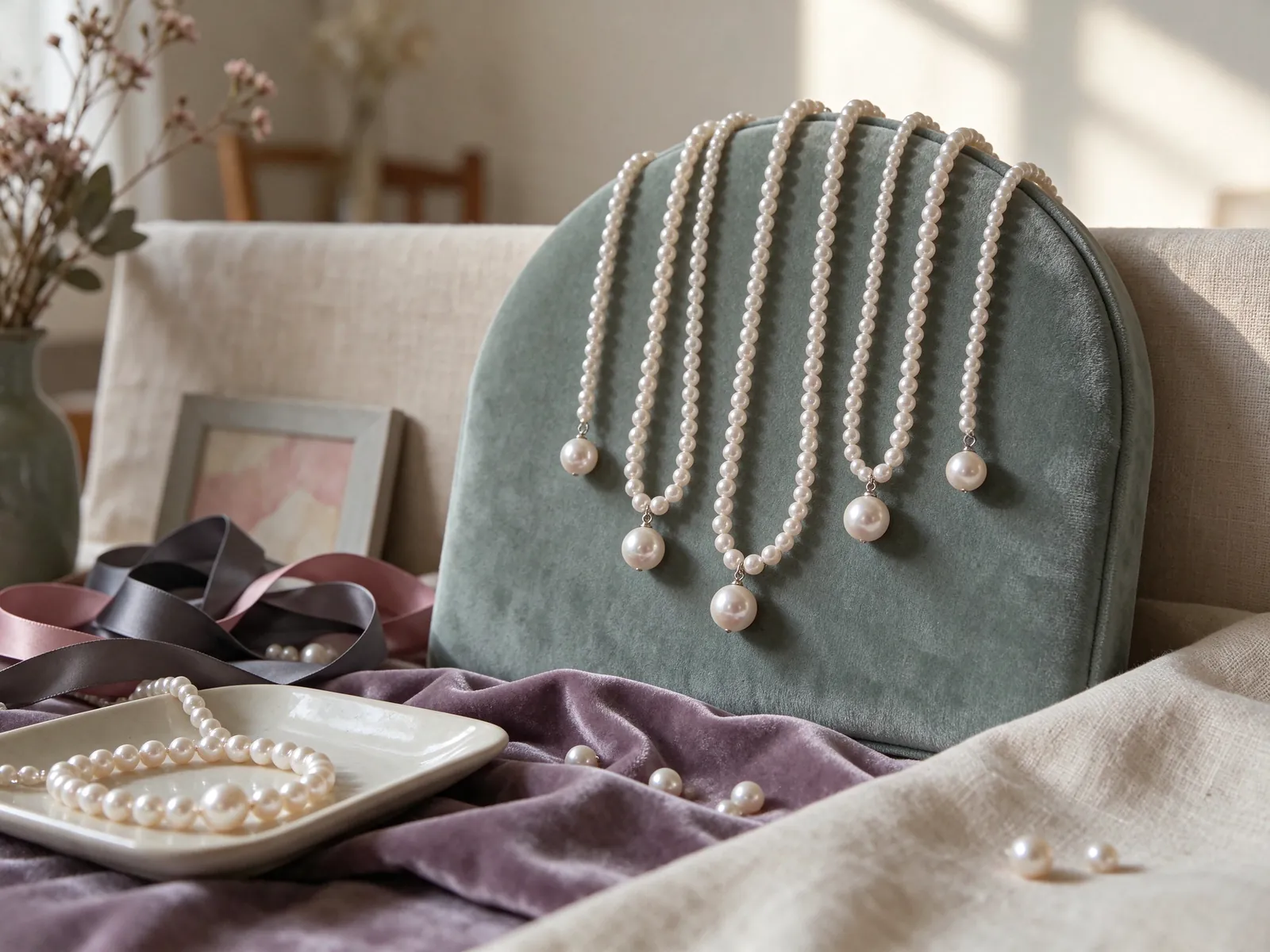
Build the outfit around the clothes you actually wear
For a work shirt, compare an open collar with the way you normally button it. The pearl section should not need constant rearranging to stay visible, and a collar point should not trap the chain. With a jacket, examine both lapels: showing pearls on one side and chain on the other can create a clear contrast, but revealing only a small fragment of each may make the design difficult to read. Check the outfit with the jacket closed as well as open.
A plain T-shirt can give the joined line space to stand out. Remove competing chest graphics or pendants from the comparison before deciding that the necklace lacks impact. Readers exploring a sharper or more neutral look can use the men's pearl necklace guide for ideas about collars and placement. Shoulder line, hairstyle and neckline are more helpful fitting questions than assigning pearl size or chain weight to a gender. An asymmetric garment also deserves a full-outfit check so that its focal point does not fight the necklace join.
Use your everyday wardrobe as the shortlist
Bring to mind the tops you wear most often: which reveal the collarbone, which carry a strong pattern and which have delicate fabric. These distinctions make a more useful shortlist than one special-event outfit. For an evening change, try adjusting hair or earrings first. Adding several accessories at once can hide the contrast that made the necklace appealing.
Layer with distinct landing points, not a fixed formula
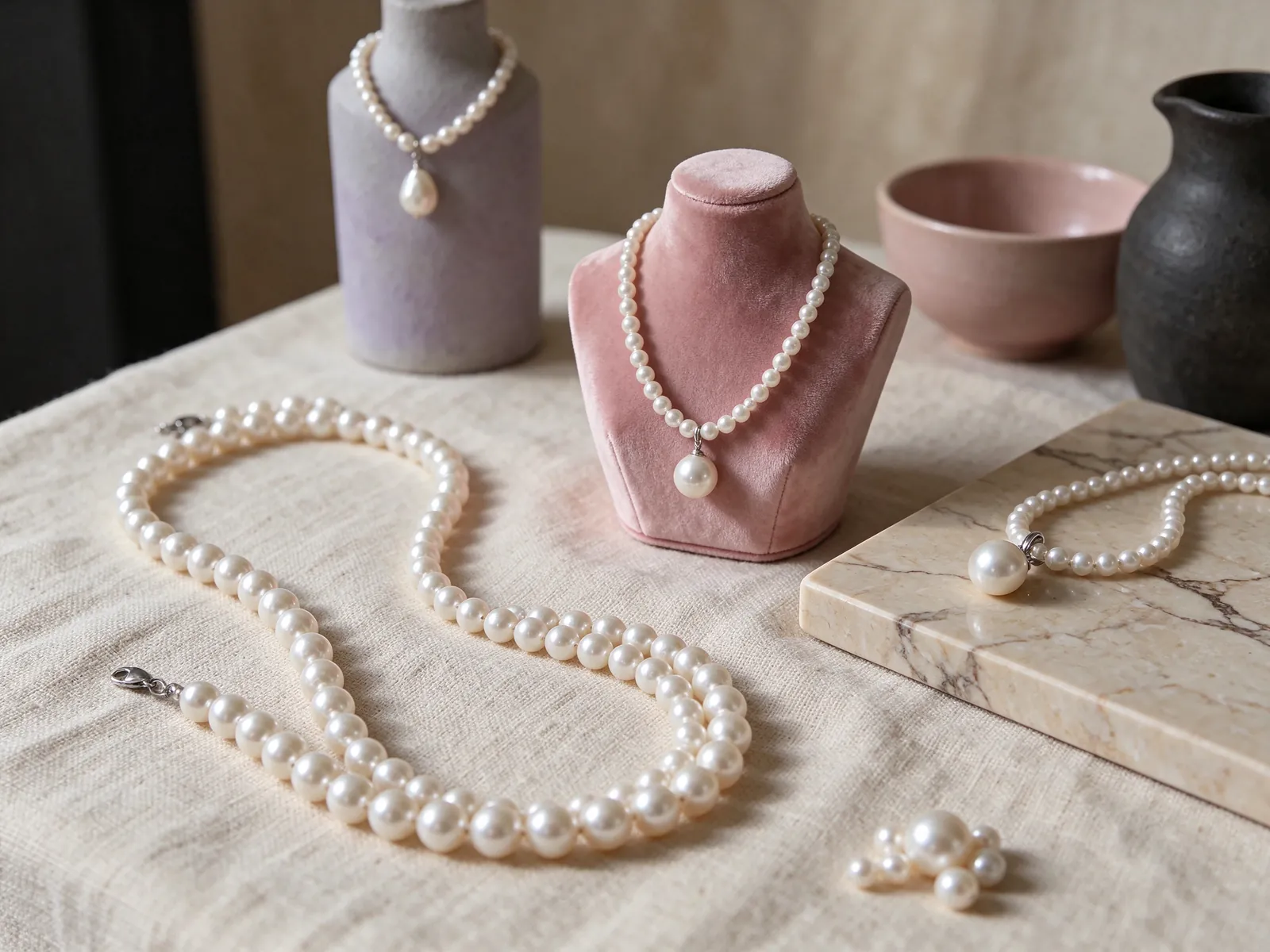
Good pearl necklace layering gives each line a clear role. Because a half-chain piece already combines two textures, a second necklace often works best when it offers a simpler outline or a distinct landing point. There is no single spacing measurement that works for every wearer and every pair of necklaces. Neckline, flexibility, pendant position and movement all matter. Check both pieces while standing and seated, especially where a pendant might touch the pearl section or a join.
Add the second piece on its own rather than putting on a full stack immediately. A second pearl line may gather at the same level, while a prominent pendant may replace the join as the focal point. Neither result is automatically wrong, but it should be deliberate. Finish fastening clothing before arranging jewellery, then separate the lines gently. When removing them, undo each necklace individually rather than pulling tangled sections apart as a bundle.
Keep a pendant away from the busiest join
Find the point that first catches your eye on the half-chain necklace. If the second pendant stops there too, compare a different landing point or omit the pendant. The lines need not be perfectly symmetrical, but each should remain recognisable. If the neckline already has a bow, tie or decorative fastening, a single necklace may give the design more room.
Consider how the clasp changes the visible structure
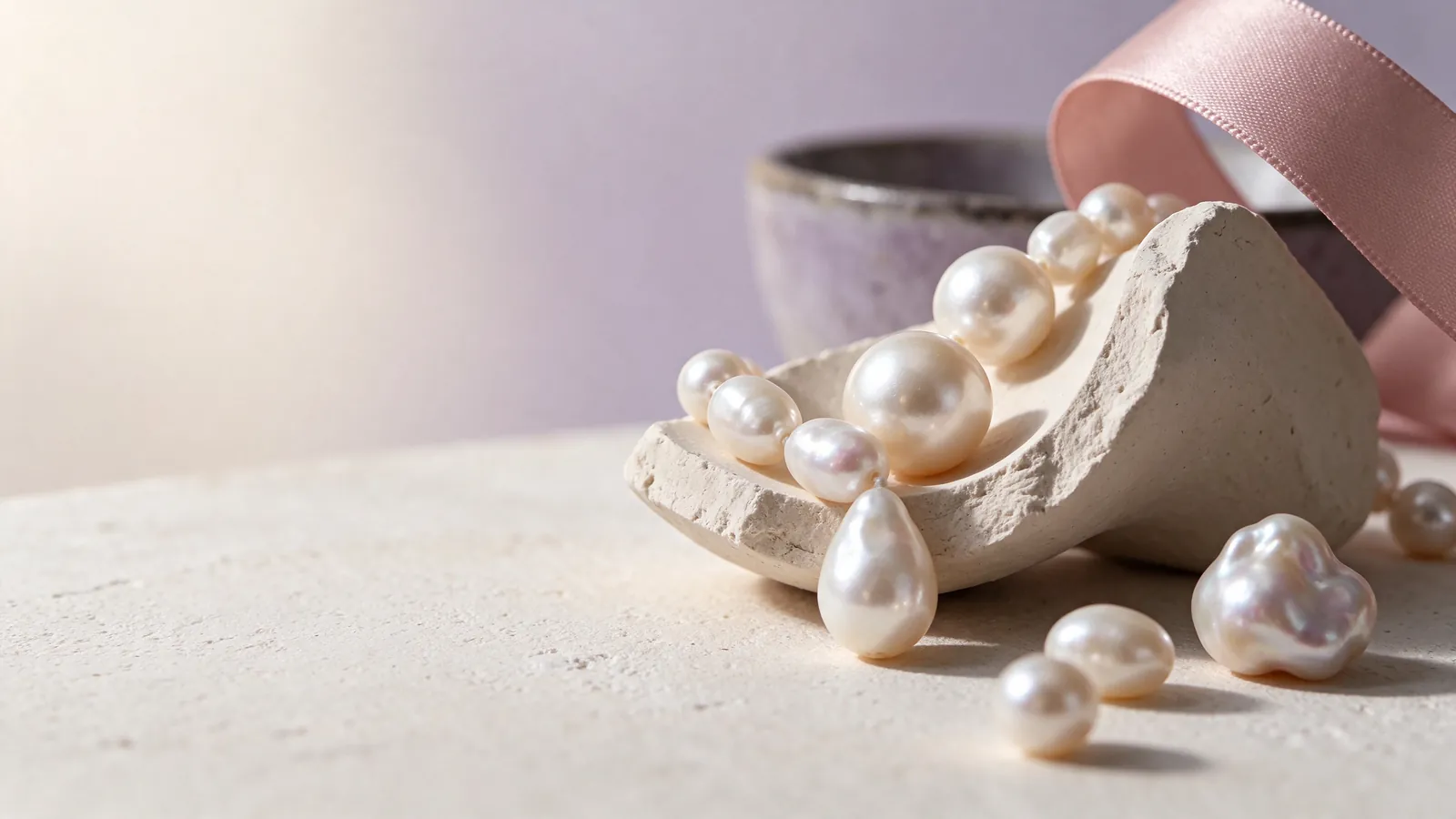
A clasp may be intended to stay behind the neck or to contribute to the visible design. The toggle clasp pearl necklace guide explores how a fastening can become a focal detail, but a prominent connector on a half-chain piece does not by itself establish that it can be worn at the front. Understand the actual fastening method, then check whether it turns during wear, is easy to reach and sits comfortably with the direction of both sections.
A clicker clasp pearl necklace and a ribbon clasp pearl necklace raise different questions about handling and line. They are useful comparisons when deciding what feels manageable, not reasons to assume that another necklace adjusts, wraps or separates into multiple pieces. Ask how the particular clasp opens and closes, which connection bears the weight, and whether a specific orientation matters. Practise putting it on without dragging the pearl string to bring the clasp within reach.
Support the pearl section when fastening
Hold the sections gently while checking that neither hair nor clothing is trapped. To remove the necklace, support the weight before operating the clasp. If the mechanism is unfamiliar, examine it over a soft surface rather than twisting it with a tool or repeatedly forcing it. Ease of handling belongs in the buying decision alongside the front view.

Let pearl care guide cleaning and storage
Combining pearls with chain does not make a necklace suitable for the cleaning methods used on an ordinary metal chain. GIA lists pearl at 2.5 on the Mohs hardness scale and says pearls should never be cleaned with ultrasonic or steam cleaners. The number is not a prediction of wearing life; it is a reason to protect the delicate surface from abrasion. After wearing, use a very soft, clean cloth and keep pearls away from acids, perfume, hair spray and excessive heat.
Store the necklace with space between the chain and pearl sections rather than winding links tightly around the pearls. A soft lining helps separate it from jewellery with hard edges, and the joins should not be pressed beneath a box lid. If a strung pearl section is cleaned with water, GIA advises allowing the string to dry completely before wearing. A dry-looking chain does not tell you whether the string is dry. Stop wearing a necklace that develops noticeable looseness or pulling at a connection.
Make the final choice practical
Before deciding, ask whether your usual neckline reveals the design, whether movement leaves it in an acceptable position, and whether you can handle the clasp comfortably. If you plan to layer, include the time needed to separate the pieces gently. A clear, wearable relationship between pearls and chain matters more than extra decoration or interpreting the style name as a precise proportion.
If you are still choosing a landing point, bring together your usual necklines, the section you want to emphasise and any questions about clasp handling. Discuss those styling preferences with Flint Jewellery on WhatsApp. Starting with an outfit you regularly wear makes the conversation more specific than a style name alone.
| What to compare | Design question | Clothing check | Practical test |
|---|---|---|---|
| Section placement | Where do both joins sit? | Keep both textures readable | Compare front and side views |
| Landing point | Does the curve sit on skin or fabric? | Check crew-neck edges and V-neck points | Look again when seated |
| Visual emphasis | Which section should lead? | Reduce competing chest detail | Try simpler earrings |
| Layering | Does a pendant meet the join? | Try a single line with decorated necklines | Add one piece at a time |
| Clasp handling | Can you reach and operate it gently? | Check hair and fine knitwear | Support the pearls while fastening |
Pearl knowledge and authoritative references
GIA ranks pearl at 2.5 on the Mohs hardness scale. For a joined pearl-and-chain necklace, cleaning and storage must therefore consider the delicate pearl surface rather than only the metal section.
Read the reference for this factFrequently asked questions
Does half-chain mean the pearl and chain sections are exactly equal?
No. The expression describes a joined style, not a guaranteed measurement. Compare the complete laid-out necklace with its worn position. Neither the number of pearls nor a front photograph is enough to establish equal section lengths.
Should the pearl section always remain at the front?
That depends on the actual construction and intended wearing method. Some asymmetric looks change with movement. Test whether the position remains comfortable and readable rather than forcing a particular section forward if doing so traps it in clothing.
What should I check with a shirt and jacket?
Look at collar points and both lapels. They can hide a join or reveal only fragments of the design. Compare the jacket open and closed, and choose a landing point where the two textures remain understandable without frequent rearranging.
Is there a standard gap for layering another necklace?
There is no universal gap. Look for distinct lines while standing, seated and moving, with particular attention to contact between a pendant and the join. A clear separation that suits your neckline is more useful than a fixed measurement.
Can the chain section make machine cleaning safe for the whole necklace?
No. GIA says pearls should never be cleaned in ultrasonic or steam cleaners. Use a very soft, clean cloth for routine care. If a strung section is cleaned with water, the string must dry completely before the necklace is worn.
Updated: