
How can colour and length guide your choice of an orange pearl necklace, an orange freshwater pearl strand or an orange pearl strand necklace for your neckline? — Flint Jewellery styling guide
Begin with the role you want the necklace to play. Against an ivory blouse, a soft orange tone may feel part of the outfit; against navy, the same warmth can become its main accent. Try the strand with a familiar top and look at your face, shoulders and neckline together. A colour that looks appealing on a display may create a different balance when it sits close to your skin and clothing.
Length makes more sense when considered alongside a neckline, not as an isolated measurement. Compare a strand that rests above a round neck with one that lies fully on the fabric. With an open shirt collar, check whether either side interrupts its line. The single strand pearl necklace guide provides a useful starting point for thinking about continuous curves. Sit down and turn your head as well as standing still, so the chosen position suits ordinary movement.
When trying an orange pearl necklace, how can you assess the colour of an orange freshwater pearl strand or an orange pearl strand necklace in different light? — Flint Jewellery styling guide
Compare the whole strand near a window away from direct sunlight, then under the indoor lighting you normally use. Keep the top and background unchanged. Notice whether the colour seems more yellow, red or subdued. Phone photographs can record an outfit, but filters and automatic white balance can alter its appearance, so they should not replace a direct comparison.
Choose a warm tone that works across your wardrobe
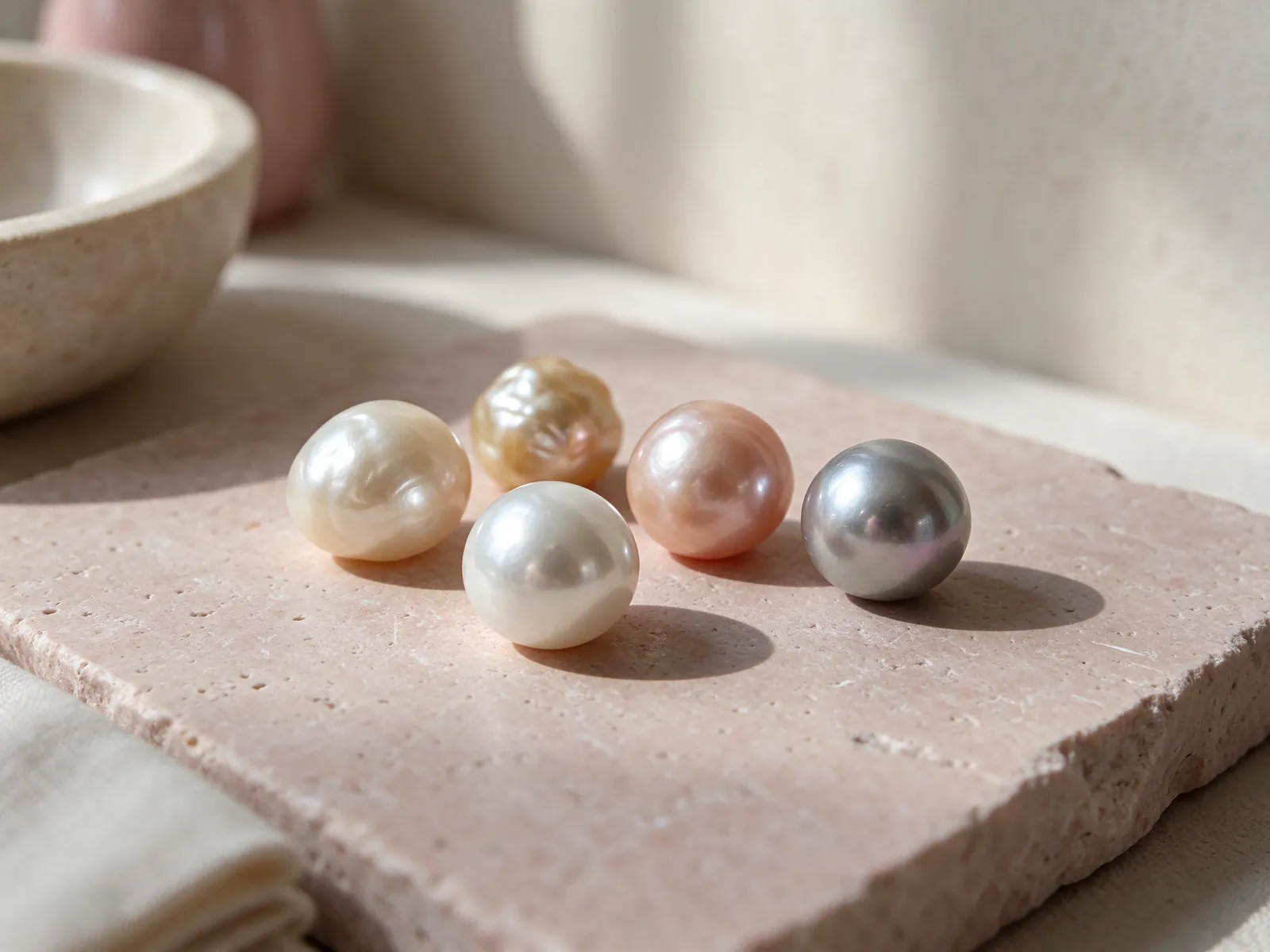
Orange covers a range of visual impressions rather than one precise shade. Descriptions such as apricot, terracotta or bright orange can help explain what you like, but they are not pearl identities or quality grades. Place the colour beside a cream knit, a white shirt and a dark jacket. If it feels comfortable with several familiar outfits, you have a more useful reason to choose it than a photograph taken against a flattering background.
Decide whether you prefer an even warm impression or a deliberate rhythm of different colours. For the latter, compare the styling approach of a multicolour pearl necklace and notice how a warm accent sits among neighbouring tones. For a quieter effect, look at how smoothly the strand reads as a whole. Neither approach is automatically better. The question is whether the colour arrangement works with the patterns, fabrics and other jewellery you already enjoy wearing.
Test the colour beside your face without rigid complexion rules
Try a softer and a stronger orange with the same top. Ask which contrast you enjoy and whether you would reduce other accessories to accommodate it. Rather than treating skin tone as a rule that excludes certain colours, use a mirror to identify a balance that feels natural to you and is likely to be worn regularly.
Separate the colour name from identity and treatment information
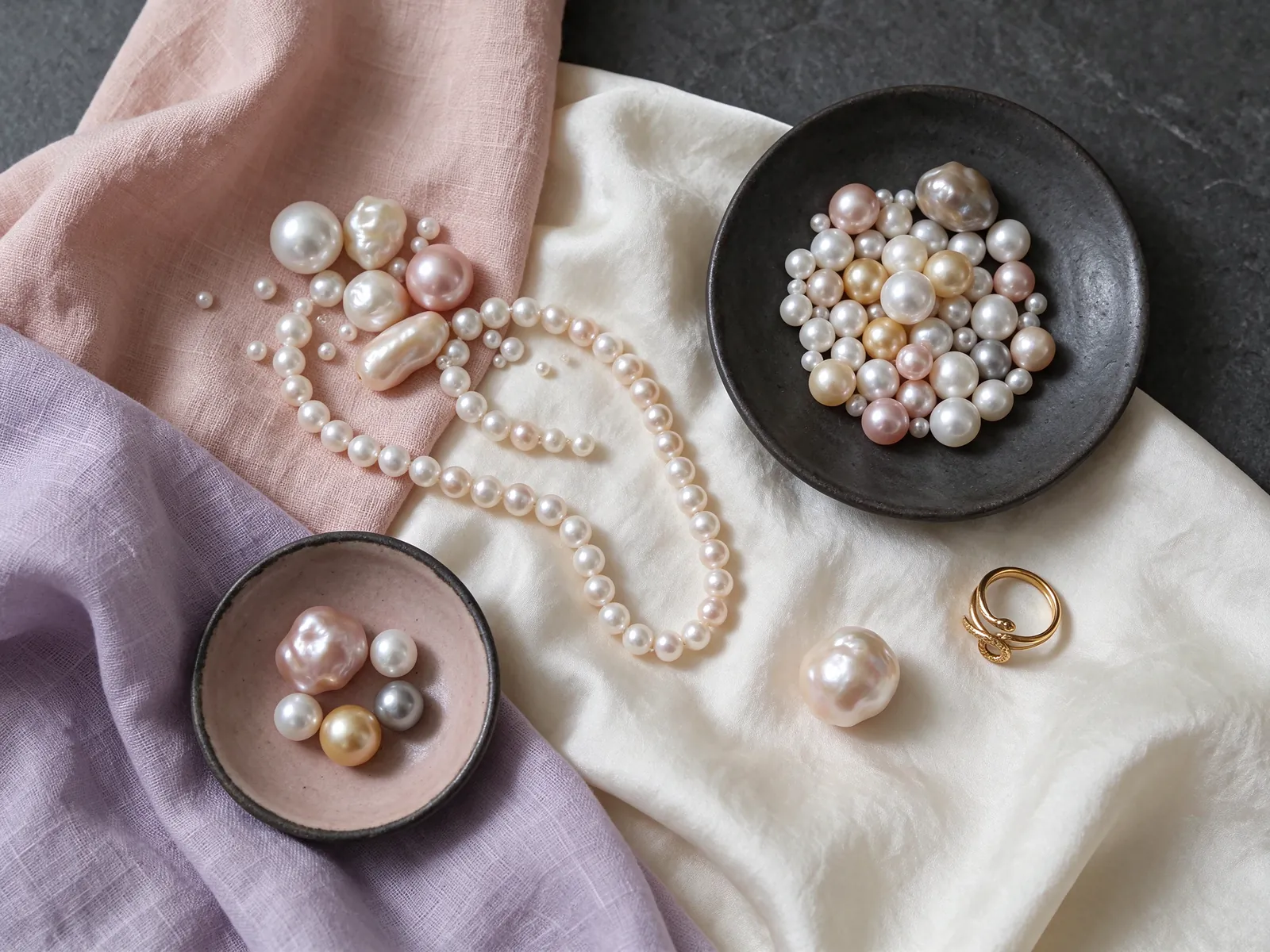
An orange pearl strand necklace describes an appearance and arrangement; the words alone cannot identify the pearl type or establish whether the colour is natural or treated. If you are considering an orange freshwater pearl strand, ask how the freshwater identity is documented and ask separately about colour treatment. A clear answer should address the question you actually asked, rather than substituting an appealing shade name for information about the pearls.
A structural term also needs its own explanation. Reading about a nucleated freshwater pearl necklace can help organise questions about structure, but orange appearance does not establish that structure, and photographs cannot establish nacre measurements. Keep a short list with visual preferences on one side and identity or treatment questions on the other. This makes comparisons clearer when different strands are described using similar colour language but may have different underlying information.
Describe bodycolour before interpreting surface colour effects
GIA distinguishes bodycolour, overtone and orient. Bodycolour is the dominant overall colour; overtone is a translucent colour over it; orient is a shimmer of rainbow colours on or just below the surface. All pearls have bodycolour, but only some show overtone, orient or both. Describe the main colour first, then note any additional colour impression. Do not label every bright reflection as orient. Record changes with the viewing angle without treating them as proof of identity or treatment.
Look beyond orange to lustre, surface and matching
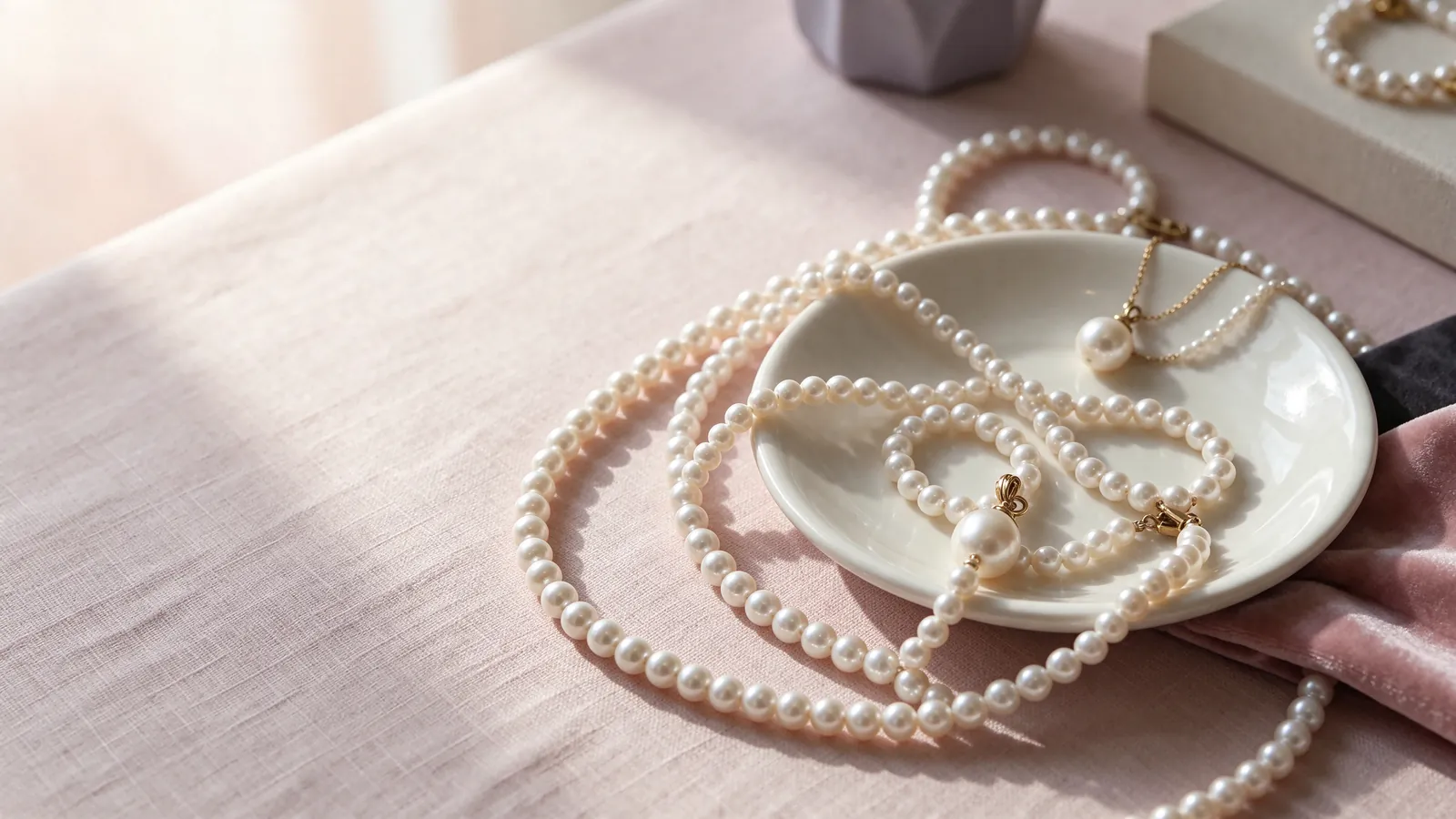
A strong colour can draw attention away from the rest of a strand. First look at whether its lustre feels coherent in consistent lighting, then examine the surface appearance and the sequence of shapes. If you enjoy a neat line, consider the overall visual matching. If you prefer variation, look at how that variation is distributed. Choosing from a close-up of the brightest pearl alone can miss the effect of the complete necklace.
GIA describes seven pearl value factors: size, shape, colour, lustre, surface quality, nacre quality and matching. They provide a framework for questions, not permission to confirm every factor from an image. For document reading, explore the pearl necklace with GIA report guide. GIA explains that pearl reports provide identity, formation-environment and treatment information, with details depending on the chosen service. Read a report in relation to the pearl or strand it describes; a similar orange appearance does not make its findings apply to another necklace.
Use detail images and normal wearing distance for different questions
A clear close-up helps you formulate questions about surface details, while a mirror at normal wearing distance helps you judge proportion. Use both. If glare hides the surface, compare another angle rather than treating photographic brightness as a quality conclusion. The best-looking image and the best-balanced necklace for your wardrobe are not necessarily the same thing.
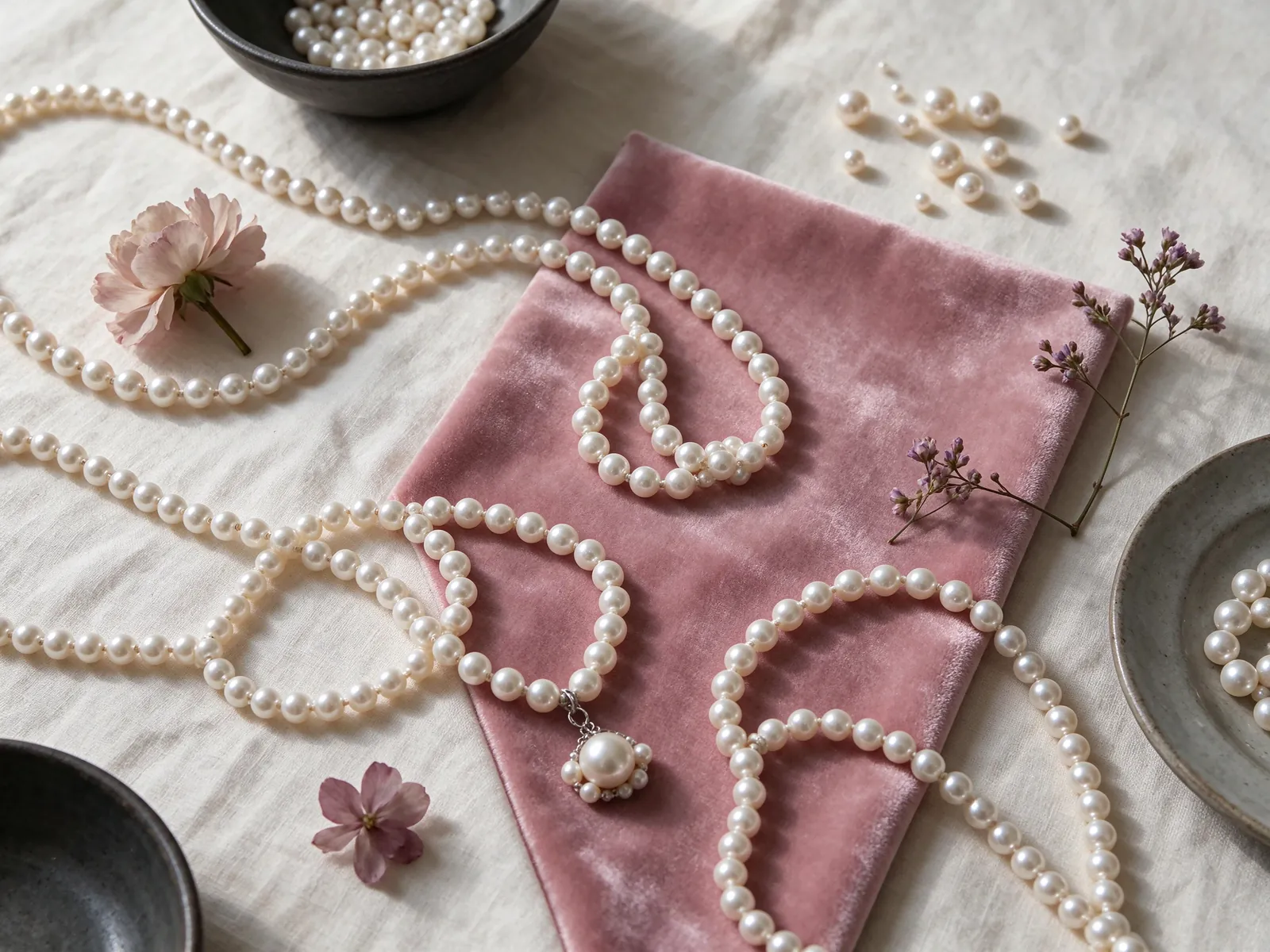
Manage the focal point for work, weekends and evening outfits
For a work outfit, try making the strand the only obvious warm accent. A simple neckline and quieter earrings allow you to judge its effect without competing details. If a jacket has prominent buttons or a decorative collar, check whether the necklace overlaps those features. For weekends, compare it with denim or a plain knit. Think about the relationship between textures and colour rather than assuming a particular pearl size is necessary for a particular occasion.
With dark evening clothes, orange may create a stronger contrast, but that does not require every accessory to be equally vivid. Add earrings or other jewellery one element at a time. If you prefer a quieter palette, the grey Akoya pearl necklace topic offers a useful colour comparison: consider how a muted grey direction and a warm orange direction change the same outfit. This is a styling comparison, not a way to identify pearl type from colour alone.
Echo a small colour in a print without matching everything
A patterned top containing orange can provide a small colour cue for the strand. Exact matching is not essential. Look for a clear necklace line at the neckline; if the pattern and strand merge visually, try a plain outer layer or a different resting position. More orange accessories will not necessarily make the composition easier to read.
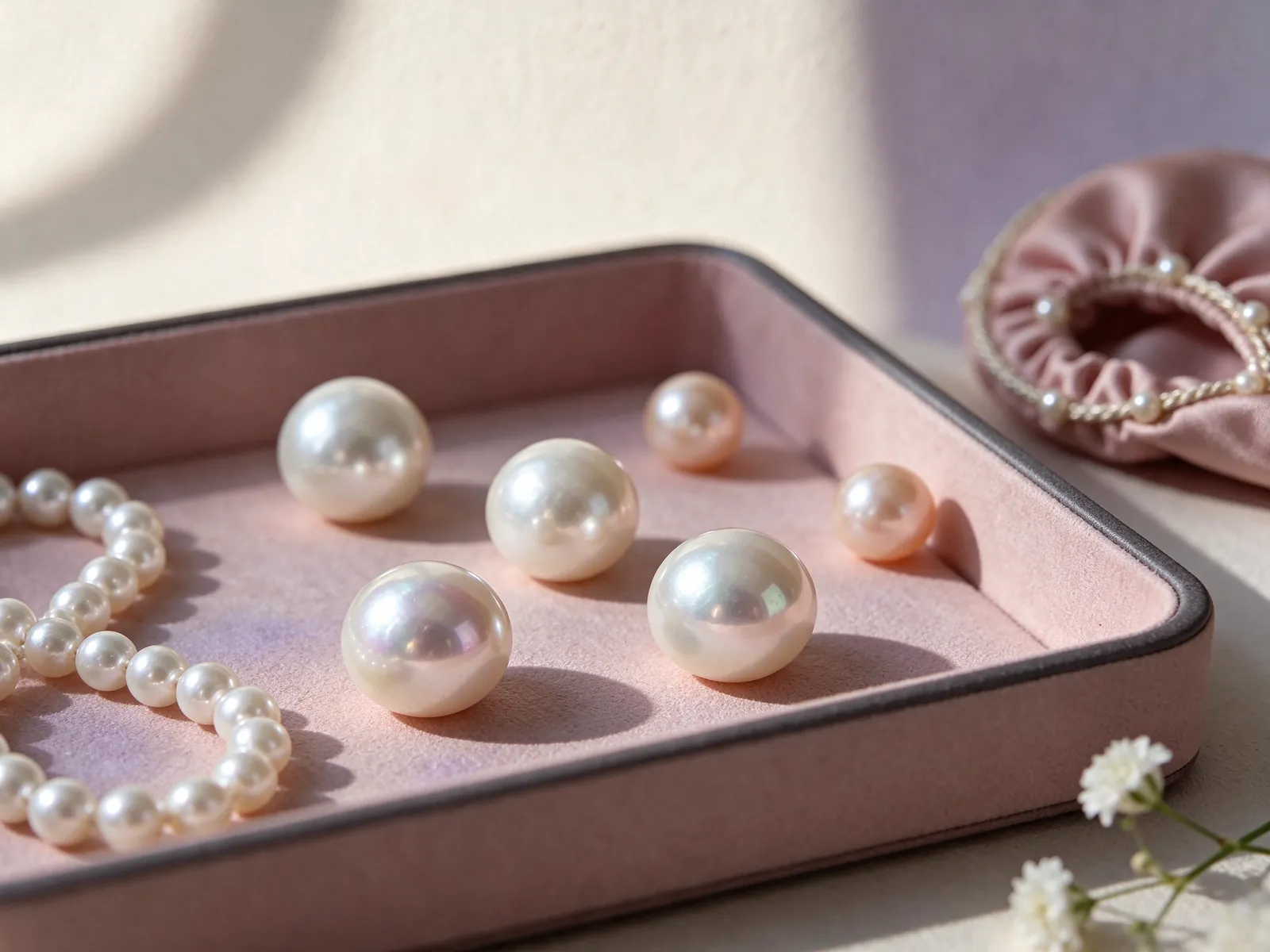
Include comfort and pearl care in the decision
A pleasing resting point should also feel practical. During a fitting, turn your head, raise your arms gently and sit down. Notice contact with a shirt collar, buttons or other jewellery. If you often wear high necks, check whether the strand lies naturally on the fabric rather than being pushed out of position. With long hair, test how it falls around the clasp. These are personal wearing observations, not details that can be reliably inferred from a styled image.
GIA ranks pearl at 2.5 on the Mohs hardness scale and advises against ultrasonic or steam cleaning. After wearing, use a very soft clean cloth and store the strand separately from items that could scratch it. Avoid contact with acids, perfume and hair spray, and avoid excessive heat. The orange colour description does not remove these care needs or promise permanent colour. Practical care should be considered alongside the appeal of the outfit.
Allow a cleaned strand to dry completely before wearing
GIA advises that if strung pearls are cleaned with water, the string must be completely dry before they are worn. A dry pearl surface does not establish that the string is dry too. Do not use high heat to accelerate the process. Follow clear care information for the particular strand rather than borrowing a cleaning method from a different necklace.
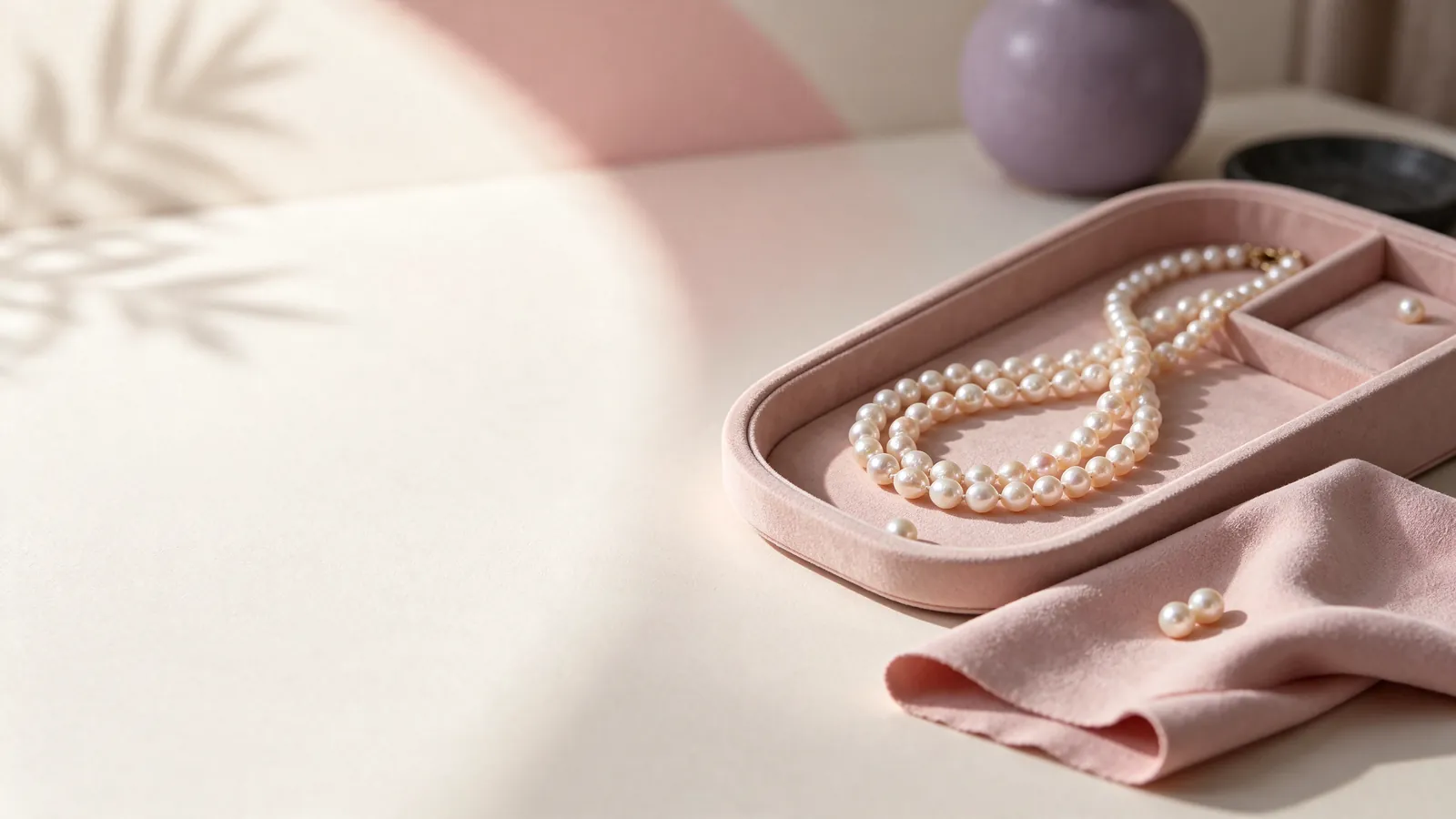
Turn a visual preference into a focused buying brief
Before comparing strands, note your usual necklines, preferred resting point and desired strength of orange. Choose a work outfit and a casual outfit as practical tests. Record observations such as a clear contrast against navy or a better line above a round neck, rather than relying only on words like elegant or flattering. This helps you stay focused on your wardrobe when photographs use different backgrounds, lighting and styling.
Make the final decision in two parts. First decide whether the colour, line and arrangement appeal to you; then consider the available identity, colour treatment and care information. For a gift, ask about the recipient's usual colours and necklines rather than assuming a warm strand suits every occasion. A useful buying brief explains why the necklace fits a person's daily style and which factual questions remain important. It does not need dramatic rarity language to be meaningful.
Use online images for a shortlist, not for hidden specifications
Online images can introduce a colour direction and suggest outfit ideas. Keep questions about appearance in different lighting, fit and treatment information separate when the image cannot answer them. An editorial styling image should not be read as evidence of stock, pearl identity or dimensions. Let the picture inspire a look and let clear information answer the factual questions.
Ready to make your warm-colour styling ideas more specific? Contact Flint Jewellery on WhatsApp at +85260106207 and share your usual neckline, clothing colours and preferred resting point. Discuss how you want a pearl necklace to work with your wardrobe. If you have a particular strand in mind, include its description so questions about identity, colour treatment and care can stay separate from the styling conversation.
| Consideration | Softer direction | Stronger direction | Practical test | Information to ask for |
|---|---|---|---|---|
| Colour | Warmth beside cream or ivory | A focal point beside navy | Use the same top and background | Colour description and treatment information |
| Neckline | A quieter continuous line | A clearly visible warm accent | Compare standing and sitting positions | Actual length and clasp details |
| Arrangement | A smooth overall impression | A deliberate colour rhythm | View flat and while worn | Shape and matching description |
| Photography | Avoid an overly pale background effect | Avoid exaggerated filter saturation | Compare daylight and indoor light | Identity explained separately from colour |
| Care | Wipe with a very soft clean cloth | Do not use stronger cleaning for vivid colour | Store apart from scratching items | Care for treatment and stringing |
Pearl knowledge and authoritative references
GIA identifies seven pearl value factors: size, shape, colour, lustre, surface quality, nacre quality and matching. Colour is only one part of a useful orange strand comparison.
Read the reference for this factFrequently asked questions
Is orange a pearl type or a quality grade?
No. Here orange is a colour description, not an identity or grade. Compare the actual tone and ask separately about pearl type, natural or cultured identity and colour treatment rather than treating the shade name as a complete specification.
Can a photograph establish that orange colour is natural?
No. Lighting, backgrounds and image processing can change appearance, and colour alone cannot establish treatment status. Ask for clear treatment information and read any document in relation to the object it describes.
How can I try a warm strand without making a work outfit too busy?
Start with a familiar plain top and keep the strand as the main warm accent. Add other accessories individually, checking the neckline after each change. Compare a softer and a stronger orange rather than assuming either will always be more suitable.
Does an orange freshwater pearl strand name answer the structure question?
Not by itself. Colour, freshwater identity and structure are separate subjects. Ask how each relevant detail is described and do not infer nucleation or nacre measurements from orange appearance or a photograph.
Must a strand match the orange in a patterned top exactly?
No. Echoing a small colour element may be enough. Check that the necklace remains visually clear at the neckline; a plain outer layer or another resting point can help if the pattern and strand blend together.
Updated: