
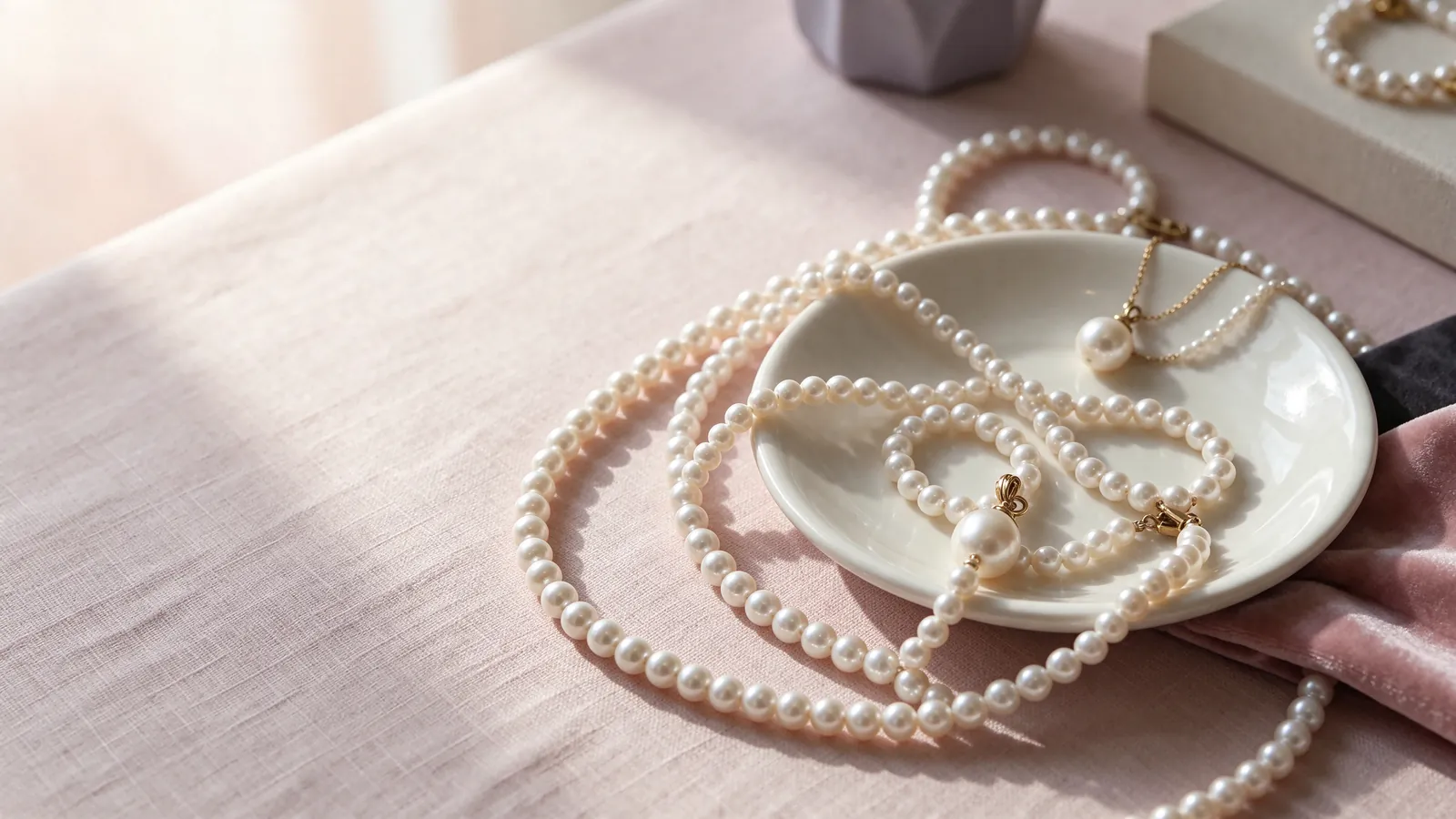
How does length shape a South Sea pearl necklace look, whether you prefer a golden South Sea pearl strand or a white South Sea pearl strand? | Flint Jewellery
Wondering how white or golden tones will sit with your own neckline? Share a familiar outfit photograph, your preferred colour relationship and the landing point you have in mind with Flint Jewellery on WhatsApp: https://wa.me/85260106207. A specific styling question is a useful place to begin before deciding from a photograph alone.
Begin with the clothes you actually wear: a round-neck top, an open-collar shirt and a dress with a more defined neckline. A strand above the fabric can create a clearly visible arc, while one resting on the fabric needs enough contrast to remain distinct. If pearls sit directly along the neckline edge, the necklace and the clothing may obscure each other when you move. Consider the landing point before choosing a length label.
A golden South Sea pearl strand and a white South Sea pearl strand should not be compared by stated length alone. Their arrangement, curve and clasp position can alter the impression on your own neck and shoulders. Stand naturally, then sit and turn your head. Put on the jacket you intend to wear, since lapels can narrow the visible space. The useful question is whether the whole curve stays balanced, not whether it resembles a photograph.
When trying on a South Sea pearl necklace, where should a golden South Sea pearl strand or a white South Sea pearl strand sit against your neckline? | Flint Jewellery
There is no universal position. With a V-neck, start by checking whether the arc remains inside the opening; with a crew neck, compare a position above the edge with one on the fabric. Photograph both with the same top and posture. For background on the category rather than the fit, read what are South Sea pearls, then keep those knowledge questions separate from your preferred neckline balance.
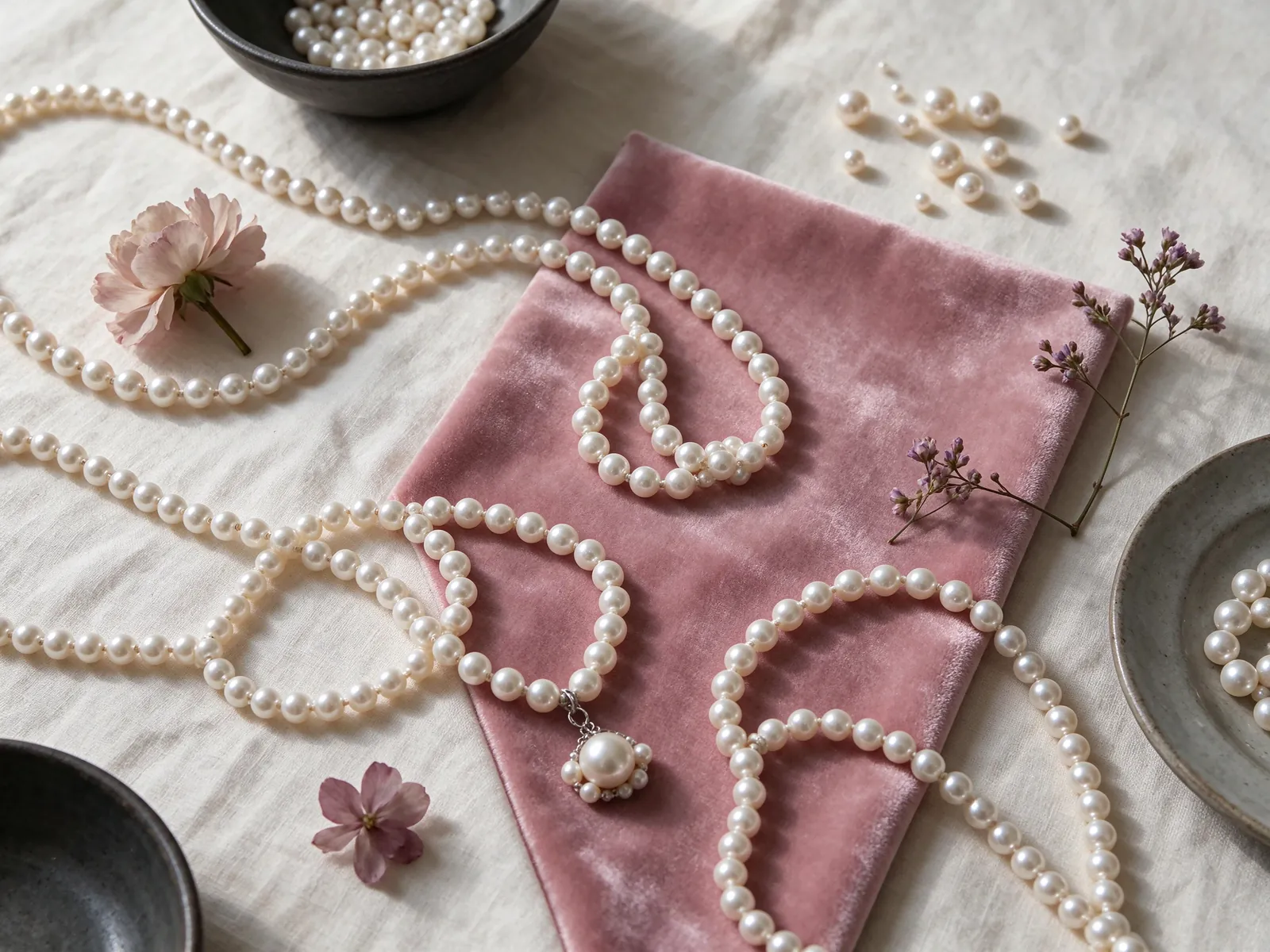
White or golden tones: compare the wardrobe background, not a colour rule
GIA describes South Sea cultured pearls as white to silver or golden, depending on the type of oyster. This is why white and golden are useful comparison directions for a South Sea pearl necklace, but a colour name is not a complete description of a particular object. With a white South Sea pearl strand, notice whether the dominant impression feels soft or silvery; with a golden South Sea pearl strand, compare the warmth against your clothing. Identity and treatment status still need to be understood from information about the actual piece, not inferred from its colour or an illustrative image.
White can look soft against warm ivory clothing and more defined against navy or another dark background. Compare a strand with your own white and cream tops rather than assuming that all pale clothes give the same result. Decide whether you want the necklace to blend into an outfit or become a clear focal point. The brightest-looking image on a white studio background may not describe the effect beside your skin.
Golden tones offer another way to organise an outfit. Camel, brown and warm ivory can build a connected palette, while dark clothing can emphasise the strand's outline. Skin tone alone is not a reliable styling rule: hair, lipstick, earrings and the sheen of the fabric all contribute. Remove other noticeable jewellery first, assess the necklace, then add accessories back individually to see when the balance starts to feel crowded.
Why can the same strand look warmer in a phone photograph?
Warm indoor lamps, window light and automatic white balance can change the apparent colour. Keep lighting and background consistent when comparing two strands, rather than treating photographs from different settings as colour samples. GIA distinguishes bodycolour, overtone and orient, and notes that not every pearl shows all three. Describe the dominant colour and the surface colour effects you observe without assuming that a single name captures every part of the strand.
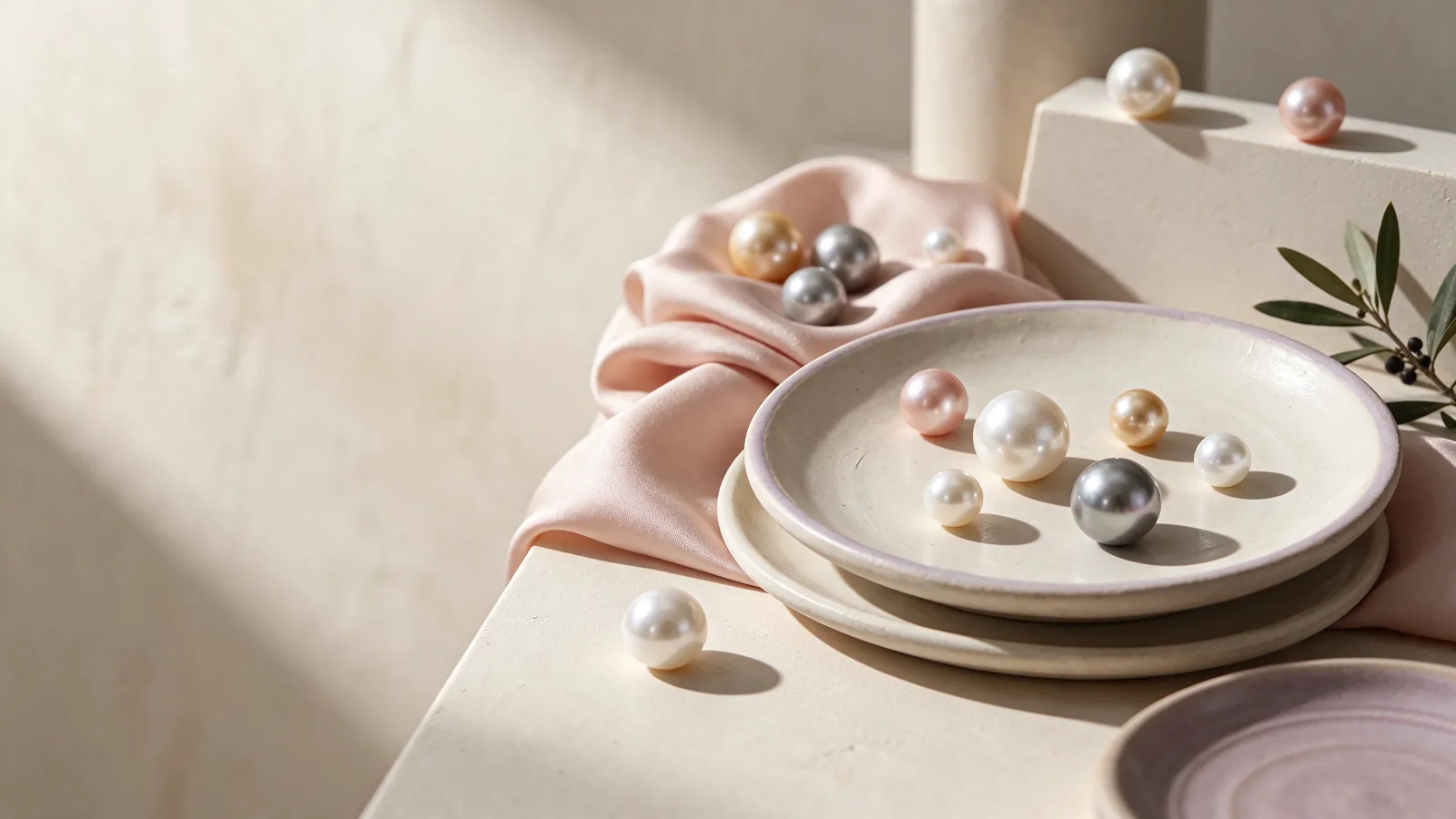
Read the strand's rhythm: even outlines, graduated emphasis and organic shapes
Step back from the most noticeable pearl and follow the full arc. A visually even arrangement can create a steady rhythm; a more prominent centre with a gradual transition towards the sides can direct attention forwards. Neither arrangement is automatically preferable. Consider how the centre and the side transitions work with the neckline. The structure of a single strand pearl necklace is a useful starting point for understanding these different visual centres.
Matching involves more than apparent size. Compare neighbouring pearls for colour, lustre and shape, then rotate the necklace to see whether an unusually dark-looking area changes with the reflection. A central pearl may provide emphasis, but the sides remain visible when worn and deserve attention too. Look from the front and at an angle. A still image can help you shortlist an appearance, while movement reveals how smoothly the strand reads as a whole.
Can irregular shapes still produce a coherent necklace?
Yes: colour relationships, spacing and the direction of the shapes can create coherence without identical outlines. Compare a baroque pearl strand necklace if you enjoy a less regular silhouette, noticing whether the strongest shapes sit centrally or across the sides. Plain clothing makes these contours easier to read than a busy print. Roundness is an aesthetic preference to weigh with other factors, not a visual test of origin or natural-versus-cultured identity.
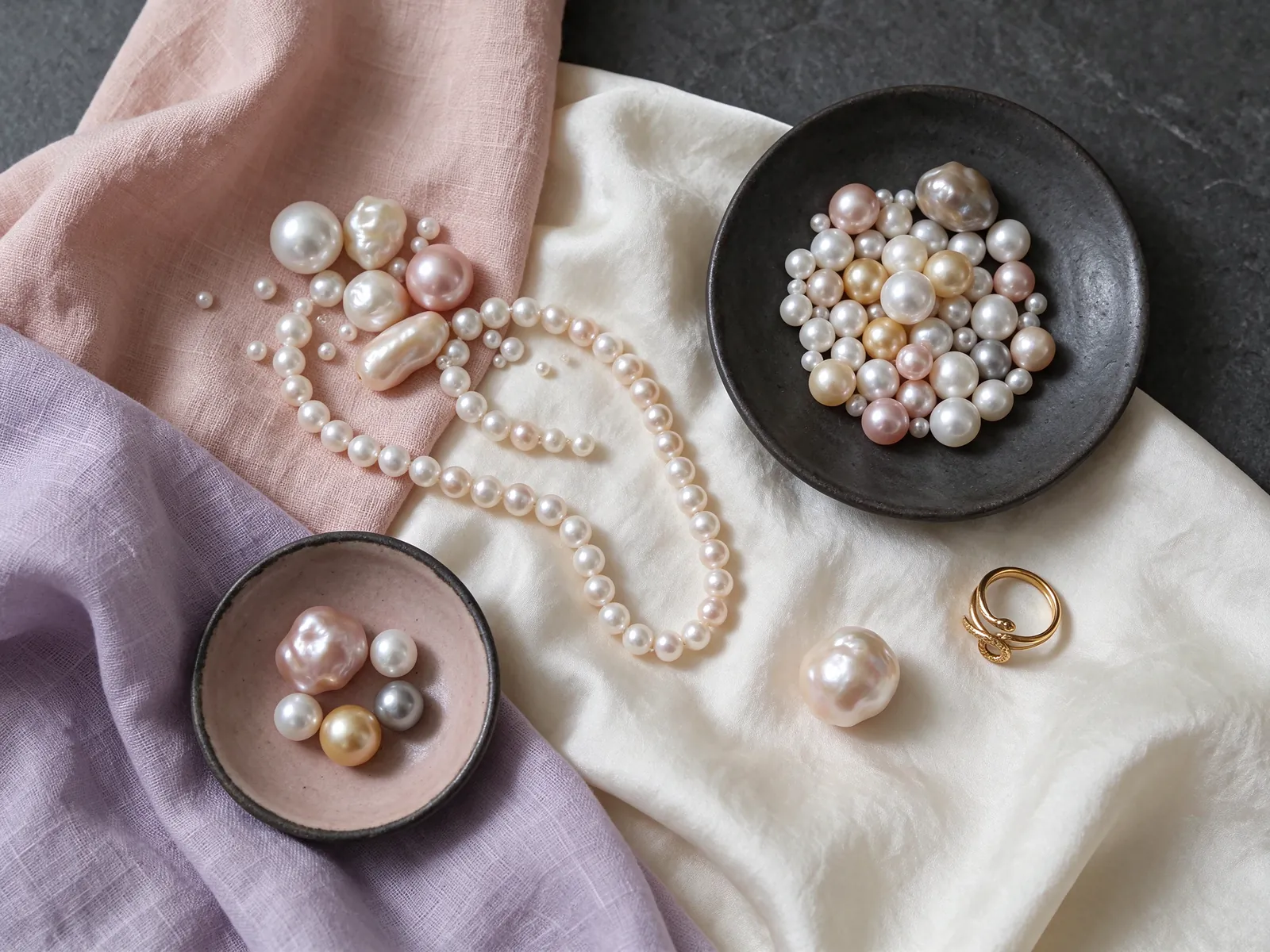
Use seven quality factors without reducing the necklace to a grade word
GIA identifies seven pearl quality factors: size, shape, colour, lustre, surface quality, nacre quality and matching. Matching is particularly relevant to a strand, but it should be considered alongside the other factors. Larger-looking pearls change visual presence without automatically making a necklace more suitable. An apparently smooth surface is also not the same thing as strong lustre. Use the factors to organise meaningful questions rather than searching for one label to settle the decision.
For lustre, observe how clearly reflections appear and whether the strand maintains a connected brightness as it turns. For surface quality, consider the position of visible features and their impact at normal viewing distance. Avoid completing the comparison only under intense spotlights or only through a magnified phone image. Begin with the full necklace, examine details, and return to the worn view so that small features are considered within the overall effect.
What should a description or accompanying document actually tell you?
Separate the pearl name, necklace construction and documentary findings. Colour and shape alone do not establish origin, treatment status or natural-versus-cultured identity. If a document accompanies a piece, check whether it concerns an individual pearl or the strand, how it corresponds to that object, and what its conclusions cover. Grade wording also needs an explanation of its meaning. GIA pearl report services record characteristics and detectable treatments; read the actual report type and findings rather than assuming that an institution name answers every question about the necklace.
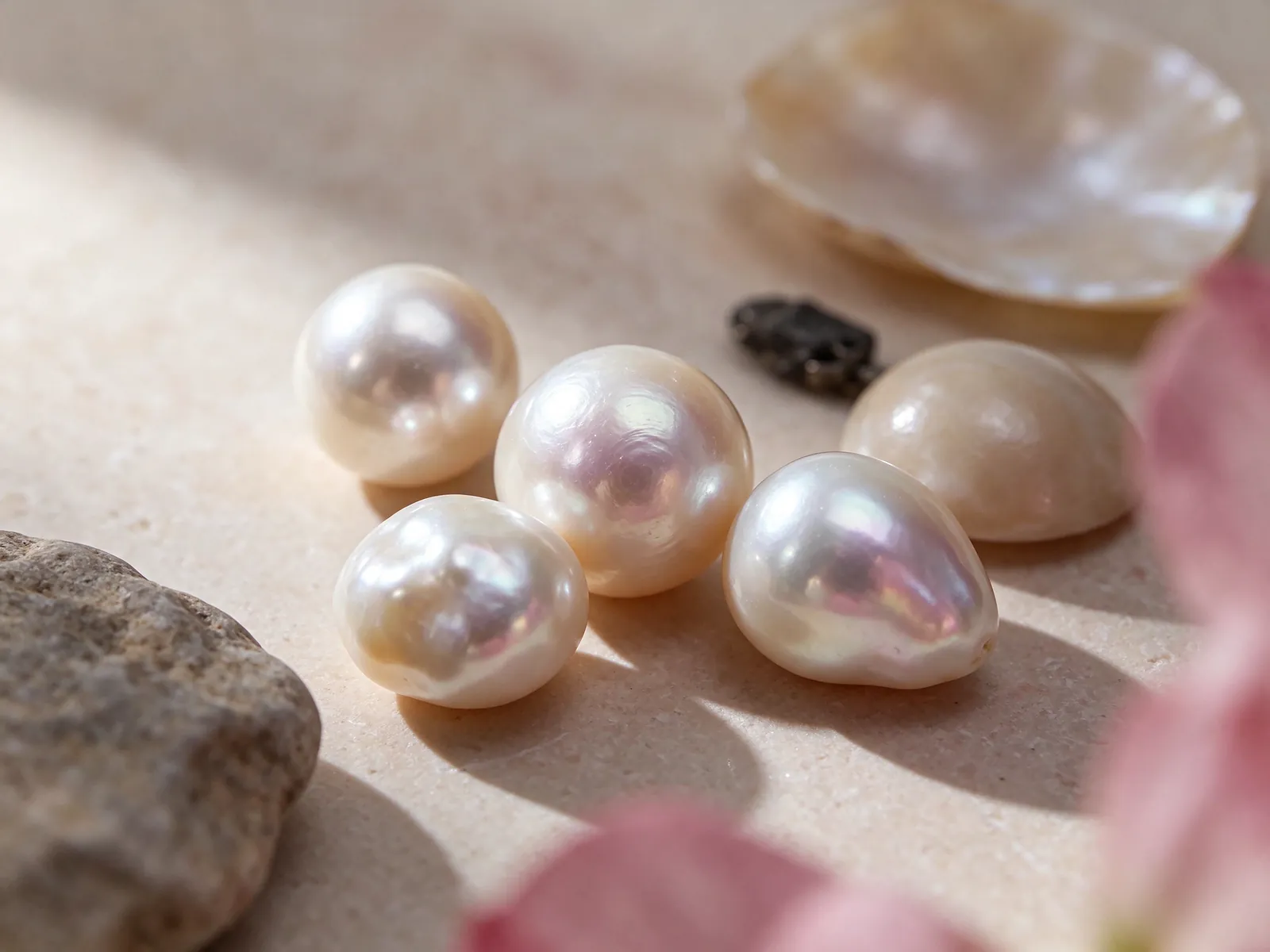
Compare neighbouring styles to discover your preferred contrast and presence
If you are drawn to a darker outline against clothing, explore the styling questions around a Tahitian pearl necklace before returning to white or golden tones. This comparison is about the effect you want, not a ranking of pearl categories by colour. Keep the neckline and earrings the same when assessing alternatives. That makes it easier to notice whether the necklace changes the balance around your face and shoulders or simply changes the palette.
For a different approach to a restrained strand, use an Akoya pearl necklace guide to frame your comparison, then assess each actual necklace's arrangement and presence. Do not assume every example within a category has the same dimensions. Photographs can alter apparent proportions through the model, camera angle and framing. Defining whether you want a delicate arc, a clear centre or a softer colour effect gives the comparison a more useful direction.
Is a smaller-looking necklace necessarily more comfortable for everyday wear?
Appearance does not determine weight or comfort on its own. A small pearl necklace can suggest ways to reduce visual presence or introduce more space, but the actual construction still matters. Consider high collars, time spent at a desk and bag straps that may contact the necklace or clothing around it. Bring those movements into a fitting rather than asking which pearl category is universally best for daily use.
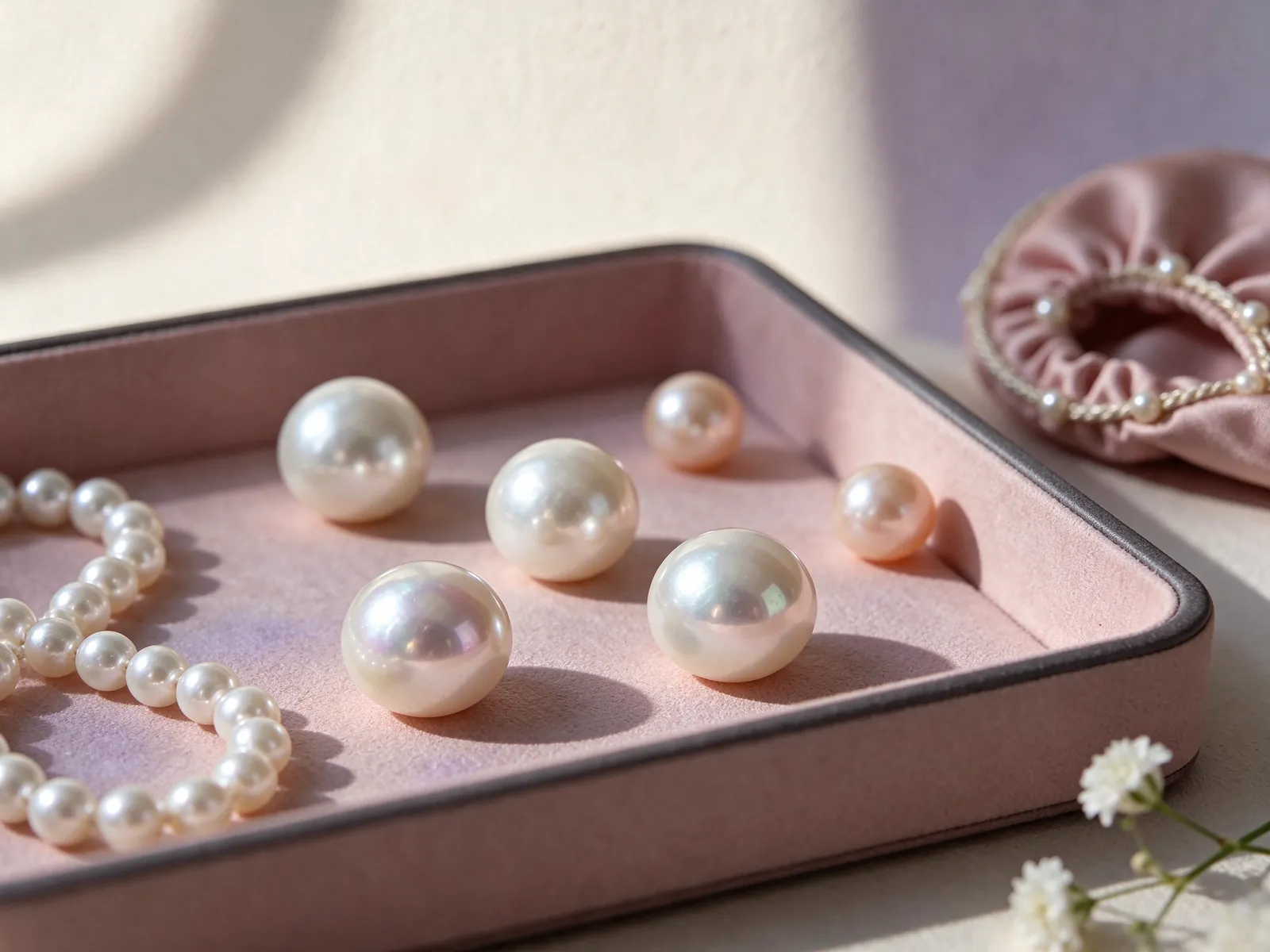
Check clasp handling, movement and the accessories you will wear with it
A necklace should be assessed beyond a still moment in the mirror. After fastening it, lift your arms to adjust your hair, turn and sit down. Notice whether the strand twists, the clasp stays where expected or the neckline repeatedly rubs against the pearls. Try long hair both loose and tied back. If you prefer to put jewellery on without help, the fastening action and how it feels under your fingers deserve attention alongside the front view.
Start with the strand as the main accessory, then decide how much emphasis the earrings should add. An open shirt lets you compare the necklace against skin, while knitwear adds texture that may soften the outline. If layering necklaces, check that the landing points are distinct and that movement does not bring the pieces together. Adding another necklace merely to fill space can hide the very curve that attracted you to the strand.
What helps when choosing a gift without a fitting?
Describe the recipient's usual necklines, preferred pale or warm-toned accessories and the position of a necklace they already enjoy. Age alone is not a styling brief. Someone who wears simple earrings may welcome a more noticeable strand, while statement earrings may call for a quieter overall balance. A photograph of a familiar outfit and specific styling questions can support a discussion, but it cannot establish the identity or details of the pearls being considered.
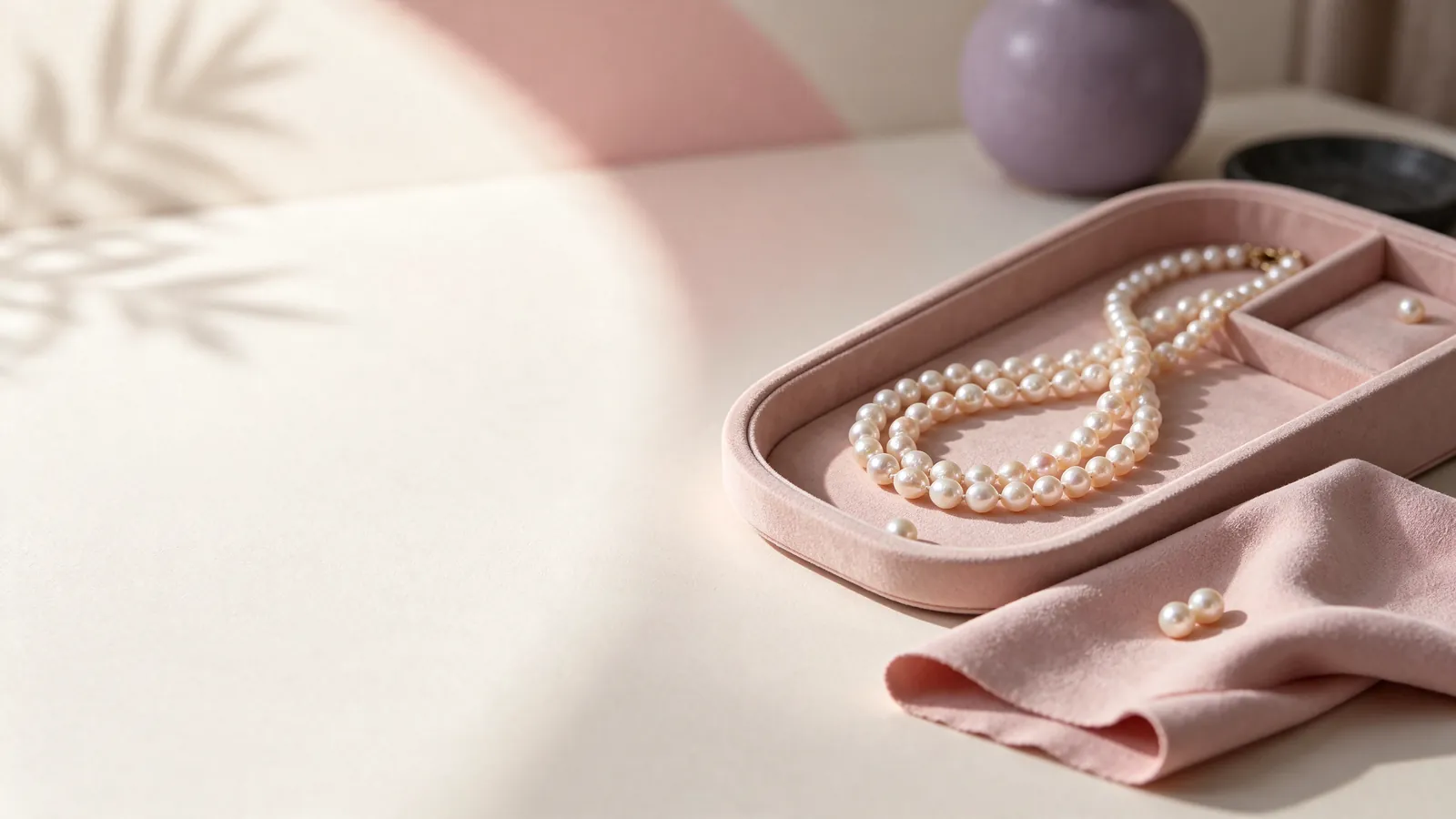
Finish with care and a decision checklist that includes the string
A strand's care involves both pearls and string. GIA places pearl at 2.5 on the Mohs hardness scale and states that ultrasonic and steam cleaners should never be used. After wearing, wipe gently with a very soft, clean cloth; avoid acids, perfume, hair spray and excessive heat. Complete makeup and fragrance application before putting the necklace on to reduce direct contact, without treating that habit as a promise of waterproofness or resistance to every chemical.
If a strung necklace is cleaned with water, the string must be completely dry before wearing. A dry-feeling pearl surface is not enough to establish that. Store the strand separately from jewellery that could scratch it, and notice changes around the clasp, drill holes and string. If something shifts unusually or fastening becomes difficult, avoid pulling harder and ask about care appropriate to that piece. Actual condition is more useful than assuming one maintenance timetable suits every wearer.
Which questions belong on your final buying checklist?
Record neckline position, white-versus-golden colour preference, matching, clasp handling and everyday care together. Read the object's description and any accompanying documents without inferring missing details from a photograph. Finally, return to the outfit you wear most often. If you still like the balance after sitting, turning and adding a jacket, that practical result is more relevant to your wardrobe than the brightness of one pearl in isolation.
Have a neckline in mind but still weighing white against golden tones? Contact Flint Jewellery on WhatsApp: https://wa.me/85260106207. Share an outfit photograph, the strand shape you enjoy and the occasions you dress for. You can also describe a clasp-handling question or a concern about a necklace you already own, so the conversation starts with practical preferences and the details you want to understand.
| Setting | Observe in white tones | Observe in golden tones | Check for either strand |
|---|---|---|---|
| Warm ivory or cream top | Whether the outline remains visible within a soft palette | Whether the warm palette connects without fabric sheen dominating | Compare under the same light and against the same background |
| Dark crew-neck top | Whether the light-dark contrast gives the desired focus | Whether the colour boundary against dark fabric feels balanced | Avoid a landing point that repeatedly overlaps the neckline edge |
| Open-collar shirt | How the colour looks beside skin rather than fabric | How the tone relates to hair, skin and earrings | Turn and check that the centre remains clearly placed |
| Formal dress with a jacket | How the strand's rhythm follows the neckline | Whether other warm-toned accessories compete | Compare standing, sitting and with the jacket on |
| Cleaning and storage | Inspect the pearl surfaces and string | Apply the same precautions around perfume, acids and heat | No ultrasonic or steam cleaning; let a wet string dry completely |
Pearl knowledge and authoritative references
GIA identifies seven pearl quality factors: size, shape, colour, lustre, surface quality, nacre quality and matching. For a strand, consider matching alongside the remaining factors rather than treating size alone as a verdict.
Read the reference for this factFrequently asked questions
Must a golden South Sea pearl strand be worn with yellow clothing?
No. Warm ivory, camel or brown can make a connected palette, while dark clothing can define the outline. Compare garments you already wear and add earrings afterwards. The useful test is the balance of the whole outfit, not a rule that golden tones require a particular clothing colour.
Can a white South Sea pearl strand sit on top of a crew-neck shirt?
That is a fitting option worth comparing with a position above the neckline. Check that the necklace and the fabric edge remain distinct and that the fabric texture does not hide the outline. Sit and turn as well as looking straight into a mirror.
Is a graduated arrangement automatically better than an even-looking strand?
No. A graduated effect can bring emphasis towards the centre, while a more even outline can create a steady arc. Consider colour, lustre and shape matching alongside the arrangement, then decide which visual rhythm works with your neckline.
Does a golden colour establish origin or treatment status?
No. Colour alone cannot establish origin, natural-versus-cultured identity or treatment status, and does not imply a certificate. Read the object's description and, if documents accompany it, check which object and conclusions they concern rather than inferring identity from an image.
Can I wear the necklace as soon as the pearl surfaces feel dry after cleaning?
If water reached the string, wait until it is completely dry. Dry-feeling pearls do not establish that the string has dried too. GIA also advises against ultrasonic and steam cleaning; routine wiping uses a very soft, clean cloth.
Updated: