
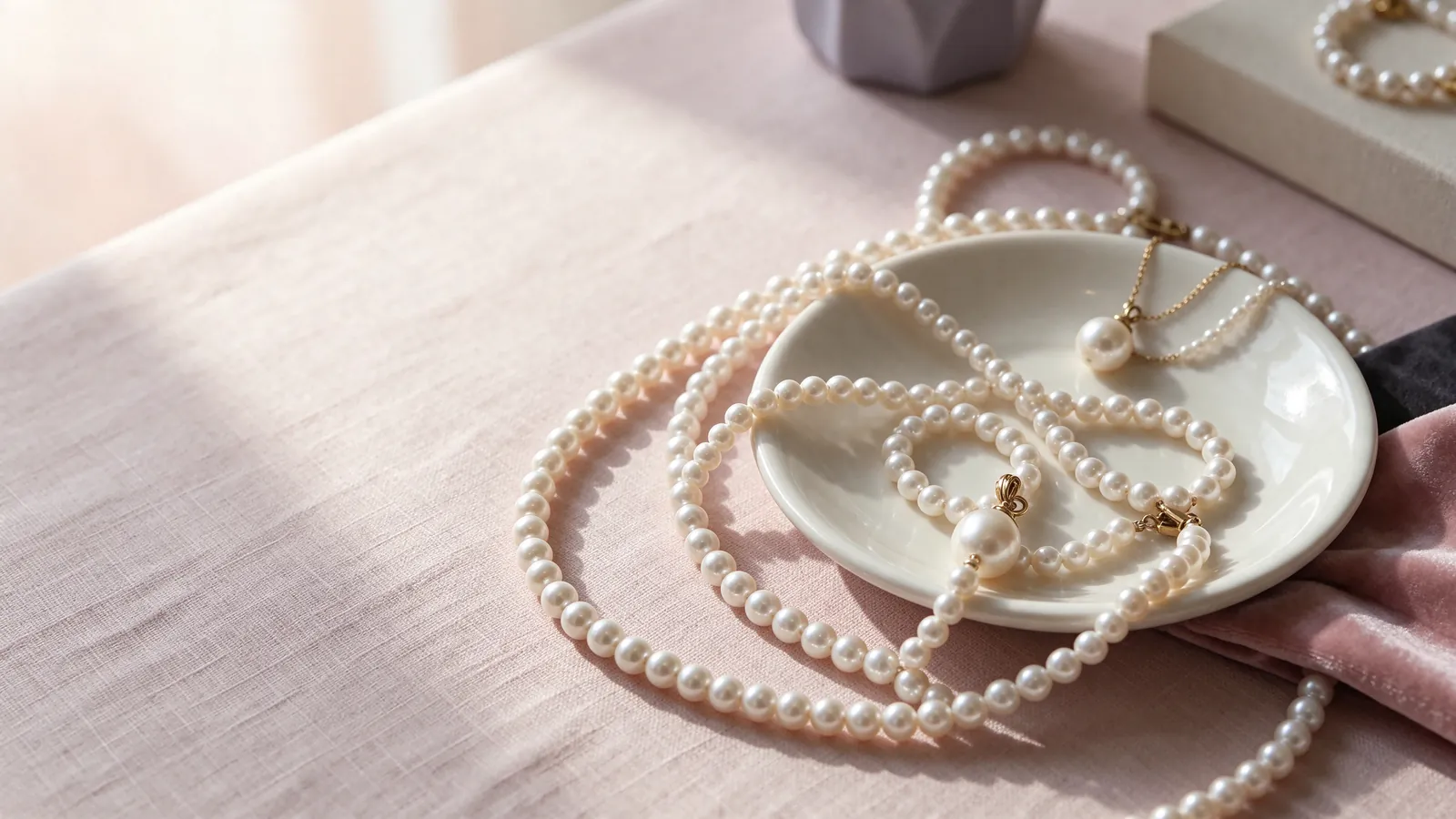
Length and neckline: finding a men's pearl necklace fit, whether your pearl necklace for men is a pendant or a mens pearl strand necklace | Flint Jewellery
Begin with your usual shirt rather than a length copied from somebody else's photograph. Neck circumference, the shape of the collar and the way a shirt hangs can change where the same necklace appears to sit. Decide whether you want the pearls visible inside the opening or resting against the fabric. A soft cord can help you sketch a preferred line, but it cannot reproduce the weight or movement of a finished necklace. The pearl necklace length guide helps you separate the stated length from the actual resting point, so you can describe a preferred fit without assuming a photograph will predict it.
Try the neckline as you really wear it: with your usual buttons fastened and, if relevant, a jacket on top. Stand, sit and look down. Notice whether the necklace disappears behind the collar or meets the shirt's button line. A position that looks pleasing when you stand perfectly still may require frequent adjustment during an ordinary day. Comfort and visibility should be judged together rather than treating length as a purely decorative number.
With an open collar, where should a men's pearl necklace sit, and how does a mens pearl strand necklace change the look of a pearl necklace for men? | Flint Jewellery
An open collar offers two useful comparisons: pearls within the exposed neckline and pearls worn outside the shirt. A pendant creates a central point, so check its relationship to the buttons. A strand creates a wider curve, so consider how much of each side you want visible. Neither position is universally correct. Keep the collar at its everyday opening while comparing; pulling it wider for a photograph can disguise the way the necklace will actually sit.
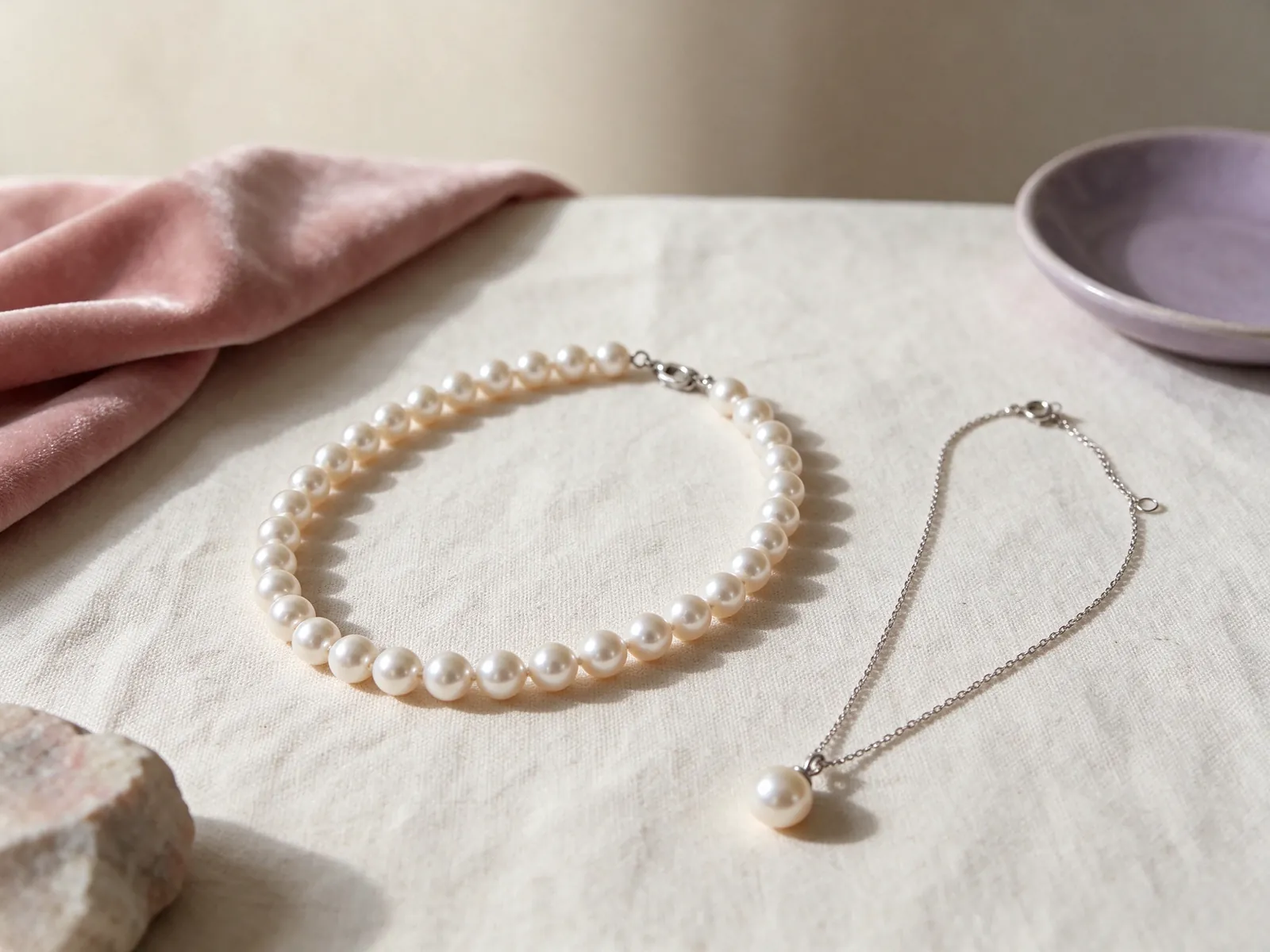
Pendant, strand or mixed line: choose the visual rhythm first
A single pearl pendant draws the eye towards one place, whereas a strand makes pearls part of the outline around the neck. Compare both against the same plain top before changing colour or adding other accessories. The single strand pearl necklace guide explores the continuous arrangement in more detail, helping you separate the effect of the strand itself from the styling of the outfit around it.
For a composition with contrasting lines, consider the idea of a half chain pearl necklace. Its pearl and chain areas divide the visual emphasis rather than repeating one element throughout. During a fitting, notice where that division sits and how it moves as you turn. An arrangement does not need to stay perfectly centred to appeal to you, but you should like the positions it naturally takes, not only its carefully arranged front view.
Change one feature at a time when comparing looks
If every photograph shows a different neckline, jacket and pose, it becomes difficult to know which necklace detail you prefer. Start with the amount of pearl you want visible, then compare the structure and finally its colour relationship with your clothes. This order gives you a practical vocabulary: a central accent, a continuous curve or a divided line. It is more informative than asking for a style simply because it is labelled for men.
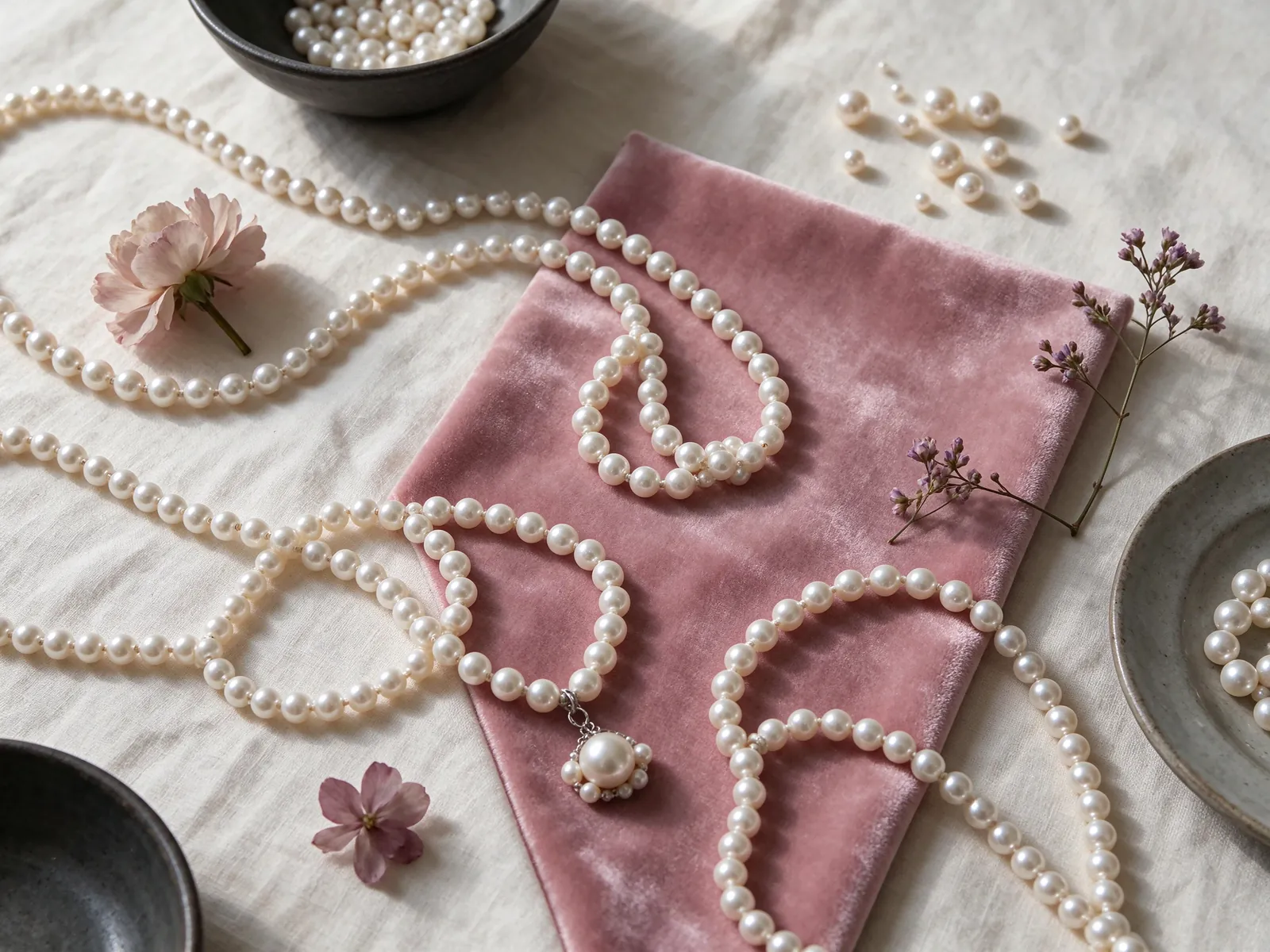
Read colour, lustre and shape alongside size
Place the necklace beside the colours you wear most often. Against a pale shirt it may become a gentle tonal detail; against a dark top its outline may be easier to distinguish. Look at reflections from different angles rather than judging colour from one brightly lit image. Ask yourself whether you like the contrast with the fabric, the character of the pearl's surface, or both. These are separate preferences and can lead to different choices.
GIA describes seven pearl quality factors: size, shape, colour, lustre, surface quality, nacre quality and matching. This framework prevents roundness or size from becoming the entire discussion. With a strand, observe the relationship between adjacent pearls and the overall arrangement. With a pendant, spend time looking at the individual pearl from its wearing angle. Being a man does not establish a preferred diameter, species or quality level. Matching is particularly relevant to jewellery with more than one pearl; an individual pendant calls for attention to the pearl itself rather than a comparison between neighbouring pearls.
Is an irregular outline less suited to a tailored outfit?
An irregular outline can provide contrast against a clean shirt, while more consistent shapes can create an orderly rhythm. Neither is automatically the better choice. If your clothes already include strong stripes or an elaborate collar, try a clearer necklace arrangement first; with a simple top, explore whether varied outlines add an enjoyable detail. Shape and colour alone cannot establish origin, natural or cultured identity, or the contents of a certificate.
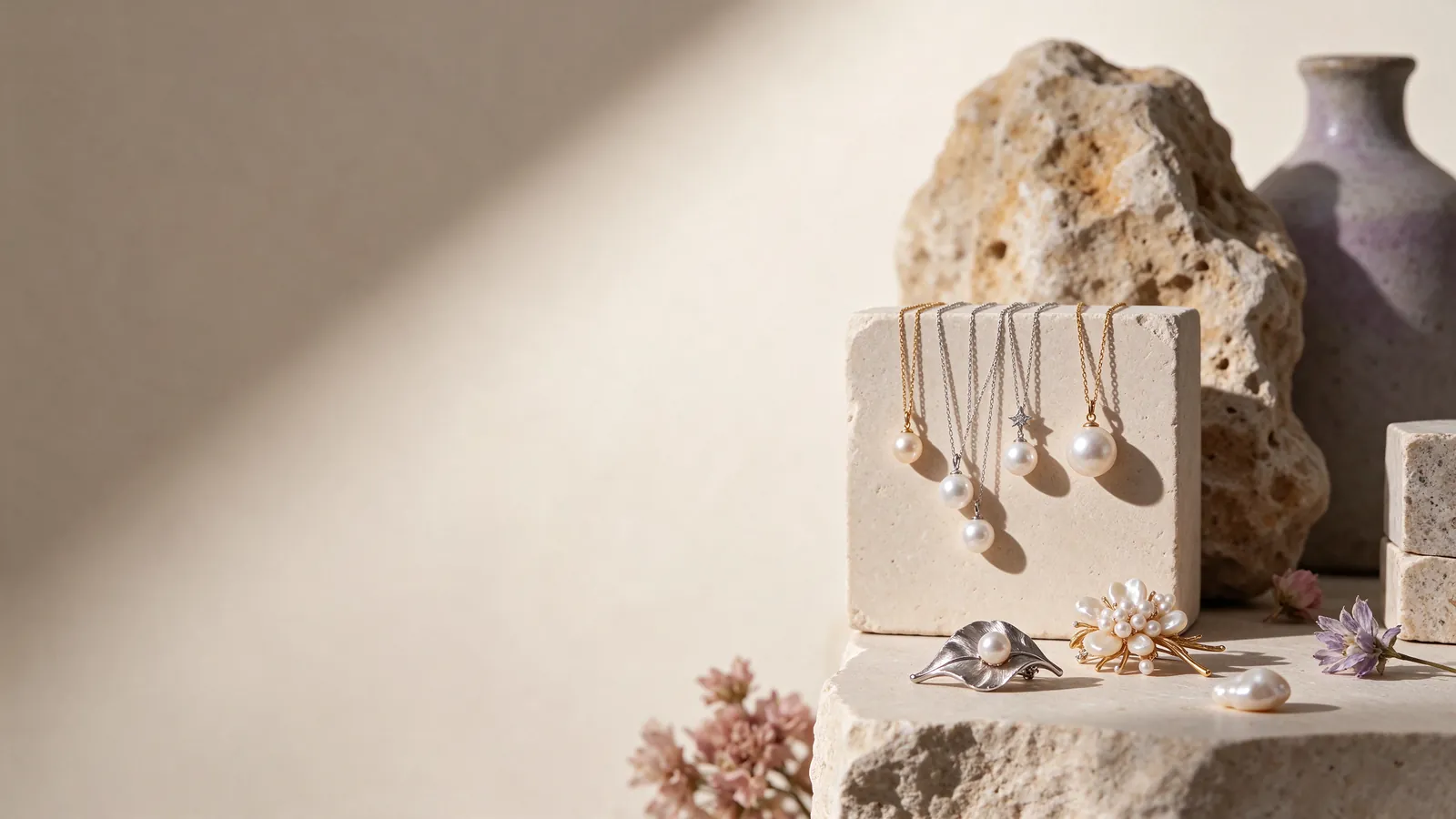
Build around everyday shirts, then consider tailoring
Choose a small selection of clothes you already reach for: perhaps a plain T-shirt, an open-collar shirt and a knit. Look for interference with printed text, prominent patterns or a textured neckline. The aim is not to create a completely new wardrobe around the jewellery. It is to find a necklace position and visual rhythm that make sense with the garments you enjoy and the way you usually wear them.
With a jacket, decide whether the necklace should be visible within the collar opening or against the shirt below it. A necklace, tie, pocket square and lapel detail do not all need equal emphasis. Fasten the jacket as you normally would and check whether its lapels cover the pearl line. This is a way to compare visual placement, not a rule that formal dressing requires one particular necklace structure.
Check the whole silhouette with your jacket on and off
Step back from the mirror after examining the necklace closely. Consider the shoulder line and the amount of fabric around it. A prominent strand in a close-up may become a subtle detail within a complete outfit; a pendant on plain fabric may become the main focal point. If you move between work and leisure clothes, compare the same necklace with the jacket removed before deciding whether its placement feels useful for both.
Layer with purpose rather than adding pieces automatically
For pearl necklace layering, start by making each necklace's line distinguishable in the mirror. Then move normally and check where pendants and curves meet. Different stated lengths do not guarantee clear separation on your body. There is no universal gap to aim for: the useful test is whether the combination preserves your preferred focal points without constant rearranging. Sometimes wearing the pearl necklace alone gives a cleaner result than adding another piece.
Pay attention to contact as well as appearance. Hard edges on other accessories can repeatedly touch the pearl surface, so watch where pendants, clasps and decorative shirt details meet it. Try a pairing with jewellery you already own before deciding that another necklace is necessary. If two pieces keep occupying the same space, changing the combination is often more practical than continually restoring the arrangement seen in a photograph.
Separate necklaces and a multi-strand composition offer different flexibility
Separate necklaces let you remove one element or wear each alone. A multi strand pearl necklace brings several lines into one composition, which may suit someone seeking a fuller outline. Compare this distinction before focusing on the number of visible layers. Look at the side and fastening area as well as the front, and consider the way the arrangement rests when seated. More layers are an option, not a measure of a better-finished outfit.
Describe your own style without a fixed masculine template
A pearl necklace for men can express an individual preference without making pearls exclusive to one gender. Words such as understated, crisp, relaxed or high-contrast can express a more useful brief than a fixed masculine template. Bring examples of clothes you genuinely wear, rather than an aspirational outfit that feels unfamiliar in daily life. Keep the discussion focused on the silhouette, the amount of pearl you want visible and the way the necklace feels when worn.
Record the situations you want to avoid as clearly as the look you want. Perhaps a pendant always hides beneath a shirt, a strand meets the collar edge, or a pattern competes with the pearls. These observations are specific enough to guide a comparison. They also let you revise one choice at a time instead of assuming that a larger pearl or a more elaborate design will automatically solve the problem.
For a gift, learn the recipient's wearing habits first
Ask whether the recipient already wears necklaces and whether they usually keep them inside or outside a shirt. Their working wardrobe and familiar accessories can be more helpful than assumptions based on gender or height. If you can discuss the gift together, compare preferred necklines and visible positions. If keeping it a surprise matters, avoid turning a social photograph into a supposed measurement or a rule about the pearl size they should receive.
Include gentle care in your wearing routine
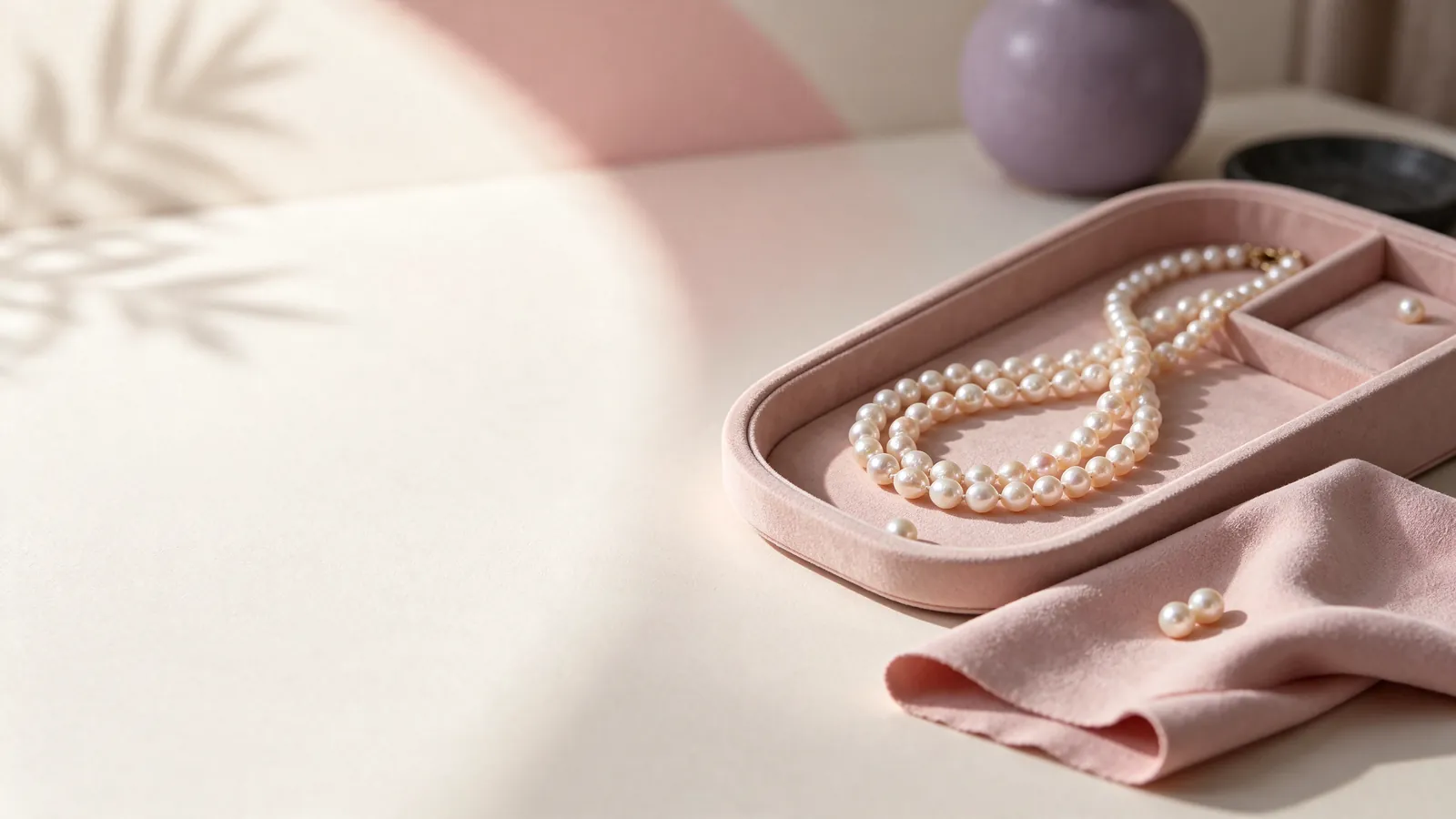
GIA places pearl at 2.5 on the Mohs hardness scale. That makes surface contact relevant when planning how to wear and store the necklace. Keep it apart from hard-edged jewellery and loose objects rather than dropping everything together into a bag. With a decorated shirt, check whether an ornament repeatedly meets the pearls. A different position or a simpler pairing may avoid that contact while keeping the look you enjoy.
After wearing, use a very soft, clean cloth. GIA advises avoiding acids, perfume, hair spray and excessive heat, and never using ultrasonic or steam cleaners for pearls. If a strung necklace is cleaned with water, its string must be completely dry before you wear it again. Do not use high heat to hurry the process. These care considerations apply to pearl jewellery regardless of the gender of the wearer.
Look at the fastening and connections during a fitting
Alongside the mirror test, notice whether you can operate the fastening comfortably and whether the string or connections show obvious wear or looseness. Avoid pulling hard on the pearls to test them. If wearing causes discomfort, remove the necklace and consider its position, weight or contact with clothing rather than assuming any pearl piece must suit everyone. A comfortable styling choice should also work with the way you handle and care for your jewellery.
Ready to explore your own direction? Contact Flint Jewellery on WhatsApp (+85260106207) with a description of the shirts you wear most, your preferred visible position and anything you find distracting in a necklace. You do not need to have chosen a pendant or strand already. Start with your wardrobe and wearing habits, then talk through the visual emphasis and practical details that matter to you.
| Wardrobe situation | Preferred emphasis | Structure to compare | Fitting observation | Personal decision |
|---|---|---|---|---|
| Plain crew-neck T-shirt | A central point or visible curve | Pendant and strand | Above the neckline or on the fabric | Quiet accent or clear focal point |
| Open-collar shirt | Pearls within the collar opening | Pendant or continuous strand | Visibility when looking down | Your usual collar opening |
| Tailored jacket | Neckline or lapel | Necklace and brooch placement | Visibility with the jacket fastened | How tie and pocket square share attention |
| Wearing an existing necklace too | Distinct layers | Separate pieces or a multi-strand composition | Overlap and hard-edge contact in motion | Whether independent wear matters |
| Exploring asymmetry | Pearl and chain contrast | A half-chain composition | Division point as the necklace moves | Whether several resting positions appeal |
Pearl knowledge and authoritative references
GIA identifies seven pearl quality factors: size, shape, colour, lustre, surface quality, nacre quality and matching. A men's necklace comparison should not rely on size or roundness alone.
Read the reference for this factFrequently asked questions
Should my first men's pearl necklace be a pendant or a strand?
Compare both with a familiar plain top. A pendant focuses attention on one point; a strand forms a continuous curve. Decide how visible you want the pearls to be, then test the position while moving. Neither structure is a compulsory starting point for men.
How can I stop an open collar hiding the pendant?
Try the shirt at its everyday button setting and check it seated as well as standing. If the pendant repeatedly disappears, compare another resting position or neckline. Widening the collar only for the mirror does not show how it will behave through the day.
Does a mens pearl strand necklace need large pearls?
No fixed diameter follows from the wearer's gender. Consider the line you want, the collar space and wearing comfort. Size is one of GIA's seven pearl quality factors, not a substitute for the other factors or a complete measure of the necklace's quality.
What if my pearl necklace and another chain keep meeting?
Identify whether the pendants share a focal point or the curves overlap after movement. Adjust the pairing or wear one piece alone, and check for hard edges touching pearl surfaces. Clear, comfortable placement matters more than achieving an arbitrary distance between layers.
Can I wear a pearl strand straight after cleaning it with water?
Its string must be completely dry before wearing again. GIA also advises against ultrasonic and steam cleaning. A very soft, clean cloth is appropriate for routine after-wear care; keep perfume, hair spray and excessive heat away from the pearls.
Updated: