
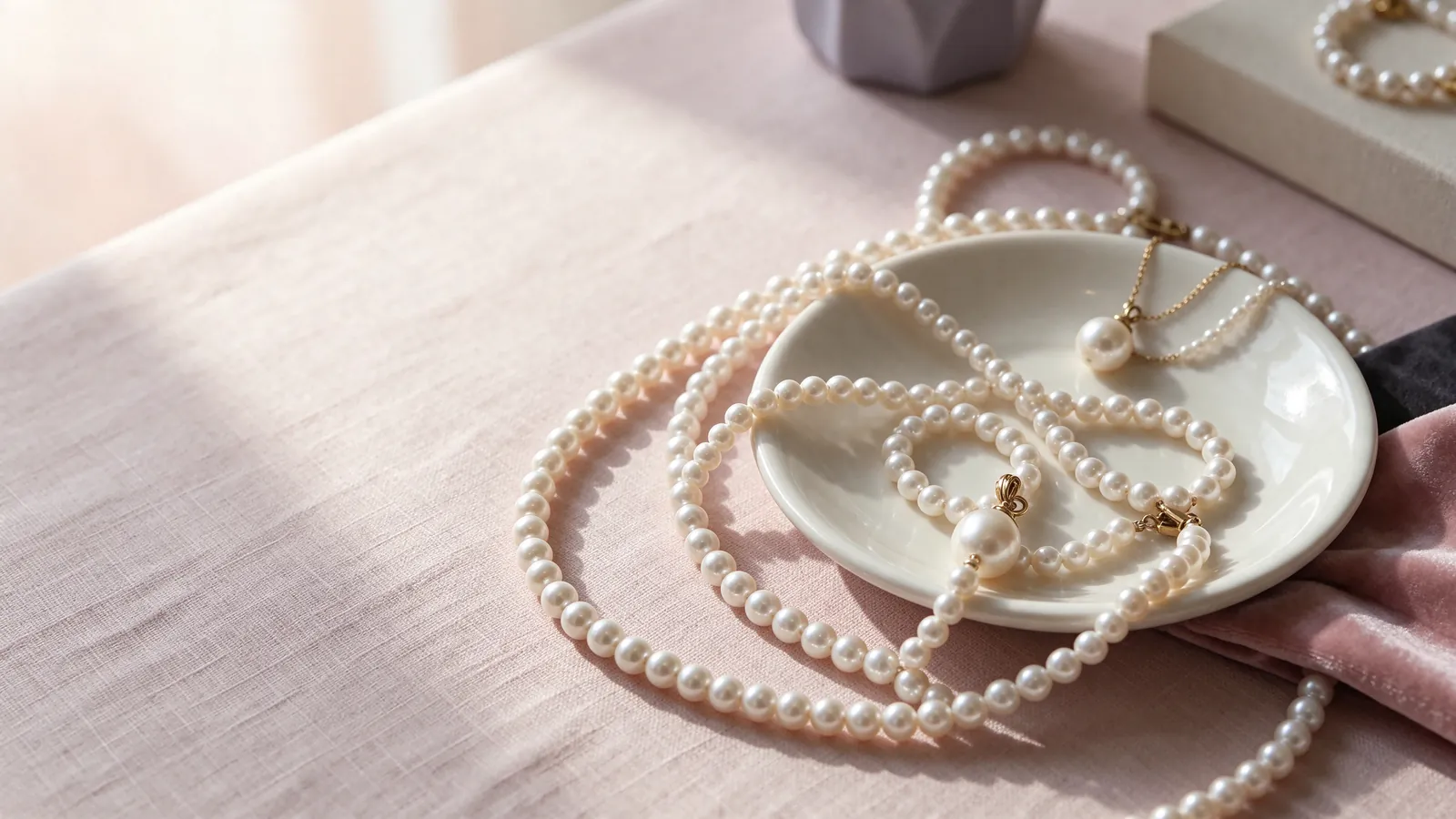
How do length and neckline balance shape the look of a large pearl necklace, including a large pearl strand necklace or a statement pearl strand necklace? | Flint Jewellery
A large pearl necklace creates a visible line around the neckline. Before comparing individual pearls, decide whether you want that line to sit within an open collar or clearly over the fabric. If it follows a crew neck too closely, the collar may hide part of the strand. With an open shirt, watch whether the collar points interrupt its curve. The useful starting question is where the whole necklace should rest, rather than how large its centre pearl looks.
Fabric changes the balance too. Smooth knitwear gives each pearl a clear edge, while a thick lapel or textured collar introduces competing lines. Use the pearl necklace length guide to compare resting positions with the clothes you actually wear. Step back from the mirror as well as looking closely: shoulder line, neckline and necklace should be considered together. A strand that looks striking in a close photograph may create a different focal point in a complete outfit.
When trying a large pearl necklace, how can you check the drape and freedom of movement of a large pearl strand necklace or a statement pearl strand necklace? | Flint Jewellery
Let the necklace settle without pulling it into position. Then sit, turn your head, look down and put on your usual jacket. Notice whether the centre rises, the clasp travels forwards or a pearl becomes trapped beside the collar. Take a front and side photograph for comparison. Record the movement that causes difficulty; a useful fitting check follows your routine, rather than stopping at a flattering pose.
What should you compare beyond pearl size?
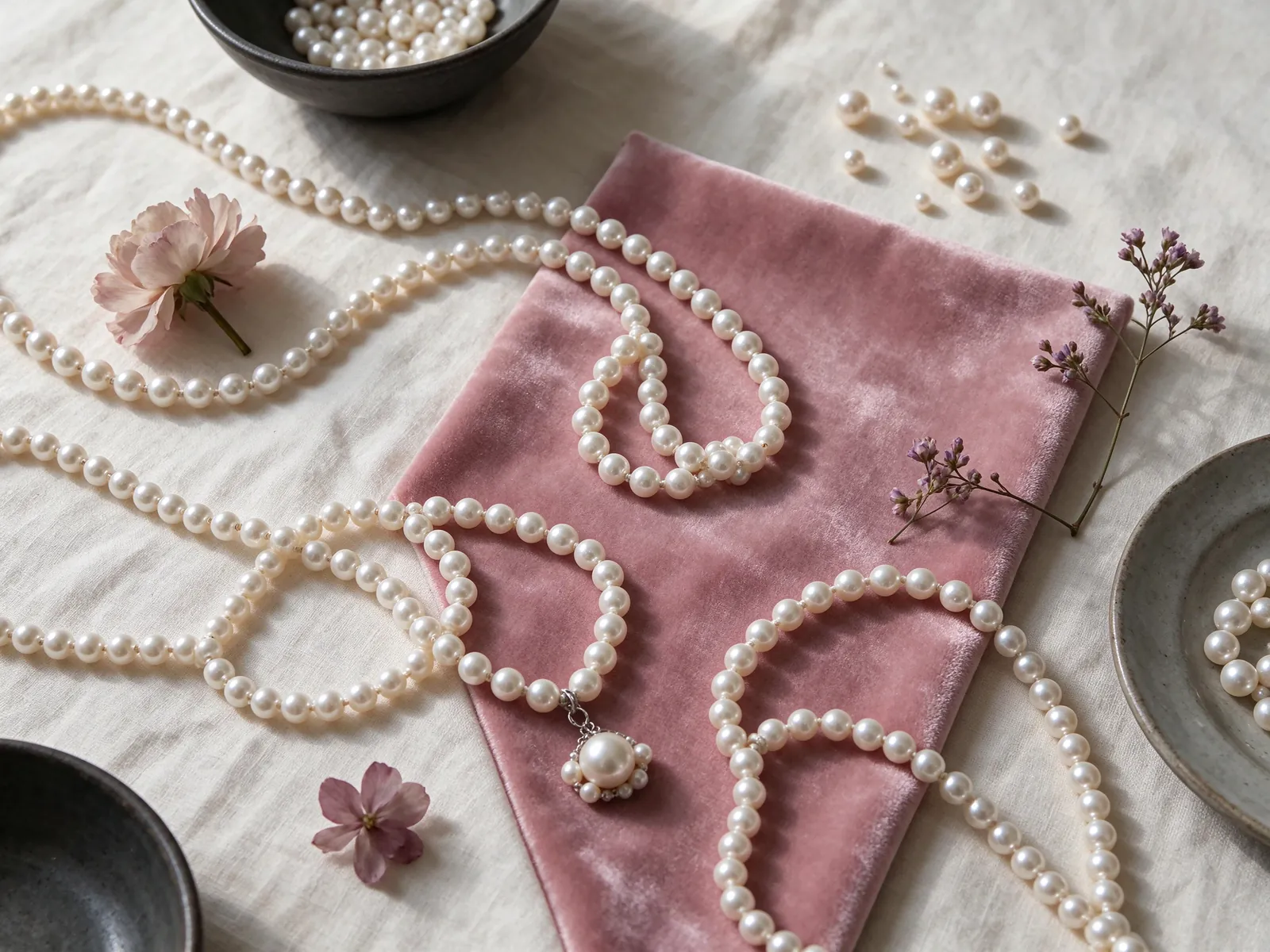
GIA describes seven pearl value factors: size, shape, colour, lustre, surface quality, nacre quality and matching. For a large pearl strand necklace, this makes size one part of the assessment rather than a complete answer. Under comparable lighting, look at the clarity of reflections and the relationship between neighbouring pearls. A larger outline can attract attention, but does not establish better lustre, a particular origin or a pearl's identity. A photograph cannot fully assess every factor, including nacre quality; use observation of the actual necklace alongside information specific to that piece.
Consider the arrangement across the whole strand. Similar-sized pearls create one rhythm, while a graduated layout directs attention towards the centre. Neither arrangement should automatically be treated as superior. Ask how the sizes progress and look at both sides, including the pearls near the clasp. Reading about a single strand pearl necklace helps place these details within the continuous curve, rather than judging the necklace solely from its most prominent pearl.
Which views make matching easier to assess?
A full-length view, a naturally hanging view and a close photograph answer different questions. Use the first two to examine the sequence, and the close view for surface details. Do not rank photographs taken under unrelated lighting as though their conditions were identical. If a document accompanies a necklace, read the actual features it describes; a grade name cannot replace inspection of the entire strand.
How do close-fitting and lower strands work with an everyday wardrobe?
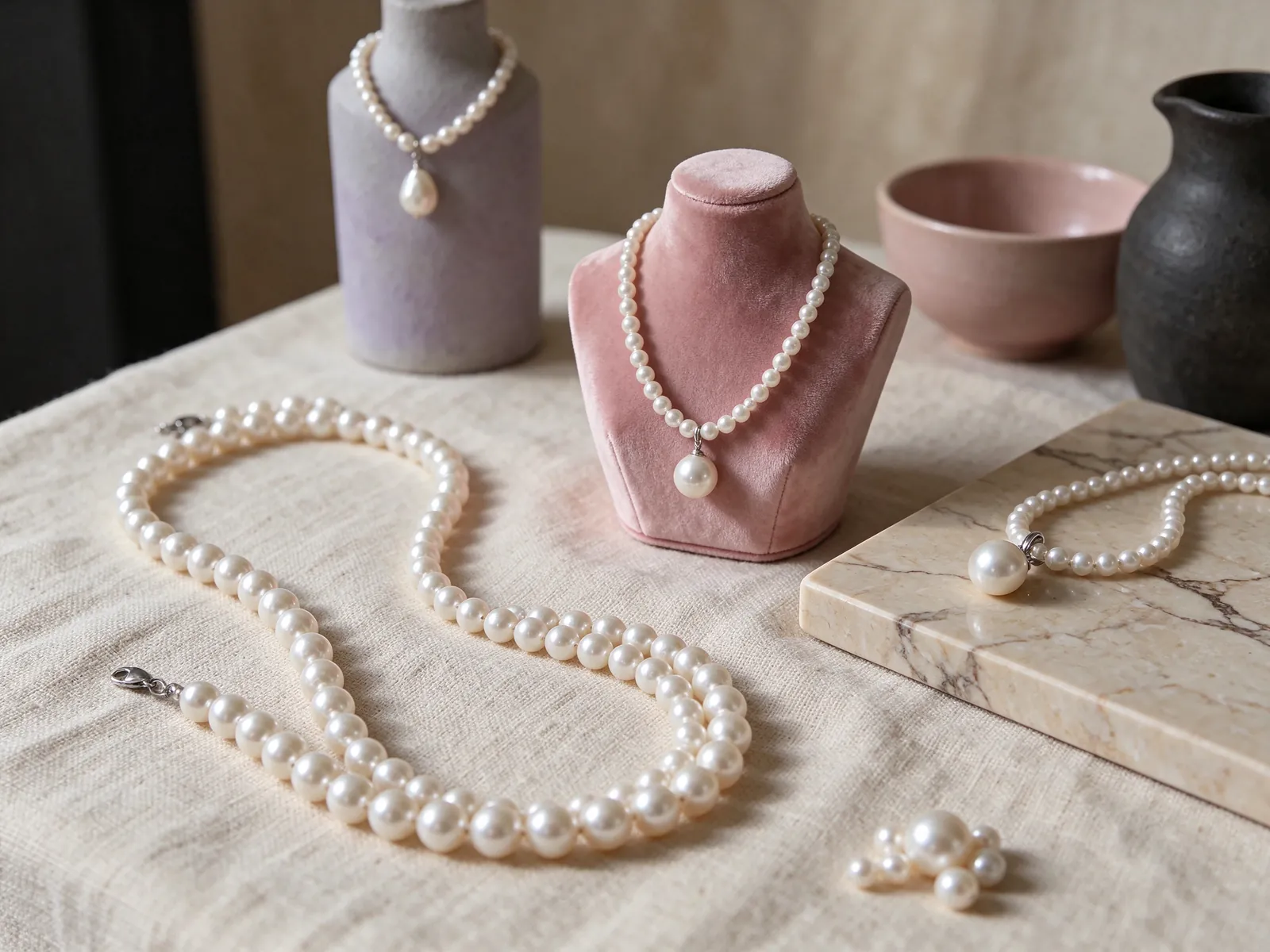
A close-fitting strand occupies space around the neck as well as tracing a line across it. Larger pearls may meet a standing collar differently from a finer strand, so stated length alone cannot tell you how much room you will feel. When considering a pearl choker necklace, examine the side view and try turning your head. The aim is a resting position you like, not forcing every pearl tightly against the skin.
A lower curve creates another balance, but can place the necklace over shirt buttons, a zip or the edge of a jacket. Compare a matinee pearl necklace with your regular knitwear and work shirt, checking where the strand meets those details. Include the movements your day involves, such as leaning over a desk or folding your arms. A lower position should be chosen for its actual behaviour on you, not assumed to solve every proportion concern.
Which clothes should you bring to a fitting?
Start with a plain crew neck, an open-collar shirt and your usual jacket. For each, note whether the strand lies on skin, at the collar edge or entirely on fabric. Return the clasp to the same position between comparisons. If one collar repeatedly catches a pearl, try another neckline before deciding that pearl size is the problem. This separates clothing interference from the necklace's own drape.
How do shape and colour change the necklace's visual rhythm?
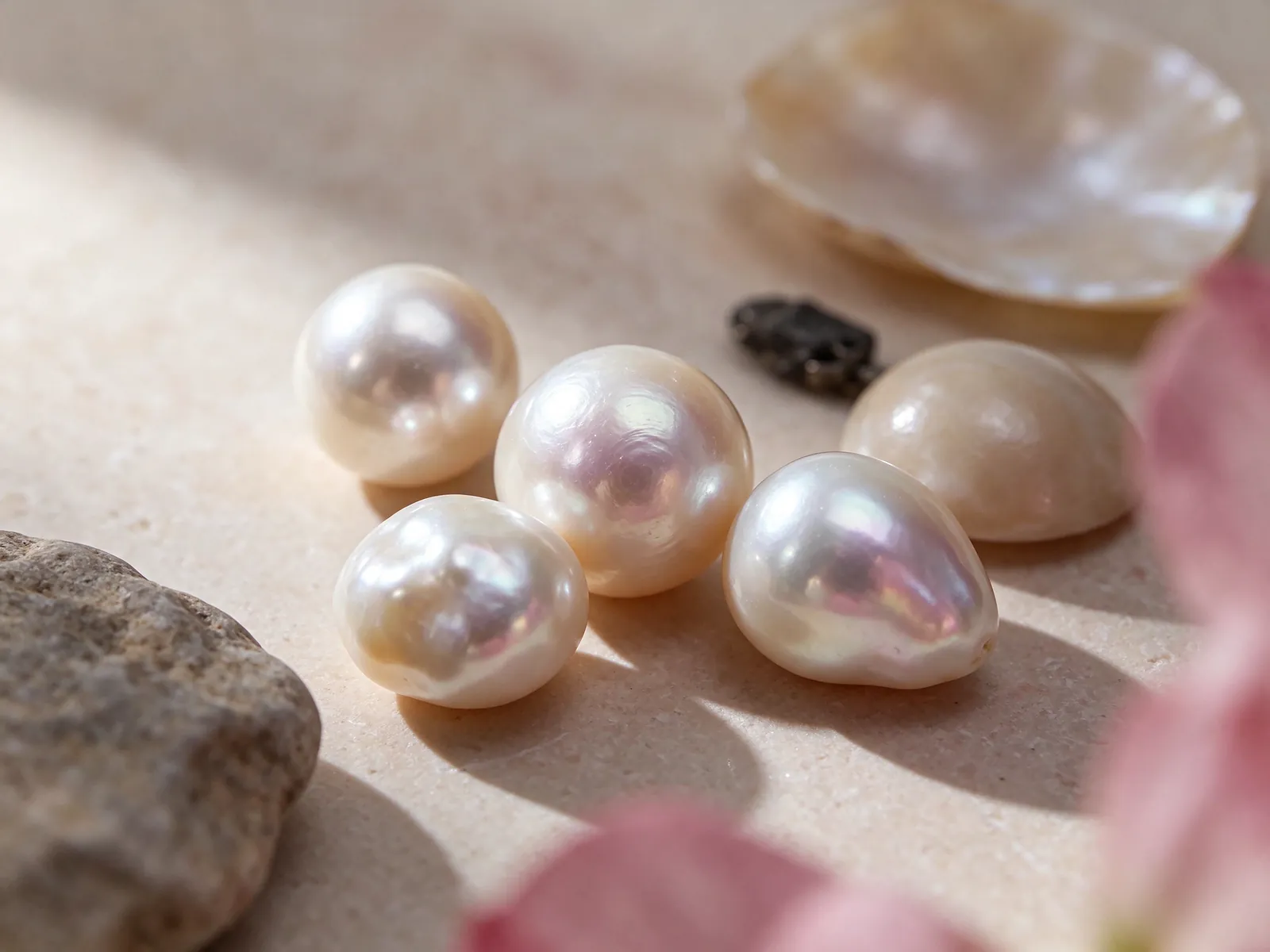
A consistent outline produces a flowing curve; varied outlines invite the eye to pause at individual pearls. If you prefer a less regular silhouette, the baroque pearl strand necklace guide offers a useful comparison of shape-led styling. Observe which parts project outwards and whether the arrangement looks balanced from both sides. Shape is a design consideration, but appearance alone cannot establish species, origin, natural-versus-cultured identity or certification.
The keshi pearl necklace topic can also help you explore whether you prefer an orderly line or a more varied outline. Use that comparison to describe the silhouette you enjoy, rather than assigning a pearl category from a photograph. When large, distinctive shapes already create a strong focus, an intricate collar or elaborate earrings may add more detail than you want. Begin with a simple neckline, then decide whether another accessory contributes to the look.
What background is useful for comparing colour?
Look at the strand against a quiet, light background first, then beside clothes you wear often. Dark fabric may define the edges more clearly, while a busy print can distract from differences between neighbours. No single background represents your whole wardrobe. Keep lighting comparable when judging colour and lustre, and distinguish the coordinated appearance of the full strand from the brightest highlight in one photograph.
How can a bold strand work for the office, dinner and casual dressing?
For office clothing, try giving the necklace a clear role before adding a brooch or long earrings. A large strand does not require formal dress, but a heavy lapel and several accessories can crowd the neckline. Compare a small pearl necklace if the same shirt feels visually too full with larger pearls. The comparison helps you choose the level of presence you want; it is more useful than declaring one pearl size appropriate for every workplace.
For dinner, a clean neckline can leave the complete curve visible. If you want a fuller composition, a multi strand pearl necklace offers another way to build presence, different from enlarging the pearls in one row. There is no need to increase both pearl size and row count simply to make a statement. With casual clothes, smooth knitwear or a plain shirt can let the necklace lead without adding competing patterns around the neck.
How should earrings and hair relate to the strand?
Check the look with your hair both down and tied back. Long earrings may overlap or touch pearls at the sides, while hair covering those sides can emphasise the centre. Decide whether the necklace, earrings or outfit should be noticed first. You can then remove unnecessary lines rather than matching every accessory in size. This is a question of visual priority, not an age-based rule.

What can the clasp and your own movements reveal?
A photograph cannot tell you the complete necklace's weight or how that weight feels around your neck. During a fitting, note whether pressure seems concentrated at the sides and whether the collar pushes the strand elsewhere. Compare alternatives in the same outfit with the same movements. Comfort is a personal observation: an arrangement that feels fine while standing can feel different when you sit or lean forwards.
Try fastening and removing the necklace gently, using the clasp's intended opening method rather than pulling the string. Look beyond its decorative face to the connection points and whether it closes properly. Notice if pearls beside it twist together during fastening. When putting on or removing a scarf, jacket or shoulder bag, check that it does not trap or catch the pearls. If an accessory repeatedly interferes, remove the necklace first rather than deliberately testing a snag. A clasp that suits your hands and routine deserves attention alongside the front-facing design.
What should you ask when choosing from photographs?
Ask how the length is measured, whether it includes the clasp, and whether the pearls are arranged evenly or graduate towards the centre. Request full-strand and side views rather than only a close-up. These details clarify proportion, but do not replace a personal movement test. For a gift, find out about the recipient's usual necklines and ability to operate the fastening before choosing greater visual volume.
How should you care for the pearls and the string together?
GIA lists pearl at 2.5 on the Mohs hardness scale. That number concerns resistance to scratching; it does not measure how much pulling a necklace can withstand. A larger pearl should not be assumed to resist abrasion better. After wearing, use a very soft, clean cloth and store the strand separately from harder jewellery. Arrange it gently rather than pulling one end through a collection of other accessories.
Avoid acids, perfume, hair spray and excessive heat. Complete your hair and fragrance routine before putting the necklace on. GIA states that pearls should never be cleaned with ultrasonic or steam cleaners. If water has been used to clean a strung necklace, allow the string to dry completely before wearing it. A bold appearance does not change these care principles, and the string deserves attention as well as the visible pearl surfaces.
Which changes should you notice before wearing it again?
Look near the clasp, between pearls and along the curve for looseness, visible wear or a fastening that no longer closes properly. Stop wearing the necklace if a connection appears compromised, and have its construction assessed by an appropriate professional. Do not attempt to solve the problem by pulling the string tight or applying household cleaners. Respond to the actual condition rather than assuming every strand follows an identical restringing timetable.
Want to turn your styling preferences into clearer questions? Tell Flint Jewellery which necklines you wear most, where you want the strand to rest and whether you prefer an even or varied outline. Discuss proportion and your own priorities on WhatsApp: https://wa.me/85260106207 (+85260106207). You do not need to settle on a pearl diameter or grade before starting the conversation.
| What to observe | Selection focus | Fitting check | Styling consideration |
|---|---|---|---|
| Neckline and resting position | A visible curve within or outside the collar | Compare a crew neck and an open shirt | Avoid placing pearls directly under the collar edge |
| Matching across the strand | Colour, lustre and progression in size | Look at the centre, both sides and clasp area | Graduated and even layouts create different focal points |
| Outline and rhythm | A continuous line or a varied silhouette | Check projecting shapes from the side | Try a plain neckline before adding more detail |
| Freedom of movement | Pressure and interference from clothing | Sit, look down and turn your head | Include your regular jacket |
| Clasp and storage | Manageable operation and separated storage | Try the opening and inspect connections | Avoid catching the strand with scarves or bags |
Pearl knowledge and authoritative references
GIA identifies seven pearl value factors: size, shape, colour, lustre, surface quality, nacre quality and matching. Size is therefore only one part of evaluating a large pearl strand.
Read the reference for this factFrequently asked questions
Can a large pearl necklace work if I prefer modest office styling?
Yes, if its role in the outfit feels right to you. Begin with a plain neckline and fewer competing accessories, then compare a finer strand in the same shirt. Choose the degree of emphasis you prefer rather than treating large pearls as automatically formal.
Does a particularly large centre pearl make the whole strand better quality?
It may create a deliberate focal point, but does not establish the quality of every pearl. Compare lustre, surface appearance, colour and matching, including the transition on both sides. Size is one of GIA's seven factors, not a replacement for the others.
Why does the same necklace look different over a jacket?
Lapels, thicker fabric and shoulder structure can change the surrounding lines or push the necklace away from its original position. Try the jacket during fitting and check both standing and seated views before judging the strand's balance.
Can I tell whether a large strand will feel comfortable from a model photograph?
A photograph can show a resting position on that wearer, but cannot establish weight distribution or pressure on you. Ask about measurement and fastening, then use a personal movement check wherever possible. A posed image is not a comfort guarantee.
Should a gift recipient's usual earrings affect the choice?
They can help you understand the recipient's preferred focal point. Someone who regularly wears prominent earrings may want a quieter neckline, or may enjoy a deliberately bold combination. Also consider usual collars and ease of fastening rather than assuming larger pearls make a better gift.
Updated: