
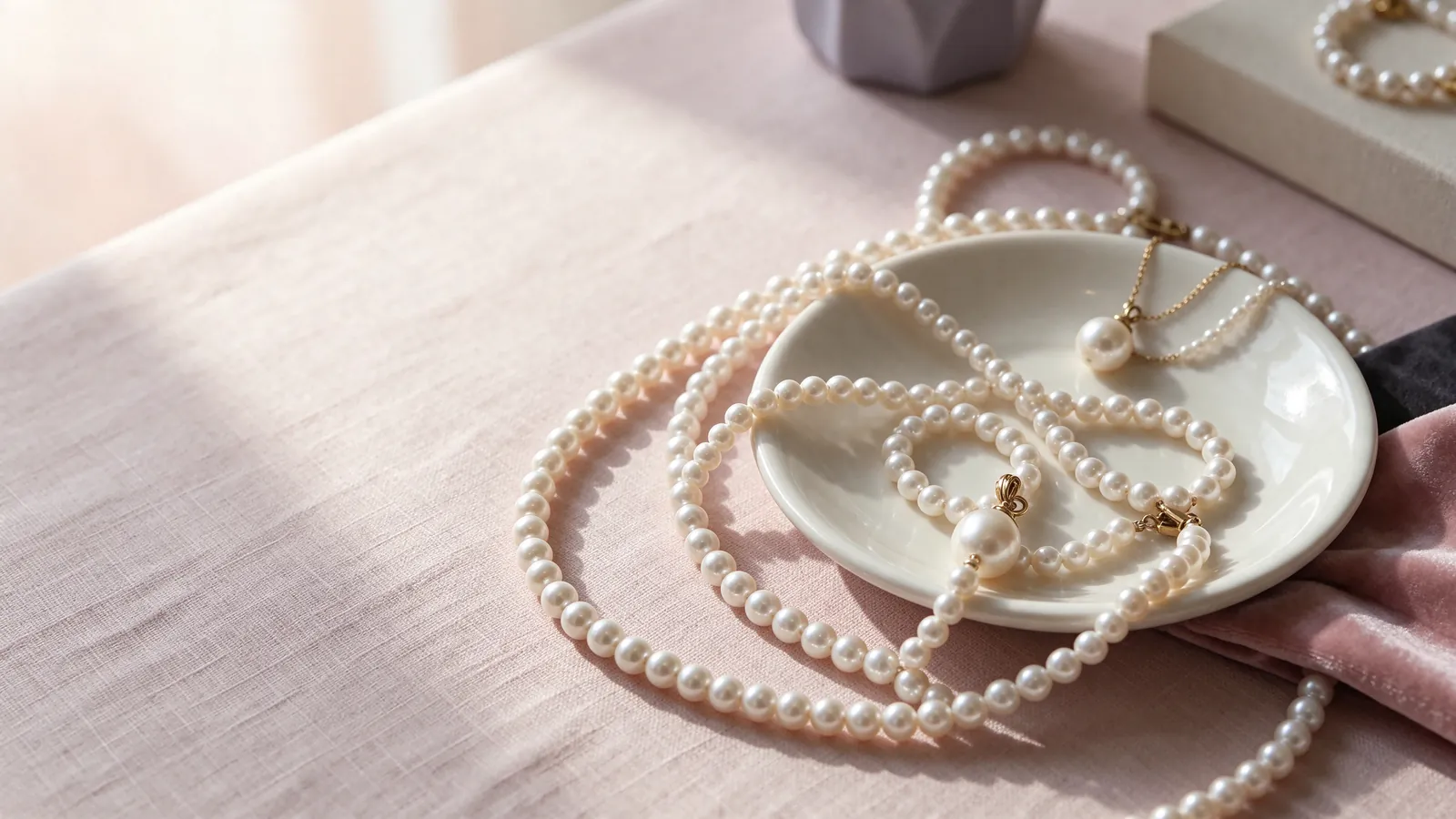
Flint Jewellery: how do colour and length shape a Tahitian pearl necklace, a Tahitian black pearl strand or a black Tahitian pearl necklace?
Start with the outline the necklace makes around your neck and shoulders. A strand sitting closer to the neck concentrates attention around the face; a lower curve draws the eye towards the chest. Neither position is automatically more flattering. The visual weight of the pearls, your collar and the amount of exposed skin work together, so a length measurement alone cannot settle the choice.
Wear an outfit you actually use rather than choosing solely against a display background. Decide whether you want the strand on skin or over fabric, then watch for a collar edge that cuts through the curve. If a lighter visual presence appeals to you, compare the styling approach in a small pearl necklace guide without assuming that a pearl name promises a particular diameter.
Flint Jewellery: how do neckline and lighting affect a Tahitian pearl necklace, a Tahitian black pearl strand or a black Tahitian pearl necklace?
Check the same outfit in soft daylight and in the indoor lighting you regularly encounter. A pale shirt makes a dark outline easier to see, whereas a dark knit may put more emphasis on reflections. Keep the camera angle and distance similar if you take comparison photographs. Include a seated view and a gentle turn of the head, not just the brightest front-facing image.
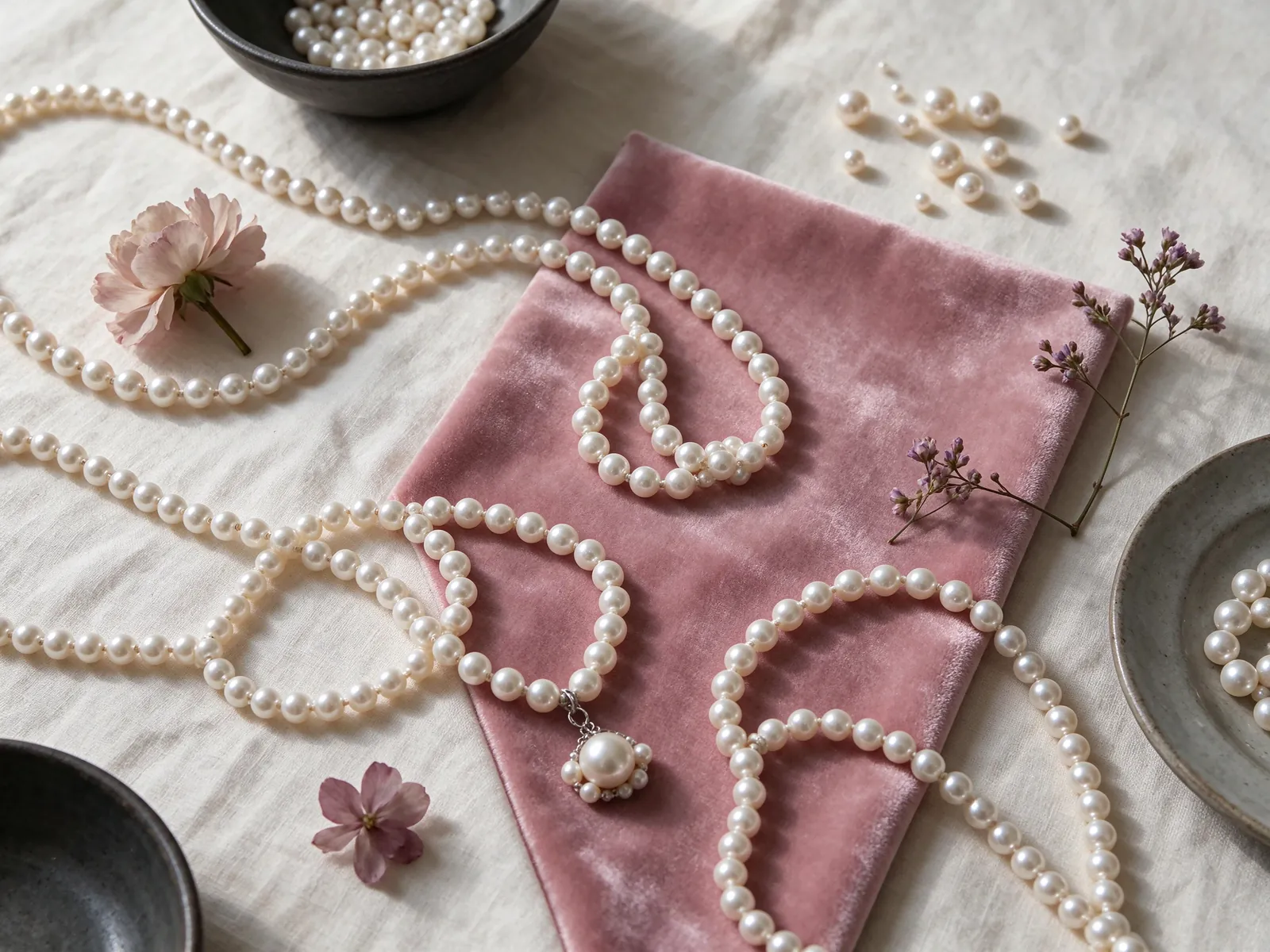
Read the colour in layers rather than treating black as a single shade
GIA describes Tahitian cultured pearls as saltwater cultured pearls grown primarily around the islands of French Polynesia. Sometimes called black pearls, they may be grey, black or brown and can have blue, green, purple or pink overtones. A Tahitian pearl necklace therefore need not be judged against a uniformly jet-black ideal. This background helps explain the pearl name; read the identity and treatment description of the particular necklace separately.
Ask separate questions about the main colour, any additional colour impression on the surface and the clarity of reflections. GIA distinguishes bodycolour, overtone and orient, and notes that not every pearl displays all three. These are useful observation terms, not automatic quality labels. Describe what you can see before deciding whether that effect is the one you want to wear.
View the necklace as a complete curve first, then examine adjacent pearls. Similar tones can produce a quiet, continuous line; more noticeable changes can create rhythm. The choice depends on your taste and clothes rather than a rule that every pearl must look identical. For the broader terminology, read what are Tahitian pearls and then return to the actual strand's visible colour arrangement.
How can you compare lustre without being distracted by one bright reflection?
Move the strand slightly and observe how several pearls respond, including areas away from the strongest highlight. A close-up can reveal surface details, but a single bright spot may conceal them. Neutral backgrounds and unfiltered images make comparisons more useful. Photographs can help shortlist colour preferences; trying the necklace with your own clothes answers the separate question of how that colour works on you.
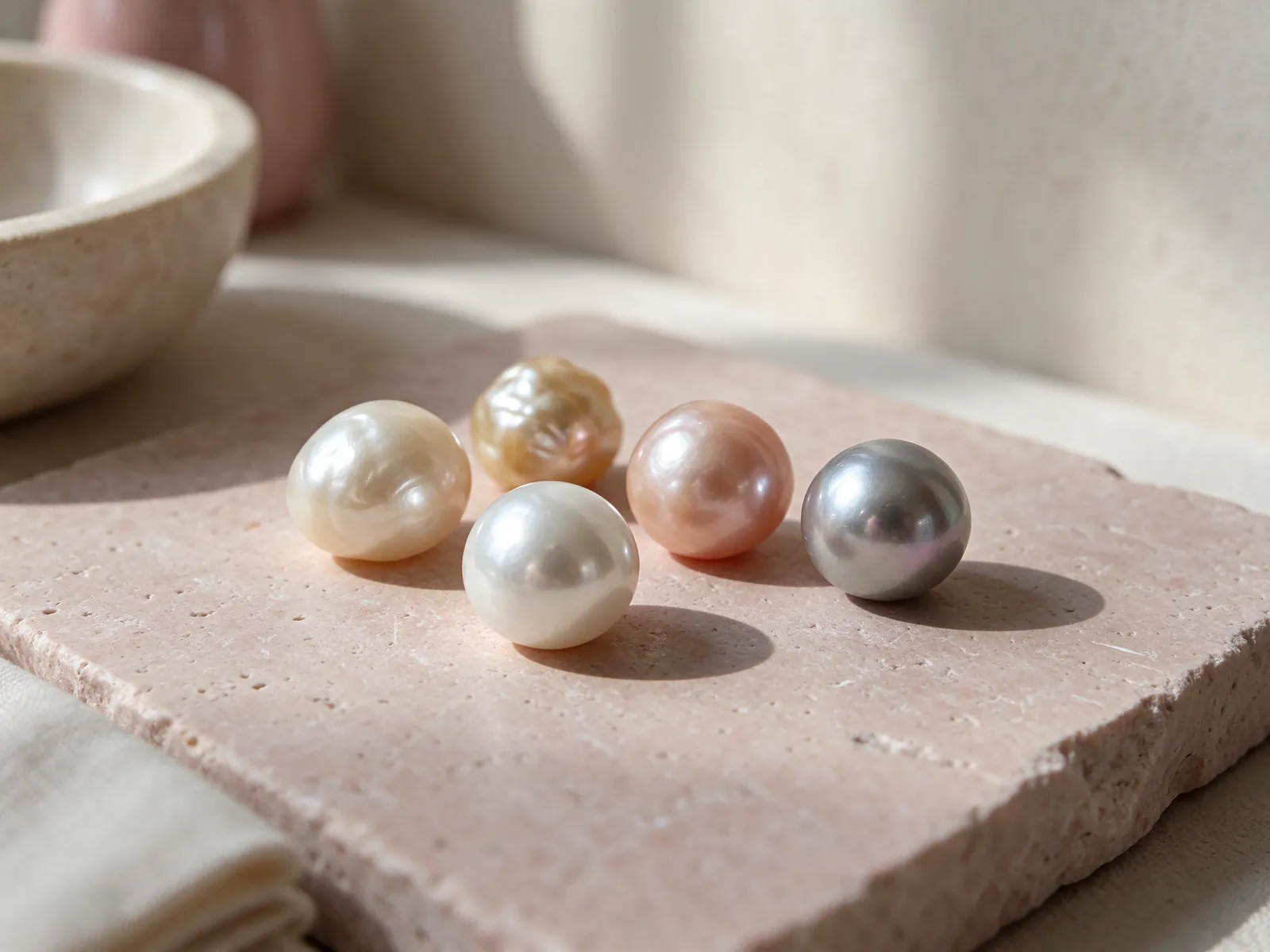
Choose between a continuous line and a more sculptural rhythm
Shape changes how the eye travels along a strand. Similar outlines and gradual transitions can make the curve feel continuous, while more pronounced contours invite attention to individual pearls. Neither preference replaces a quality assessment. Consider lustre, surface appearance and matching alongside shape, then check whether the necklace remains comfortable when its pearls settle naturally against you.
If irregular outlines interest you, use a baroque pearl strand necklace as a styling comparison. Notice where a projecting contour meets the collar and whether a pearl rotates when you move. A flat photograph can suggest symmetry that changes on the body. Look at the central section, the transition towards each side and the arrangement near the clasp as parts of one design.
Why does matching matter when you are looking at a whole strand?
GIA includes matching among its seven pearl value factors. That makes it particularly relevant when several pearls share one necklace: their relationship matters as well as their individual features. Begin at ordinary conversational distance, then look more closely at visible surface marks. Their position and surrounding reflections affect how noticeable they are, so do not let one magnified detail replace the overall view.
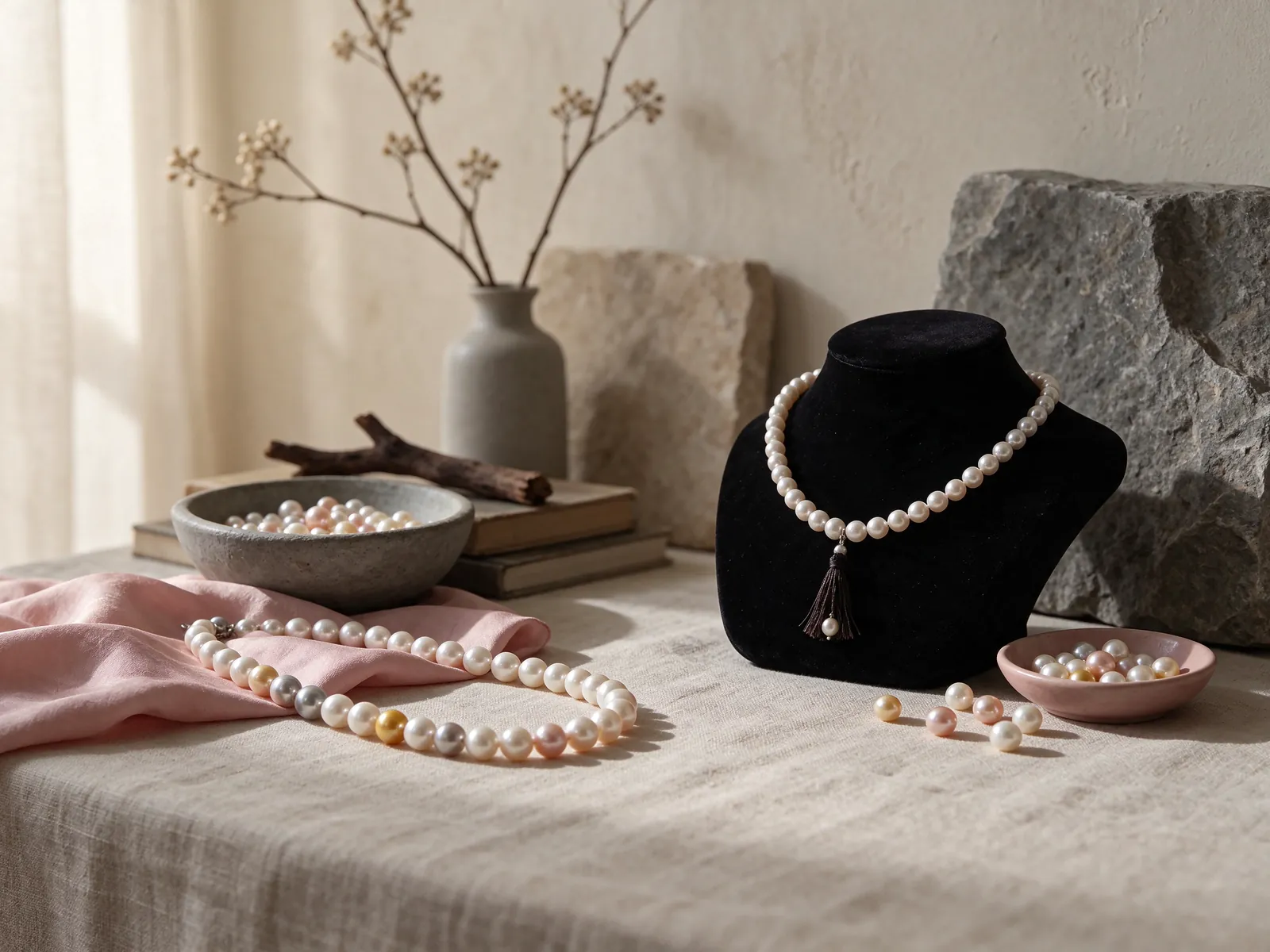
Test the fit in motion, not only the stated length
Use a soft measuring tape along your preferred curve, or note where an existing necklace falls, to establish a starting point. Neck circumference, shoulder line, pearl shape and fabric thickness can all alter the result. A close-fitting necklace should not be selected on tightness alone. Sit down, look down and turn your head to decide whether the position feels easy in normal use.
The proportion ideas in a single strand pearl necklace guide can help you establish a clear curve before adding other jewellery. For layering, choose distinguishable resting positions and watch whether clasps become tangled or harder decorative elements rub against the pearls. Begin with the strand on its own. Add a second piece only after you know how the first one sits and moves.
What should you notice about the clasp and string?
Try opening and fastening the clasp yourself rather than relying on a front view. Check whether the action suits your fingers and whether the closure catches hair or pulls at your collar. Where a strand is knotted, observe how the knots affect spacing. If you notice loose or worn string, or an abnormal clasp action, stop wearing it and seek inspection by an appropriate jewellery professional.
For a clasp-material discussion, organise your preferences around 18K 750 white gold, 18K 750 yellow gold, 18K 750 rose gold, PT950 platinum and PT900 platinum, then read the material description for the particular piece. Compare the metal colour against your clothing and try the fastening action. Liking a metal colour does not mean every clasp shape will be equally easy for you to operate.
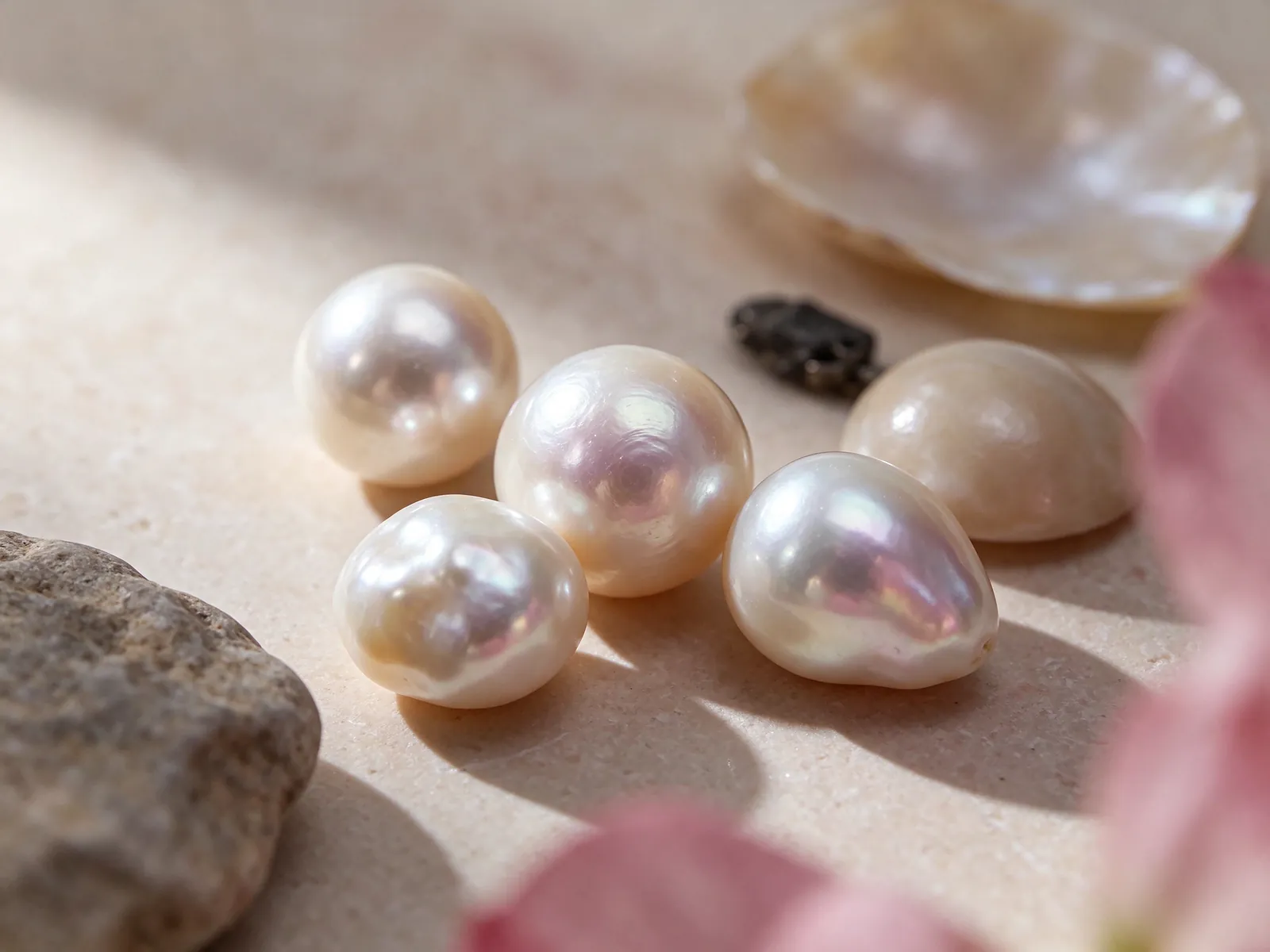
Build outfits around the strand without reserving it for evening wear
For a working-day shirt, an open collar can frame the whole curve instead of hiding part of it. With knitwear, consider texture as well as colour: a thick knit already adds visual weight, while a finer fabric may make the pearl reflections easier to notice. If a blouse has a busy pattern, reduce competing accessories around the neck before deciding the strand itself is too strong.
For dinner or a dressier occasion, let the necklace lead and keep the nearby details simpler. A dark strand against dark clothing can still have presence when its outline and lustre remain visible. Warm ivory or soft pink fabric offers another way to explore contrast without relying on a stark white background. Choose the combination that belongs in your wardrobe, not only the one that photographs dramatically.
For a gift, learn the recipient's neckline habits first
Look beyond whether the recipient likes black. Consider whether they usually wear crew necks, V-necks or shirts, where their existing necklaces sit and whether they prefer an easy clasp action. Everyday outfit photographs can make a styling discussion more specific than an evening portrait. Keep written information about pearl identity, any described treatment and the metal with the gift so the recipient can understand the piece.
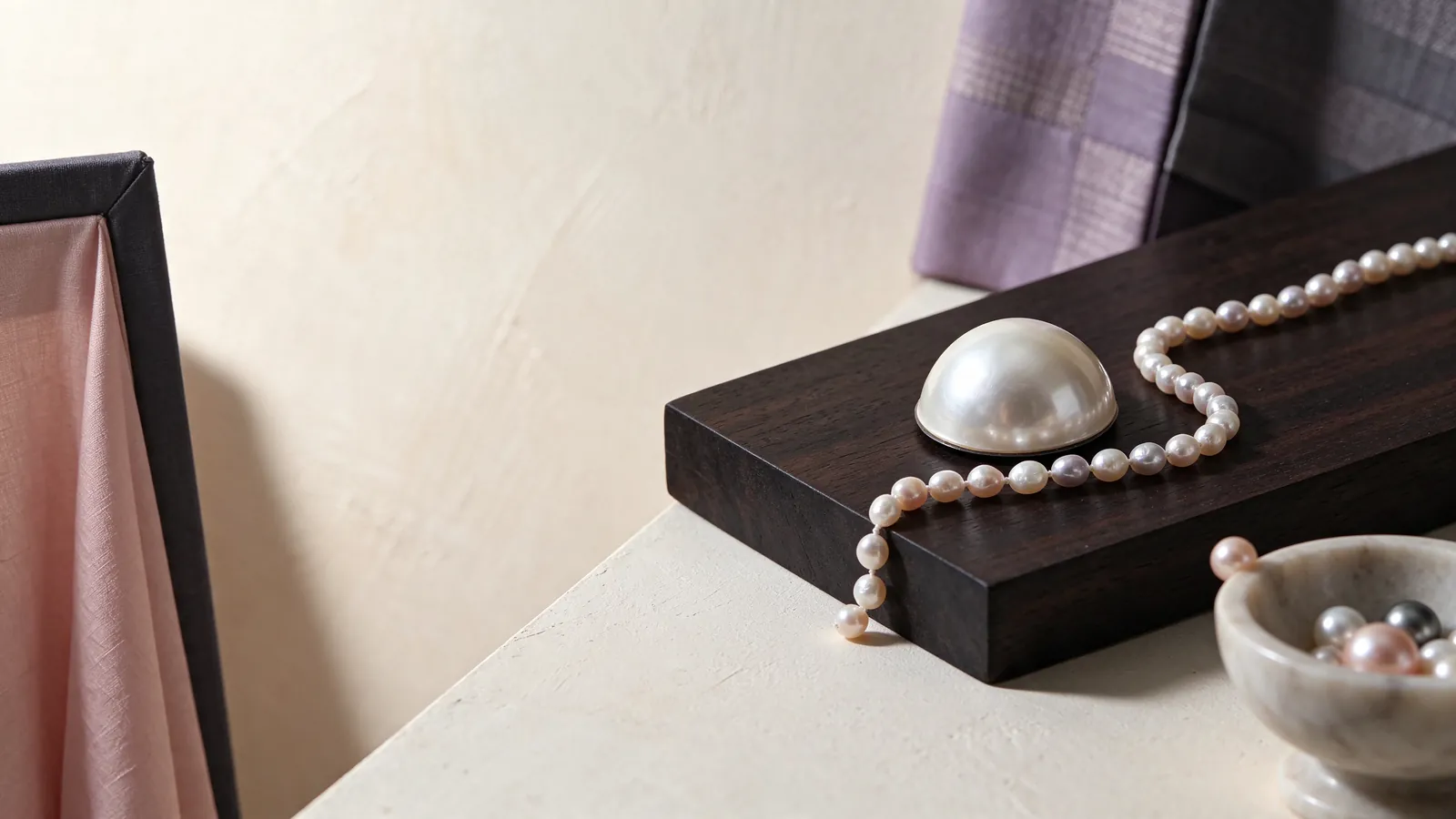
Separate the visible dark colour from identity and treatment information
Dark appearance cannot establish pearl type, natural-versus-cultured identity or treatment history. Read those details separately from the style description and metal information. A name such as black pearl does not answer every question. If a testing document accompanies a piece, check which item it describes and which characteristics it actually addresses rather than treating the document's presence as a complete answer.
When comparing a black Akoya pearl necklace, do not assume that two dark strands share the same identity or treatment because they look similar. A South Sea pearl necklace can also be a useful styling comparison, but compare its visible colour and proportions with the same outfit rather than assigning a fixed size to the name. Keep documentary details separate for each piece.
Turn a general enquiry into useful questions
Make two short lists: how you want to wear the necklace, and what is described about the piece. The first covers neckline, resting position and preferred colour effect. The second covers pearl identity, treatment information, clasp and string construction. A grading letter or the darkest appearance cannot replace those answers. Putting them together lets you compare suitability without confusing style preference with a claim about value.
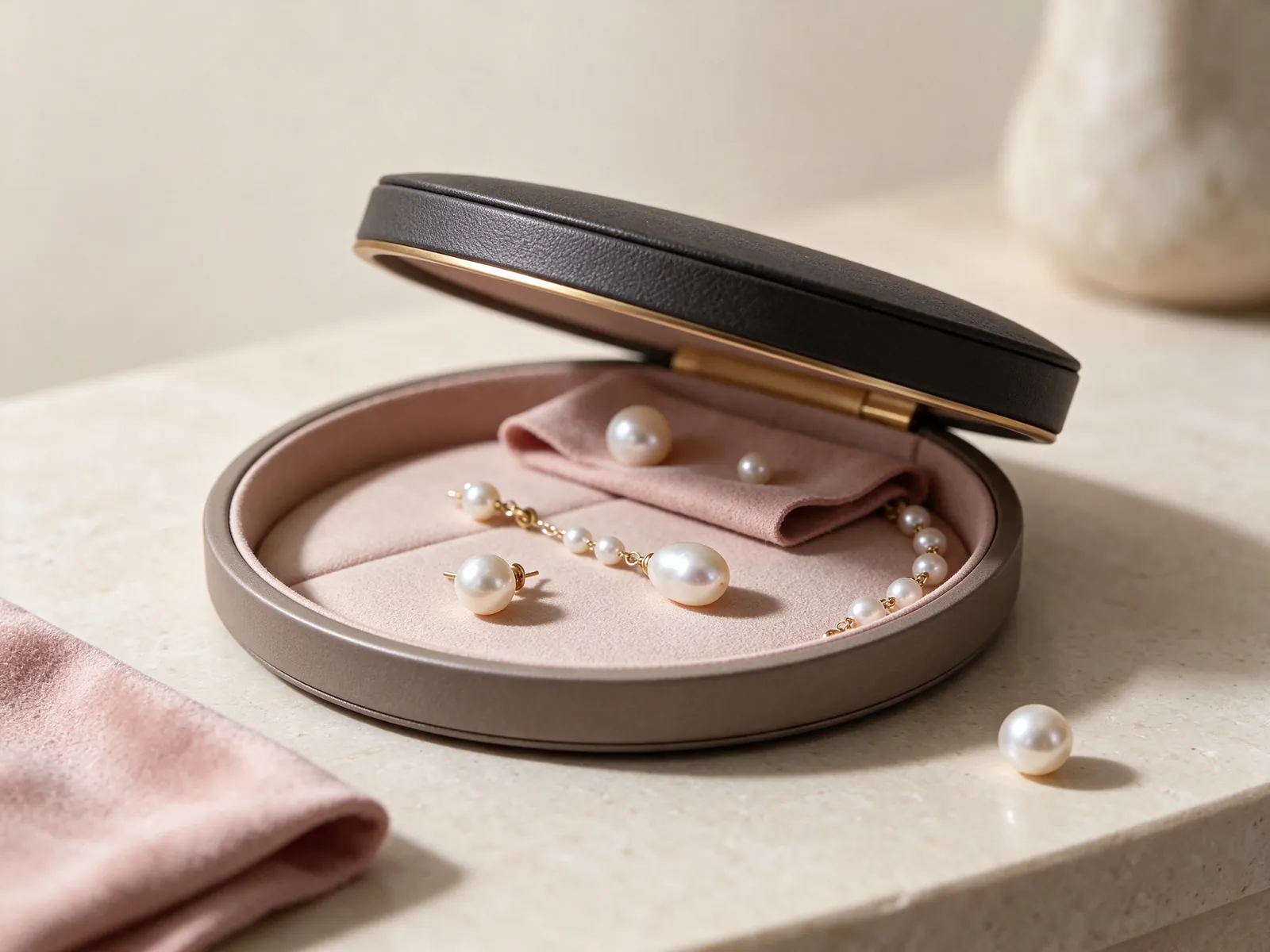
Consider the care routine before making the strand everyday jewellery
GIA lists pearl hardness as 2.5 on the Mohs scale, so prevent contact with harder jewellery during storage. After wearing, use a very soft, clean cloth for gentle wiping. Avoid acids, perfume, hair spray and excessive heat. Completing grooming and applying fragrance before putting on the necklace helps reduce direct exposure to those products; it does not make the pearls resistant to them.
Never use an ultrasonic or steam cleaner for pearls. GIA also advises that, when a strung necklace is cleaned with water, the string must be completely dry before it is worn again. A dry-looking pearl surface is not proof that the string has dried. Keep the strand apart from other jewellery and observe the condition of its clasp and string as part of ordinary handling.
Finish the comparison with one practical wardrobe test
Keep a photograph with your most frequently worn neckline, note the colour arrangement and clasp action you prefer, and place the written pearl information beside those observations. If two looks appeal equally, favour the one that feels comfortable and fits more of your usual outfits. A Tahitian black pearl strand can express a distinctive style without relying on vague terminology or exaggerated promises.
For a more focused styling conversation, contact Flint Jewellery on WhatsApp at +85260106207. Share a familiar neckline, where you would like the necklace to rest and the dark colour effects you enjoy. Discuss those preferences alongside the written jewellery information, rather than letting one attractive photograph settle every question.
| Comparison | What to observe | Outfit consideration | Try-on check | Keep separate |
|---|---|---|---|---|
| Overall colour | Main colour, additional colour effects and transitions | Pale fabric defines the outline; dark fabric emphasises reflections | Compare daylight with familiar indoor lighting | Appearance versus identity and treatment |
| Shape and arrangement | Centre section and transitions towards both sides | Avoid a collar pressing on a projecting contour | Turn gently and watch for rotation | Shape preference versus quality factors |
| Length and visual weight | Actual resting position, not the number alone | Try both exposed skin and fabric | Sit, look down and turn your head | Measured length versus personal fit |
| Clasp and string | Opening action, spacing and visible condition | Watch for catching on hair or collar | Fasten it yourself | Construction details and maintenance needs |
| Daily care | Use a very soft clean cloth after wearing | Avoid direct perfume and hair spray contact | Store away from harder jewellery | GIA lists pearl hardness as Mohs 2.5 |
Pearl knowledge and authoritative references
GIA describes seven pearl value factors: size, shape, colour, lustre, surface quality, nacre quality and matching. Matching is especially useful for considering how several pearls work together within a necklace rather than assessing only one pearl.
Read the reference for this factFrequently asked questions
Should a Tahitian black pearl strand look uniformly jet black?
Uniform jet black is not the only style preference. Compare the whole strand's colour arrangement, lustre and shape, and choose the effect that works with your clothes. The word black does not establish pearl identity or treatment history.
How can I wear a dark strand with a high crew neckline?
Try a complete curve over the fabric rather than a position that repeatedly disappears across the collar edge. Fabric thickness and your proportions affect the result, so check the necklace while seated and turning your head as well as standing.
What makes colour comparison photographs more useful?
Use a neutral background and similar lighting, camera distance and angle. Include the whole strand as well as closer views. Filters and a single intense reflection can distort the impression; try-on photographs with your usual clothes add useful proportion information.
Can an irregularly shaped strand still feel balanced?
Yes, balance can come from colour continuity and thoughtful transitions rather than identical outlines. Observe the centre, each side and any projecting contours on the body. A necklace's flat arrangement is not necessarily how it settles when worn.
Does dark colour change the recommended cleaning method?
No. GIA advises against ultrasonic and steam cleaning for pearls. Use a very soft clean cloth after wearing, and if a strung necklace is cleaned with water, allow the string to dry completely before wearing it again.
Updated: