
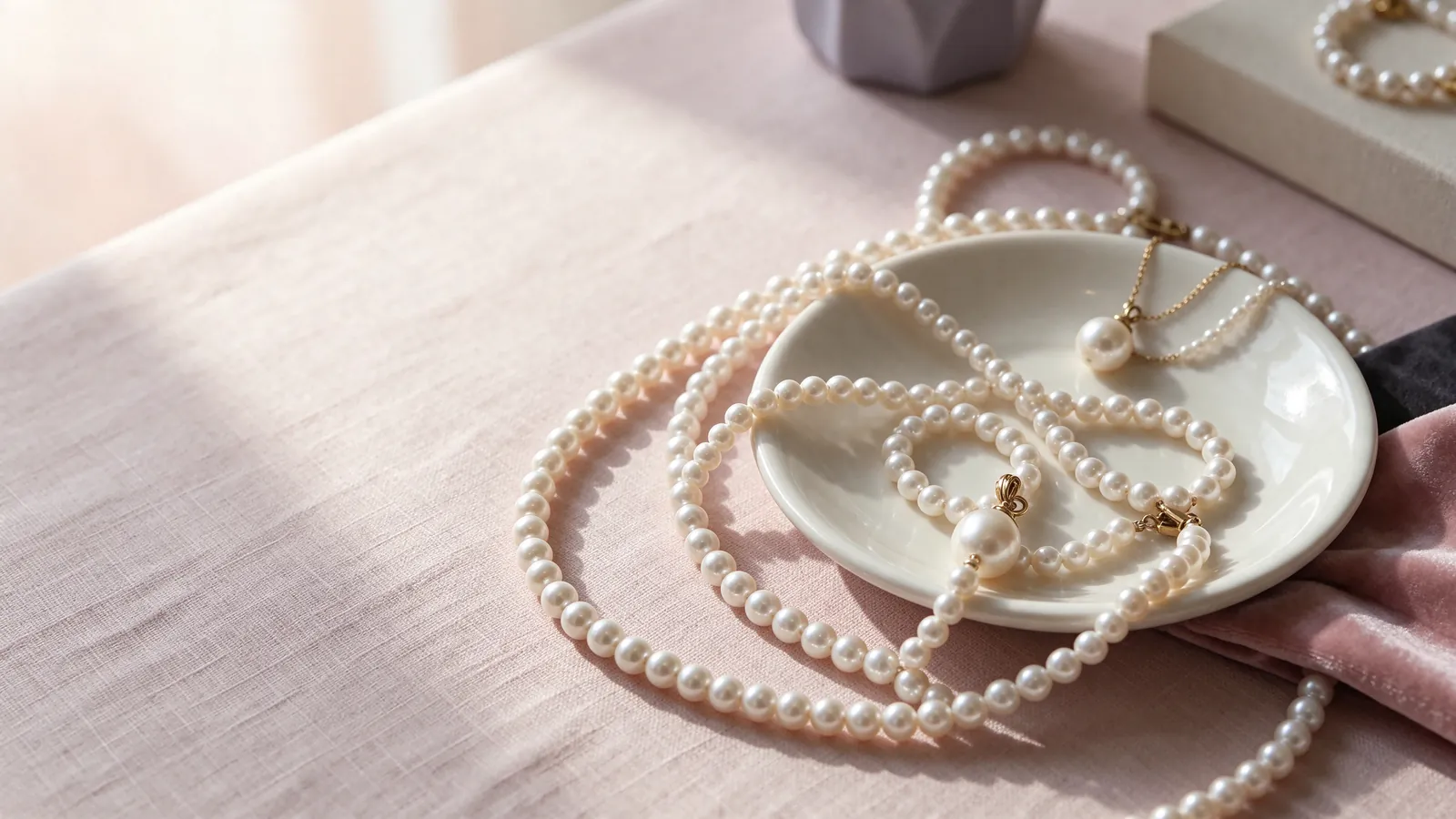
How does length shape the look of a baroque pearl strand necklace or an irregular pearl strand necklace? | Flint Jewellery
Want to narrow down a neckline position or a rhythm of shapes? Discuss pearl necklace styling with Flint Jewellery on WhatsApp at +85260106207. Mention the tops you wear most often and whether you prefer a quiet line or a more sculptural look, so the conversation starts with your everyday wardrobe.
Length sets the position of a baroque pearl strand necklace, but the outline of its pearls determines how that position looks. A broad face may extend below the line of the string, while an elongated pearl can point sideways rather than down. Begin with the area you want to frame: the neck, the collarbone or the front of a top. The single strand pearl necklace guide offers a useful starting point for understanding a continuous line, before you consider the extra movement of irregular shapes.
For a work shirt, compare the necklace with the top button fastened and open. Check whether collar points conceal the most interesting pearls or push them forwards. With a round neckline, look for a clear relationship between the fabric edge and the strand: either a visible space or an intentional placement over the fabric. A necklace resting exactly on the edge may slip between these positions when you sit down, making the outline less consistent.
Where should a baroque pearl strand necklace or an irregular pearl strand necklace sit against your neckline? | Flint Jewellery
There is no single correct resting point for every wearer. Put on the clothes you actually use, then turn your head, sit down and add your jacket. Notice whether a projecting pearl catches the collar or whether the central arrangement rotates. Compare a front view with a side view rather than continually pushing the strand into place for a photograph. The most useful position is one that presents the shape clearly without demanding repeated adjustment.
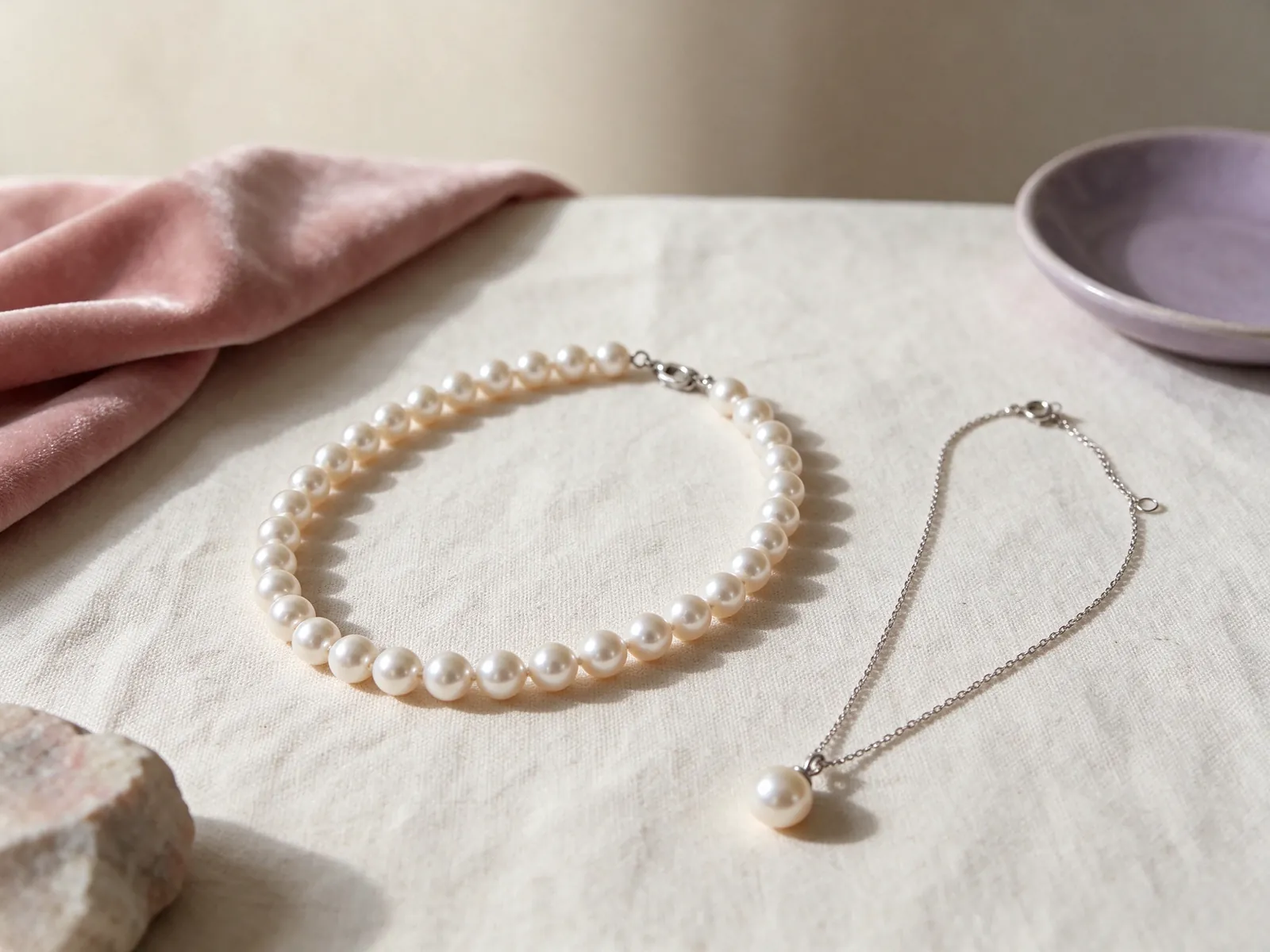
Read the Whole Arrangement Before Choosing a Favourite Pearl
The character of baroque pearls comes from irregular outlines, but a full strand needs more than a succession of striking individual shapes. Step back and look for an overall rhythm. Rounded sections can create pauses between longer forms; a prominent centre can draw attention to the neckline; a more even distribution can feel fluid across the whole necklace. Decide which effect appeals to you before examining close-up details, so one unusual pearl does not distract from the arrangement around it.
Matching in an irregular strand does not require mirror-image shapes. The two sides may balance through similar visual weight, colour or lustre while retaining different contours. Alternatively, a deliberately off-centre arrangement may be the point of the design. Look at how the pearls leading away from the focal area connect with one another. A shape that appears attractive in isolation may feel abrupt if its neighbours have a very different visual character.
What Can Flat Photographs Hide?
A wide pearl face shown towards the camera may turn sideways when worn. The direction of the string through a pearl also affects which contour becomes visible. Ask yourself whether the available views show the whole strand, its sides and the area near the clasp, rather than only a central close-up. Photographs help you understand composition, but cannot fully convey movement or the way a projecting shape feels against your neck.
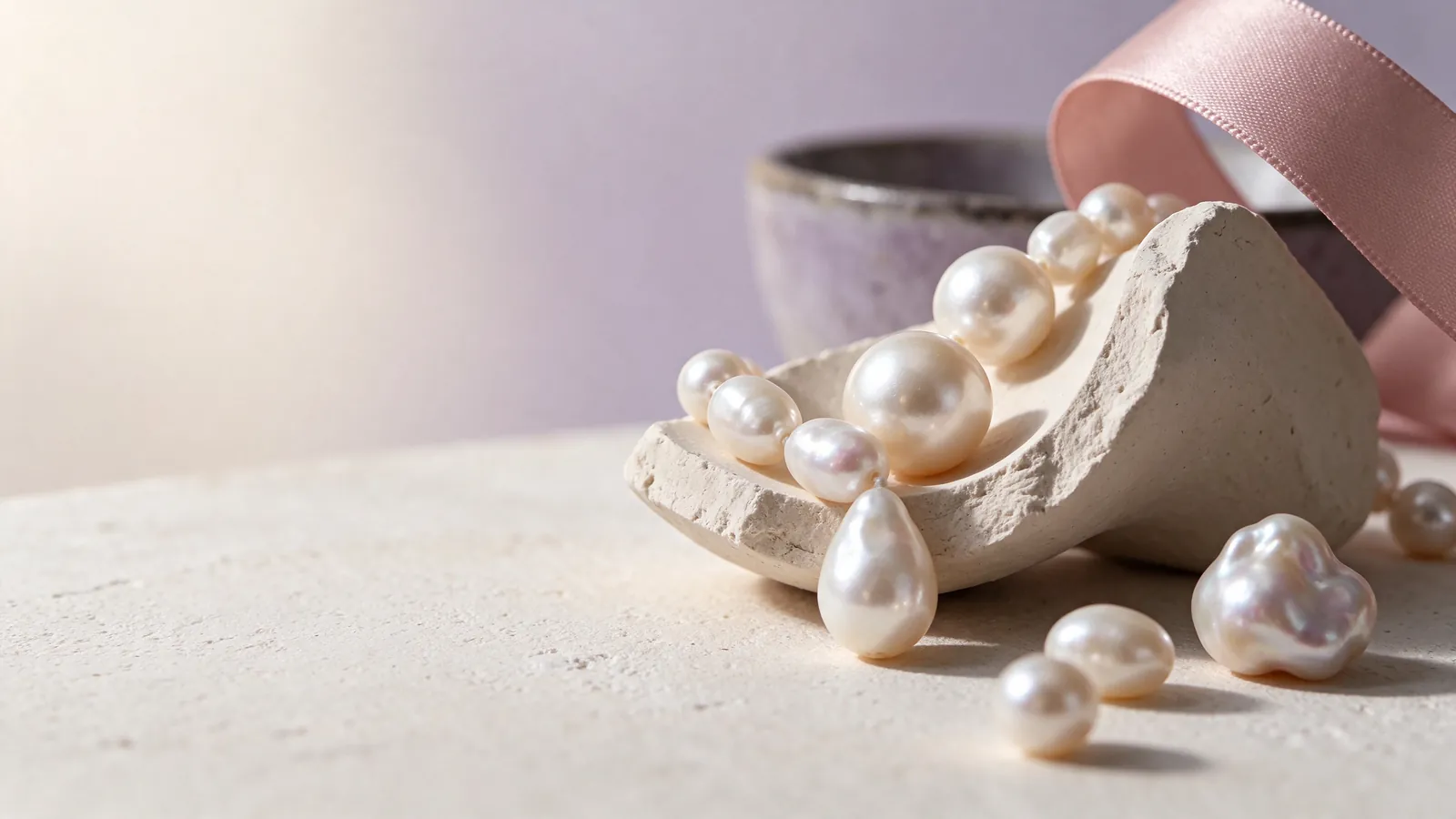
Consider Lustre, Colour and Surface Alongside Shape
GIA describes seven pearl value factors: size, shape, colour, lustre, surface quality, nacre quality and matching. These provide a better framework than judging an irregular strand by shape alone. For visible comparisons, look at the clarity of reflections and how the colours relate across adjacent pearls. A strand can preserve varied outlines while maintaining a coherent appearance. The word baroque does not itself tell you how the other factors have been assessed.
View the strand under soft light and rotate it slowly. Separate your observations of the overall contour from observations of the surface itself. A dip in an irregular outline is not the same question as a mark that affects your enjoyment of the surface. Check more than the most prominent pearl, and compare colour under similar lighting rather than contrasting unrelated photographs. Lighting can change what you notice, so a single bright highlight is not a complete assessment of lustre.
Does an Irregular Shape Indicate Better or Worse Quality?
Neither conclusion follows from shape alone. You may prefer a restrained contour for everyday clothing or a more sculptural outline for a statement look; that is a style preference. When comparing strands, keep the viewing conditions similar and consider lustre, surface, colour and matching separately. This lets you identify what you value rather than treating roundness or irregularity as a universal quality score.
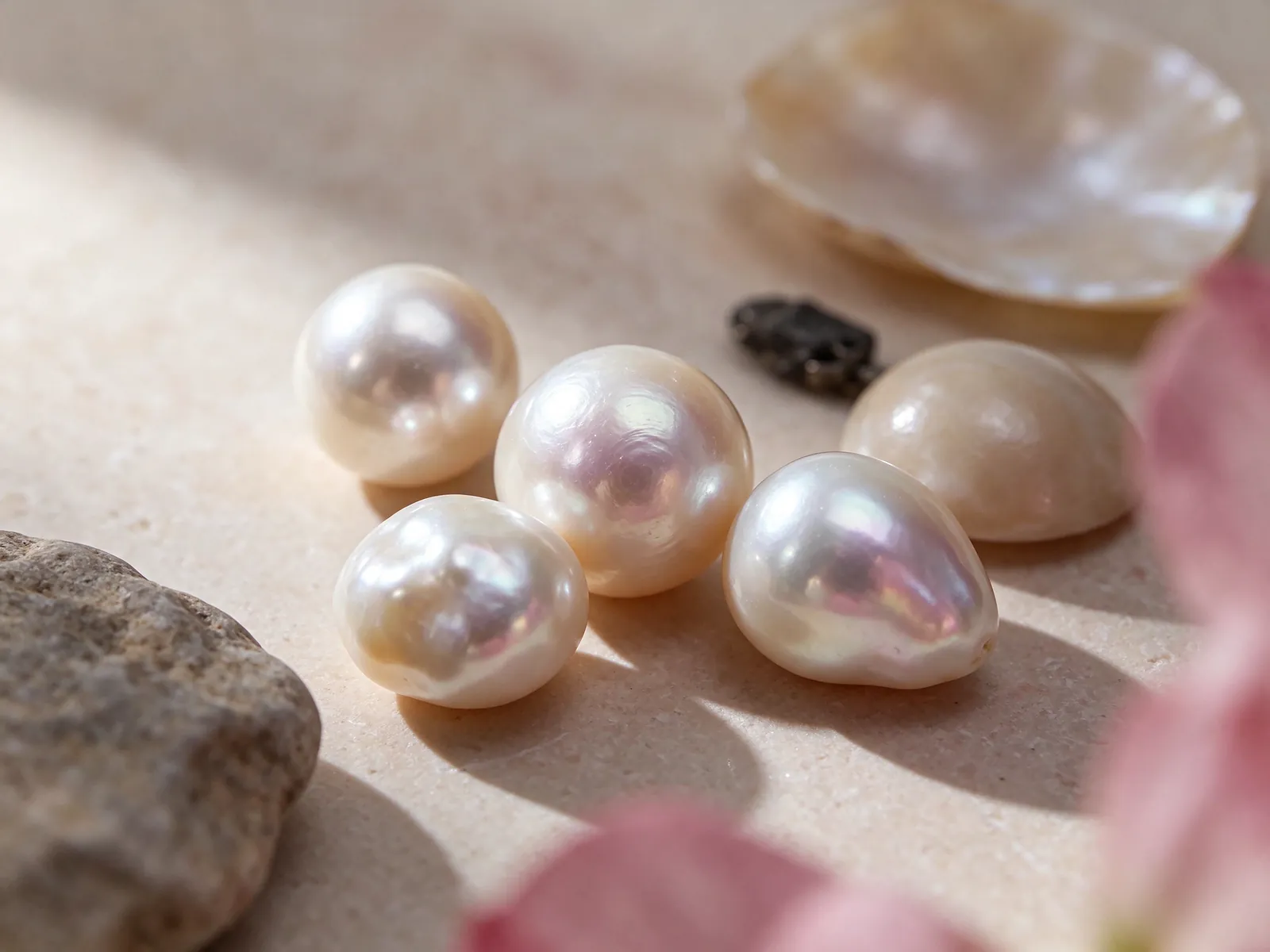
Choose Visual Weight for Shirts, Jackets and Evening Clothing
A plain, smooth top gives irregular contours room to stand out. Dense prints, textured knitwear and decorative collars already bring their own rhythm, so consider whether the strand complements or competes with them. The small pearl necklace guide can help you think about lighter visual presence, while the large pearl necklace guide explores a stronger focal line. Use these as styling comparisons, not as specifications for the baroque strand in front of you.
With a tailored jacket, check the open space between the lapels before deciding how prominent the necklace should be. If the pearls form the main focus, simpler earrings can leave the neckline easier to read. For an evening outfit, do not assume that more elaborate clothing needs a larger necklace. Look at the combined effect of fabric, neckline and earrings, then decide where attention should begin. A clear hierarchy often feels more considered than several competing statement pieces.
How Can You Test a Layered Look?
First wear the strand on its own and find its natural resting position. Add another necklace only after that line is established. Move normally and check whether the pieces cross, their clasps tangle or metal elements repeatedly rub the pearls. If their lower edges overlap, change the arrangement or keep a single necklace. Successful layering depends on readable spacing and comfortable movement, not simply on adding more jewellery.
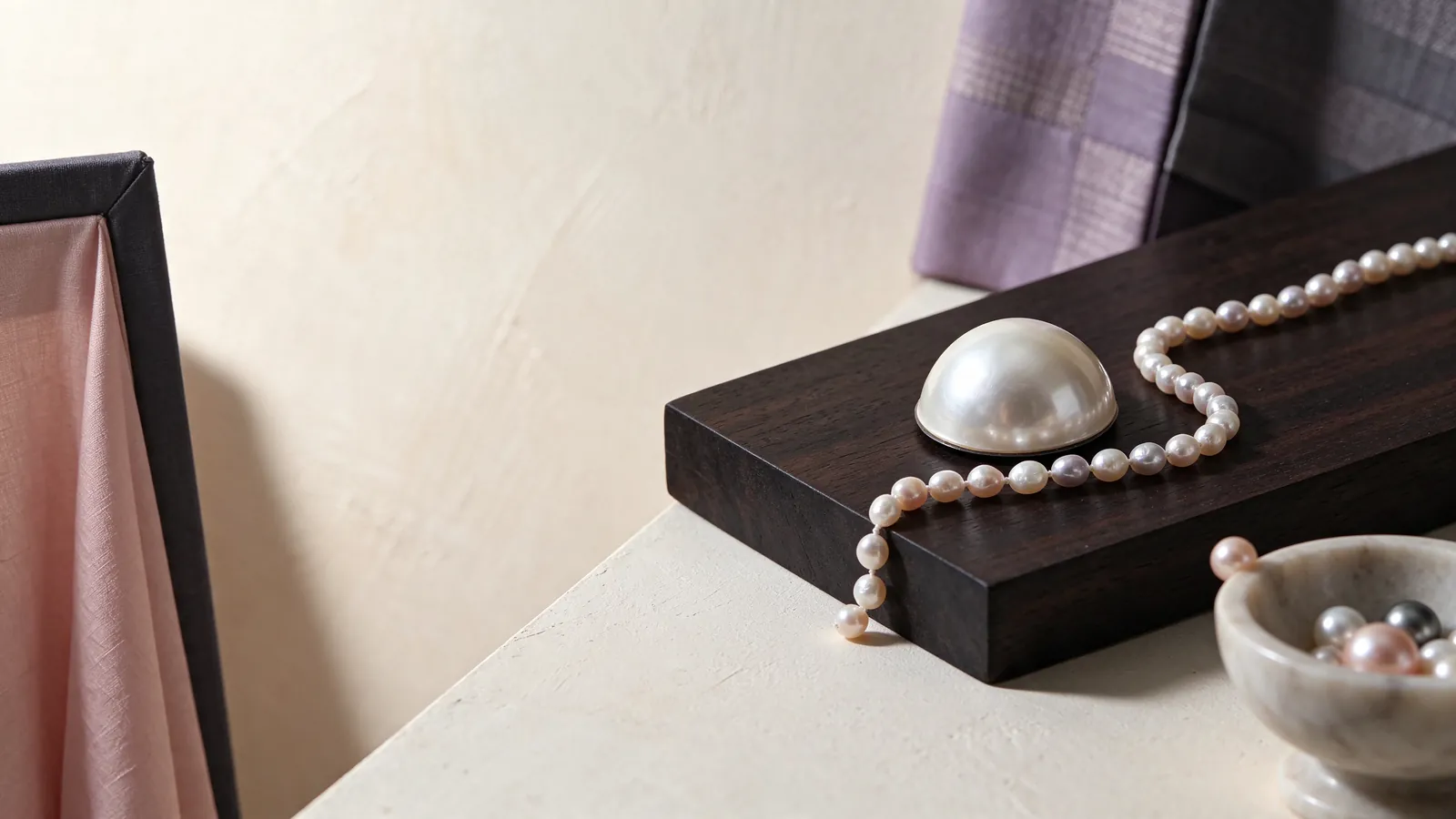
Keep Baroque Shape Separate from Pearl Identity
Baroque describes an irregular shape; it does not identify pearl species, origin or natural-versus-cultured status. When reading about a strand, distinguish words describing its appearance from words identifying its pearls. GIA explains that recording external features and testing pearl identity are different parts of its analysis. For an identity question, look at the stated information and relevant examination results for the actual piece, rather than turning a visual impression into a conclusion about formation or origin.
A South Sea pearl necklace or freshwater pearl necklace may introduce other pearl terminology, but those descriptions do not transfer automatically to an irregular strand. White colour, a broad face or an elongated form is not enough to establish identity. Compare the actual descriptions of the pieces you are considering, then return to the design question: are you drawn to their colour, their outlines or the way the pearls are arranged? Keeping those preferences distinct makes comparisons more useful.
What Does a Description Answer, and What Does a Report Answer?
A jewellery description helps explain the design and its stated details. A gemmological report should be read for the conclusions it actually contains and the item it describes. GIA explains that report contents depend on the service requested, so do not assume every document includes the same quality assessment. Check whether it concerns a whole strand or a particular pearl rather than assuming its scope. Neither a report nor a photograph chooses your neckline for you. Use identity information for identity questions, and practical styling observations for fit and proportion.
Inspect Movement, Stringing and Clasp Comfort
Comfort depends on more than the apparent size of the pearls. The contours beside your neck, the spacing between pearls and the clasp position all contribute to how a strand feels. Turn your head both ways and notice whether one projecting shape repeatedly presses into the same area. Then sit down with your jacket on. A collar can lift or turn a pearl, changing both comfort and the arrangement you saw in the mirror.
Look for natural movement between pearls and inspect the string, any knots and the area beside the clasp for visible wear or looseness. Knots should not be treated as a guarantee against breakage. Operate the clasp using the way you normally put on jewellery, and check its connection once closed. A decorative clasp may be visually appealing yet awkward for your preferred routine; practical handling is therefore part of choosing, not an afterthought.
Is a Visible Clasp Intentional or Has the Strand Rotated?
Establish whether the clasp is meant to be part of the visible composition. If it is, judge how its placement relates to the irregular pearls. If you prefer it behind the neck, observe whether it migrates forwards as you move and takes the central shapes with it. Looking at clasp and focal area together is more informative than repeatedly straightening only the front pearls.
Care for the Contours Without Harsh Cleaning
GIA ranks pearl at 2.5 on the Mohs hardness scale and advises against ultrasonic or steam cleaning. After wearing, use a very soft, clean cloth to gently wipe accessible surfaces. Do not pull the string while reaching around irregular contours, or force fabric into narrow gaps. Keep pearls away from acids, perfume, hair spray and excessive heat. More elaborate outlines call for careful handling, not stronger cleaning methods.
Store the strand separately from jewellery that could scratch it, without pressing protruding shapes beneath other objects. If water has been used during cleaning, GIA advises that the string must be completely dry before wearing; a dry-looking pearl surface does not establish that the string has dried. Support the necklace when taking it out rather than lifting only by the clasp. This also gives you an opportunity to notice changes near knots and connections.
Make a Final Check with Your Complete Outfit
Before leaving, put on your jacket and check that the lower outline is clear of the fabric edge, the clasp is connected and other jewellery does not obscure the shape you wanted to show. Turn gently and see whether the strand stays in its intended position. If it needs constant adjustment or repeatedly rubs the collar, another neckline may work better. A successful choice should fit everyday movement as well as a still photograph.
If you are choosing between two arrangements or resting positions, discuss your styling ideas with Flint Jewellery on WhatsApp at +85260106207. You can share neckline photographs without including your face, and explain whether you want the strand near the collarbone or over fabric. Focus on the details that would make the necklace easier to style with your own clothes.
| Feature | What to observe | Styling decision | Common oversight |
|---|---|---|---|
| Neckline position | Check the lower outline while standing and sitting | Leave clear space or place deliberately over fabric | Flat length alone does not show the worn effect |
| Shape rhythm | Compare the centre with both sides | Choose a focal arrangement or an even flow | Asymmetry can still be deliberate matching |
| Lustre and colour | Rotate adjacent pearls under similar soft light | Look for a coherent overall appearance | A striking shape does not establish other quality factors |
| Clasp and movement | Turn your head and operate the clasp | Decide whether the clasp should be visible | Rotation may move the intended focal area |
| Clothing texture | Compare plain fabric, knitwear and prints | Choose which element leads the look | Layered pieces can cross or rub pearl surfaces |
Pearl knowledge and authoritative references
GIA describes seven pearl value factors: size, shape, colour, lustre, surface quality, nacre quality and matching. Matching is particularly useful when considering how varied shapes work together in a full strand.
Read the reference for this factFrequently asked questions
How does a full baroque strand differ from a single pearl pendant?
A strand creates a continuous outline from several pearls, so arrangement, colour relationships and overall visual weight matter. A single pendant usually concentrates attention on one form. Liking an irregular pearl does not automatically mean you will prefer a full strand; compare how each frames your usual neckline.
Must the uneven shapes repeat exactly for the strand to be well matched?
No. Similar lustre, compatible colour and balanced visual weight can link pearls with different contours. Judge whether the arrangement reads coherently as a whole rather than expecting every dip or elongated section to have an identical partner.
Can one front photograph show whether the necklace will sit comfortably?
It offers a starting point, not a complete answer. Pearl orientation, stringing direction and movement affect the worn position. Side views and views near the clasp add context, while turning your head and sitting down during a fitting help assess comfort.
Does a clasp moving to the front always indicate a fault?
Not necessarily: a visible clasp may be intentional. Separate the intended arrangement from rotation during wear, then consider whether it changes the focal area or comfort. If you want the clasp hidden, include its position during movement in your comparison.
Is steam useful for cleaning the dips in irregular pearls?
No. GIA advises that pearls should never be cleaned with steam or ultrasonic cleaners. Use a very soft, clean cloth for routine care, avoid sharp tools in recessed areas, and allow a string exposed to water to dry completely before wearing.
Updated: