
When comparing an Aurora Akoya Queen pearl necklace with an Akoya Queen certified pearl necklace, how do product names differ from report findings? | Flint Jewellery
Want to organise your document questions or describe how you would like a necklace to sit? Contact Flint Jewellery on WhatsApp: https://wa.me/85260106207. This is an independent guide to names and document reading, not a WSP dealership or an offer of an Aurora Akoya Queen range. Mentioning a certificate term does not mean Flint Jewellery holds that certificate for a necklace.
The words Aurora, Queen and Certified attract attention because they suggest an immediately recognisable category. WSP uses “Aurora Akoya Queen Certified” in the titles of specific necklace product pages. That is the seller's product wording; it does not reproduce every finding in an accompanying document. When reading an Aurora Akoya Queen pearl necklace description, ask what document accompanies it and what that document actually says.
Keep a note of the seller's wording beside a separate note of the document's wording. The seller may describe a style, a range or a wearing occasion, while the document has its own stated subject and scope. For an Akoya Queen certified pearl necklace, the useful question is not simply whether the title contains Certified, but whether the available document answers the particular question you have about the necklace.
When reading documentation for an Aurora Akoya Queen pearl necklace or an Akoya Queen certified pearl necklace, how can you check which necklace the report identifies? | Flint Jewellery
Read the identifying information actually present: a description, photograph, number or date, where provided. Do not assume every issuer uses identical fields. Compare those details with the necklace under consideration and establish whether the document describes a complete strand, an individual pearl or another examination subject. A familiar title is not enough to connect a document to the object in front of you.
Use quality factors without creating a universal grading ladder
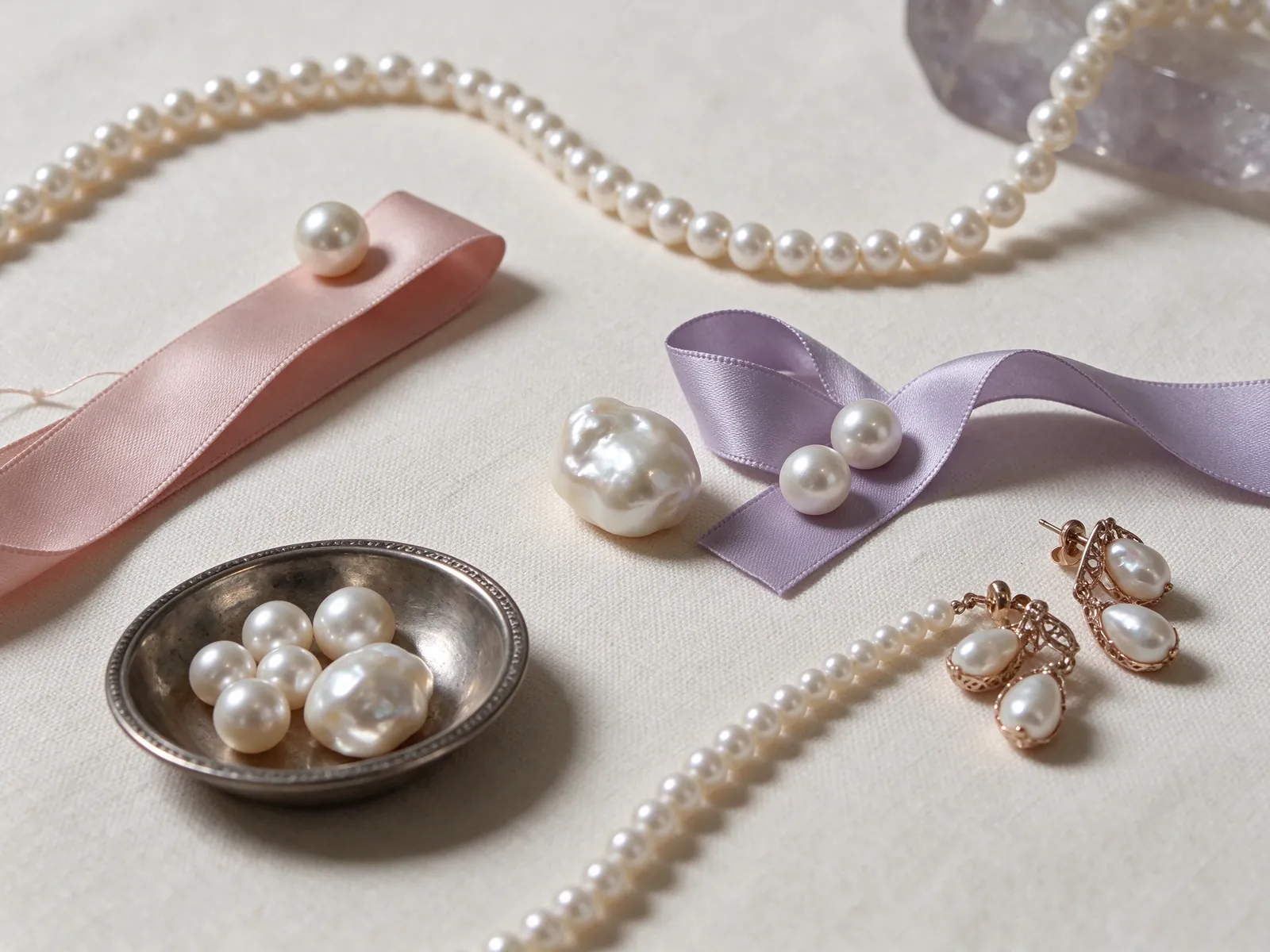
GIA describes seven pearl quality factors: size, shape, colour, lustre, surface quality, nacre quality and matching. This gives you a practical vocabulary for asking about a strand. You might notice that neighbouring pearls differ in lustre or that the overall colour is not as harmonious as expected. Reading about an Akoya pearl necklace can help organise those observations without turning a name into an automatic numerical rank.
Colour needs careful language too. GIA distinguishes bodycolour, overtone and orient, and notes that not every pearl shows all three. A pinkish or cooler impression in a photograph is therefore a visual observation, not proof of origin or certification. Describe what you see first, then read whether the document addresses that characteristic. Bright photography cannot establish a characteristic that the image does not actually reveal.
Compare documented characteristics, not the prestige of a label
Reading about a Hanadama Akoya pearl necklace or a Tennyo pearl necklace should prompt questions about the relevant document and the object it describes. Do not assume that Hanadama, Tennyo, Queen, Aurora and AAA form one interchangeable scale simply because the words appear in jewellery descriptions. Compare the characteristics expressly recorded, and keep categories separate where a clear common basis has not been established.
Understand the document's subject before extending its conclusions
A finding about an individual pearl and an observation about an entire strand address different subjects. If a document describes a particular object, do not extend its conclusion to every other pearl without support in the text. Equally, documentation about pearls does not necessarily answer questions about the clasp, the current stringing or the comfort of wearing the assembled necklace. Separate these questions rather than treating documentation as an all-purpose promise.
The same discipline applies when considering a pearl necklace with GIA report: identify the actual report, its subject and its stated findings. GIA's public quality-factor guidance is educational material, not evidence that a particular necklace has a GIA report. It also does not make Queen and GIA equivalent terms. If several documents are shown, establish what each one contributes instead of grouping them under a vague description of certification.
Ask how later alterations relate to the documented necklace
A replaced clasp or a changed pearl arrangement can make the present necklace look different from a document photograph. Ask what changed and how the document's subject relates to the current strand. Do not automatically declare the document valid or invalid because of the alteration; its wording and the issuer's guidance matter. Keeping the purchase description and alteration records together makes a later conversation more precise.
Judge the strand at both close range and wearing distance
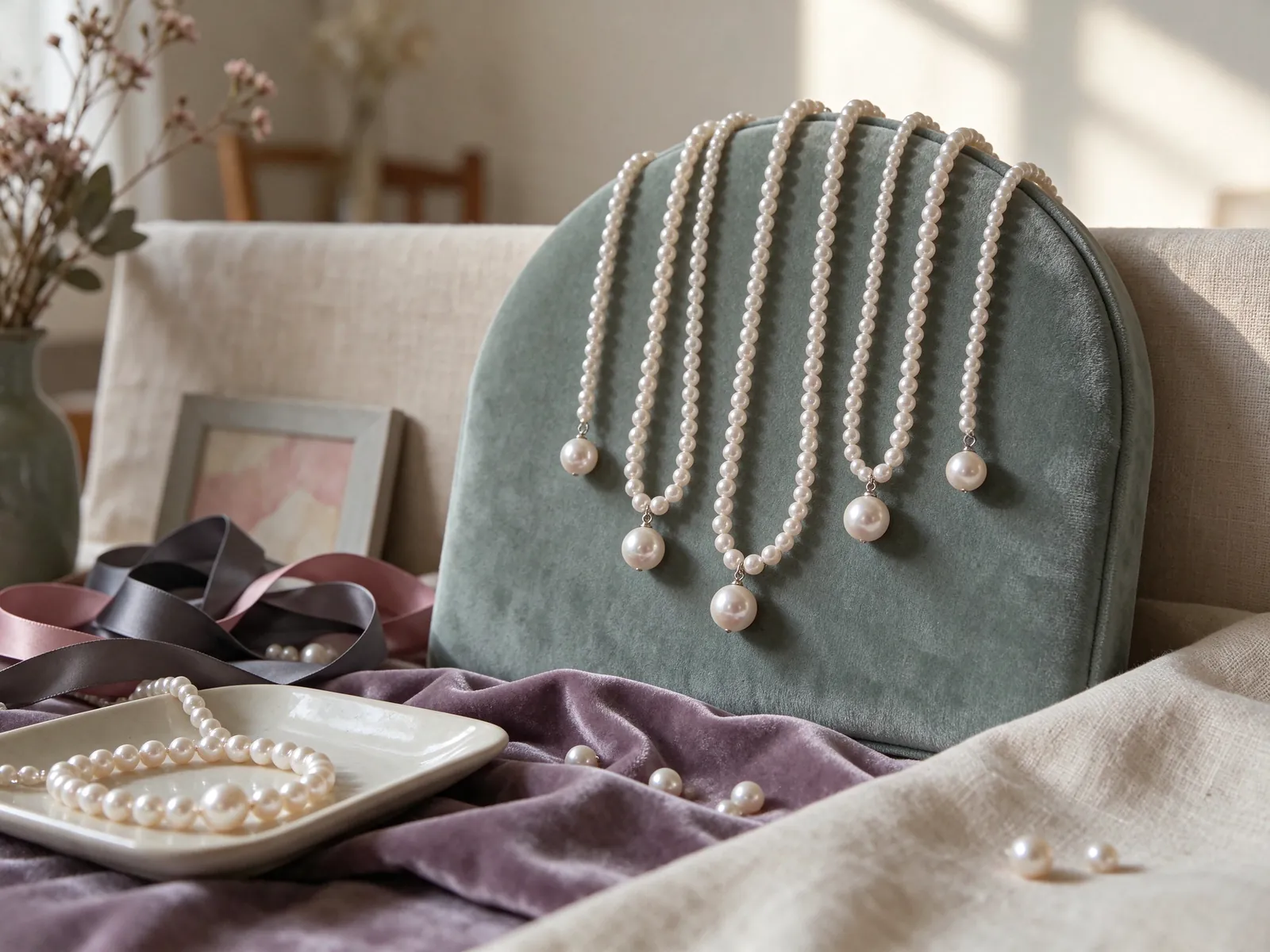
Begin with the whole strand against a simple background, using consistent, gentle light. Look for continuity rather than concentrating on its brightest pearl. Then examine neighbouring pearls around the section that will sit at the front of the neck. Differences there may be more visually prominent during wear. Photographs with different exposure or backgrounds are not a reliable basis for declaring one strand superior to another.
Close inspection helps you notice surface features, but the next question is how those features affect the look you actually enjoy. A highly enlarged image and a normal conversation distance serve different purposes. Use both perspectives: one for understanding detail, the other for judging the necklace as jewellery. This avoids overlooking visible differences while also preventing magnification from becoming the only basis of a personal wearing decision.
Keep clothing and lighting consistent when comparing colour
Try the necklaces with the same top and similar posture. White clothing may make some colour differences easier to notice; dark clothing can give the pearl outline greater contrast. These are styling effects, not identification tests. Decide whether you want the necklace to blend into your outfit or draw attention, then assess which overall impression suits that aim rather than choosing solely by the name.
Let your usual neckline guide the wearing decision
For a single strand pearl necklace, its resting position matters as much as its appearance laid flat. With a round neckline, check whether the strand overlaps the edge. With a shirt, see whether the open collar hides or catches the necklace. There is no need to impose one ideal length on everyone: neck proportions, clothing and preferred ease all affect how the same strand sits.
For a formal occasion, consider whether the necklace or the earrings should be the main visual focus, particularly when the outfit already has embellishment near the neck. For everyday office wear, consider sitting, turning and walking as well as the still mirror view. When choosing a gift, the recipient's usual collars and styling habits are more helpful than assuming that a certification name alone guarantees a suitable present.
Describe your preference in practical terms
Prepare a short description of your most common neckline, where you like a necklace to rest and whether you prefer a discreet or prominent effect. If you bring a reference photograph, explain whether you like its colour harmony, arrangement or proportions rather than asking to reproduce the item. Keeping styling questions separate from document questions makes both conversations easier to answer clearly.
Assess the clasp and stringing separately from the pearl name
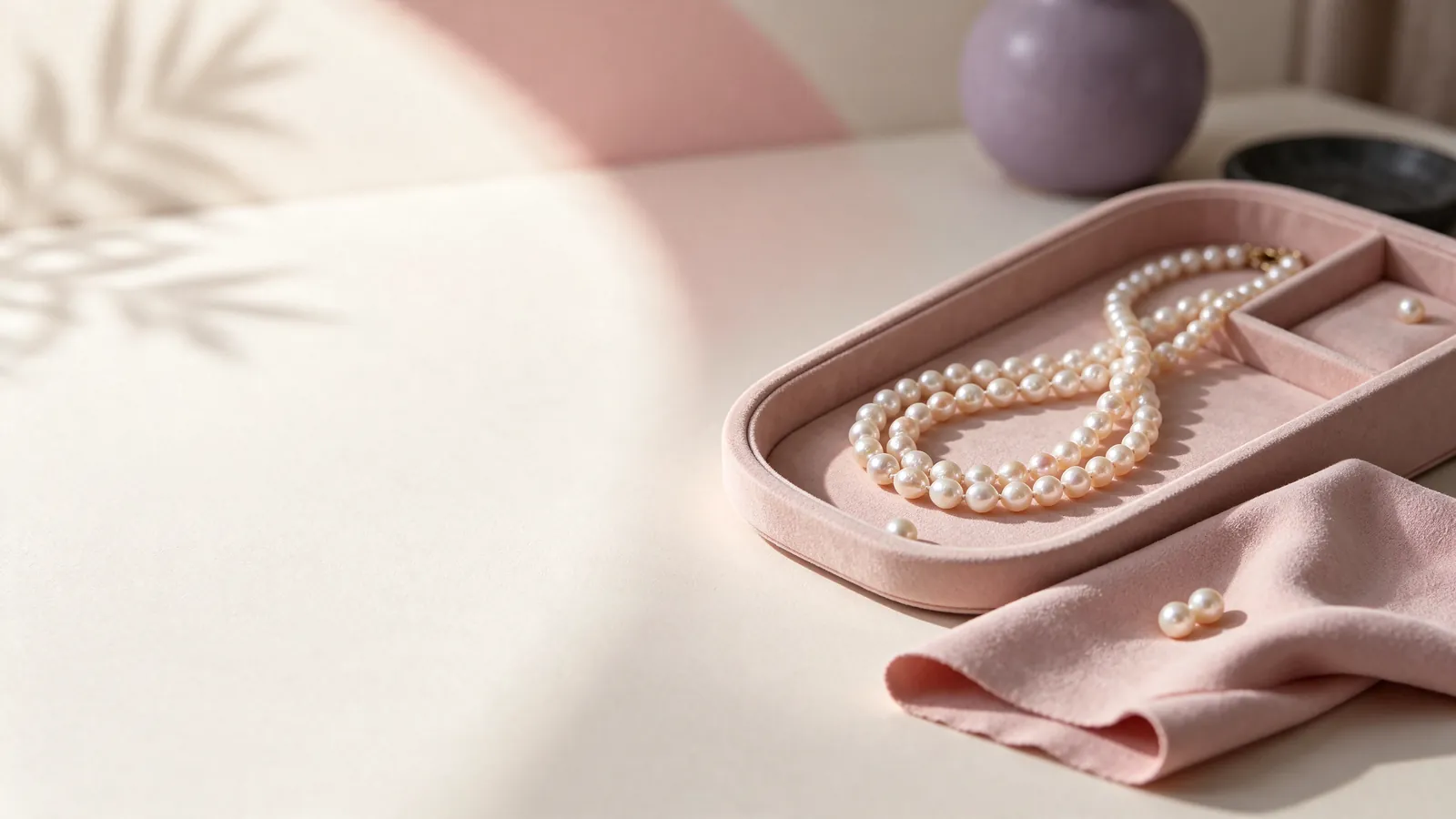
The clasp is an everyday point of contact, so read its stated material and understand how it opens and closes. An 18K gold clasp pearl necklace involves a metal description separate from the pearl documentation. Neither description proves the other. During a practical comparison, consider whether the clasp's orientation is easy to recognise and whether your fingers can operate it comfortably without pulling on the strand.
A platinum clasp pearl necklace likewise requires a clear clasp description rather than an assumption based on a similar-looking metal colour. Look at the connection between the string and clasp and at any visible looseness or wear. If something concerns you, seek a suitable jewellery professional's assessment rather than testing strength by tugging. A pearl name cannot establish the present condition of the assembled necklace.
Define the purpose of a clasp change before discussing customisation
If customisation involves changing a clasp, explain whether the aim is easier handling, a different visual focus or coordination with other jewellery. Ask whether the change affects stringing, arrangement or the necklace's resting position. Do not assume every clasp can be exchanged directly. A metal change is a design and usability question; it is not, by itself, an improvement to the pearls' documented quality.
Keep care routines and documentation useful over time
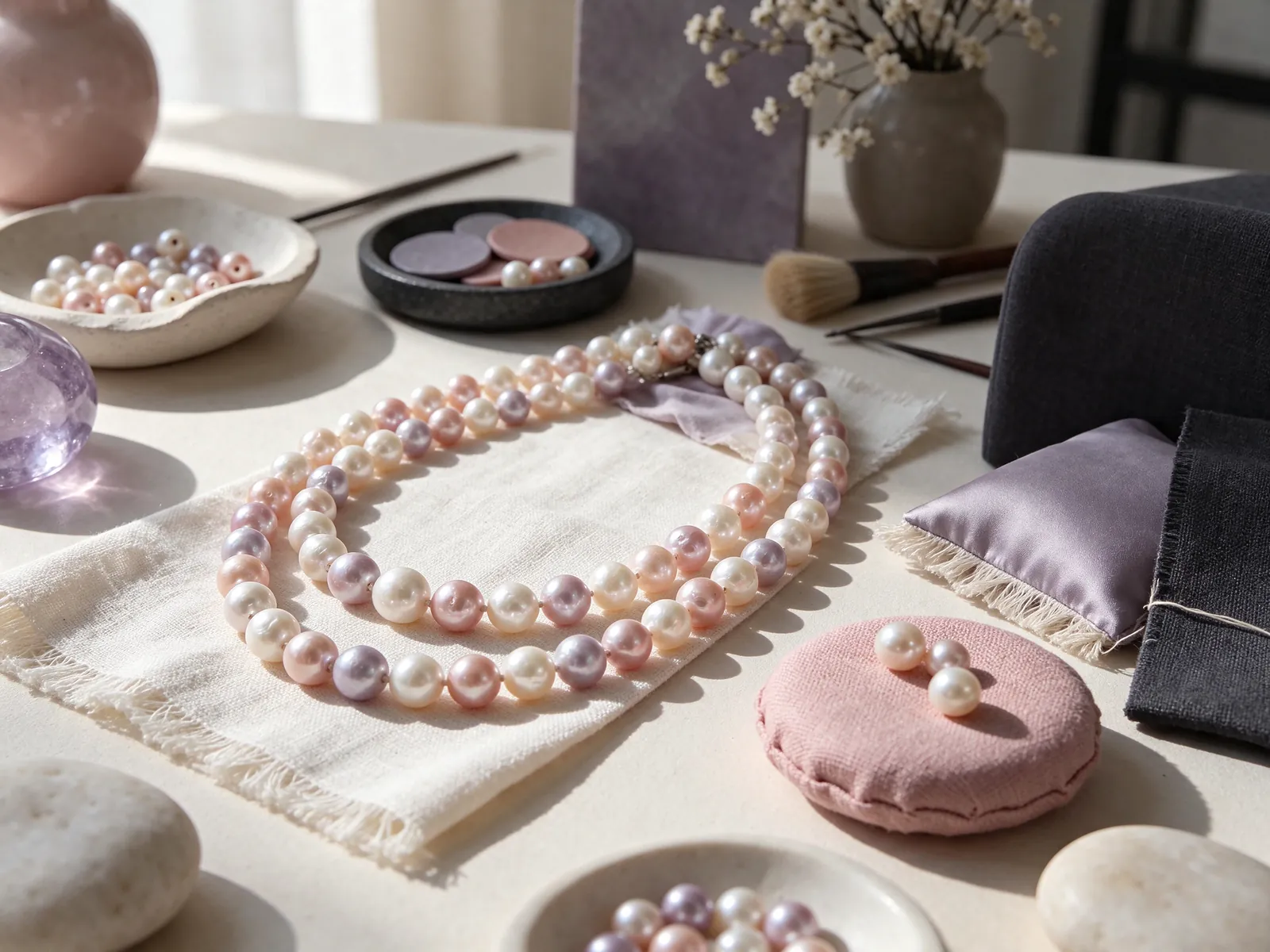
Certification language does not change the basic care needs of pearls. GIA lists pearl at 2.5 on the Mohs hardness scale and says never to use ultrasonic or steam cleaners. After wearing, use a very soft, clean cloth, and avoid contact with acids, perfume, hair spray and excessive heat. Applying fragrance and finishing hair styling before putting on the necklace helps avoid spraying it directly.
GIA also advises that the string must be completely dry before wearing pearls that have been cleaned with water. Store the necklace without rubbing against other jewellery that could scratch its surface, and pay attention to the string and clasp. Separately, keep clear document images alongside the necklace description and any alteration records. A cover image without identifiable context is much less useful when revisiting the necklace later.
Finish with three concrete questions
Before deciding, ask whether the document clearly describes the necklace you are considering, whether the whole strand suits your visual preferences and whether its wearing and care needs fit your routine. If a question remains, name the particular passage or wearing issue you want explained. The title helps you find information; the useful decision comes from connecting that information with the object and your own circumstances.
To turn this comparison into a personal selection brief, contact Flint Jewellery on WhatsApp: https://wa.me/85260106207. Describe your usual neckline, preferred necklace position and the document passage you want to understand. Cover names, addresses and other private information before sharing document photographs. A general selection conversation is not a substitute for the issuer's findings, and does not imply that a named range is available from Flint Jewellery.
| Layer | What to read or observe | Useful question | Avoid assuming | Wearing relevance |
|---|---|---|---|---|
| Product name | The complete wording of the title | Which document accompanies this description? | A name is a universal grade | Record your style preference separately |
| Document subject | Description and identifying fields actually present | Does it describe the strand or an individual object? | One finding covers every pearl | Compare the current necklace with the description |
| Quality factors | Relevant features within GIA's seven factors | How consistent are lustre and colour? | Colour proves origin | Use consistent light |
| Neckline and position | The mirror view and movement | Does the strand overlap my usual collar? | One length suits everyone | Try the same top for each comparison |
| Clasp and stringing | Stated material, operation and present condition | Can I operate the clasp comfortably? | The pearl name proves the metal | Check position when sitting and turning |
Pearl knowledge and authoritative references
GIA describes seven pearl quality factors: size, shape, colour, lustre, surface quality, nacre quality and matching. Matching is particularly useful when discussing the visual continuity of a strand.
Read the reference for this factFrequently asked questions
Is a document cover enough when the title says Certified?
A cover may show a document name without its subject description or full findings. Read the available contents, identify the issuer and compare the stated object with the necklace. The word Certified in a title cannot perform those checks for you.
Can Queen, Hanadama and Tennyo be placed in one quality order?
Not simply by their names. Do not treat them as interchangeable positions on a universal scale. Read each document's wording and subject, then compare the characteristics actually described alongside the strand's visible appearance.
What should I ask if the photographed clasp is different?
Ask whether the clasp was replaced, whether stringing or arrangement changed, and how the documented subject relates to the present necklace. Do not decide the document's status from that visual difference alone; consider its contents and the issuer's guidance.
Why look at a wearing view as well as a close-up?
A close-up helps explain detail, while a wearing view shows the neckline, resting position and overall visual weight. Keeping the top and lighting consistent makes the comparison more useful and reveals whether the collar hides part of the strand.
Does a certification name make ultrasonic cleaning suitable?
No. GIA's pearl-care guidance says never to use ultrasonic or steam cleaners. Use a very soft, clean cloth after wear, and allow the string to dry completely before wearing a strand that has been cleaned with water.
Updated: