
Where Should a Long Pearl Necklace Sit? Matching an Opera Length Pearl Necklace or a Long Pearl Strand Necklace to Your Neckline | Flint Jewellery
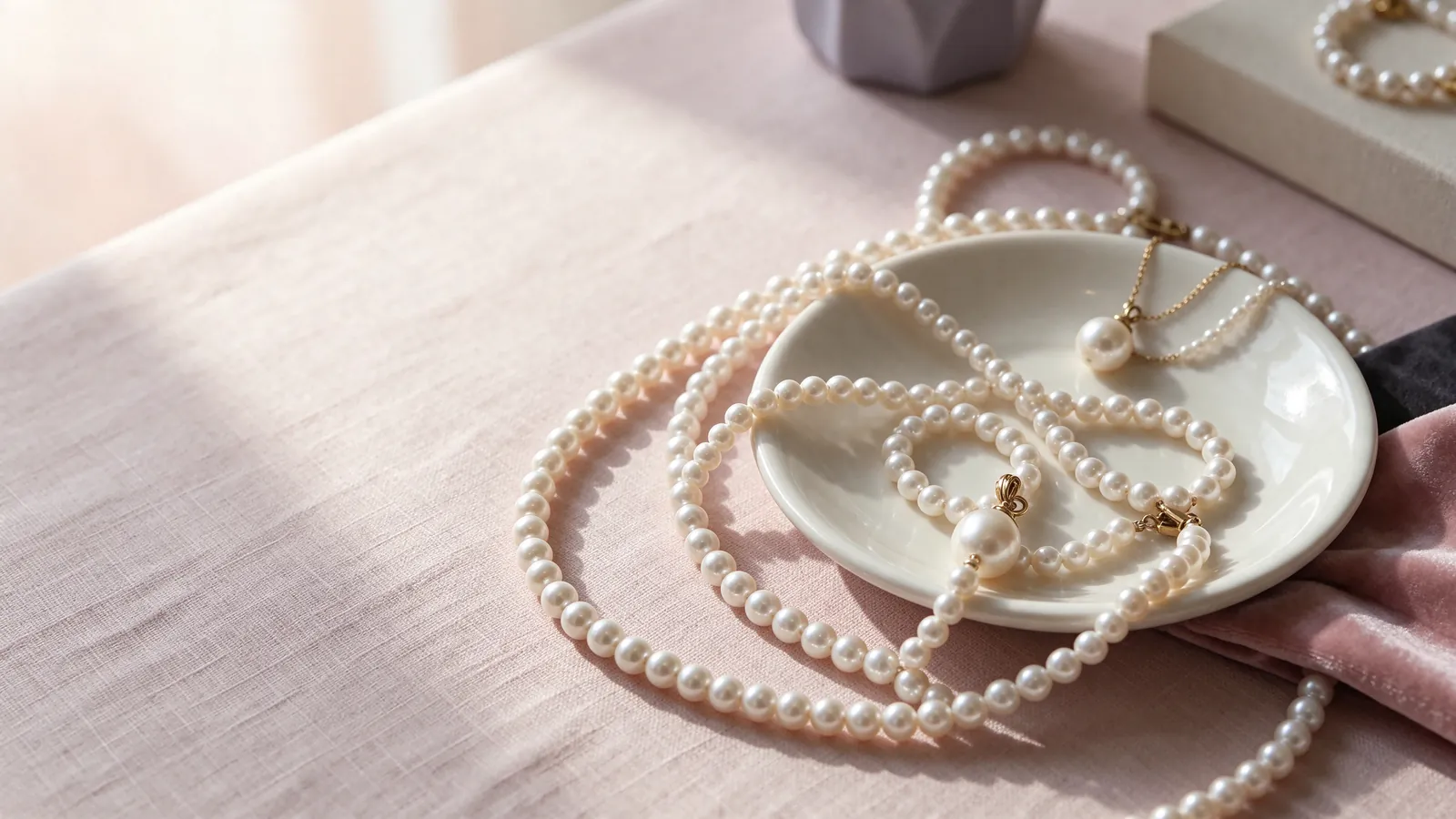
A long pearl necklace works best when its curve has room to be seen. With an open blouse, check whether the lowest point meets the opening, a button or a pocket rather than assuming a longer drop is automatically more flattering. A plain crew-neck knit gives the strand a continuous background. For a starting comparison, consider how a single strand pearl necklace creates one uninterrupted line before deciding how far down that line should extend.
An opera length pearl necklace may sit differently over a fine blouse and a substantial jumper, even on the same person. Look from the side as well as the front: folds can support the pearls and change their apparent drop. A long pearl strand necklace worn in two loops shifts attention towards the neck. That can suit a different outfit, but the upper loop should not press into the collar or force the lower loop against a fastening.
Can a Long Pearl Necklace Be Doubled? Check the Length, Clasp and Fit of an Opera Length Pearl Necklace or a Long Pearl Strand Necklace | Flint Jewellery
Open and close the clasp normally before testing two loops, without stretching the strand. Half the total length is only an equal division, not a promise of neck clearance. Pearl volume and unequal loop heights also matter. Turn your head, raise your arms and sit down; if the upper loop tightens or the clasp moves uncomfortably, return to a single line.
Translate a preferred drop into a useful measurement
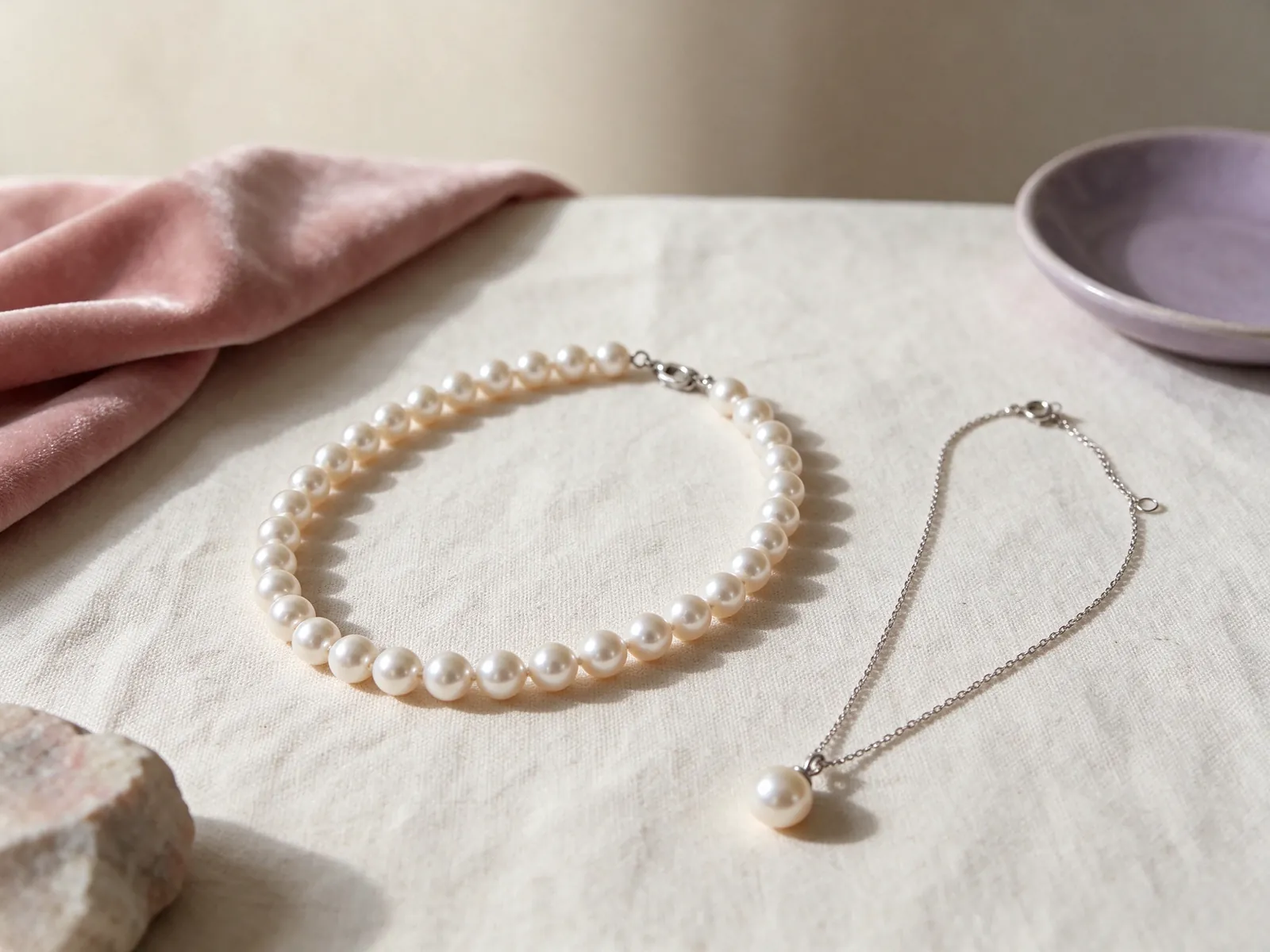
Wear the blouse or dress you expect to use most often and place a soft cord along the intended necklace route. Let it form a curve rather than pulling it flat against your chest. Note the resting point and whether the strand will sit on fabric or skin. The pearl necklace length guide can help organise these comparisons, but your own neckline and torso remain the useful fitting reference.
Length names do not define a single size across every seller. WSP's published chart calls 70 cm Long, 80 cm Opera and 90 cm Opera or Long, illustrating the overlap. Ask for the measured total and whether it includes the clasp. If the proposed drop competes with your waistline or feels impractical at a desk, compare a matinee pearl necklace on the same outfit rather than choosing solely because the word opera appeals to you.
Record sitting fit as well as standing fit
Check the lowest point while seated, especially if you lean towards a desk. A strand that looks balanced standing up may meet a tabletop or belt when you sit. Keep your preferred drop, clothing thickness and clasp measurement together so that comparisons address the same wearing conditions.
Distinguish doubling from layering and fixed multiple strands
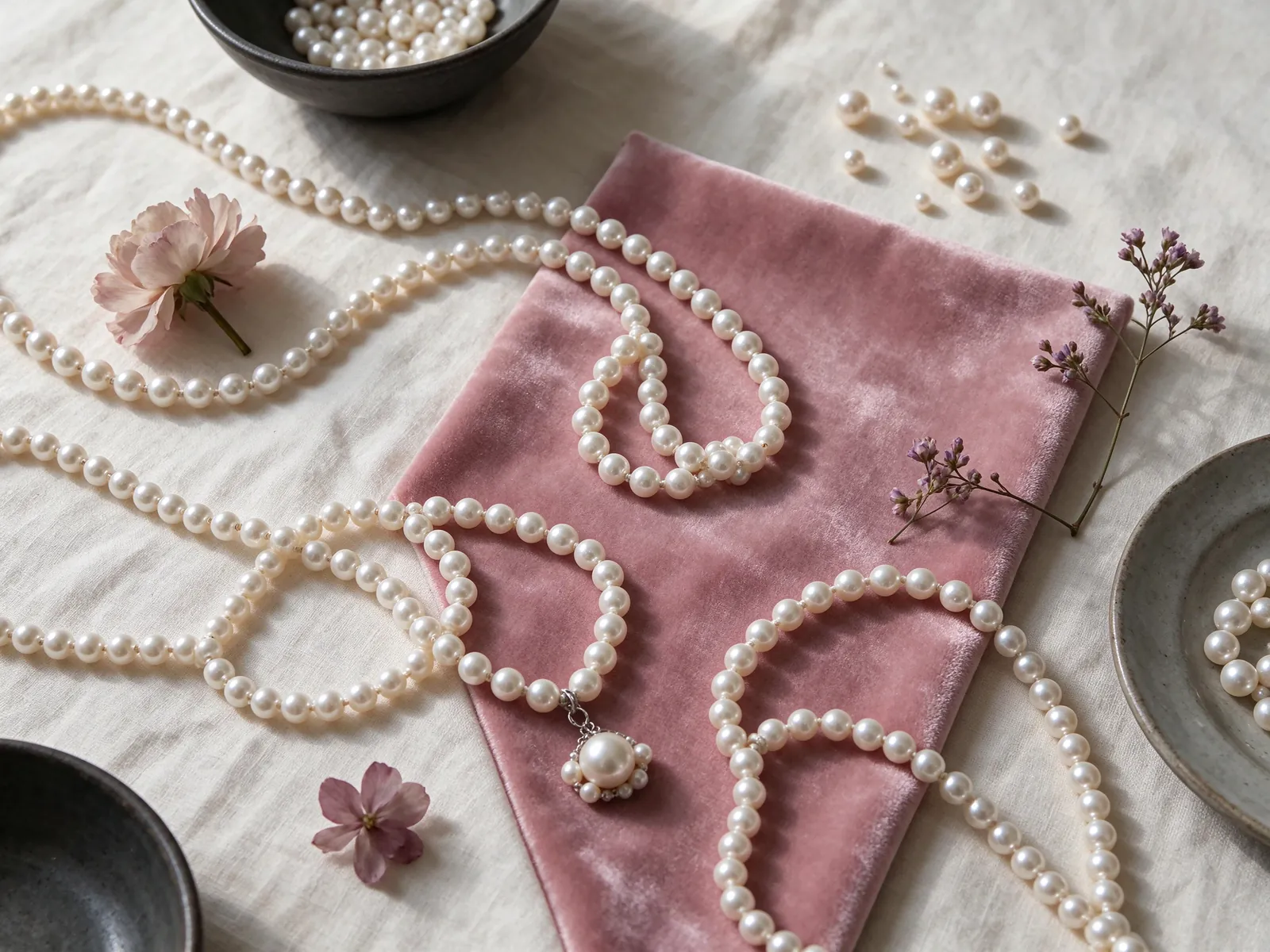
A doubled necklace uses one continuous strand to make two loops. A multi strand pearl necklace can instead have separate lengths joined to a shared clasp. These arrangements need not distribute weight or maintain spacing in the same way. If a reliably defined gap between rows matters most, examine the construction of a fixed arrangement. If changing between one line and two loops matters more, establish what the individual long strand allows.
Adding an independent shorter necklace offers another route to contrast without doubling the longer one. For pearl necklace layering, try letting one line sit above the neckline and the other pass below it, with visible space between them. Walk a little and check whether they cross, whether clasps touch and whether you can straighten them easily. A layered look should remain manageable after movement, not depend on holding still for a photograph.
Do not create separation by tightening the upper loop
Arrange the two routes before fastening, then see whether their different heights hold naturally. Avoid pulling the upper loop snug to force a gap. If both loops repeatedly settle together, an independent shorter necklace or a fixed multi-row construction may suit the desired effect more easily.
Give the strand room among collars, patterns and accessories
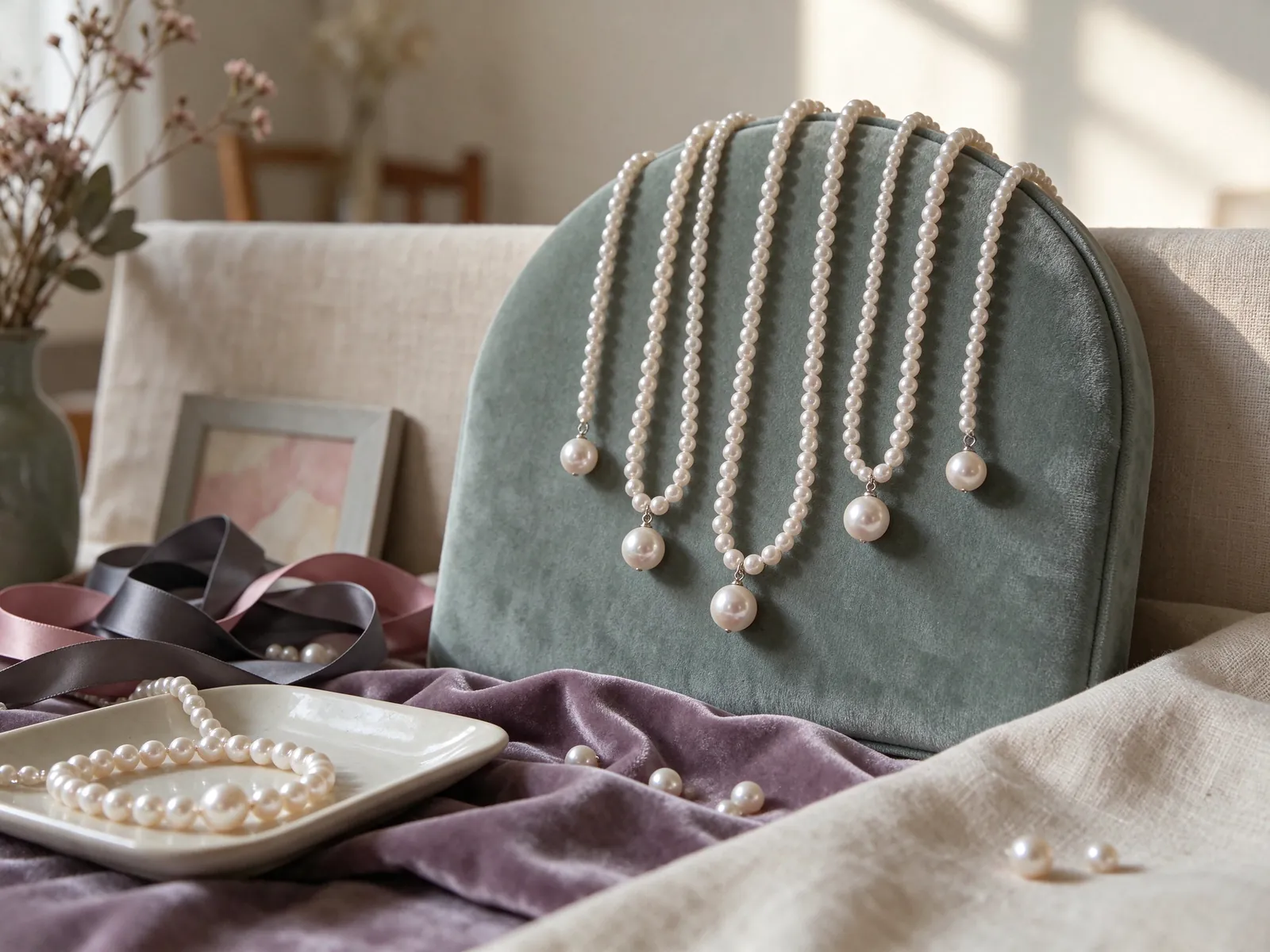
A patterned dress can still work with a long strand, but first check where the pearls cross the strongest print or chest details. Moving the visual endpoint away from a pocket or a prominent button can make the line easier to read. Colour contrast is a styling preference rather than proof of pearl quality. Judge the arrangement with clothes you actually wear, instead of selecting a pearl colour for a photograph alone.
Try the complete outfit with its jacket. Lapels can cover portions of the strand or hold it in an uneven position, and a shoulder bag can press it against the fabric. A pearl choker necklace gives a different balance around an open neckline, so it is a useful alternative when the long line has nowhere clear to sit. There is no need to combine both lengths if the collar already carries substantial decoration.
Build a practical workday fitting test
Put on your bag, reach for a document and lean forward as you would at work. Check for contact with desk edges, buttons and straps. Then consider earrings and other accessories from a full-length view; simpler surrounding shapes can leave the long necklace as the main line without crowding the outfit.
Read quality across the whole strand
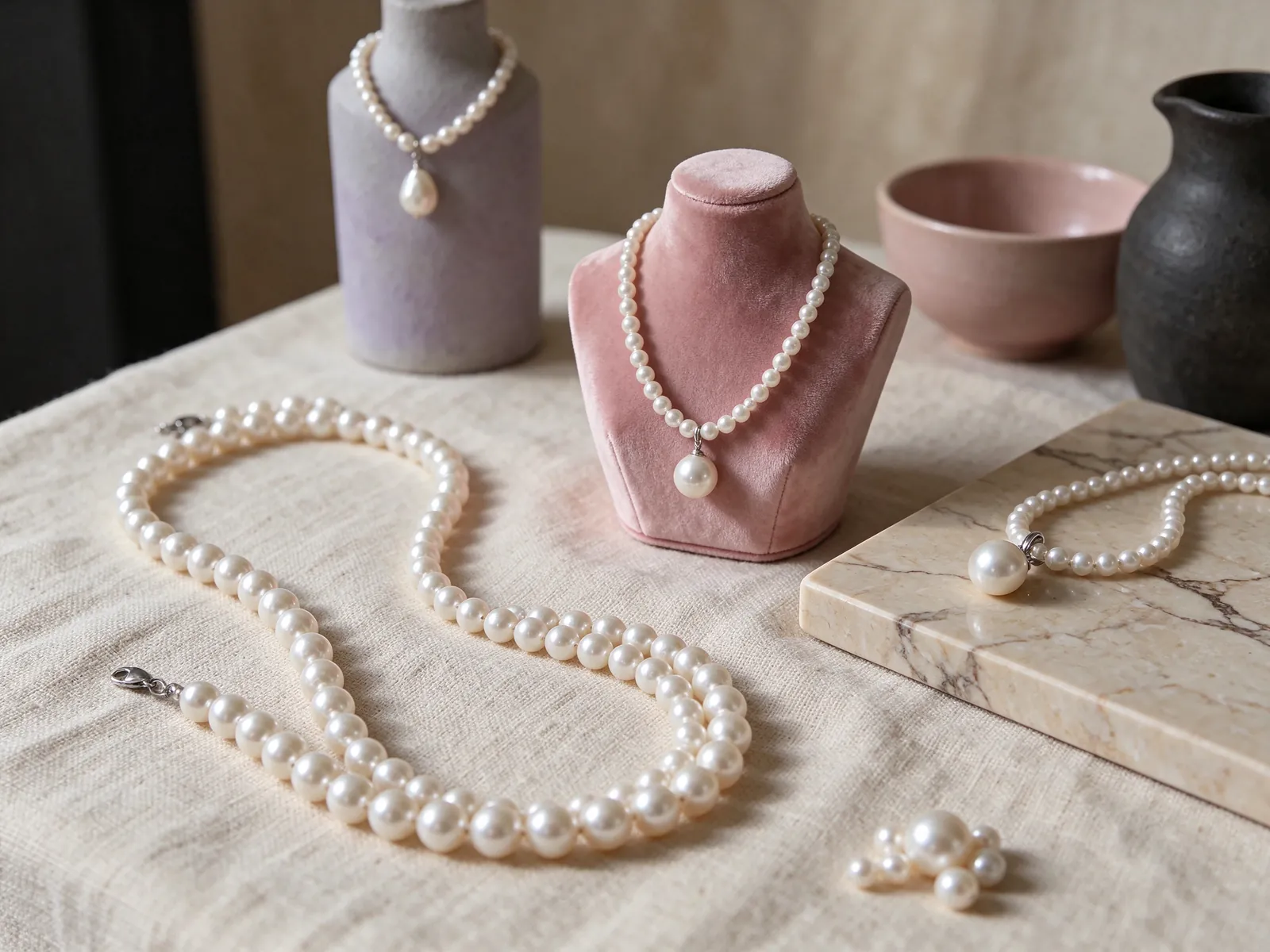
GIA describes seven pearl value factors: size, shape, colour, lustre, surface quality, nacre quality and matching. Matching is particularly useful when considering a long line of pearls because changes in appearance repeat along the necklace. A graduated or irregular arrangement can be intentional. Look at whether the sequence is coherent for its design, rather than treating every difference between adjacent pearls as a flaw.
View the whole strand as well as close details. In gentler light, observe the definition of reflections, then turn the strand to avoid judging lustre from one brightly exposed image. Read the accompanying description for any stated pearl identity. Shape and colour alone cannot establish origin, natural-versus-cultured status or a certificate. If those distinctions matter to your purchase, ask about the specific necklace rather than deriving an answer from its length category.
Separate visual harmony from identical appearance
For an orderly effect, follow the line from end to end and observe its consistency. For a more irregular outline, look at the rhythm of shapes and their orientation. Comparing the strand laid out and worn helps reveal both the intended arrangement and the effect of its drape.
Check clasp operation and the condition of the string
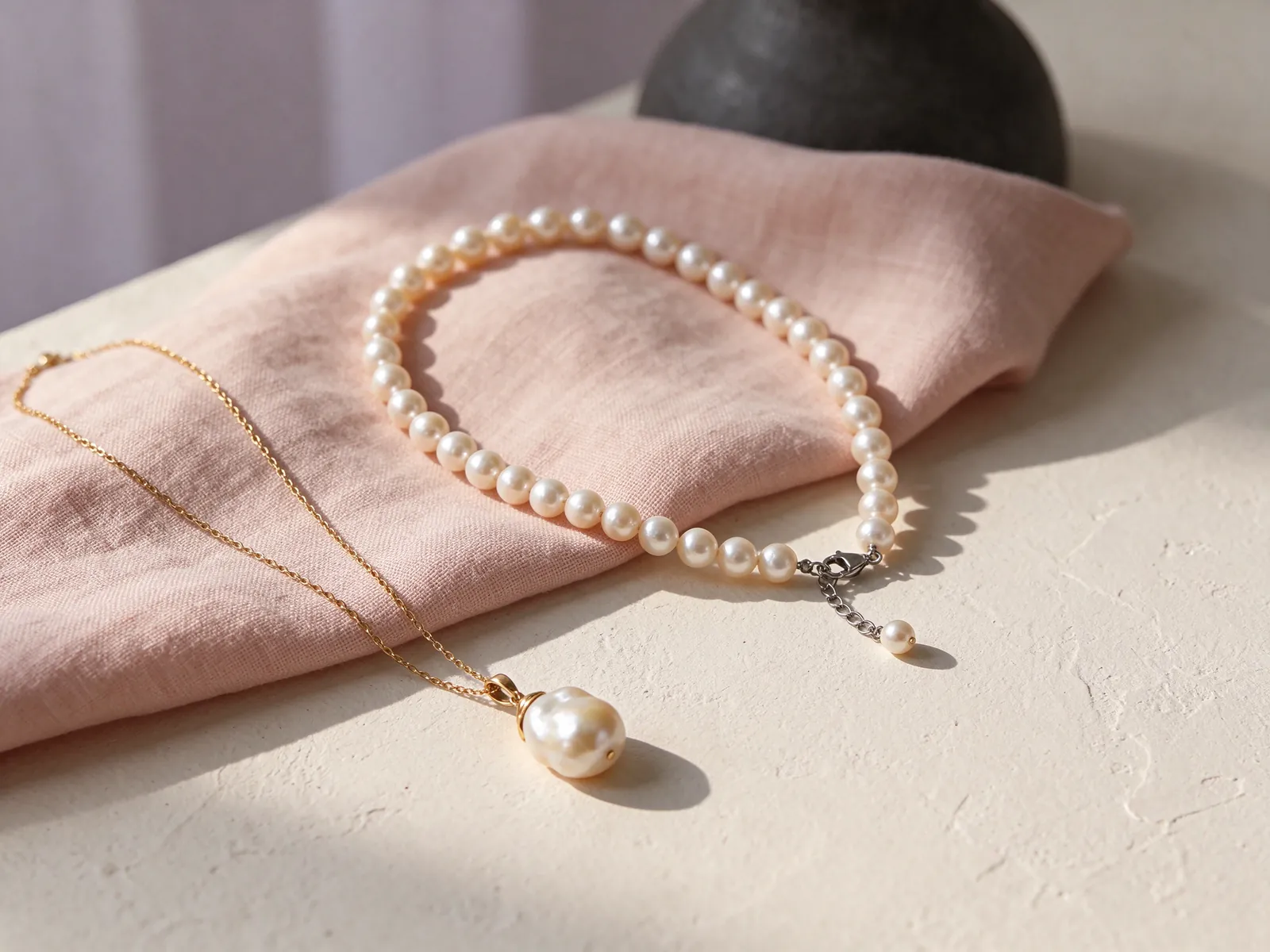
The clasp may move from the back towards the side as you wear a long necklace. Check whether it rests comfortably, catches hair or meets a button when doubled. A decorative clasp can contribute to the appearance, but that does not make every position comfortable. Practise fastening without tugging the pearls and ask how the connection is intended to be handled if the mechanism is unfamiliar.
For an existing strand, inspect visible looseness, unusual gaps and whether the clasp closes properly before changing the wearing arrangement. Knotted and unknotted strings have different constructions; the presence of knots alone is not a complete assessment of condition. If you are considering a shorter or multi-row redesign, describe the current length, the difficulty you experience and the elements you wish to keep. Start with structure and proportion, not an assumption that every strand can become the same design.
Untangle on a soft surface before changing the arrangement
Lay the necklace on a clean, soft surface and straighten its route before attempting two loops. Do not wrench the clasp, twist the connections or force a closed strand over your head. If the operation feels awkward, stop and ask how that particular construction should be worn.
Plan care and the final fitting conversation
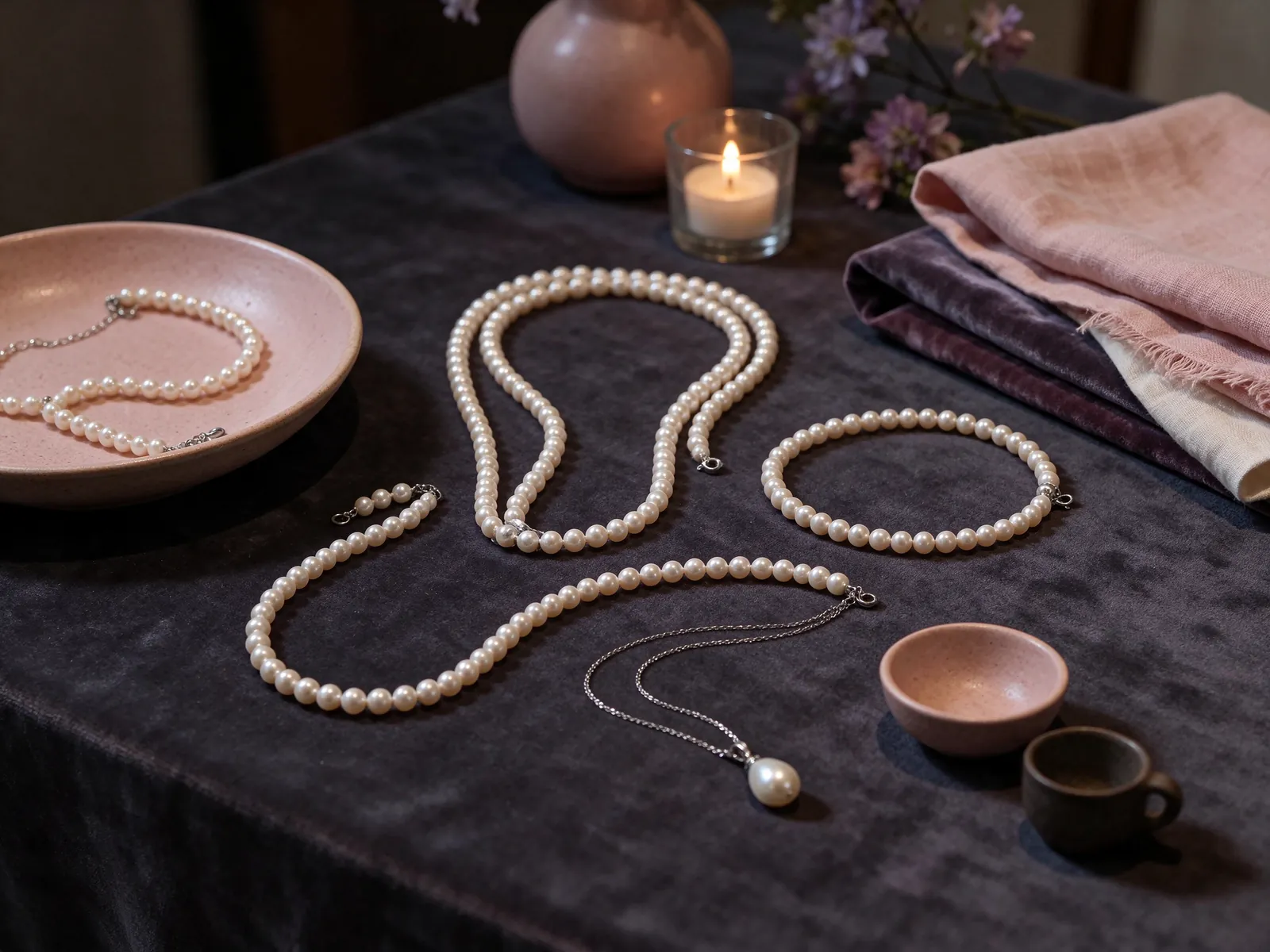
Wearing pearls over clothes does not remove the need for gentle care. GIA gives pearl a Mohs hardness of 2.5 and advises against ultrasonic and steam cleaning. Apply perfume and hair products before putting on the necklace, then wipe it with a very soft, clean cloth after wearing. Store the long strand without tangling it into other chains, and keep it apart from jewellery that could scratch its surface.
Before choosing, prepare two familiar outfits or clear neckline photographs. Decide whether your priority is one continuous line, occasional doubling or defined rows. Compare the resting point, actual length, clasp operation and seated comfort in that order. You can discuss your neckline and wearing preferences with Flint Jewellery on WhatsApp, keeping the conversation focused on proportion and use; read pearl identity and individual specifications from the description of the particular piece.
Wait until wet string is completely dry
GIA advises that string on pearls cleaned with water must be completely dry before wearing. Do not use excessive heat to hurry drying or pack the damp strand tightly away. A routine of gentle wiping, straightening and careful storage makes the necklace easier to handle next time without pulling at tangles. To discuss your own long strand, share its current length, a clasp photo and your usual neckline with Flint Jewellery on WhatsApp, together with the wearing position you would like to improve.
| Intended effect | Construction or fit check | Outfit observation | Useful response |
|---|---|---|---|
| One flowing line | Lowest point and full curve | Contact with buttons, belt or desk | Choose the resting point before the length name |
| Two loops | Clasp access and neck clearance | Pressure against the collar | Avoid tension; use a single line if uncomfortable |
| Defined row spacing | Loop position after movement | Loops settling at the same height | Compare independent layers or fixed rows |
| Jacket styling | Lapel and shoulder-strap contact | Hidden or trapped sections of pearls | Try the complete outfit |
| Everyday handling | Clasp closure, string and tangles | Snagging when sitting or reaching | Prioritise intact construction and comfortable use |
Pearl knowledge and authoritative references
GIA identifies seven pearl value factors: size, shape, colour, lustre, surface quality, nacre quality and matching. Matching provides a useful framework for assessing the visual consistency of a long strand.
Read the reference for this factFrequently asked questions
Does opera always mean an 80 cm necklace?
No single length name should replace the actual measurement. WSP's chart labels 80 cm Opera and 90 cm Opera or Long. Ask for the complete length and whether it includes the clasp, then check its resting point on your own outfit.
Why do doubled loops keep settling together?
The strand's length, pearl volume, clasp position and fabric can affect the spacing. Straighten the routes without tightening the upper loop. If the gap does not hold comfortably, try a single long line with an independent shorter necklace or compare fixed multiple rows.
Can I tie a styling knot in any long pearl strand?
Do not assume all strands permit knotting. String, pearls, clasp and connections differ, and forcing a knot introduces tension. Ask how the individual necklace is intended to be worn and favour arrangements that can be changed without pulling.
Should a long strand sit inside or outside a blouse collar?
Try both routes with the blouse fastened as you normally wear it. Check for contact with collar edges and buttons, and look from the side for fabric lifting the pearls. Choose the route that leaves a clear line and allows easy movement.
Do pearls worn over a jumper still need wiping?
Gentle wiping after wearing remains useful, alongside untangling and separate storage. GIA advises against ultrasonic and steam cleaners. If a strung necklace has been cleaned with water, its string must be completely dry before it is worn again.
Updated: