
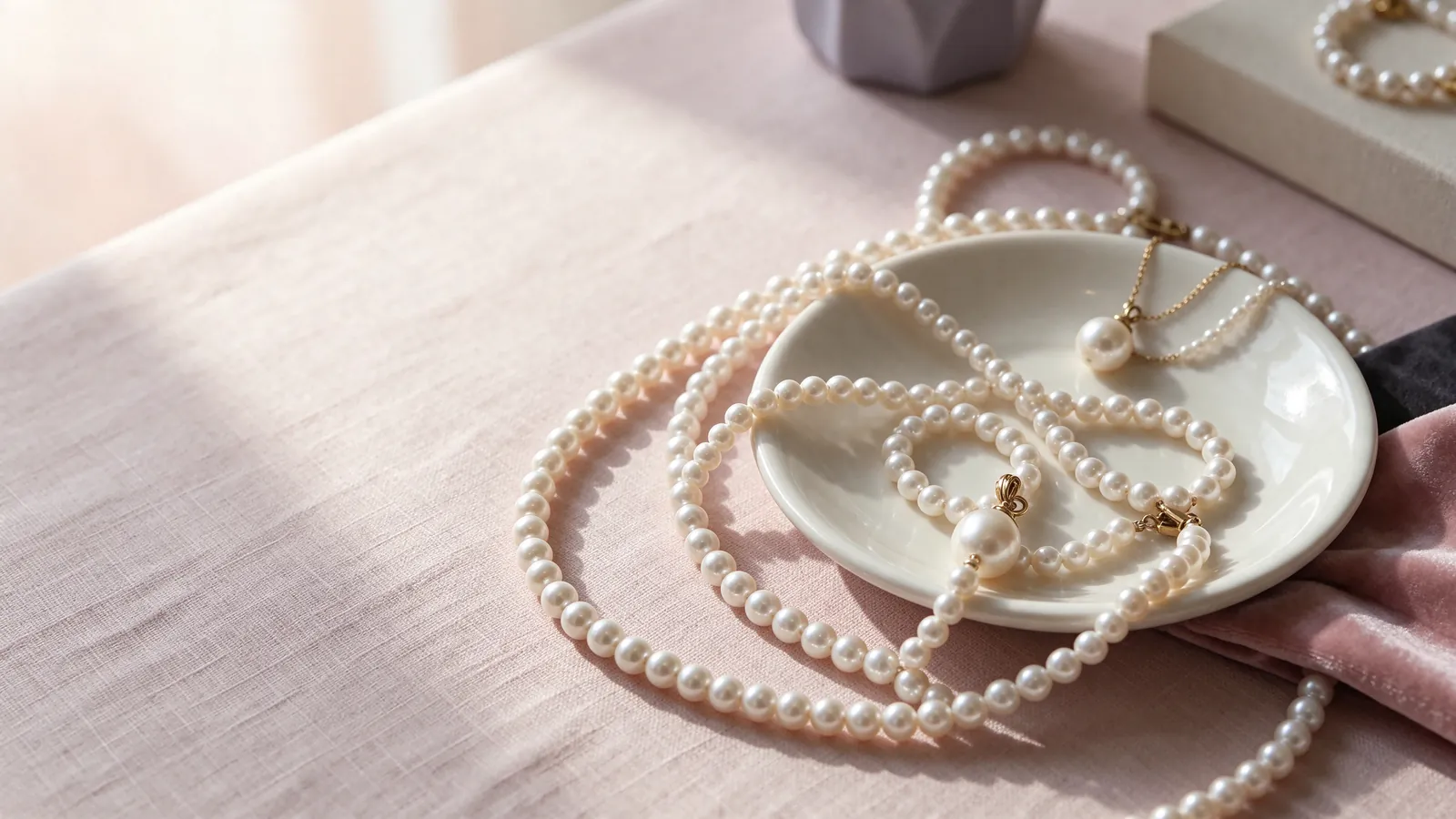
Flint Jewellery — pearl necklace layering starts at the neckline: how to layer pearl necklaces for balanced layered pearl necklace styling
Put on the intended top before choosing your layers. A crew neck gives you a visible curve to work around: the upper strand can sit above it or form a separate curve below it. Avoid a position where the fabric hides half the pearls. With a V-neck, look at whether the lower strand follows the opening or competes with its point. Move one layer before adding another.
A shirt changes shape as you open or close its buttons, so test it in the arrangement you expect to wear. A shorter necklace may frame the space between the collar points, while a longer one needs room around the placket. On a high-neck top, necklaces sit against fabric rather than bare skin. The thickness and texture of that fabric can change how clearly the layers separate.
Flint Jewellery — Drape and comfort in pearl necklace layering: how to layer pearl necklaces so layered pearl necklace styling feels right
Check the whole silhouette while standing, then sit down, turn your shoulders and look down as you would at work. Notice whether the upper strand presses upwards or the lower one rests against a desk. A side photograph can reveal overlap that a front view misses. Keep a combination because it remains comfortable and readable during movement, rather than because it achieves an exact gap in one photograph.
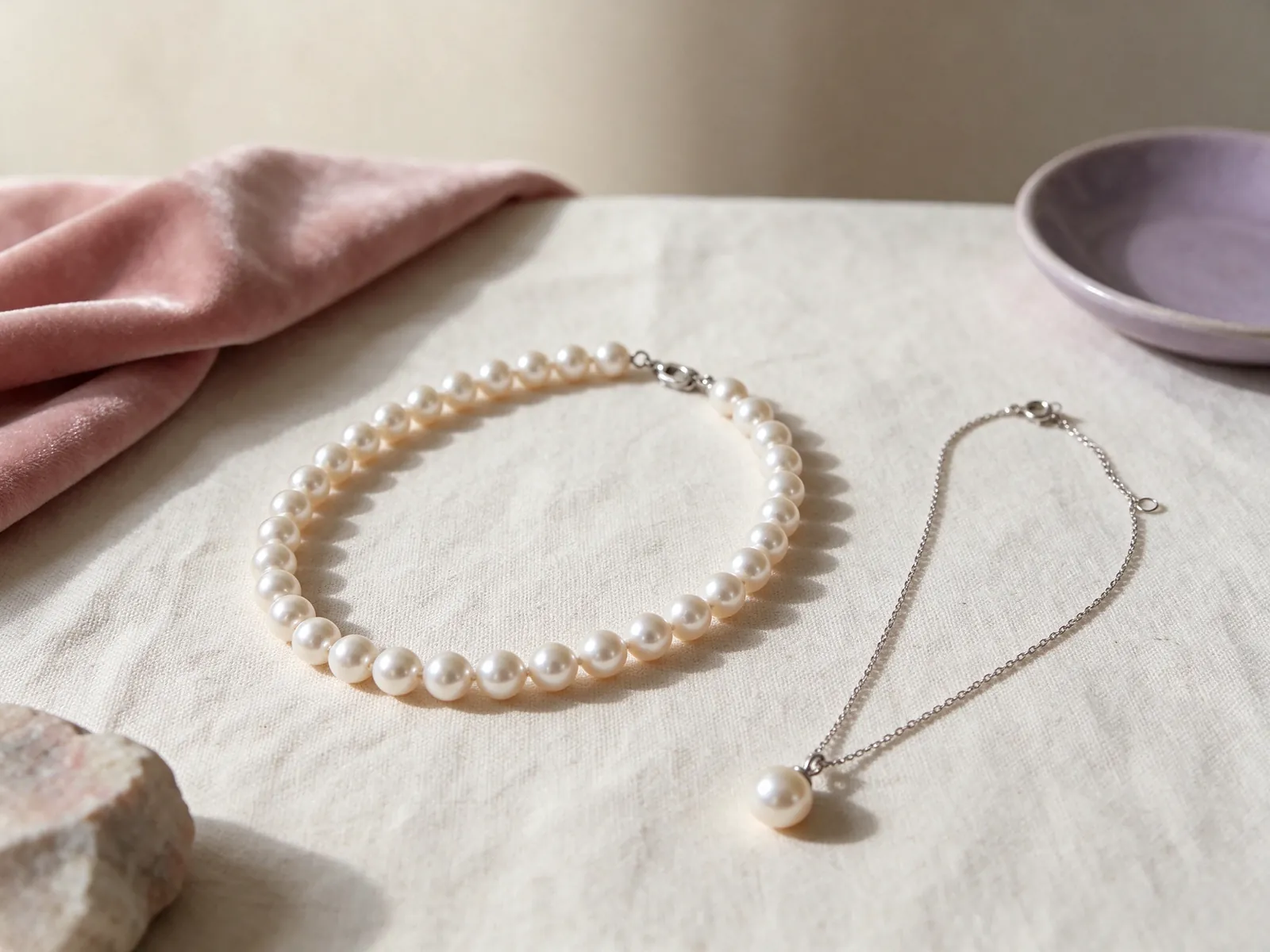
Establish a base necklace before choosing the second layer
A familiar single strand pearl necklace makes a useful starting point. Wear it with the chosen outfit and note where its lowest point falls. Then add a necklace that has a clear job: framing the neck more closely or extending the line below. Compare actual drape rather than labels alone. Pearl dimensions, clasp shape and the path around your neck can affect the visible result even when stated lengths appear suitably different.
Separate necklaces let you remove a layer and reuse each piece with other clothes. A multi strand pearl necklace instead combines several strands within one item, so its attachment points and shared structure deserve attention. Decide whether you want flexible combinations or a particular joined silhouette. Neither arrangement should be chosen solely because it looks tidy laid flat; try the complete weight and the way the strands settle on the body.
Record useful observations, not just necklace lengths
Make a short note of the neckline, each strand's resting position and what happens after walking. This tells you whether your next necklace needs to be shorter, longer or visually lighter. If you are buying to accompany an existing piece, bring it when practical and compare the clasps too. An outfit photograph and an accurate length measurement are more useful together than either one in isolation.
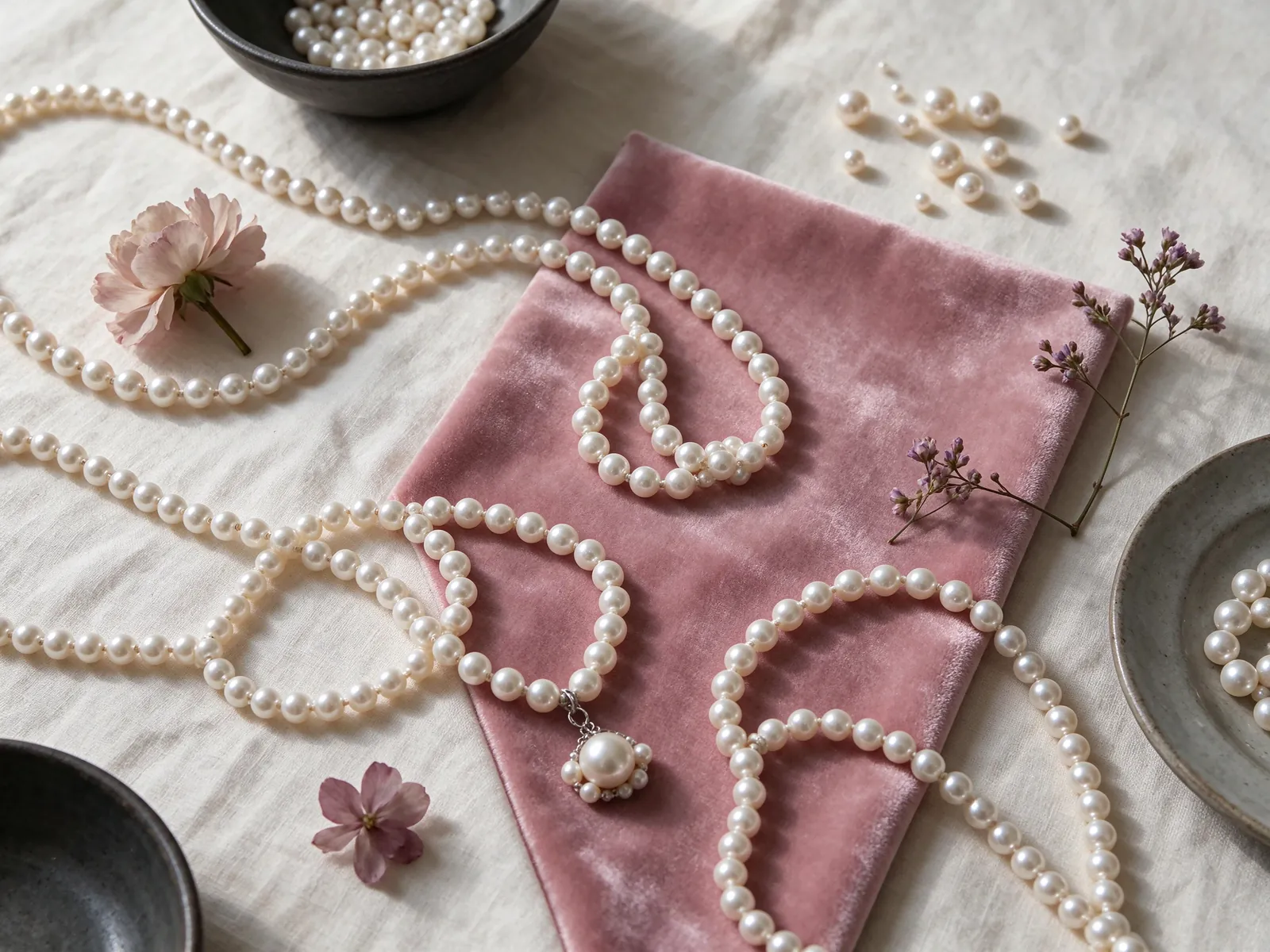
Give colour, lustre and shape a deliberate hierarchy
The layers do not have to look identical. A shared colour impression, similar lustre or related outline can connect them, while a contrasting shape can give one strand a more prominent role. Start with the necklace you most want to show. If adding the second makes that focal point disappear, change the supporting layer or simplify the surrounding accessories instead of adding more necklaces to the same area.
GIA describes seven pearl value factors: size, shape, colour, lustre, surface quality, nacre quality and matching. It also notes that designers sometimes mix colours, shapes and sizes deliberately. Matching within a pearl jewel is not quite the same question as coordinating two independent necklaces for an outfit. Compare both pieces under the same light and against the actual top, looking for a clear leading and supporting role. A visual match does not establish equal quality, origin or natural versus cultured identity.
Use the clothing as part of the colour comparison
A dark jacket may make a light strand stand out, while a pale shirt can shift attention towards shape and shadow. Patterned fabric introduces another visual rhythm. Lay both necklaces beside the garment, then check them on the body, where skin and fabric surround them differently. For a busy top, a quieter supporting strand may help the principal necklace remain visible without forcing every accessory to match exactly.
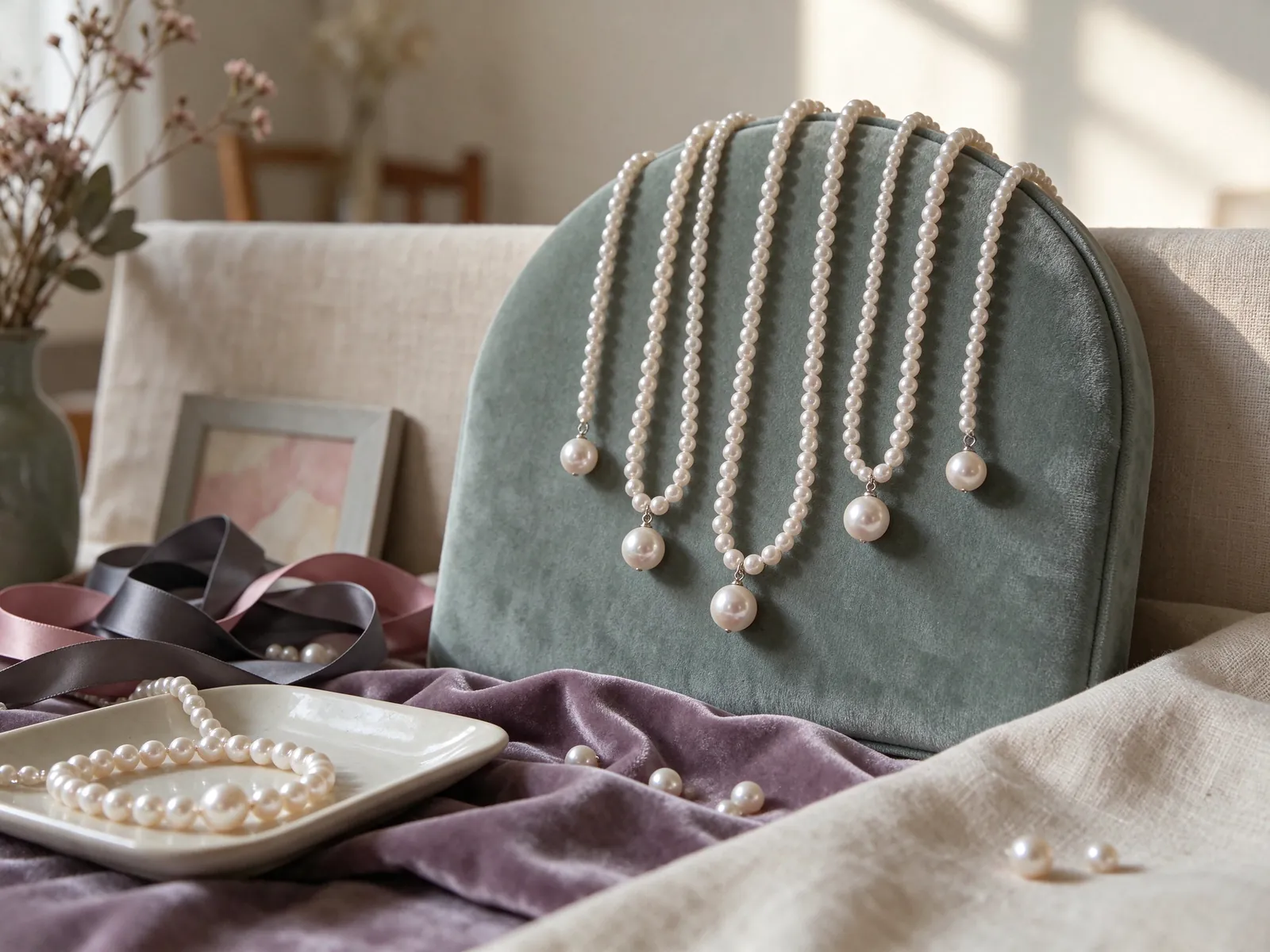
Mix pearl strands and chain details without crowding the centre
A half chain pearl necklace brings a chain section and a pearl section into one outline. When combining it with another necklace, inspect where the joining points move as you turn. A junction can be an intentional focal point, but it may compete with a shirt button or another pendant if everything lands in the centre. Compare a slightly different drape or a simpler second strand before settling on the combination.
Look beyond the overall colour of a chain. Check its edges, clasp and any hanging tail, and observe whether these parts move across the pearls on the other strand. A heavier necklace can also press a lighter one towards the fabric. Gently arrange both, walk for a moment and inspect which piece moves in front. Persistent rubbing is a reason to change the pairing, not merely to straighten it before leaving.
Let mixed metal colours echo small outfit details
If you enjoy contrasting metal colours, an earring, ring or small clothing detail can help connect them visually. Keep the number of competing focal points manageable. The aim is not to repeat every colour everywhere, but to make the contrast look considered. Inspect the necklace combination in the same light as the outfit; appearance is a styling observation, not proof of a metal's identity or a pearl's quality.
Test longer layers during the movements of an ordinary day
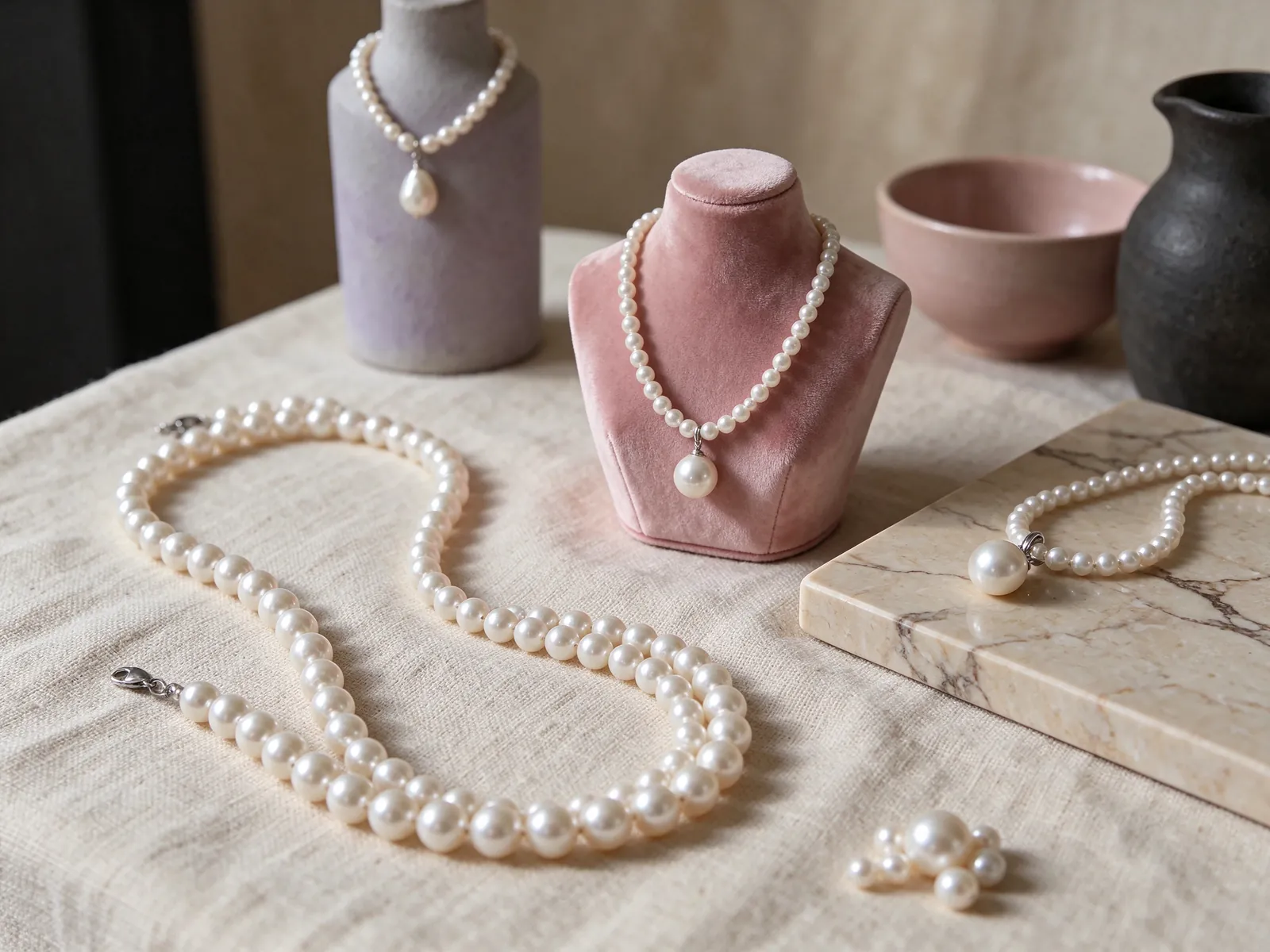
A long pearl necklace draws the eye lower on the torso, which makes the surrounding space important. Try it with your jacket fastened and open, and with the bag you normally carry. Watch for contact with lapels, pockets and shoulder straps. If the lowest strand repeatedly reaches the desk when you sit, consider a higher resting position or fewer layers. Standing still is only one part of the fitting exercise.
A matinee pearl necklace may be worth comparing when you want a longer supporting line without taking the lowest layer as far down. Tangling depends on more than the difference between stated lengths: weight, clasp orientation, fabric and movement all play a part. Placing every clasp at the back does not ensure separation. Turn, lift your arms and observe whether the strands exchange positions or the clasps collide.
Troubleshoot twisting one necklace at a time
Remove one layer and check how the remaining necklace hangs by itself. Repeat with the other, then try the pair again with one change to the outfit or resting position. If they are already entangled, undo the clasps and arrange them gently on a soft surface rather than pulling. Any spacer also needs to suit the actual attachment points; it is not a universal answer for every necklace combination.
Adapt the layers to workwear, evenings and personal expression
For a working day, consider repeated actions such as reading at a desk, handling papers and putting on a coat. Two clearly defined layers may be easier to manage than several strands filling the same space. An evening neckline can offer more room, but still test the seated position you will use at dinner. A formal occasion does not automatically call for more necklaces, especially when the garment already has embellishment.
Layering also works as a styling approach with plain T-shirts, shirts and less gendered tailoring. When exploring a men's pearl necklace, focus on the neckline, shoulder line, visual weight and the wearer's habits rather than assigning a particular shape or length to a gender. A loose top and a fitted one create different spaces. Establish one successful necklace first, then judge whether the next layer genuinely improves that particular outfit.
Balance the necklaces with earrings and other accessories
If the neck area already has a strong upper and lower line, quieter earrings can leave that rhythm visible. If statement earrings lead the outfit, reduce contrast between the necklace layers. Rings do not need to mirror every pearl detail. Step back from the mirror to judge the whole figure, including the jacket and bag, instead of assessing each accessory separately at close range.
Make care and storage part of the layering routine
Before choosing another necklace, identify the existing piece it will accompany and the necklines you wear most often. Check the closure, overall length and weight during fitting. If flexibility matters, ask about the intended wearing arrangement for the actual structure. Do not assume a long necklace can be knotted or doubled simply because you can temporarily form two loops. Support the strand while fastening rather than pulling from its clasp.
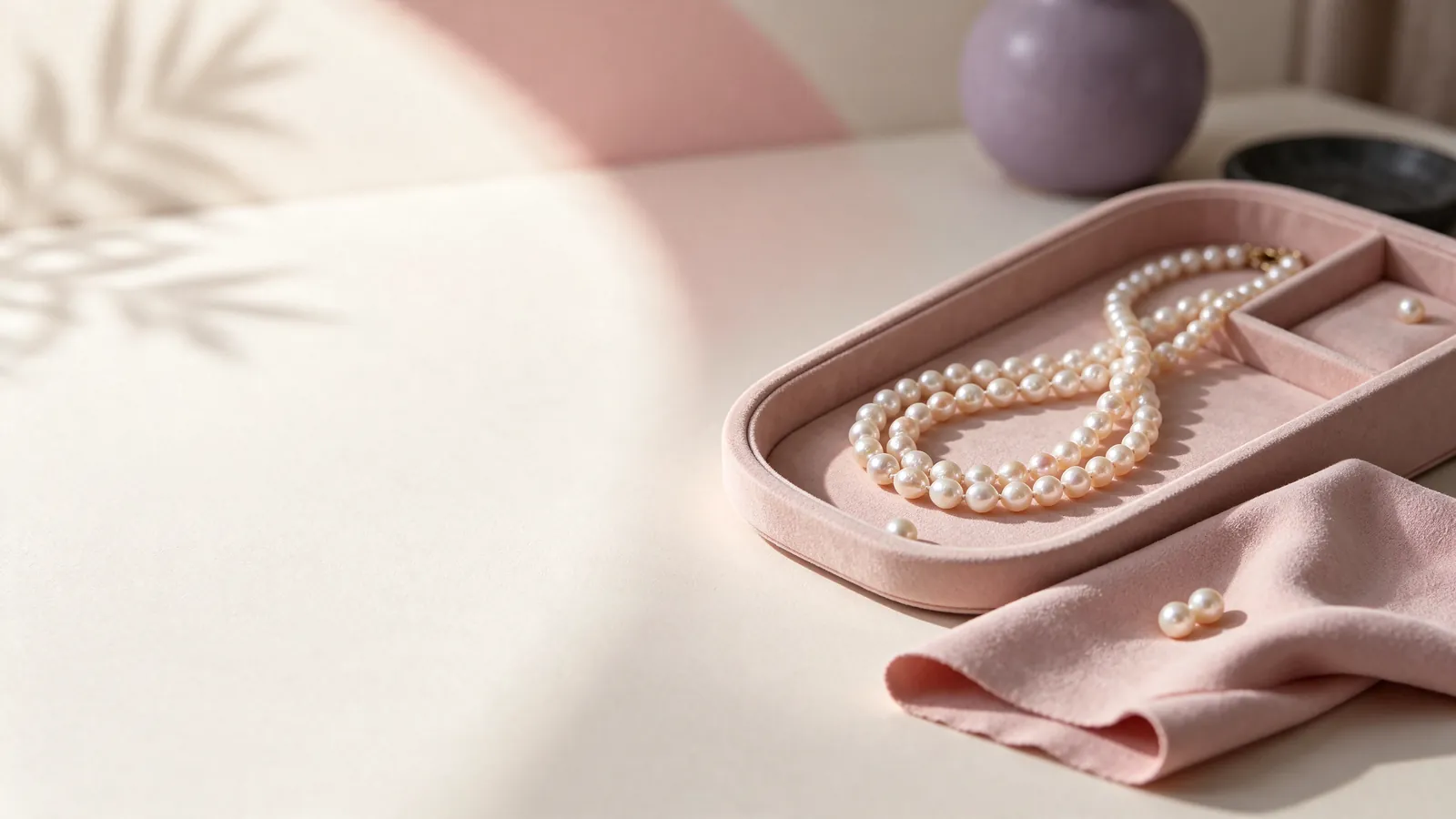
GIA lists pearl at 2.5 on the Mohs hardness scale, making contact with harder jewellery parts a relevant concern when layers touch. After wearing, use a very soft clean cloth and put each necklace away separately rather than in a tangled pile. Apply perfume and hair products before putting pearls on. Pearls should never be cleaned with ultrasonic or steam cleaners; a layered outfit does not change those care needs.
Keep each strand ready for the next combination
Separate storage lets you notice twisting, knots or a loose connection before the next wear. If a strung necklace has been cleaned with water, allow the string to dry completely before wearing it. Note any pairing that repeatedly rubs or slips with a particular garment. That record can guide a better combination next time while keeping the necklaces individually organised and easier to inspect.
To discuss a supporting layer for a necklace you already own, gather its length, a clear clasp photo and the necklines you wear most often. Contact Flint Jewellery on WhatsApp: https://wa.me/85260106207. Tell us which necklace you want to feature and when the layers overlap, so the conversation can focus on drape, visual balance and your wearing preferences.
| Outfit | Upper layer's role | Lower layer's role | Movement to test | Reason to adjust |
|---|---|---|---|---|
| Crew-neck top | Frame a clear curve | Add a separate lower line | Look down and sit | Fabric hides part of the strand |
| V-neck top | Frame the upper opening | Extend the neckline's direction | Compare front and side views | Lower strand competes with the V point |
| Open-collar shirt | Sit between collar points | Clear the placket | Turn shoulders with buttons set | A strand catches near a button |
| High-neck knit | Create an upper line on fabric | Give the silhouette depth | Walk and put on a jacket | Fabric pushes the layers together |
| Jacket and shoulder bag | Keep the neck area clear | Avoid lapels and straps | Lift arms and sit at a desk | A strand repeatedly meets the desk or strap |
Pearl knowledge and authoritative references
GIA lists pearl at 2.5 on the Mohs hardness scale. When layering, watch for contact with harder jewellery components and store the necklaces separately afterwards.
Read the reference for this factFrequently asked questions
Is there a standard gap I should leave between pearl necklaces?
There is no single gap that works for every wearer and outfit. Stated lengths are a starting point, while drape, pearl dimensions, clasps and clothing change the visible spacing. Test the pair with your intended top during ordinary movement and choose a separation you find clear and comfortable.
Can two strands with different colour impressions still work together?
Yes, contrast can help define a leading and supporting strand. Compare them under the same light against the actual garment, and look for another connection such as lustre or outline. Different colour impressions alone do not identify pearl species, origin or quality.
How do I decide whether to add a necklace to an existing multi-strand piece?
First check whether the existing piece already fills the neckline. Add the separate strand only if it has a distinct role and does not obscure the original drape or press against the shared closure. A multi-strand piece already provides layers, so more jewellery is not automatically an improvement.
Can I double a long strand instead of wearing two separate necklaces?
That depends on the necklace's construction, length and fastening method. Confirm its intended wearing arrangement and check whether the upper loop feels restrictive or the lower loop twists. Do not force a knot or assume that every long necklace is suitable for doubling.
What is the first step when my layers keep twisting?
Check each necklace on its own, then try them together again with one change to the resting position or garment. Inspect clasps and contact points as well as length. If the pieces repeatedly rub or collide, a different pairing or separate wear may be more suitable than continual straightening.
Updated: