
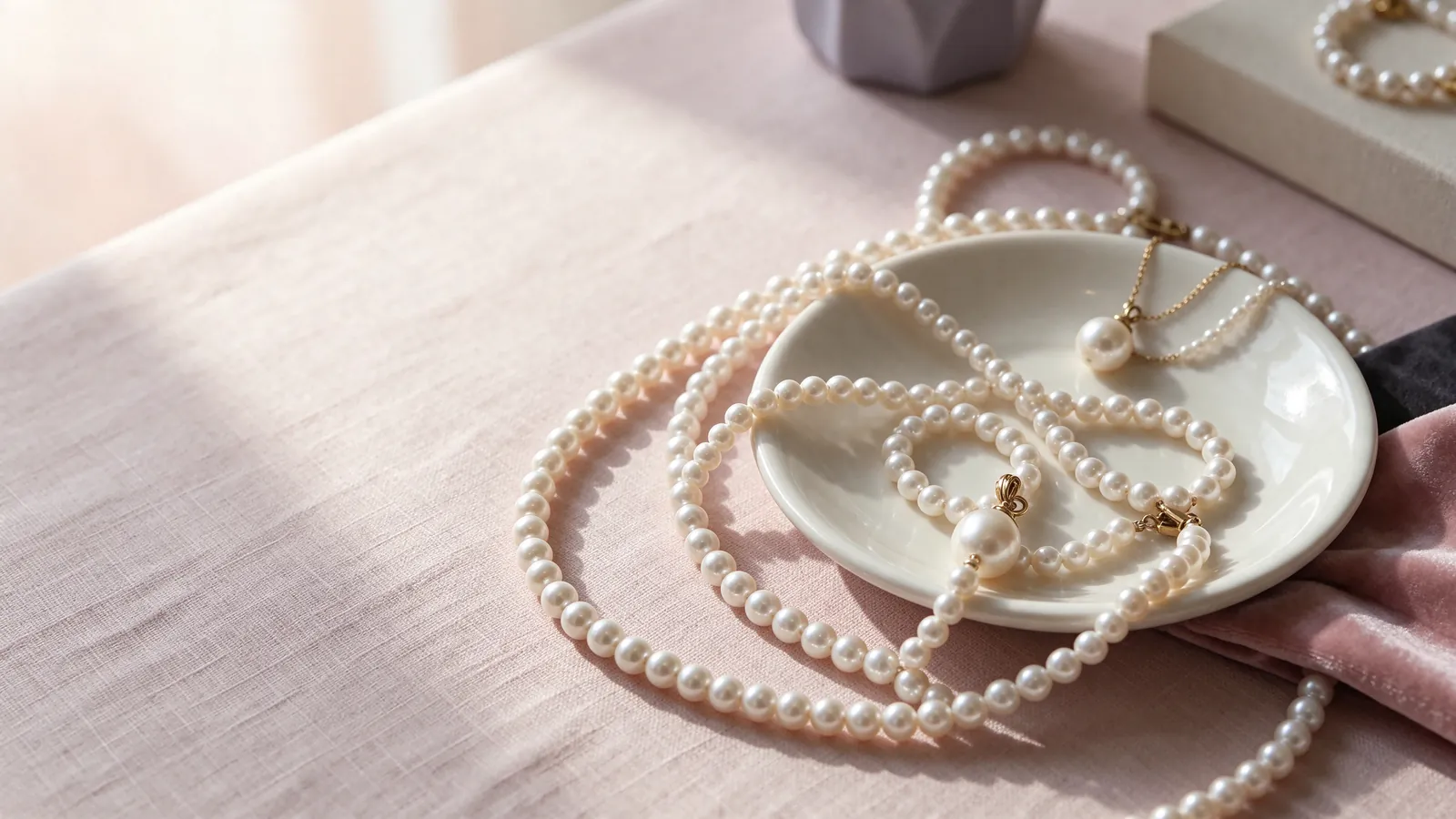
How can length and neckline pairing balance a large pearl necklace, from a large pearl strand necklace to a statement pearl strand necklace? | Flint Jewelry
Begin with the space your neckline creates. A large pearl necklace can form a complete curve inside an open shirt or rest visibly on a smooth top, but a collar that cuts across the pearls may obscure that shape. Decide which placement you want before comparing the largest pearl in different strands. The necklace's relationship to the shirt opening and shoulder line gives you a more useful starting point than an isolated close-up.
Try the same strand with fabrics of different thickness. A plain knit can define the outline clearly, while a substantial collar adds another layer of detail. The pearl necklace length guide helps you compare these resting positions without assuming one length works for everyone. Look at a full-outfit view as well as the neckline: a necklace may be balanced close up yet compete with a pocket, lapel or pattern farther down the outfit.
When trying a large pearl necklace, what should you notice about the drape and movement of a large pearl strand necklace or a statement pearl strand necklace? | Flint Jewelry
Stand naturally and allow the strand to settle without arranging it by hand. Then sit, look down, turn your head and add your usual jacket. Check whether pearls shift into the collar, the center lifts or the clasp moves around the neck. Compare front and side views, and note which action changes the fit. Your everyday movements provide information that a carefully posed photograph cannot.
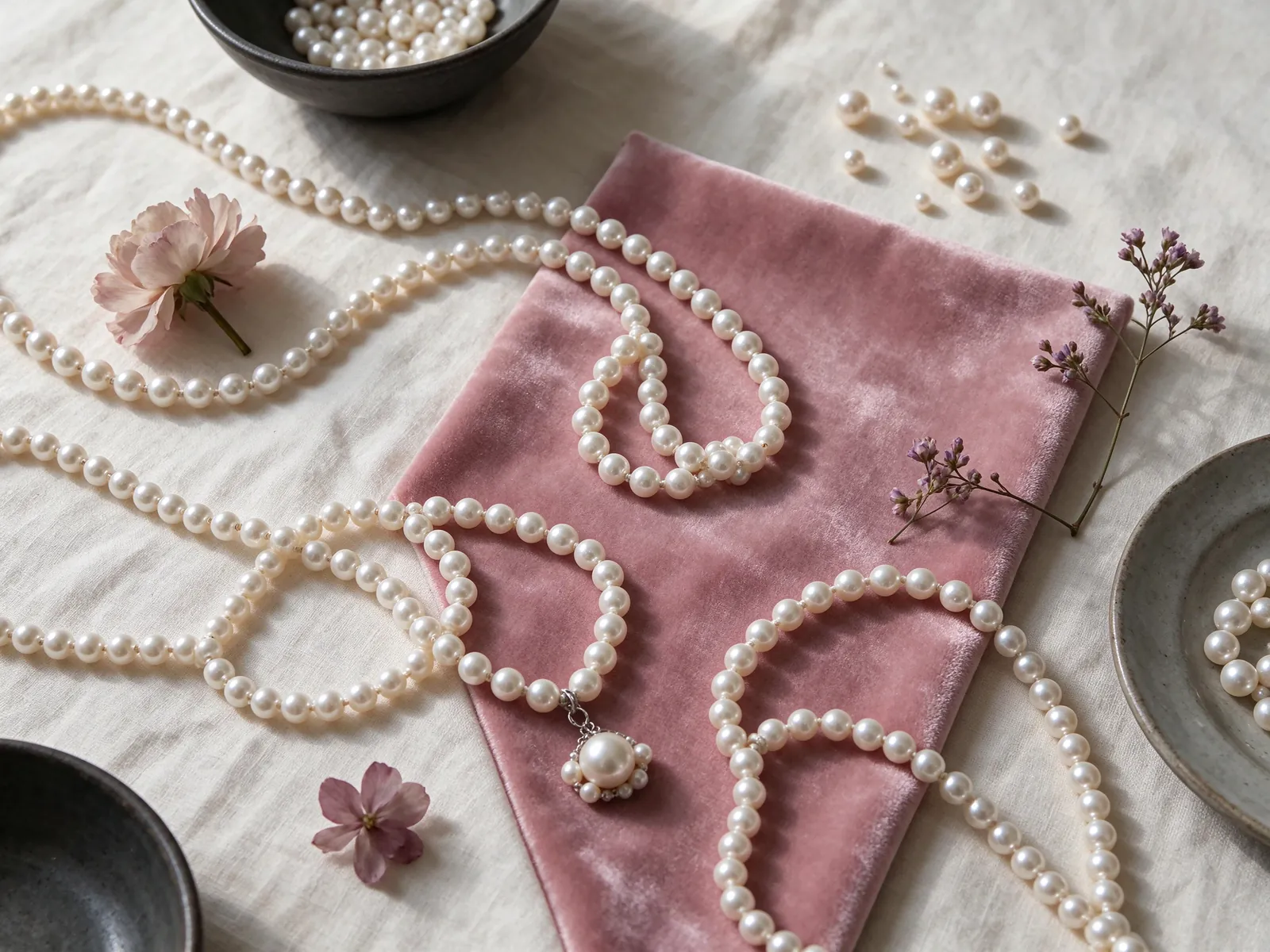
How can you assess the whole strand instead of buying by size alone?
GIA identifies seven pearl value factors: size, shape, color, luster, surface quality, nacre quality and matching. A statement pearl strand necklace deserves attention to all of these, not just its most noticeable dimension. Compare neighboring pearls under similar lighting and look at the definition of reflections. A larger pearl may draw the eye, but size alone does not establish better luster, geographic origin or natural-versus-cultured identity. Not every factor, including nacre quality, can be fully evaluated in a photograph; consider the actual necklace together with information specific to that piece.
Ask whether the layout uses similar-sized pearls throughout or a progression toward the center. An even sequence emphasizes continuity; graduation can concentrate attention in one area. These are different design choices, not an automatic quality ranking. The single strand pearl necklace topic provides a useful starting point for understanding the complete curve. Look at the pearls near the clasp as well as those facing forward, and decide whether the transitions feel intentional and coordinated.
What photographs help you compare matching?
Request a view of the entire strand laid out, one hanging naturally, and closer views of different areas. Each serves a different purpose: overall sequence, drape and surface detail. Avoid comparing brightness in images taken under unrelated lighting. When written information accompanies a necklace, read what it actually describes rather than assuming a grade label explains every pearl or guarantees the appearance of the whole strand.
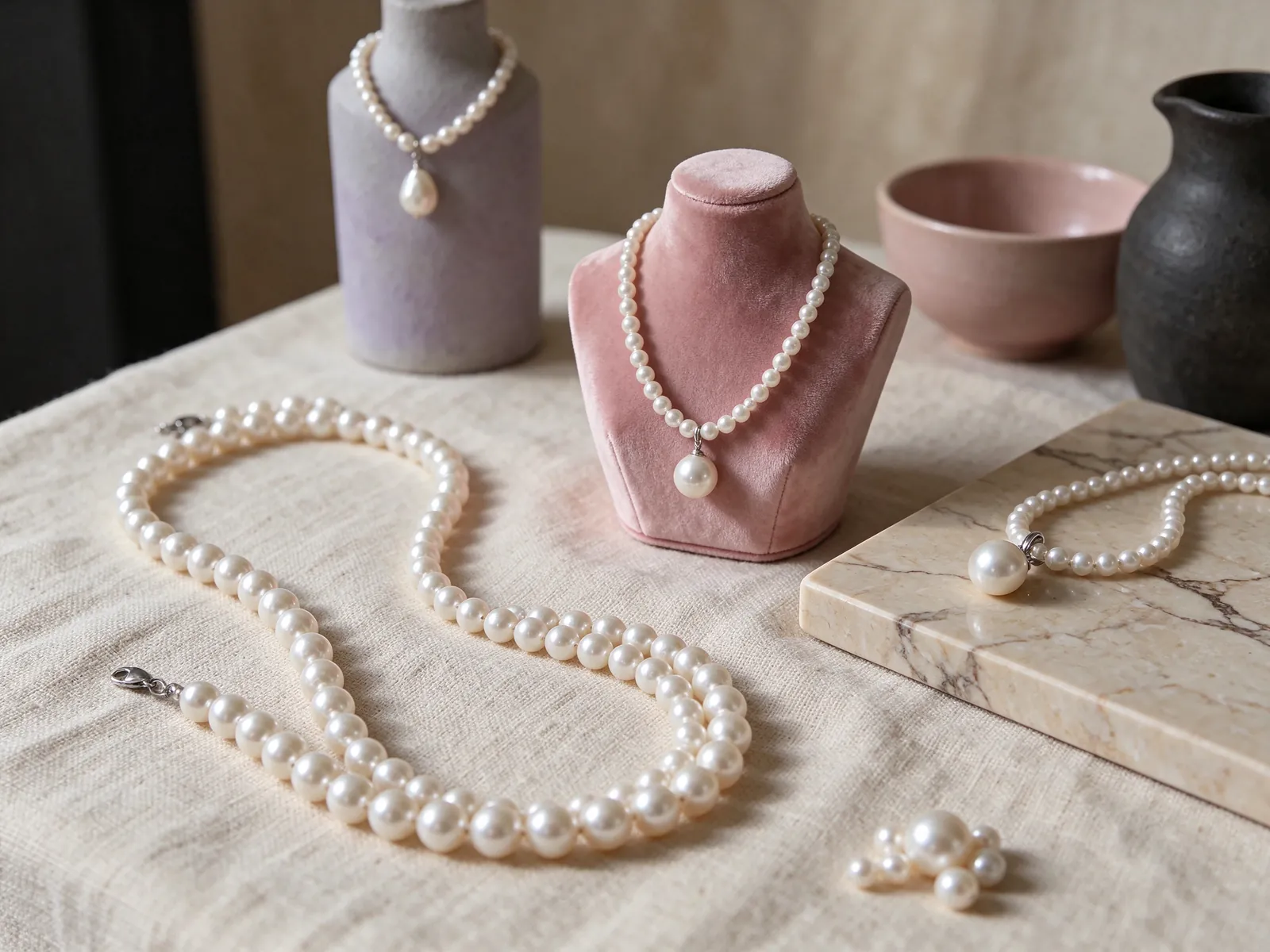
Should your large strand sit near the neck or lower on the chest?
For a close position, look at the room between pearls, neck and clothing rather than relying only on a length measurement. Larger outlines can meet a high collar differently from a fine strand. If you are considering a pearl choker necklace, turn your head and check the side view before deciding. A pleasing close curve does not require pearls to press tightly against the skin, and a stated length cannot predict your personal sense of space.
A lower strand can create a more open curve, but its resting point may coincide with buttons, a zipper or the edge of an outer layer. Compare a matinee pearl necklace while wearing a typical shirt and sweater, not just a fitting top. If your day includes leaning across a desk or folding your arms, test those positions too. Choose the lower placement because it works with your habits, not because it is assumed to improve every silhouette.
How can you make a wardrobe comparison consistent?
Use a plain crew neck, an open shirt and your regular jacket as a small test wardrobe. Note whether the necklace sits on skin, at a fabric edge or fully over the garment. Reset the clasp before each comparison so a twisted strand does not distort the result. When one collar repeatedly pushes a pearl upward, change the neckline before concluding that the necklace's size is unsuitable.
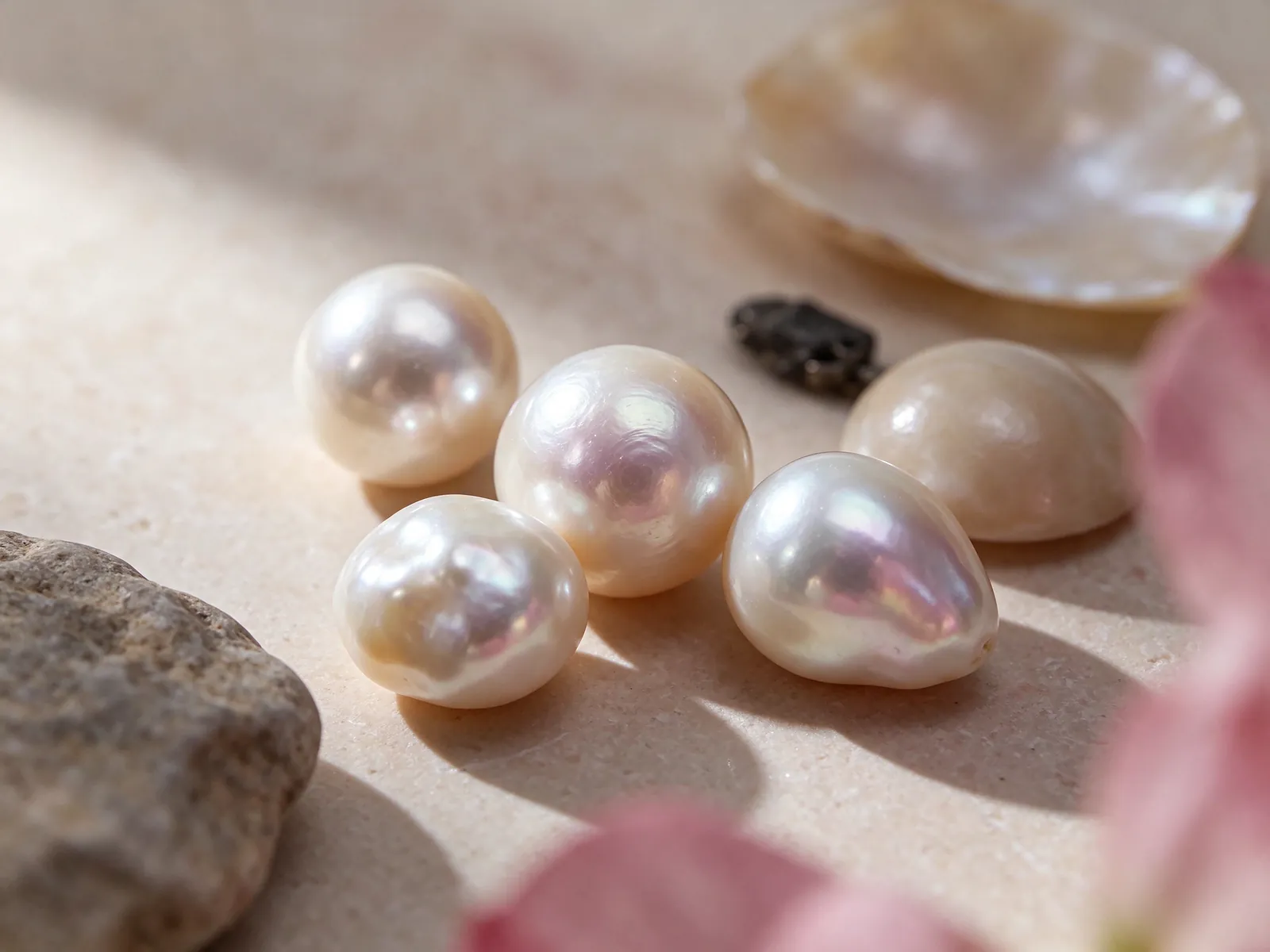
Which shapes and colors support the look you want?
A repeated outline can feel orderly, while a varied silhouette highlights individual pearls and creates a different rhythm. Explore the baroque pearl strand necklace guide if you want to compare shape-led styling with a continuous curve. During fitting, look at any projecting shapes from the side and check their arrangement on both halves. An interesting outline describes a visual effect; it cannot by itself establish species, origin, identity or certification.
You can also use the keshi pearl necklace topic to clarify whether your preference is a regular line or a less uniform outline. Describe that preference in terms of shape, arrangement and overall emphasis rather than naming a pearl type from appearance alone. A large, distinctive silhouette may already supply enough detail. Start with a quiet neckline, then add earrings or other accents only if they help the intended focus instead of competing with it.
How should you compare color against clothing?
View the strand against a simple light background, then beside the colors you wear most. Dark fabric may make the outline easier to see, while prints can distract from the relationship between adjacent pearls. Keep lighting conditions comparable when assessing color and luster. The brightest reflection in one picture is not a substitute for the coordinated appearance of the full necklace in your usual clothing.
How do you style a statement strand without crowding the outfit?
For work, give the necklace a defined role before adding a pin, long earrings or a detailed collar. Large pearls are not restricted to evening clothing, but several strong lines can fill the same small area. Try a small pearl necklace with the same shirt if you want to compare a quieter emphasis. This lets your workplace and personal taste guide the decision, rather than treating one pearl size as a universal dress-code rule.
For an event, a simple neckline can keep the entire curve visible and let the strand become the main accent. If you prefer a fuller composition, a multi strand pearl necklace builds presence through rows rather than the size of a single row's pearls. More rows and larger pearls need not be combined just to make the look stronger. With casual clothing, a smooth sweater or plain shirt can provide a similarly clear background without making the outfit formal.
What changes when you wear your hair up?
With hair pulled back, the side pearls and earrings become more visible; with hair down, attention may concentrate at the center. Compare both views and check whether longer earrings touch the strand when you turn. Decide what should be noticed first, then simplify competing accessories if needed. A coordinated look does not require every piece of jewelry to have the same scale or follow an age-based formula.
What should a hands-on fit and fastening check include?
Visual volume does not tell you the complete strand's weight or how it will feel on your neck. During a fitting, notice pressure at the sides, changes when seated and any interference from your collar. Use the same outfit and movements when comparing alternatives so clothing changes do not confuse the result. Personal comfort must be assessed by the wearer; a necklace that looks relaxed in a photograph may behave differently on you.
Fasten and remove the clasp gently, checking its intended opening method rather than only its decorative surface. Notice whether it closes properly and whether nearby pearls twist together; do not pull the string to bring the clasp ends together. When adding or removing a scarf, outer layer or shoulder bag, check that it does not trap or catch the pearls. If the accessory repeatedly interferes, remove the necklace first instead of deliberately testing a snag. Ease of operation and clear connection points are practical details worth evaluating alongside the strand's front-facing appearance.
What can you ask before choosing online or as a gift?
Ask how the necklace length is measured and whether the clasp is included. Find out if the sizes stay similar or progress toward the center, and request a complete view rather than just a central close-up. These questions help explain proportion but cannot replace a movement check. For gifting, learn the recipient's usual collar styles, preferred level of emphasis and ability to operate the clasp before choosing a bold strand.
How do you protect a large strand between wears?
GIA ranks pearl at 2.5 on the Mohs hardness scale. This concerns scratch resistance, not the amount of tension a necklace can tolerate. Do not assume that a larger pearl is more resistant to abrasion. Wipe pearls after wearing with a very soft, clean cloth, and keep the strand separate from harder jewelry. Lay it out gently so a clasp or other accessory does not press against a pearl surface during storage.
Avoid acids, perfume, hair spray and excessive heat; finish your fragrance and hair routine before adding the necklace. GIA advises never using ultrasonic or steam cleaners on pearls. If a strung necklace has been cleaned with water, its string must dry completely before it is worn. These principles remain relevant regardless of how substantial the pearls look. Care should address the string and connections as well as the surfaces that catch the light.
Which visible changes call for attention?
Before wearing, look between pearls and near the clasp for looseness, wear or a closure that behaves differently. Stop using a necklace if a connection looks compromised and ask an appropriate professional to assess its construction. Pulling the string tighter or applying household cleaners is not a suitable fix. Base any further attention on the actual condition instead of assuming all strands require the same fixed restringing schedule.
Ready to describe the balance you want? Tell Flint Jewelry about your usual collars, preferred resting position and whether an even curve or a varied outline appeals to you. Discuss your styling priorities on WhatsApp: https://wa.me/85260106207 (+85260106207). Start with the clothes and movements that matter to you; there is no need to choose a pearl diameter or grade before asking questions.
| Comparison | What matters | How to test | Outfit implication |
|---|---|---|---|
| Collar and resting point | A clearly visible complete curve | Try an open shirt and a crew neck | Keep the collar from cutting across pearls |
| Whole-strand matching | Color, luster and size transitions | Inspect the center, sides and clasp area | Even and graduated layouts draw attention differently |
| Shape and outline | Continuous rhythm or individual accents | Check projecting shapes from both sides | A quiet neckline makes the silhouette easier to assess |
| Movement and pressure | How the necklace behaves on you | Sit, lean slightly and turn your head | Test with your regular outer layer |
| Fastening and handling | A clasp you can operate and careful storage | Try putting it on and removing it | Watch for catches when adding scarves or bags |
Pearl knowledge and authoritative references
GIA lists seven pearl value factors: size, shape, color, luster, surface quality, nacre quality and matching. Evaluating a large pearl strand therefore requires more than comparing size.
Read the reference for this factFrequently asked questions
Is a large pearl necklace unsuitable for a shorter-looking neck?
Not automatically. Compare the open space around the neckline, the resting position and the side view. Check whether pearls press against the neck or become caught by clothing when you move. Proportion and personal fit are more informative than a simple rule based on neck length.
Should I choose evenly sized pearls or a larger center?
Choose the arrangement that creates the focus you want. An even layout emphasizes continuity; a graduated layout can draw attention toward the center. Inspect both sides and the clasp area as well. Neither arrangement alone establishes better pearl quality.
Why does my open shirt sometimes push a strand upward?
The collar points or fabric edge may meet the pearls when you sit or turn. Fasten the buttons as you normally wear them and repeat those movements. Try another resting position or neckline to distinguish clothing interference from the necklace's own fit.
Does a large pearl's appearance mean the strand will be heavier?
You cannot establish the complete necklace's weight or how it feels from visual size alone. Ask about the actual piece and assess its weight distribution during a fitting. Pay attention to pressure and movement rather than relying on a photograph.
Can a bold strand be cleaned with an ultrasonic jewelry cleaner?
No. GIA advises that pearls should never be cleaned with ultrasonic or steam cleaners. Use a very soft, clean cloth for routine care, avoid perfume and excessive heat, and allow any wetted string to dry completely before wearing.
Updated: