
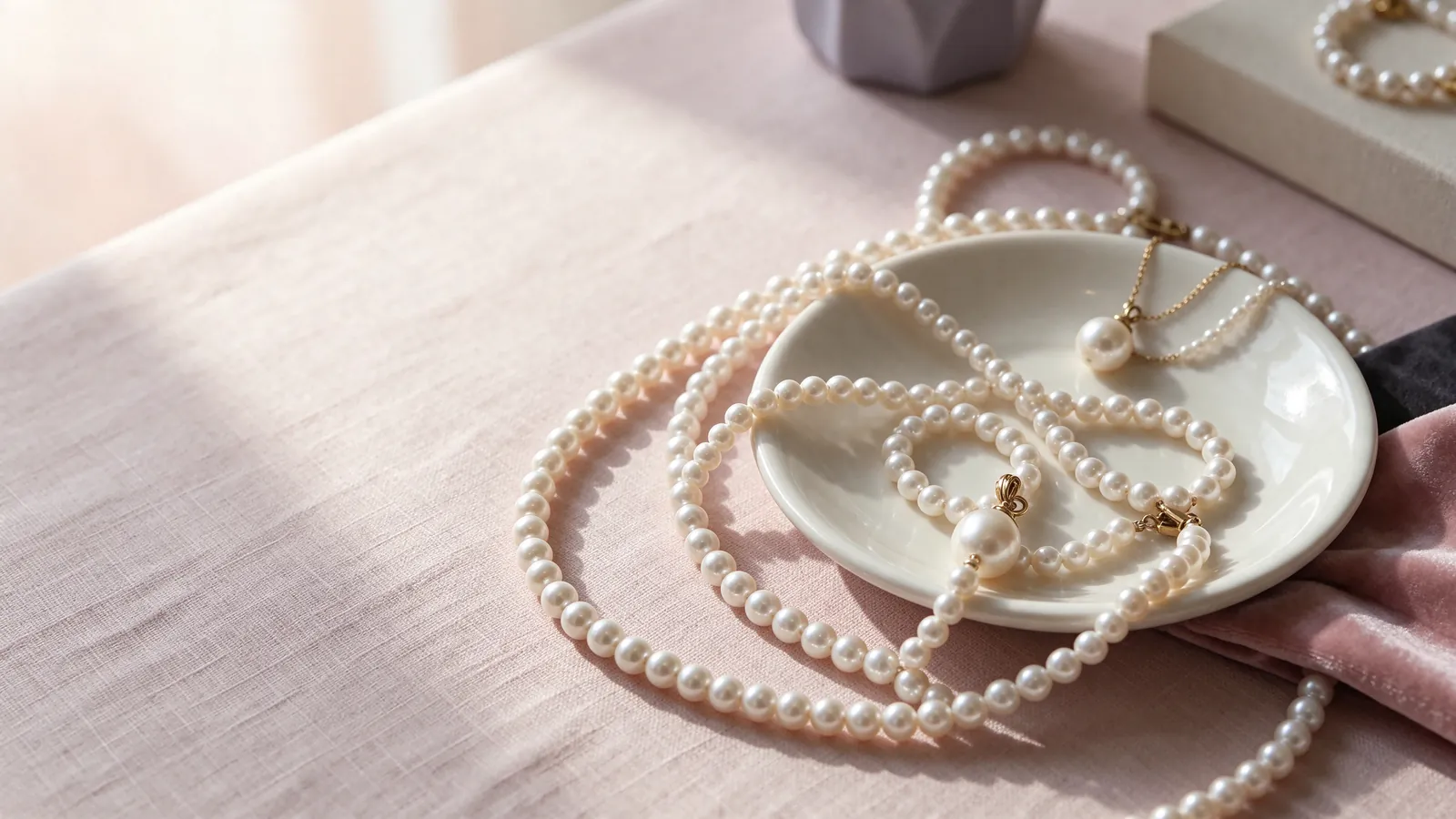
Flint Jewelry guide: how can you assess length and balance in a half chain pearl necklace or half pearl half chain necklace when choosing a pearl and chain necklace style?
The defining appeal of a half chain pearl necklace is the transition from a pearl section to a metal chain section. It can create a side-to-side contrast, a front-and-back arrangement, or a shifting asymmetric line, depending on its construction. The phrase alone cannot establish two exactly equal lengths. Begin by identifying both joins in a complete view, then see where they land on the body. Comparing the result with a single strand pearl necklace makes the change in rhythm easier to understand: continuous pearls repeat one texture, while a joined necklace introduces a second direction.
Overall length matters, but a measurement does not tell the whole styling story. The point where a section changes may be more important than the lowest part of the curve. Use a soft ribbon to explore a possible outline over a favorite shirt, remembering that ribbon cannot imitate jewelry weight or movement. Then compare an actual fitting from the front and side. If the pearls disappear under the collar while the chain remains visible, decide whether that partial view still gives you the look you want.
Flint Jewelry styling questions: how does your neckline frame a half chain pearl necklace or half pearl half chain necklace when building a layered pearl and chain necklace look?
For a half pearl half chain necklace, first choose between an exposed-skin outline and a line displayed over fabric. A crew-neck edge can interrupt the join; a V-neck can place its point beside the same visual feature. Try a different landing point before assuming the necklace needs another layer. When adding to a pearl and chain necklace, give the second line its own space instead of sending its pendant directly into the busiest transition.
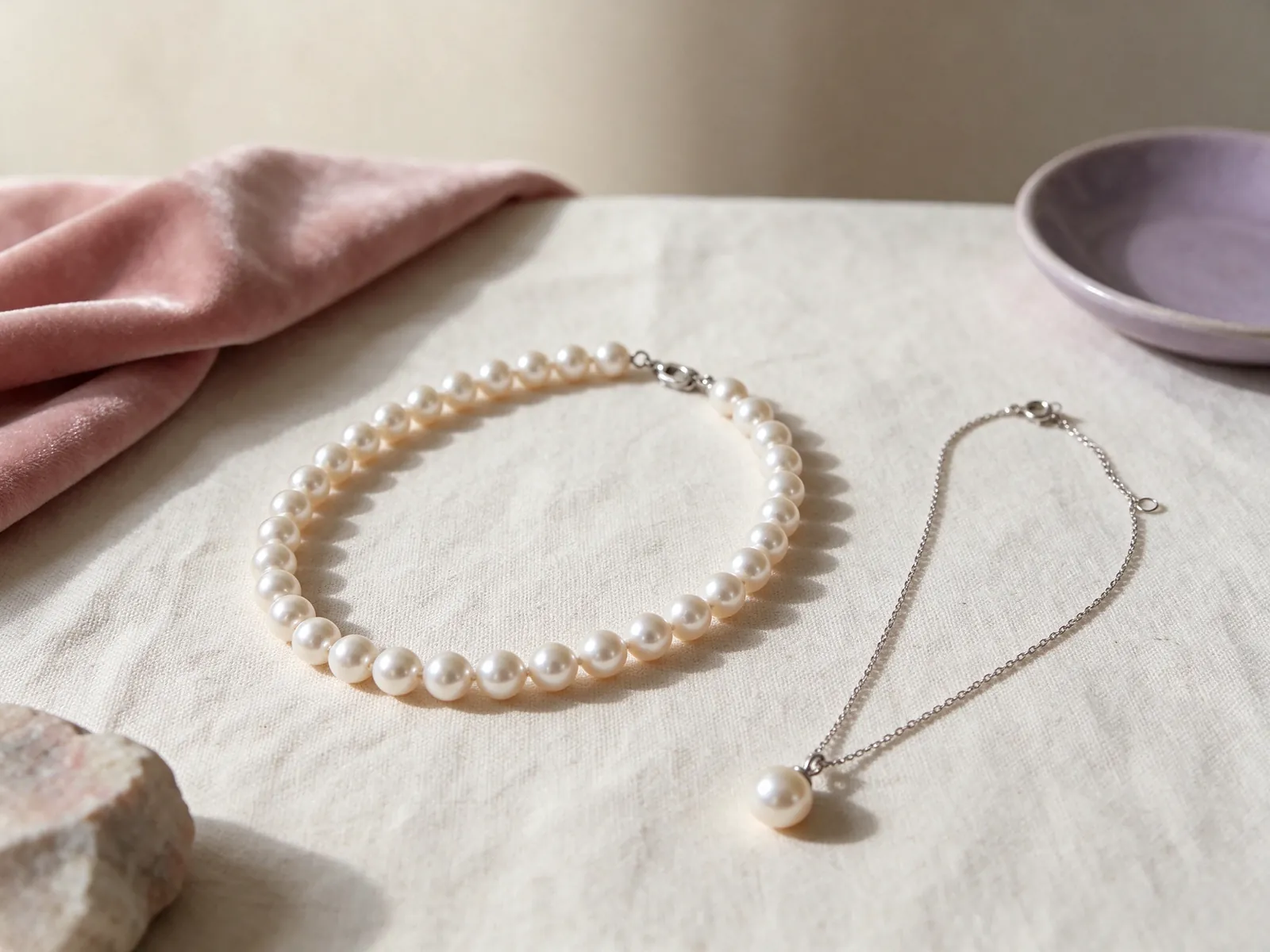
Test the fit beyond the mirror pose
The balanced position you see while standing still may change once you move. Turn your head, take a few natural steps, and sit down before checking the joins again. Look for a section that slips behind the shoulder, a connector caught by a collar, or a clasp that becomes more prominent. Some people enjoy a necklace that shifts into a slightly different asymmetric arrangement. Others prefer a stable focal point. Your fitting should establish which experience the actual piece gives you.
Include the clothes and hair that normally touch the necklace. Fine knitwear, a smooth blouse and a jacket edge can interact differently with open links or raised connectors. Move the piece gently near the fabric and notice any catching without tugging to test strength. Lower your hair for another check if you normally wear it loose. A connector can look unobtrusive in an image yet feel distracting in daily wear, so practical contact deserves its own evaluation.
Check what changes when you sit
A seated view can reveal contact with a button, zipper pull or the edge of a desk. It may also show that the pearl section drops inside the shirt. Use the same outfit and lighting for comparison photos, and identify whether the issue comes from the necklace position or the garment. Adjusting the collar may solve the problem without changing accessories.
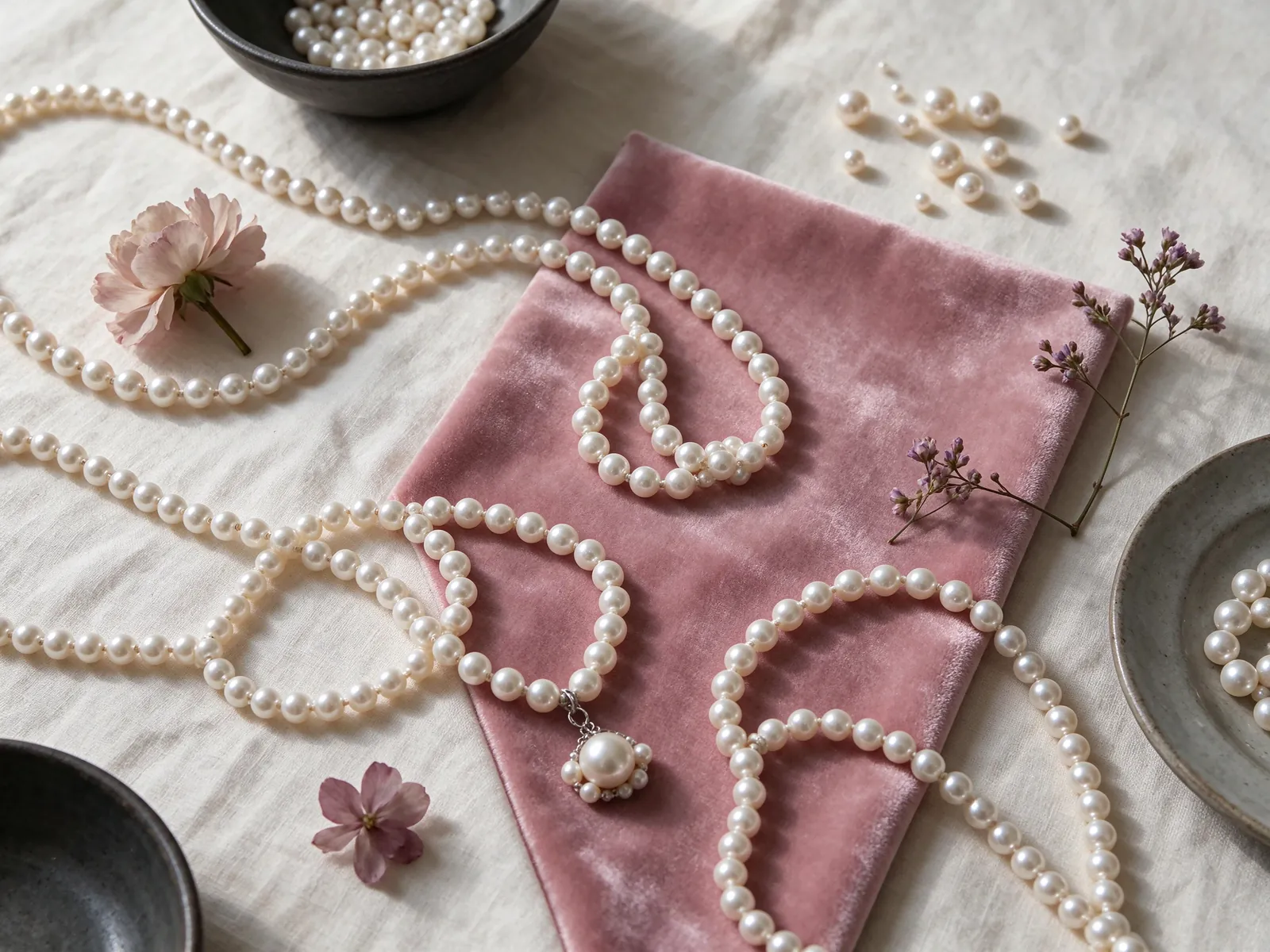
Decide which texture deserves the attention
Equal numbers of pearls and links would not necessarily create equal visual weight. Pearl volume, spacing and reflected light affect the impression of the pearl section; link shape and openness influence the chain. If both have a strong, irregular outline, the combined line may be intentionally expressive or simply busier than you prefer. Compare the entire silhouette before focusing on small details. Ask whether the transition reads clearly and whether one section supports the feature you actually want to emphasize.
Pearl quality is a separate question from the style of the transition. GIA identifies seven pearl value factors: size, shape, color, luster, surface quality, nacre quality and matching. These factors help explain why color alone or a round outline cannot complete a comparison. Matching can shape the rhythm of a pearl section, but deliberate variation may also be a design choice. Do not infer origin, natural-versus-cultured identity or certification from the appearance of a photograph; those are different kinds of information from visual preference.
Remove competing details before judging balance
Try a plain top and simple earrings when evaluating which texture leads. If the pearls become clearer after removing another accessory, the necklace itself may not have been the source of visual clutter. If the chain is your preferred feature, assess whether its direction remains visible rather than hidden by hair. A useful choice is one whose focal point you can describe.
Style for everyday outfits rather than a gender rule
With a button-up shirt, compare the opening you actually wear rather than an unusually low neckline created only for a photograph. Check whether a collar point presses against a join and whether both sections can be recognized. A blazer adds another frame: its lapels may reveal pearls on one side and chain on the other, or cover so much that only disconnected fragments remain. Review the jacket closed and open before deciding how the necklace will work during the day.
A simple T-shirt lets the joined line stand out without requiring a formal outfit. If you prefer a streamlined or gender-neutral approach, the men's pearl necklace guide offers useful collar and placement considerations. The fit is better understood through shoulder line, hairstyle and neckline than through rules assigning pearl size or link weight to a gender. For clothing with asymmetric seams or draping, compare its focal area with the necklace join. Two strong asymmetries can work together, but they should not obscure each other by accident.
Use your most-worn tops for the final comparison
Think about which tops expose skin, which carry a graphic, and which are made of fabric likely to catch on jewelry. Compare those real situations before selecting a necklace for only one event. To shift the same outfit toward evening, change hair or earrings first. An additional necklace is optional, not a requirement for making the half-chain line look finished.
Give every layer a visible purpose
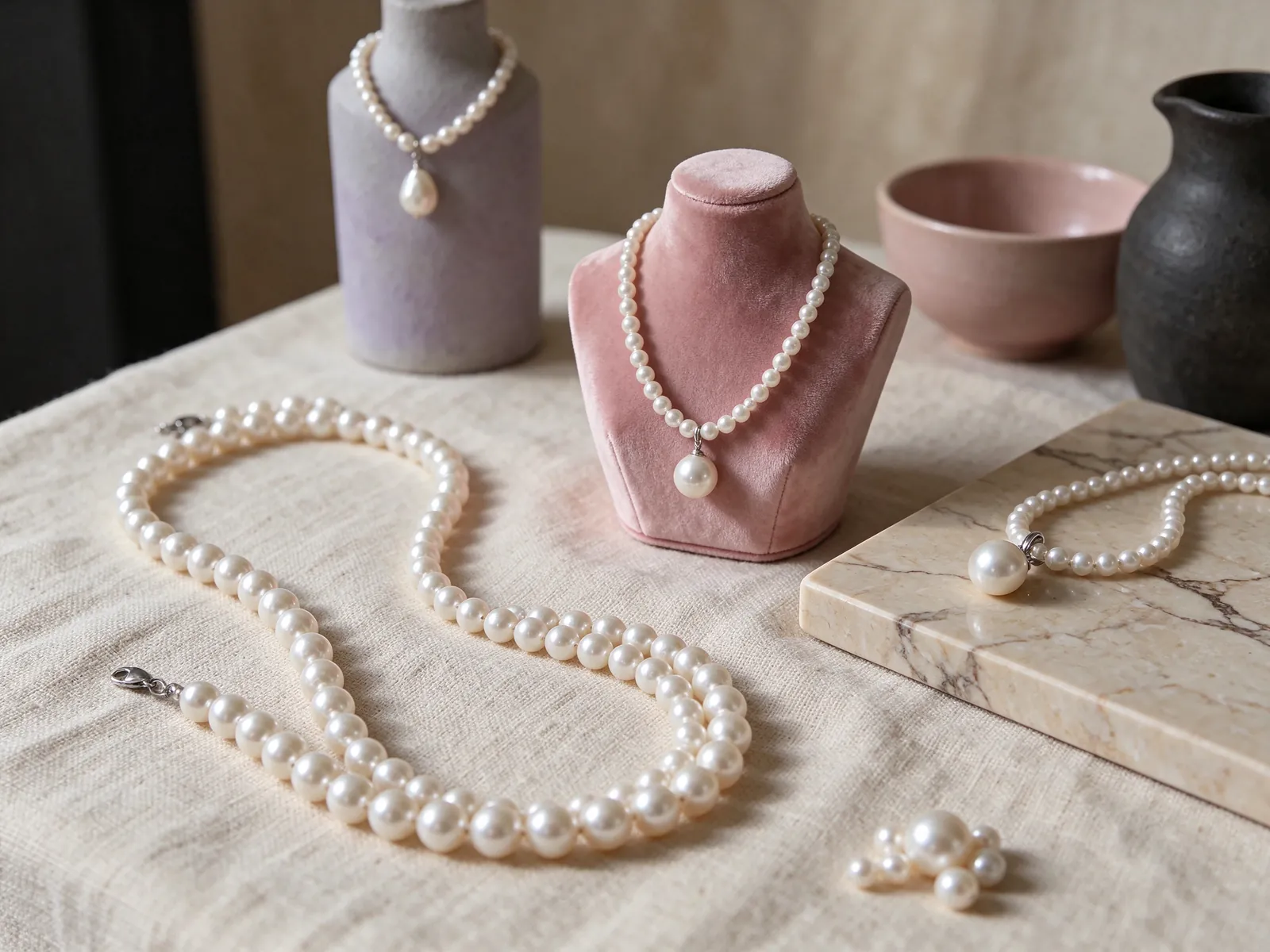
The aim of pearl necklace layering is not simply to fill more space. A half-chain necklace already contains two textures, so consider a second piece that adds a different landing point or a quieter outline. No universal gap works for all necklines, necklace structures and bodies. Test the layers while standing and sitting, then watch what happens as you move. The useful question is whether both lines remain readable and comfortable, not whether they meet a fixed spacing formula.
Add one piece at a time. Another pearl strand may gather close to the original pearl section, while a large pendant may become the new focal point. If that is not your intention, compare a simpler line or wear the half-chain piece alone. Fasten clothing before arranging the necklaces so that a zipper or collar does not pull them out of position. At the end of the day, open each clasp separately rather than trying to pull a tangled stack apart.
Separate the pendant from the transition
Find the join that attracts the most attention, then see where a second pendant rests in relation to it. If both occupy the same place, move to a different layering arrangement or leave out the pendant. Distinct lines need not be symmetrical. When a blouse already has a tie, bow or decorated neckline, a single necklace may provide the clearest result.
Treat the clasp as part of the wearing experience
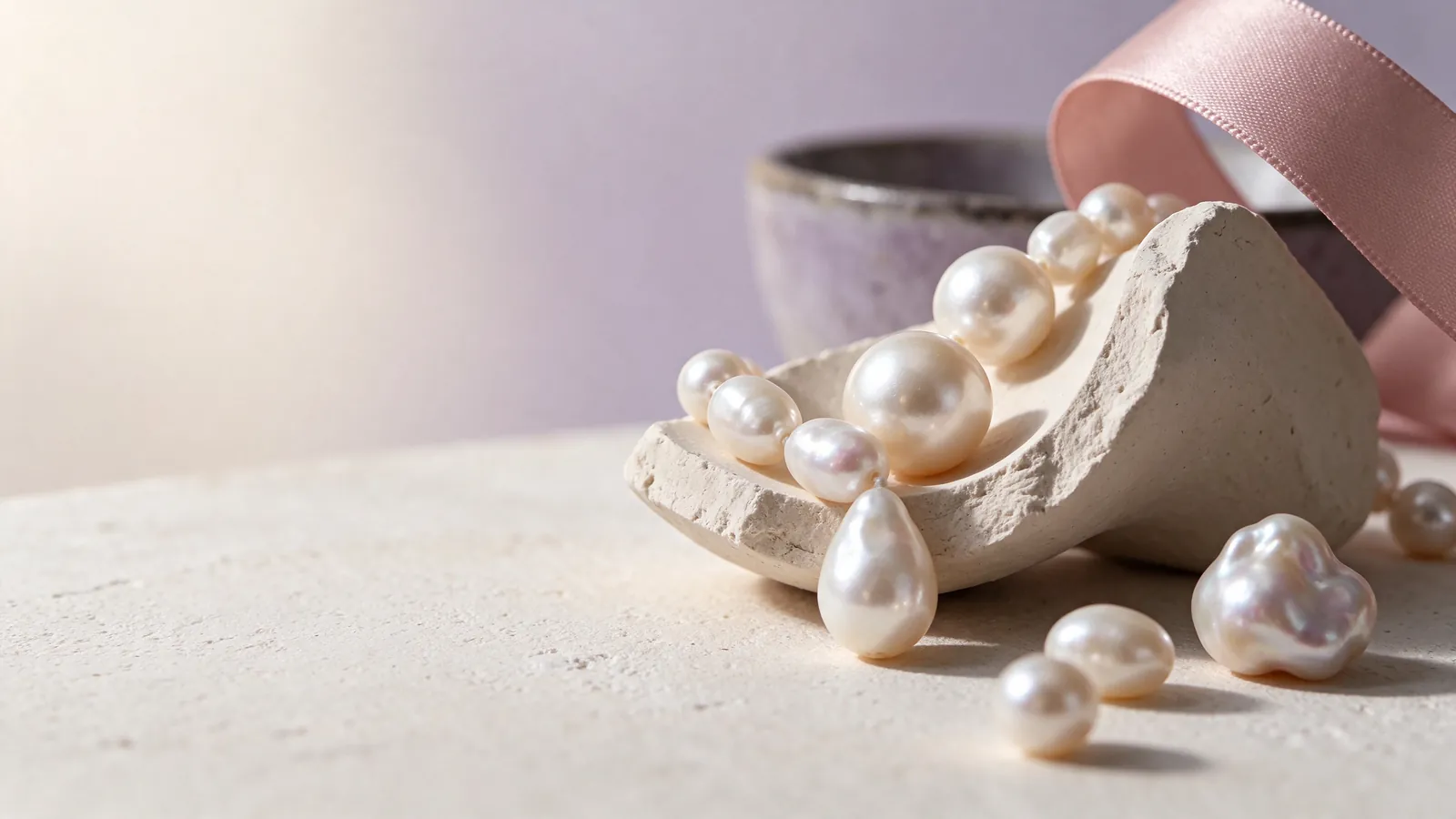
A clasp can be a hidden fastening or a visible part of a design. Reading about a toggle clasp pearl necklace helps illustrate the second possibility, but it does not mean that a connector on another necklace is meant to face forward. Examine the particular opening method and intended orientation. During a fitting, notice whether the clasp turns, presses against you or is difficult to reach. A strong front view should not distract from a fastening you cannot comfortably manage.
A clicker clasp pearl necklace and a ribbon clasp pearl necklace offer different handling questions to compare. They do not establish that a half-chain necklace can adjust in length, wrap around, or separate into other pieces. Ask how the actual fastening closes, where its supporting connections sit and whether direction matters. Try opening and closing it over a soft surface before wearing it, without twisting the mechanism or pulling on the pearl section to bring it closer.
Support the weight before opening
When removing the necklace, gently support the heavier-feeling section before operating the clasp. Check that hair and fabric are free rather than dragging the clasp around the neck. If the mechanism does not operate easily, stop forcing it and examine its direction on a soft surface. Avoid using tools to twist it. Handling comfort is a practical selection criterion, not a minor afterthought.

Clean the mixed design with the pearls in mind
A metal chain does not make the attached pearls suitable for ordinary chain-cleaning methods. GIA ranks pearl at 2.5 on the Mohs hardness scale and states that pearls should never be cleaned in ultrasonic or steam cleaners. That number is not a forecast of how long a necklace will last. It is a useful reminder to limit abrasion and protect the pearl surface. For routine care after wearing, use a very soft, clean cloth and avoid acids, perfume, hair spray and excessive heat.
Give the two sections room in storage. Do not wind links tightly around pearls or press the joins under a box lid. A soft-lined space also keeps the necklace away from jewelry with hard edges. GIA advises that a string cleaned with water must dry completely before the pearls are worn again; checking only the chain is not enough. If a connection develops visible looseness or a new pulling sensation, stop wearing the piece rather than allowing movement to keep loading that point.
Finish with a realistic wearing checklist
Choose with your routine in view: does the design show against your usual neckline, remain comfortable after movement and have a clasp you can manage gently? If layering is part of the plan, consider whether you will separate and store each piece carefully. A half-chain necklace can make a complete statement on its own. Its value as a style lies in the relationship between its sections, not in adding as much decoration as possible.
If the transition point is still difficult to place, describe your most-worn neckline, the texture you want to emphasize and the clasp questions that matter to you. Discuss necklace styling with Flint Jewelry on WhatsApp. A familiar outfit gives the conversation a useful starting point without relying on the style name to describe every detail.
| Decision | What to observe | Outfit consideration | Try this |
|---|---|---|---|
| Section layout | Locate both joins rather than assuming equal halves | Can you see both textures? | Compare complete and worn views |
| Neckline position | Check the curve and its transition points | Avoid an unintended clash with the collar edge | Stand, then sit |
| Focal texture | Consider pearl volume and link openness | Reduce competing accessories | Use a plain top for comparison |
| Layer separation | Look for contact between pendant and join | A decorated neckline may need only one piece | Add each layer separately |
| Fastening comfort | Understand the clasp direction and contact points | Check hair, lapels and delicate fabric | Support the sections when opening |
Pearl knowledge and authoritative references
GIA lists pearl at 2.5 on the Mohs hardness scale. This is a relevant care consideration for a joined pearl-and-chain design: protecting the pearls remains necessary even when part of the necklace is metal.
Read the reference for this factFrequently asked questions
Can I tell the section ratio from a front photo?
Not reliably. Part of either section may be hidden behind the neck or under clothing. Look at the complete necklace and both joins as well as the worn view. The style name does not promise an exact equal split.
Why does the necklace look different after I move?
Movement can change where the sections and clasp rest. Check whether that changing line suits your preference or causes catching and discomfort. A fitting that includes turning, walking and sitting is more useful than judging a single still position.
Do I need another necklace to complete the look?
No. The pearl and chain sections already provide a texture contrast. Start with the piece alone, particularly if the neckline has a bow or decorative detail. Add another line only if it introduces a clear purpose without hiding the join.
Does a visible connector mean I can wear the clasp in front?
Not necessarily. A connector and a fastening may have different functions. Follow the intended wearing method for the particular necklace and compare its handling and orientation instead of inventing a new configuration from appearance alone.
What if the chain is dry but the pearl string was washed?
Wait until the string is completely dry before wearing, as GIA advises for strung pearls cleaned with water. The chain's appearance cannot tell you the condition of the string. Do not substitute ultrasonic or steam cleaning; GIA excludes those methods for pearls.
Updated: