
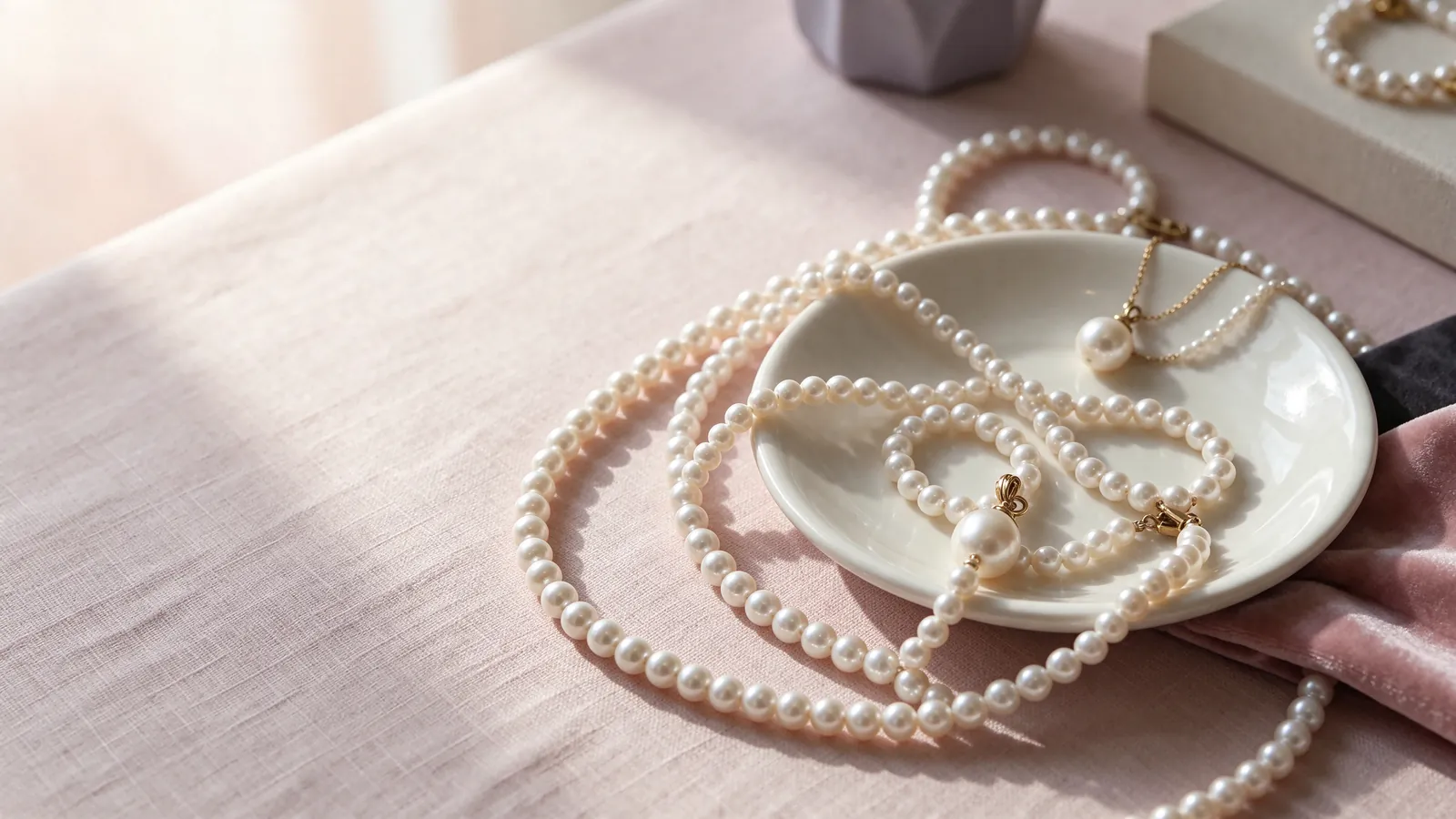
Choosing a men's pearl necklace length: how a pearl necklace for men sits at the neckline, from a pendant to a mens pearl strand necklace | Flint Jewelry
A familiar T-shirt is a useful first backdrop because it lets you compare the necklace without inventing a new outfit. Decide whether the pearl line should appear above the neckline or lie against the shirt. A soft cord can help you outline a position you like, but it does not imitate a finished piece's weight or movement. Treat it as a way to express a preference, not a guaranteed fit. The pearl necklace length guide offers a useful way to separate the listed length from the actual resting point. Use that distinction to describe what you want visible rather than choosing by another person's photograph alone.
Do not assume that a necklace length shown on another person will reach the same place on you. Neck circumference, shoulder shape and the shirt's cut all affect the visual relationship. During a fitting, sit down, turn and look down as well as facing the mirror. Notice whether the neckline covers the pearls or pushes them into another position. A necklace that needs repeated adjusting may not deliver the easy everyday effect you wanted.
Above or below a T-shirt neckline: where does a men's pearl necklace sit, and how does a mens pearl strand necklace shape the look of a pearl necklace for men? | Flint Jewelry
Above the neckline, pearls become part of the visible outline around your neck. Below it, they interact with the shirt's fabric, print or texture. Check a pendant's central point against any graphic; for a strand, check the whole curve rather than only its lowest point. Neither placement is a universal answer. Choose the amount you want visible and test it with the shirt sitting naturally, not pulled into a pose that you would not maintain during the day.
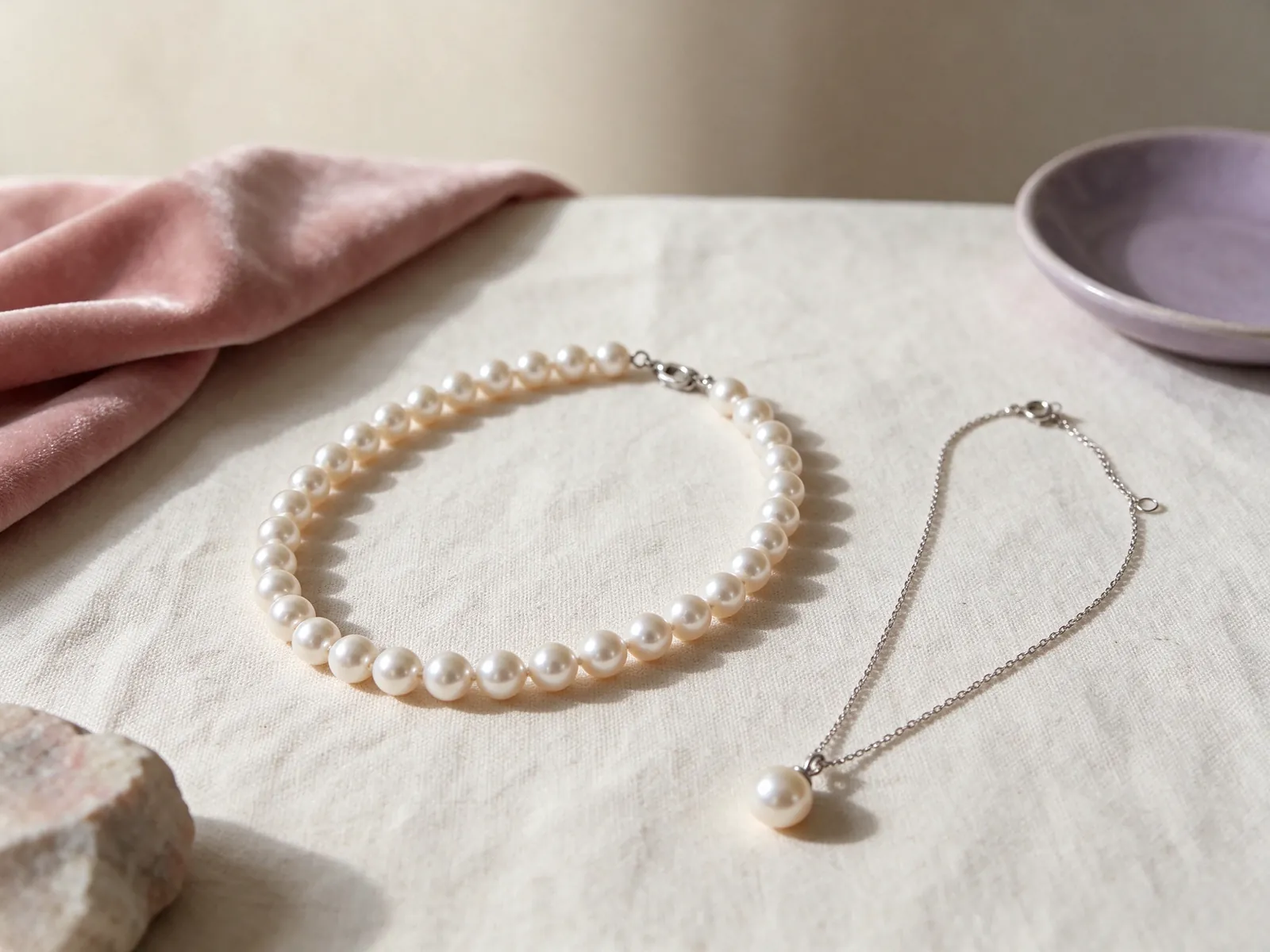
Decide between a focal point and a continuous outline
A pearl pendant can act as a small point of interest while a strand makes the pearl arrangement more central to the outfit. The single strand pearl necklace guide helps you examine that continuous line. For a fair comparison, keep your top and neckline the same and ask which effect feels more like you. A striking photograph may depend on the entire outfit, so separate the necklace's structure from the surrounding styling.
A half chain pearl necklace introduces a different composition, placing pearl and chain lines in distinct areas. Instead of asking whether it is more masculine, consider whether you enjoy that change in rhythm. Watch where the division rests and how it shifts as you move. If only one carefully centered arrangement appeals to you, compare how comfortably you can maintain it before deciding that the design fits your routine.
Keep the comparison simple before adding accessories
Start with a central accent, a full curve or a divided line; then explore the color relationship and finer details. Changing every feature at once makes it harder to identify what you actually like. If your goal is a subtle detail that sometimes shows beneath an open button-down, say so. If you want pearls to be the first thing someone notices, that is a different brief, not a better or worse one.
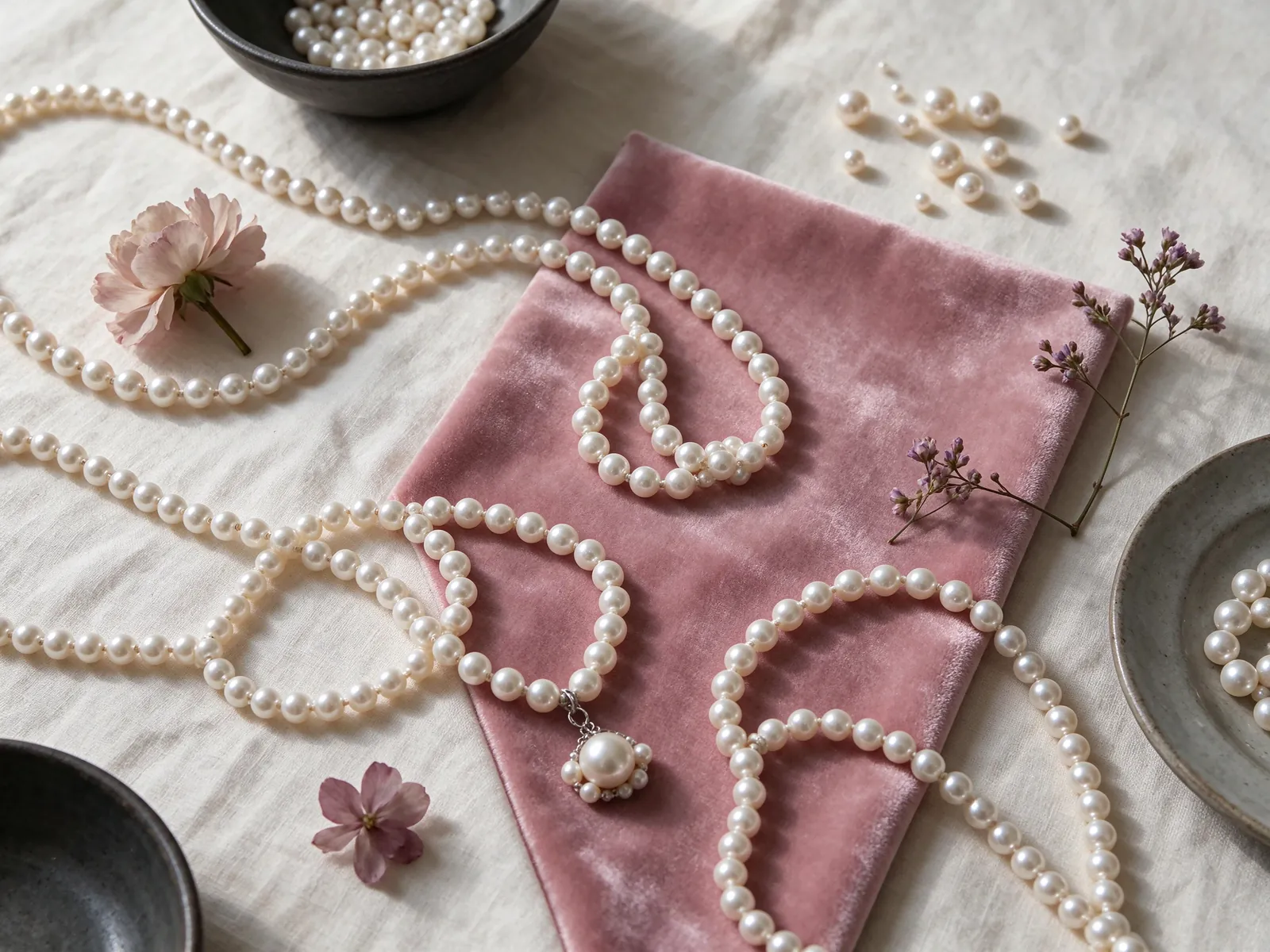
Look beyond diameter to color, luster and arrangement
Try the necklace beside a light shirt and a dark shirt you own. The contrast with each fabric can matter as much to your styling choice as the pearl's color itself. View reflections from more than one angle rather than relying on a single brightly lit image. With a patterned top, check whether the pearl line remains easy to distinguish or competes with the print for attention.
GIA identifies seven pearl quality factors: size, shape, color, luster, surface quality, nacre quality and matching. The list gives you a broader way to evaluate a piece than judging only its diameter or roundness. In a strand, look at how neighboring pearls relate to each other. In a pendant, look closely at the individual pearl from its wearing position. Gender does not determine the pearl size or species a person should prefer. Matching concerns the relationship between pearls in jewelry with more than one pearl; for an individual pendant, focus on the pearl itself rather than applying a strand-wide comparison.
Use shape as a styling choice, not a shortcut to identity
Consistent outlines can create a regular rhythm, while irregular shapes can add contrast to a simple outfit. Both can work with casual clothes or tailoring when their arrangement suits your preference. An unusual outline is not automatically a lower-quality choice, and a round pearl does not establish a superior piece by itself. Shape and color also cannot prove origin, natural or cultured identity, or certification; those questions are separate from the look you enjoy.
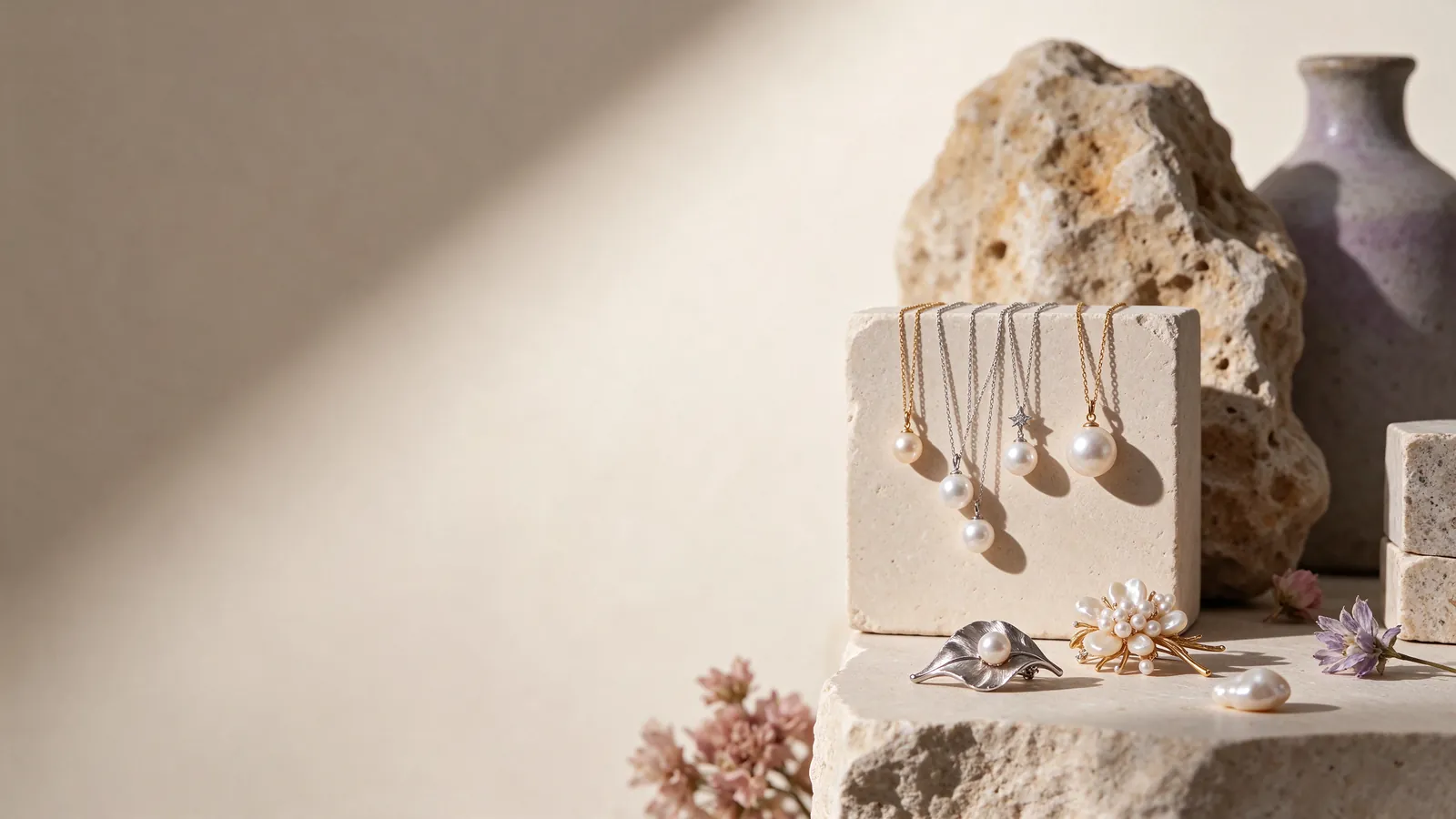
Make the necklace work with your everyday wardrobe
Compare a plain tee, a button-down and a sweater before planning a special-occasion look. On a graphic T-shirt, a pendant may land directly over printed text; on a sweater, texture can change how clearly you see the pearls. On a button-down, the central button line adds another visual feature. You are choosing how these elements work together, not deciding whether one category of clothing is allowed with pearls.
For a blazer or jacket, check the neckline with the garment both open and fastened. If you also wear a tie or pocket square, decide which element should lead. Compare pearls within the collar opening with a line against the shirt, and notice whether the lapels obscure either position. This helps clarify what you want without assuming that formal clothes require one particular type of jewelry or a prescribed amount of pearl.
Look at the full outfit, not just a cropped necklace photo
After inspecting the piece up close, step back and consider the shirt's volume and the jacket's shoulder line. A strand that dominates a close-up may read as a small detail in the full silhouette. A pendant can be unexpectedly prominent against plain fabric. If you want one necklace to accompany several familiar outfits, compare those outfits directly rather than assuming the most appealing cropped image predicts every wearing situation.
Give layered pieces distinct space and watch where they touch
For pearl necklace layering, deliberately compare the lines rather than simply adding more pieces. Check whether each necklace remains distinguishable after you turn or sit down. Different listed lengths alone cannot tell you where their curves and pendants will meet on your body. You do not need a fixed separation: you need a combination that keeps the focal points you like without frequent rearranging.
Start with jewelry you already wear and notice which elements occupy the same area. A hard-edged pendant or clasp repeatedly touching a pearl is also a care concern, not just a crowded look. If the pairing keeps shifting into an arrangement you dislike, wear the pieces separately or try another combination. Adding a necklace is optional; a clear single line can already give the outfit the emphasis you want.
Separate layers are different from a multi-strand design
Independent necklaces let you remove one layer and change the mix. A multi strand pearl necklace presents several lines within one composition. Consider which kind of flexibility matters to you before choosing a fuller outline. Examine the sides and fastening area, then check how the piece rests when seated. A multi-layer look is one styling direction, not a requirement for an outfit to feel complete or intentional.
Choose a personal style instead of a rule about masculinity
A pearl necklace for men can express personal style without defining who may wear pearls. Put your own preference ahead of a prescribed masculine look. Describe your goal with words that say something concrete: minimal, relaxed, clean-lined or contrasting. Add the necklines and clothes you already enjoy, so the discussion stays connected to your actual wardrobe. The useful question is how you want the necklace to look and feel in daily life, not whether you fit a fixed style category.
It is equally helpful to describe what feels wrong. A necklace may vanish beneath a collar, collide visually with a graphic or feel distracting at its resting point. Identify that specific issue before changing the pearl size or choosing a more elaborate structure. Moving through fit, visual rhythm and color one at a time makes the decision easier to understand and avoids turning an uncertain preference into a gender-based rule.
Buying a gift? Ask how the recipient already wears necklaces
A recipient's habits are a stronger starting point than assumptions about men as a group. Find out whether they wear necklaces at all, keep them under a shirt or prefer a visible accessory. If you can compare ideas together, use their everyday tops and preferred resting positions. If the gift is a surprise, avoid treating height or a social-media photo as a measurement that determines which pearl diameter they will enjoy.
Plan gentle care alongside the way you wear it
GIA ranks pearl at 2.5 on the Mohs hardness scale, so surface contact deserves attention. Keep the necklace separate from hard-edged accessories and loose objects in storage rather than dropping it into a pocket with keys. When wearing decorated clothing, check whether an ornament repeatedly touches the pearls. Choosing another position or pairing can make the daily routine more practical without changing your overall styling preference.
Use a very soft, clean cloth after wearing. GIA advises keeping pearls away from acids, perfume, hair spray and excessive heat, and never using ultrasonic or steam cleaners. If a strung necklace is cleaned with water, the string must be fully dry before wearing again. Avoid trying to speed that up with high heat. These are pearl care considerations, not special instructions that change according to who wears the necklace.
A fitting is also a chance to check how you handle the piece
Notice whether the fastening is comfortable for you to operate and whether the string or connections show visible wear or looseness. Do not pull hard on the pearls as a test. If the necklace causes discomfort, remove it and consider position, weight or contact with clothing. No pearl necklace should be treated as a universal guarantee against reactions. The right styling choice also needs to fit your handling and care habits.
Want to explore a direction that fits your own wardrobe? Contact Flint Jewelry on WhatsApp (+85260106207) and share your everyday tops, how much pearl you want visible and any necklace placement that bothers you. You can begin without deciding between a pendant and a strand. Talking through your clothes and wearing habits first gives the conversation a practical starting point before you compare the visual effect and handling details.
| Everyday outfit | Desired focal point | Structure to explore | What to check in motion | Question to settle first |
|---|---|---|---|---|
| Plain crew-neck tee | A point or an outline | Pendant versus strand | Pearls above the collar or against fabric | How much visibility feels right |
| Button-down worn open | The collar opening | Pendant or continuous curve | Whether pearls slip out of view | Your normal button setting |
| Blazer or jacket | Neck or lapel | Necklace and brooch placement | The effect with the jacket fastened | Which accessory leads the outfit |
| Another necklace already worn | Readable layers | Independent pieces or multi-strand design | Overlap and repeated hard-edge contact | Whether layers need to work separately |
| A contrasting, asymmetric look | Alternating pearl and chain areas | Half-chain composition | The division's changing resting point | Whether you like its natural movement |
Pearl knowledge and authoritative references
GIA lists seven pearl quality factors: size, shape, color, luster, surface quality, nacre quality and matching. Comparing a men's pearl necklace therefore involves more than diameter or roundness.
Read the reference for this factFrequently asked questions
Should pearls sit above my T-shirt collar or on the shirt?
Both are styling options. Above the collar they outline the neck; on the shirt they interact with its color, texture or graphic. Test the shirt in its normal position and check the full curve or pendant after movement, then choose the visibility you prefer.
Is a pendant an easier first choice than a mens pearl strand necklace?
A pendant gives one focal point, while a strand creates a continuous line. Which feels easier depends on your clothes and how much pearl you want visible. Compare them against a familiar plain top instead of treating either as a required beginner style.
Do irregular pearl shapes work with a blazer?
They can offer contrast against tailoring, just as consistent shapes can create a regular rhythm. Check the arrangement with your actual jacket. Irregularity alone does not establish lower quality, and shape does not prove pearl origin or natural-versus-cultured identity.
How do I choose a pearl necklace for men as a gift without guessing size?
Start with the recipient's habits: whether they wear necklaces, prefer them visible and usually choose tees or collared shirts. Discuss a preferred resting position if possible. Gender and height do not establish a pearl diameter, and a photograph is not a fit measurement.
Can I use an ultrasonic cleaner on a pearl necklace?
No. GIA advises never using ultrasonic or steam cleaners for pearls. Use a very soft, clean cloth for routine after-wear care. If a strung piece is cleaned with water, wait until the string is completely dry before wearing it again.
Updated: