
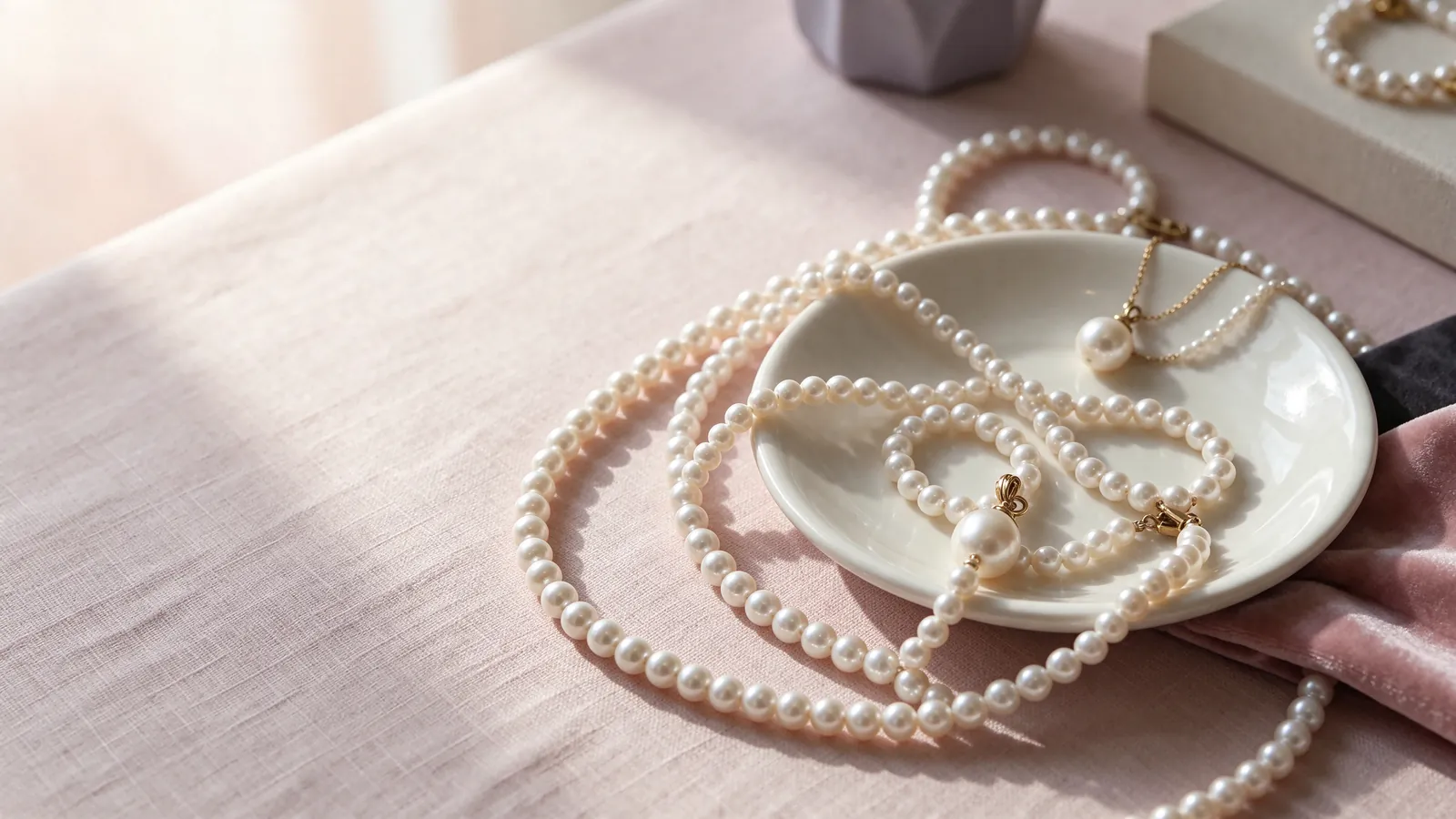
Flint Jewelry: How does length affect a single strand pearl necklace and the classic pearl necklace look of a pearl strand necklace?
Think about where you want the curve to appear before choosing a length label. A single strand pearl necklace can occupy the open area of a shirt, leave space above a crew neckline or rest on a smooth section of fabric. The right position is a relationship between the necklace and the garment, not a universal rule. If the pearls land exactly on the fabric edge, they may slip back and forth as you move. To talk through your preferred proportions with Flint Jewelry, share your usual neckline and the position you have in mind on WhatsApp at https://wa.me/85260106207.
A soft cord can help you map that preferred curve. Mark the lowest point and measure the path, while remembering that cord cannot reproduce the volume or weight of a pearl strand necklace. Ask whether an actual necklace's stated length includes its clasp. Pearls with different outlines and physical volume can change how a row fits, even at the same listed length, so use the measurement to narrow your comparison rather than settle it.
Flint Jewelry: When trying on a single strand pearl necklace, where should a pearl strand necklace rest to suit your neckline and classic pearl necklace styling?
Wear the neckline you expect to use, then sit, turn your head and add a jacket. Check whether the pearls press near your throat, disappear under fabric or catch beneath a collar point. Open a button if that is how you usually dress, and compare again. For a classic pearl necklace look, prioritize a visible, balanced curve that remains comfortable through those ordinary actions rather than a position that works only for a still photograph.
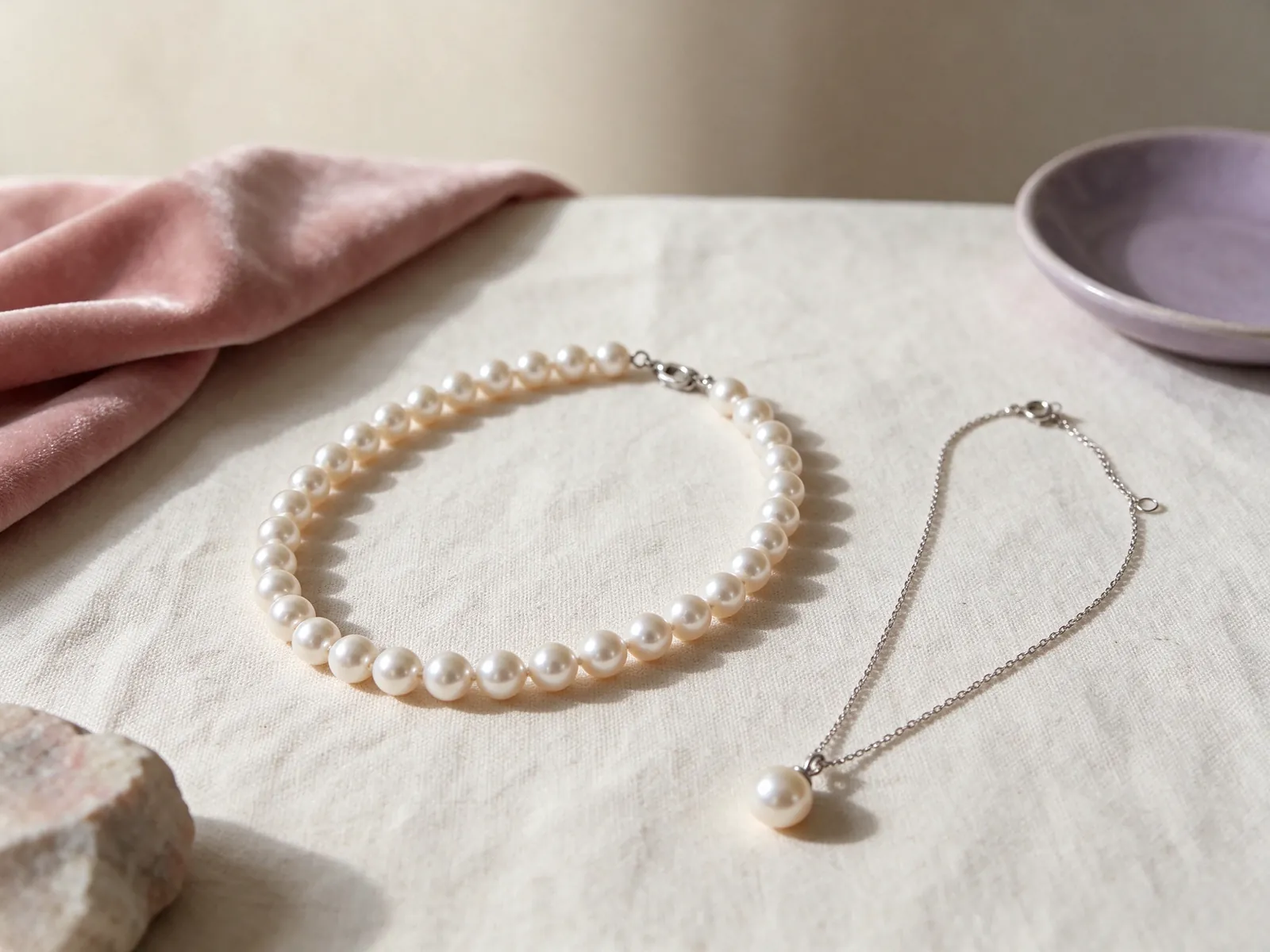
Choose between a flowing outline and a central accent
The distinction between a strand and a pendant is useful when you are deciding how much of the neckline to frame. A full strand makes pearls the main continuous line, while a single pendant generally draws the eye to a particular point. Ask whether you want attention to travel around the curve or gather at the center. Either approach can suit a relaxed outfit or a dressier one; the garment and its existing details matter more than that simple category.
A single row does not require every pearl to have an identical appearance. Visually similar sizes can give the curve an even pace, while a gradual change toward the center can build emphasis at the front. Notice how the transitions work rather than focusing on one standout pearl. Small details such as knots, clasp position and clothing patterns also influence the finished outline. Assess the necklace as a complete arrangement before deciding whether its central area is right for you.
Build the outfit in stages so you can see what changes
Try the strand without another necklace first, then add your regular earrings. If the combined effect feels busy, simplify the neckline before assuming the strand is too dressy. To compare other ways of placing a pearl accent, explore Pearl Jewelry and consider the area you want to emphasize. Separating the neck-level outline from an ear-level or pendant accent makes your preference easier to describe.
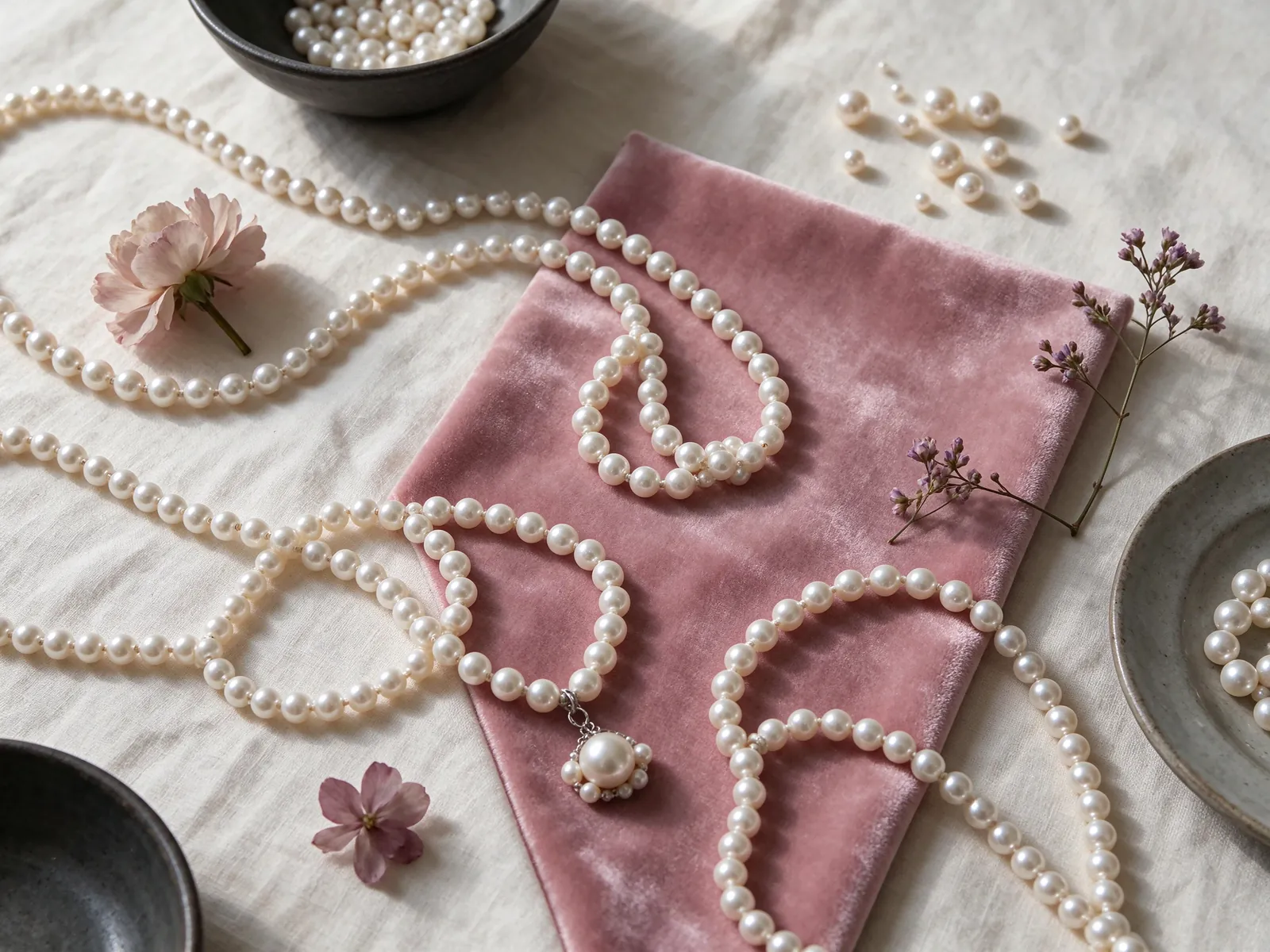
Assess shape and spacing across the complete strand
Stand back far enough to see the full curve, then examine individual pearls. Watch the change in outlines from the middle to the sides and whether the spacing supports a coherent row. A photograph taken close to one pearl can emphasize that area through perspective or light. A regular rhythm and a more varied rhythm can both be intentional style choices; a round outline alone neither establishes pearl identity nor answers every question about quality.
For further reading, the Akoya pearl necklace and freshwater pearl necklace guides let you separate type-related questions from the arrangement you prefer. Do not assume that two similar-looking rows share an origin, natural or cultured identity, or treatment status. Those details belong to the particular pearls and their descriptions or documents. Start this style comparison with the curve, visual density and shape transitions, then investigate the pearl information as a separate part of the decision.
Compare the row's visual volume, not just a pearl in your hand
A fuller-looking row takes up more of the open neckline and can appear closer to the chin than a finer row at a similar lowest point. See how it relates to collar tips, earrings and the space beside your neck. When patterned fabric competes with the pearls, try a plain shirt and then switch back. This helps you distinguish a strand you dislike from an outfit with too many competing details.
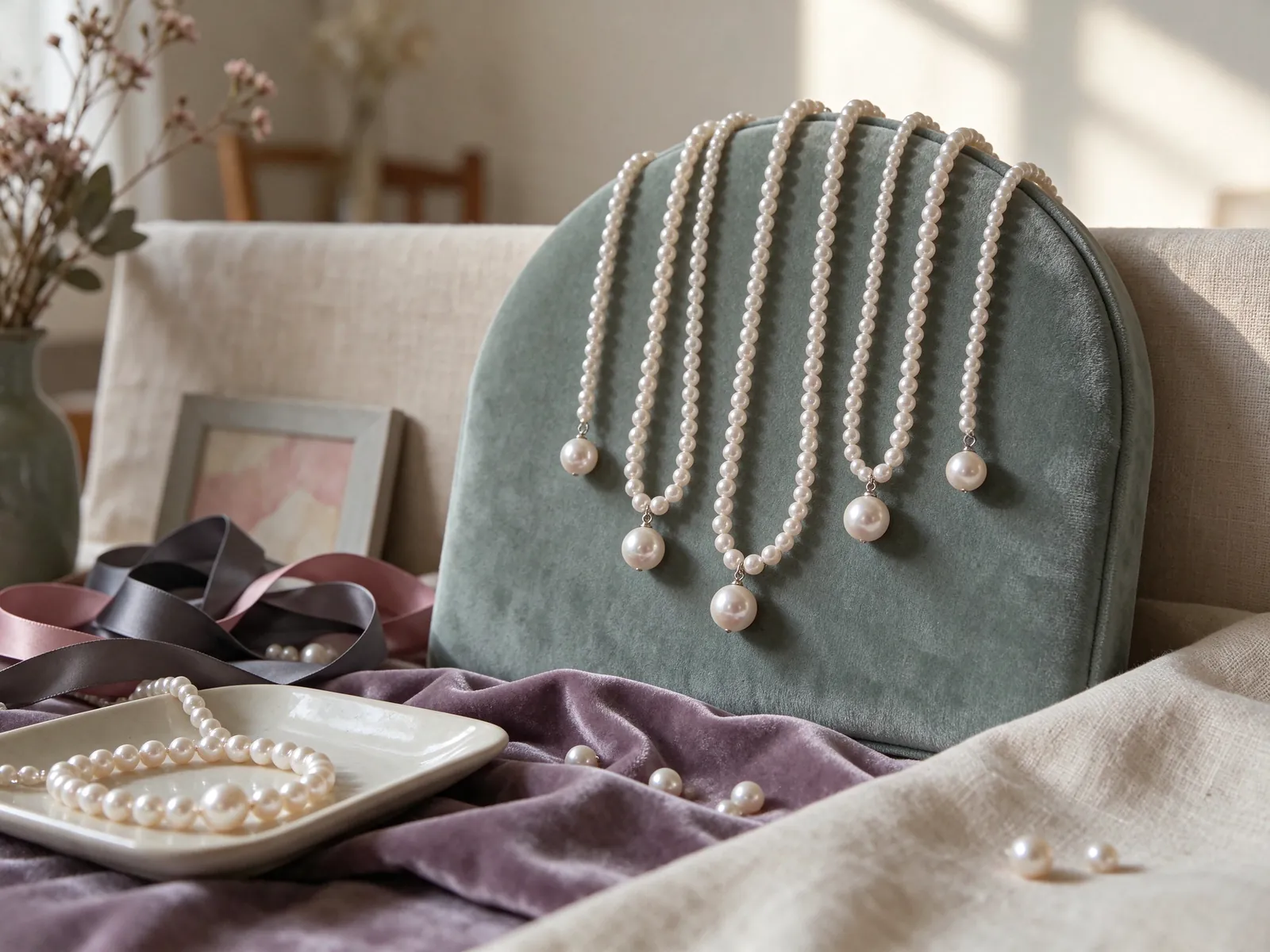
Look at luster, color and matching in everyday settings
GIA identifies seven pearl quality factors: size, shape, color, luster, surface quality, nacre quality and matching. A continuous strand makes matching especially useful to observe across the entire necklace. Compare neighboring pearls and the transitions between the center and sides. The seven factors are not a single score you can calculate from a screen image. They help organize questions, while your preferred styling effect remains a separate consideration from individual pearl characteristics.
Use a neutral background and, when possible, compare diffuse daylight with the indoor light you wear the necklace in. Then try a light-colored top, a warmer garment and a dark one. The South Sea pearl necklace and Tahitian pearl necklace topics can broaden your reading, but a white, golden or dark appearance does not establish type or origin on its own. The practical style question is how the complete row looks with your clothes, not what a phone display seems to identify.
Describe the variation you like without guessing an identity
Decide whether you enjoy a closely coordinated impression or visible, deliberately arranged variation. A changing appearance is not automatically poor matching; look for a pattern that feels convincing as a whole. GIA distinguishes bodycolor, overtone and orient, and not every pearl shows all three. Explain the lightness, color shifts and reflections that attract you rather than assigning every effect the same label or using it to infer an origin.
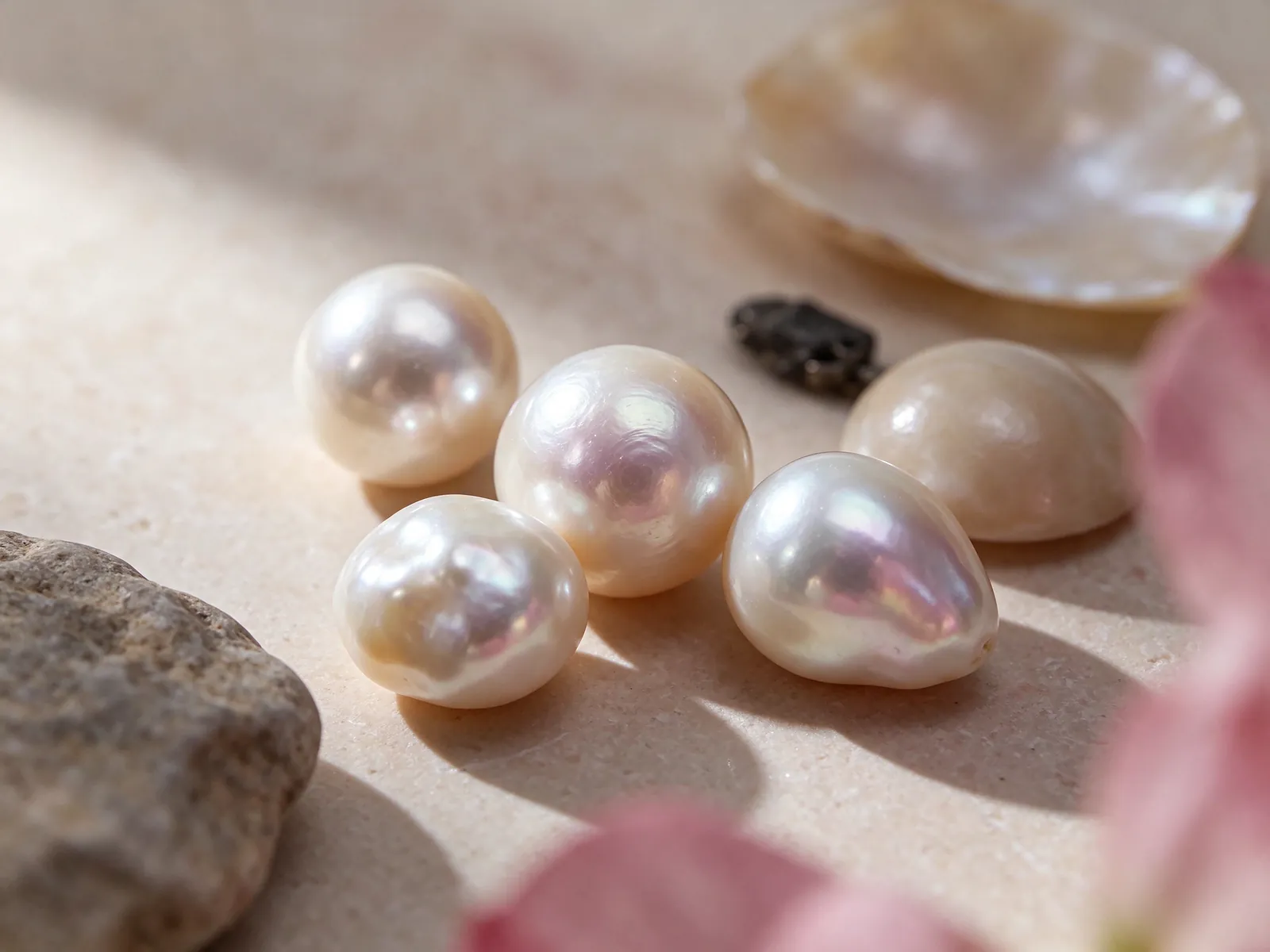
Test the clasp as something you will actually use
Fasten and unfasten the necklace yourself before judging its everyday practicality. Can you find the operating point, recognize that it is closed and manage it without help? Check the back of your neck for uncomfortable pressure and notice whether hair gathers around the connection. Clasps that resemble each other may operate differently. A tidy front view is useful for style, but it says little about how easy the necklace will be to put on in your usual routine.
The 18K gold clasp pearl necklace and platinum clasp pearl necklace guides address related styling choices without making a metal name a fastening specification. For a material discussion, compare 18K 750 white gold, 18K 750 yellow gold, 18K 750 rose gold, PT950 platinum and PT900 platinum. A material name does not identify a particular necklace's clasp construction. If you want the clasp visible at one side, assess the actual fastening and how its proportions affect the curve. Move naturally to check whether that position remains comfortable.
Inspect connections gently rather than testing with force
Observe knots, any exposed string and the transition where the row meets the clasp. Stringing arrangements can serve different design purposes, so do not expect every strand to follow one pattern. If you notice worn string, a marked change in gaps or unusual clasp operation, stop wearing it and have the structure examined. Tugging hard does not provide a reliable assessment of future wear and can cause the very damage you want to avoid.
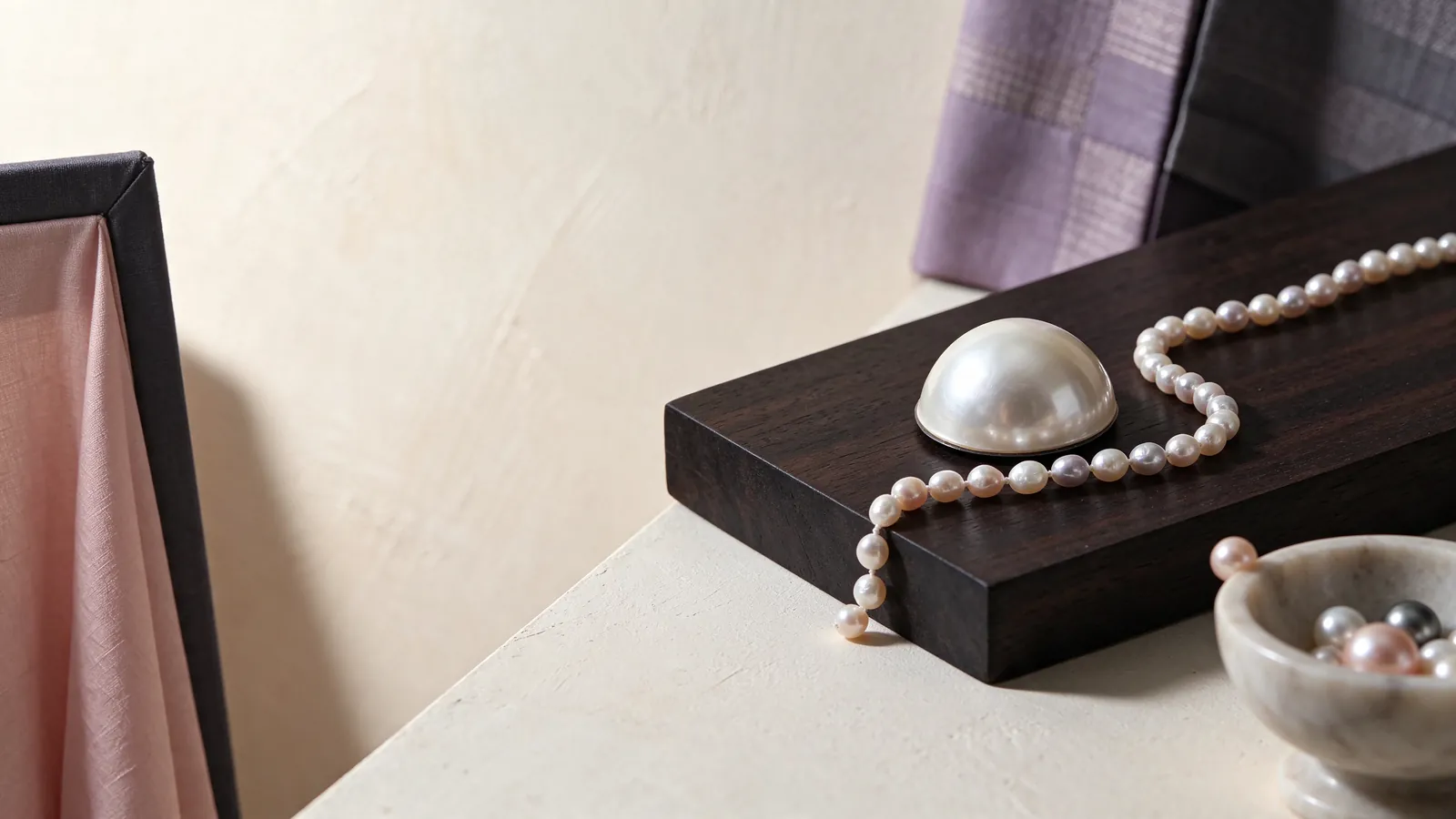
Make a classic strand work with the clothes around it
A plain knit or a simple shirt lets the pearl curve remain visible in a casual outfit. With a crew neck, compare clear space above the neckline with a steady position on the fabric below. An open collar should not repeatedly push the row out of place. Add the jacket you normally wear, since lapels can conceal much of the necklace. Judge the combination you spend the most time in, not just the brief moment before adding an outer layer.
For occasion dressing, locate the garment's existing point of emphasis. Lace, embroidery or decorative beading near the neck may already create a strong frame. A simpler dress can give the strand more room, but its resting point still needs a seated check. Try earrings and a brooch one at a time before combining them. If the outfit loses a clear focal point, reduce one accessory's visual presence instead of assuming that the pearl row needs to become more prominent.
Layer only after checking where pieces meet during movement
Place a second necklace at a distinct level, then turn and lean gently to see whether its chain, pendant or clasp brushes the pearls repeatedly. A gap visible in the mirror can disappear as you move. When contact is hard to avoid, separate wear is the more practical option. Keeping one continuous outline also makes it easier to arrange the necklace under a collar and to preserve the garment's own clean lines.

Include gentle care in the decision, not just the photograph
GIA gives pearl a Mohs hardness of 2.5 and advises against ultrasonic and steam cleaners. That number describes scratch resistance, not the lifespan of a complete necklace. Wipe pearls after wear with a very soft, clean cloth, and avoid acids, perfume, hair spray and excessive heat. Complete fragrance and hair-product application before putting on the strand. Also consider where it might repeatedly rub against a hard edge as you dress or move.
Store the row in its own soft space rather than tightly beside harder jewelry. Support the strand as you lift it instead of letting all its weight hang from the clasp. After water cleaning of strung pearls, GIA says the string must be completely dry before the necklace is worn. Surface dryness does not answer that question. If your routine is rushed, practical fastening, careful handling and time for appropriate drying deserve attention alongside the look.
Turn a style preference into a useful discussion
Prepare your usual neckline, the resting point you hope to achieve and your experience with fastening a necklace independently. Add the shape rhythm and overall color impression you prefer. A picture of the garment explains more than the word classic by itself. Finally, test the proposed look against ordinary actions: sitting, adding a jacket, removing the necklace and placing it in storage. That sequence helps you choose proportions that belong in your life rather than only in an image. To discuss a look with Flint Jewelry, send a neckline photograph, your preferred resting point and any practical fastening needs on WhatsApp at https://wa.me/85260106207. A few specific details make it easier to explore how a continuous pearl curve could work with your wardrobe.
| Decision area | Look for | Action to try | Clothing relationship | Avoid assuming |
|---|---|---|---|---|
| Resting point | A readable curve clear of awkward fabric edges | Sit, turn and put on your jacket | Crew necks and open collars | A length label guarantees the fit |
| Shape and spacing | Coherent transitions across the row | Step back before examining close details | Plain fabric versus competing patterns | Roundness proves pearl identity |
| Luster and color | How neighboring pearls appear together | Compare neutral backgrounds and everyday light | Light, warm and dark garments | A screen identifies type or origin |
| Clasp use | Clear operation and comfortable connections | Open and close it without assistance | Your actual dressing routine | Front-view appeal means easy fastening |
| Quality factors | GIA's 7 factors: size, shape, color, luster, surface quality, nacre quality and matching | Separate complete-row style from individual details | The continuous outline you prefer | One factor represents an overall score |
Pearl knowledge and authoritative references
GIA lists 7 pearl quality factors: size, shape, color, luster, surface quality, nacre quality and matching. For a single-row necklace, matching is observed across the complete strand.
Read the reference for this factFrequently asked questions
What if my necklace keeps slipping under a crew neckline?
Try a resting point clearly above the fabric or one that sits steadily below it. Test while seated and turning, because the fabric edge can move with you. A slightly different position may be more useful than repeatedly pulling the pearls back into view.
Is a full strand the same visual choice as a pearl pendant?
No. A strand leads the eye along a continuous pearl curve, while a pendant generally creates a single central accent. Choose the effect you want in relation to your collar, earrings and the garment's existing details; neither is limited to formal or casual wear.
Should I choose a uniform-looking row or one with a stronger center?
Compare a steady rhythm with a gradual change toward the front while wearing your usual neckline. The first can emphasize continuity, while the second can bring attention to the center. Judge the whole transition rather than one pearl alone.
Can a clasp look good but still be inconvenient for daily use?
Yes. Its appearance does not tell you whether you can operate it independently or whether it feels comfortable behind the neck. Fasten it yourself, check closure and move with your hair and jacket in place before making that decision.
Why does drying the string matter after water cleaning?
A pearl surface can look dry while the string is not yet completely dry. GIA advises waiting until the string is fully dry before wearing strung pearls after water cleaning. Avoid ultrasonic or steam cleaners and use gentle after-wear wiping for routine care.
Updated: