
How does gold color shape the look of 18K gold pearl earrings and 750 gold pearl earrings when choosing 18k pearl stud earrings?
Think about the clothes you reach for each week before choosing a gold color. White gold may echo the crisp feeling of a white blouse or cool gray sweater; yellow gold can connect a pearl accent with camel, cream or other warm fabrics. Rose gold can introduce a softer transition beside blush, lavender or neutral clothing. None of these suggestions restricts a color to a particular skin tone. The useful question is whether you want the pearl to create contrast or to become a gentle part of the outfit's existing palette.
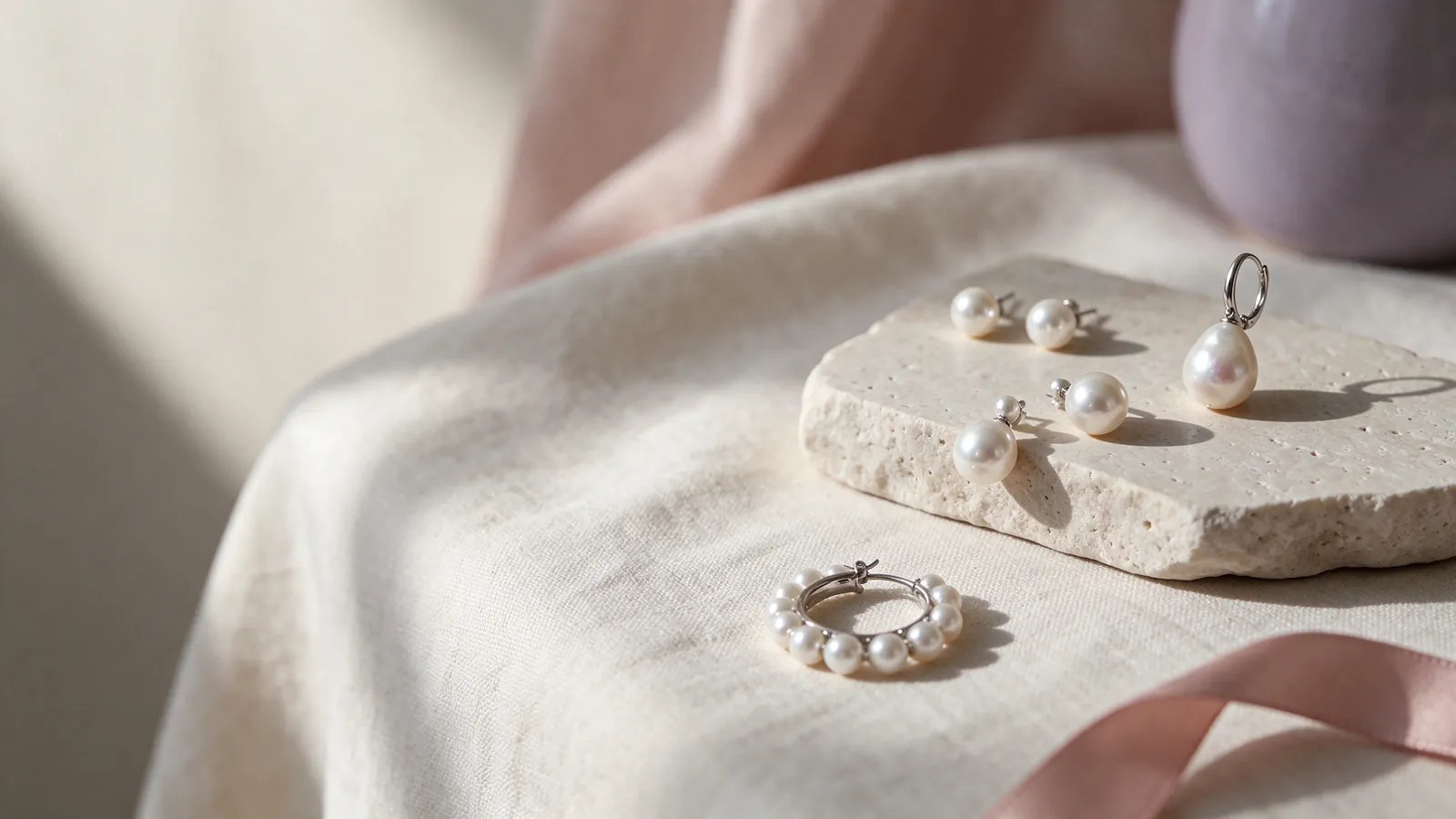
In Soft Tide, the pearl's irregular contour and simple stud keep the focus close to the ear. Metal color can support that detail rather than overpower it. Look at a frequently worn watch, ring or eyeglass frame to find a connection you already enjoy. You can also mix tones intentionally, especially when the clothing leaves room for small accents. The guide to pearl stud earrings offers a framework for close-to-ear outlines and construction, while your own outfit photographs make the conversation with Flint Jewelry specific to the way you dress.
After choosing a gold color for 18K gold pearl earrings or 750 gold pearl earrings, how can 18k pearl stud earrings complement your neckline?
Compare the stud idea with an actual collar rather than looking only at your earlobe. A turtleneck gathers visual detail near the face, while a V-neck leaves a longer open line below it. A close-to-ear pearl can offer a restrained accent without following that entire line. Check your usual hair position, then tuck it back and compare a side view. Glasses and the shoulder shape may change the balance as much as the neckline itself.
A baroque pearl's outline matters as much as its approximate size
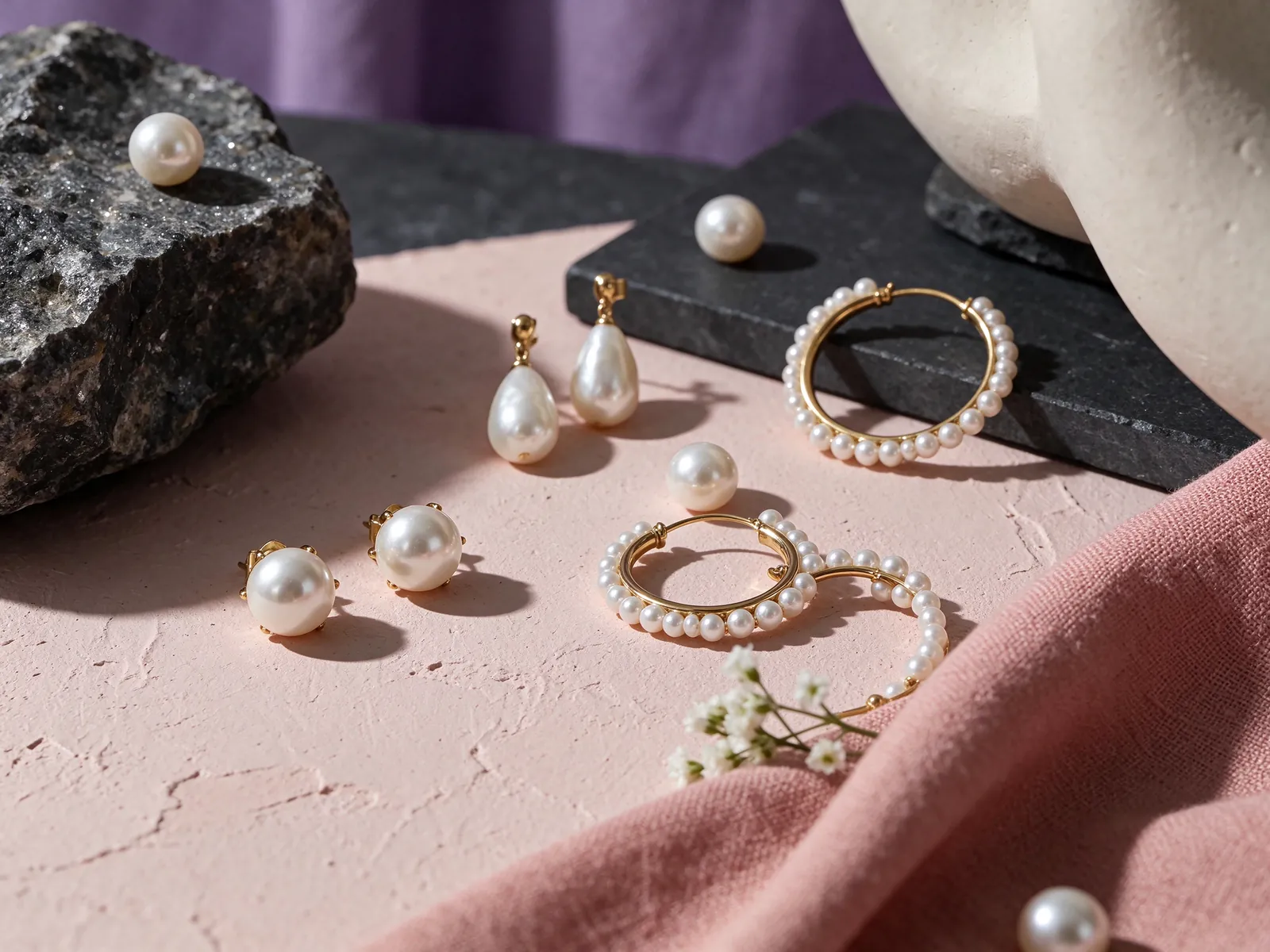
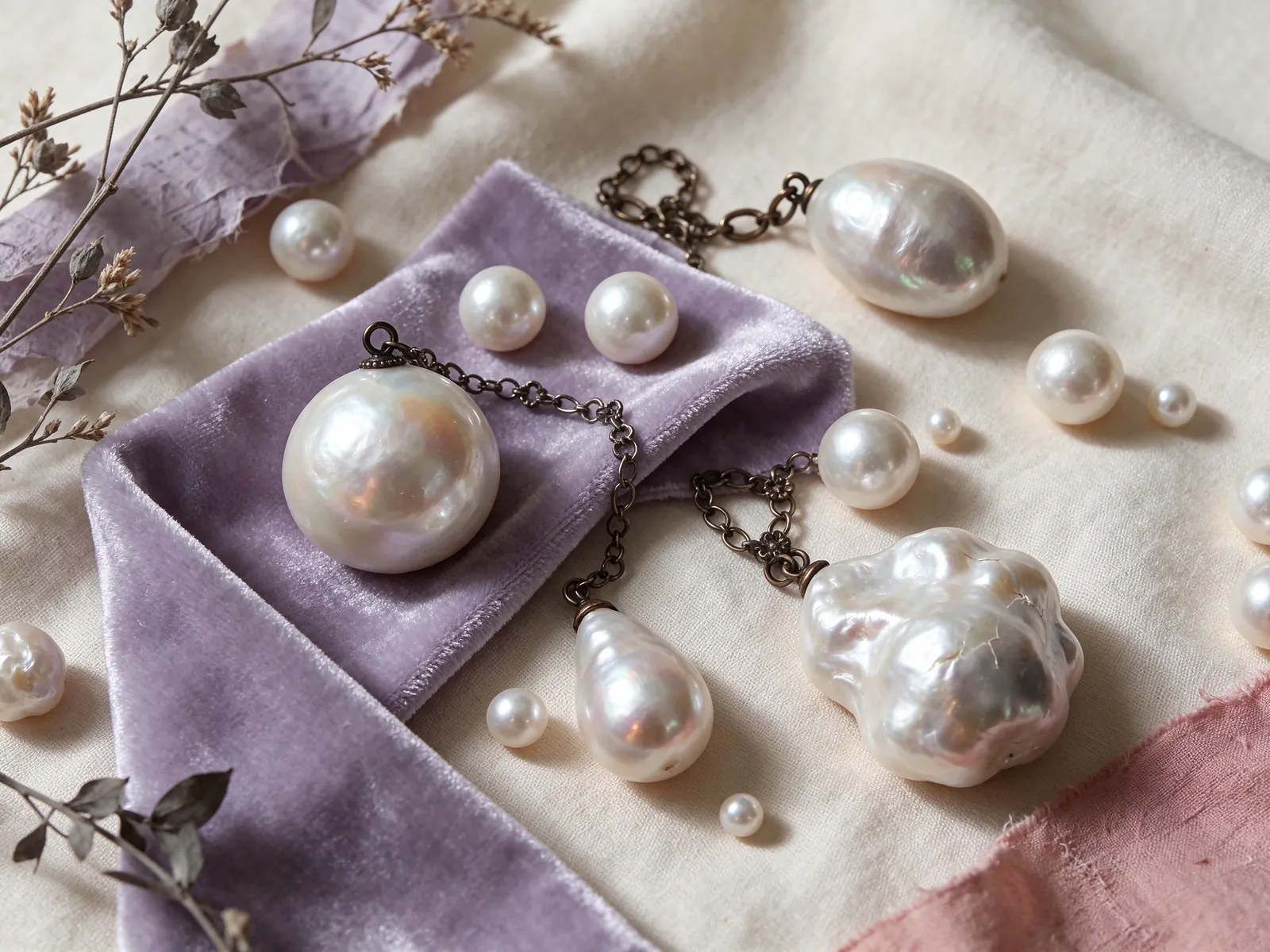
Soft Tide is described with a white baroque pearl approximately 7~8mm. Because a baroque outline is irregular, that size does not tell the whole visual story. A fold can catch light, an edge can appear more pronounced from one angle, and the orientation can change how broad the pearl looks against the ear. Explain whether you want a calmer front outline or a more noticeable ripple. Do not infer the finished earring's weight or exact distance from the earlobe from an approximate diameter.
Assess what you like about the surface separately from the shape. Look for the way reflections move across the pearl and how its bright areas contrast with its folds. GIA discusses seven pearl value factors, not a single size-based verdict. An irregular contour is an aesthetic feature, not automatic evidence of lower quality. White color alone also cannot establish pearl origin or natural-versus-cultured identity. Reading about geometric pearl earrings can help clarify whether your preference is for controlled lines or the less regular rhythm that Soft Tide brings to the ear.
Turn an inspiration image into a precise shape preference
Point to the curve, fold or angle that makes a photograph appealing, then describe the effect you want to keep. You might like a compact front view with texture revealed at the side. That is more useful than requesting an exact copy of an irregular outline. When discussing earrings for both sides, explain whether you want similar visual weight or a deliberate difference in direction. A considered relationship need not mean that every surface curve is identical.
Clarify the single-earring unit before planning your arrangement
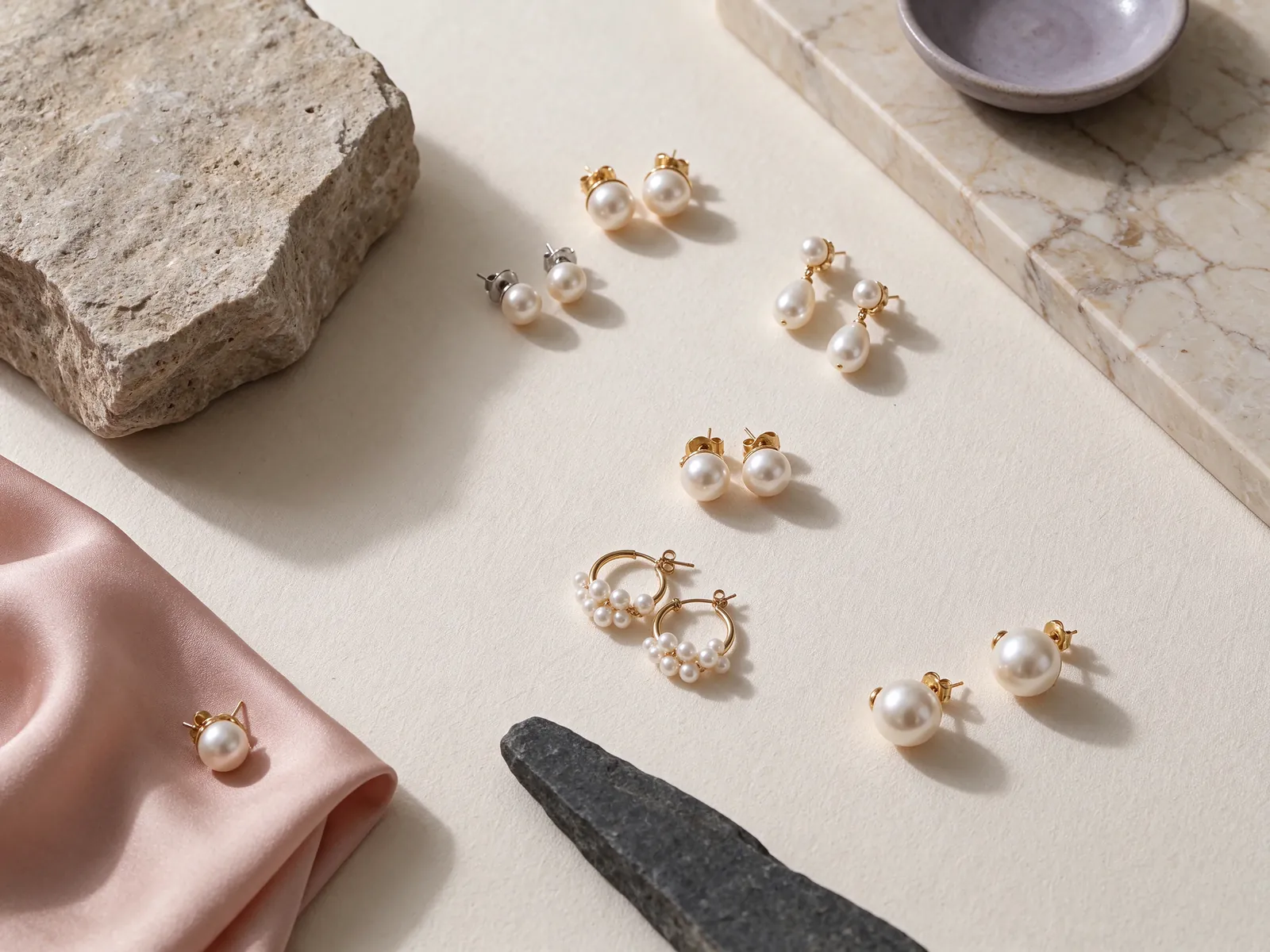
Soft Tide's stated product unit is a single earring. If you are imagining one on each side, make that intention part of the first conversation. Describe how closely you want the two sides to relate in outline and visual presence. If you prefer an asymmetric look, bring an image of the accessory you already wear on the other ear. This makes the design brief practical and avoids reading a single-item description as though it included a pair.
A simple stud can create a close-to-ear look, but that description is not a comfort guarantee. Piercing placement, the way a back sits, and your everyday activities all matter. Explain whether headphones, phone use or scarves have interfered with previous earrings. If you have experienced a back pressing against the ear or a front that tilts, describe that specific experience. The design's simplicity and pearl measurement alone do not establish weight, fit or how the earring will feel during a full day.
Plan a charm around movement and the neckline
An earring charm can be discussed with Soft Tide, but the styling option does not automatically mean a detachable construction. Consider the line you want below the ear and how it relates to hair, a jacket collar or a scarf when you turn your head. Bring a photograph of the garment that prompted the idea. The connection and final proportions belong in the design conversation; there is no reason to borrow another earring's charm length or two-way mechanism.
Use metal names clearly when comparing white gold and other options
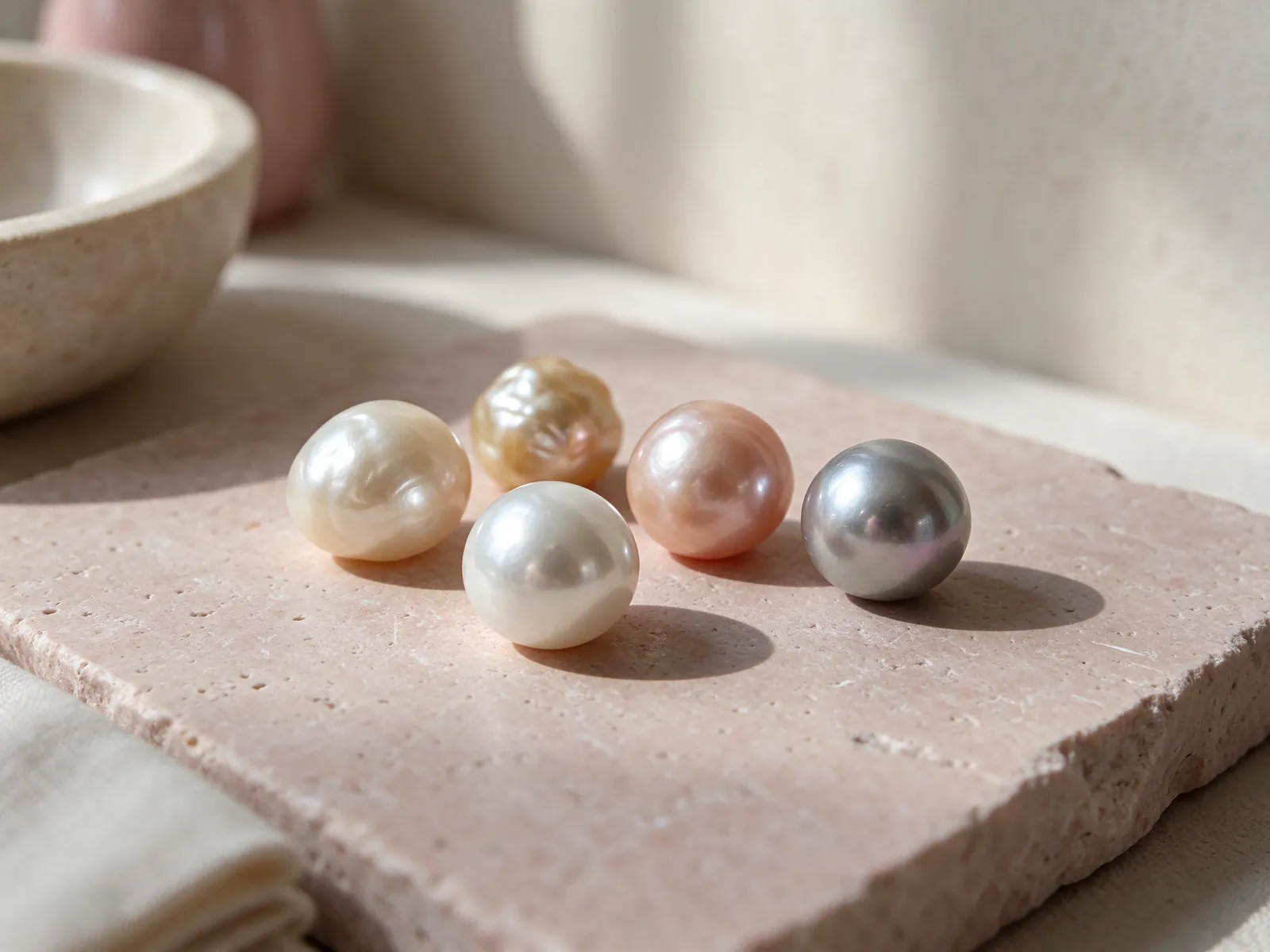
This page discusses 18K750 white, yellow and rose gold. White gold is not another term for platinum, even if both appear white in jewelry photographs. If platinum is the direction you want to explore, platinum pearl earrings is the relevant comparison topic for discussing PT950 or PT900. Start by separating the color you enjoy from the material name. Then consider the design structure and your intended use, rather than treating similar-looking metals as interchangeable descriptions.
You may encounter 10K gold pearl earrings, 14K gold pearl earrings or sterling silver pearl earrings while researching. Those reading and comparison topics do not mean Flint supplies those materials. Ask what part of an earring a material statement describes, and consider the stated construction as well as the title. A number or color name is not a complete account of a piece. Comparisons are more useful when the intended wearing arrangement and design requirements are aligned, rather than when an assumed price or durability claim drives the choice.
Build the decision in three layers
Decide which metal color works with your wardrobe, describe the pearl outline and stud arrangement you want, then explain your personal wearing concerns. Keeping these layers separate prevents a color preference from standing in for a fit decision. If you want to discuss a budget, include whether the idea is for one ear or both and whether a separately chosen charm is involved, so the conversation concerns one clearly described set of needs.
Style the ear-level accent around the outfit's main feature
For an office outfit, a white baroque pearl can add surface interest beside a tailored jacket, a button-down shirt or a plain sweater. When the fabric has a visible pattern, choose simpler surrounding accessories so the pearl texture has room to register. Eyeglasses are part of the same composition: a strong frame does not require an equally elaborate earring. A quieter stud outline can leave the frame as the main feature while contributing a small area of brightness nearby.
An evening outfit can use contrast without needing every accessory to become larger. A sculptural shoulder or draped neckline can work beside the pearl's softer edge. Hair pulled up reveals the contour continuously, while loose hair may reveal it only as you move. Compare your work and evening outfits in similar lighting to see whether the same accent feels right in both. That helps you decide whether a different gold color or a charm idea serves a real styling purpose.
Coordinate with a necklace or brooch without crowding the face
A necklace occupying the center of a neckline already creates a focal area, so the earring can contribute luster and shape without repeating its complexity. A shoulder brooch may bring another bright element close to one ear; check their spacing in a full outfit photograph. A shared warm tone or gentle curve can connect accessories even when they are not identical. Decide which piece leads, then let the others support that visual choice.

Treat sensitivity questions and pearl cleaning as separate needs
Past discomfort is worth describing carefully: explain where the earring touched and what happened, rather than requesting a metal color that can never trigger a reaction. The guide to pearl earring back types helps frame questions about back construction, and pearl earrings for sensitive ears addresses contact areas and practical selection concerns. A metal label cannot predict every person's response. If pain, redness, swelling or other discomfort develops, stop wearing the earring and seek appropriate professional advice. A jewelry design is not a treatment for those symptoms.
The gold setting does not replace the pearl's care requirements. GIA gives pearls a Mohs hardness of 2.5 and states that ultrasonic and steam cleaners should never be used on them. Put the earrings on after applying perfume or hair spray, and keep product residue on your hands away from the pearl. Wipe with a very soft clean cloth after wearing. Store separately from harder jewelry and avoid acids and excessive heat; careful habits reduce unnecessary exposure without guaranteeing an unchanged appearance forever.
Protect the connection when putting the earring away
Work over a steady surface when removing a stud so a small back is easier to find if it falls. Hold the metal component instead of twisting or levering the pearl. Notice obvious looseness at a connection or a changed post shape before wearing again. If something seems distorted, stop using the earring and discuss the next step. Home heating, forceful bending and harsh cleaning are not a sound response to a structural concern.
Prepare a focused customization brief for Flint Jewelry
A useful brief combines a front and side view of the ear area with a photograph of a frequently worn neckline. Private documents are unnecessary. Add a few sentences about the gold color you prefer, the kind of baroque contour you enjoy, and whether you want a single-ear accent or a left-and-right arrangement. Mention glasses, headphones and existing accessories if they affect the way you wear jewelry. These details turn a broad preference into a conversation about your everyday routine.
Put the most important needs first. Perhaps the priority is a quiet daytime silhouette, followed by an optional evening charm idea; perhaps the relationship with your eyeglasses matters more than either. Explain those priorities to Flint Jewelry on WhatsApp at +85260106207 using Soft Tide's white baroque pearl and simple stud as the design starting point. If the idea is a gift, learn whether the recipient has pierced ears and usually wears one earring or two before assuming what arrangement they would enjoy.
Use the recipient's style as a clue, not a substitute for their preferences
A person's usual jewelry colors and clothing can suggest how an ear-level accent might fit their style. A photograph cannot tell you their piercing measurements or predict skin sensitivity. When their preference for symmetry is unknown, leave space for them to participate in that decision. The personal meaning of a gift can come from understanding how they dress and what they enjoy, without an unsupported origin, grade or certification claim.
| Decision | Soft Tide starting point | Outfit consideration | Useful detail to share |
|---|---|---|---|
| Metal color | 18K750 white, yellow, or rose gold | Warm and cool tones in clothing and accessories | Contrast with the pearl or a coordinated accent |
| Pearl contour | White baroque pearl, approximately 7~8mm | Front outline, side folds, and hair coverage | The curves and visual presence you prefer |
| Wearing arrangement | Single earring | One-ear styling or left-and-right balance | Whether you intend to wear one or both sides |
| Stud construction | Stud earring | Collar, eyeglasses, and earring-back position | Past wearing experiences and routine activities |
| Charm idea | Can be paired with an earring charm | Hair, scarf, and neckline spacing | Intended line, connection, and occasion |
Pearl knowledge and authoritative references
GIA describes seven pearl value factors: size, shape, color, luster, surface quality, nacre quality, and matching for jewelry with more than one pearl. This helps explain why choosing pearl earrings involves more than a diameter or a preferred metal color.
Read the reference for this factFrequently asked questions
Is 18K750 white gold another name for platinum?
No. White gold and platinum are distinct material names. Soft Tide can be discussed in 18K750 white, yellow, or rose gold, while PT950 or PT900 platinum is a separate material direction. Similar white-metal appearance does not make the terms interchangeable.
If I want earrings for both ears, what should I say about Soft Tide?
Explain that you want a left-and-right arrangement because Soft Tide is specified as a single earring. Discuss how closely the two sides should relate in contour and visual presence. The stated single-earring unit should not be interpreted as an included pair.
Does the approximately 7~8mm measurement describe exactly how the pearl will look on my ear?
It gives a size starting point, not a complete wearing image. Baroque folds, orientation, your hairstyle, and neckline affect apparent presence. The measurement alone cannot establish the finished weight or precise projection from your earlobe.
Can I assume a charm makes Soft Tide a detachable two-way design?
No. Charm styling is an option for discussion, not a statement about a detachable mechanism. Bring the intended neckline and line you want below the ear, then discuss the connection and proportions rather than borrowing another design's construction.
Does a gold stud allow ultrasonic cleaning of the whole earring?
No. GIA says pearls should never be cleaned in ultrasonic or steam cleaners. Use a very soft clean cloth for routine care after wearing, and avoid perfume, hair spray, acids, and excessive heat. The metal choice does not override the pearl's cleaning needs.
Updated: