
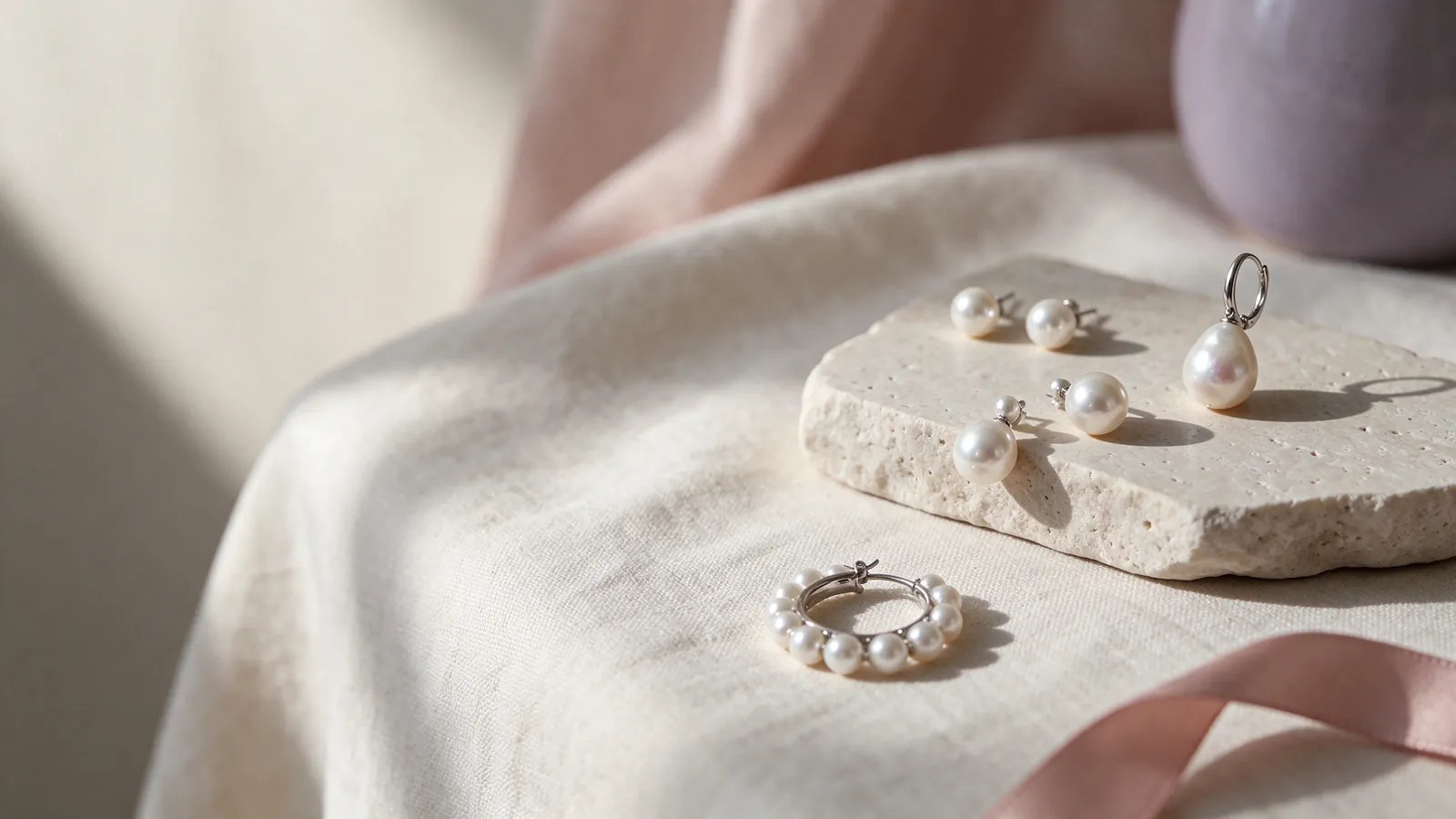
How can pearl studs for a second piercing and second-hole pearl earrings create balance alongside small pearl studs for multiple piercings?
Think of the second stud as part of a composition rather than a space that needs filling. Decide what should draw attention first: the main pearl, a drop silhouette, or a soft line across the lobe. The pearl earring size guide provides a starting point for understanding diameter, but a setting can add to the visible outline. Compare the area each complete earring occupies before deciding how much contrast you want between the two positions.
Second-hole pearl earrings do not have to be dramatically smaller to play a supporting role. A plain second front can look quiet beside a more detailed first setting even when the pearls appear close in size. Alternatively, two restrained studs can form a deliberate sequence. Step back from the mirror after checking the details. The balance of the entire ear is easier to judge at an ordinary distance than in a tightly cropped photograph.
Checking the spacing of pearl studs for a second piercing and second-hole pearl earrings when styling small pearl studs for multiple piercings
Piercing spacing and earring spacing are not the same measurement. The holes can be visibly separate while the pearl fronts or decorative edges overlap. Look at the arrangement from the front, side and back, using your own placement as the reference. A clear front gap cannot tell you whether the posts and backs have enough room behind the lobe.
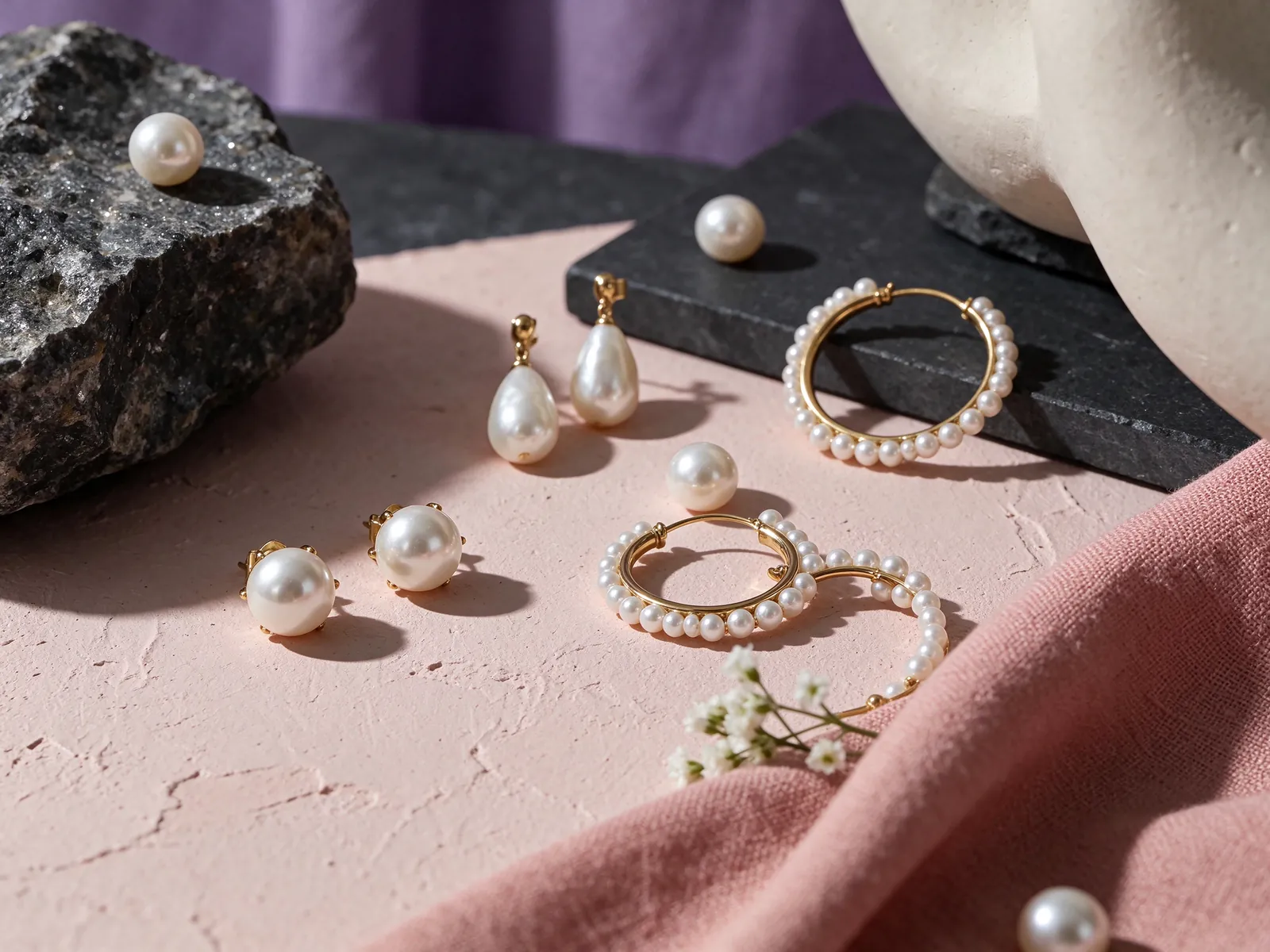
Make a size comparison that includes the entire earring
Looking for small pearl stud earrings is a useful way to explore a restrained style, but small is not a complete description of fit. Compare the pearl face, the metal around it and its projection from the ear. An open-looking front may still have a substantial backing. If your main earring reaches toward the neighboring hole, first consider whether its shape is the source of crowding rather than assuming the second pearl alone must change.
Create a simple comparison using separate entries for the pearl, setting, post and back. Front views are useful for appearance, while side and rear views answer different questions about structure. Avoid drawing conclusions about projection from a front-only image. Ask how the entire earring sits next to your existing piece. This is more informative than asking for a diameter that would supposedly work for every second piercing.
Include the outer edge of a smaller lobe
When the lobe is small or a hole sits close to its edge, inspect the space beyond the pearl as well as the space between the pair. The discussion of pearl earring size for small earlobes can help frame this comparison. Visible skin around a pearl is a style choice; it is not a fixed ratio that establishes whether an earring suits a piercing.
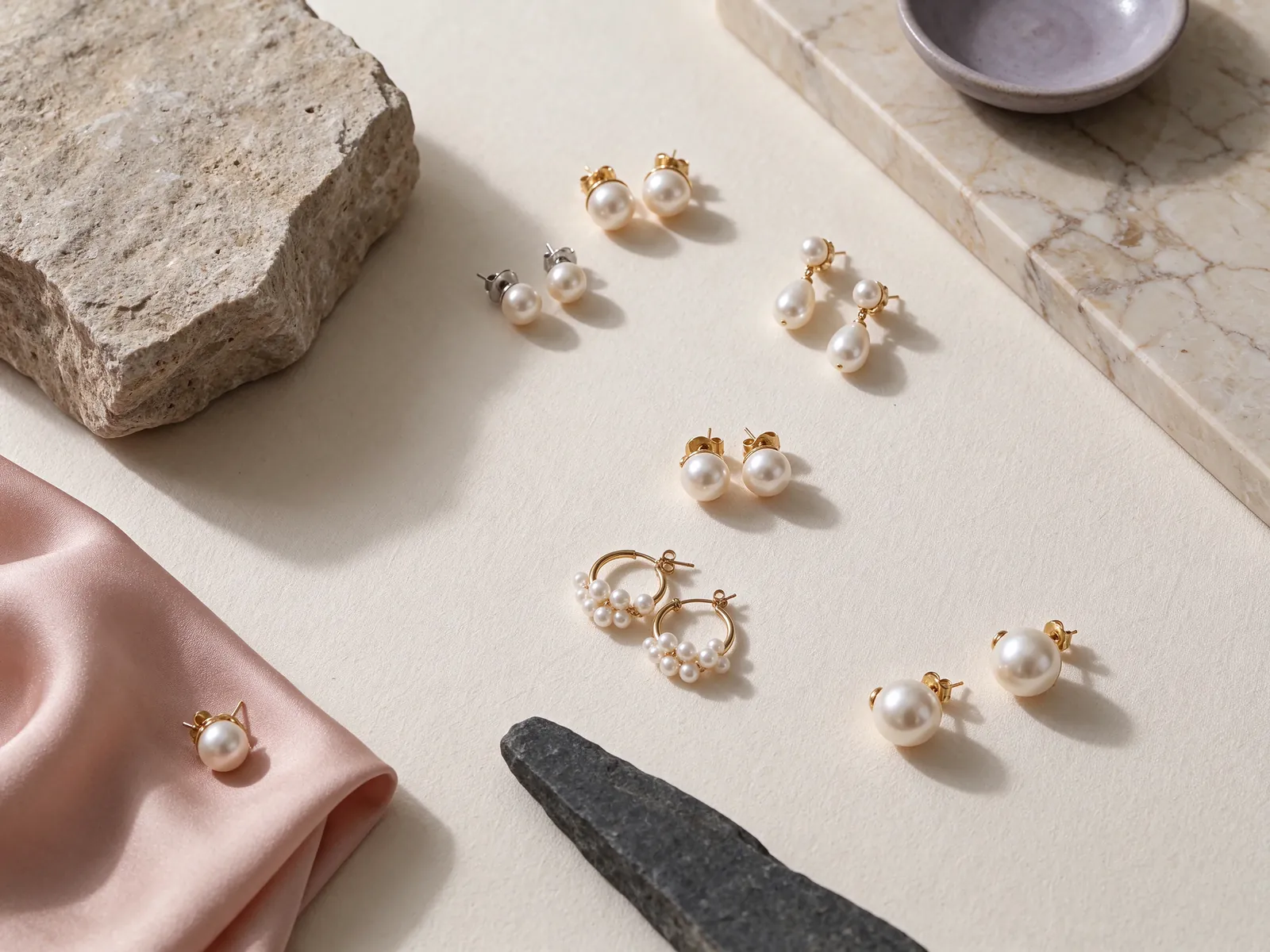
Inspect the back of the arrangement before finalizing the look
Two attractive fronts can hide an awkward rear arrangement. Consider the direction of each post, the shape of each back and where they meet behind the lobe. A stud offered as a single piece is not automatically designed for a second hole; quantity tells you nothing about that placement. Similarly, a cartilage label should not be treated as proof that a compact design can be moved to an adjacent lobe piercing.
For established piercings where trying jewelry is appropriate, check the pair during normal movements, including turning your head, putting on glasses and moving hair behind the ear. Avoid forcing the backs tighter to create a straight pearl line or leaving them excessively loose to gain space. If the pieces require repeated adjustment, simplify the combination and identify the point of interference. A qualified piercing professional should guide choices for new or still-healing piercings.
Keep visual overlap and physical discomfort separate
Record what you see at the front separately from what you feel behind the ear. A crowded appearance and a pulling sensation call for different questions. Stop wearing a combination that causes pain, pressure or pulling, and seek appropriate professional help if discomfort persists. Do not treat a jewelry change as a diagnosis or as a remedy for a piercing problem.
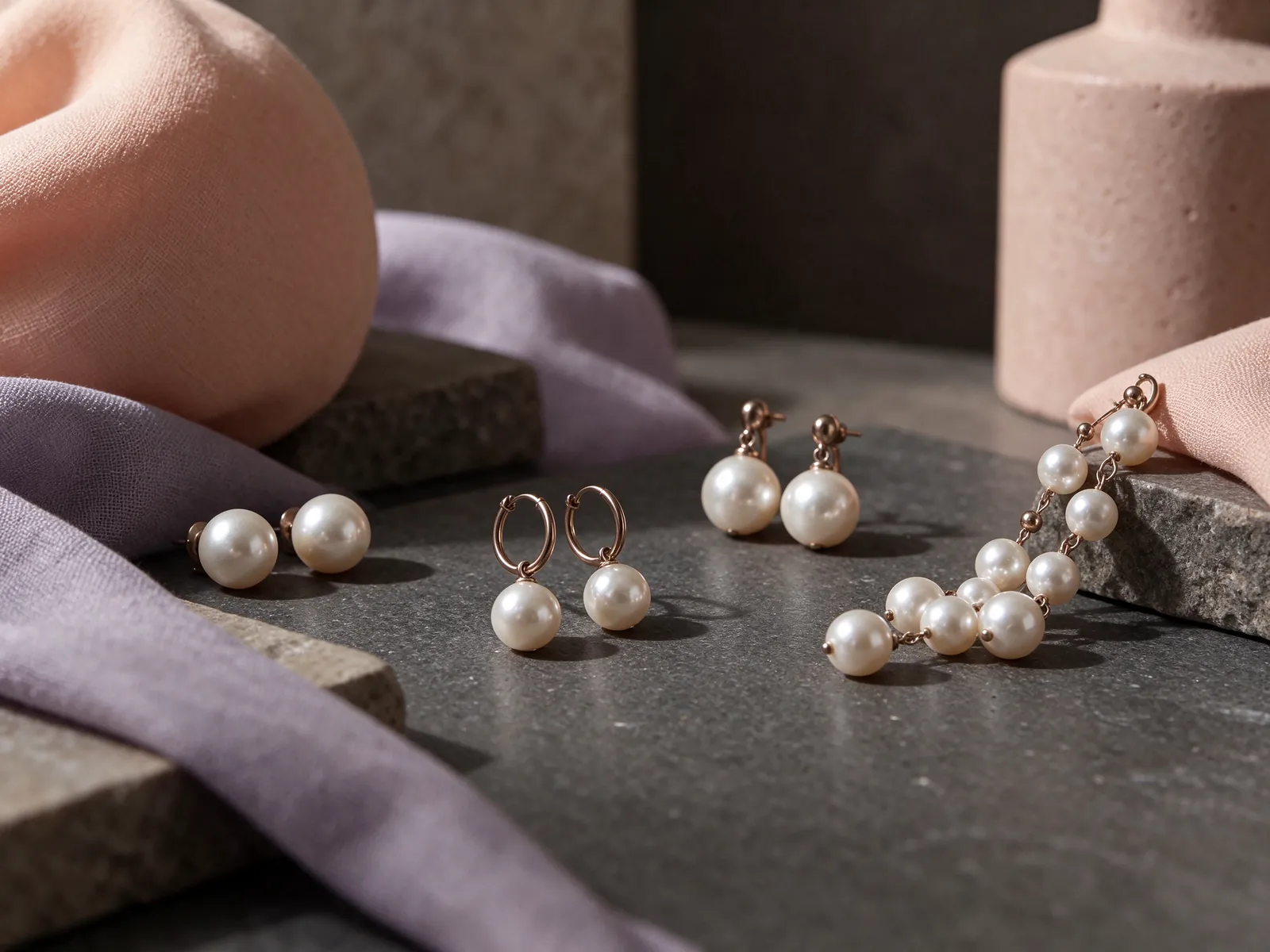
Pair a steady pearl point with the main earring's silhouette
A stud in the first hole usually creates a compact relationship with its neighbor. A drop or dangle brings a vertical line and movement, so the second pearl can offer a quieter, steady accent. The comparison of pearl studs vs drops vs dangles helps explain why these silhouettes need different styling decisions. Look at the moving earring's upper attachment near the lobe, not only the pearl or ornament at the bottom.
A good pairing can repeat just one idea. Similar pearl luster may connect two different outlines, or a related metal color may make a decorative first earring and a simpler second stud feel intentional. Repeating every feature can create too many competing details around the ear. Choose the leading piece first, then ask what the second position contributes: continuity, contrast or a small point of light. It does not need to do all three.
Use a bold main pearl as a contrast in emphasis
The style guide to 12mm pearl earrings offers a way to think about a more prominent first pearl. Its visual emphasis also depends on the setting and the surrounding lobe space, not diameter alone. If a strong main front already occupies the space near the second hole, a simpler supporting element—or leaving that hole unfilled for the look—can preserve a clearer focal point.
Choose a shared color, luster or outline rather than a perfect duplicate
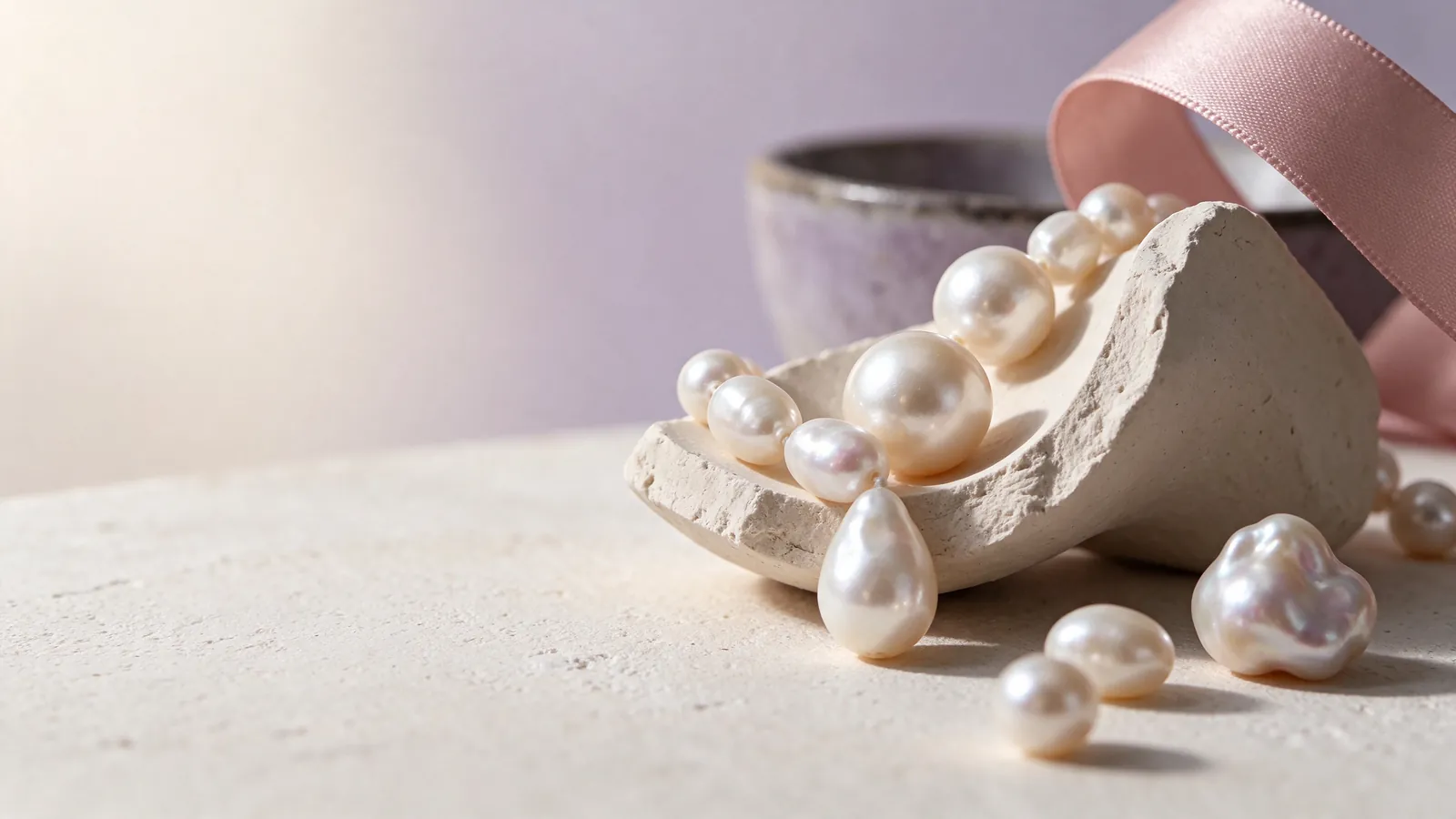
For a subtle pair, start with a similar color impression and comparable luster. For a more distinctive arrangement, let one of those qualities link the earrings while their shapes differ. Always make the comparison under the same lighting. Warm indoor light and daylight can make photographs look different without demonstrating a true mismatch. Examine the pearls from more than one angle, since a bright reflection in a single image is not the whole appearance.
GIA identifies seven pearl value factors: size, shape, color, luster, surface quality, nacre quality and matching. This vocabulary helps you explain visible preferences without relying only on a collection name. Matching is useful for styling, but a coordinated appearance does not establish pearl identity or all quality factors. Color and shape alone cannot prove origin or natural-versus-cultured status. Keep what you like visually separate from the information needed to identify a pearl.
Give an intentional difference room to stand out
If your main pearl has an individual outline, let the second stud be more restrained so the difference reads clearly. With two simple settings, a shape variation can supply the interest instead. Choose which feature should connect the pieces, then allow another to vary. This gives you a practical reason for selecting a pairing rather than expecting every visible detail to match.
Review the combination with your everyday accessories
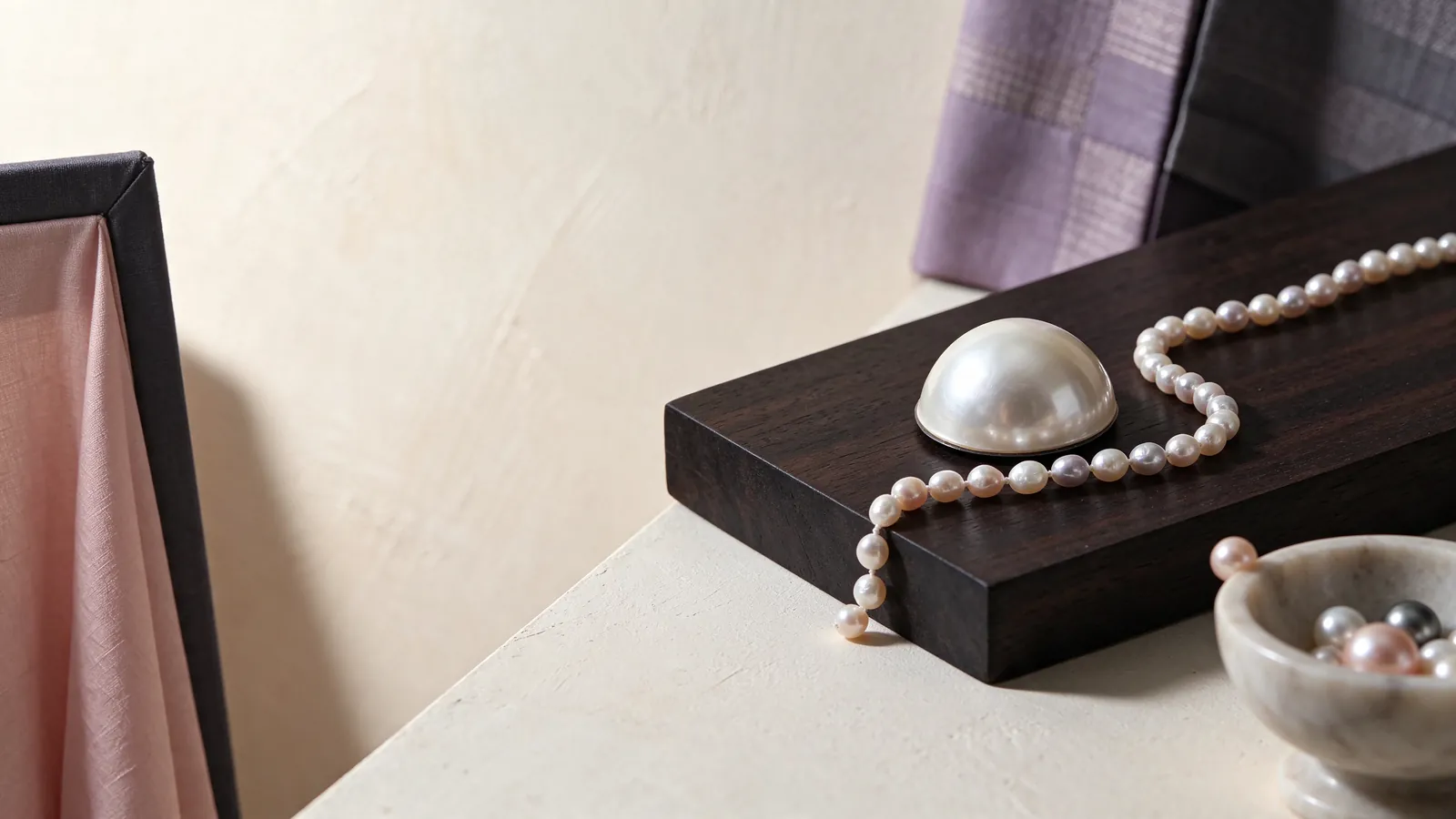
A close-up leaves out much of the context that affects a layered ear. Glasses add a structure behind the ear, hair can reveal or cover the spacing, and a prominent neckline can compete for attention. The guide to everyday pearl earrings broadens the outfit conversation. For your second stud, pay particular attention to how the arrangement behaves with the accessories and movements that are part of your routine, not only how it looks while you hold still.
Start with a less detailed arrangement when your clothing or other accessories already create activity near the face. You may find that pearl light alone gives the outfit enough continuity. The two ears may have different piercing placements, so exact mirrored spacing is not always the best goal. Similar emphasis on both sides can still feel coherent. Check the broader reflection first and then inspect the ear details, rather than letting a minor close-up difference dictate the whole look.
Explain your styling goal with concrete details
For a styling discussion with Flint Jewelry, describe the main earring's silhouette, where the second hole sits on your lobe and whether you usually wear glasses or put your hair up. If you want to share photos, front and side angles can clarify proportion. These details are more useful than beginning with an assumed pearl type or deciding in advance that one design must fit.

Separate the pieces to protect their pearl surfaces
Pay attention if the neighboring metal repeatedly touches a pearl while you move. GIA places pearl at 2.5 on the Mohs hardness scale, which is relevant to gentle surface care—not to the load capacity of a stud or its suitability for a hole. Revisit a combination that keeps rubbing together. When removing the jewelry, keep pearl fronts away from loose posts and backs, using separate compartments or soft material between the pieces.
Wipe the pearls gently with a very soft, clean cloth after wearing and check for cosmetic residue. Prevent direct contact with perfume and hair spray, and take off the earrings while applying products around them. GIA says pearls should never be cleaned with ultrasonic or steam cleaners. Do not select a cleaning method solely because the post is metal; the pearl and the complete construction also determine how the earring should be handled.
Keep jewelry cleaning distinct from piercing care
Organize the main and second pieces together as a pairing but give each its own protected space. This makes them easier to recognize without allowing the parts to rub. Pearl-cleaning instructions are not piercing-aftercare instructions. Direct questions about the ear itself to a qualified professional, keeping the decisions about styling, structural interference and jewelry surface care separate. To discuss the balance of your main and second earrings, contact Flint Jewelry on WhatsApp at +85260106207 and describe your everyday style, piercing placement and the space you want to preserve.
| Pairing context | What to see in front | What to check behind or beside | Styling priority | Next step |
|---|---|---|---|---|
| First earring is a stud | Space between complete fronts | Contact between backs | A clear sequence rather than crowding | Compare settings as well as pearls |
| First earring has movement | Placement of the upper attachment | Movement toward adjacent jewelry | A steady supporting pearl point | Check during a normal head turn |
| Lobe space is limited | Relationship to the lobe edge | Projection and rear clearance | Visible breathing room | Consider both holes and outer outlines |
| Glasses and everyday hair | Whether the pearl sequence is visible | Contact around the glasses' arms | Compatibility with your routine | Review the wider outfit and normal movements |
| Jewelry is being put away | Residue on pearl surfaces | Metal parts near the pearls | Protection from repeated rubbing | Separate and gently wipe the pieces |
Pearl knowledge and authoritative references
GIA places pearl at 2.5 on the Mohs hardness scale. The figure is relevant to gentle handling and avoiding repeated surface contact with neighboring metal, not to a stud's load capacity or piercing suitability.
Read the reference for this factFrequently asked questions
Can similar-size pearls work in the first and second holes?
Yes, as a visual choice, when the complete earring fronts remain distinct and the arrangement has a clear intention. Different setting details or a longer main silhouette can create emphasis without a dramatic size difference. Appearance alone still does not establish whether the posts and backs suit your placement.
Why check the backs if the pearl fronts already have space?
The rear parts can meet or interfere even when the fronts do not overlap. Their shape, direction and placement need their own inspection. Where trying jewelry is appropriate for your piercings, include normal movements and glasses in the check instead of forcing alignment by tightening the backs.
Does a single-stud listing mean it is a second-piercing earring?
No. Single describes the quantity, not the intended fit at a specific hole. The full setting, post and back matter, and a small cartilage stud is not automatically interchangeable with a stud for an adjacent lobe position.
What if the two pearls have slightly different colors?
Compare them in the same light and decide on one shared feature, such as luster or a simple outline. Keep surrounding decoration restrained if you want the difference to look intentional. A photo's color does not prove pearl origin, identity or every quality factor.
What is the simplest storage habit for a layered pearl look?
Keep the pairing organized but separate the pearl surfaces from metal posts, backs and other jewelry with compartments or a soft barrier. Gently wipe the pearls after wearing. Avoid ultrasonic and steam cleaning, and remember that jewelry care is separate from advice about caring for a piercing.
Updated: