
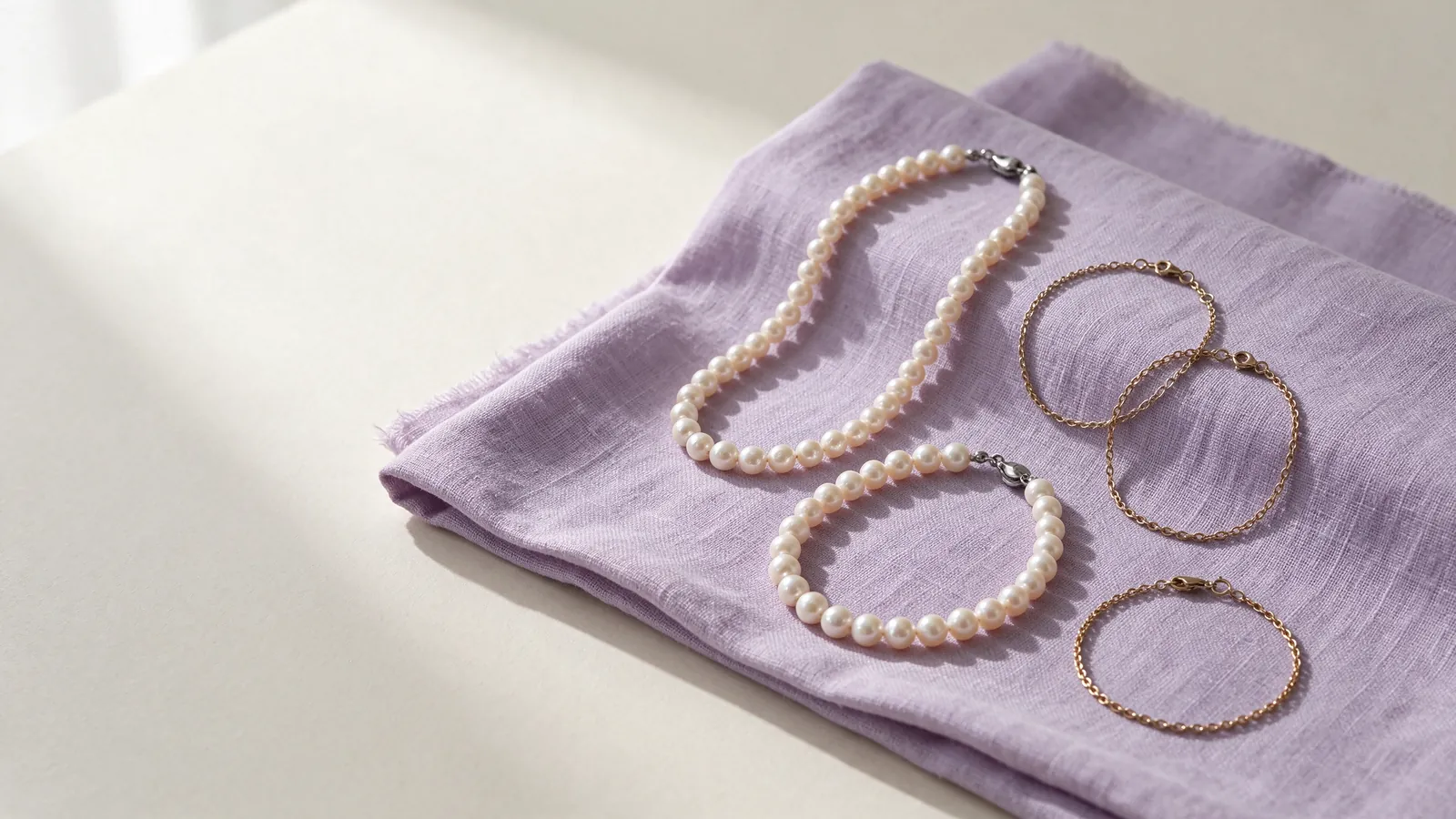
How does one-handed fastening influence your pearl bracelet clasp choice, the best clasp for pearl bracelet wear and your use of a pearl bracelet safety clasp?
Start by placing the bracelet on the wrist where you plan to wear it. Handling a clasp with two free hands does not reproduce fastening it on yourself. Support your arm and the pearl bracelet on a clean, soft cloth so you can concentrate on the connection without letting the strand hang. See whether your other hand can hold the clasp body and bring the ends together without squeezing or pulling the pearls.
Pay attention to your normal grip, not the grip someone else uses in a demonstration. A lever pointing away from your fingertips or a ring hidden beside a pearl can make an otherwise familiar mechanism frustrating. Practice taking the bracelet off as well as putting it on. If you expect help, have the helper learn both actions too, including any separate catch that must be released before the main fastening.
Before choosing the best clasp for pearl bracelet wear, what should you check on the pearl bracelet clasp and any pearl bracelet safety clasp?
Inspect the connection for correct alignment and visible gaps, confirm that the main mechanism closes in its intended way, and check additional components individually. Then bend and turn your wrist gently to feel where the clasp sits. Do not take a click as proof that every catch is engaged, and avoid pulling hard on the strand. A useful fitting ends with you knowing the complete removal sequence.
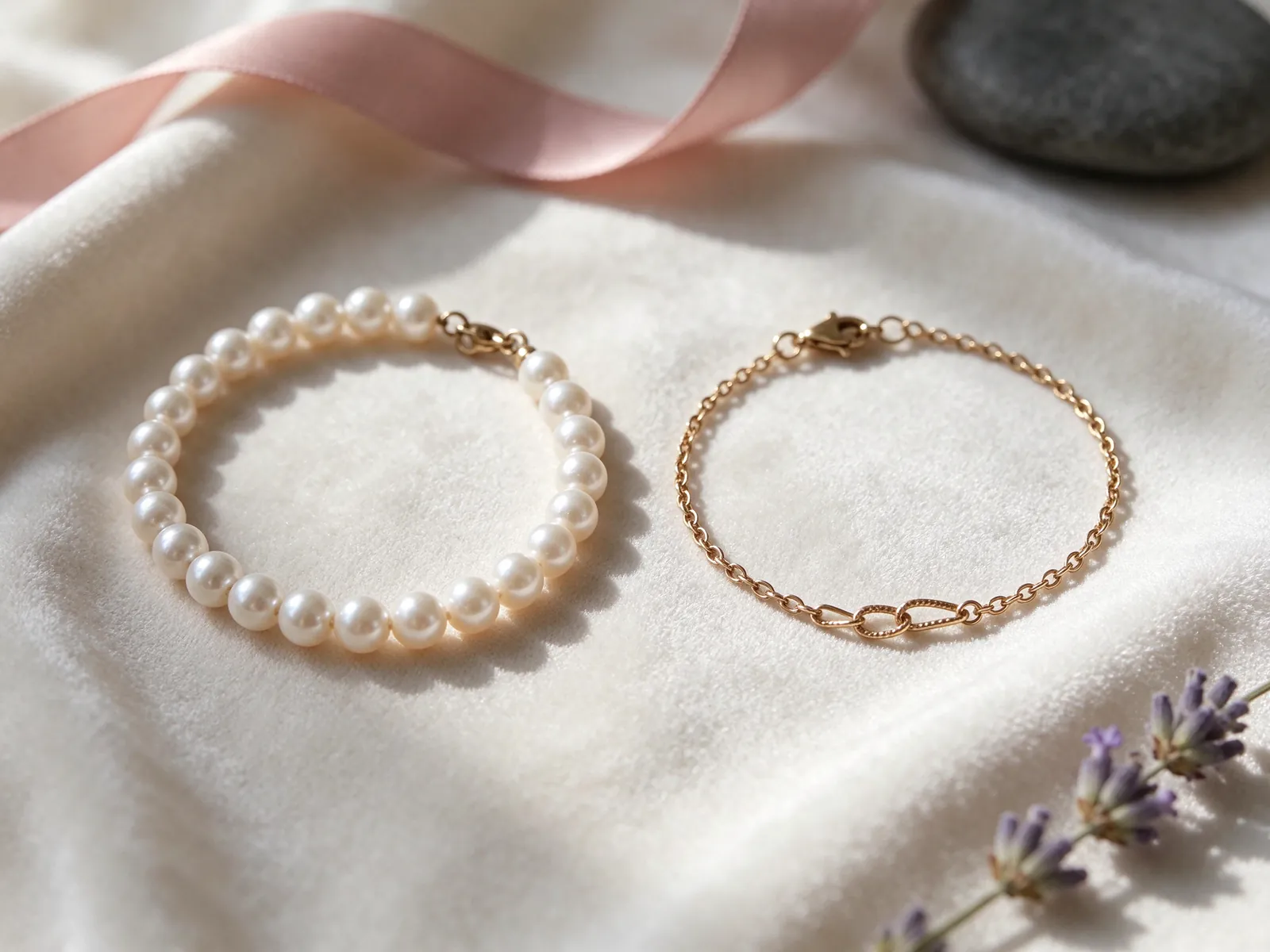
Read the mechanism: a box clasp and a lobster clasp require different handling
With a box clasp, an insert generally enters a receiving box. You need a clear approach that lets the ends meet straight rather than at an angle. Try aligning them with the bracelet supported; if the rows twist while you reach, reset them before closing. Examine the surface against the skin, because a decorative top says little about whether the underside presses on your wrist or rocks during movement.
A lobster clasp uses a lever to open a gate that meets a connecting ring. Think of the clasp and ring as one working pair. An accessible lever is less helpful if the ring turns out of reach or the opening is difficult to guide around it. Try grasping the metal with your fingertips and check whether you can complete the action without holding the strand under tension.
Know when changing the approach is not enough
Resting your wrist differently or finding a better finger support may improve an unfamiliar action. Continued resistance, an insert that appears bent or a lever that fails to return normally needs a different response: stop forcing the clasp and arrange an examination. A fitting should help distinguish a technique you can learn from a construction that does not suit your hand or a mechanism that needs attention.
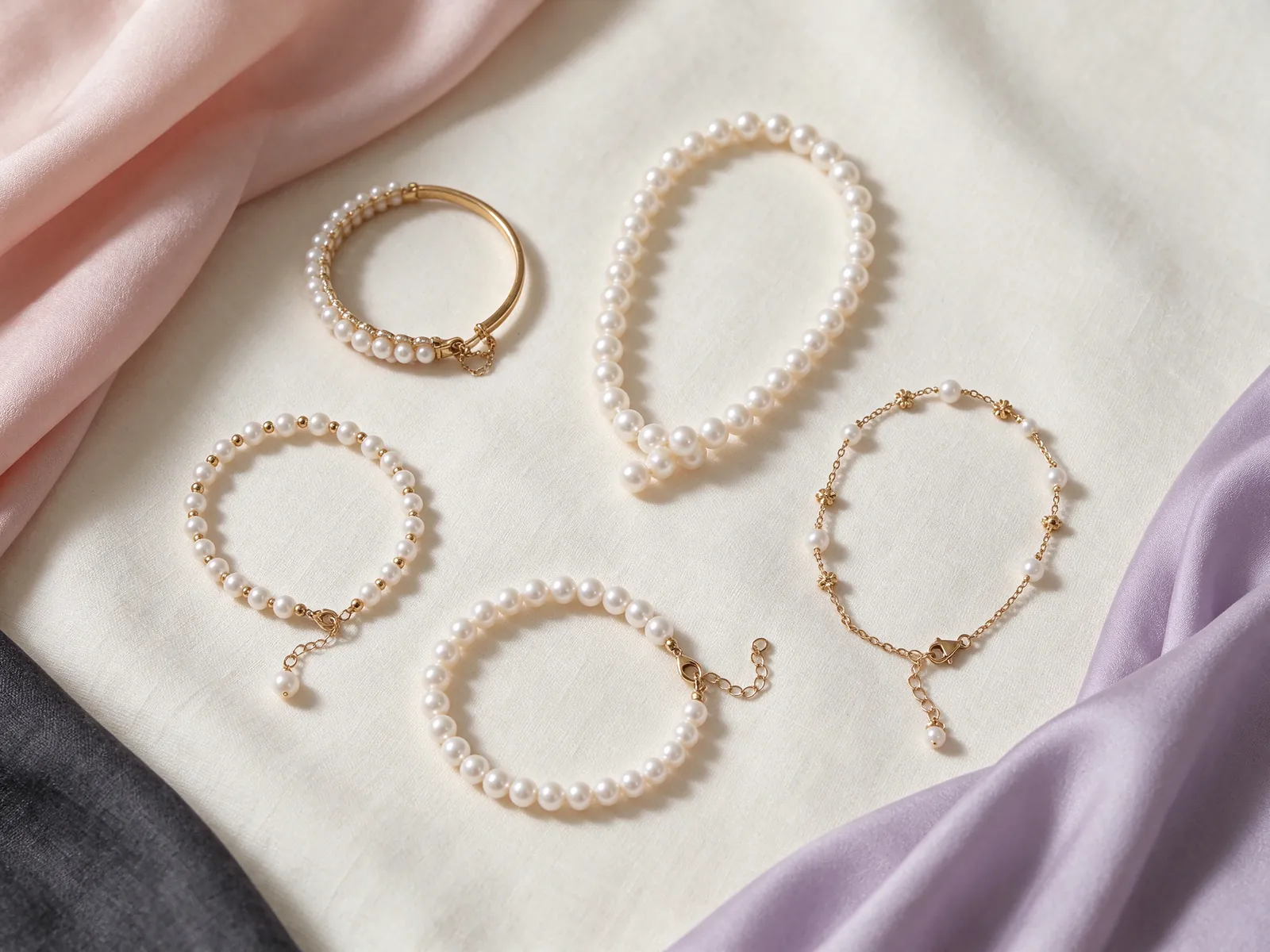
Secondary catches and chains: map out the full opening sequence
The phrase pearl bracelet safety clasp does not identify one universal construction. A small side catch can have a separate action from the main clasp, while another design may place the extra connection elsewhere. Ask the person demonstrating the bracelet to identify each working component. Close and release them in the intended order yourself, so the additional feature is something you understand rather than a detail you only notice in a photograph.
A safety chain is an extra chain connection between bracelet ends, not the main closure. Check whether it has its own opening, how it behaves after you release the clasp, and where it rests during wear. A hanging chain can meet a charm or nearby jewelry. Its presence does not make a loose main connection acceptable, so a clasp that changes behavior should be examined before the bracelet is worn again.
Replacement questions must include the bracelet ends
When considering a different fastening, look beyond the visible clasp face. The multi strand pearl bracelet guide raises useful questions about row spacing and end connections. Discuss the actual attachments, row layout and room for your fingers when assessing a clasp change. A small secondary catch hidden below decoration may be an important handling issue even when the main clasp seems straightforward.
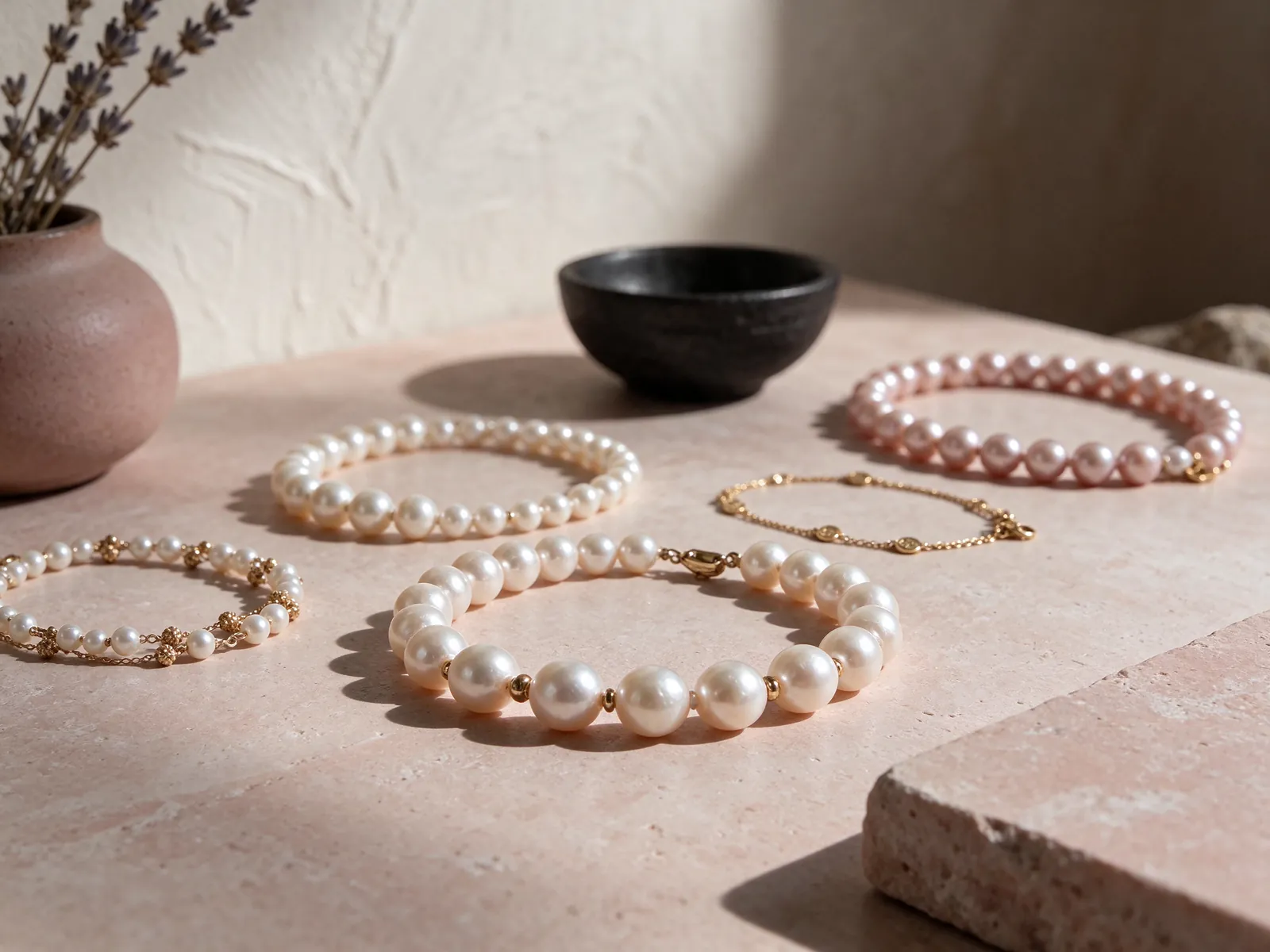
For multiple rows, check the layout as well as the opening style
Multi-row refers to the strand arrangement and its connections; box and lobster describe ways to open and close a fastening. Ask separate questions about these features instead of assuming a multi-row clasp has one particular mechanism. Look at where every row attaches and how much room there is between the end connections. A wide decorative clasp cannot by itself establish how the strands will sit on your wrist.
Turn your palm upward, lower your hand and bring your wrist toward a desk during a trial. Notice whether rows cross near the clasp, one strand becomes unusually taut, or the fastening tilts. If a pearl charm bracelet inspires the styling, consider how a charm would share space with the rows and opening. Decoration should be positioned so you can still find and handle the functional parts.
Test the bracelet inside the clothing you normally wear
A broad layout can look orderly on a flat surface yet gather under a close cuff. Try a familiar shirt or jacket and watch how the rows respond as you move. If one strand rolls across the clasp, first check that the ends are not twisted; forcing the closure tighter is not a solution. An open wrist styling choice shows the arrangement differently from a bracelet partly covered by sleeves.
Length and comfort: include the clasp in the fit decision
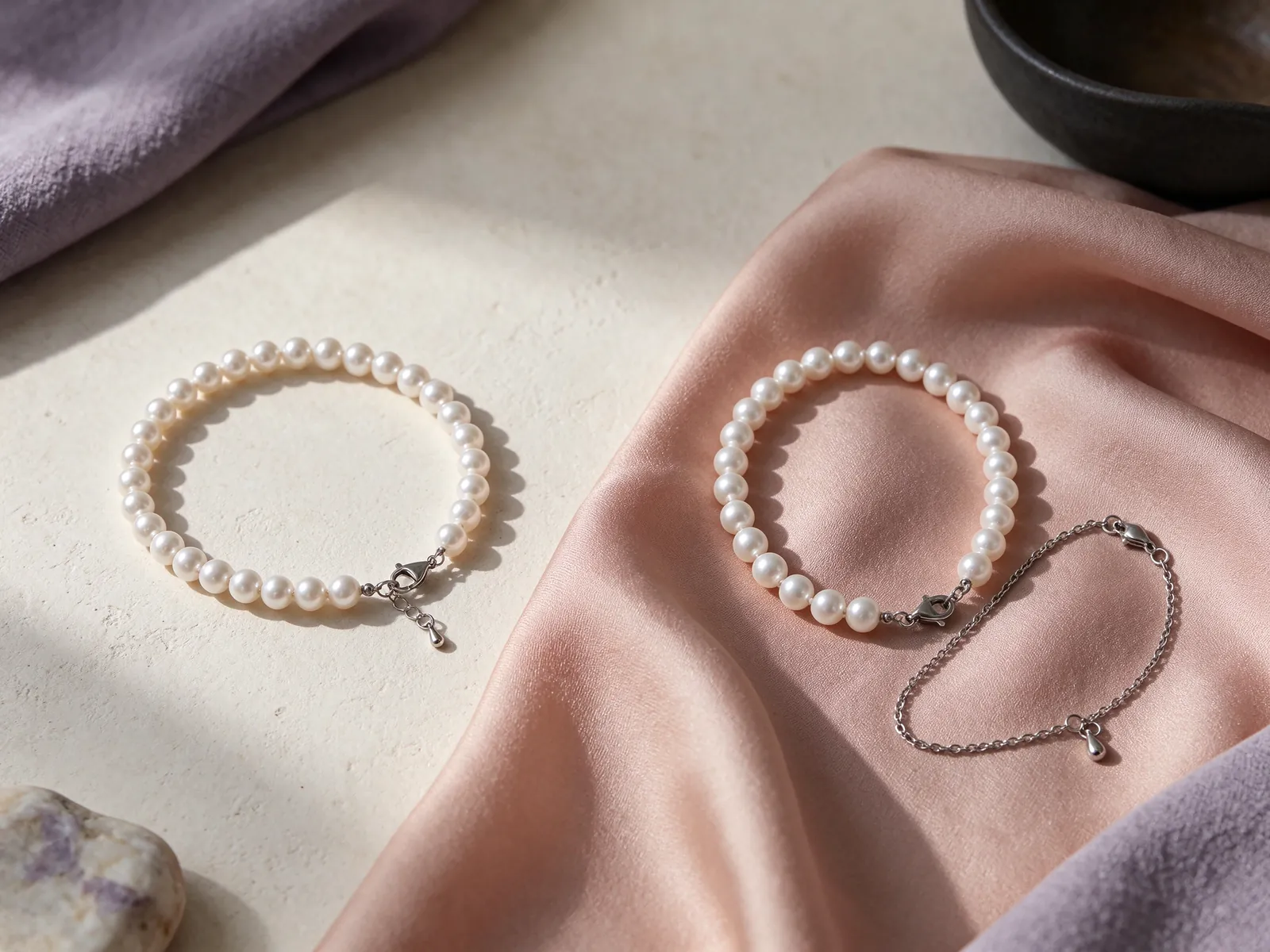
A wrist measurement does not describe the whole bracelet. The clasp takes up part of its length, and the shape of that component affects the inside fit alongside the pearls. Pair the pearl bracelet size guide with information about where you like the bracelet to sit and how much movement feels comfortable. This is more useful than asking for a length without mentioning the planned fastening or strand layout.
If the bracelet sits too close, there may be little space for a finger to support the clasp during closure. If it is too loose, the clasp can rotate onto the back of the wrist or repeatedly meet the work surface. Compare the feel with your arm relaxed and your wrist bent. Avoid treating any single clearance as suitable for everyone; wrist shape, row width and clasp profile all need consideration.
Evaluate adjustment and main closure separately
An adjustable pearl bracelet introduces another action to test. Identify the adjustment points, choose a setting and see where the unused chain section ends up. Then open and close the main fastening at that setting and repeat the movement check. Adjustment can change where the clasp rests, but it does not automatically make the lever easier to reach or guarantee comfort at every available position.
Choose the visual role of the clasp before settling on metal color
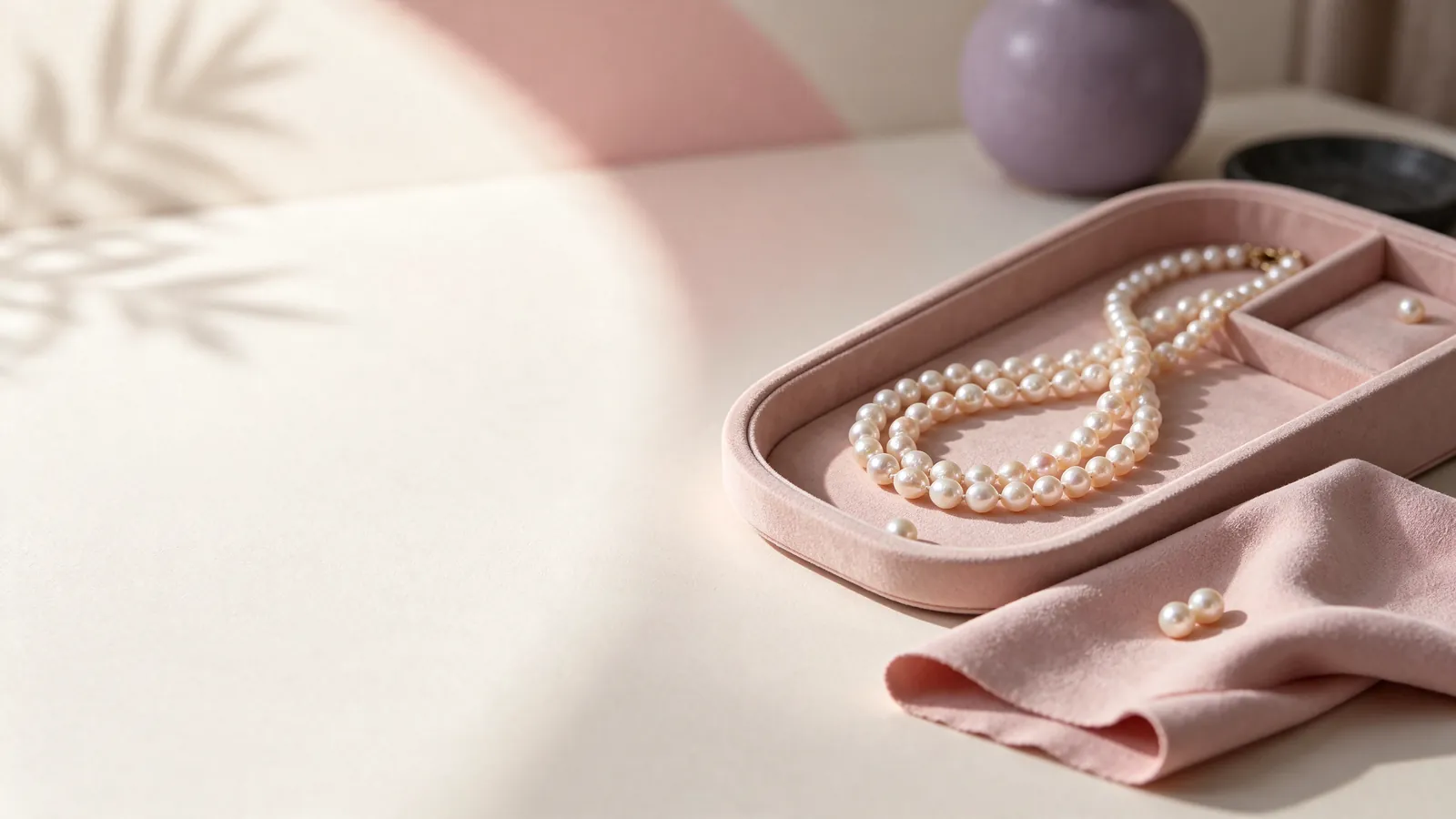
Decide whether the clasp should be a quiet connection or a visible focal point. Compare its scale with the pearl rows, then look at the side profile and the surface touching the skin. A decorative clasp that turns toward the back of the wrist should still look intentional. When pairing a bracelet with a watch, test their contact in normal positions instead of assuming they will stay apart.
The 18k gold pearl bracelet and platinum pearl bracelet guides offer related ways to consider metal color in a coordinated look. Flint Jewelry's customization material options are 18K 750 white gold, 18K 750 yellow gold, 18K 750 rose gold, PT950 platinum and PT900 platinum. Discuss the proposed clasp and end components within that design conversation. Metal choice and fastening action are separate decisions: a color preference cannot tell you whether your fingers can reach a catch.
Consider cuffs, knitwear and layered accessories
Look for edges near a shirt seam and projecting parts that could meet knit fibers. For evening styling, a visible clasp face may be appealing, but it still needs to feel comfortable when you sit down, reach into a bag or rest your arm. With another bracelet, first examine whether the pieces catch or rub against each other. Matching their colors is a styling option, not a substitute for that practical check.
Care for the whole bracelet when the clasp needs attention
GIA lists pearl at 2.5 on the Mohs hardness scale. When you handle a metal clasp, avoid letting a hard tool scrape the pearls beside it. Cleaning only the metal is not a reason to expose the entire strand to an unsuitable process: GIA says pearls should never go into ultrasonic or steam cleaners. Routine wiping after wear uses a very soft, clean cloth rather than an abrasive approach.
Changes in closure deserve attention. Put the bracelet aside if the mechanism becomes difficult, a connection remains loose, an end ring opens or the string near the clasp shows obvious wear. Do not reshape an insert yourself or add oil or adhesive to an unfamiliar mechanism. Arrange the bracelet smoothly for storage, keep other jewelry from pressing on the clasp and release tangled chain sections without pulling on the pearls.
Describe the specific handling problem when discussing a design
Tell Flint Jewelry which wrist you use, whether you fasten jewelry yourself, the action that feels awkward and the sleeves or watch you usually wear. For an existing bracelet, clear views of the clasp front, back and end attachments can make the discussion easier. Photographs support communication, but the actual mechanism needs examination to assess a problem. These details help frame a conversation about access, proportion and fit rather than simply requesting a named clasp. Contact Flint Jewelry on WhatsApp or call +85260106207 to discuss clasp choices and your wearing needs.
| Feature | Working action | On-wrist test | Wardrobe check |
|---|---|---|---|
| Box clasp | Insert meets a receiving box | Align the ends without strand tension | Check edges and the underside beside cuffs |
| Lobster clasp | Lever opens a gate around a ring | Handle both clasp and ring with the free hand | Notice rotation toward the back of the wrist |
| Secondary catch | Additional closure depends on its construction | Learn each closing and release step | Make sure decoration leaves finger access |
| Safety chain | Extra chain connection joins the ends | Understand its handling with the main clasp open | Look for contact with charms or clothing |
| Multi-row attachment | Rows connect alongside a chosen mechanism | Turn the wrist to observe crossing or tipping | Try the layout within a usual sleeve |
Pearl knowledge and authoritative references
According to GIA, pearl ranks 2.5 on the Mohs hardness scale. Protect the pearls next to a clasp from hard-tool contact, and do not clean the strand in ultrasonic or steam equipment.
Read the reference for this factFrequently asked questions
Is a familiar clasp name enough when buying a bracelet as a gift?
No. The recipient's fastening hand, finger access and preferred fit can make the same type feel different. Describe those habits during the design discussion and, where possible, let the wearer try the full closing and removal sequence.
Should I choose a decorative clasp that always stays on top?
A clasp can move as the wrist moves, so assess its appearance and comfort in more than one position. Fit, row layout and neighboring accessories affect how it sits. Do not choose by a single posed top view alone.
Does an adjustable length solve a hard-to-reach lobster clasp?
Not automatically. Adjustment changes fit, while the lever direction, opening and connecting ring still determine handling. Test the main closure after selecting a length, including where any remaining chain section rests.
Can I keep wearing the bracelet if only a secondary catch works?
A working secondary connection does not establish that the main clasp is sound. If the main closure is loose, damaged or behaving differently, stop wearing the bracelet and arrange a professional examination rather than relying on the extra component.
What should I send when asking about a clasp change?
Provide clear views of the clasp front, back and strand attachments, plus a description of the difficult action and desired fit. Include the wearing wrist and whether there are multiple rows. Photos help explain the request, but physical examination is needed to assess the mechanism and connections.
Updated: