
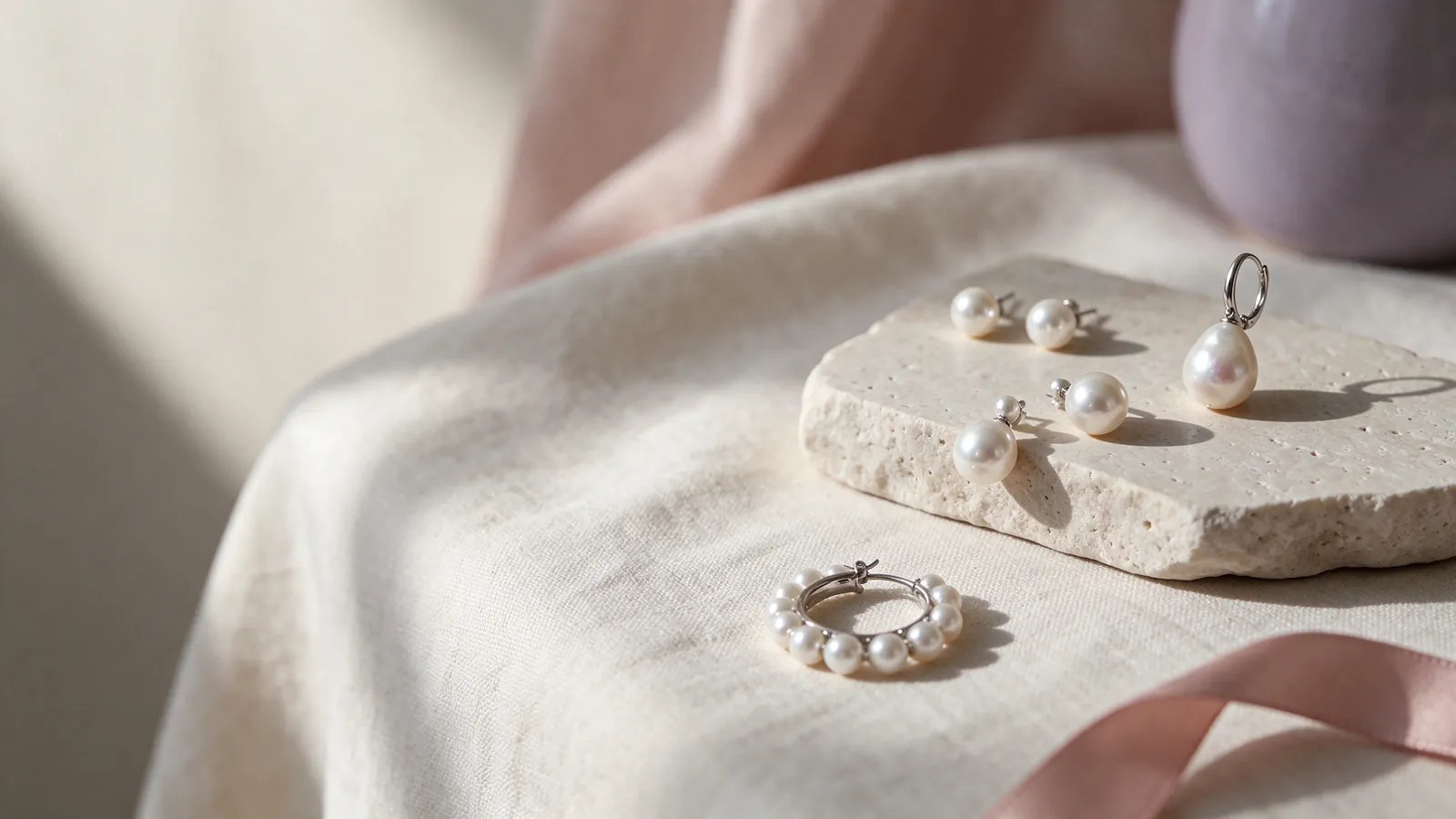
Choosing single-pearl stud earrings: how pearl studs frame the earlobe
Start by deciding what you want to notice when you look in the mirror: a subtle light near the ear or a distinct outline beside the face. A stud keeps the main feature near the lobe, but a front view does not reveal its entire profile. The pearl's outward projection and the location of your piercing both matter. A diameter can describe size without predicting the complete effect on an individual ear.
Imagine the earring with the clothes and hairstyle you use most often. Hair tucked back exposes more of the outline; loose hair can turn the same stud into a glimpse of light. A high collar or noticeable glasses may change where your attention settles. For a broader introduction, compare the design directions in pearl earrings, then narrow your choice to the specific ear-level effect you prefer.
Styling single-pearl stud earrings with a charm: a new silhouette for pearl studs
A charm adds a line below the pearl, changing the composition rather than simply adding another detail. Soft Tide can be styled with an earring charm selected separately. Talk about the connection point, the direction of movement, and the space near your hair and neckline. If you want the stud to remain the main focus, describe a restrained extension; if you want a stronger one-sided look, include the other ear in that discussion.
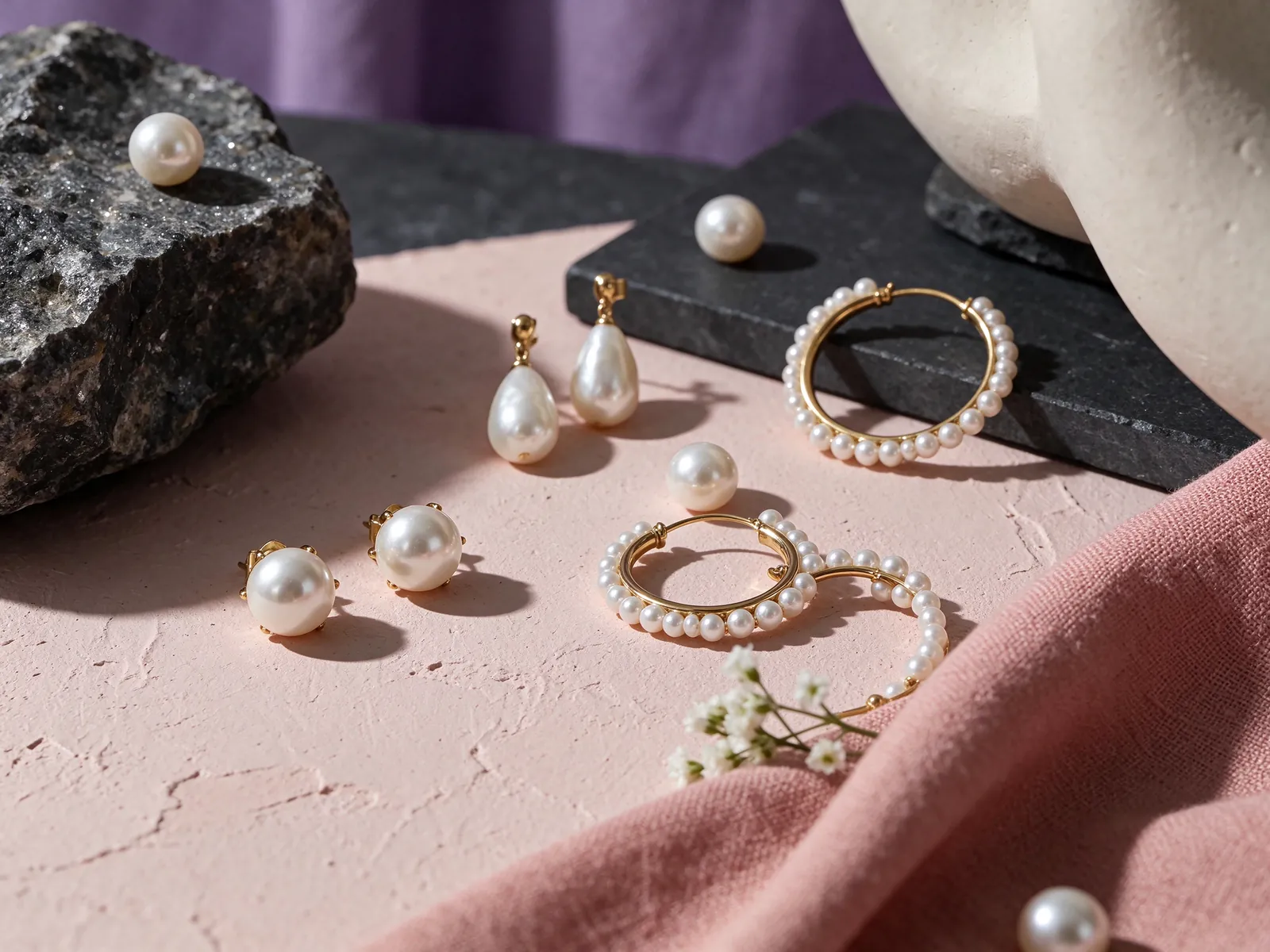
Choose the character of the outline before relying on size
Baroque describes an irregular pearl shape, not a perfectly round one. Soft edges, folds, and an elongated or wider outline can create different impressions at the ear. Think about whether you enjoy a flowing shape or a compact visual accent. Two size descriptions that sound alike do not necessarily produce the same silhouette, and an irregular edge can be the appealing feature rather than something the design should conceal.
GIA describes seven pearl value factors: size, shape, color, luster, surface quality, nacre quality, and matching when jewelry contains multiple pearls. That framework helps separate the questions you are asking. A white pearl's color does not tell you everything about its luster, and an irregular shape does not identify its species or origin. When considering a stud, pay attention to the way the surface catches light and how its texture works with the surrounding metal lines.
Use both detail views and an outfit-level perspective
Close images can reveal folds that become much quieter at conversation distance. Consider the pearl surface first, its proportion against the ear second, and the full outfit last. This prevents a dramatic close-up from becoming the only basis for your decision. Light and camera angle influence the highlight you see; neither a photograph nor the word white establishes a certificate or promises an identical appearance under every lighting condition.
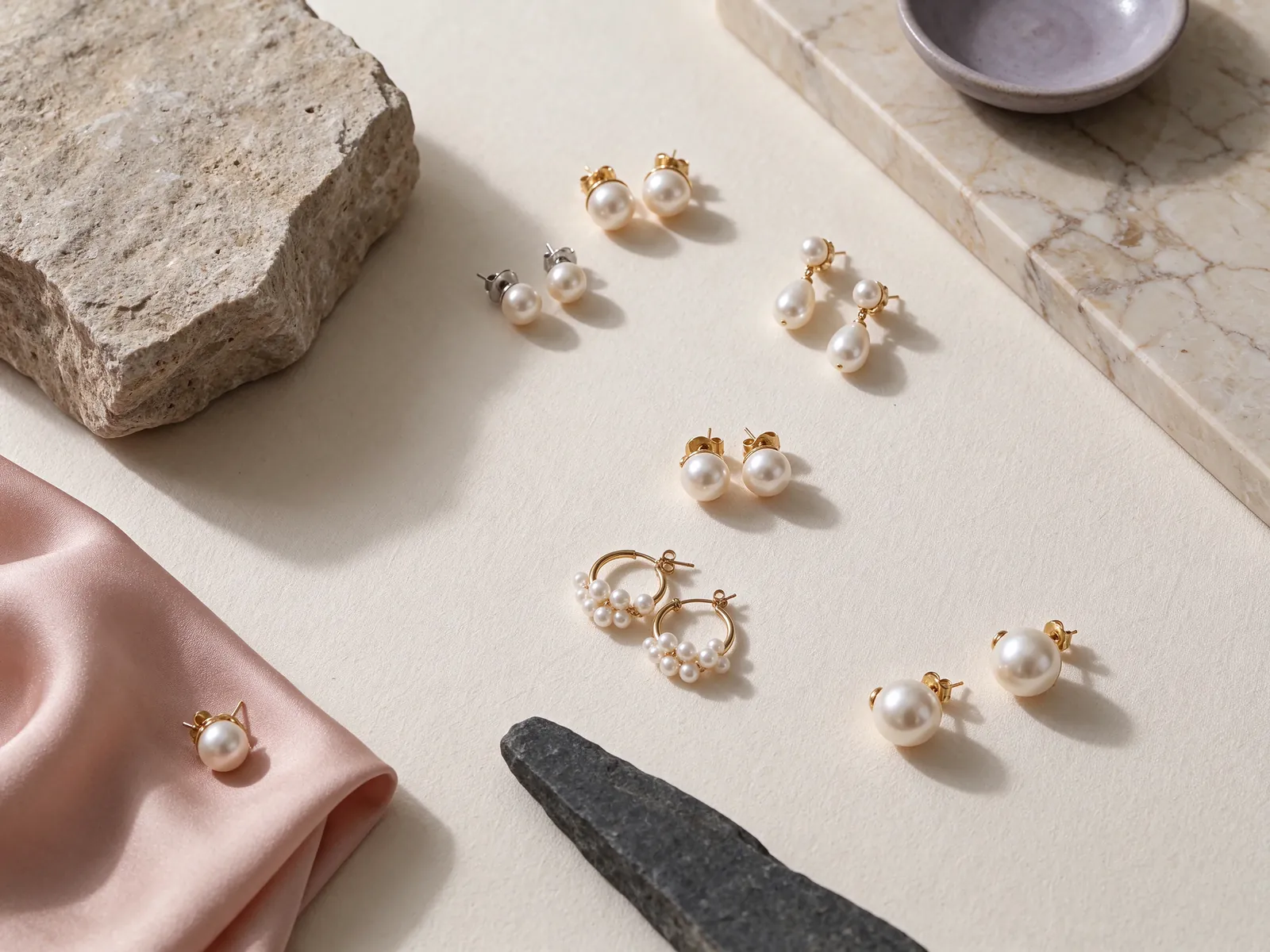
Understand Soft Tide as a single-earring design
Flint Tide · Soft Tide Earrings is design FE014: a stud earring with a white baroque pearl measuring approximately 7–8mm. The product unit is one earring, not a pair. Its gently uneven outline and pared-back construction make the pearl's surface the visual focus. The approximate measurement helps begin a proportion discussion, but it does not turn an irregular pearl into a round shape or establish its fit for every ear.
A single pearl earring offers a deliberate way to compose an asymmetric look. You might highlight the ear exposed by a side-swept hairstyle, or balance the pearl with a simpler earring you already own. Begin with the result you want on each side rather than assuming symmetry is necessary. If your goal involves two earrings, discuss the quantity and desired relationship between them; the design name does not imply a supplied matching pair.
Balance a single focal point with the rest of the outfit
An angled neckline or off-center hair part can provide balance without repeating the same earring on both sides. Decide whether the pearl follows that direction or offers a counterpoint. Include your necklace, glasses, and other visible jewelry in the picture. If every piece competes for attention, a subtle baroque surface may be lost; leaving visual space around it can make the irregular outline easier to appreciate.
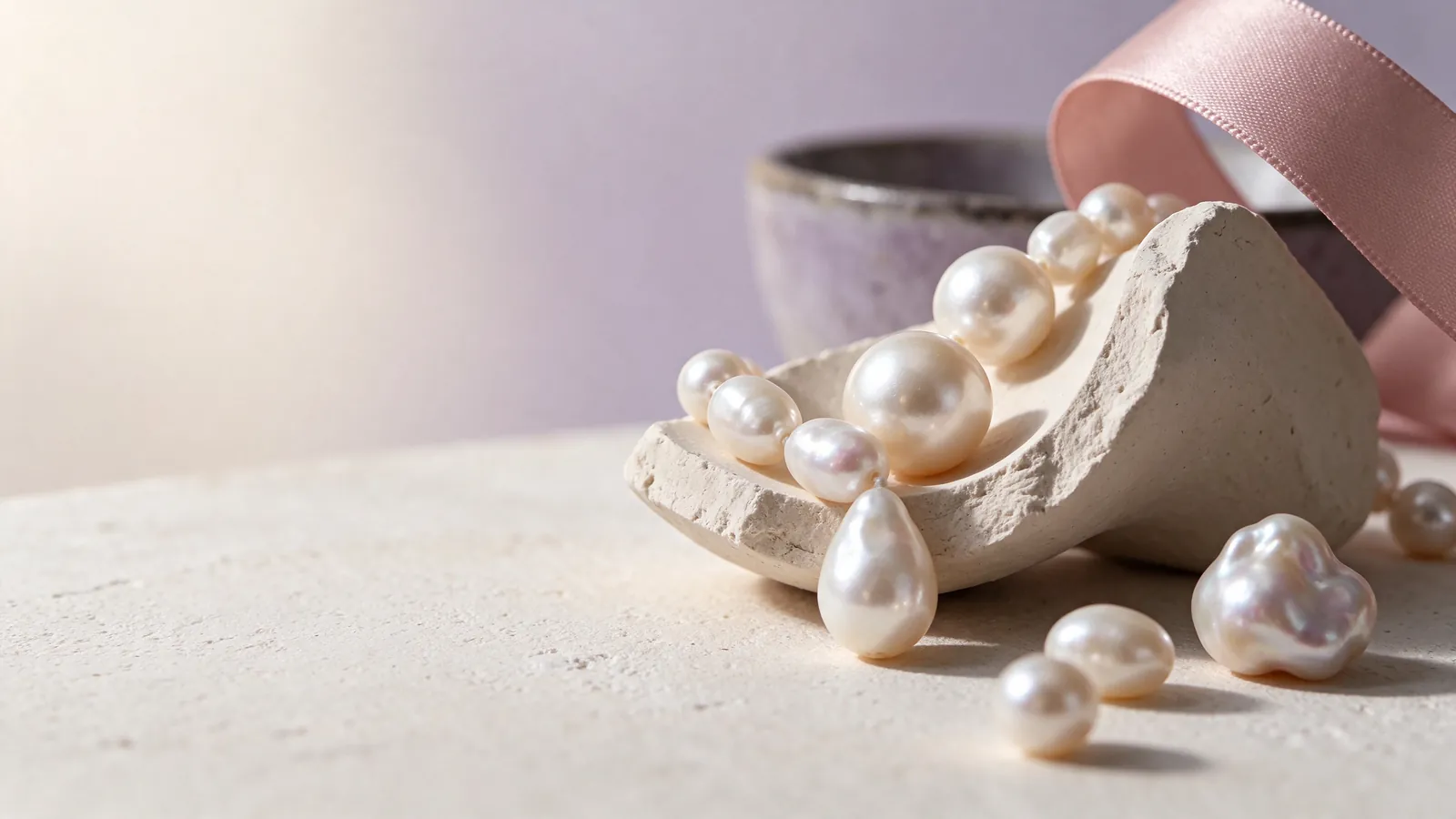
Make a daily styling decision, not just an occasion choice
Consider your most-used necklines before planning a stud around a special event. Crisp shirts and simple knits leave room for a pearl's texture, while patterned collars, bows, or ruffles may call for a quieter accent at the ear. The guide to everyday pearl earrings develops this wardrobe-first approach. Instead of asking whether a stud is inherently formal, ask what role it will play beside the clothing you actually reach for.
Metal color can connect with jewelry you already wear without requiring every accessory to match exactly. Notice which details are already prominent, such as a watch or glasses frame, and decide whether the pearl should lead or support them. Practical habits matter, too: holding a phone to your ear, using headphones, and brushing hair back can bring objects into contact with an earring that looks unobtrusive in a photograph.
Account for glasses, headphones, and the earring back
Think about space on both sides of the lobe. Glasses occupy an area behind the ear, while headphones and a phone may press near the front. Describe the accessories you regularly use instead of assuming that close-to-ear means universally compatible. Avoid tightening the back to force the pearl flatter against the lobe. If contact causes discomfort, stop wearing it and understand the cause rather than relying on a material label as reassurance.
Plan multiple piercings as one composition
When considering pearl studs for a second piercing, the space between holes is as important as the individual pearl size. Look at the outline of the first earring and the room its back occupies. An irregular edge may overlap a neighboring piece even when both seem modest in isolation. Soft Tide's approximate 7–8mm measurement is not a universal recommendation for a second piercing, because placement and existing jewelry differ between wearers.
Give the arrangement a clear lead element. If the baroque pearl is the focus, a simple nearby line may keep its edge visible. Multiple textured accents can instead create a busy cluster in which individual shapes are hard to distinguish. Consider any charm within the same plan, since it may move into space occupied by another earring. Describe your existing pieces by shape and position rather than only by labels such as small or classic.
Keep comfort questions separate from styling preferences
Tell Flint which piercings you normally use and which ear you want to emphasize. Clear front and side descriptions can support a discussion of spacing, but they cannot determine how an earring will feel. New or unhealed piercings and persistent pain or irritation need qualified healthcare advice. A styling arrangement is not a treatment, and a precious-metal choice should not be presented as a universal solution to sensitivity.
Compare studs and hanging silhouettes by what they do
A stud concentrates the main shape near the lobe; pearl drop earrings carry the line below it. If you want visible movement, a hanging direction is worth comparing. If you want a contained ear-level accent, the stud direction may better express that preference. Neither option automatically belongs to a particular dress code or face shape. The collar, hairstyle, and other accessories help determine how the line reads in a complete look.
The comparison of pearl studs vs drops vs dangles is useful when you frame the choice around focus, extension, movement, and contact with clothing. A stud plus a separately selected charm should be considered as a complete combination, not only by its post construction. If you prefer the vertical effect of long pearl dangle earrings, consider where your hair ends and neckline fall. That design exploration does not mean Soft Tide includes a full range of hanging styles.
Explain the desired change before adding a charm
Describe whether you want more texture close to the ear, a longer line, or a touch of movement. Those preferences make a discussion more useful than choosing a component by appearance alone. A work-to-evening change might involve the overall direction rather than extra decoration everywhere. Discuss the charm's connection and the opposite ear at the same time; similar-looking accessories should not be assumed to fit together automatically.
Bring care and customization into the practical decision
Pearl ranks 2.5 on the Mohs hardness scale according to GIA. Even a small stud needs gentle care and protection from rubbing against harder jewelry. Wipe the pearl with a very soft, clean cloth after wearing and store it apart from pieces that could scrape its surface. Avoid acids, perfume, hair spray, and excessive heat. Never use an ultrasonic or steam cleaner for a pearl earring, including when the metal parts are what you want to clean.
Keep sprays away while arranging your hair, and hold the earring's construction rather than tugging on the pearl during removal. If you add a charm, watch for catches on fabric or hair. Check the post, back, and connection before wearing again. A loose component is a reason to pause and discuss the issue, not to bend or tighten parts yourself. These routines reduce unnecessary contact; they do not establish waterproofness or suitability for every activity.
Share the outline, quantity, and materials you have in mind
Talk with Flint Jewelry about your preferred white baroque outline, whether you want a single-sided or two-sided arrangement, and whether a separately chosen charm belongs in the look. Custom material options are 18K 750 white gold, 18K 750 yellow gold, 18K 750 rose gold, PT950 platinum, and PT900 platinum. Describe any past jewelry-contact discomfort along with your daily habits so that the conversation addresses practical needs as well as visual preferences.
Ready to explore the outline and arrangement you have in mind? Contact Flint Jewelry on WhatsApp or call +85260106207 to discuss a single-sided or two-sided look, the earrings you already wear and your everyday styling habits.
| Decision | Detail to consider | Useful question | Outfit connection | Avoid assuming |
|---|---|---|---|---|
| Position and proportion | Front outline plus side projection | Where should attention settle? | Compare exposed and partly covered ears | Size alone predicts comfort |
| Irregular shape | Width, flowing edges, and folds | What character do you enjoy? | Simple fabrics can leave room for texture | Baroque establishes species or origin |
| One-earring styling | FE014's unit is one earring | Which side leads the composition? | Use hair and neckline for balance | A matching pair is included |
| Additional charm | Connection and moving line | Do you want extension or a contained accent? | Include collar and hair clearance | Every charm is compatible |
| Care routine | Soft wiping and protected storage | What might touch or rub the pearl? | Handle the structure when taking it off | Small pearls tolerate ultrasonic cleaning |
Pearl knowledge and authoritative references
GIA places pearl at 2.5 on the Mohs hardness scale. Pearl studs require gentle care and should never be put into ultrasonic or steam cleaners.
Read the reference for this factFrequently asked questions
Is the Soft Tide design sold as two matching studs?
The product unit for FE014 is one earring, not a pair. The design uses a white baroque pearl measuring approximately 7–8mm in a stud construction. For a two-sided arrangement, discuss the number of earrings and the intended relationship between the sides rather than assuming paired supply.
How should I interpret the approximate 7–8mm size on a baroque pearl?
Use it as a starting point for understanding proportion, not as a promise of a perfectly circular outline. The irregular shape, outward profile, and your piercing position all affect how much visual space the pearl occupies. Describe the look you want against your ear as well as the size you have in mind.
Can one pearl earring look intentional with a different earring on the other side?
Yes, asymmetry can be a deliberate styling direction. Choose which ear should lead, then consider the other earring, your parting, and the neckline together. A simpler opposite accent may give the baroque texture room to stand out; identical pieces are not the only way to create visual balance.
What changes when I add an earring charm?
The focus extends below the lobe and may gain movement. Soft Tide can be styled with a separately chosen charm, but discuss its connection, the resulting line, and clearance near hair and clothing. The combination should be considered as a whole rather than assuming any attractive charm will fit.
What should I avoid when cleaning a pearl stud?
GIA advises against ultrasonic and steam cleaning for pearls. Avoid acids, perfume, hair spray, excessive heat, and rough rubbing. Use a very soft, clean cloth for routine care, and do not pull on the pearl when handling the earring. Difficult residue or loose parts call for discussion before stronger cleaning or adjustments.
Updated: