
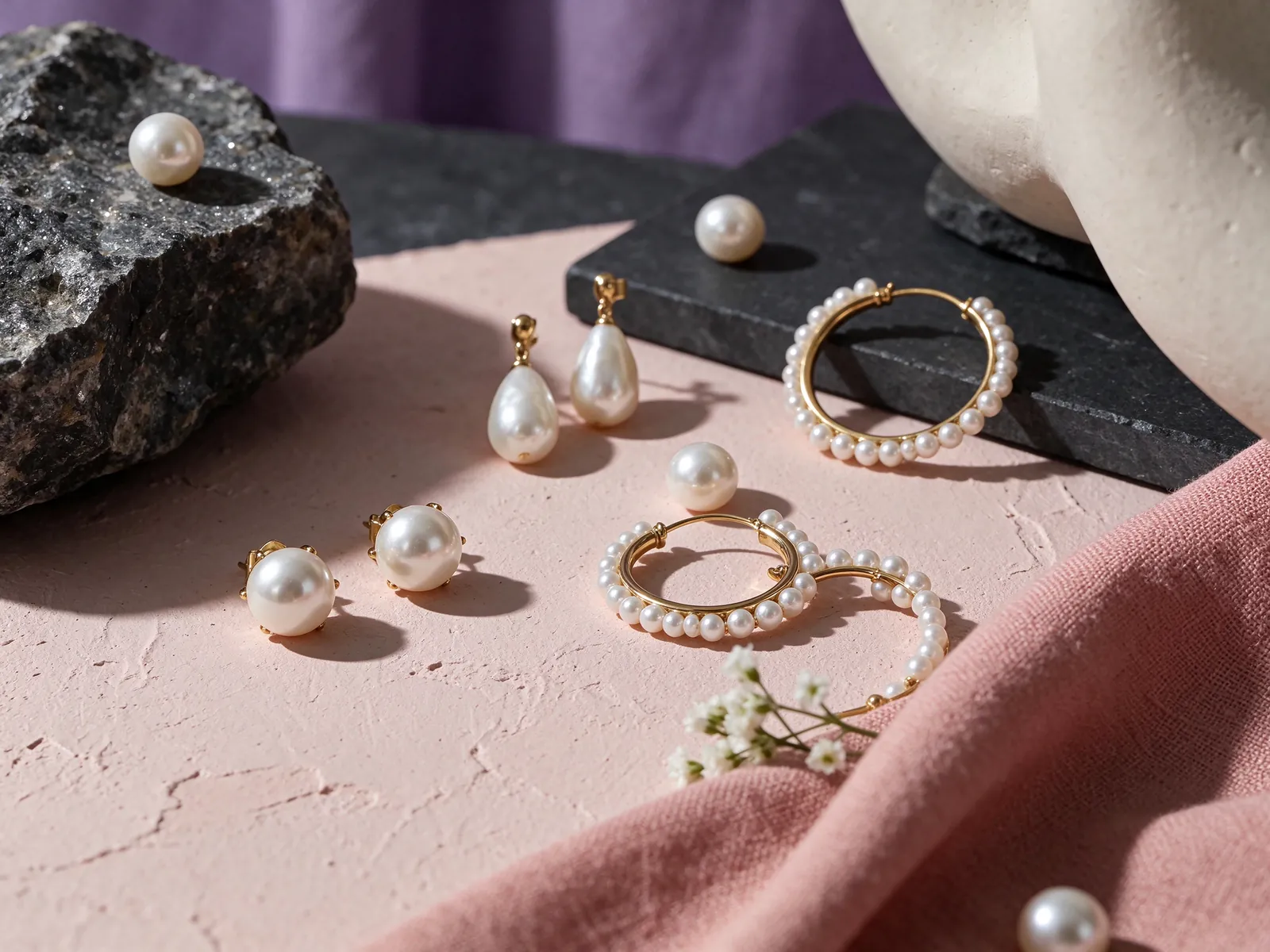
What gives short pearl drop earrings and pearl drops their below-the-lobe proportions?
A pearl drop creates a small extension beneath the ear rather than placing its entire focal point at the piercing. Picture three locations: the hole, the metal connection and the bottom of the pearl. Measuring from the hole is different from judging how much of the design shows below the lobe. This distinction explains why the same short outline can appear more exposed on one ear and more closely tucked beneath another.
Use the front view to compare width and the side view to understand how far the design projects. A visible gap between the lobe and pearl can be part of the look you enjoy, while another wearer may prefer a more continuous outline. If you actually want light concentrated on the lobe, compare pearl stud earrings first. That alternative helps separate a preference for placement from a preference for the pearl itself.
What do length and connections reveal about short pearl drop earrings and how pearl drops move?
Trace the design from the upper fitting toward the pearl, noticing a connecting ring, a joint or a fixed continuous structure. A moving connection can let the lower portion turn separately, whereas the whole earring may also change position on the ear. During a fitting, turn your head gently and observe both effects. The word short describes a visual impression; it cannot guarantee that a worn earring remains completely still.
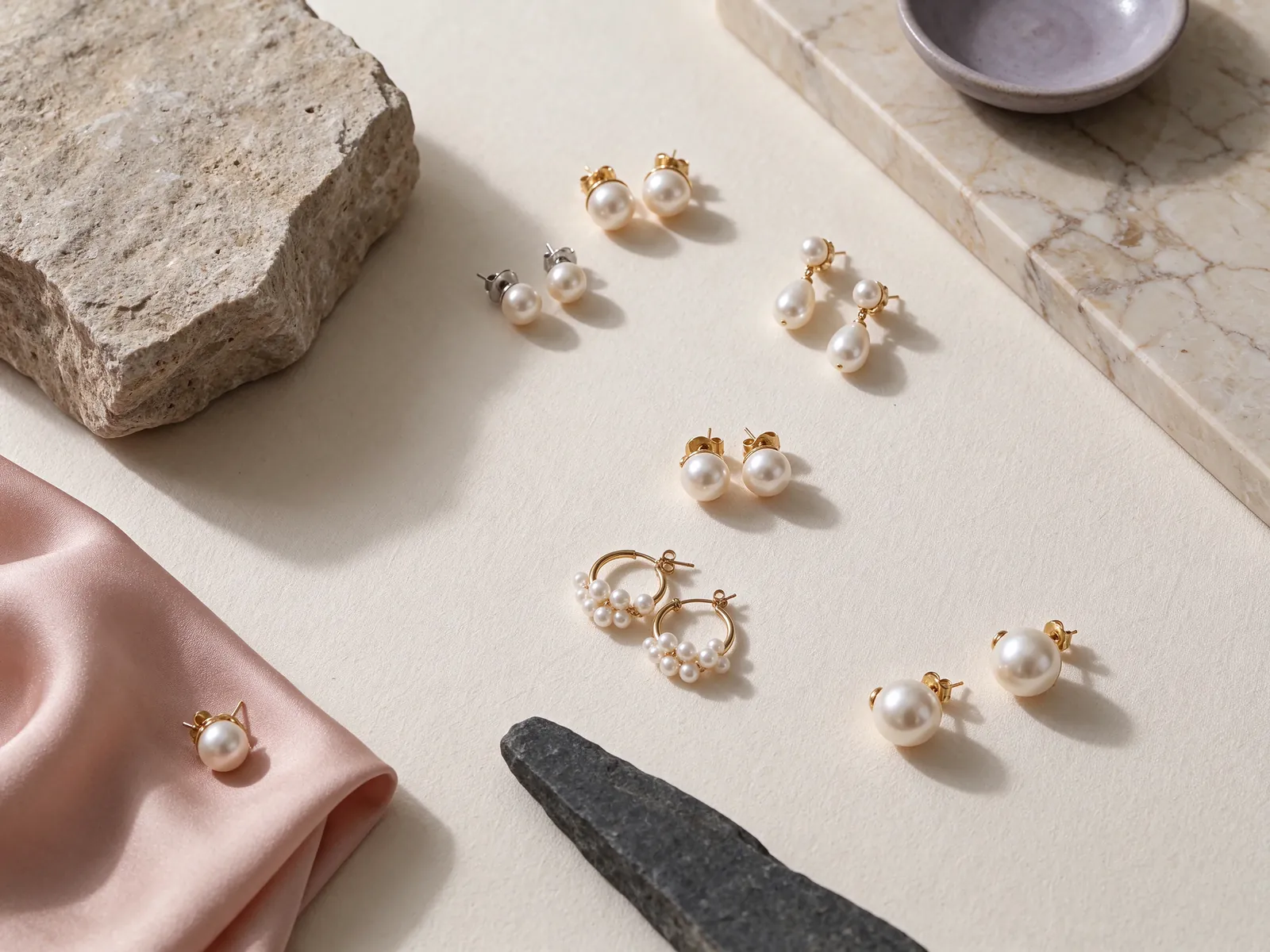
Find your preferred position beneath the lobe
Your piercing location influences how much of an earring appears beneath the lower edge of the ear. Before choosing, decide whether you want the pearl to start close to that edge or sit farther below it. You can point to the intended position in a mirror rather than relying only on words such as small or delicate. This gives you a concrete comparison without creating a supposedly ideal length for every wearer.
Look at both ears together, since the lobes and piercing heights may differ slightly. First assess the balance in your usual posture, then look more closely at the bottom of each pearl and the upper components. Do not assume a pair that appears level on a stand will create exactly the same alignment on your ears. A difference matters according to how you experience the complete look, not just how it appears in an enlarged photograph.
Use the side view to assess the fitting
Observe the post direction, the backing position and the orientation of the front piece. Wear the fastening according to its construction rather than tightening it excessively to alter the pearl's height. If a design seems to tilt, consider the whole relationship between the fitting and the lobe instead of immediately blaming pearl size. Note any pressure or pulling as a separate concern from whether the front outline appeals to you.
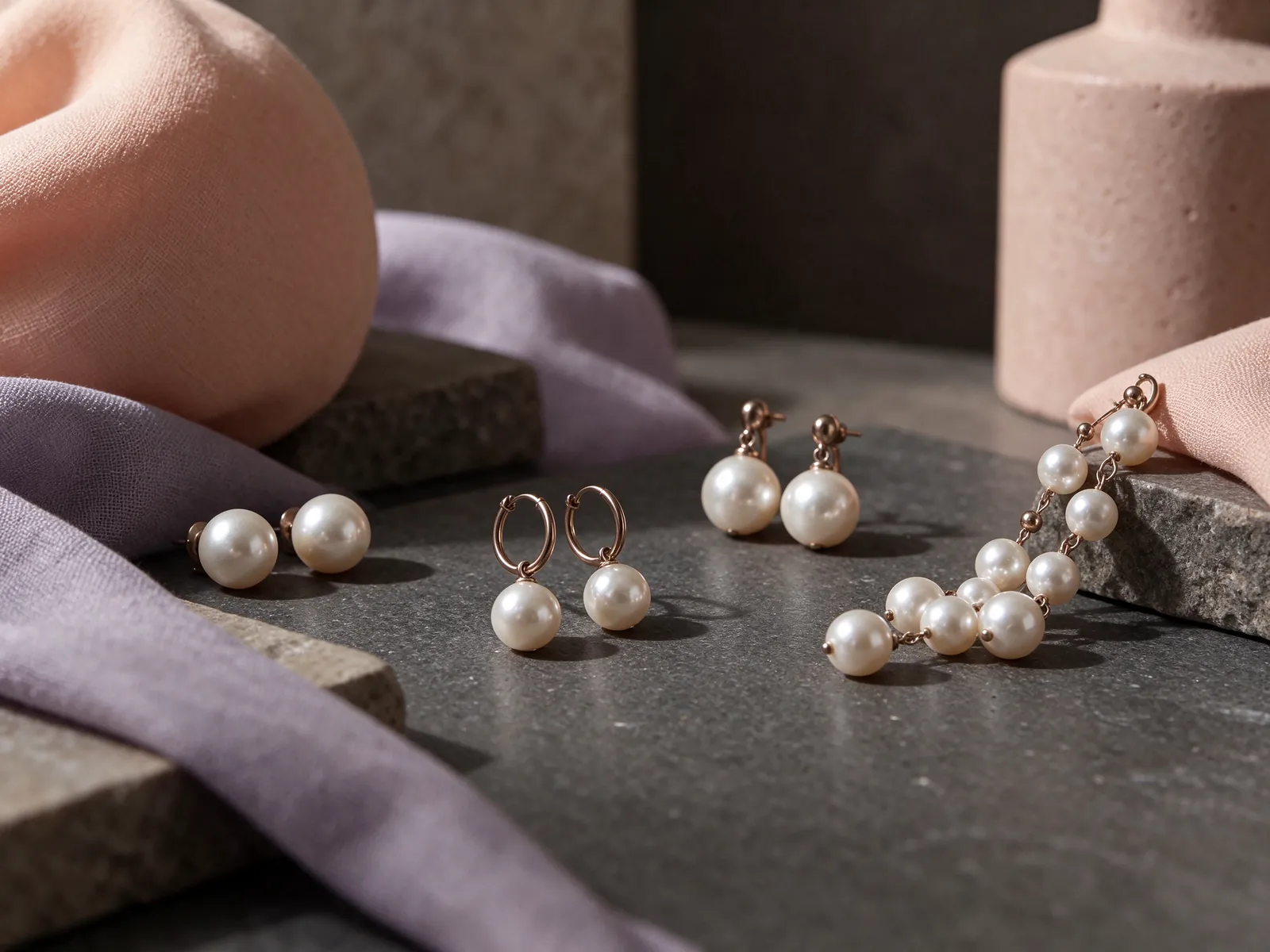
Choose the line you like, not a universal styling formula
A short drop emphasizes the area close to the ear; a longer silhouette carries the line toward the neck. Compare the pearl's endpoint with your jaw and clothing rather than using a face-shape label as a rule. If you want an extended vertical feature, consider the styling ideas for long pearl dangle earrings. If you prefer a restrained detail beneath the lobe, a compact drop may be closer to the effect you have in mind.
Length is not the only source of visual presence. A broad upper shape can make a short design prominent, while a narrow longer connection may look less substantial from the front. Use pearl studs vs drops vs dangles to compare placement, extension and movement as separate features. This approach avoids assuming that every short style is subtle or that every longer earring belongs only with evening clothing.
Contrast a curved frame with a straight drop
A comparison with pearl hoop earrings can clarify whether you like a curved frame or a mostly downward line. The position of the pearl within a curve, or suspended beneath it, changes where your eye settles. Decide whether you want the pearl to dominate, the metal outline to be noticeable, or both to contribute equally. This is a practical styling decision, not a promise that one outline changes everyone's facial proportions in the same way.
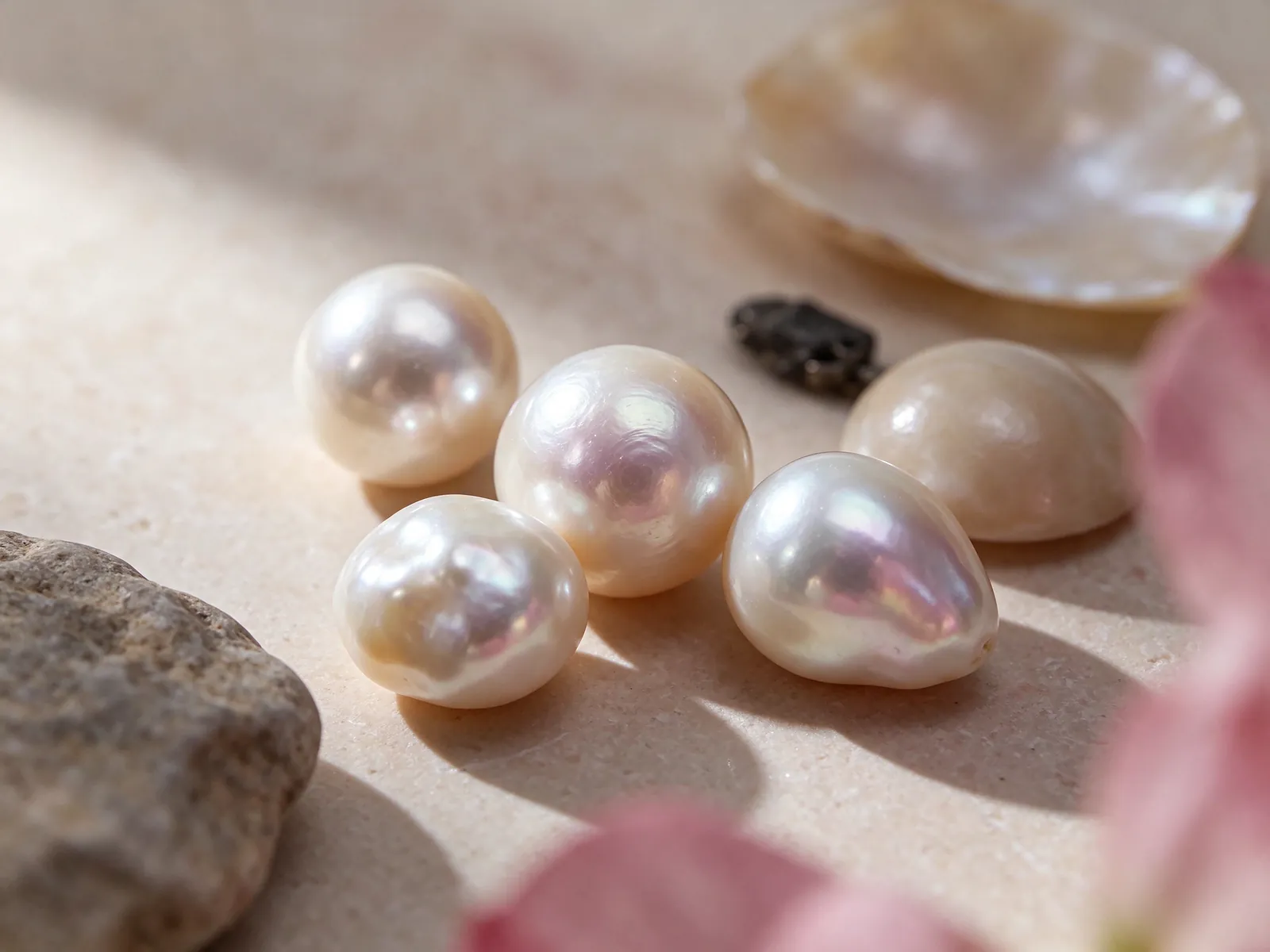
Build the comparison around your everyday wardrobe
Try your normal hairstyle as well as a view with the ear uncovered. Hair left loose may hide the upper connection while allowing the pearl to appear when you move. Tucking it behind the ear makes the complete silhouette visible. With shorter hair, the metal may become a stronger part of the look. Decide whether you want a consistently visible accent or an occasional glimpse rather than judging only a carefully arranged fitting photograph.
Wear a familiar shirt or high-neck top and turn your head to check the nearby fabric. A collar point can occupy a different position from a scarf or a soft neckline, so the garment itself is more useful than a general dress-code label. With an open neckline, a small drop can remain distinct without needing to fill the space. When adding a necklace, compare the two focal areas instead of requiring matching apparent size or identical shapes.
Test the interactions you notice during the day
Keep your glasses on while checking the side profile, and bring your phone toward your ear as you normally would. Notice the space around the upper fitting and any contact with the lower part. Moving your hair or putting on a jacket can reveal details that a stationary mirror view misses. These observations help you choose according to your own routine, without expecting an earring to avoid every contact in every situation.
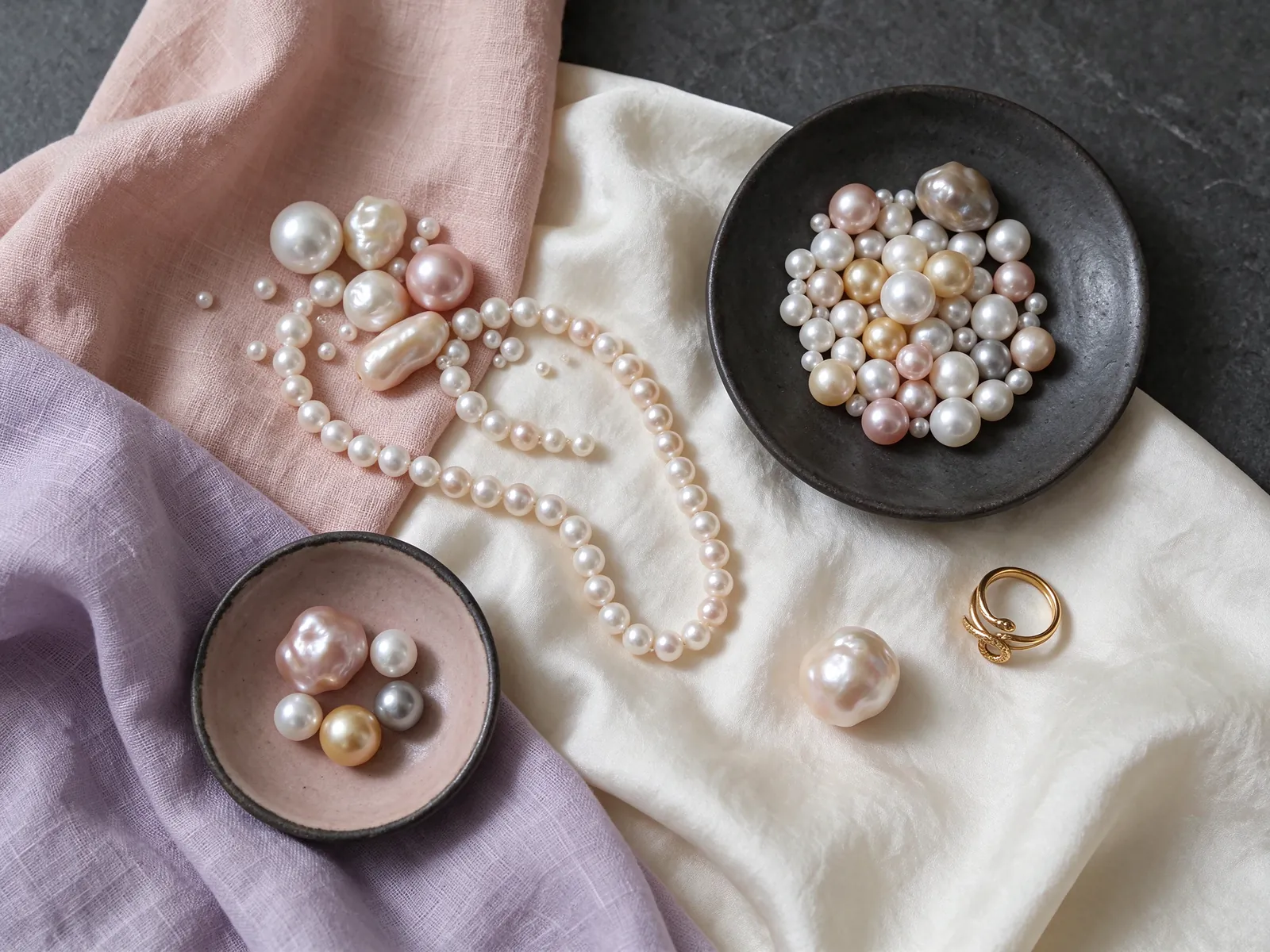
Understand the upper fitting and the lower connection separately
When movement concerns you, ask which part changes direction. The lower pearl might move at a joint, or the entire fitting might shift relative to the ear. Describe the appearance you want after a normal head turn, such as a clear front-facing line, instead of using complete stillness as the only criterion. A compact silhouette and a fixed-looking photograph do not, by themselves, explain every aspect of movement when worn.
The fitting also determines your wearing routine. With pearl hook earrings, compare the hook outline and how it leads into the suspended component, then consider the actual way that design is put on. A post and backing involve different handling. Try whether the orientation is clear to you and whether fastening feels natural. The style name alone cannot tell you which method you will find easier or more convenient.
Do not infer wearing comfort from a small appearance
Comfort involves the complete structure, including the metal, the balance and contact with the lobe. The visible pearl is not enough to estimate weight from an image. During a fitting, look for pulling, a localized pressure point or repeated repositioning. Keep those notes beside your comments about shape. Two designs that look similarly compact may still feel different to you, making a direct comparison more useful than an assumption about size.
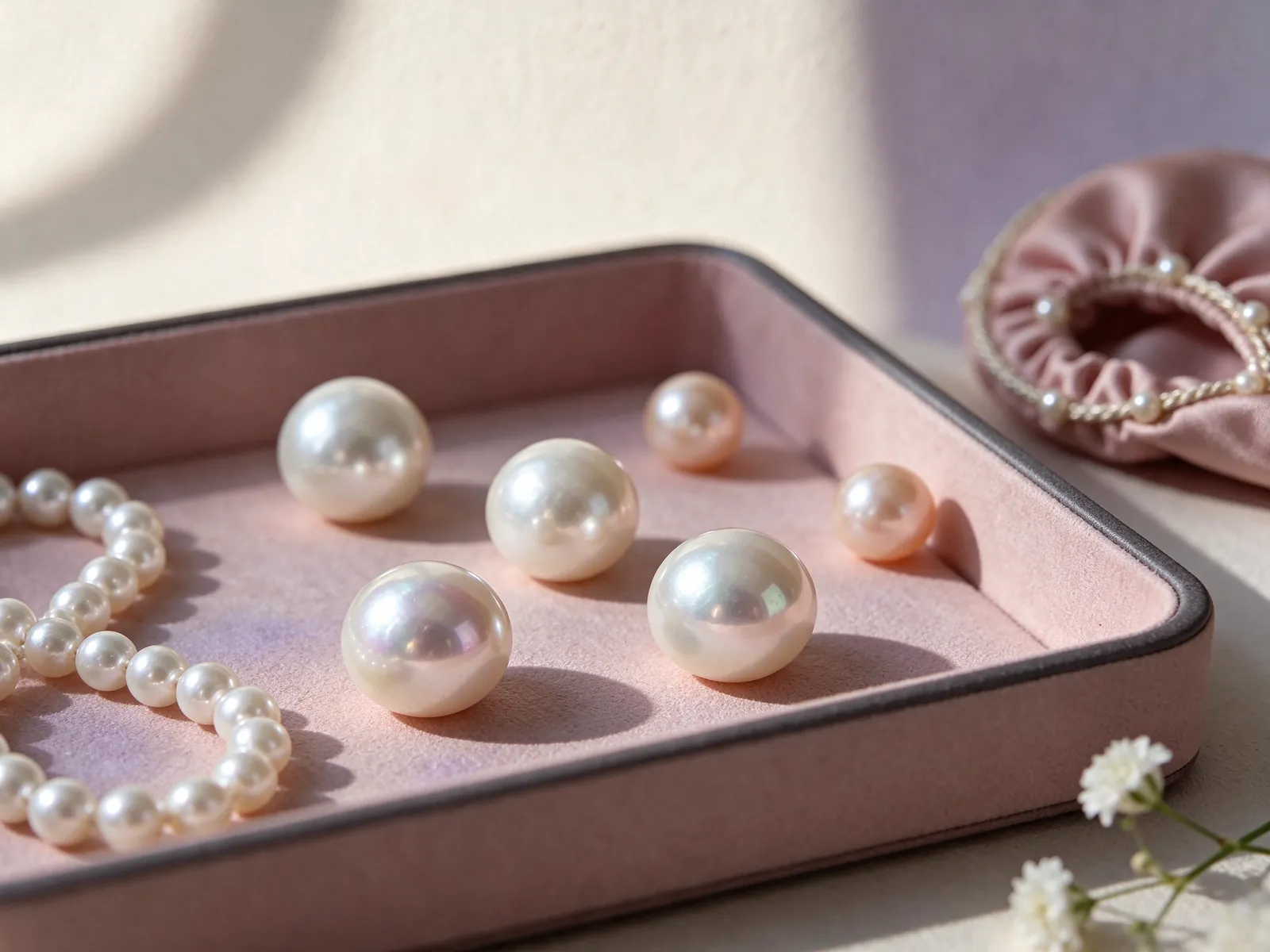
Evaluate the paired pearls in consistent light
Look at the pair under the same lighting before comparing color or luster. Different photographic lighting can make separate images unsuitable for a direct color judgment. At close range, consider the surface appearance and the shapes you enjoy; at a normal viewing distance, consider harmony beside the face. A rounded shape and a more individual outline can both appeal aesthetically. Neither shape nor photographed color alone establishes origin, pearl species or natural-versus-cultured identity.
GIA identifies seven pearl value factors: size, shape, color, luster, surface quality, nacre quality and matching. This is a helpful framework for earrings because it keeps the coordinated pair in view rather than treating apparent size as the whole decision. Compare metal color with your other jewelry or wardrobe as a separate styling choice. Whether colors work together for you is different from whether the pearl has a particular documented quality or identity.
Consider the whole pair before isolating details
Paired appearance also depends on the upper fittings, the direction of each pearl and the hanging outline. Start with that complete view, then examine individual features. Use written design information for what it explicitly states and a fitting for what it reveals about your proportions. Do not treat roundness, a quality letter or an attractive photograph as evidence of certification. Documentation and visual preference serve different purposes in a careful choice.
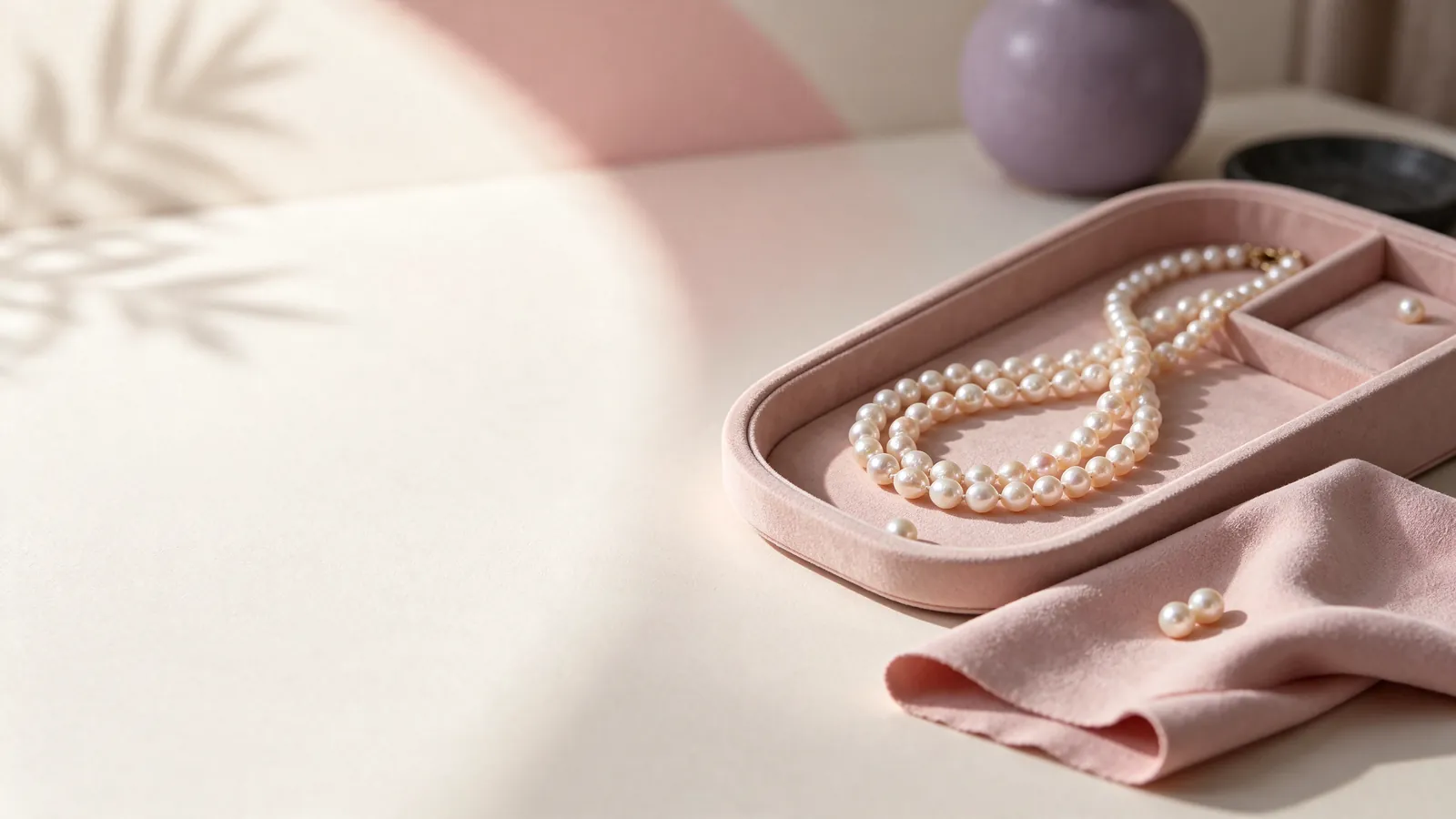
Create a clear preference brief and care for the pearl
Write down the desired point below your lobe, the connection you prefer and the hairstyle or neckline you most often wear. Add your observations about movement and comfort. A request for a pearl just visible beneath the ear with a discreet connecting line communicates more than a general request for elegance. You do not need to assign an ideal dimension before you have clarified the visual relationship that matters to you.
For a broader comparison of outlines, return to the pearl earrings guide and organize the choices by placement and construction. GIA's care guidance includes wiping pearls with a very soft clean cloth after wearing, avoiding acids, perfume, hair spray and excessive heat, and never using ultrasonic or steam cleaners. Remember the earrings when applying fragrance or hair products; practical care should follow the whole piece, not only its metal components.
Make a styling conversation specific to your ears and routine
When discussing preferences with Flint Jewelry through the page's WhatsApp contact, mention your piercing position, the side profile you like and your usual clothing. If a pair you already wear has a helpful or uncomfortable feature, describe that feature clearly. Keep the conversation focused on your preferred outline and routine rather than assigning a pearl identity, size or price from a photograph. Specific observations make the comparison easier to understand.
| Decision point | Feature to compare | Practical check |
|---|---|---|
| Visible position | The pearl's starting point beneath the lobe | Compare both ears in your normal posture |
| Front and side outline | Width, projection and the connecting space | Look straight ahead, then inspect the side view |
| Movement | A moving lower joint versus movement of the whole fitting | Turn your head gently and watch the direction |
| Everyday styling | Visibility through hair and proximity to clothing | Try your usual hair and a familiar collar |
| Paired harmony | Color, luster, shape and the suspended outline | Use the same light and compare at different viewing distances |
Pearl knowledge and authoritative references
GIA lists seven pearl value factors: size, shape, color, luster, surface quality, nacre quality and matching. For a pair of short drops, matching provides a useful way to consider the pearls together rather than judging apparent size alone.
Read the reference for this factFrequently asked questions
Do pearl drop earrings have to contain teardrop-shaped pearls?
No. The drop description refers to the below-the-lobe arrangement, not a mandatory pearl shape. A rounded or more irregular outline can be used in that arrangement. Compare the shape and the connecting design separately rather than treating the style name as pearl identification.
Can I choose a short drop by its overall length alone?
Overall length is useful only when you understand its starting point and relate it to your piercing. Also compare the pearl's position below the lobe and the side profile. There is no universal numerical fitting boundary in this guide that guarantees the same appearance for everyone.
What if a pair looks level on a stand but uneven on my ears?
Your lobe shapes and piercing positions may differ. Try both earrings and assess the complete balance, including the pearl endpoints and upper components. Do not tighten the backings excessively to force alignment; evaluate the actual fit and your comfort as well as appearance.
Should I avoid short drops when wearing a collared shirt?
Not necessarily. Wear the shirt and turn your head to see where the collar sits relative to the earrings. The actual collar shape, visible drop and your routine are more useful than a rule based only on garment type.
Is steam cleaning suitable for the metal connection and pearl together?
GIA states that pearls should never be cleaned in steam or ultrasonic cleaners. A metal connection does not change that guidance for the pearl. Routine care includes a very soft clean cloth after wearing and avoiding perfume, hair spray, acids and excessive heat.
Updated: