
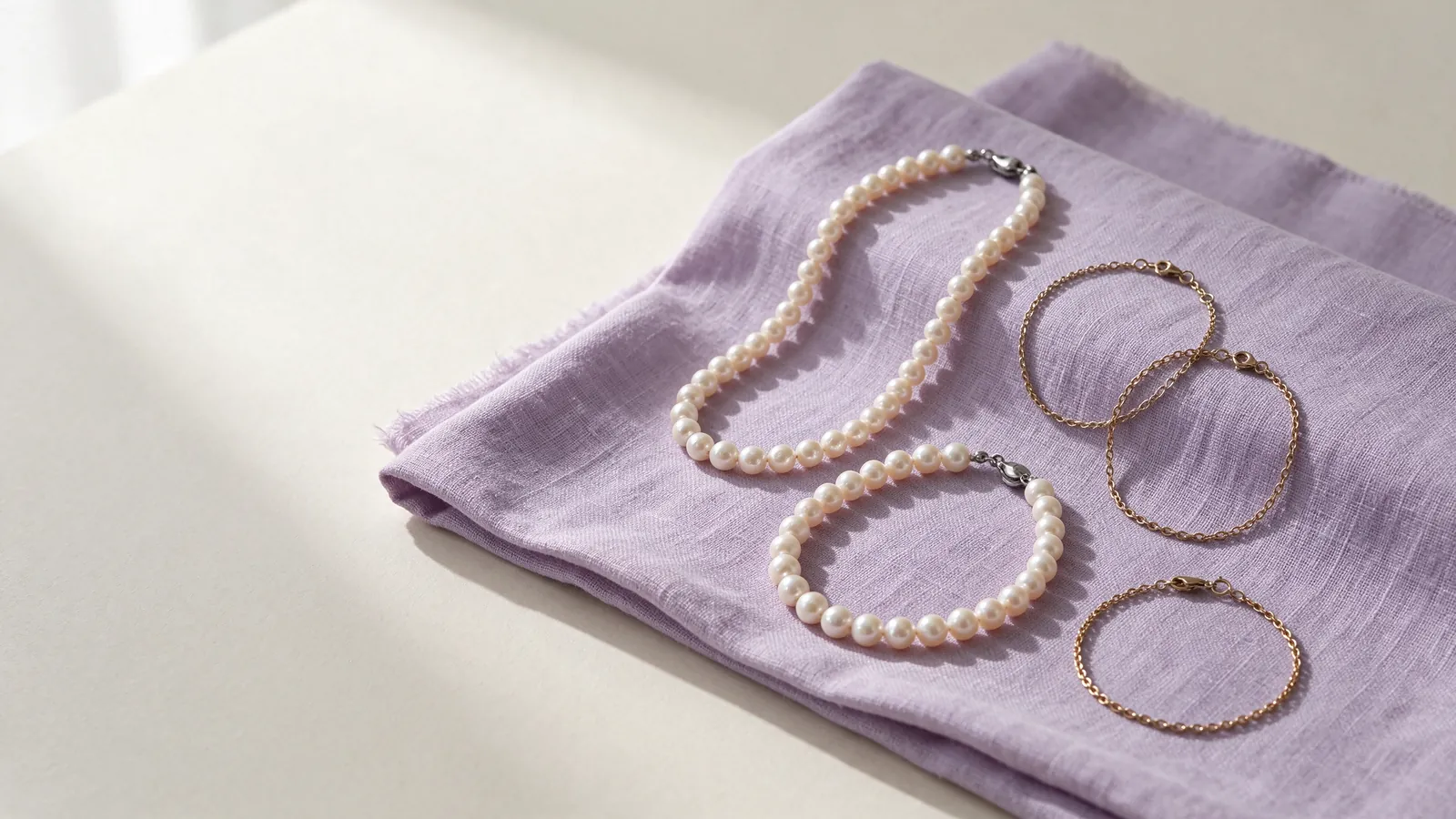
How can pearl and chain proportions shape the look of a half chain pearl bracelet compared with a half station pearl bracelet or a half pearl half chain bracelet?
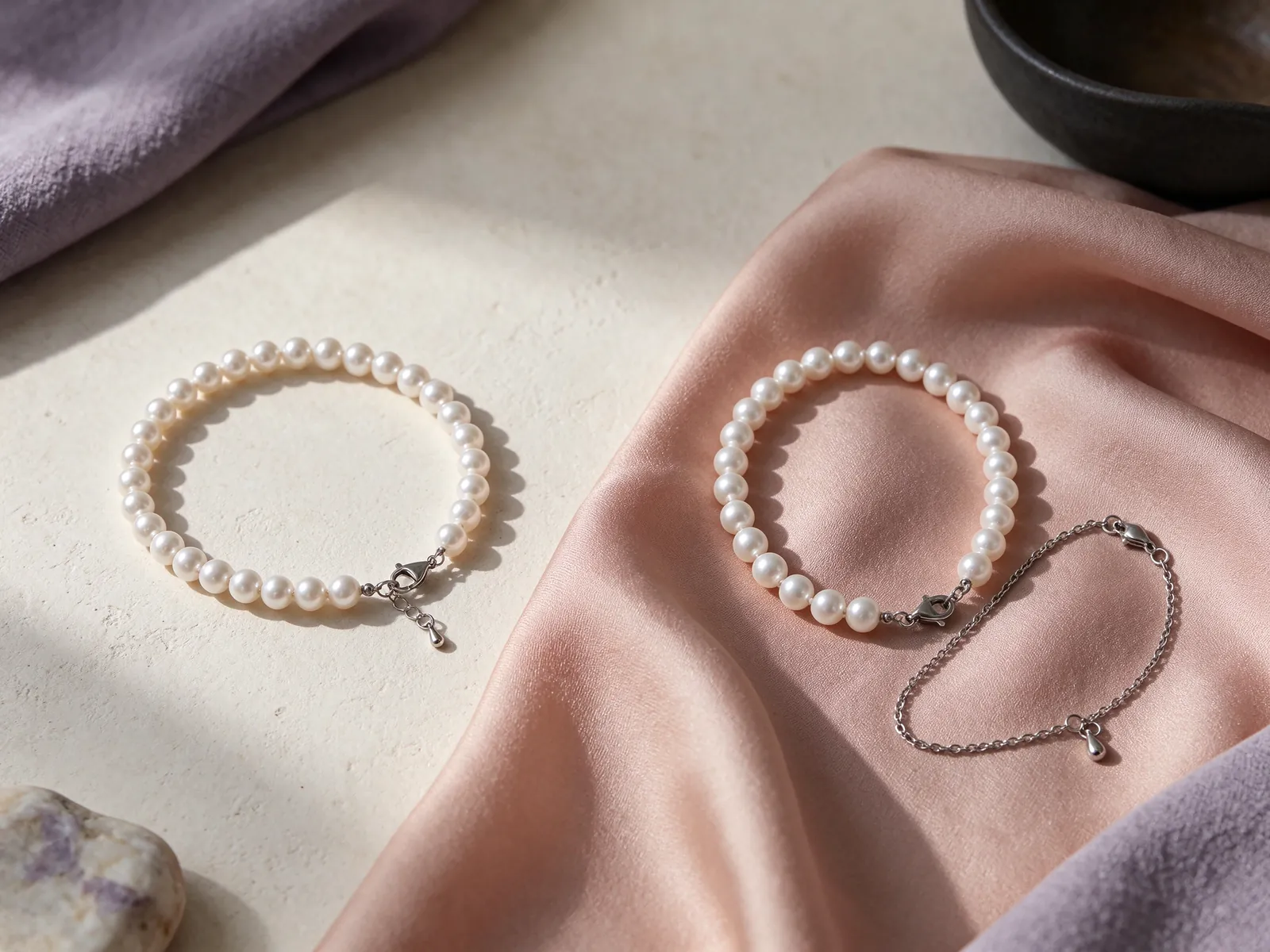
When comparing a half chain pearl bracelet, start with its outline rather than interpreting half as an exact division. A half station pearl bracelet or half pearl half chain bracelet may describe a visual idea without fully explaining the arrangement. Trace where the pearl group begins, where the chain is exposed and how the clasp completes the loop. The pearl bracelet overview helps place this contrast alongside other bracelet structures before you focus on individual details.
Consider what you want to notice first: a concentrated pearl focal area, the chain's line or the exchange between them. View the piece with your hand resting naturally and with your arm at your side. A pleasing top view does not tell you what happens when the wrist rotates. If the chain becomes the visible feature, decide whether you still like the composition. This is a preference about balance, not a guaranteed wrist-slimming effect.
How should you assess clasp position and room for movement in a half chain pearl bracelet compared with a half station pearl bracelet or a half pearl half chain bracelet?
Place the clasp where you can reach it, fasten without forcing it and let your hand relax. Then gently bend and turn the wrist. Observe the contact points at the wrist bone and the pearl-chain connections. Movement room should be assessed together with the pearl area's position: enough length to fasten does not automatically mean the bracelet sits comfortably or presents the focal area where you expect.
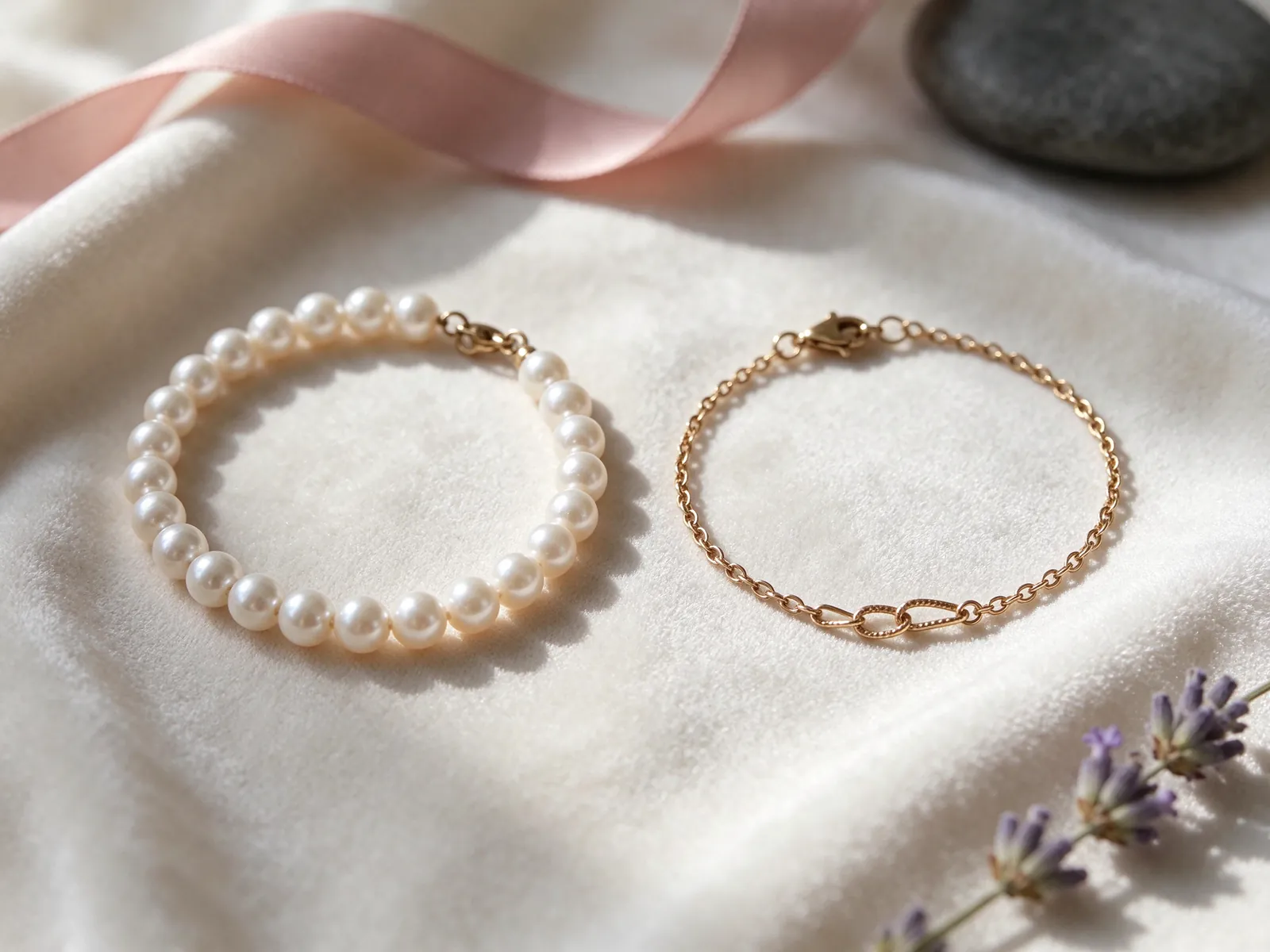
Choose a fit based on internal space, not length alone
Measure your wrist with a soft tape at your intended wearing position, keeping it comfortably against the skin. Record the position as well as the measurement, because moving above or below the wrist bone changes the comparison. Wrist circumference and bracelet length answer different questions. Pearl volume, chain flexibility and clasp shape influence the space available inside the finished loop. A length that feels right in one structure should not be assumed to feel identical in another.
Think about whether you prefer a bracelet that follows the wrist closely or one that moves more freely. With a loose fit, check the palm-side view when the pearl group slides. With a close fit, check that bending the wrist does not create unwanted pressure. An adjustable pearl bracelet can help you understand length choices, but altering a chain section may also relocate the pearl focal point. Evaluate both the comfort and the new arrangement after a change.
Bring your everyday sleeves into the fitting decision
Try the bracelet with the kind of cuff you wear most often. A fitted shirt cuff may push it toward the hand, while a loose sleeve may cover the pearl area and leave only the chain visible. Reach for your phone and rest your wrist as you would at a desk. These modest movements reveal practical fit issues without pulling on the bracelet or using a forceful shake as a supposed strength test.
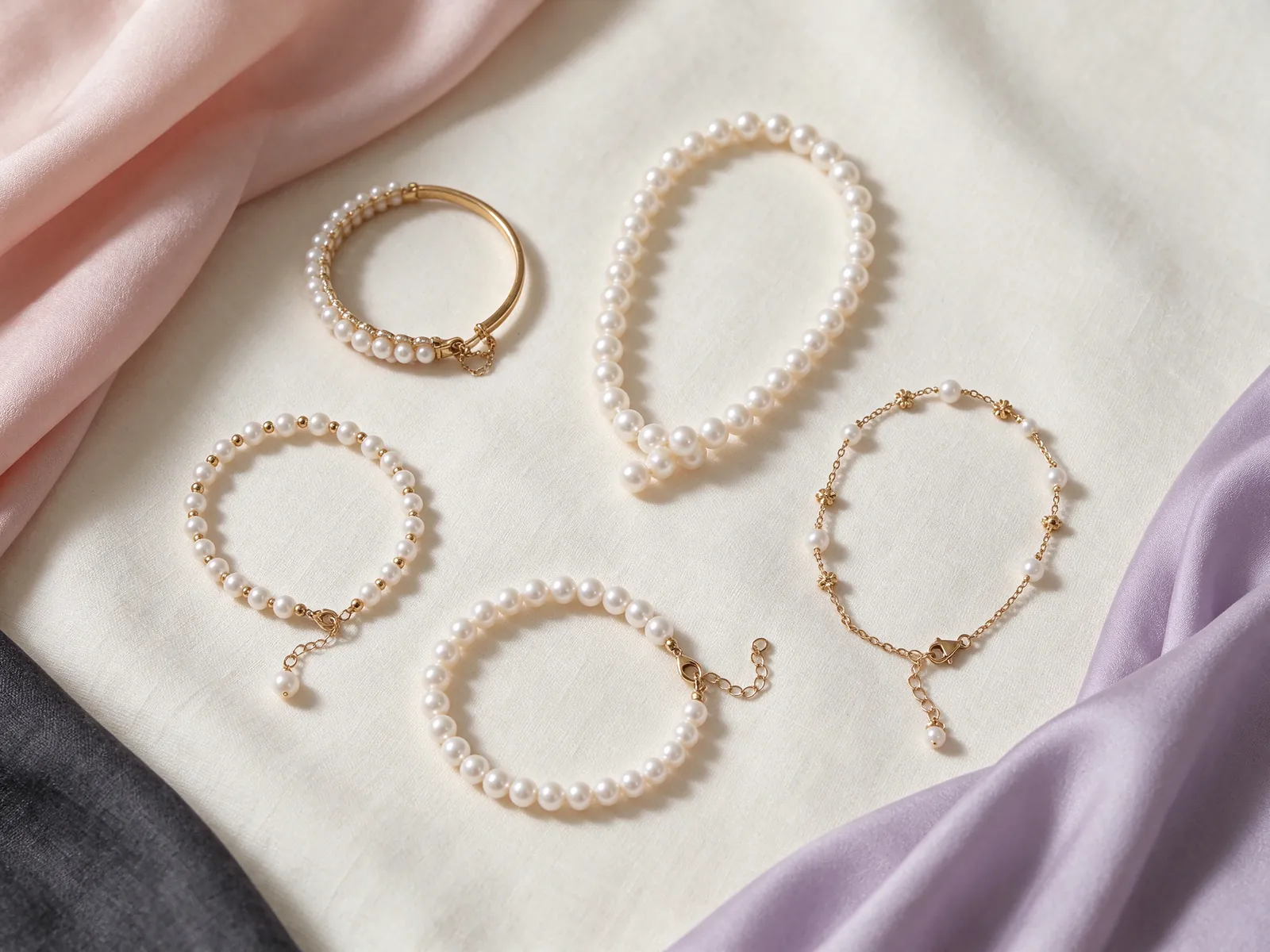
Make clasp operation and connection details part of the comparison
Inspect more than the clasp's front appearance. Look at its opening space and how you would reach it while wearing the bracelet. Practice using the hand you normally use to fasten jewelry, especially if you often dress without assistance. A clasp that is visually discreet can still be inconvenient for your routine. Long nails and the choice of wrist may change the operation, so a neat photograph cannot replace this practical check.
Follow each transition between the pearl area and chain from several angles. Notice any projecting outline that could meet skin, knitwear or another accessory. Then consider where these connections rest during typing or carrying a bag. If a watch is part of your routine, test the bracelet separately before combining them. This makes it easier to distinguish movement created by the bracelet itself from contact introduced by the watch strap or case.
Describe rotation before deciding it is a sizing problem
A pearl area can change direction after turning your palm, lowering your arm or passing through a sleeve. Note which action causes the unwanted view. Shortening the bracelet changes its space and balance, but it is not a universal solution. You may prefer a layout with pearls spread across more viewpoints, or you may enjoy alternating pearl and chain views. A style label cannot guarantee that a focal section stays on top all day.
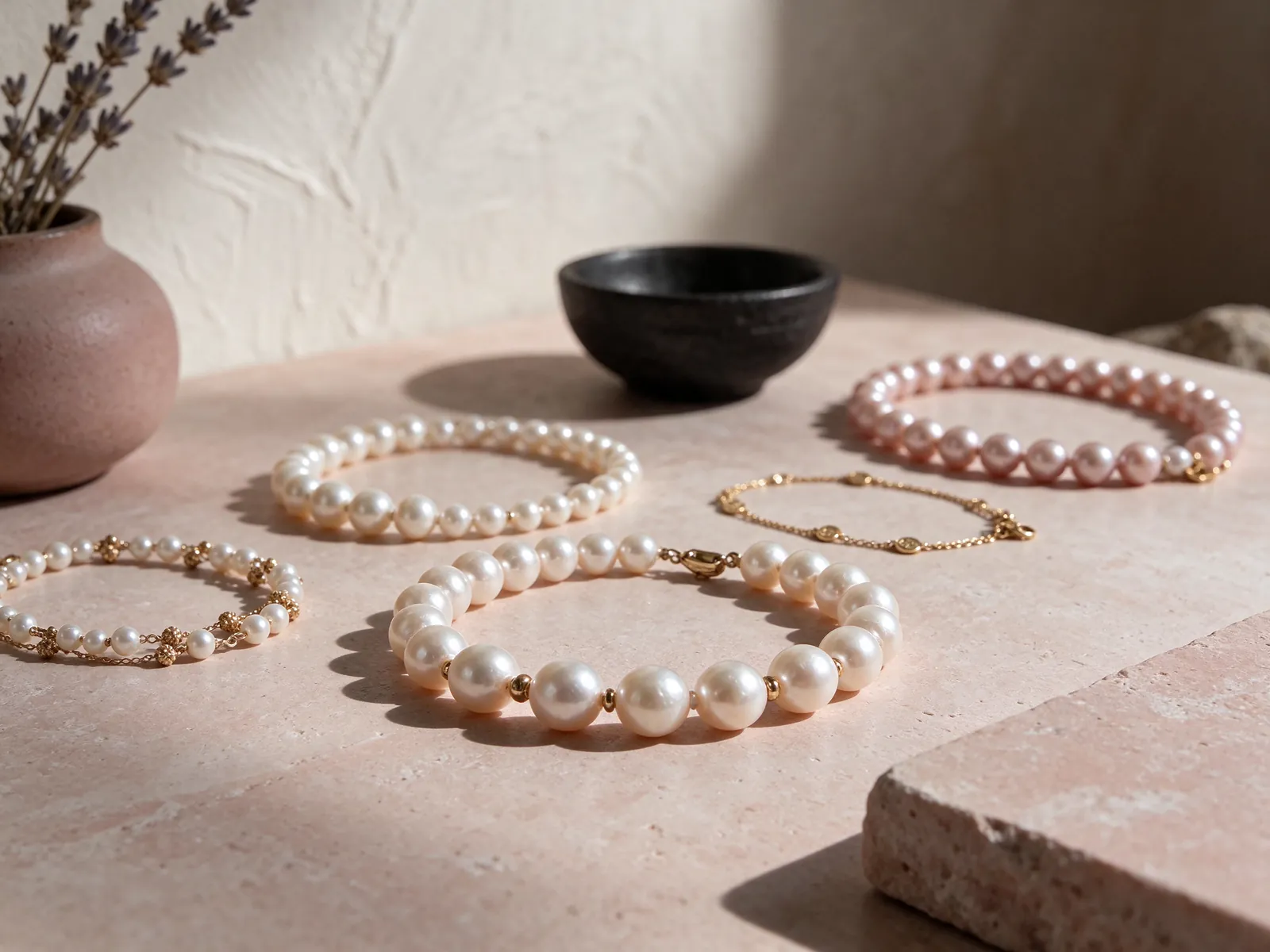
Compare neighboring pearls without confusing appearance and identity
A grouped pearl section invites the eye to compare neighboring shapes and reflections. Look first at the overall rhythm, then at individual surface details under gentle light. Decide whether the differences feel intentional and appealing to you. A uniform-looking group and an irregular arrangement can serve different visual goals. Do not assume the brightest photograph describes the actual bodycolor; reflective highlights, camera settings and background can all influence that impression.
GIA identifies seven pearl quality factors: size, shape, color, luster, surface quality, nacre quality and matching. For a concentrated section, matching is a useful way to discuss the group's continuity, while luster helps describe its reflective appearance. These observations cannot establish pearl species or origin on their own. Likewise, shape and color do not prove natural-versus-cultured identity. Read identification details separately rather than treating an attractive outline as evidence of a particular certificate.
Use consistent light when recording your preferences
If you take comparison pictures, keep both sections under the same light and avoid filters that alter color or skin tone. Include the whole bracelet view as well as a closer image, so a single bright pearl does not distract from the arrangement. Let the pictures support your memory of the styling. Direct observation remains important when judging surface features and deciding whether a distinctive pearl is a welcome focal point.
Understand the alternatives before choosing a divided layout
Compare the grouped area with a pearl station bracelet, where spacing can distribute pearl accents along a chain. A half-chain look may emphasize separate visual regions instead. Because names can overlap, describe what you actually see: neighboring pearls, open chain between pearls or a distinct uninterrupted chain area. This lets you choose whether you want a single focus or pearl accents that appear from more directions as the bracelet moves.
Use a pearl strand bracelet as a reference for a continuing pearl line around the wrist. If you are drawn to greater layered width, explore how a multi strand pearl bracelet arranges additional rows. Compare the alternatives with the same sleeve and setting rather than different styled photographs. You may discover that you prefer visible chain, continuous pearls or multiple rows for different reasons. Wrist movement and desk contact are as relevant as the impression of formality.
Ask an arrangement question instead of relying on the name
Useful questions include whether the pearls are adjacent, where the chain sections begin and what the reverse side looks like. These clarify a style more effectively than assuming every half station description means the same construction. Once you understand the layout, compare the intended direction, clasp and length. If the text and image suggest different arrangements, resolve that distinction before deciding whether the design suits your preferred wearing view.
Build an outfit around the bracelet's changing focal point
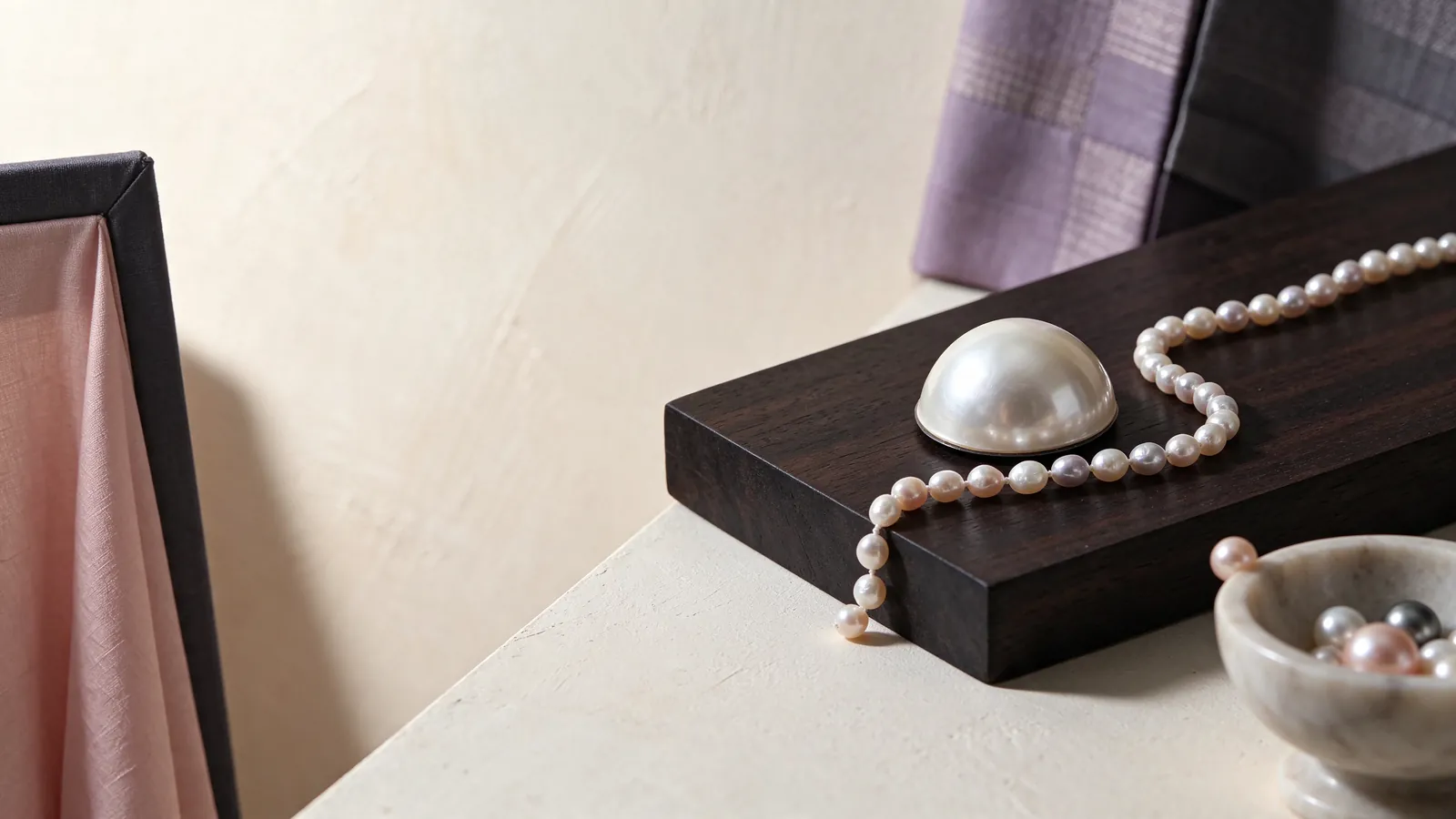
A clean, open cuff gives both parts of the design room to show. A long sleeve creates a more intermittent accent and may reveal the chain before the pearls. Choose according to the role you want the bracelet to play. If it is your main wrist accessory, less competing sleeve decoration can make the structure easier to appreciate. If it is a subtle detail, consider whether its partly covered views are equally appealing.
A heart pearl bracelet is a useful comparison when you like a clearly recognizable motif. Consider whether a motif would share or compete with the pearl group's focal position. A pearl charm bracelet introduces another idea: moving accents that may interact with cuffs or a tabletop. With a watch, try opposite wrists before pursuing a stacked look. This preserves the overall combination while reducing direct contact between the watch and pearl components.
Allow a dressed-up look to work beyond a posed moment
For a photograph, gently rotate the pearl area toward the camera if you wish. For an event, also consider eating, handling a clutch and putting on a jacket. These actions can expose a different portion of the bracelet. If you like the composition only after repeatedly resetting it, weigh that habit against your expectations. The most useful styling choice is one you still enjoy between posed moments, not only in a single still image.
Apply pearl-appropriate care to the whole mixed design
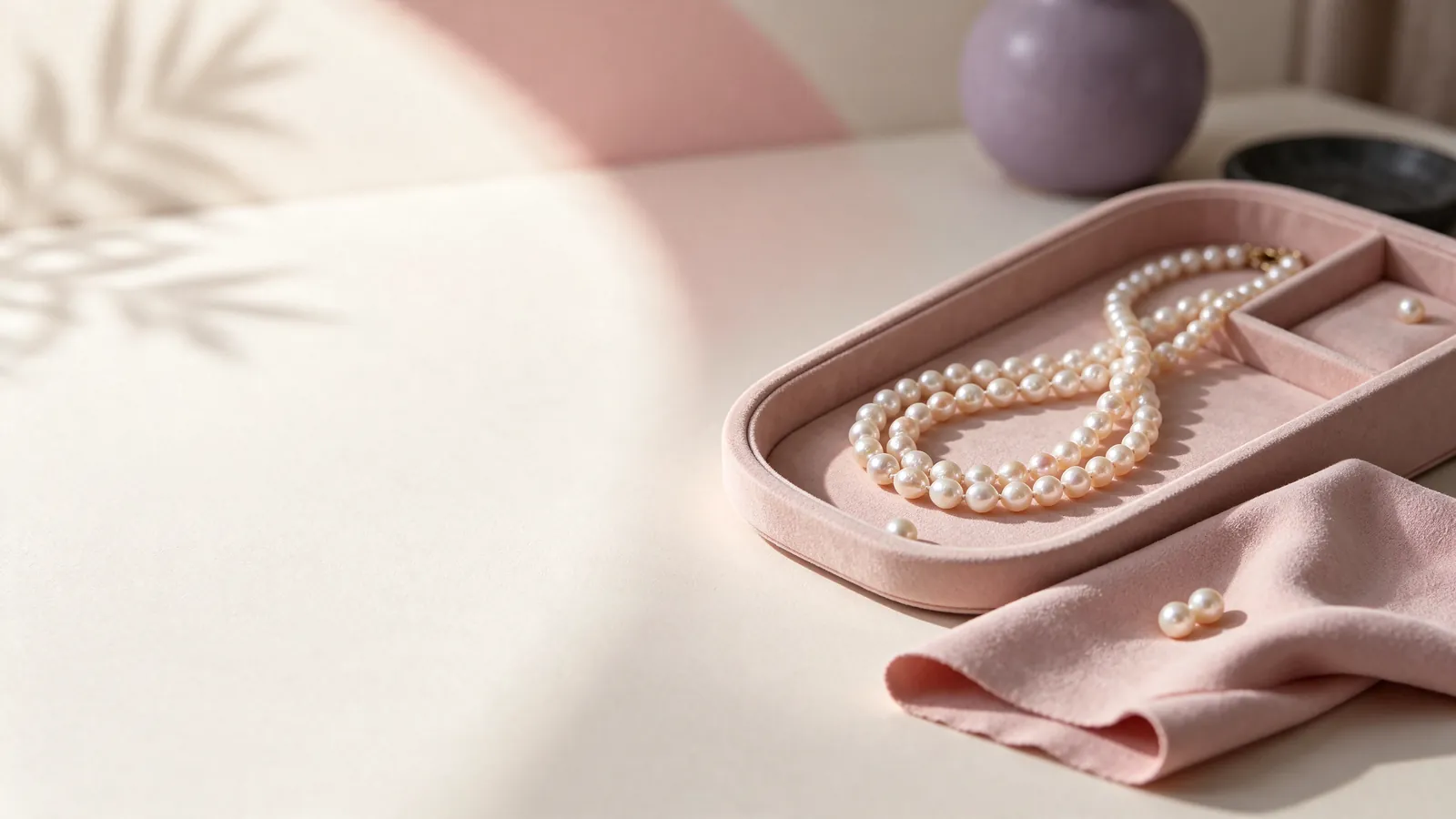
The metal portion does not make a pearl bracelet suitable for every chain-cleaning method. GIA gives pearl a Mohs hardness of 2.5 and states that ultrasonic and steam cleaners should never be used on pearls. Gently wipe the pearl components with a very soft, clean cloth after wearing. Keep them away from acids, perfume, hair spray and excessive heat. If the chain needs different attention, avoid exposing the adjacent pearls to an unsuitable treatment.
Before storage, arrange the bracelet so its chain cannot wind tightly around the pearl section. Keep it separate from pieces that could scratch the pearls and remove it by opening the clasp instead of stretching it over your hand. GIA advises that the string of strung pearls cleaned with water must be completely dry before wearing. That advice concerns a strung construction; a half-chain name does not reveal the connection method of every design.
To discuss pearl placement, chain proportions and wrist fit, contact Flint Jewelry on WhatsApp or call +85260106207. Describe your usual cuffs, preferred movement and watch-wearing habits to focus the conversation on how you want a bracelet to fit into your daily routine.
Treat changed connections as a reason to pause wearing
Stop wearing the bracelet if a join noticeably bends, a clasp no longer operates normally or the pearl section becomes unexpectedly loose. Set it down securely rather than trying to straighten a connection or repeatedly pull on it. Record where the change occurred and what you were doing, then describe the issue to a jewelry professional. This focuses the discussion on an observable problem without assuming a particular repair outcome.
| Checkpoint | Design question | Everyday test | Outfit implication |
|---|---|---|---|
| Pearl area | Is the focal point grouped or dispersed? | Lower the arm and rotate the palm | Decide which moving views you enjoy |
| Exposed chain | Which portion appears beside the pearls? | Pass the wrist through a familiar cuff | A covered pearl area may leave a chain-only accent |
| Clasp | Can you reach and operate it comfortably? | Use your normal fastening hand | Consider contact with a watch |
| Connections | Do outlines project at the transitions? | Look from the front, side and back | Check interaction with knitwear |
| Wearing space | Does the fit suit your preferred movement? | Hold a phone and rest at a desk | Overall length alone cannot describe comfort |
Pearl knowledge and authoritative references
GIA lists seven pearl quality factors: size, shape, color, luster, surface quality, nacre quality and matching. Matching is relevant to neighboring pearls in a grouped section; the seven factors do not constitute a bracelet certificate or a fixed grade.
Read the reference for this factFrequently asked questions
Must the two parts of a half-chain bracelet have equal lengths?
No. The term does not establish an exact proportion. Inspect the full arrangement, including the pearl group, chain sections and clasp, to understand how the design is divided.
What if I like the top view but not the palm-side view?
Check how often the pearl area changes direction during normal activities. Compare a more dispersed arrangement or decide whether regular repositioning suits you. Do not assume the name promises a permanently centered focal point.
Should I use the same length as my pearl strand bracelet?
Use it as a starting comparison, not a fit guarantee. Pearl volume, chain flexibility and clasp shape affect internal wearing space. Try the half-chain structure at the same wrist position and assess movement directly.
Can a half-chain design work with long sleeves?
It can be considered, but test the actual cuff interaction. The sleeve may cover the pearls, push the bracelet or meet a connection. Decide whether you enjoy the partial chain view as well as the full arrangement.
Does an exposed chain change how the pearls should be cleaned?
The pearls still need pearl-appropriate care. GIA rules out ultrasonic and steam cleaning for pearls. Wipe gently after wearing and avoid letting a stronger metal-cleaning treatment reach the pearl components.
Updated: