
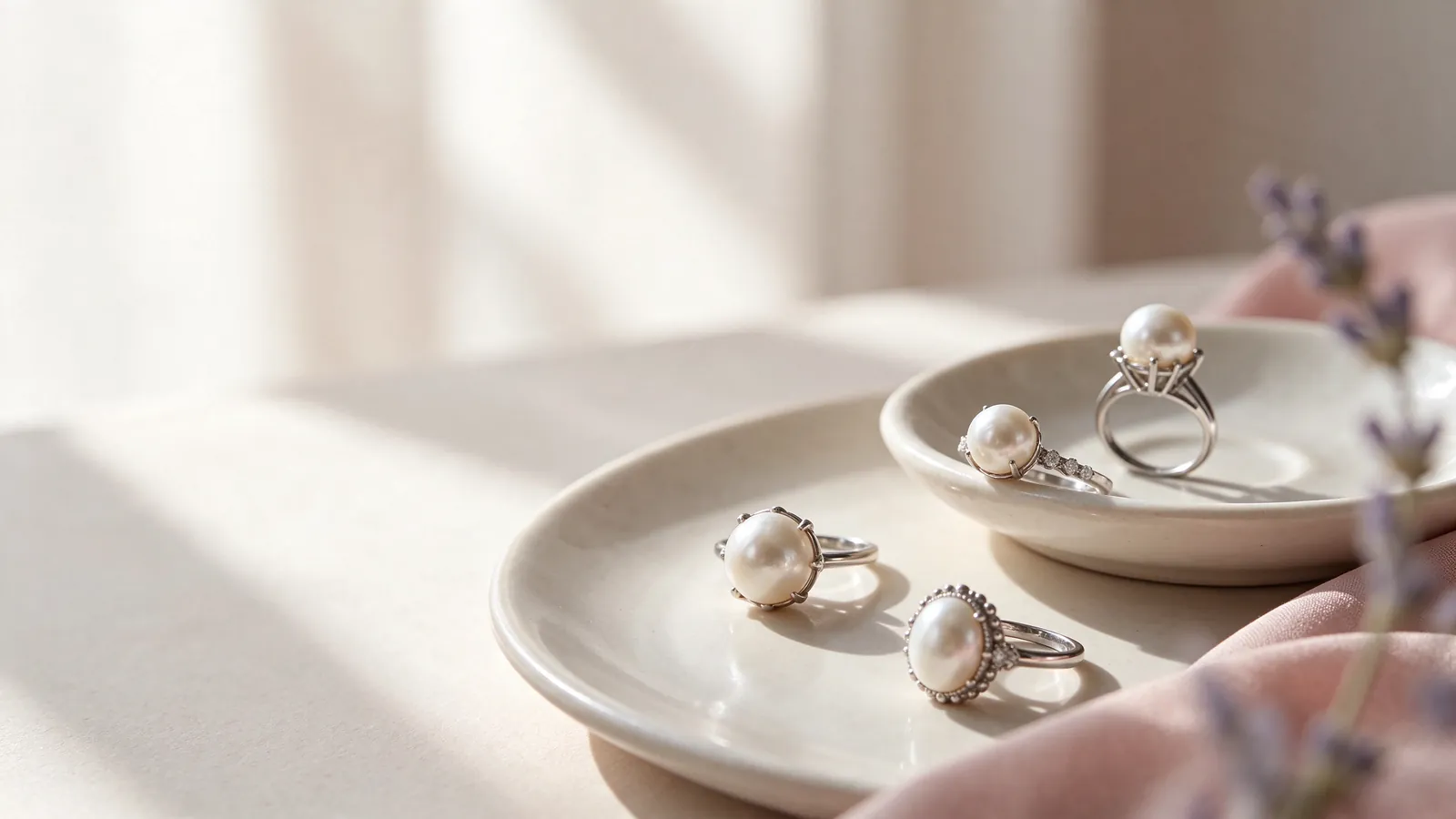
Proportion and comfort in an Akoya pearl pinky ring or another pearl little finger ring
The outside of the hand gives a pearl pinky ring a distinctive position: a small accent can stand out even without a large face. Start by looking at your relaxed hand. Does the pearl stay visually close to the finger, extend toward the ring finger or project beyond the outer edge? Turn the hand over and check the base as well. Exploring pearl rings can help you identify the design language you like, but a pinky choice needs its own assessment of proportions and movement.
Try the outline without your other rings first, then restore your usual accessories. This separates the ring's individual balance from a crowded overall look. A narrow-looking face may sit on a tall base; a broader pearl arrangement may have a more compact side profile. Neither a short finger nor a long finger dictates one correct design. Your normal movements provide a more useful test than a hand shape label.
Checking band width and knuckle fit for an Akoya pearl pinky ring or another pearl little finger ring
Assess the trip over the knuckle in both directions. After the ring is seated, bring your fingers together, loosely close your hand and open it again. A broad band touches more of the finger than a fine band, so a size label alone does not describe the experience. Identify whether discomfort comes from tightness at the base, an edge or the setting beside the ring finger.
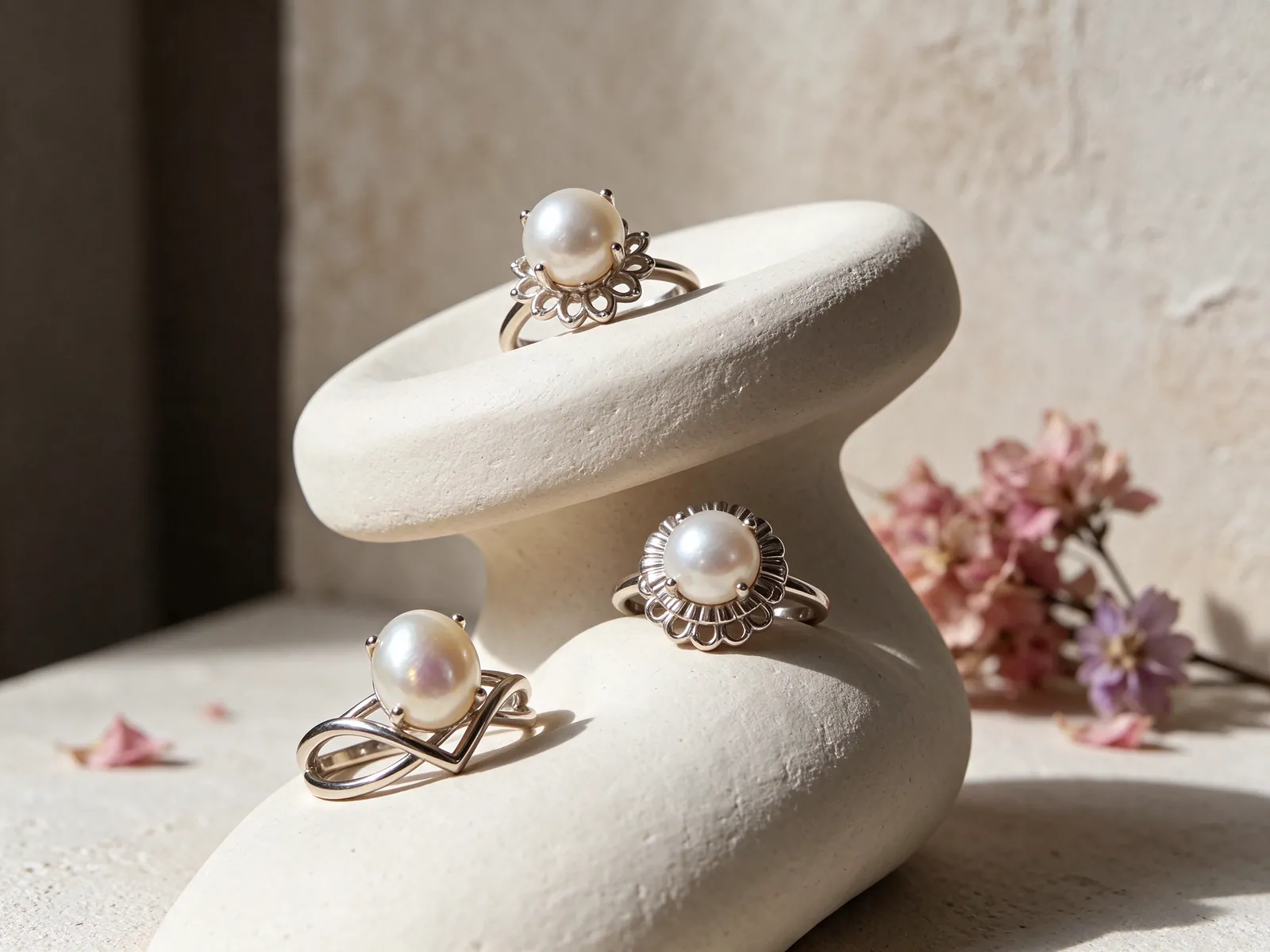
Fit the intended pinky instead of adapting another size
Use the pinky on the hand where the ring will actually be worn. The other hand may feel different, and a ring that fits another finger is not a dependable starting point. An initial flexible-strip measurement should sit against the skin without cinching it. Also note how the knuckle compares with the base of the finger. If using an existing ring for comparison, consider its band width and inner contour rather than assuming that all rings with the same label fit alike.
Rotation deserves a separate investigation. A pearl may shift toward the palm because of setting balance or the finger's contours, not just excess room inside the band. When knuckle passage is already difficult, a smaller size can make putting on and removing the ring harder. Look at where the pearl moves and where the band makes contact before deciding that tightness is the solution.
Describe the fit with observations, not a single verdict
Useful notes include easy removal, pressure when the fingers close, rotation during a phone grip or contact beneath the setting. Notice the ring in ordinary conditions, since temperature and activity can change how your hand feels. Avoid treating persistent pain or numbness as the price of a stable pearl. A ring should not require you to ignore an uncomfortable signal throughout the day.
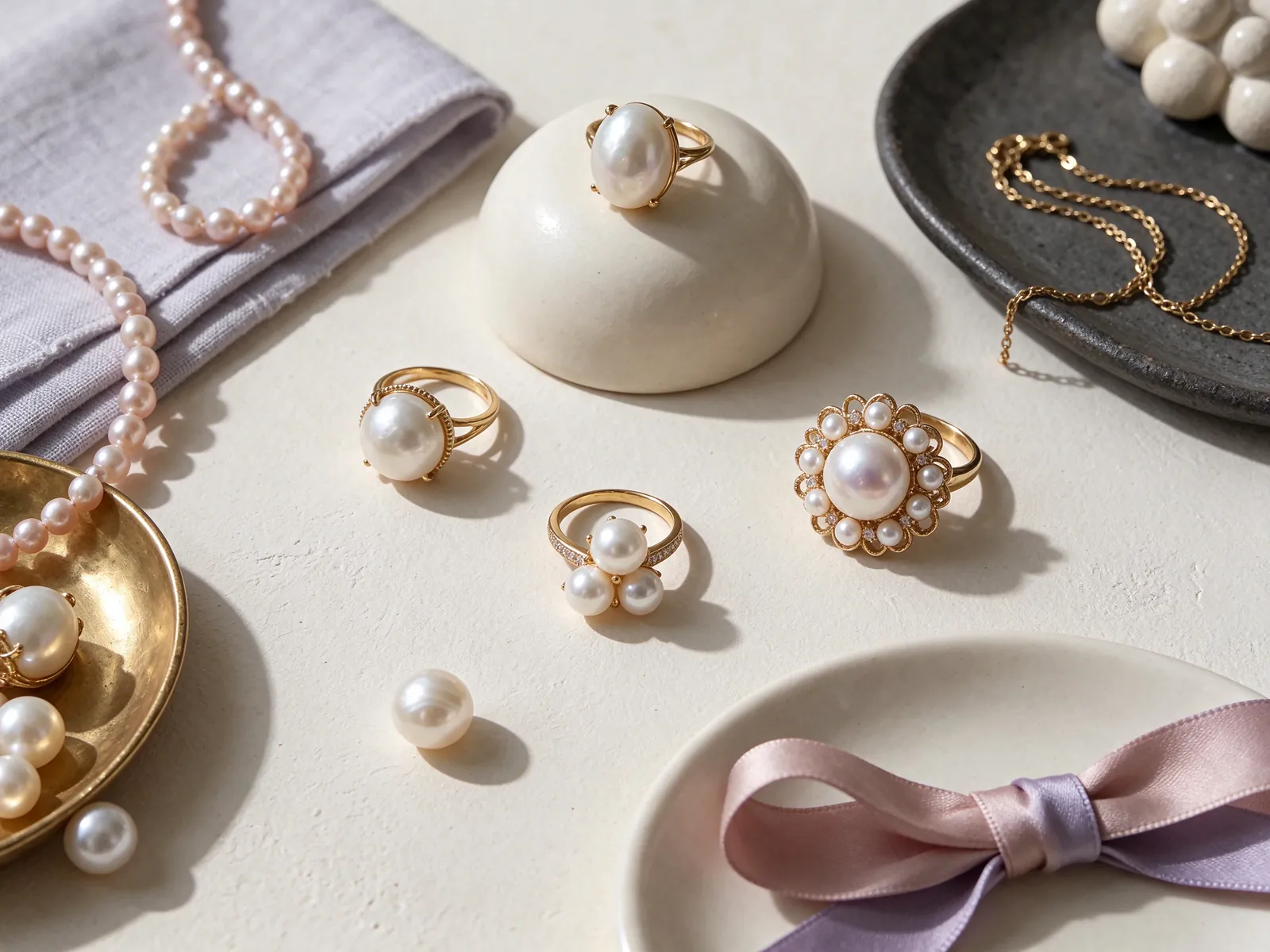
Read pearl identity separately from visual appeal
Searching for an Akoya pearl pinky ring expresses a preference, but a small, round, white appearance cannot establish Akoya identity by itself. It also cannot establish origin, natural-versus-cultured identity or a certificate. Descriptions such as baby pearls should not be equated automatically with seed pearls or Keshi. Distinguish size language from identity language when reading about a pearl, and let the actual description answer the identity question.
GIA describes seven pearl value factors: size, shape, color, luster, surface quality, nacre quality and matching for multi-pearl jewelry. Proportion is important for the pinky, but it should not crowd out attention to visible luster and surface features. Compare soft daylight with normal indoor light; strong flash can give a different impression. For a more open silhouette, consider an open pearl ring as a design comparison without assuming that its gap allows unrestricted size adjustment.
Check where the pearl's widest point sits
Round outlines tend to focus attention, while non-round outlines may direct it along the finger. The wearing question is where the shape extends. A projection toward the outside can meet a sleeve; one toward the inside may press against the neighboring finger. A preferred shape is a starting point for trying on, not a universal ranking of comfort or quality.
Look below the pearl to understand contact points
A pinky passes close to pocket openings, cuffs and handles. Study the side profile for height and edges that might catch fabric. A low setting can appear less prominent but is not an assurance against collisions. If a defined face appeals to you, compare a pearl signet ring for visual weight while still testing the setting on the intended finger; the style name does not establish pinky suitability.
A pearl charm ring adds movement to the comparison. Notice where the hanging element falls when your hand relaxes and whether it becomes trapped when you grip an object. This differs from checking a fixed pearl face. If your pinky normally supports the bottom of your phone, see whether the ring occupies that same contact point. Changing your grip for a posed view can hide an everyday inconvenience.
Use gentle everyday simulations
Let a familiar cuff pass over the hand, lightly hold a smooth bag handle and type as you usually do. The aim is to locate contact, not prove impact resistance. Do not knock the pearl against a desk or drag it over a surface. If a routine task repeatedly catches the setting, choose a different outline or save the ring for a setting with less hand activity.
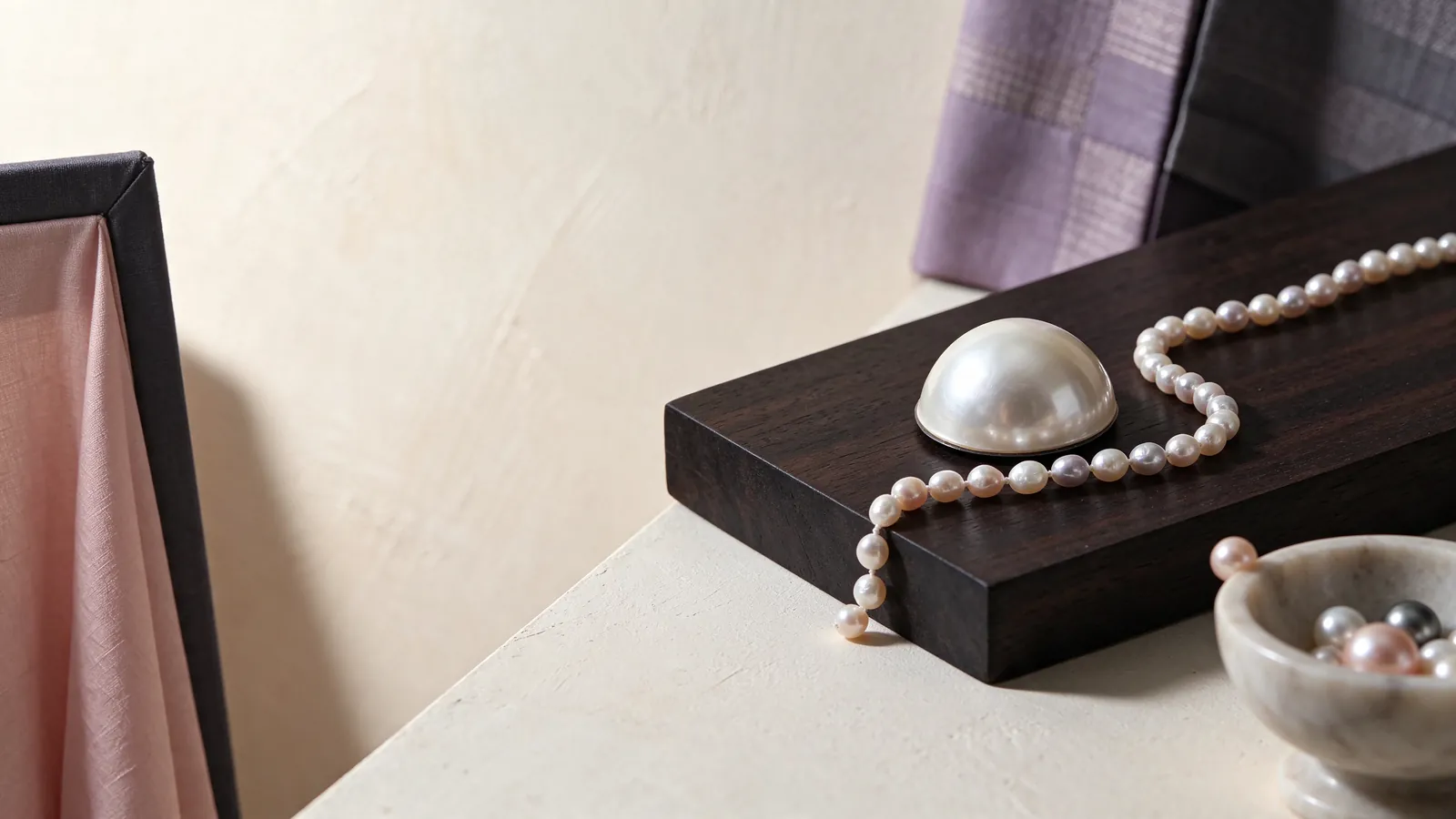
Create a focal point with space around it
One pinky ring can carry the hand's main accent, especially beside a simple cuff or quieter wrist jewelry. A multi pearl ring already creates rhythm through several visible pearl surfaces, so more surrounding bands may not add clarity. Examine the hand at your side as well as flat on a table. A bracelet, watch and outer-finger ring can pull attention toward the same edge in ways a close-up photo does not reveal.
With stackable pearl rings, start with clearance. Stacking on one pinky increases total band width, which may alter the fit even when each ring feels fine alone. Wearing another ring on the ring finger brings a different issue: the settings can touch when fingers close. Separating accents across hands or leaving a finger between them can preserve the styling intention without forcing pearl faces into contact.
Adapt the arrangement to sleeves and activities
For a workday, consider typing, carrying files and removing the ring before manual tasks. For a dressier occasion, echo a soft fabric color or an earring without requiring identical pearl sizes across every piece. Loose knits, lace and fringe need attention to snagging. An appealing arrangement should work with what you actually wear, not just the backdrop of a photograph.
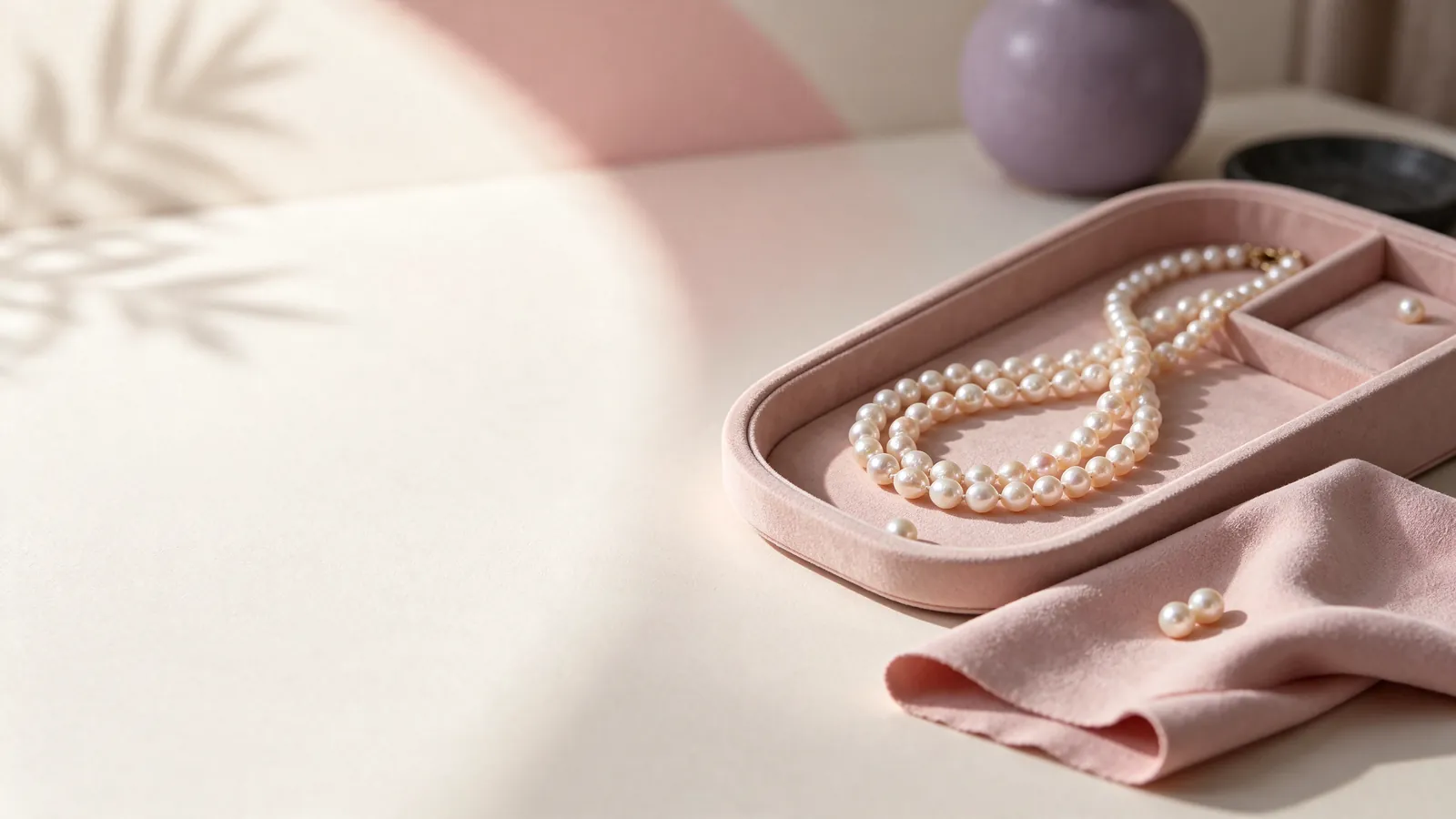
Make pearl care part of the wearing decision
GIA gives pearl a Mohs hardness of 2.5. The figure is relevant to scratching; it is not a lifespan estimate or a guarantee about impact. At the outer edge of the hand, a pearl may encounter rough surfaces during ordinary tasks. Remove the ring before using tools, lifting boxes or activities that could press the pearl against an object. Avoid carrying it loose in a pocket or bag alongside keys.
Apply perfume and hair spray before putting on the ring, and keep cleaning chemicals away from its pearl. After wear, use a very soft, clean cloth for a gentle wipe. GIA says pearls should never go into ultrasonic or steam cleaners, even if those methods are used for other jewelry. Do not scrape dirt from around a setting with a hard point that could reach the pearl surface.
Separate storage helps reduce accidental rubbing
Store the ring in its own soft space, away from excessive heat and pieces that may rub against it. Before the next wear, notice any unusual pearl movement or a change in the setting's shape. If something appears loose, stop wearing it and seek an appropriate inspection. Household glue and twisting the pearl are not suitable ways to diagnose or resolve a mounting concern.
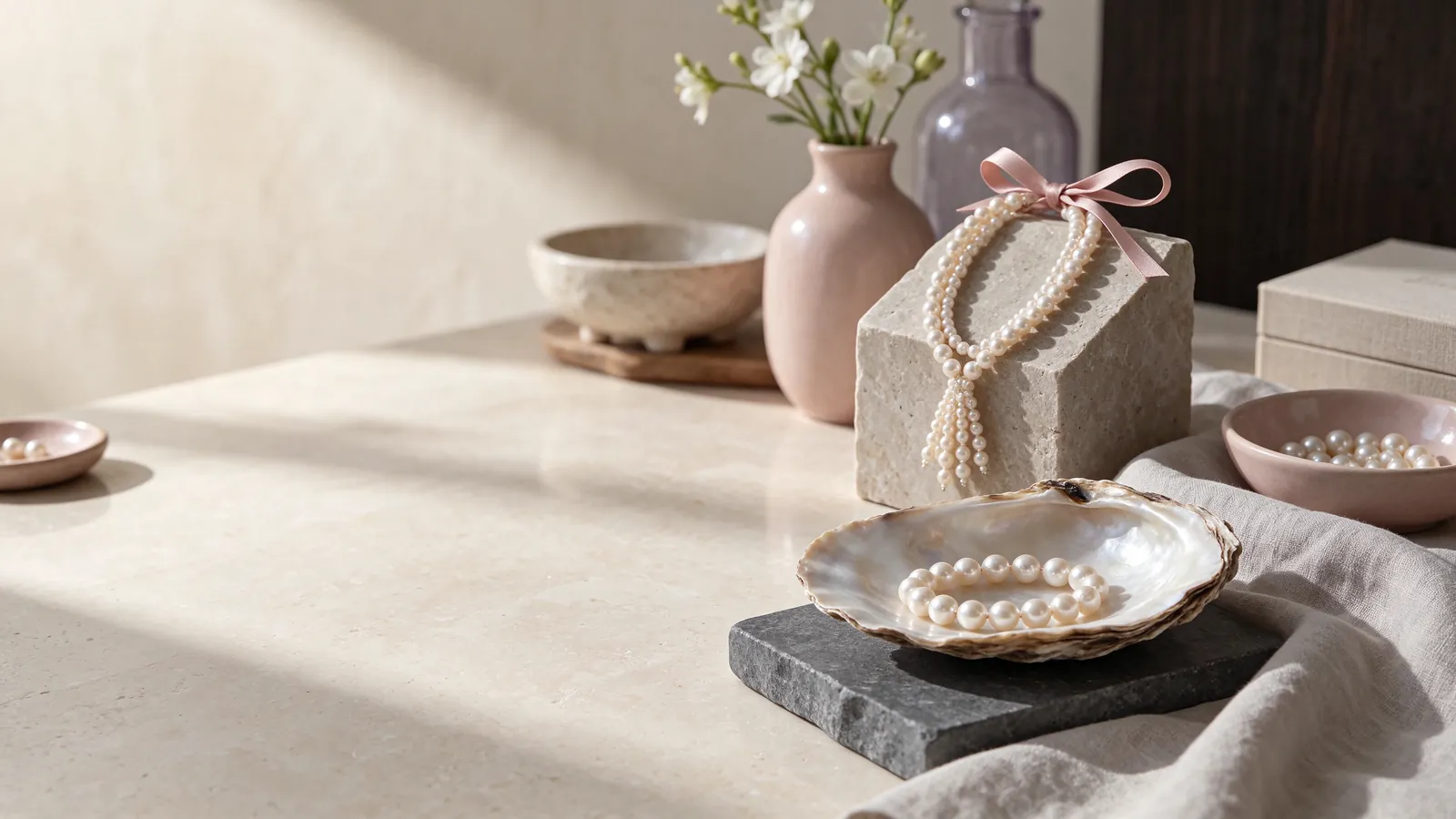
Prepare questions that connect style with daily use
List the hand you plan to use, whether you want one ring or an arrangement, and the tasks that involve your pinky most often. Then describe the outline you like, preferred setting height and any pressure noticed while trying on. These details keep a selection conversation practical. If Akoya is the intended pearl direction, ask about the actual pearl description instead of treating a search term as a finished specification.
When discussing selection with Flint Jewelry, focus on the relationship between band width, knuckle passage, pearl placement and your usual movements. Evaluate an attractive face together with its side profile. Pearl identity, design structure and personal fit are separate questions; an answer to one should not be taken as evidence of the others. This approach helps you compare the whole wearing experience rather than just the first impression.
End with a realistic wearing check
Would you wear the ring with your usual sleeve, close your fingers naturally and put it safely away before a rough task? If the raised pearl is compelling in a picture but awkward on the hand, reconsider the silhouette. A thoughtful pinky choice brings the visual accent and the everyday routine together without ignoring care or fit.
To discuss pinky-ring proportions, fit and everyday contact points, use the WhatsApp inquiry on this page to contact Flint Jewelry, or call +85260106207. Describe the intended finger and the movements that matter most to you.
| Feature | What to observe | Trade-off to consider | Practical check |
|---|---|---|---|
| Pearl footprint | Top and palm-side views | Focused accent versus sideways projection | Add usual jewelry after viewing it alone |
| Band width | Finger closure and removal | More contact can change the feel | Reassess the combined width of a stack |
| Setting profile | Raised edges and cuff clearance | Low does not mean impact-proof | Check your normal phone support point |
| Turning | Pearl balance and band contact | Tighter sizing may hinder knuckle passage | Note the direction of movement |
| Pearl surface | Soft daylight and indoor lighting | A photograph may give a different impression | Look at luster and visible surface features |
Pearl knowledge and authoritative references
GIA assigns pearl a Mohs hardness of 2.5. For a pinky ring, this highlights the need to avoid scratching and inappropriate cleaning rather than promising a particular durability outcome.
Read the reference for this factFrequently asked questions
Should I choose a pinky ring using a ring that fits another finger?
That is not a dependable fit comparison. Assess the intended pinky and its knuckle, then consider band width and inner profile. Even the opposite hand may not provide the same wearing experience.
Why does the pearl rotate even though the knuckle fit feels snug?
Balance and finger contours can affect where the setting rests. The base of the finger and knuckle present different fit conditions. Making the band smaller may complicate removal, so consider the setting and contact points as well.
Can a small white pearl be identified as Akoya from a picture?
No. Size, color and shape alone do not establish that identity, origin or natural-versus-cultured status. Read the actual pearl description; baby pearls also should not be assumed to mean Keshi or seed pearls.
What should I check before stacking another band on my pinky?
Check the total width and whether the pearl setting has room when your hand closes. A stack can change comfort even if the rings fit separately. Neighboring-finger arrangements also need a check for repeated contact between settings.
How should I clean a pearl pinky ring after wearing it?
Gently wipe with a very soft, clean cloth. GIA advises against ultrasonic and steam cleaners for pearls. Avoid sharp tools around the mounting, and pause wear for suitable inspection if the pearl or setting appears loose.
Updated: