
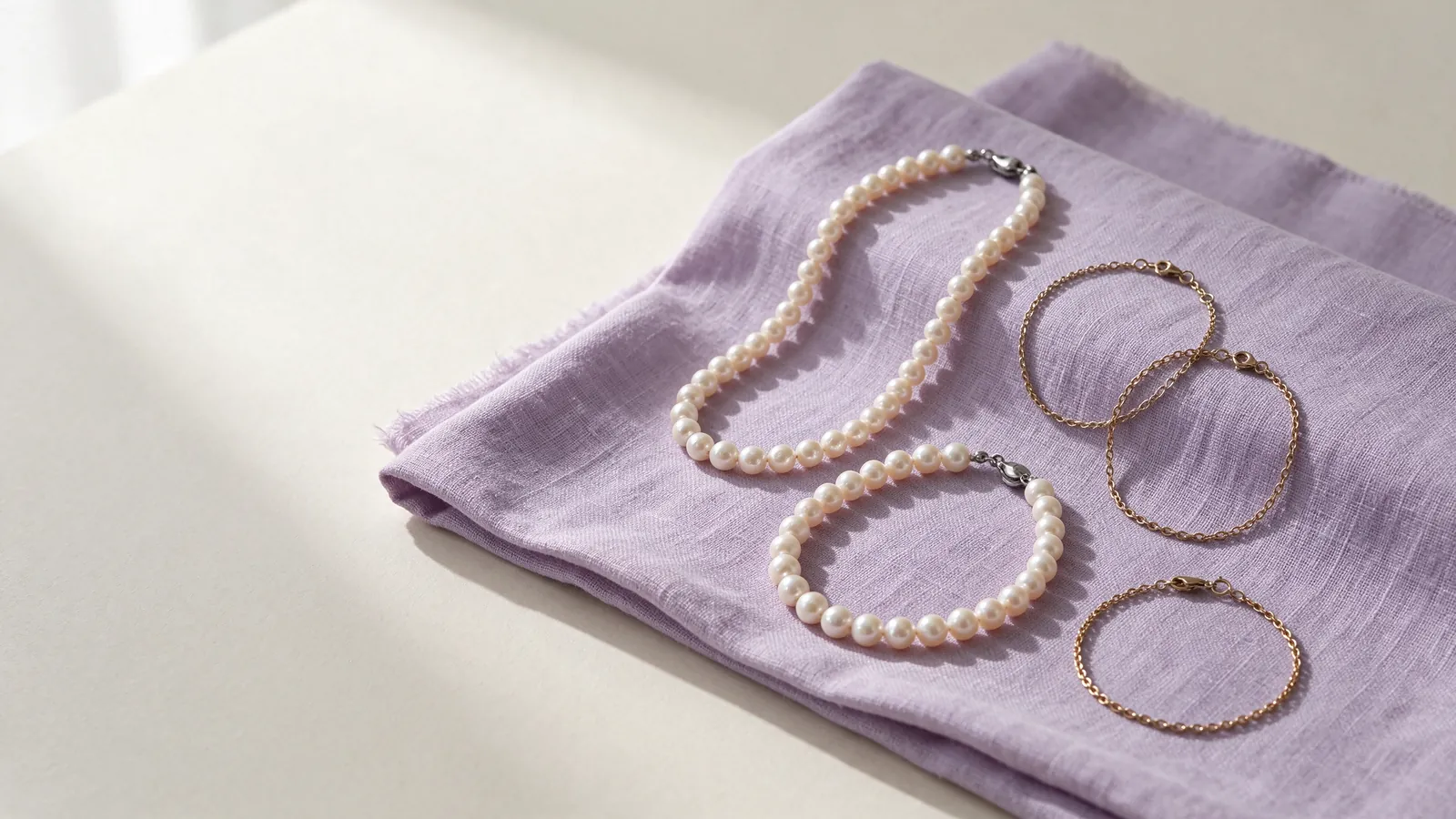
How do spacing and wrist fit influence a pearl station bracelet, pearl chain bracelet or pearl and chain bracelet?
The appeal of a pearl station bracelet comes from the alternation between pearl accents and visible chain. The empty areas are part of the design, not simply places waiting for more pearls. Before focusing on a pearl count, decide whether you like an open metal line or a nearly continuous pearl impression. Comparing the broader pearl bracelet structures can make that distinction clearer. The most useful starting question is what you want to notice first when you look at your wrist.
A pearl chain bracelet also changes appearance as it wraps around the wrist. Links that look straight in a flat image curve, and some pearl positions become less visible from above. For a pearl and chain bracelet, consider whether the outer wrist should carry a distinct focal arrangement or whether you prefer pearl accents visible from many directions. Overall length affects these views as well as comfort, so spacing and fit should be evaluated as a combined decision.
When you fasten a pearl station bracelet, pearl chain bracelet or pearl and chain bracelet, how can you assess looseness and pearl placement?
Begin with a relaxed arm, then rotate your palm upward and bend the wrist. Notice whether the chain pulls tight, a pearl presses into the skin or the bracelet travels toward the edge of your hand. Try the movements you actually make at work or at home. The goal is enough freedom for comfortable movement without uncontrolled slipping. Choosing a tight fit solely to hold one pearl on top can create pressure when the wrist bends.
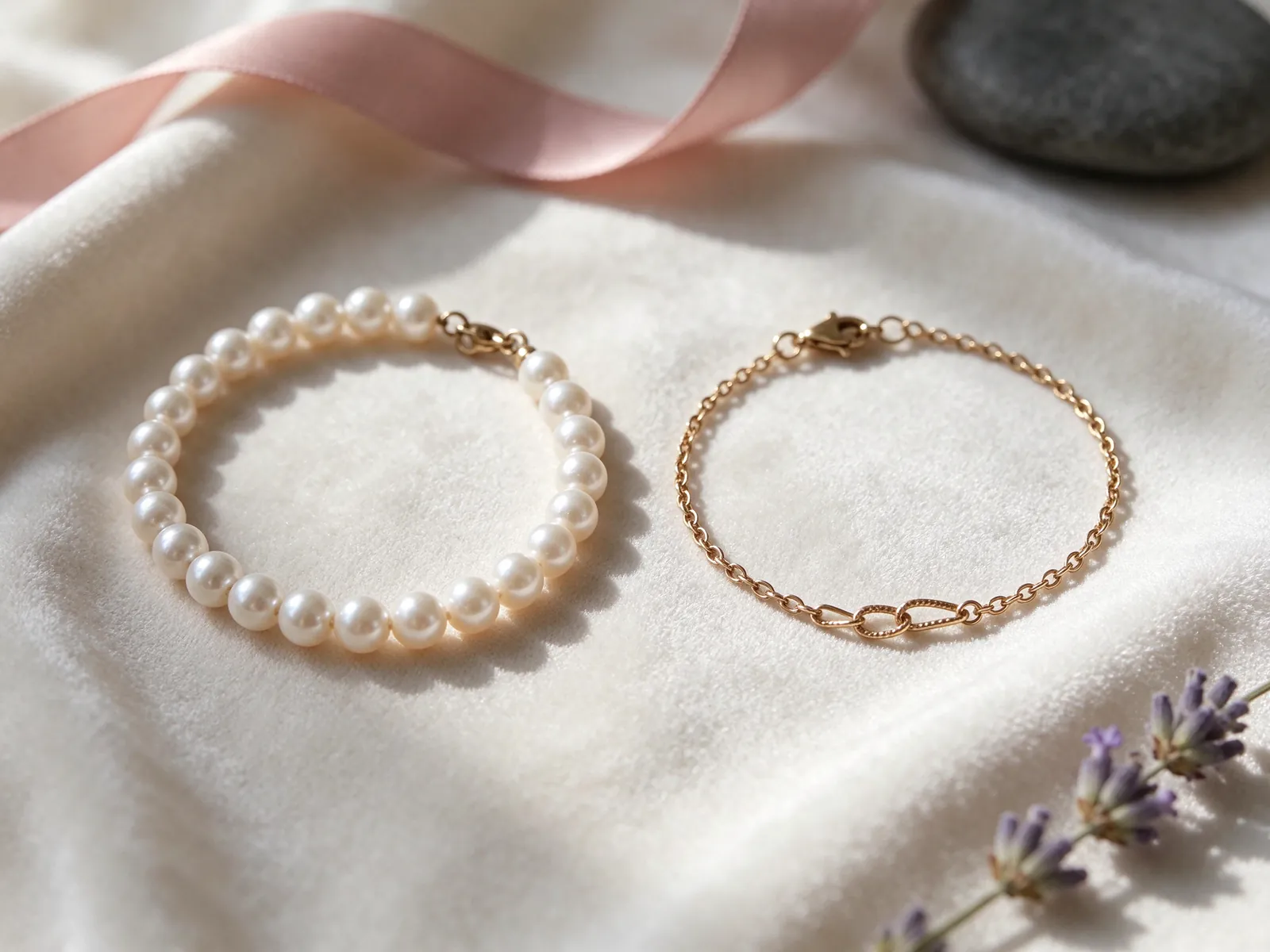
Choose an open rhythm or fuller coverage intentionally
Widely separated pearl positions let the chain establish the main line, punctuated by individual highlights. Closer positions shift attention toward a fuller sequence of pearl light. If uninterrupted coverage is what you consistently prefer, a pearl strand bracelet is worth comparing directly. It is a different structure, not an inferior or superior alternative. Making that comparison prevents you from selecting a station layout for its name while actually wanting the visual continuity of a strand.
The chain's outline can reinforce or interrupt the pearl rhythm. Look at it next to a simple T-shirt sleeve and a tailored cuff, since the background changes how clearly the links stand out. If your aim is a wider band of jewelry rather than a fine line, compare a multi strand pearl bracelet. Adding more pearl positions to one chain does not create the same width or arrangement as placing strands beside one another.
Keep camera scale separate from actual proportion
An enlarged image can make a quiet link look bold, while a distant wrist photograph can make a prominent pearl appear small. Compare layouts at a similar viewing scale and look for side views when possible. Photos can help explain whether you like generous gaps or a clear repeating pattern, but they cannot reliably supply dimensions without actual measurement information. Also consider the clasp area: it takes up part of the composition even when the photograph places it out of sight.
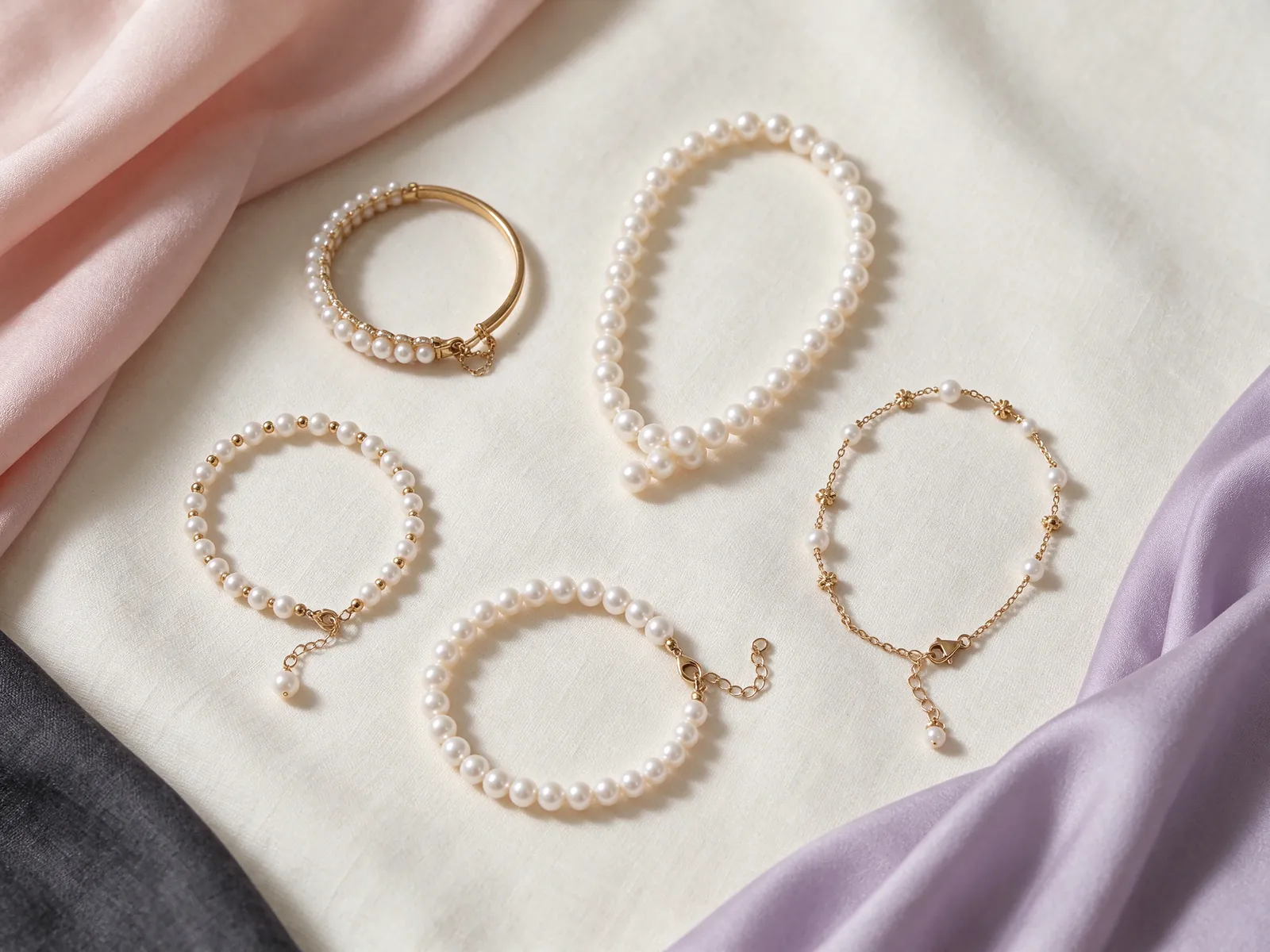
Look at each pearl and at the relationship between them
Open spacing gives individual pearls room to stand out. Observe how sharply light reflects from each surface, then compare neighboring positions for the color and shape relationship you enjoy. Turn the bracelet slowly in soft, consistent light rather than relying on a bright spotlight. A dramatic lighting setup can alter the apparent contrast between pearls, so a calm comparison is useful when deciding whether you want close coordination or noticeable variation.
GIA identifies seven pearl value factors: size, shape, color, luster, surface quality, nacre quality and matching. This framework is especially helpful when separate pearl positions make each element easy to inspect. It avoids reducing the decision to size or roundness alone. Similar outlines do not establish identical quality, and a visible color does not determine origin, treatment status or natural-versus-cultured identity. Those questions require information beyond the arrangement and the appearance of the bracelet.
Make matching a specific visual preference
Instead of asking for everything to match without explanation, identify what matters most to you: related color, similar shapes or a consistent reflection pattern. A deliberately varied sequence may suit you, but consider whether that variation should appear at selected stations or across the whole bracelet. This makes the aesthetic request precise. Keep pearl identity and any accompanying documentation separate from that visual request; an attractive arrangement is not evidence of a particular pearl species or certificate.
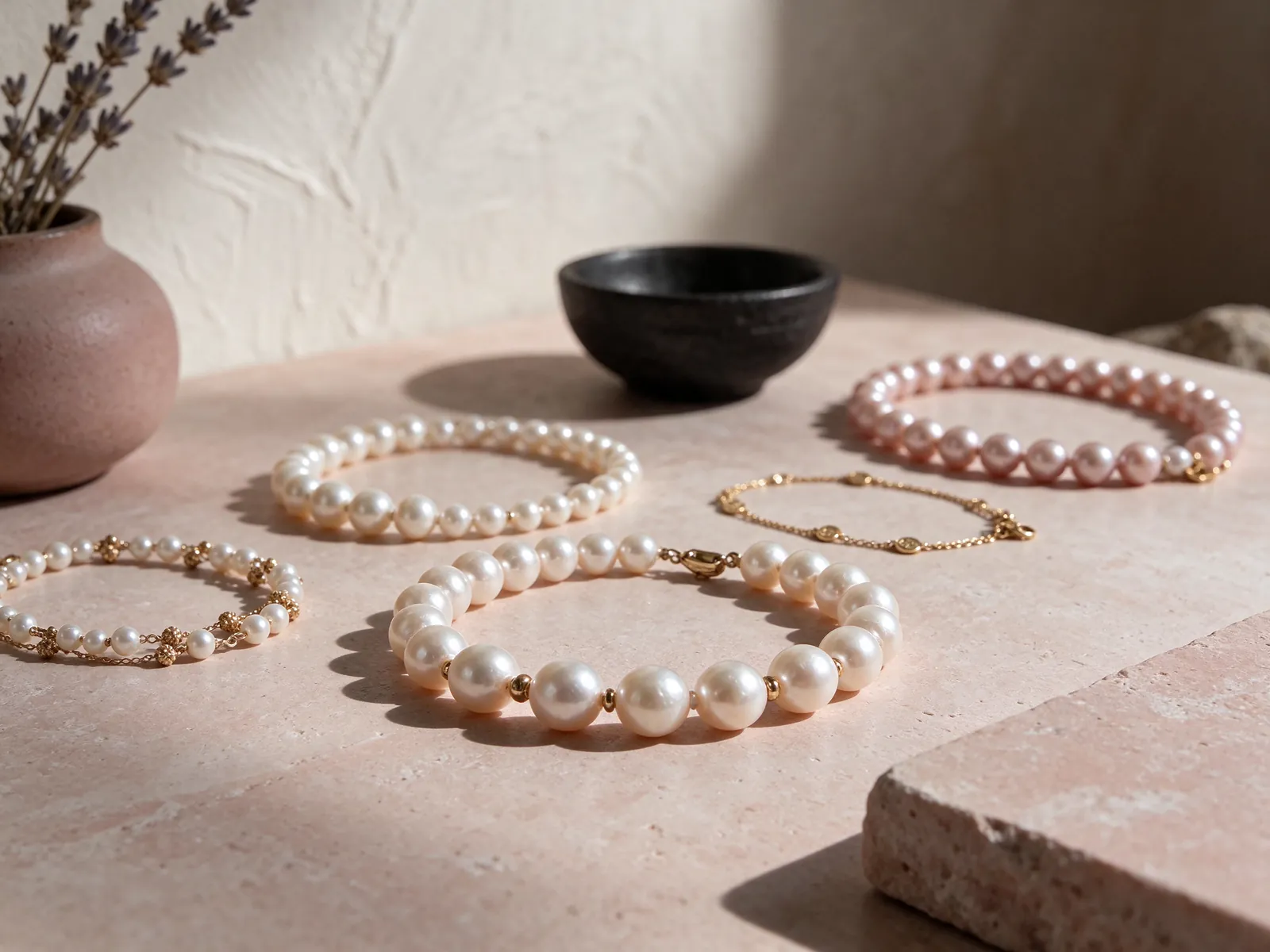
Fit should work at a desk, under a sleeve and during fastening
Use a flexible tape at the position where you intend to wear the bracelet. Let it rest against the skin without digging in, and do not include sleeve thickness. That wrist measurement does not automatically equal the finished bracelet length. The clasp, pearl projection and flexibility of the chain influence the space you experience after fastening. Avoid applying a universal extra-length rule without trying how the particular structure moves on your wrist.
Rest your hand on a desk, reach for a cup and bring your wrist through a typical sleeve. Check whether the clasp repeatedly meets the surface, a link catches the cuff or a pearl sits uncomfortably against the wrist bone. Try fastening and unfastening without rushing. An unobtrusive clasp is not useful to you if you find it difficult to operate or cannot tell whether it has fully closed. Fit includes handling, not just the silhouette.
Judge rotation by its effect, not by whether it happens
Some movement around the wrist is normal for a chain structure. What matters is whether it causes discomfort, persistent slipping or a need to constantly reposition the piece. Test the intended wrist, especially if your dominant hand handles bags or spends long periods at a keyboard. If pearl positions repeatedly land where the hand meets a desk, note that experience during a design discussion. Simply shortening the chain may trade the original issue for pressure during wrist movement.
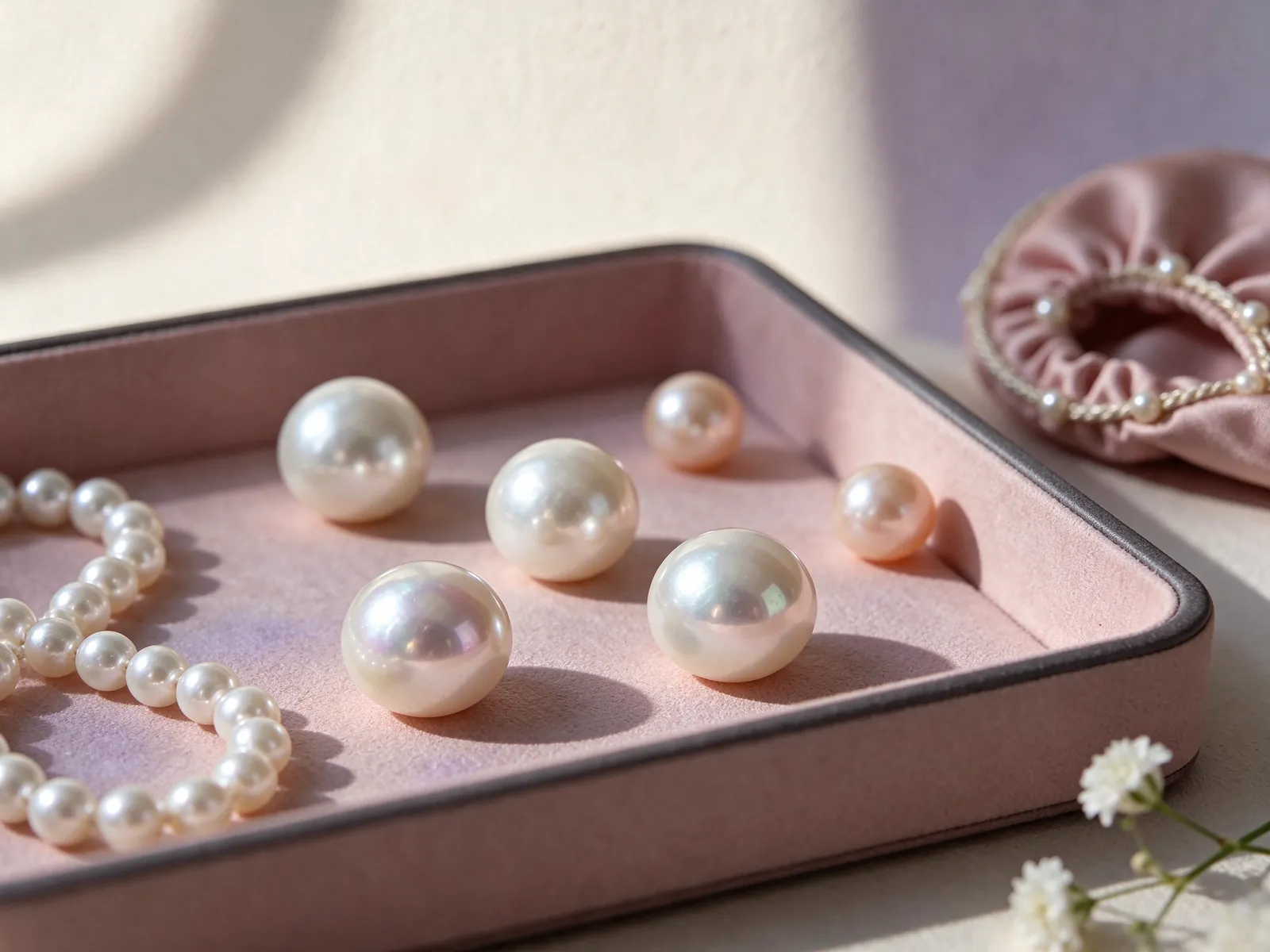
Style the negative space rather than filling every part of the wrist
For solo wear, let the bracelet's gaps remain visible beside the sleeve. A busy print can compete with the pattern, while a plain cuff makes the relationship between links and pearls easier to read. If you prefer a concentrated pearl section next to a metal section, compare a half chain pearl bracelet. Its contrast comes from two adjacent areas, whereas a station design distributes that contrast repeatedly around the wrist. The distinction is useful when planning a clean, uncluttered look.
When layering, decide which piece should be the focal point before adding another chain. A pearl charm bracelet has a hanging element that can move differently from fixed stations. Watch where that detail travels as you turn your hand, and whether it strikes a pearl or catches a neighboring link. Visual balance in a still photograph is only part of the decision. If the pieces repeatedly meet during ordinary motion, wearing them on separate wrists is a more workable arrangement.
Include your watch and rings in the color comparison
Compare the bracelet beside the watch, rings and clothing you already use. A shared metal color can feel coordinated, while a contrast can be deliberate; neither needs a rigid skin-tone rule. Keep lighting similar while you judge how the metal relates to pearl light. Then repeat the movement test. A matching palette does not prevent abrasion, and a watch case that touches pearl surfaces is still a concern even when the colors work beautifully together.

Protect pearl surfaces without stressing their connections
GIA lists pearl at 2.5 on the Mohs hardness scale. The figure is relevant to scratch awareness, not a promise about resistance to impacts or a predicted service life. Metal links do not change the vulnerability of the pearl surface. After wear, use a very soft, clean cloth and handle the piece gently. Support the chain and pearl positions rather than pulling one end tight while rubbing a pearl, which can strain the connection.
Do not use ultrasonic or steam cleaners on pearls. Avoid acids, perfume, hair spray and excessive heat; completing your beauty routine before wearing the bracelet helps limit direct exposure. Store the chain without tangling it into harder jewelry and give the pearls a soft separation from neighboring pieces. If the clasp becomes difficult, a link looks distorted or a pearl position unexpectedly loosens, stop wearing it and ask about the connection instead of reshaping it with pliers.
The style name does not tell you whether soaking is suitable
Station describes an arrangement, not a complete attachment specification. Cleaning advice must account for how the pearls are connected. If the structure includes stringing that has been cleaned with water, GIA advises allowing the string to dry completely before wearing it. When the construction is unclear, gentle after-wear wiping is a useful starting point while you ask about appropriate care. A pearl surface that looks clean does not mean the joints and holes should be immersed.
Bring real wearing details into a customization discussion
A useful design brief begins with wrist measurement and daily use: the wrist you plan to wear it on, typical sleeves, desk habits and any watch or other bracelets. Add your preferred visual rhythm, the amount of visible chain and whether pearls should be noticeable from the side. Images can communicate these preferences, but should not be treated as proof of pearl identity or dimensions. Notes about what feels comfortable are as valuable as a mood photograph.
Flint Jewelry's customization material directions are limited to 18K 750 white gold, 18K 750 yellow gold, 18K 750 rose gold, PT950 platinum and PT900 platinum. Start by explaining the color relationship and outline you prefer. A heart pearl bracelet is a helpful comparison if you are considering a motif: decide whether the appeal comes from the heart shape itself or from the spaces beside it. Added detail should be considered in relation to sleeves, desk contact and other jewelry as well as appearance.
For a gift, replace guesses with a few practical questions
Ask which wrist the recipient prefers, whether they wear a watch and whether small clasps are comfortable to handle. Their usual sleeves and preference for solo pieces or layered jewelry will help shape the conversation. Do not substitute your wrist measurement for theirs. If choosing for yourself, note the most important trial observation, such as slipping, cuff contact or a link pattern you especially like. Contact Flint Jewelry on WhatsApp at +85260106207 to talk through those observations; specific habits give the discussion more direction than a general request for a versatile bracelet.
| Decision | What matters | Practical check | How to describe your preference |
|---|---|---|---|
| Spacing | Visible gaps and pearl positions around the wrist | Check top, side and palm-side views after fastening | Open chain rhythm or fuller pearl coverage |
| Chain presence | Link outline beside the pearl accents | Compare against a casual sleeve and tailored cuff | Understated connection or distinct metal pattern |
| Pearl coordination | Luster, color, shape and matching | Rotate slowly under consistent soft light | Close coordination or purposeful variation |
| Handling and fit | Clasp operation, pressure and contact | Fasten, bend the wrist and rest it on a desk | Specific movements that feel easy or uncomfortable |
| Layering | Contact with watches, charms and other chains | Observe ordinary motion instead of a still pose | Keep separate outlines or use opposite wrists |
Pearl knowledge and authoritative references
GIA lists pearl at 2.5 on the Mohs hardness scale. This supports avoiding repeated rubbing against a watch, adjacent chain or other hard surface when wearing an open station bracelet.
Read the reference for this factFrequently asked questions
Are equal spaces required for a balanced station design?
No. Regular spacing gives one kind of rhythm; varied spacing can place emphasis on selected pearl positions. Balance needs to be judged once the bracelet curves around the wrist, including views that a flat image leaves out.
Should I shorten the bracelet if a pearl moves away from the top?
Not automatically. Consider pressure when bending, movement toward the hand and contact with sleeves or a desk. Some rotation is expected with a chain. Shortening solely to hold one pearl in place may make the bracelet uncomfortable during movement.
Does a close-up picture establish pearl dimensions or origin?
No. Camera scale and lighting change appearance, and the visible arrangement does not establish pearl species, origin or natural-versus-cultured identity. Use images for layout and styling ideas, while discussing actual pearl information separately.
Can matching the metal color make a watch-and-pearl stack suitable?
Color coordination only answers a styling question. Check whether the watch case or strap meets the pearls during typing, reaching and turning the hand. Repeated contact is a reason to separate the pieces, regardless of how coordinated they look.
What can help when choosing a station-style bracelet as a gift?
Learn the recipient's wrist measurement, preferred wrist, watch habits and typical sleeves. Ask about clasp handling and whether they prefer individual pieces or layers. These details make fit and layout discussions more useful than guessing a length from your own jewelry.
Updated: