
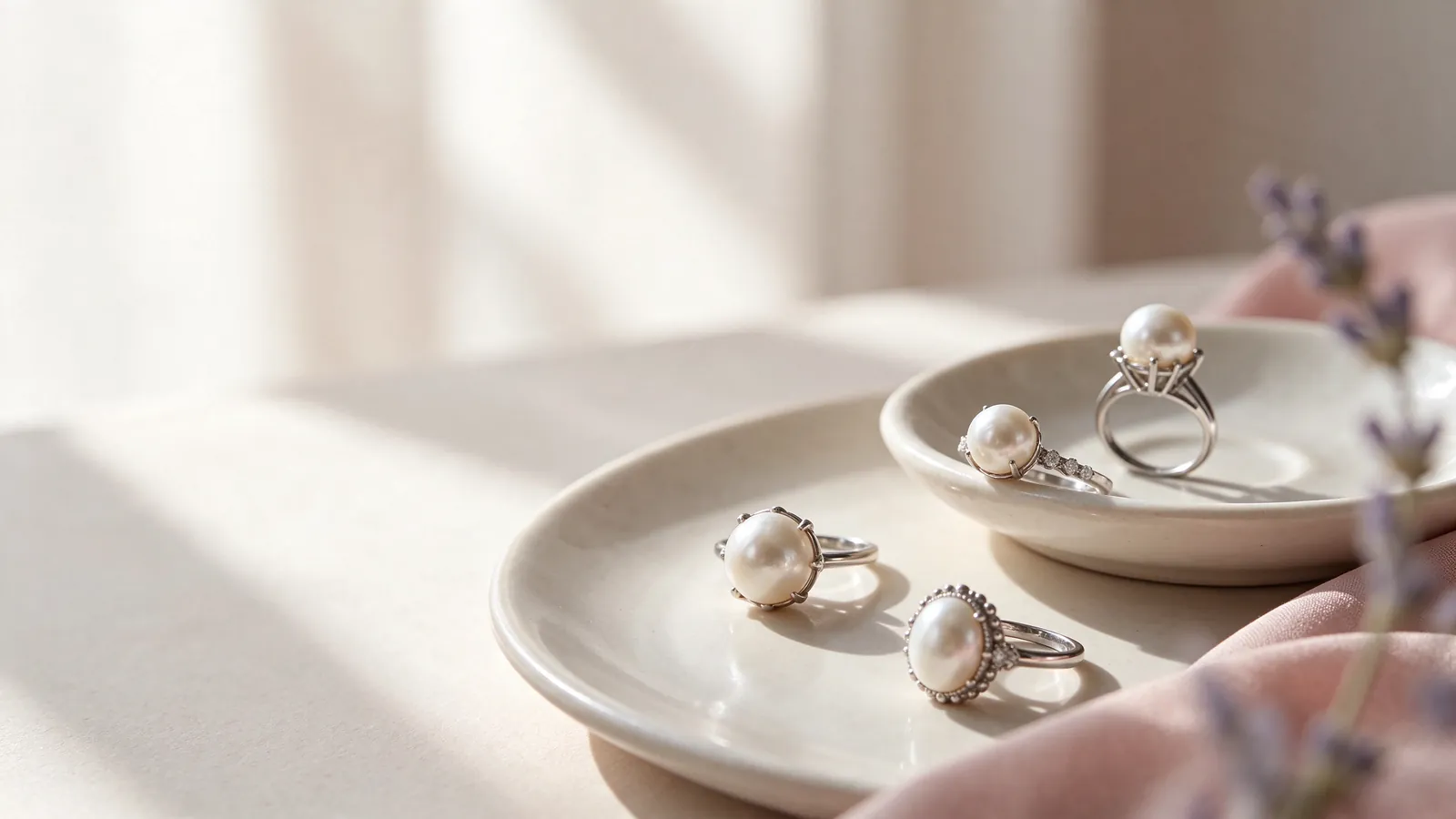
How do band width and ring size affect comfort in freshwater pearl rings across freshwater pearl ring designs?
Treat your ring size as a starting point, not a complete description of fit. Choose the intended finger first and compare with a fitting band close to the width you are considering. A wide band and a slender band contact the finger differently, which can change the sensation at its edges. Notice how the ring crosses the knuckle as well as how it rests once fully on.
Do a small set of everyday movements rather than keeping your hand still for the entire try-on. Hold a phone, pick up a pen, and gently close your hand. A band that feels fine with straight fingers might press against a neighboring finger during these actions. Record what you feel and compare at another normal time, since a quick fit check captures only one moment in your day.
When trying on freshwater pearl rings, what should you check at the knuckle and between fingers in freshwater pearl ring designs?
Slide the ring on with controlled movement; a slight turn is different from forcing it over the knuckle. At the base, check whether the setting's width crowds the neighboring fingers. Enlarging the size may not solve a shape-related pressure point. The ring should also come off with manageable effort. If you feel pain or numbness, or see a lasting pressure mark, stop wearing it and reassess the fit.
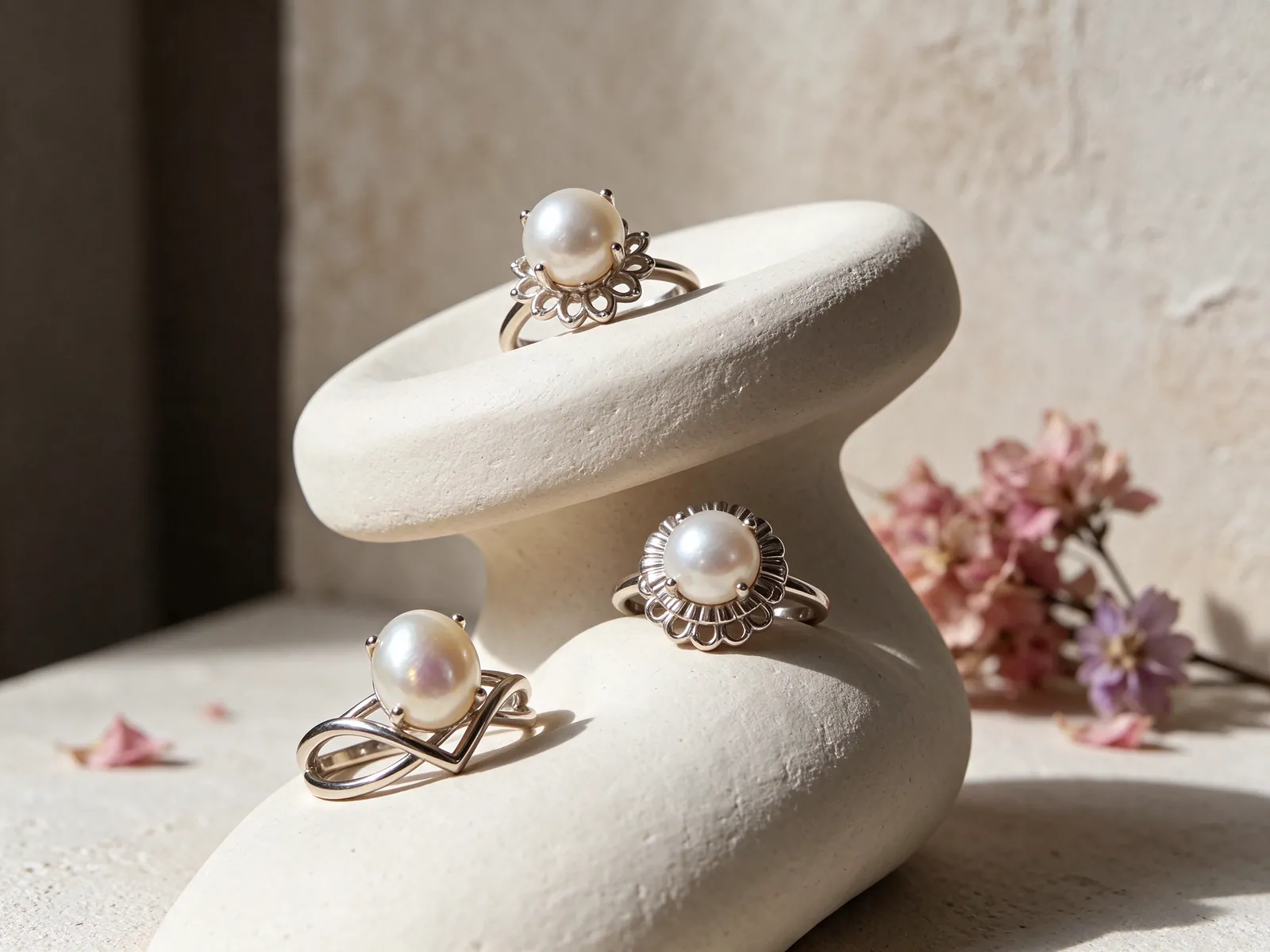
What does the side profile tell you that the top view cannot?
The top view shows the pearl's outline, while the side view reveals how far the setting stands above your hand. Inspect both before choosing a visual statement. Imagine pulling on a jacket, reaching into a bag, or sliding your hand past a shirt cuff. A prominent profile may be exactly the look you want, but it should be a conscious choice made with these movements in mind.
Proportion is a relationship, not a rule about finger length. Compare the outline with your nails, knuckle, and the open space around the ring. A shape extending along the finger directs attention differently from a broad shape across it. The pearl rings guide can help you identify a general design preference before narrowing the question to the balance and comfort of a freshwater pearl ring on your own hand.
How can you test clearance for a ring stack?
Start with the pearl ring by itself, then add the other ring and gently bend the finger. Watch the nearest edges and raised settings, including where they move when your hand tilts. Nothing should press or rub against the pearl. If the arrangement becomes crowded in motion, separate the rings across fingers or hands; the still photograph of a stack should not be the only basis for wearing it.
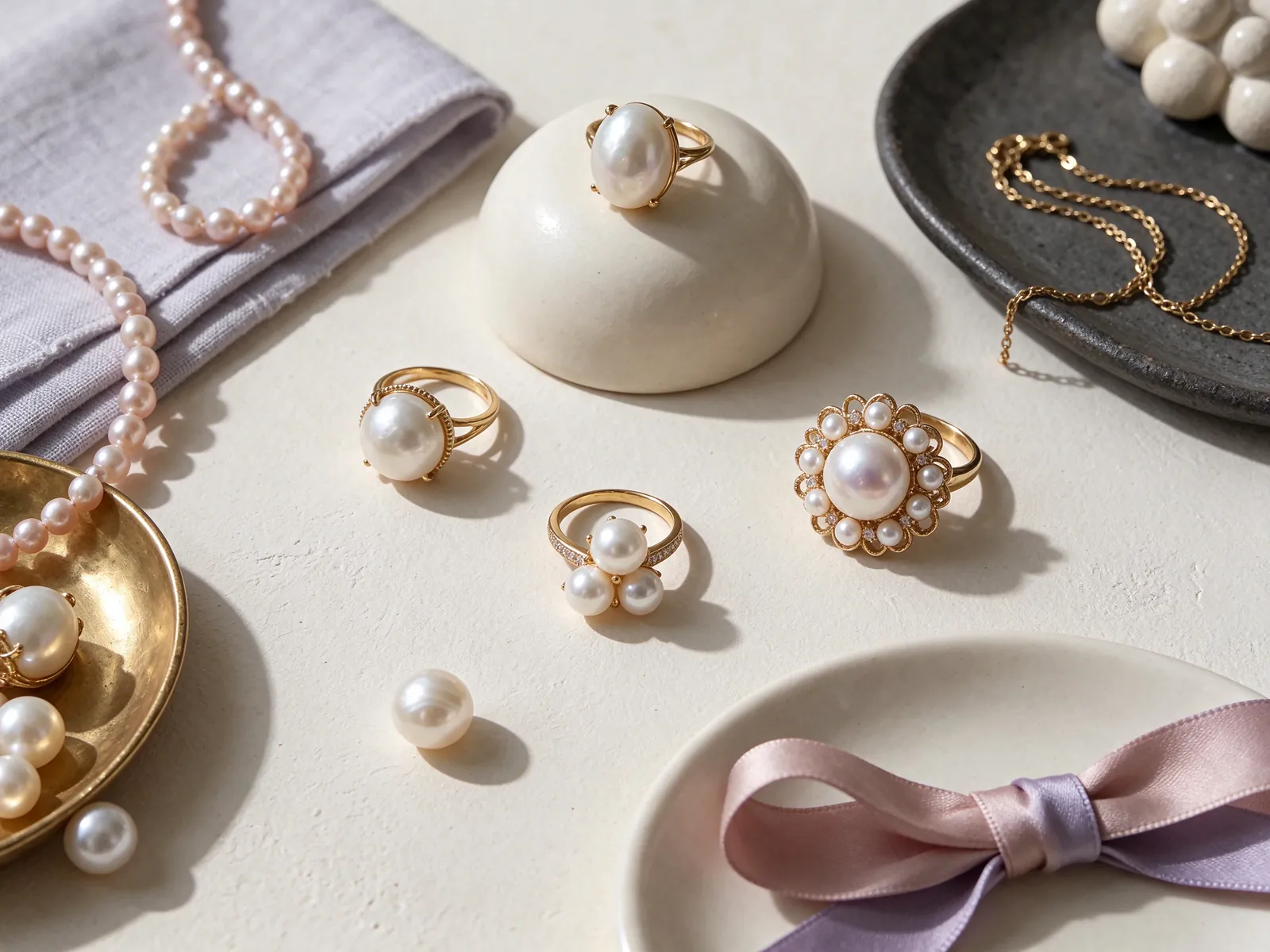
How do you assess appearance without relying on a single grade?
GIA describes seven pearl value factors: size, shape, color, luster, surface quality, nacre quality, and matching. Use these to organize questions instead of compressing every feature into one adjective. For a ring, examine how the pearl reflects light, what its contour contributes, and which surface characteristics are visible from the wearing position. Matching several pearls is different from judging a single pearl's visual relationship with its setting.
The explanation of what are freshwater pearls is a useful background step, but the category name does not answer every quality question. A color, shape, or bright image alone does not establish origin, natural-versus-cultured identity, or certification. Compare views at a similar distance and under similar lighting. If a surface detail matters to you, describe its location and visibility rather than asking only for an unexplained letter grade.
Which viewing angles are useful for an individual pearl?
Look straight on, at a shallow angle, and from farther away with the complete ring in view. Turning the pearl changes the reflections and may reveal a different texture or contour. You are evaluating the appearance, not measuring nacre thickness by sight. For an asymmetric shape, identify the face you prefer and how you would like it oriented, especially from the viewpoint you have when looking down at your hand.
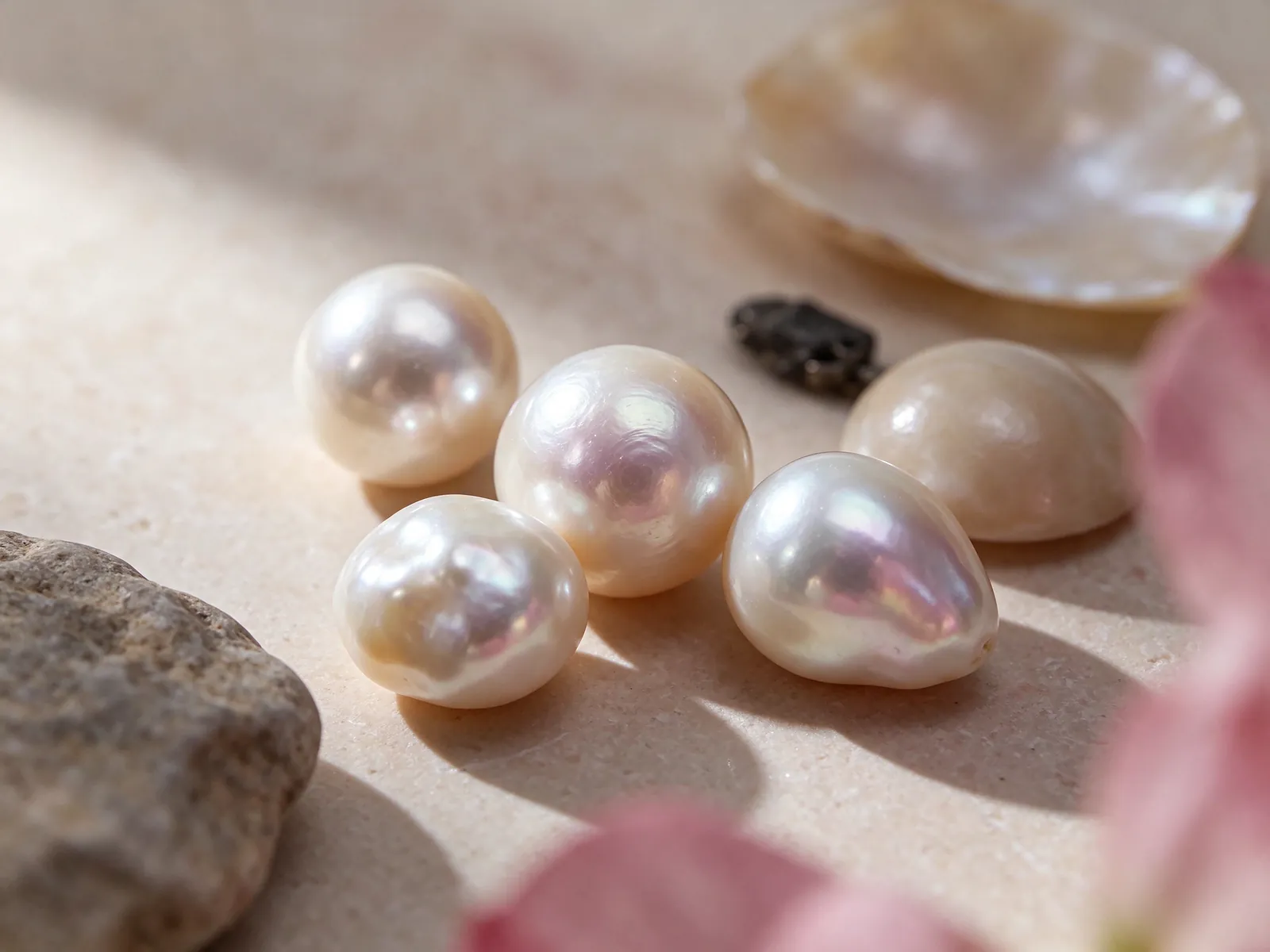
How should color choices connect with your wardrobe?
Instead of choosing a color in isolation, place its visual direction next to clothes you regularly use: a crisp white shirt, a cream sweater, or a dark blazer. GIA distinguishes bodycolor, overtone, and orient, and notes that not every pearl shows all three. If pink or lavender is your starting point, explore the pink freshwater pearl ring guide to consider whether you want a gentle blend or a clearer contrast.
The metal directions to discuss are 18K 750 white gold, 18K 750 yellow gold, 18K 750 rose gold, PT950 platinum, and PT900 platinum. Look at the width and visual weight of the band as well as its color. For a wardrobe centered on black, charcoal, or navy, the Tahitian pearl ring guide offers another styling comparison: decide whether you prefer a light focal point or darker emphasis, without treating color depth as a quality ranking.
What if the pearl looks different under another light?
Keep the background and viewing conditions consistent when comparing options, then check the impression under soft window light where possible. Glare on one option and shadow on another can distort the comparison. Include your usual watch or other ring to see the overall palette. A phone image is helpful for remembering a direction, but its screen cannot replace direct observation; note the warm, cool, soft, or contrasting effect you like.
How can shape express style without compromising movement?
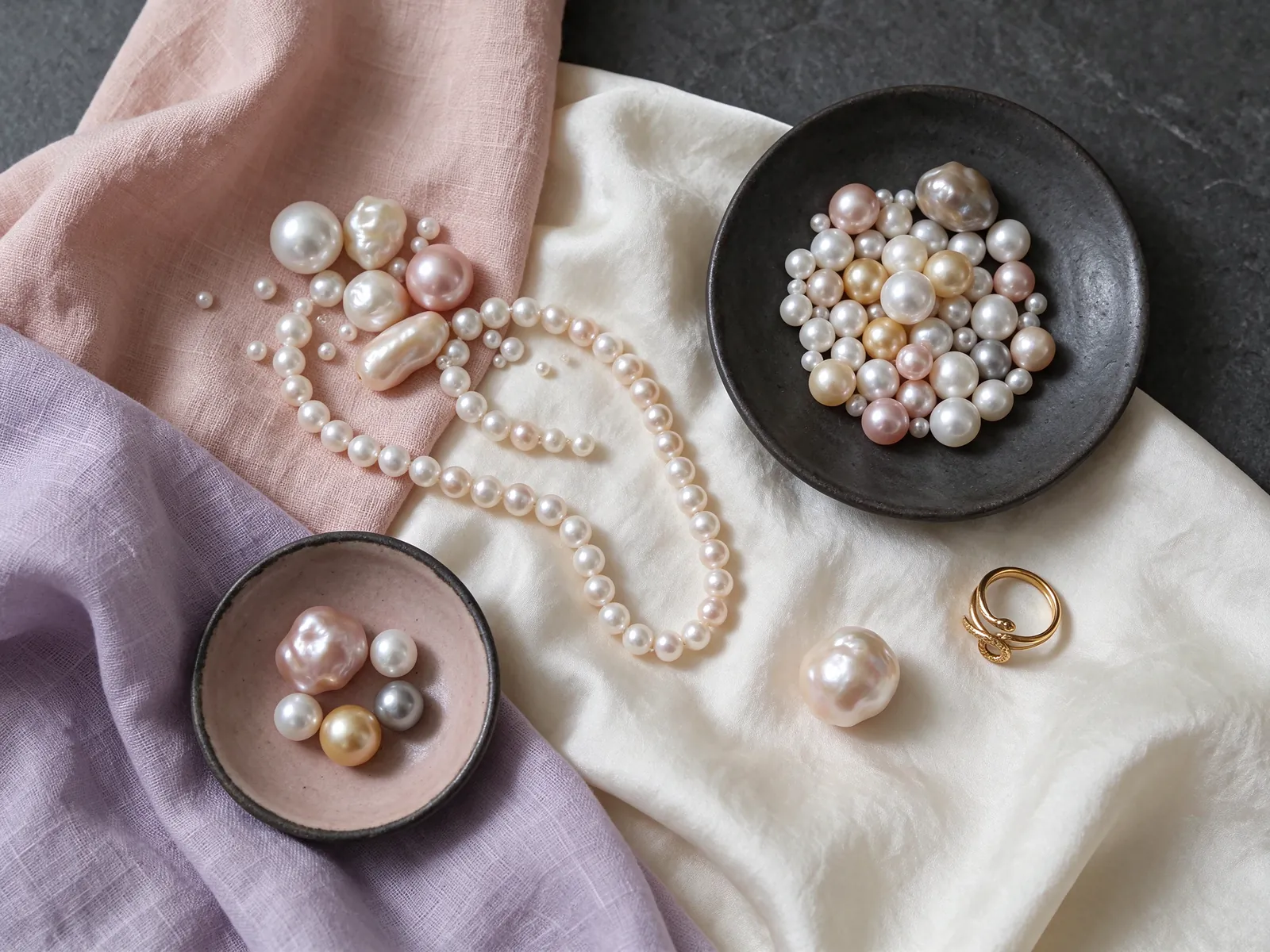
A compact, rounded contour and a flowing, irregular contour emphasize different lines. Neither establishes quality on its own. If you enjoy an individual outline, the baroque pearl ring guide can help frame practical questions about direction. Look for any projection toward adjacent fingers and judge the ring from your wearing viewpoint, not just its most dramatic camera angle. An appealing shape should still feel considered when the hand is relaxed.
The Akoya pearl ring guide provides another route for comparing setting placement and clean surrounding space. Do not assume the pearl type name guarantees a particular roundness or luster. Instead, connect the silhouette to your clothes: tailored lines might inspire a focused shape, while softer fabrics might suit a more fluid outline. Try these as styling directions for freshwater pearl ring designs, then let your actual preference and comfort take priority.
How do you choose the orientation of an offset outline?
Rest your hand near the objects you usually see beside it, such as a keyboard or a bag, and compare the outline pointing toward your fingertip and toward your wrist. Explain what works in concrete terms: length along the finger, for example, or space beside its neighbor. If the ring rotates on its own, check whether the fit is loose before attributing the movement to the intended design.
What should your daily routine tell you about pearl-ring care?
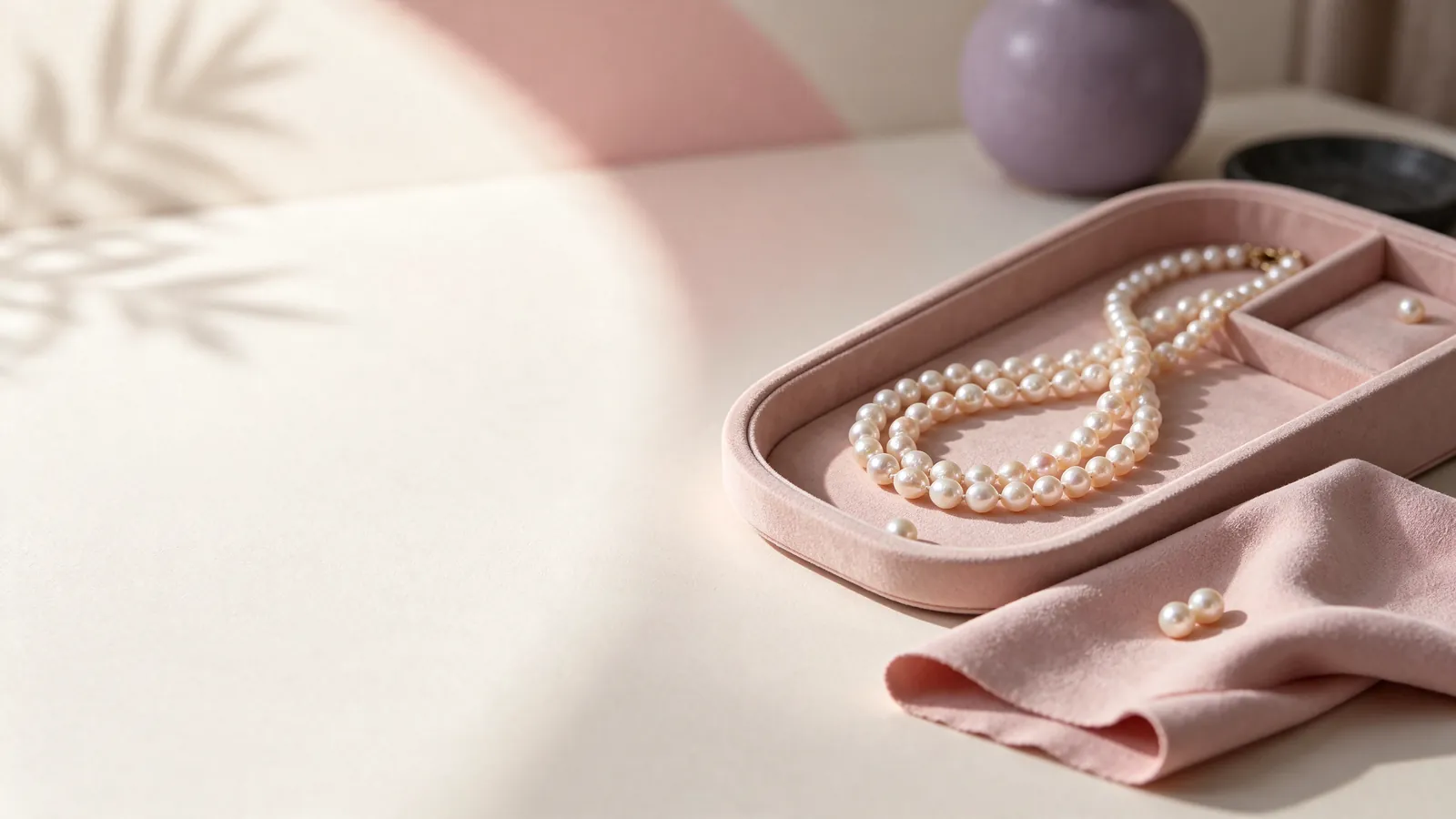
Pearl ranks 2.5 on the Mohs hardness scale according to GIA. The figure helps explain why scratching deserves attention; it does not set a lifespan or a maximum number of wears. Rings sit on hands that handle doors, tools, and bags. List your most hands-on tasks before choosing when to wear the ring, especially if your routine includes heavy lifting or cleaning products.
Finish applying perfume and hair products before putting the ring on, and avoid spraying the pearl directly. When removing it for washing, exercise, or household work, use a dedicated location away from a sink edge. Keep it separate from keys and loose hard objects in a bag. A repeatable removal-and-storage habit is more useful than relying on memory when switching quickly between work, errands, and an evening occasion.
Which cleaning methods should stay off your list?
After wearing, gently wipe the pearl with a very soft, clean cloth and keep the ring separate from jewelry that might scratch it. GIA says pearls should never go into ultrasonic or steam cleaners, and advises avoiding acids and excessive heat. Do not scrape near the pearl with a pointed tool or experiment with a soaking solution. For stubborn residue, ask a jewelry professional about cleaning the pearl and setting together.
How do you turn preferences into a useful design brief?
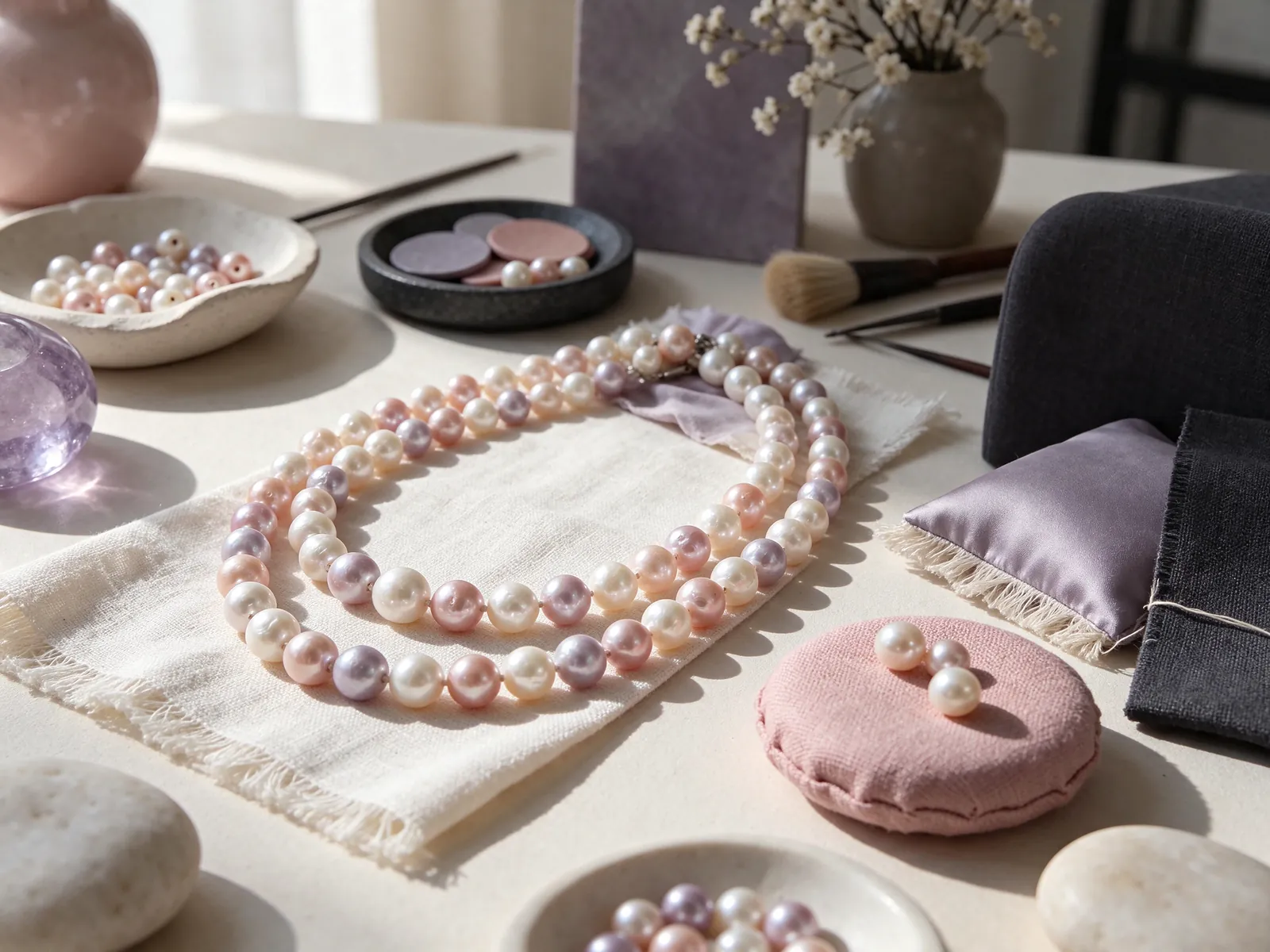
Write down what must work, what you most enjoy visually, and what you can change. Comfortable room beside neighboring fingers belongs in the first group; a soft color or expressive outline belongs in the second. Band width and the direction of a shape may be flexible. This separation keeps a favorite image from making the decision for you when it does not match your intended wearing habits.
For a discussion with Flint Jewelry, bring notes on how an existing ring feels, the finger you plan to use, your usual clothing palette, and the occasions you have in mind. Describe the appealing part of an image rather than requesting its entire look: open space, a centered pearl, a flowing edge, or a quieter side profile. Considering pearl selection, setting shape, and fit together creates a more coherent starting point.
What is a sensible final check before choosing a direction?
Run the preferred style through your ordinary movements: handling a pen, passing a sleeve, and wearing your familiar watch or other ring. If one feature gets in the way, consider a different finger, orientation, or band proportion before discarding the idea. Identify the features you want to preserve and those you are willing to adjust. A specific set of priorities is more helpful than choosing solely by first impression. When your priorities are clear, talk about freshwater pearl ring style, fit, and wearing preferences with Flint Jewelry on WhatsApp at +85260106207.
| Design aspect | Comparison method | Fit concern | Style decision | Useful question |
|---|---|---|---|---|
| Band and size | Try a band of comparable width | Knuckle passage and edge pressure | Begin with a single ring | Does it shift while you write? |
| Side profile | Look above and across the hand | Room beneath a sleeve | Subtle or prominent silhouette | Will it fit your everyday cuffs? |
| Pearl contour | Turn it under consistent light | Projections near other fingers | Rounded or flowing outline | Which direction feels right? |
| Color pairing | Use everyday clothes as a background | Consider the band's visual weight | Blend or contrast with your palette | How does it look beside your watch? |
| Wearing routine | Identify hands-on activities | Hard-object contact | Choose the right moments to wear it | Where will you store it when removed? |
Pearl knowledge and authoritative references
GIA gives pearl a Mohs hardness of 2.5. For a ring, this makes avoiding scratches from hard objects a practical part of choosing when and how to wear it.
Read the reference for this factFrequently asked questions
Should I order my usual size for a wider pearl-ring band?
Use that size as a starting point, then compare with a fitting band of similar width. Contact area and edge pressure can feel different. Check passage over the knuckle, comfort at the base, and normal hand movements before deciding; the size number alone does not describe the fit.
Will a high setting make a pearl ring more practical?
Height alone is not a practical guarantee. Inspect the side view and consider sleeves, bag openings, nearby rings, and the tasks you perform. Choose the profile deliberately and plan removal for activities that could bring the pearl into contact with hard objects.
Can I identify freshwater pearl quality from its color?
Color is one of GIA's seven value factors, not a complete quality assessment. Look separately at luster, shape, visible surface, and overall proportion. Color alone also does not establish origin, natural-versus-cultured identity, or certification.
How can I keep another ring from rubbing against the pearl?
Check clearance with both rings on, then gently bend the finger and tilt your hand. Watch raised settings and edges as they move. If contact is possible, separate the rings onto different fingers or hands rather than relying on their position in a still photograph.
Can I use a steam cleaner for the metal part of the ring?
Do not put a pearl ring into a steam or ultrasonic cleaner; GIA advises against both for pearls. Treat the complete ring as one piece when considering cleaning. Wipe gently after wear, and ask a jewelry professional about residue around the setting instead of experimenting near the pearl.
Updated: