
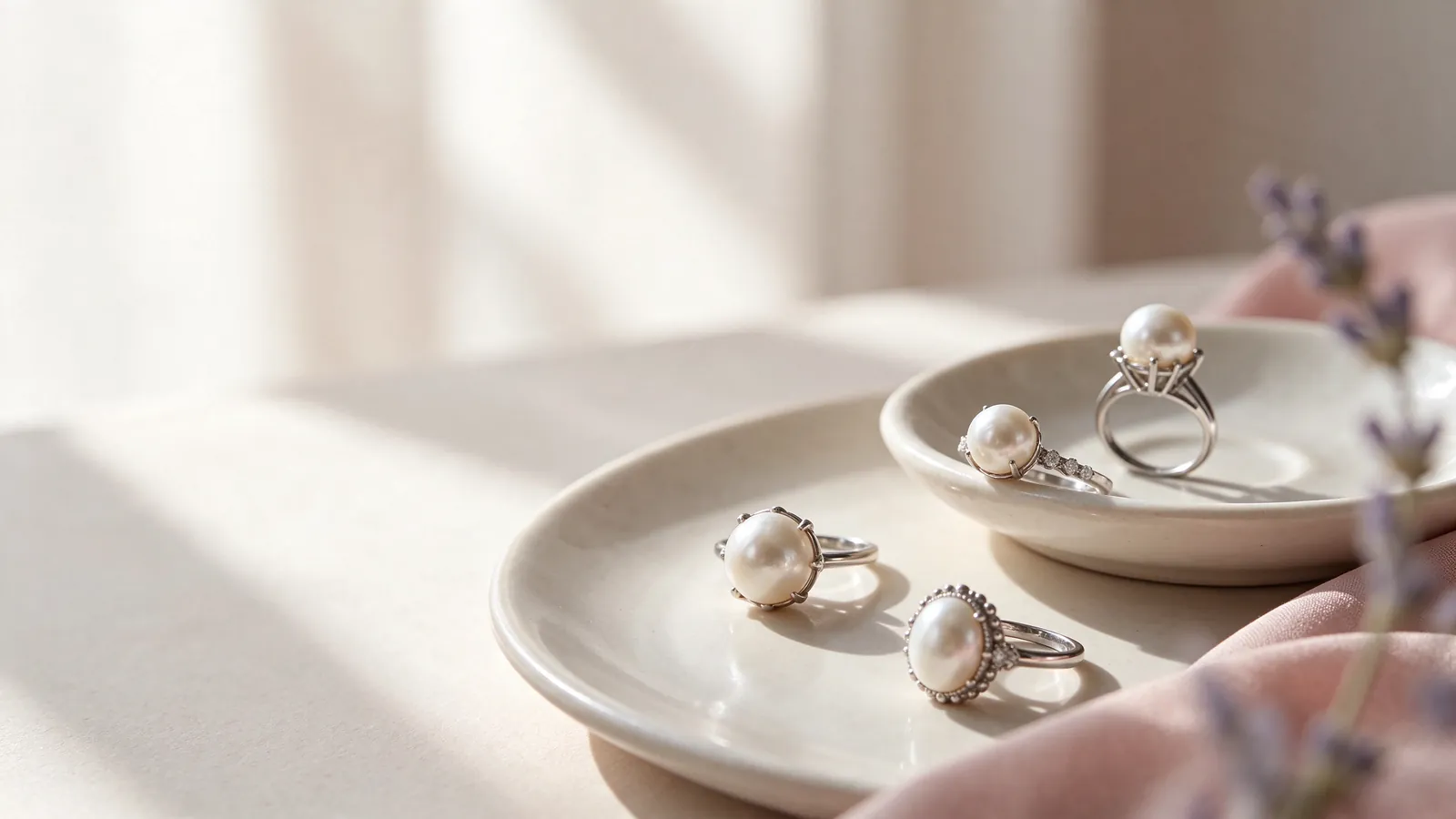
How do finger shape and ring size influence baroque pearl ring design for an irregular pearl ring?
Consider the space a pearl occupies on your hand before deciding whether its silhouette is flattering. With your fingers relaxed, notice whether the outline runs along the finger or extends toward its neighbors. Then close your hand loosely and check the broadest edge again. A wide face can look intentional without being overwhelming, while a long face can follow the finger's line. The pearl rings guide offers a starting point for thinking about proportion, but your own movement is more useful than a universal hand-shape rule.
Treat ring size as one part of the fit discussion, not as a guarantee of balance. Your knuckle and finger base may need different consideration, and a prominent pearl can change how the complete ring sits. Notice pressure, sideways movement and contact with neighboring fingers while holding a phone or a pen. If a ring repeatedly turns, describe that behavior instead of immediately choosing a smaller band. Comfort and stability need to be evaluated together, particularly when an uneven outline carries a strong visual direction.
When assessing baroque pearl ring design, how should an irregular pearl ring sit on your finger?
It should be assessed with your hand both resting and moving. Look at the broad end, the tapered end and any projection from the side as well as from above. If an orientation feels awkward, raise the issue before choosing. Do not turn or twist a pearl that is already secured in its setting to experiment with a different position.
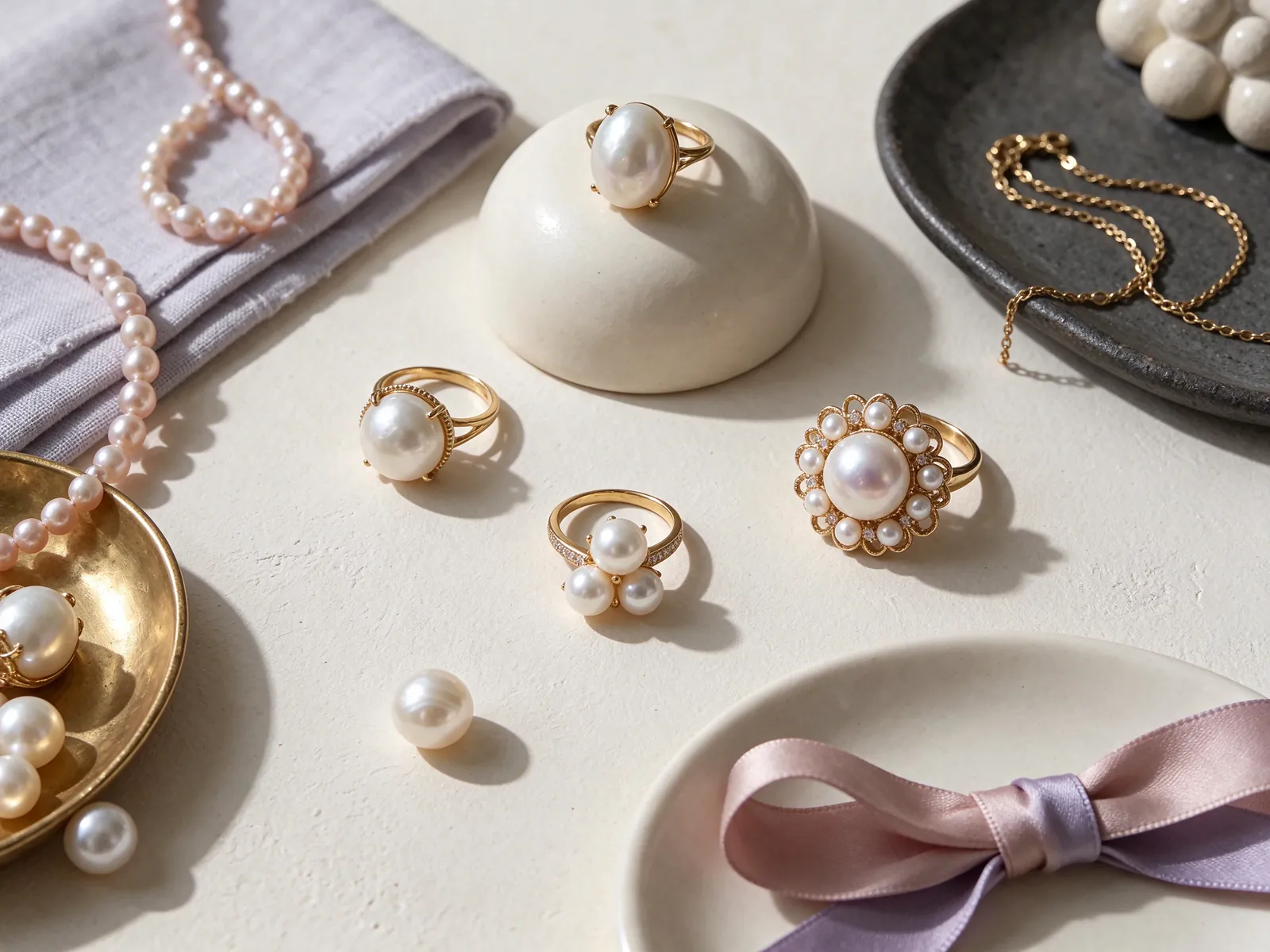
Separate a distinctive shape from a pearl's identity
The word baroque describes an irregular form. It does not establish species, origin, natural or cultured identity, or bead status. When you explore baroque pearls, start by describing the visible outline in ordinary terms: curved, elongated, off-center or wider at one end. Those observations can guide a design conversation without claiming information that the shape cannot provide. Keshi and seed are not alternative names for baroque, so avoid using them interchangeably when asking about a particular pearl.
An appealing contour should not distract you from the rest of the pearl. GIA identifies seven quality factors: size, shape, color, luster, surface quality, nacre quality and matching in multi-pearl jewelry. For a ring, you can start by comparing how light reflects across the visible face and whether surface details are comfortable for you to see in the wearing position. A shadow inside a curve is not automatically a stain, and an irregular silhouette is not a reason to disregard every surface feature.
Compare reflections without changing the lighting setup
Place candidates against a similar background and view them in the same soft light. Slowly change the viewing angle rather than switching between heavily edited photographs. Nearby clothing and screens can influence reflections, so a colored patch in an image should not be used to identify pearl type or determine treatment status.
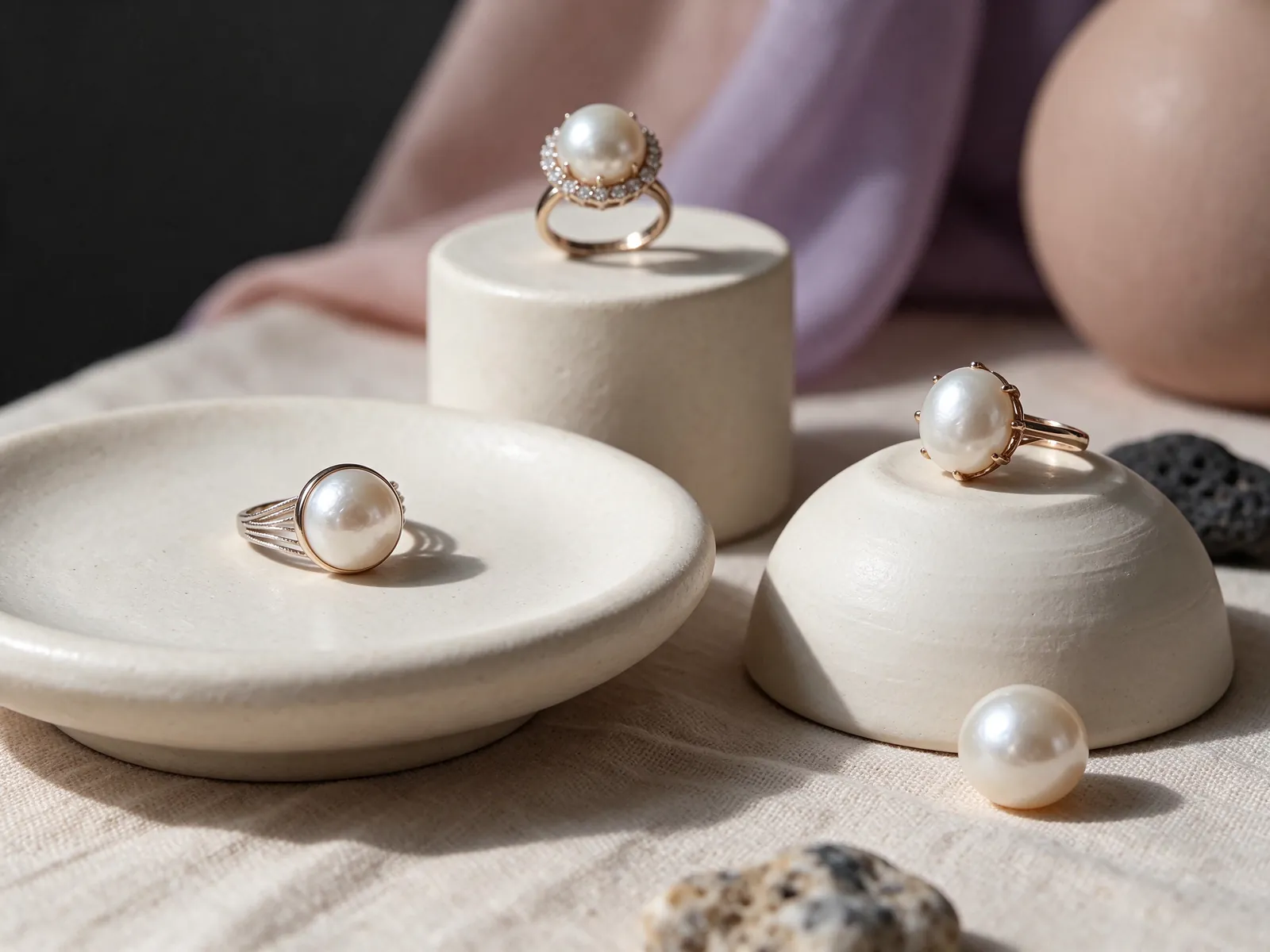
Read the setting from the side, not only from above
The side view reveals the relationship between the pearl's thickest area, the setting and the hand. Ask where the ring is most exposed when you reach into a pocket or move past a fitted cuff. A raised outline may provide the sculptural quality you love, but it calls for realistic consideration of contact. A lower appearance is not necessarily more comfortable if a broad edge extends sideways. Compare the entire profile rather than judging wearability from height alone.
A setting can frame an unusual contour, leave a curve visible or visually counterbalance a broader end. Those are design observations, not explanations of how the pearl is attached. Ask how the specific structure supports the pearl and what care is appropriate around its exposed edges. If something feels loose or the orientation changes unexpectedly, stop wearing the ring and have it examined. Do not bend metalwork or manipulate the pearl yourself; two settings that look alike may work differently.
Use familiar objects for a gentle movement check
Try the motions of holding a mug, taking a card from a wallet and writing a short note. Bring a sleeve you wear often and check clearance without tugging fabric against the pearl. This is a comfort assessment, not a durability test, and deliberate knocks or catches do not belong in it.
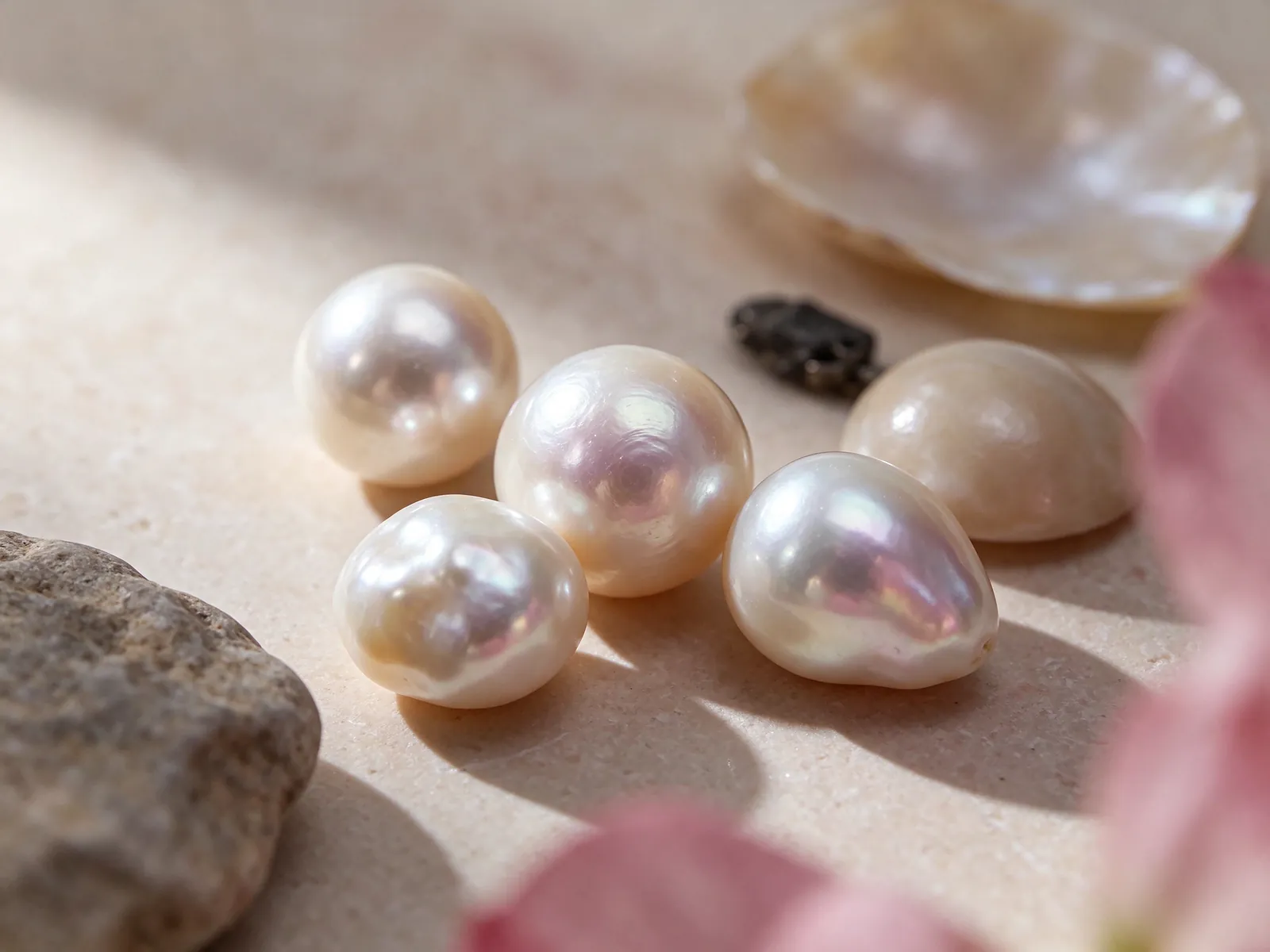
Style a sculptural ring with room around its outline
A baroque pearl can anchor a simple outfit because its outline already supplies visual movement. Try it with an uncluttered cuff or a plain knit before adding other pieces. If your clothing has strong patterns or texture, give the ring a quieter area on the hand. You do not have to avoid all other jewelry: placing a bracelet or another statement ring on the opposite hand can preserve a layered look while making the pearl easier to see.
The 18K gold pearl ring topic is useful for considering metal color alongside the pearl. The five metal choices to discuss are 18K 750 white gold, 18K 750 yellow gold, 18K 750 rose gold, PT950 platinum and PT900 platinum. Assess metal color alongside the setting proportions and the pearl outline. Compare the actual combination with your usual watch and wardrobe. Choose the color relationship you enjoy rather than treating warm and cool styling preferences as fixed rules about skin tone.
Keep neighboring metal from rubbing the pearl
If you like a slim ring on the next finger, test the pair with your fingers together and while bending them. The metal should not scrape the pearl's projecting edge. Moving the companion ring to the other hand can repeat the metal color without placing a hard surface directly beside the pearl.
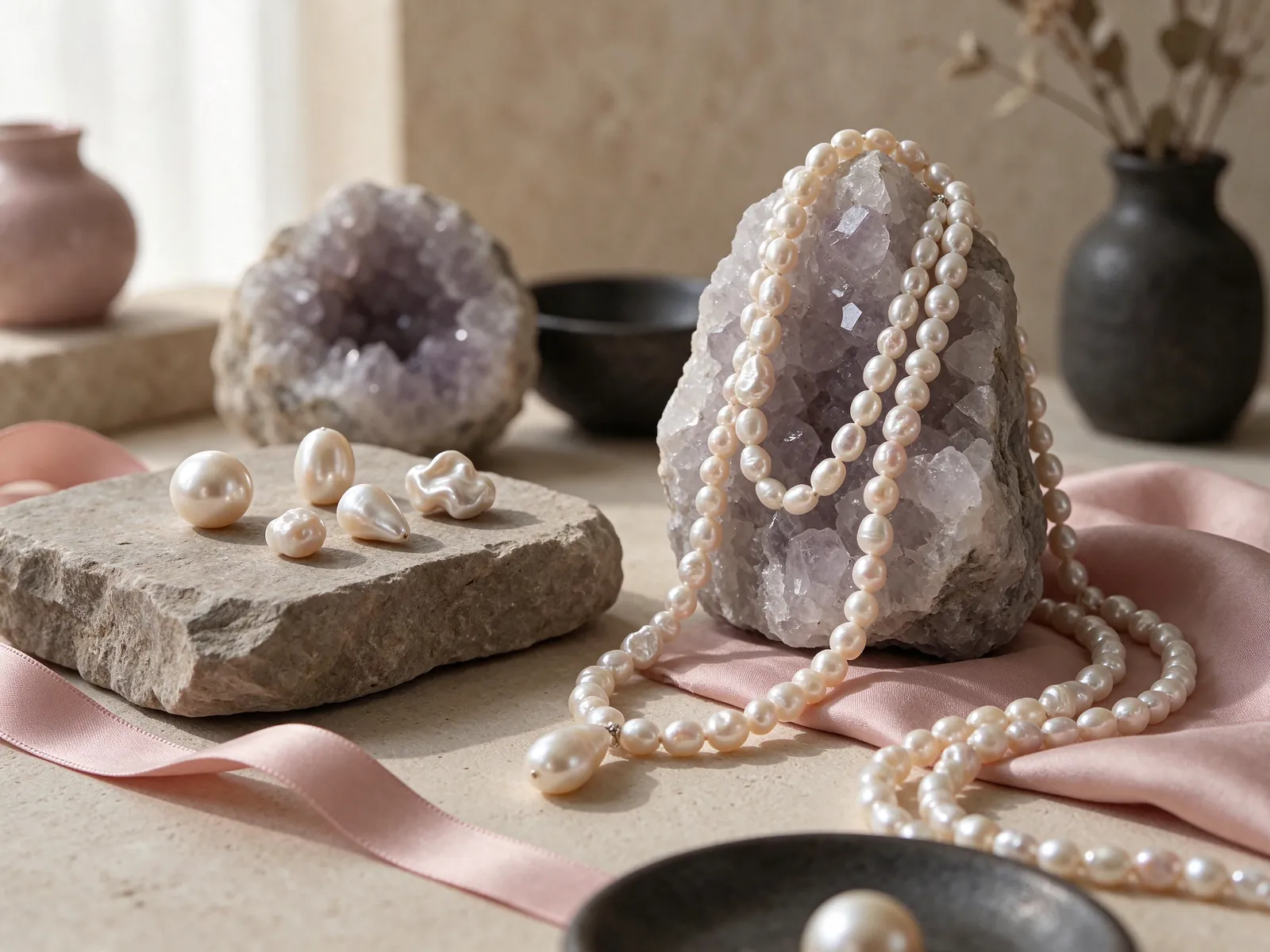
Use other ring topics to clarify what you actually prefer
Sometimes the attraction is less about irregularity than about a soft color or a particular face profile. Identify that preference before choosing a category label. A freshwater pearl ring guide concerns a pearl category, while baroque concerns shape; those descriptions are not opposing choices. Comparing them responsibly means asking what each label establishes and what information is still needed for the individual pearl. This keeps a useful style comparison from becoming an unsupported claim based on appearance.
For questions about a pearl face and the construction around it, read about a mabé pearl ring as a separate subject rather than calling every non-round face baroque. A Tahitian pearl ring guide offers another direction if a darker color impression is what draws your attention. Neither a dark photograph nor an uneven outline identifies an unknown pearl. Use related topics to organize your questions, then return to the candidate's actual information and the way its ring sits on your hand.
Write preferences as features rather than labels
A description such as an off-center outline with enough room beside the next finger is easier to evaluate than a category name alone. Include the side profile you like and the movements that must remain comfortable. Apply that same short list to every candidate so that comparison stays focused.
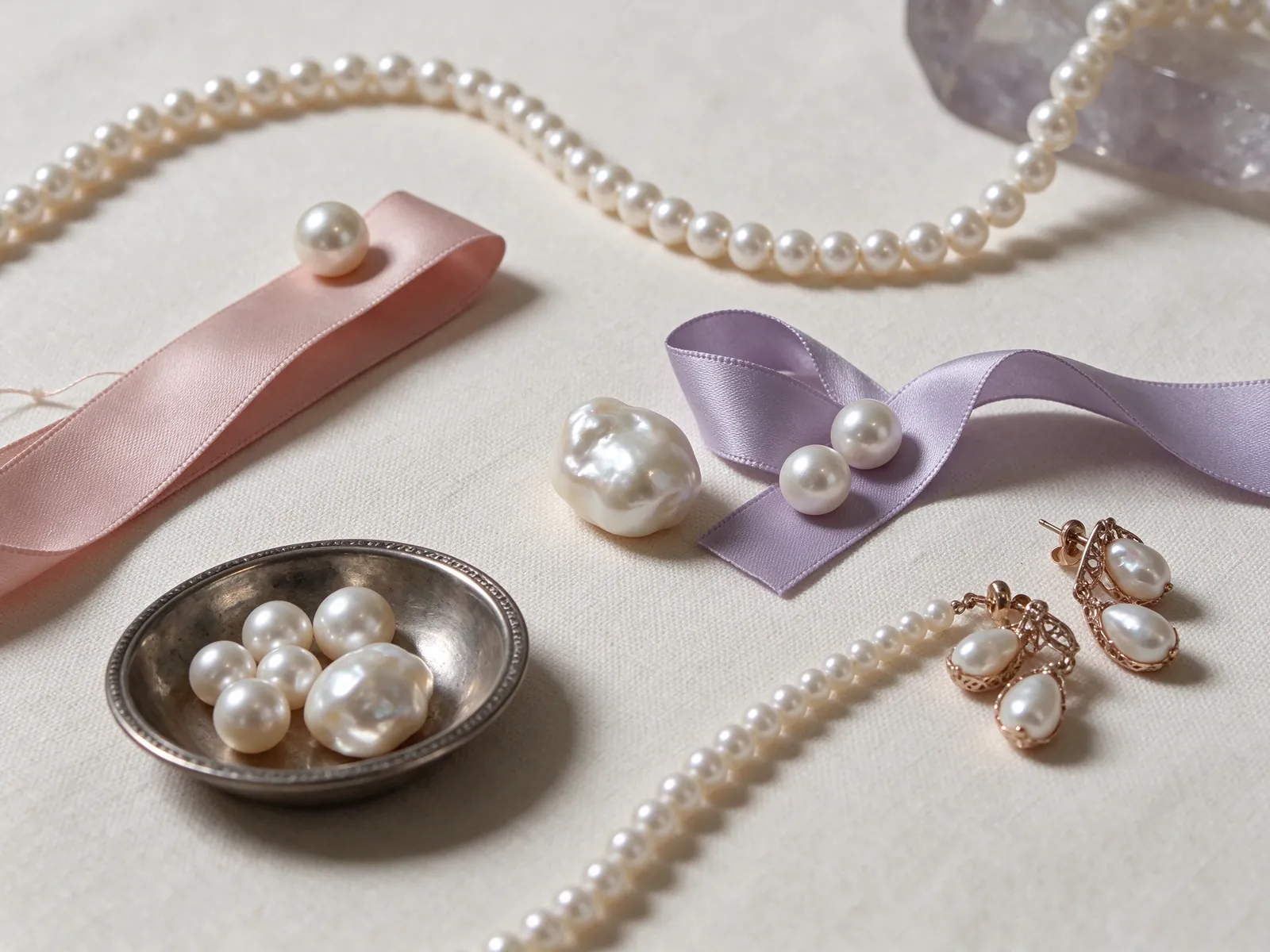
Make care decisions around how your hands are used
Rings come close to hard surfaces more often than jewelry worn farther from the hands. Think about desk edges, door handles and equipment you use, and remove a pearl ring for household cleaning, heavy lifting or repeated hard contact. Put it in a secure place, not on the edge of a sink. GIA lists pearl at 2.5 on the Mohs hardness scale. That fact supports caution about scratching; it does not measure the impact resistance of the entire ring.
Wipe the pearl after wear with a very soft, clean cloth, following its curves gently. Do not press hard into recesses or pick at residue. GIA advises never using ultrasonic or steam cleaners for pearls and warns against acids, perfume, hair spray and excessive heat. Use personal-care products before putting the ring on to limit direct contact. Store it apart from harder jewelry so that an exposed curve does not rub against another piece. Any unexpected movement at the attachment warrants a professional inspection.
A difficult recess is not a reason for aggressive cleaning
Avoid needles, stiff brushes and improvised tools when a mark will not lift with a gentle wipe. Do not soak the complete ring to treat an unknown substance. Tell a jewelry professional where the mark appeared and what the ring contacted, allowing the cleaning approach to account for both pearl and setting.
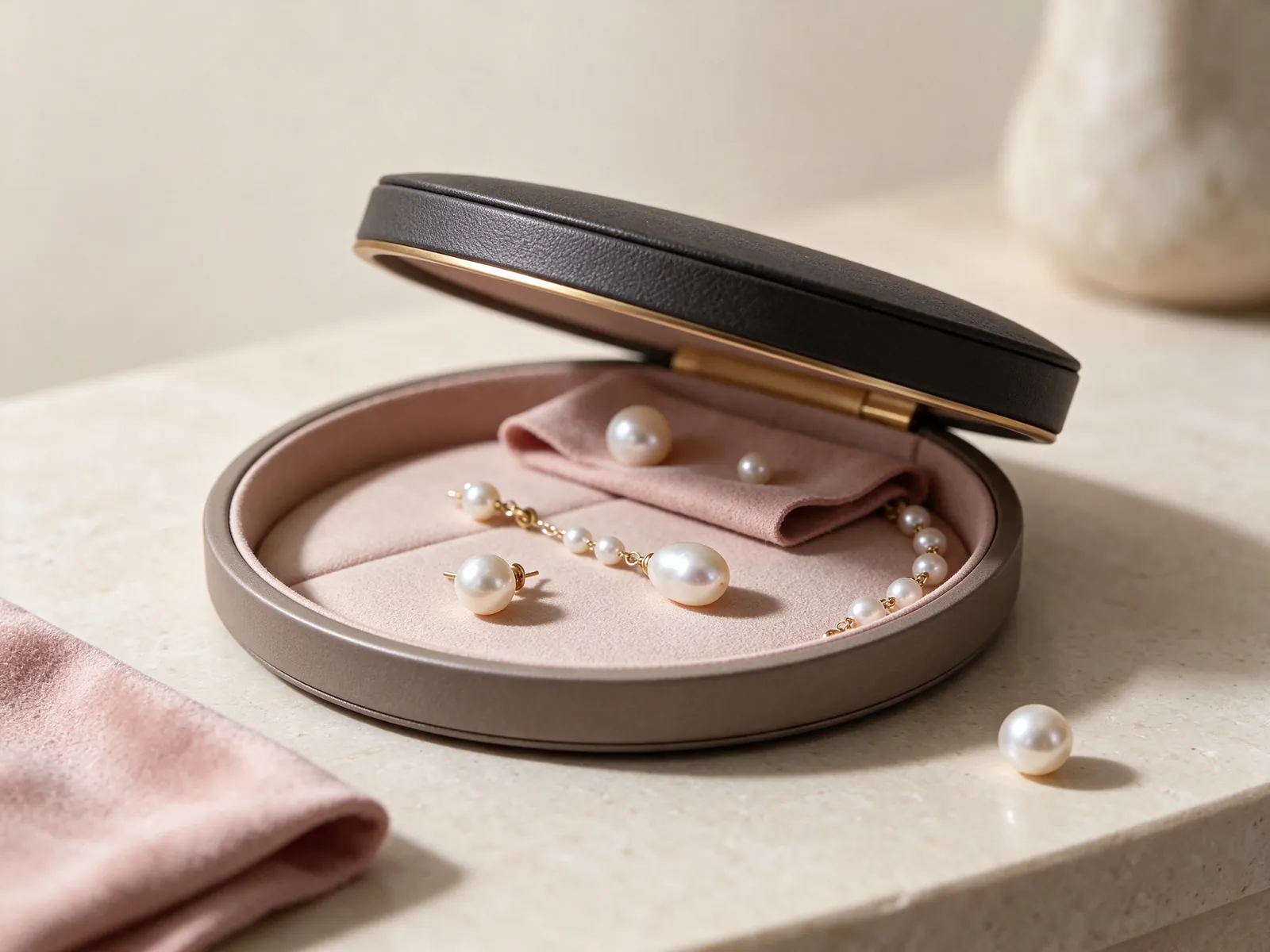
Bring a wearing brief to the selection conversation
Before discussing a design, separate what you need from what you admire. Your essentials might include comfortable writing, room under a jacket cuff and compatibility with a watch. Your preferred features might be an asymmetric face or a clearly visible curved edge. A photograph helps communicate style, but it cannot explain those everyday requirements. If the dramatic outline conflicts with a movement you perform constantly, decide whether occasional wear would suit you better than trying to ignore the conflict.
Ask about the particular pearl's stated dimensions, description and any available identity documentation. Keep those questions separate from band size, setting construction and wearing orientation. Budget discussions should address the actual pearl and metalwork rather than a presumed price attached to the word baroque. When contacting Flint Jewelry about pearl ring choices, describe both what attracts you in the front and side views and the activities you expect to do. That makes the design discussion more useful by connecting your visual preferences with practical wearing needs.
Confirm the whole experience before deciding
Return to your relaxed hand position, then repeat the movements and sleeve check. Notice whether you need to keep correcting the ring with your other hand. The right choice need not be the most unusual silhouette; it should be a form you understand, enjoy from different angles and can accommodate in your routine.
| Feature | What to try | What to discuss | Everyday styling note |
|---|---|---|---|
| Broadest edge | Rest the hand and bring fingers together | Clearance beside neighboring fingers | Leave room for the silhouette to stand out |
| Directional outline | Look at the tapered and broad ends | Intended orientation within the setting | Compare the line with your cuff |
| Three-dimensional profile | View from the side and check a sleeve | Exposure around hard surfaces | Consider fitted clothing before choosing |
| Reflection and surface | Rotate under consistent soft light | Visible details in the wearing position | Avoid relying on one dramatic photograph |
| Fit and balance | Hold a pen or phone | Comfort at the knuckle and finger base | Keep adjacent metal away from the pearl |
Pearl knowledge and authoritative references
GIA describes seven pearl quality factors: size, shape, color, luster, surface quality, nacre quality and matching in multi-pearl jewelry. An irregular silhouette addresses shape, not all seven factors.
Read the reference for this factFrequently asked questions
Can a photograph tell me where a baroque pearl came from?
No. An irregular outline does not establish origin, pearl type or natural-versus-cultured identity. Read the information for the particular pearl and any available identity documentation instead of drawing those conclusions from an image.
Is a low-profile irregular ring always easier to wear?
Not necessarily. Width and projecting edges can affect adjacent fingers even when the ring looks low from the side. Assess the full profile with your hand moving and with the sleeves you normally wear.
What should I ask if I am buying the ring as a gift?
Begin with the intended finger, ring size and recipient's daily activities. Ask about the setting and any fit considerations rather than assuming all rings can be resized the same way. A preferred silhouette alone does not establish a comfortable gift choice.
Do irregular contours make surface quality irrelevant?
No. Shape and surface quality are separate parts of the comparison. You can appreciate an uneven outline while still looking closely at reflections and visible surface details in the intended wearing position.
Can the metal setting protect the pearl during cleaning chores?
It does not make the exposed pearl waterproof or collision-proof. Remove the ring before chores involving cleaning products or hard contact, and follow gentle pearl-care guidance rather than relying on the setting to prevent damage.
Updated: