
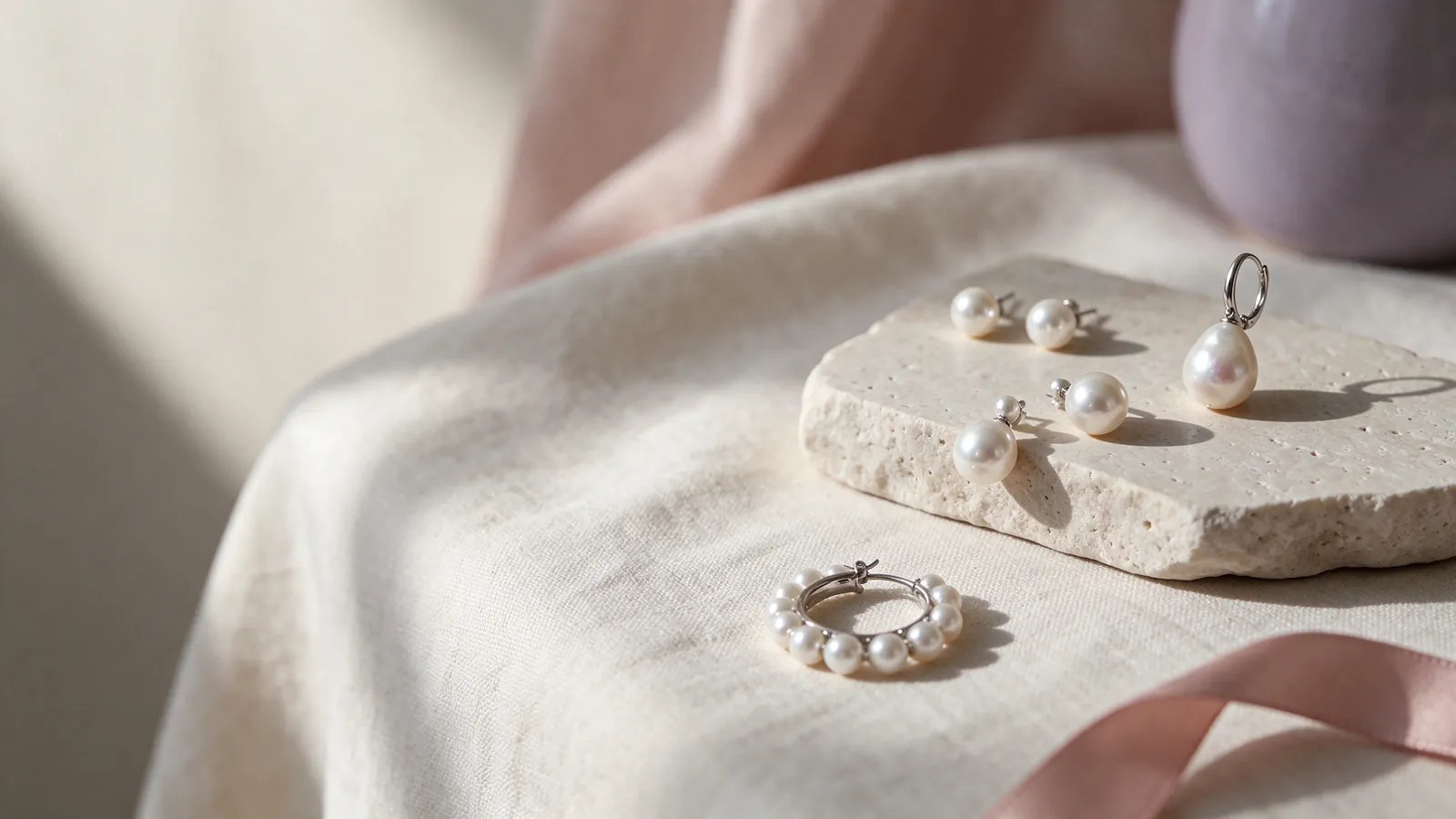
How do hoop size and drop length shape two-way pearl earrings with detachable pearl earring charms or removable pearl earring charms?
A useful first comparison is the hoop worn on its own and the outline you want after adding a charm. The circle supplies structure; the connector introduces a transition; the pearl creates the lower focal point. With pearl hoop earrings, a smaller visible circle and a more open circle distribute attention differently even when the same charm is considered. Check the profile as well as the front view, because a piece hanging beside the face does not behave like jewelry lying flat.
Two-way pearl earrings can make sense when you enjoy a plain hoop for one outfit and a defined drop for another. That distinction is more useful than simply maximizing length. For a tailored shirt, notice the relationship to the collar point; for an open neckline, consider how much empty space you want around the face. While choosing pearl earrings, use the clothes and hairstyles in your regular rotation to judge the complete arrangement, not just the appeal of an isolated pearl.
Which connector measurements matter when matching detachable pearl earring charms or removable pearl earring charms to two-way pearl earrings?
Hoop diameter and hoop thickness answer different questions. Diameter changes the silhouette, while thickness determines whether the body can travel through the charm opening. Measure or assess the narrowest usable opening, then compare it with the widest section along the entry route. Include tips, hinges and projecting joints rather than the body alone. After passage, the hoop still needs to close as intended and the charm needs to hang in a suitable position without crowding the connection.
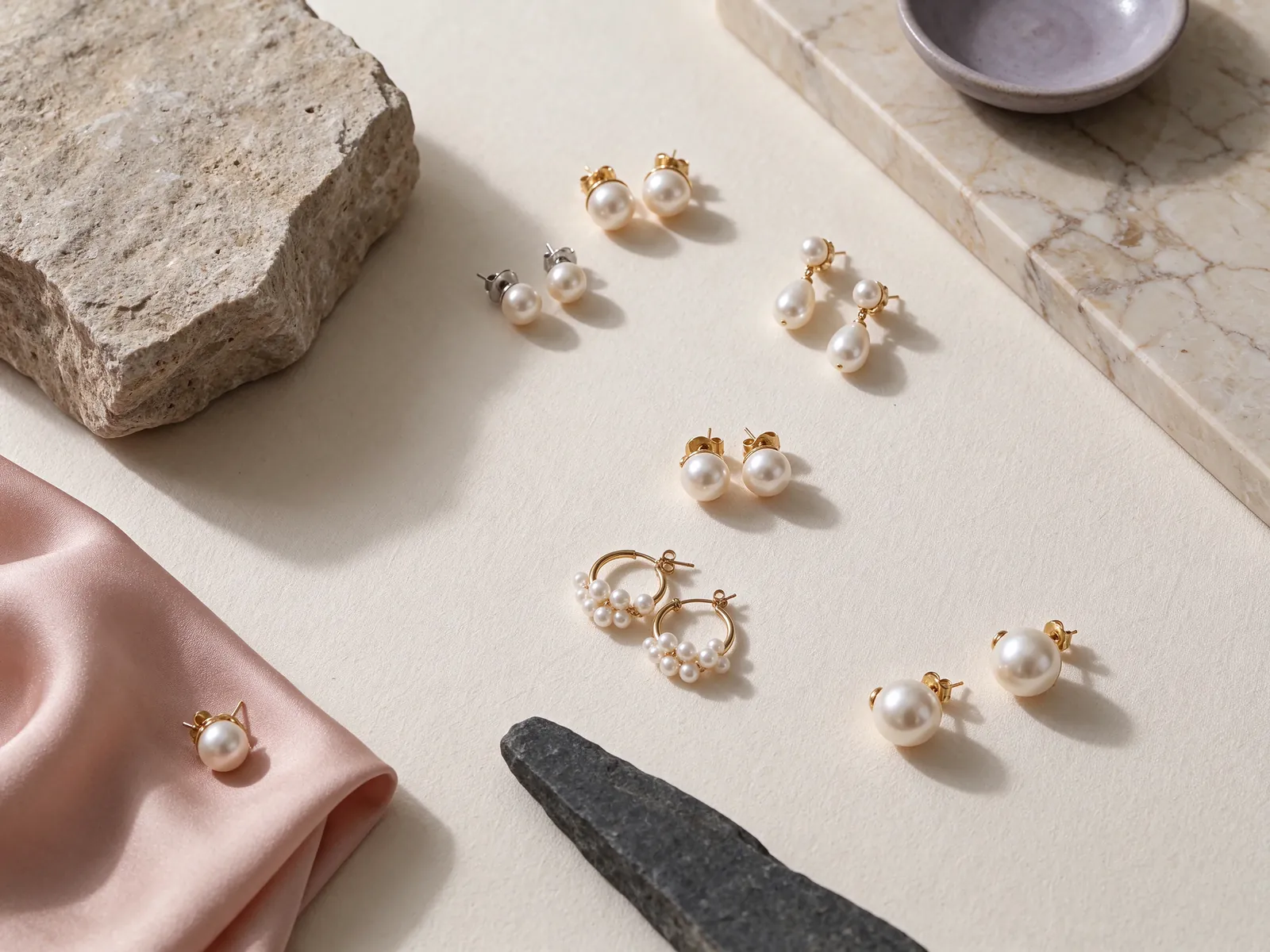
How the Tide · Floating Pearl design uses a circle and an irregular contour
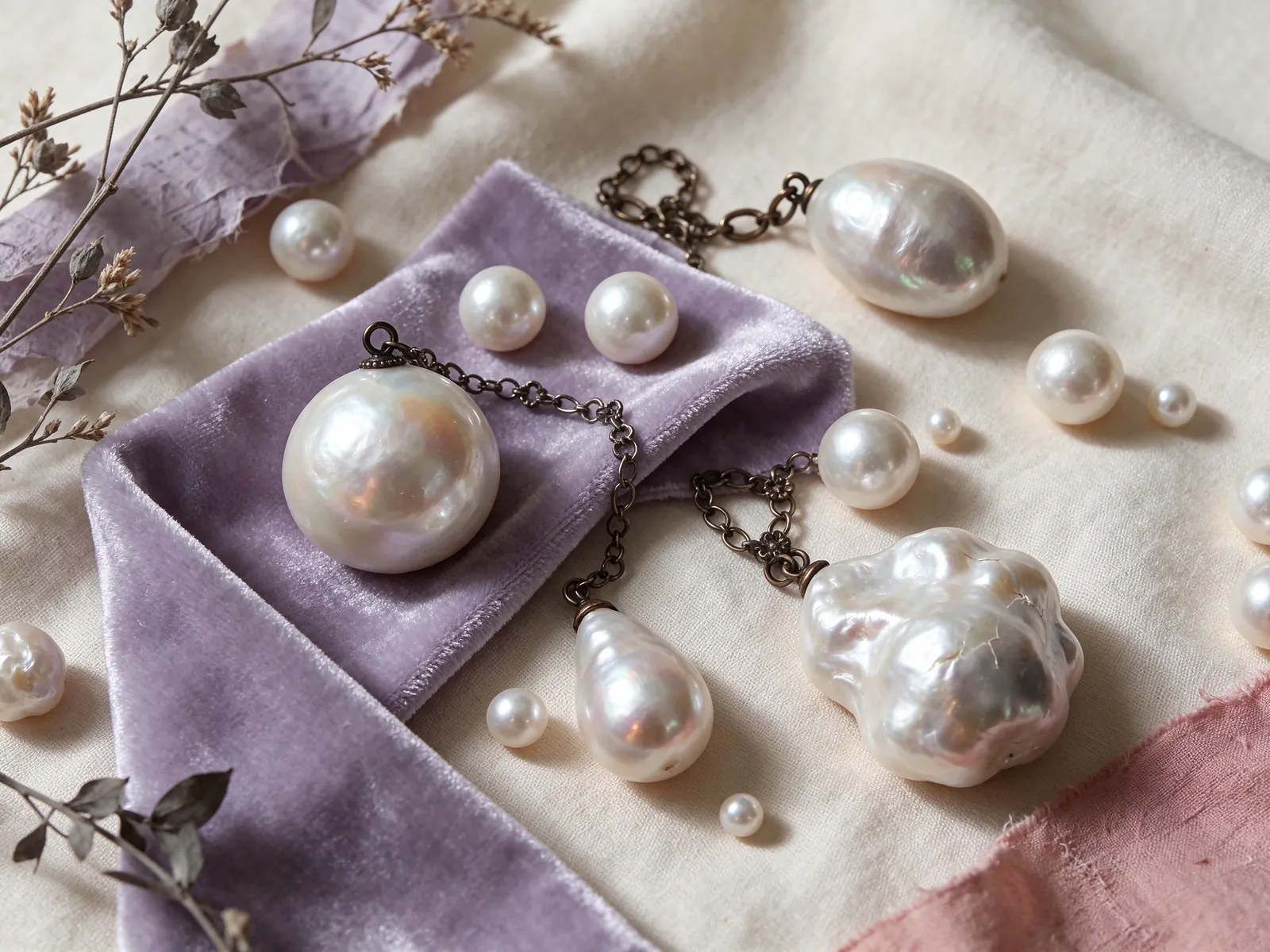
The Flint Tide · Floating Pearl Earring Charm features a white baroque pearl beneath a sculptural connector with a bead-like outline. A small linking loop separates the orderly circular form from the softer pearl contour. Look for the open space in the connector and the changing outline below it as the viewing angle shifts. Appreciating these design features does not identify the pearl's origin, species or natural-versus-cultured status; those questions cannot be settled by its silhouette.
The design can attach to hoop earrings or thread onto a necklace chain. The ear arrangement emphasizes a vertical relationship below the circle, while the necklace arrangement moves the same detail to the center of an outfit. A plain top can let the connector's open space remain visible. On a printed top, think about where the pearl falls within the pattern and whether another necklace would compete with it. Consider the fitting separately for each wearing position.
Choosing the view you want to emphasize
An irregular pearl can have a fuller side, a narrower edge and folds that read differently from the front. Decide which contour you enjoy rather than expecting a perfectly round appearance from every angle. If discussing a paired arrangement, consider the overall drop positions, visual weight and color relationship together. You may prefer closely related silhouettes or a looser balance; describing that preference is more specific than asking two distinctive outlines to look exactly alike.
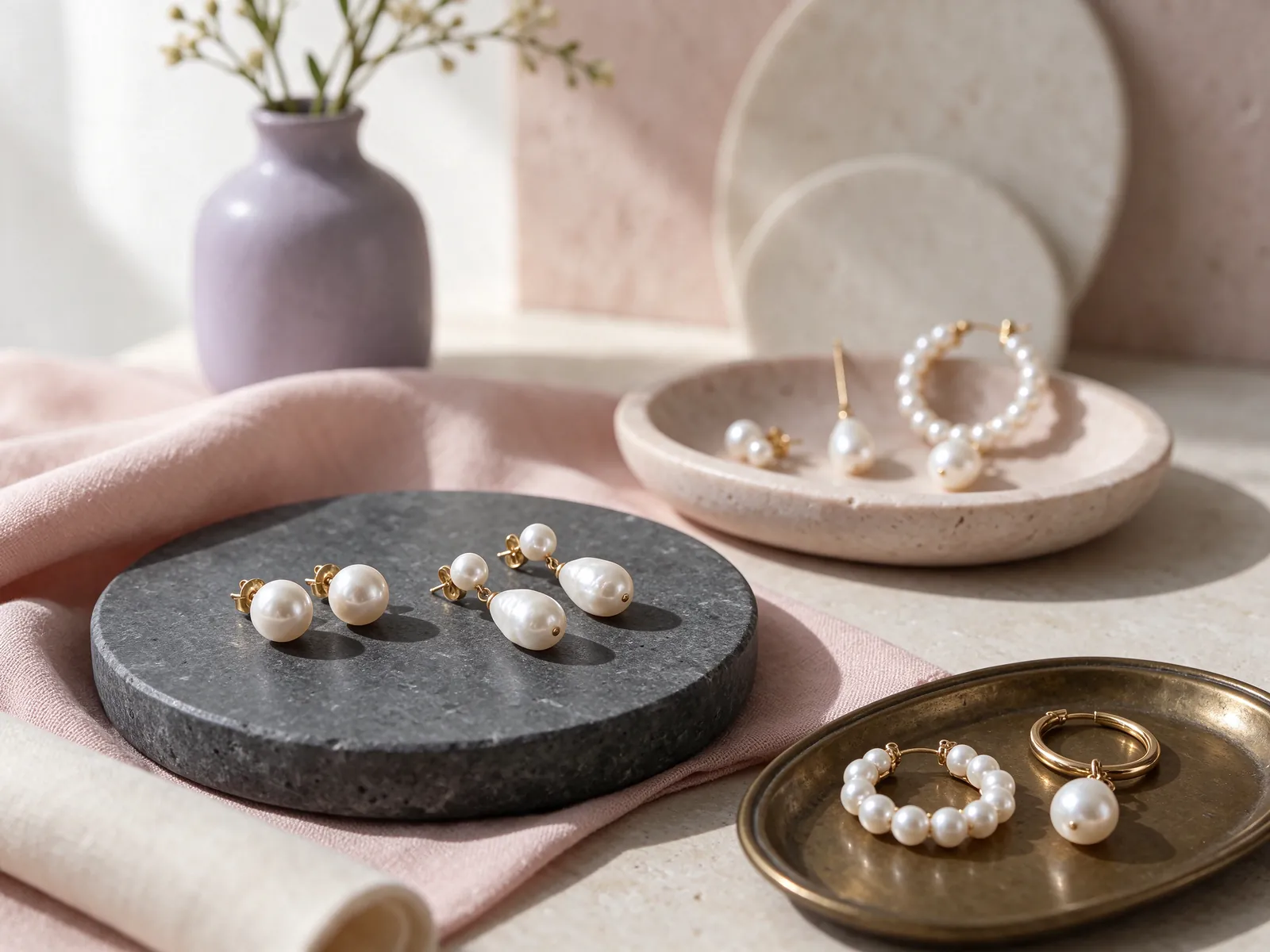
Following the attachment path, not just comparing widths
Before selecting removable pearl earring charms for an existing hoop, identify how that hoop opens. A ring-shaped charm connector is not necessarily an opening component. With a closed connector, the hoop's entry point must allow passage without bending the ring or putting pressure on the pearl. Examine the open tip, hinge and closed seam. A charm that passes the body may still encounter a projecting part, and the finished position may sit closer to the hinge than expected.
A chain presents a different route. Its end fitting or clasp can be much wider than the links you see around the neck, so a fine appearance does not establish passage through a connector. A joining ring can also be the limiting part. Compare the complete end with the charm opening before planning the look. Then consider whether the link profile permits the charm to move and face naturally, without treating flat and rounded links as interchangeable.
Assessing movement after the pieces connect
Compatibility includes what happens after entry. A tight relationship can limit turning; a roomier one can let a charm travel along the hoop. Neither observation supplies a universal rule without the actual geometry. Check that the closure meets fully, that neighboring details are not crowded and that the pearl rests where you intend. The relevant sequence is passage, closure and movement, rather than a single gap measurement treated as a promise of fit.
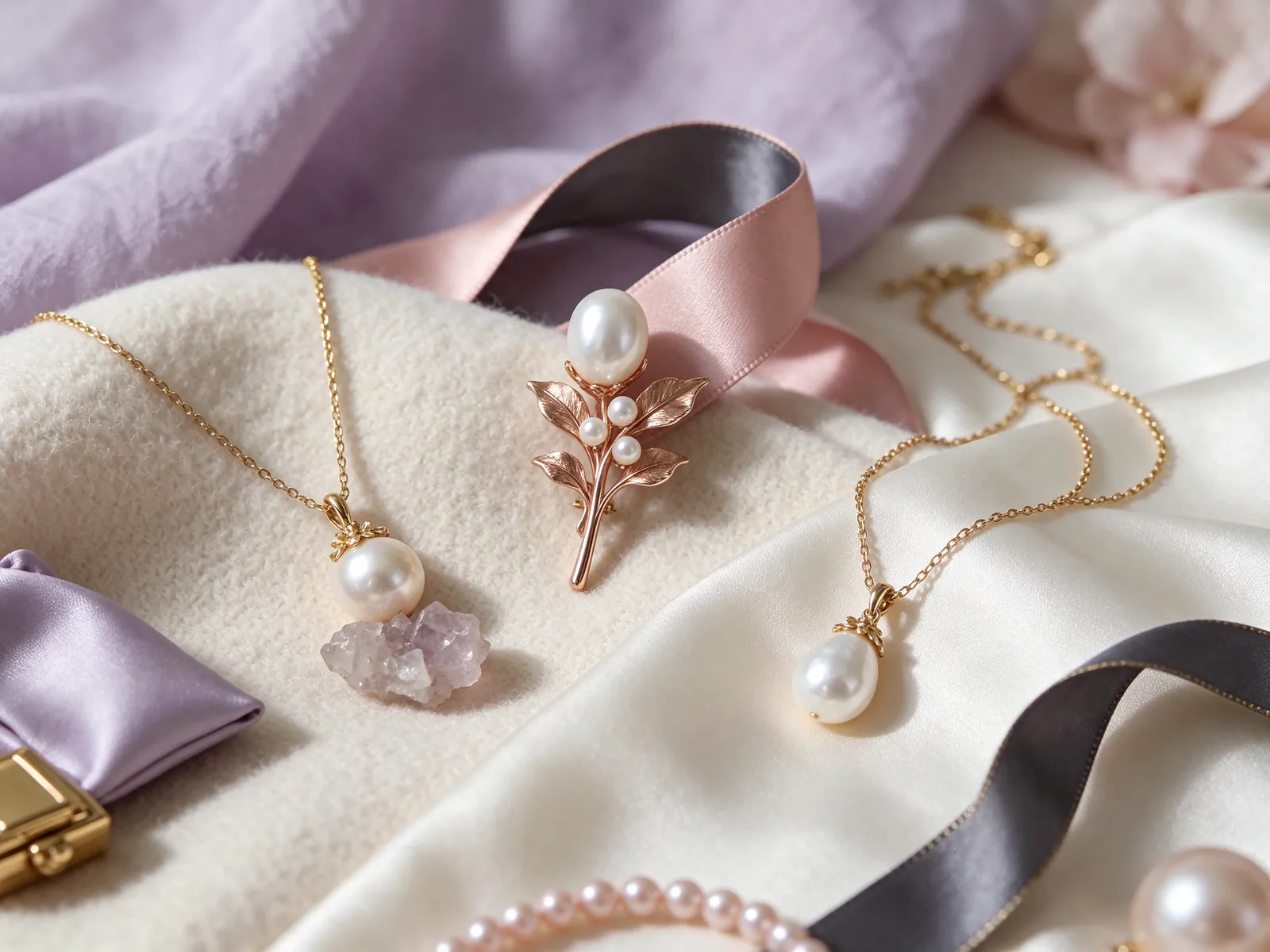
Building an outfit around a clear ear-level focal point
Start with how much of the connector will be visible. Pulled-back hair can reveal the complete metal-and-pearl relationship, while loose hair may hide the upper detail. Next, check the drop against a jacket lapel, shirt collar or textured sweater. If the pearl sits near a raised edge, observe that contact during an ordinary turn of the head. For an evening outfit, try the added drop before choosing a necklace; leaving the neckline simpler can make the ear detail easier to read.
For an asymmetric look, a single pearl earring concept lets one side carry a drop while the other stays simpler. A shared hoop outline can connect the sides without equalizing every detail. Compare the arrangement with a side-swept hairstyle or one-shoulder neckline, and decide where the irregular pearl is most visible. The point is an intentional relationship between the sides, not a requirement to add another equally prominent pearl whenever one side gains length.
Coordinating a charm with upper-ear jewelry
A pearl ear cuff draws attention above the lobe, while a hanging charm works below it. Consider those as distinct areas and leave enough visual space for each detail to remain recognizable. First check whether pieces touch, then compare how crowded the front view feels. The cuff's wearing structure is different from a hoop, so a coordinated appearance should not be confused with a compatible attachment point for the same charm.
Separating style categories from removable construction
The term pearl fringe earrings describes a hanging arrangement with multiple lines or details; the word fringe does not tell you whether a component can be removed. Detachable construction answers a different question: which part separates and what remains wearable afterward? If you want a quiet daytime base and an added evening element, ask about that change first. Then choose between a single baroque focal point and the more distributed rhythm of a fringe silhouette.
Designs described as multi-pearl earrings place more emphasis on spacing, repetition and the direction of an entire line. A charm with one pearl and an open circular connector instead gives the metal and the individual contour a more direct relationship. Neither approach is automatically better for a gift. Ask whether the recipient likes repeated details, a distinct focal point or the ability to change a familiar piece with different clothing; those preferences explain more than a broad request for a large or small earring.
Considering the mechanism when ears are not pierced
If the recipient wears clip-on pearl earrings, start with the clip structure and contact area. An added drop changes the arrangement below that mechanism, so its connection point and direction deserve attention together. Do not assume a connector designed for a hoop can attach to every clip-on style. Establish the usual wearing method and preferences for length and weight before developing an idea for an additional charm.
Making a custom design discussion specific and practical
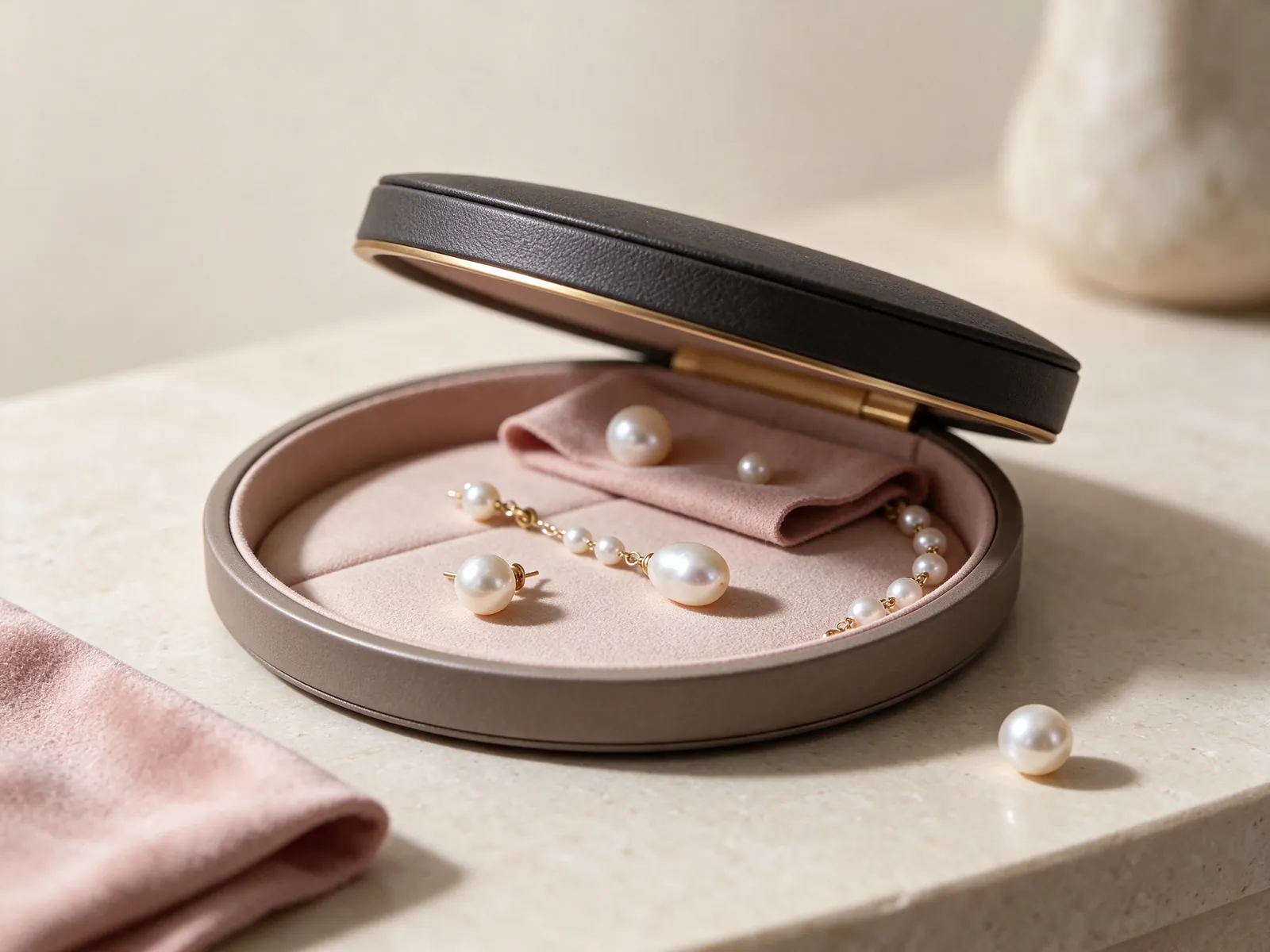
For a discussion with Flint Jewelry, prepare photographs of the hoop from the front and side, plus a close view with it open. If necklace styling is part of the plan, photograph the clasp and terminal fitting as well. Label where any measurements were taken, because body thickness, connector opening and end-fitting width are different dimensions. These views explain the proposed combination, while actual dimensions and closure behavior remain essential to assessing its connection.
Describe your preferred pearl contour, the clothing you want to wear it with and which parts of existing jewelry you hope to keep. Metal options for the design conversation are 18K 750 white gold, 18K 750 yellow gold, 18K 750 rose gold, PT950 platinum and PT900 platinum. Think about the color relationship with your usual jewelry without using metal preference to infer pearl identity. Keeping appearance, connection and wearing position as separate topics makes customization more focused.
Explain the change you want across a typical week
A scenario such as a simple hoop for work, a pearl drop for dinner and a chain arrangement for a weekend outfit gives the conversation a clear purpose. Add whether you favor matching sides, often wear your hair up or own a chain with a broad clasp. These details are more actionable than an adjective such as timeless. You can share the intended styling through WhatsApp and discuss how the connector, outline and proportions relate to those different uses.
Changing components without treating the pearl as a handle
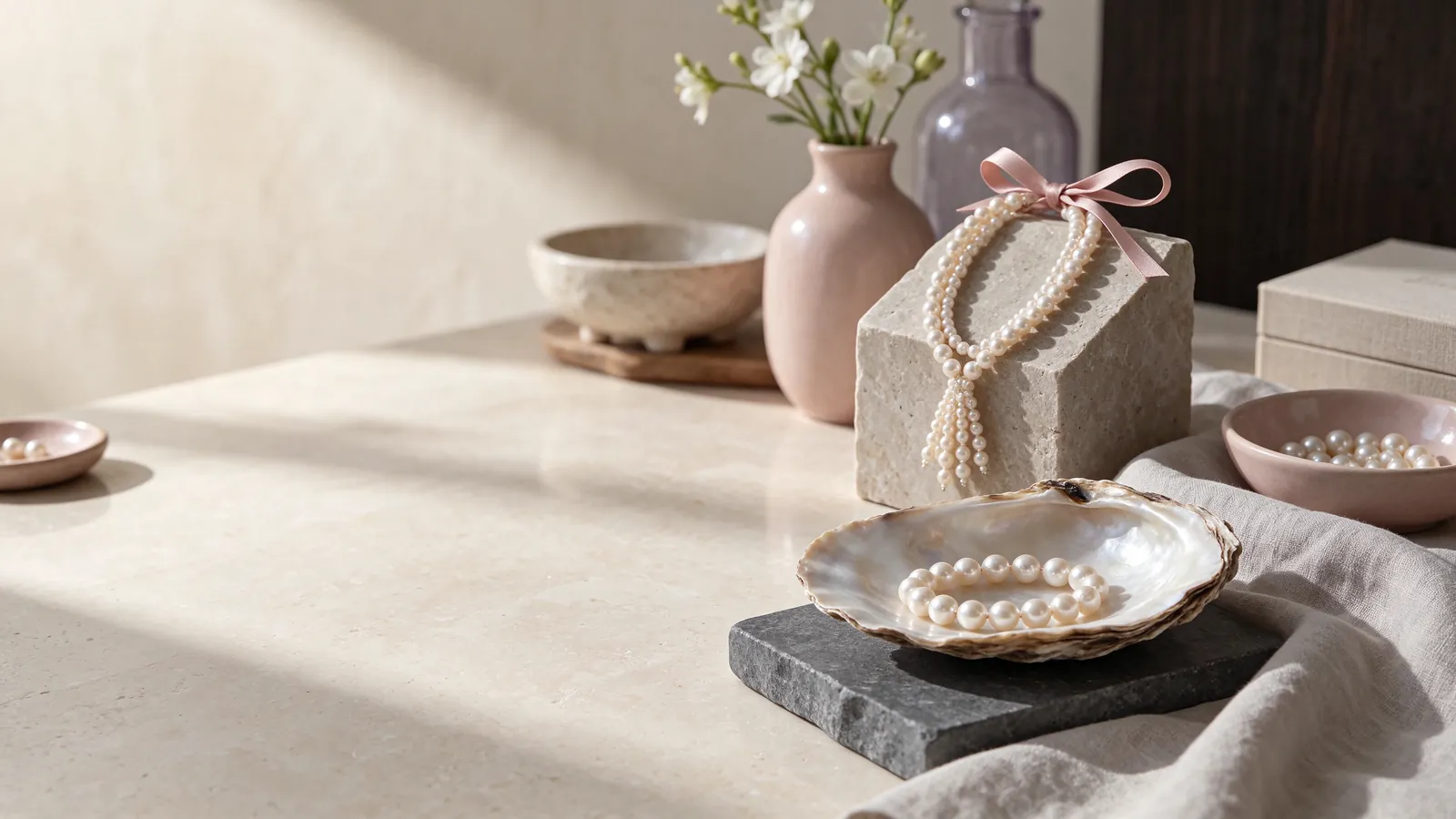
Use a soft-covered tabletop when removing or adding a charm, and hold the metal component rather than tugging on the pearl. Open the hoop or chain as its mechanism allows, then guide the charm along the same route used for entry. Resistance is a reason to stop and inspect the obstruction, not to twist harder. Keep detached parts in separate visible places on the cloth so that a small fitting does not get lost while the arrangement changes.
GIA gives pearl a Mohs hardness of 2.5 and states that pearls should not be cleaned in ultrasonic or steam cleaners. This concerns surface care, not the load capacity of an earring connector. Wipe the pearl after wearing with a very soft, clean cloth, and avoid acids, perfume, hair spray and excessive heat. Put the jewelry aside when applying fragrance or arranging hair, helping keep those substances away from both the pearl and the connection area.
Store the preferred arrangement without hard-edge contact
Soft compartments or separators can keep clasps and other jewelry edges from resting against the pearl. Place related pieces near one another and remember the direction of a preferred baroque outline so that the next arrangement is easier to recreate. Before wearing, check for a distorted link or a closure that no longer aligns as expected. Stop using a loose or bent combination and discuss the appropriate next step rather than attempting to reshape it yourself. To explore a charm arrangement for your existing hoop or chain, contact Flint Jewelry on WhatsApp or call +85260106207 to discuss the pearl outline, connection and custom design direction.
| Check | Look at | Effect on the arrangement | Practical comparison | Avoid relying only on |
|---|---|---|---|---|
| Hoop route | Body thickness, open tip and hinge | Controls passage and closure | Review open and closed views together | The circle's overall diameter |
| Connector opening | Narrowest clear space and ring direction | Influences turning and resting position | Observe the charm after fitting | The connector's outside width |
| Necklace terminal | Clasp, end fitting and joining ring | Can limit threading onto a chain | Compare the entire end with the opening | The appearance of fine links |
| Outfit relationship | Hair, collar and nearby textures | Determines how clearly the contour reads | Try familiar clothing and side views | A flat product-style photograph |
| Handling and storage | Links, closing surfaces and nearby hard edges | Keeps parts distinct and protects the surface | Hold metal and use soft separation | The fact that pieces once fitted |
Pearl knowledge and authoritative references
GIA places pearl at 2.5 on the Mohs hardness scale and advises against ultrasonic and steam cleaning. The number informs pearl surface care, not the strength or load capacity of a charm connector.
Read the reference for this factFrequently asked questions
Should I choose the charm before deciding on the hoop?
You can begin with a preferred silhouette, but connection and proportion need to be considered together. If you already have a hoop, record its opening mechanism and body thickness early. The charm must have a suitable entry route, allow complete closure and sit where you want it to hang.
What makes the same charm look different on a necklace?
At the ear, the circle and pearl form layers below a hoop. On a chain, the connector becomes a transition at the neckline. Clothing, chain position and the direction of the pearl change the composition. The necklace's terminal fitting must also suit the connector opening independently of the hoop fitting.
Is a removable pearl charm the same as a fringe earring?
No. Removable describes a connection, while fringe describes a hanging arrangement. A fringe may be fixed, and a detachable single-pearl charm may have no fringe effect. Identify which component separates and the appearance left behind before choosing the style category.
What is the best way to explain an asymmetric styling idea?
Describe which side carries the drop, what remains on the opposite side and how the arrangement works with your hair and neckline. A shared metal outline can relate the sides without equal pearl details. Front and side views help show whether the focal point stays visible as you move.
What should I do if the charm catches during removal?
Stop and inspect the entry route, tip or projecting joint. Keep hold of the metal rather than pulling the pearl or bending the connector. If the parts are distorted or the closure no longer aligns, leave the arrangement unworn and discuss how to address the problem.
Updated: