
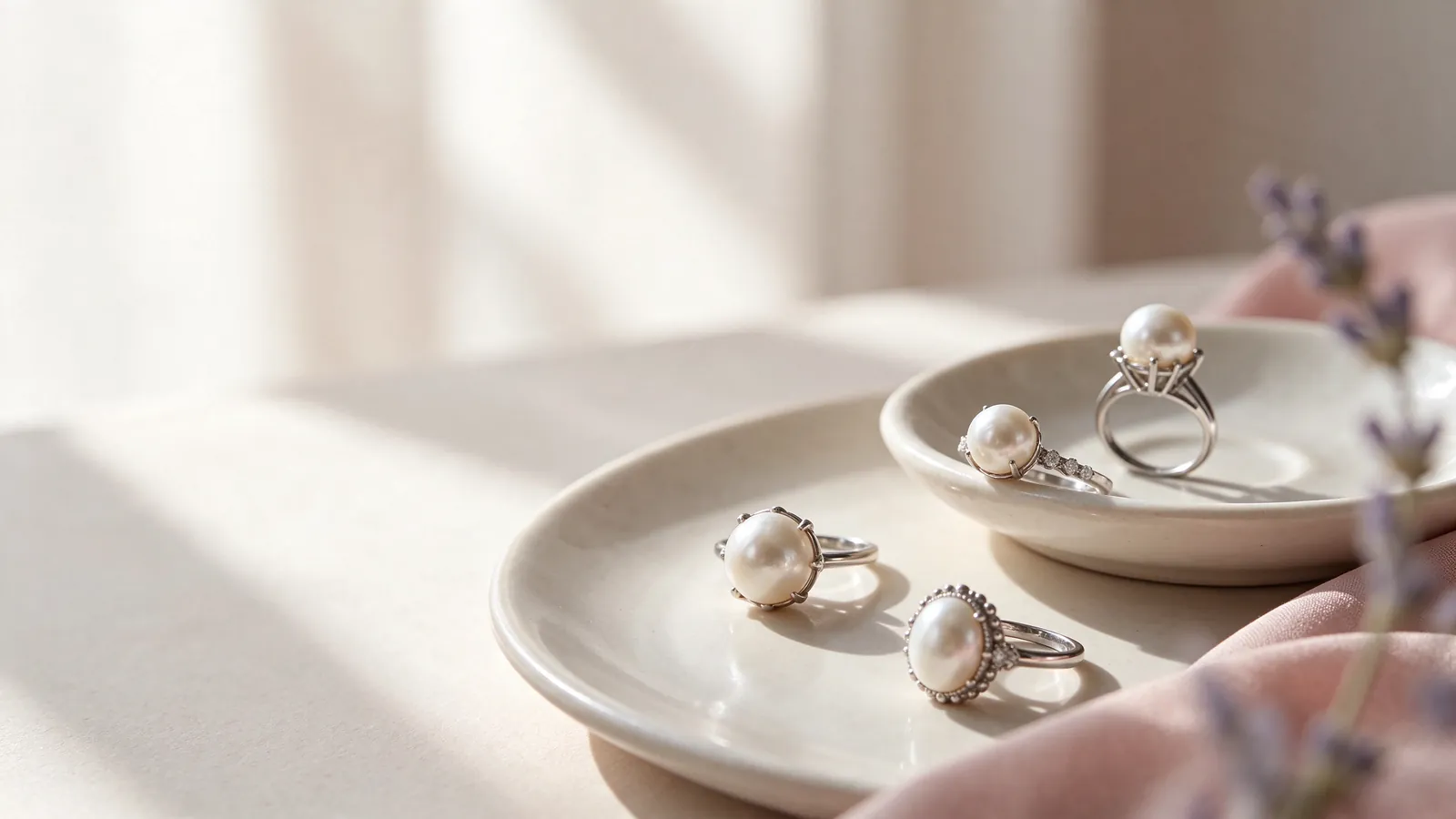
How do curve and pearl placement shape a crescent moon pearl ring, a crescent pearl ring or a moon shaped pearl ring?
When choosing a crescent moon pearl ring, begin by tracing the curve around the pearl. Is the opening narrow and contained, or broad enough that the empty space becomes a focal point? A crescent pearl ring or moon shaped pearl ring can use either approach; these names do not define dimensions or construction. In a comparison of pearl rings, the useful starting point is how the complete face sits on your hand, including the room it leaves beside neighboring fingers.
A wide horizontal arc may create an expansive impression, while a more upright sweep can emphasize direction along the finger. Compare both with the visible space between your knuckles rather than assuming one shape suits every hand. Turn the ring to an angle you would normally see while wearing it. Decide whether you still like the outline when the lunar motif is less obvious, because your everyday view is not always the front-facing product image.
How can you assess setting height and fit when comparing a crescent moon pearl ring, a crescent pearl ring and a moon shaped pearl ring?
Check height and fit as separate but related questions. From the side, note where the pearl and tips sit above the band. On the finger, notice whether the ring settles comfortably, turns at rest or presses when you bend your hand. A smaller band is not a universal fix for a directional setting. Comparing the front view with these movement notes helps distinguish a preferred silhouette from a wearing arrangement that actually works for you.
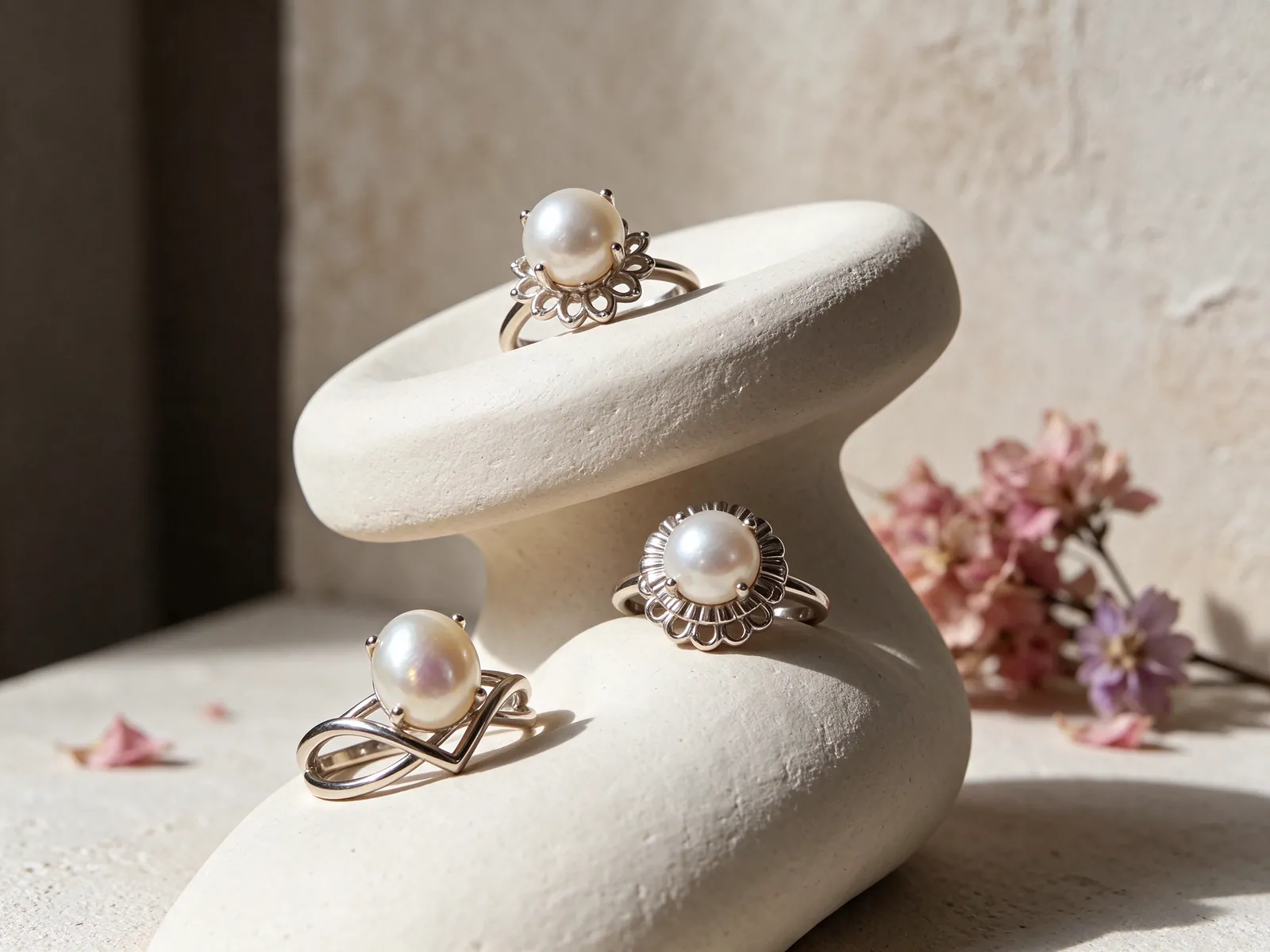
Decide whether the pearl or the moon outline should lead
Pearl placement changes how a crescent reads. A pearl near the center may make the arc feel enclosing; a pearl near one end can make the whole composition feel more asymmetrical. Look first at the upper outline without concentrating on the band. If the pearl should be the focus, assess whether a thick or brightly reflecting arc draws attention away from it. If you love the moon shape itself, compare how continuous the curve looks when your hand turns.
Sparkling accents introduce another decision about emphasis. A pearl and diamond ring can illustrate the difference between a concentrated bright detail and a more distributed composition. A pearl halo ring offers a contrasting enclosed outline, useful when deciding whether an open crescent is genuinely your preference. Use these related designs to compare visual arrangements, not to infer that any bright detail in a photograph is a particular gemstone or that another ring shares its specifications.
Separate color preference from pearl identification
Observe the pearl in soft light, turning it to see reflections and surface detail rather than relying on a dramatic image. GIA identifies seven pearl value factors: size, shape, color, luster, surface quality, nacre quality and, for jewelry with more than one pearl, matching. Enjoying a color or shape does not establish origin, natural-versus-cultured identity or certificate status. Let the individual pearl's written description answer identity questions while your eye answers whether you like its relationship to the curve.
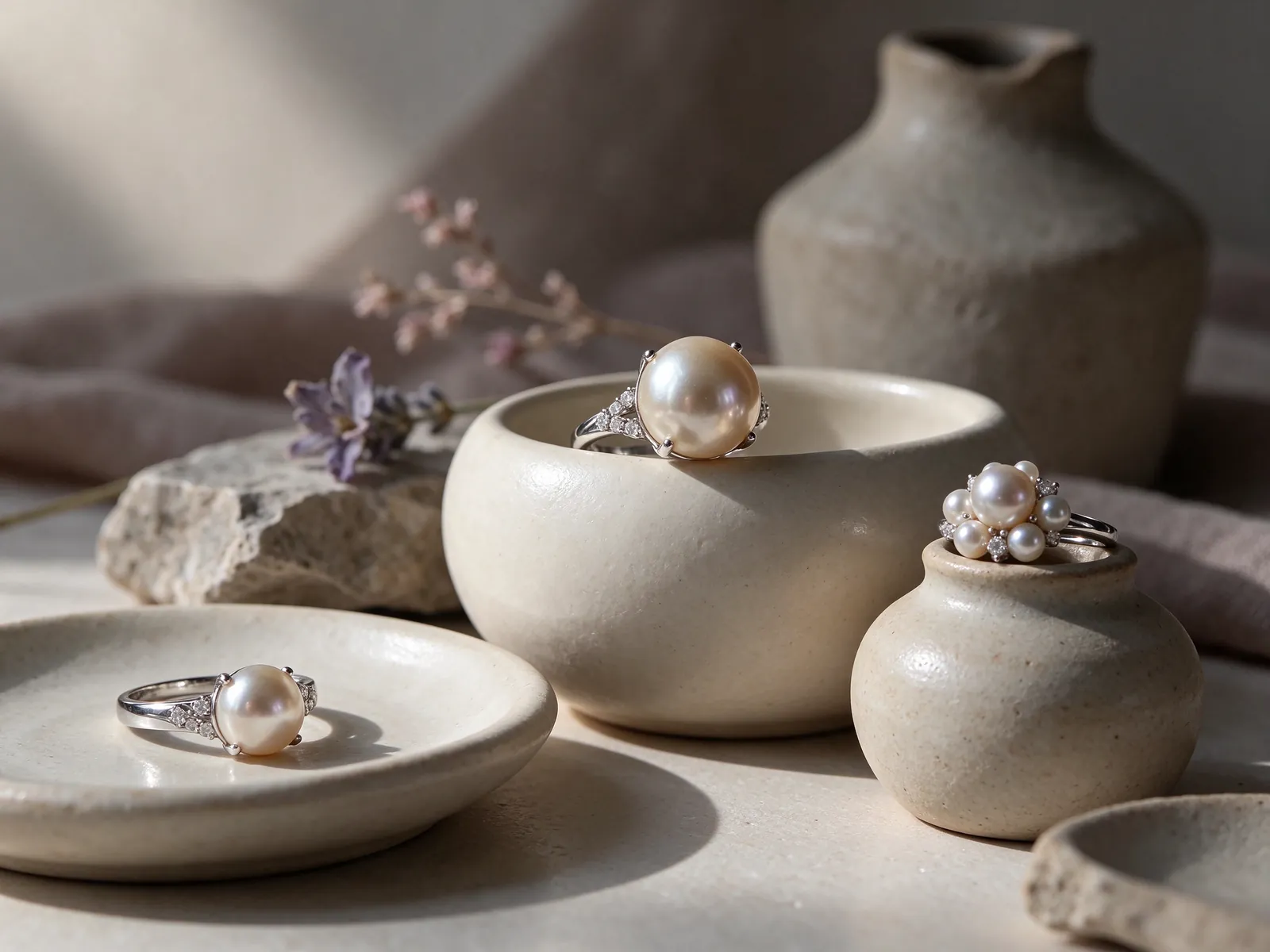
Compare the setting with your daily range of motion
A tall profile may create the sculptural look you want, but it also occupies space above the hand. Gently move a familiar sleeve across it and notice whether you need to avoid the tips or pearl. A close-to-the-finger outline is not automatically easier: its width and inward-facing edges still matter. Consider the motions you repeat, such as handling a bag or adjusting a cuff, rather than judging comfort only while your hand is posed.
Use a measured size for the finger you intend to wear the ring on. Check both passage over the knuckle and the fit once the band reaches its resting position. Wider and narrower bands should be compared through gentle finger bending as well as at rest. Notice whether the face pushes against a neighboring finger. The aim is to identify pressure or unwanted movement, not to prove that you can tolerate a fit that feels restrictive.
Explain when rotation happens, not just that it happens
If the pearl is positioned to one side, describe whether the ring rotates while your hand rests, changes position during movement or feels uncomfortable when brought back to the center. The shape of the band, distribution above it and fit on the finger may all deserve consideration. This gives a more useful basis for discussion than immediately asking for a tighter band. Any sizing decision should account for the setting as a whole.
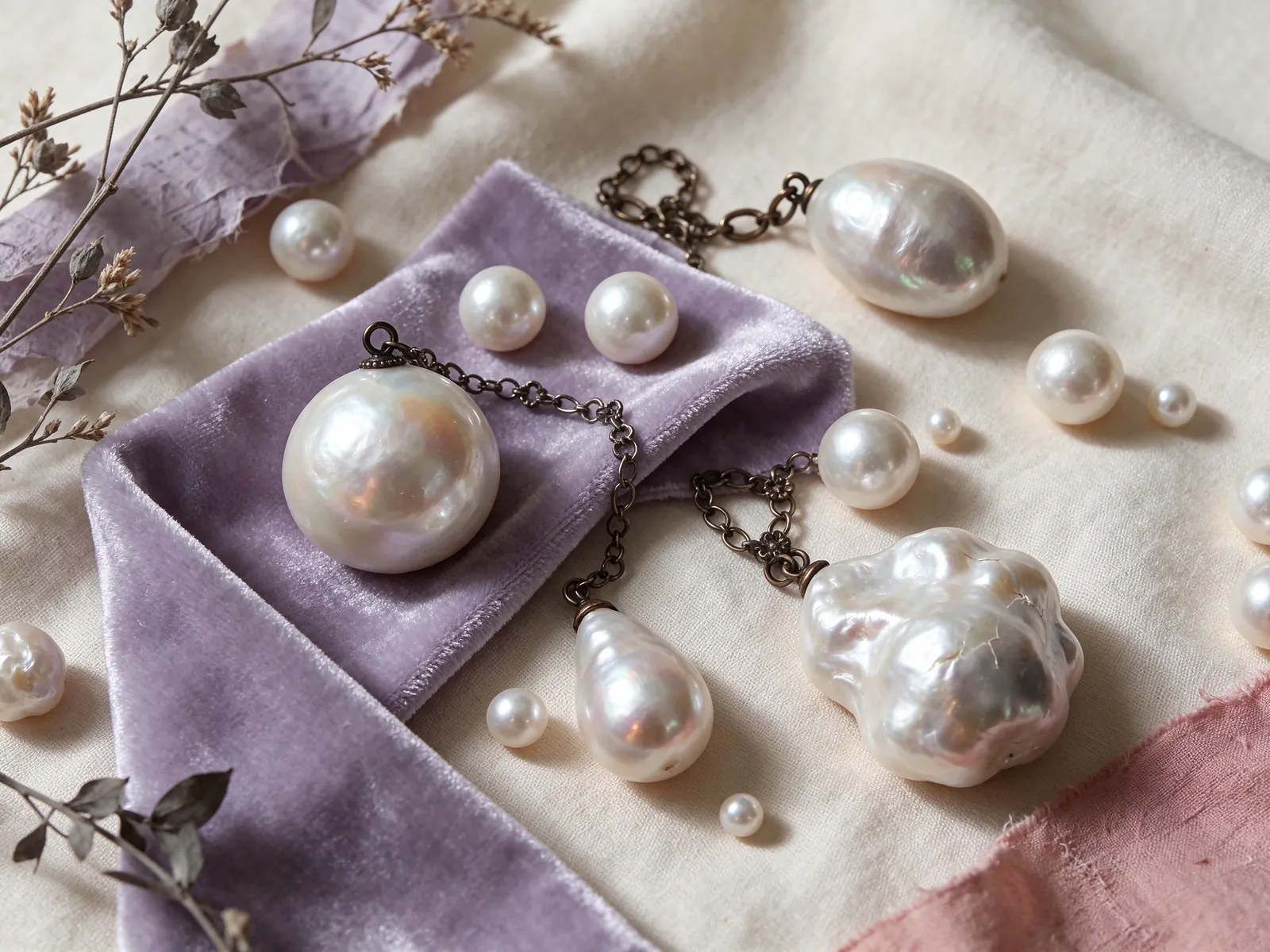
Inspect the crescent's ends without testing them by force
The two ends are important both visually and practically. Look at whether they turn upward, extend outward or return toward the finger. Then check how close they come to skin, sleeves and other rings during ordinary movement. Do not pull fabric repeatedly against the ends to see whether they catch; a gentle wearing check is enough to identify a clearance concern. A delicate appearance alone cannot tell you how an end will interact with your routine.
Ask how the pearl is held and what kinds of handling the setting should avoid. A hidden connection is not evidence that the pearl is unsupported, but a smooth-looking connection is not proof of strength either. Notice whether the area under the arc is accessible for appropriate cleaning. Do not twist the pearl, bend the tips or push on the setting to test it. If anything feels loose or catches unexpectedly, remove the ring and have it inspected.
Distinguish the decorative opening from size adjustment
The gap inside a crescent is part of its composition; it does not mean the ring can be resized by hand. Even an open band should not be assumed adjustable based on its appearance. Pulling or squeezing the metal could change the direction of the ends and the forces around the pearl attachment. Ask about sizing as its own subject, rather than treating the decorative opening as a mechanism for improving fit.
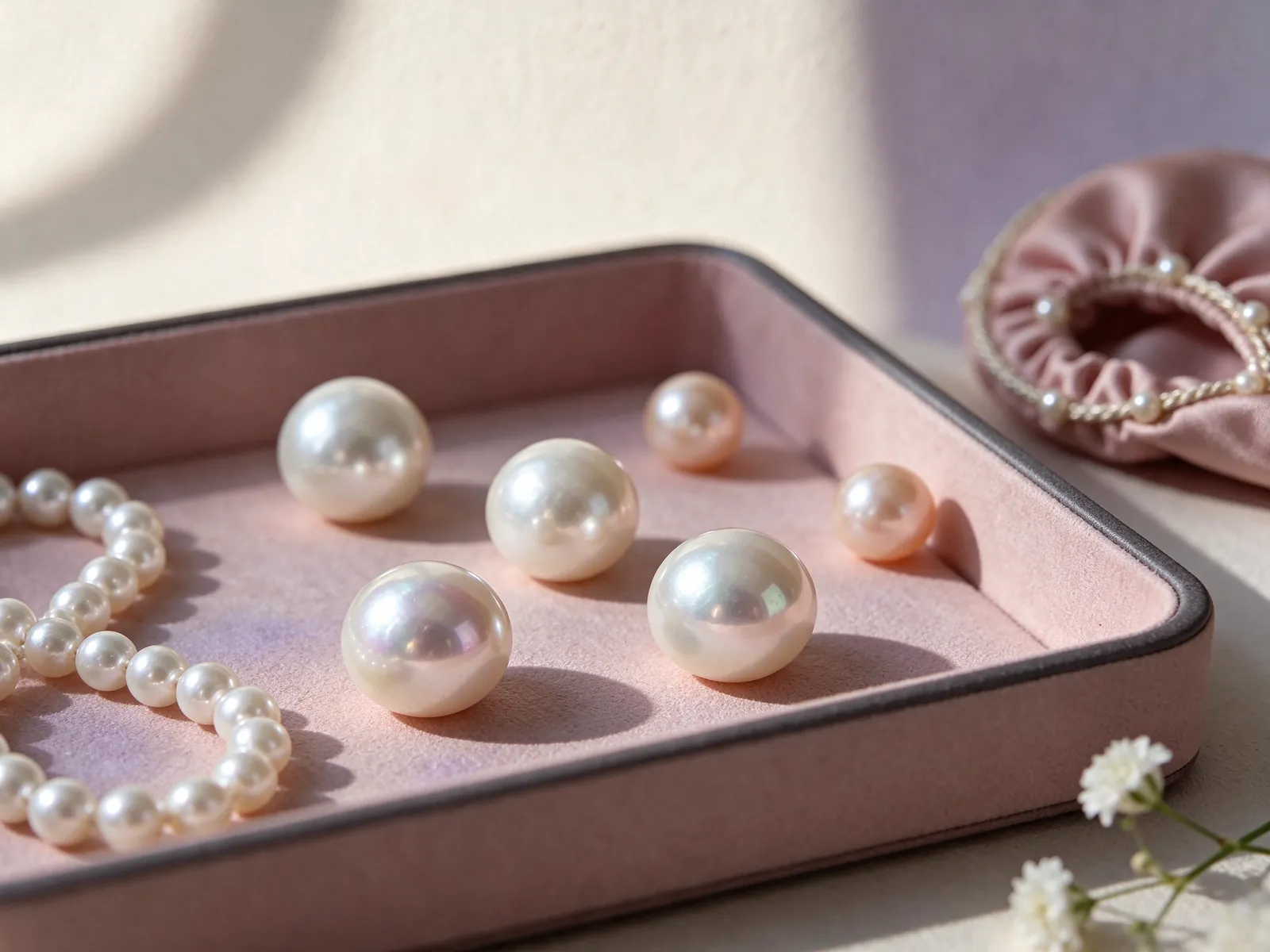
Give the lunar silhouette room in your styling
Start with the crescent as a standalone ring. This makes it easier to see its shape beside a watch, a cuff or your usual hand gestures. For additional jewelry, try a nonadjacent finger first so another band does not crowd the open curve. If you enjoy a recognizable motif but want a different spread across the hand, compare a pearl butterfly ring: its wing-like arrangement offers a useful contrast to the crescent's directional sweep.
For a dressier outfit, choose where the main jewelry emphasis should sit. A pearl cocktail ring is a useful related topic when considering a more prominent hand-focused look. A pearl tiara ring gives another way to compare an upward outline. If your earrings already carry strong visual detail, the crescent does not need to match their complexity. Also consider lifting a glass and holding a clutch, so the styling choice accommodates the evening's movements.
Choose the opening's direction by look and clearance
You can prefer the crescent opening toward your fingertip or toward your wrist; the name does not prescribe one direction. Reverse it and check clearance again, particularly at the knuckle and beside other rings. If you stack jewelry, confirm that movement does not bring another band into contact with the pearl or tips. Empty space is an intentional part of this outline, so leaving it unfilled can be the clearer styling choice.
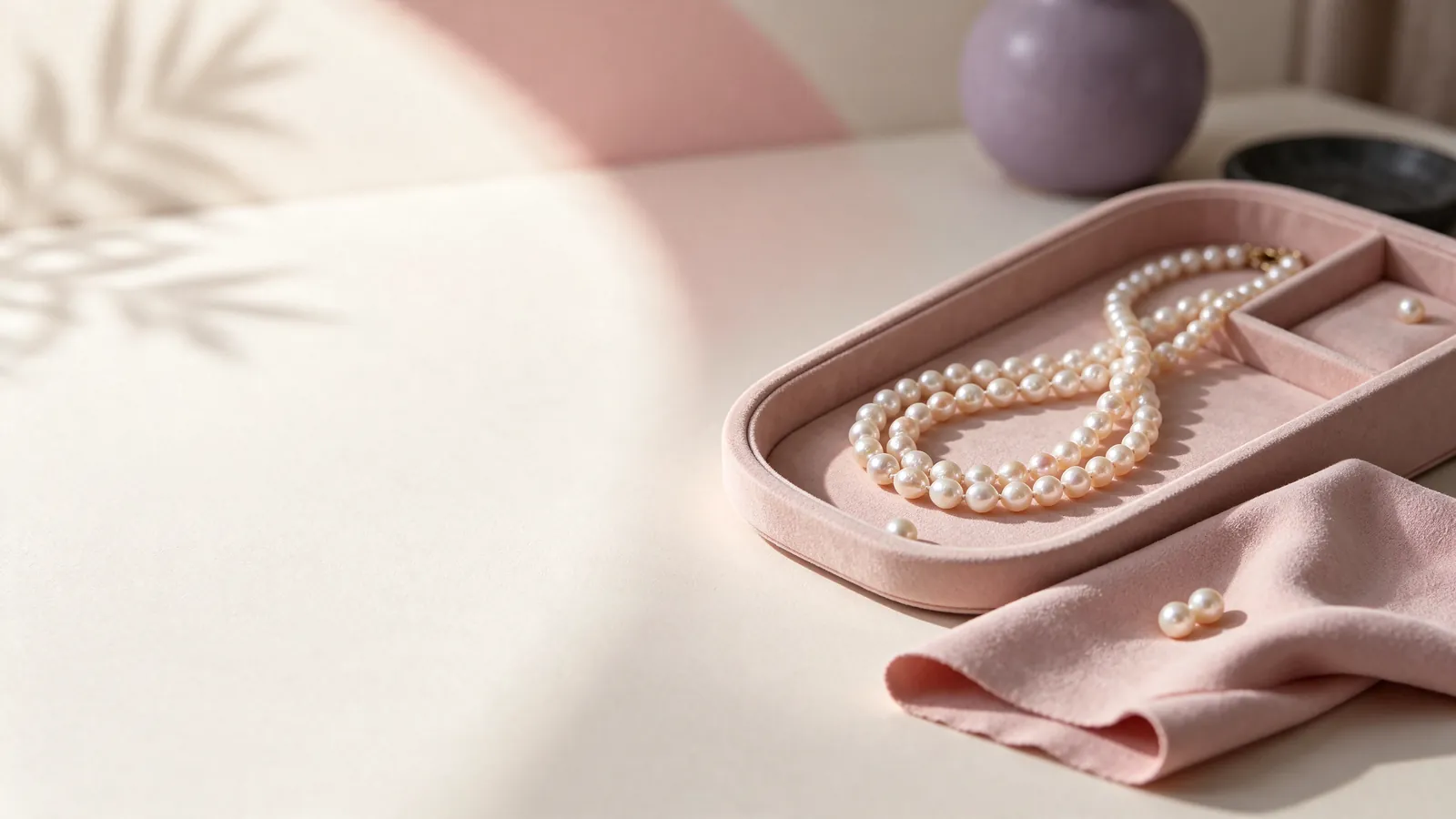
Protect the pearl even when it appears framed by metal
Pearl has a Mohs hardness of 2.5 according to GIA. The curve around it does not change that care consideration, and it should not be treated as complete protection from rubbing. Keep hard edges of neighboring rings away from the pearl. Store the ring in a clean, soft, separate place where its tips cannot tangle with other jewelry and nothing heavy rests on the face. Hardness is useful care information, not a guarantee of wear performance.
Gently wipe the pearl with a very soft, clean cloth after wearing. Avoid contact with acids, perfume, hair spray and excessive heat. GIA advises that pearls should never be cleaned with ultrasonic or steam cleaners, even if the rest of a ring is metal. Do not reach under a narrow arc with a needle or abrasive brush. For residue that routine wiping cannot remove, seek guidance suited to the entire setting and its attachment method.
Treat new snagging or movement as a reason to pause
If a tip begins catching when it did not before, or the pearl area develops unusual movement, stop wearing the ring and note the location and activity involved. Avoid recreating the problem repeatedly. Do not flatten a tip yourself or add glue to secure something that feels loose. Professional inspection is more appropriate than continued wear while waiting to see whether the issue resolves on its own.
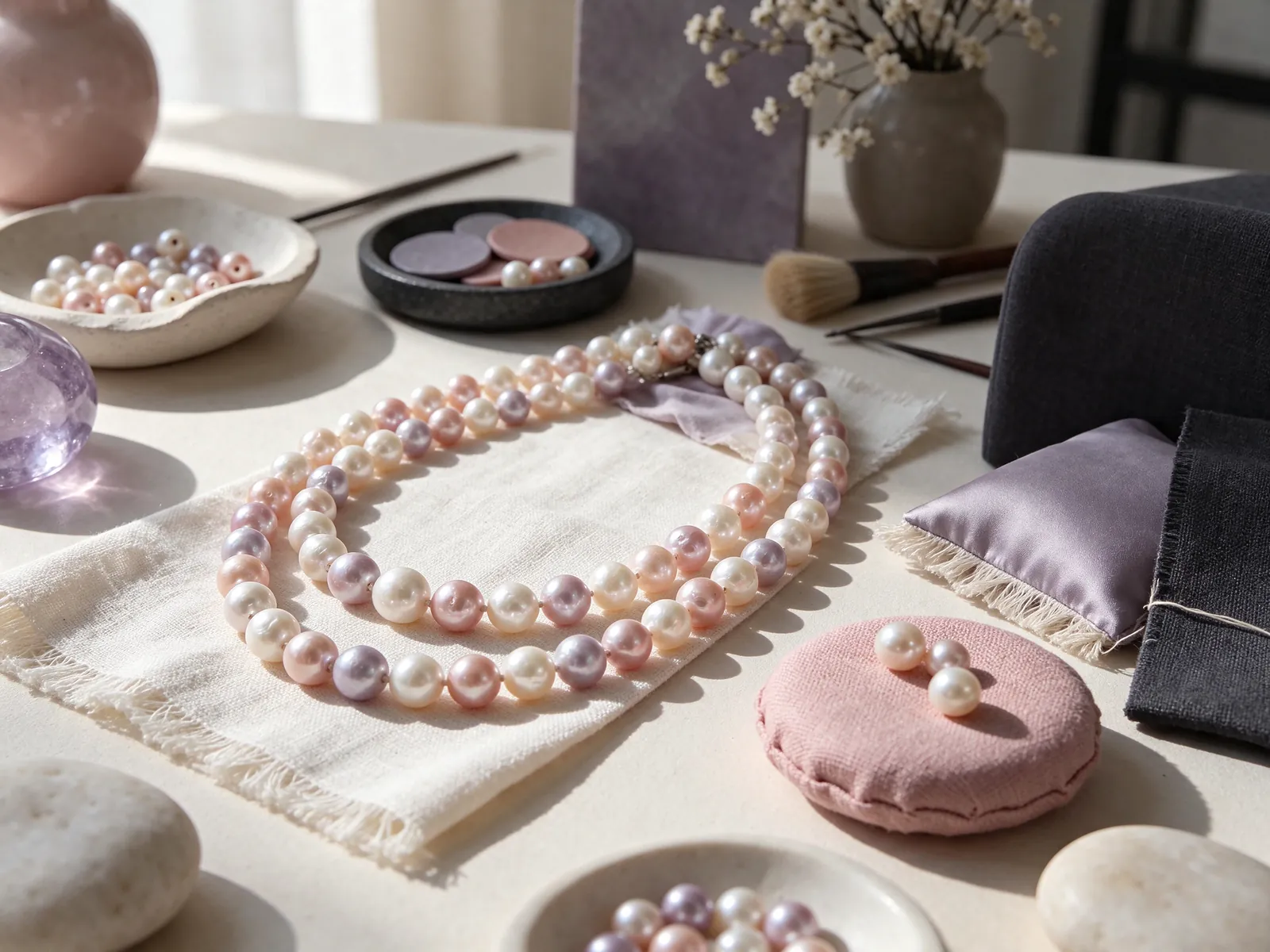
Create a selection checklist that separates appearance from fit
Write down the opening direction, pearl position, curve thickness, height and space beside adjacent fingers for each option. Then describe resting, bending and sleeve movement in a different part of your notes. When working from images, compare front, side and angled views, while remembering that photographs do not replace measured fit or actual wearing experience. This approach keeps a favorite visual detail from overshadowing a persistent movement problem.
A useful selection brief might say that you want the pearl to dominate, prefer tips that stay clear of neighboring fingers, or usually wear close-fitting cuffs. Include the intended finger and whether you plan to wear other rings nearby. Read the description of the specific piece for pearl identity, dimensions and construction; a moon motif cannot establish those facts. Clear everyday priorities are more informative than asking for a ring to resemble a single reference image in every respect.
Discuss your lunar silhouette preferences with Flint Jewelry on WhatsApp or call +85260106207. Describe the intended finger, your usual cuffs and how much open space you prefer, so your ring-selection questions stay focused on style, fit and everyday handling.
Make a final comparison alone, reversed and with a sleeve
Before choosing, compare the ring without other bands, reverse its direction and repeat an ordinary sleeve movement. A preferred direction can be a personal styling decision if fit and clearance remain comfortable. If the face needs constant repositioning, revisit its height, width or balance instead of accepting the adjustment as inevitable. The strongest choice is a silhouette that suits your habits and care routine, not simply the one that photographs most clearly as a moon.
| Decision | What to see from above | What to check in motion | Styling implication | Question to ask |
|---|---|---|---|---|
| Open curve | How the gap contributes to the outline | Whether an angled view still appeals | Leave room for the negative space | Which direction works with my gestures? |
| Pearl position | Where the focal point sits | Whether the face turns at rest | Avoid nearby bands touching the pearl | How is the pearl secured? |
| Side profile | How much emphasis the setting creates | Clearance through a usual sleeve | Consider cuffs, bags and glasses | Can I see the setting from the side? |
| Tip direction | The shape and finish of both ends | Distance from fingers and fabric | Do not crowd the ends with other rings | What handling should the ends avoid? |
| Band fit | Whether the face settles as preferred | Knuckle passage and comfortable bending | Reassess if combining rings | How does this band width work with my measured size? |
Pearl knowledge and authoritative references
GIA gives pearl a Mohs hardness of 2.5. Metal framing does not change the pearl's need for protection from abrasion.
Read the reference for this factFrequently asked questions
Does the term moon shaped pearl ring specify a particular construction?
No. It describes an appearance, not a standardized setting height, attachment method or pearl specification. Compare the opening, pearl position and side profile, then read the individual piece's description for its actual details.
Is there a correct direction for wearing a crescent ring?
Choose by your preferred look and practical clearance. After reversing it, check the tips near your knuckle, sleeves and neighboring jewelry. The style name does not require one orientation.
Should I size down if the pearl is positioned off-center?
Not without assessing the whole fit. Note when rotation occurs and whether bending creates pressure. Weight distribution, band shape and finger fit can all affect how the face settles, so a tighter band is not a universal solution.
Can I fill the crescent opening with a second band?
Consider contact during movement before choosing that arrangement. Another band should not press into the pearl, rub the arc or touch the tips. Leaving the space empty or using a nonadjacent finger may preserve both clearance and the lunar outline.
Can a framed pearl ring go into a steam cleaner?
No. GIA advises against steam and ultrasonic cleaning for pearls. A metal frame does not remove this restriction. Use a very soft, clean cloth for routine care and ask a jewelry professional about residue in hard-to-reach areas.
Updated: