
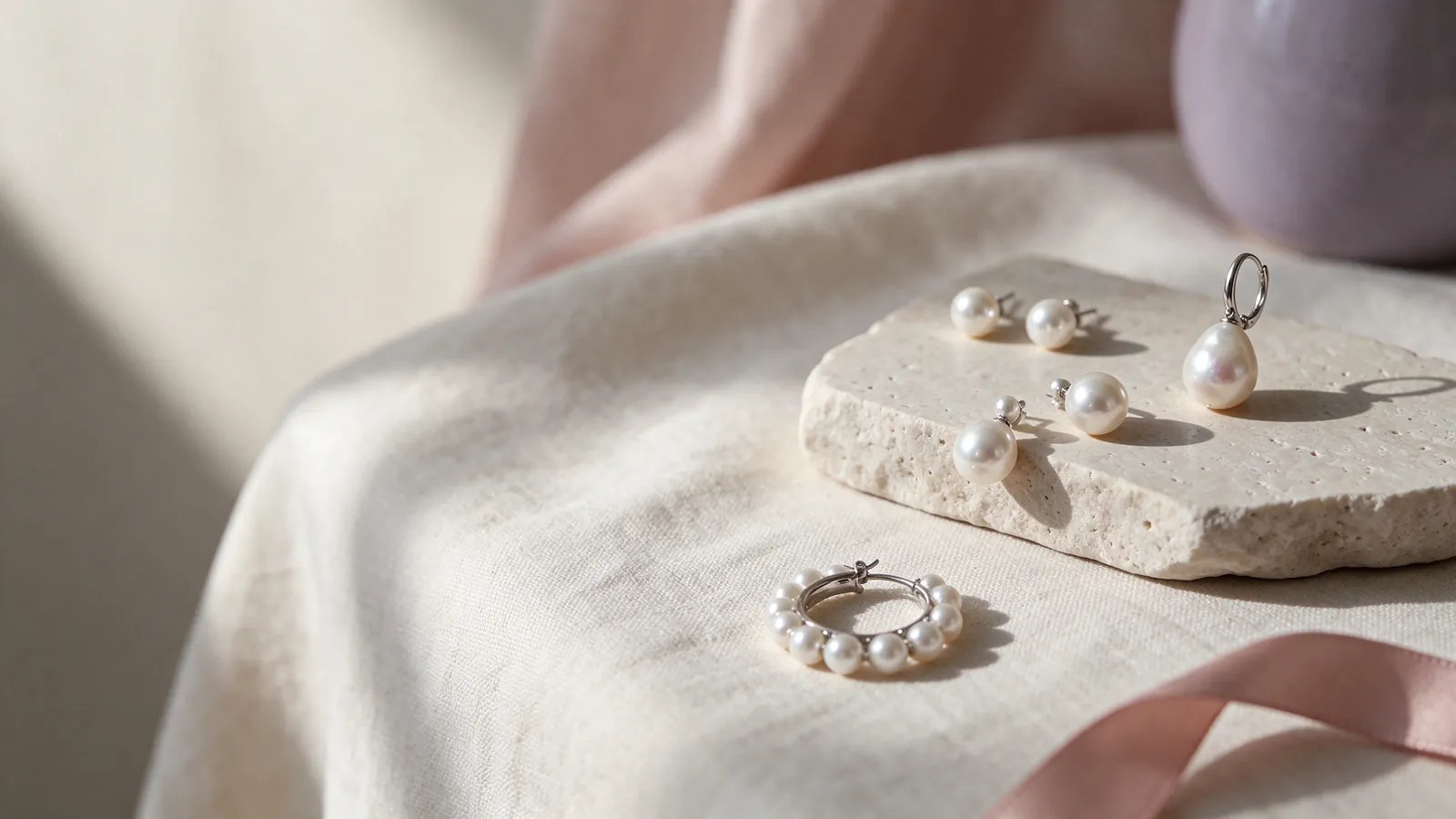
Where do pearl ear cuffs sit, and how does a non-pierced pearl ear cuff fit?
Think of the ear as a set of possible focal points rather than a single place for decoration. A cuff can draw attention to the outer contour, while a lobe earring places the emphasis lower. Before choosing a pearl ear cuff, consider which part of your ear is naturally visible with your usual hairstyle. View a design from the front to understand how the pearls frame your face, then from the side to see the support and projection. A graceful front outline does not show everything about the position behind it.
The term cuff does not describe one universal mechanism. Some ornaments use an opening that works with the ear's contour, others have moving fastenings, and some ear jewelry includes a post. A non-pierced pearl ear cuff needs to be evaluated through the individual construction. If you want a pearl accent on the lobe instead, compare clip-on pearl earrings as a separate category. Their location and support differ from an ornament following the outer ear. Let a suitable supported position determine the styling, rather than forcing a piece to match a photograph.
For pearl ear cuffs, what should you check about a non-pierced pearl ear cuff's fastening?
Locate the metal that carries the piece and the part intended to open or close. Hold that support rather than the pearl, follow the intended operation, and confirm that a moving fastening is properly engaged. Look for outward tipping as well as sliding, since a projecting decoration can change the balance. Do not bend a fixed opening to make it fit. An adjustable description should come with a clear understanding of the mechanism; painful pressure is not an acceptable substitute for a compatible shape.
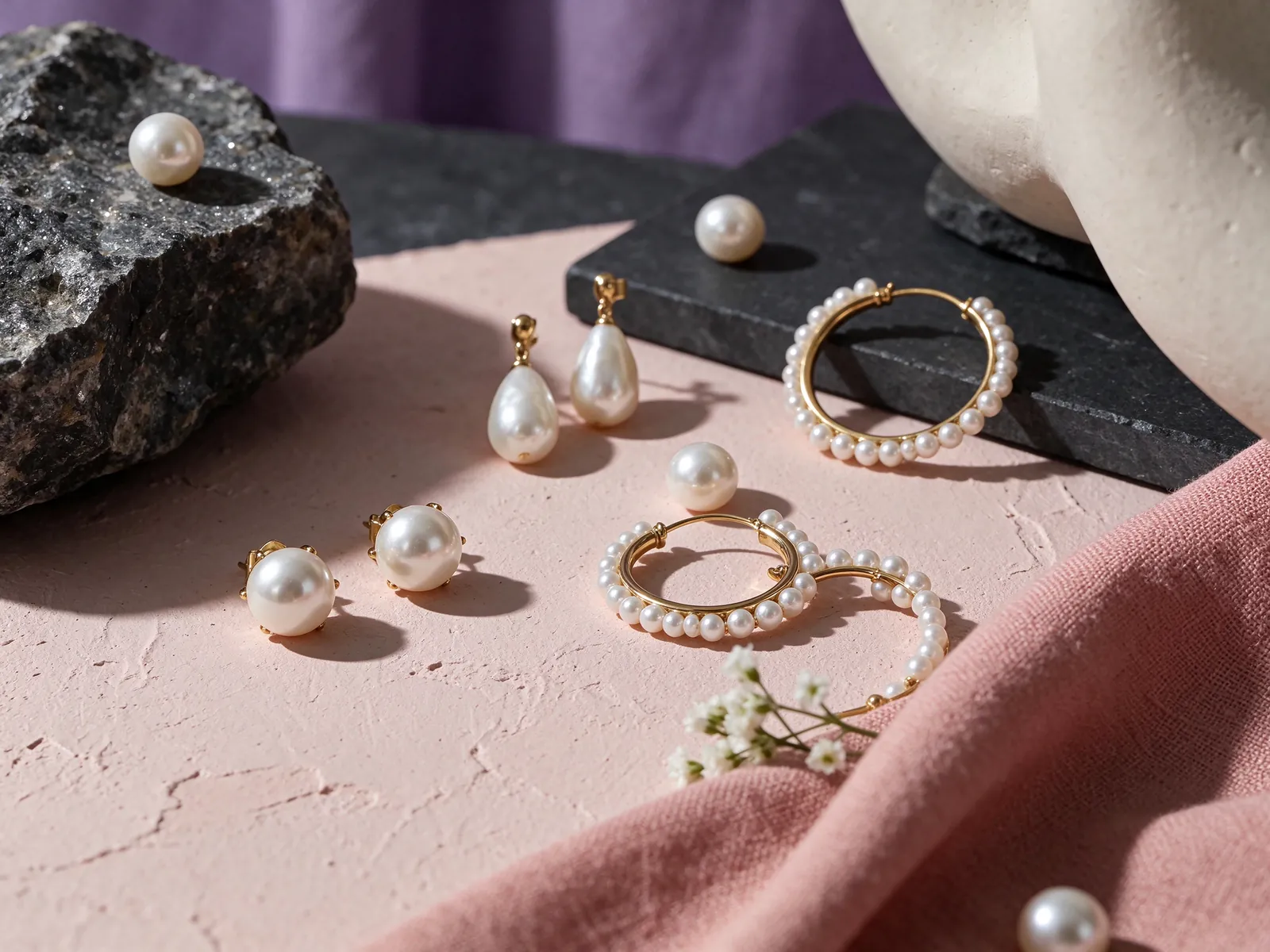
Separate three fitting questions: position, pressure, and movement
Position answers where the decoration sits; pressure describes how the contact feels; movement shows what happens when you use it. Check all three separately. While facing a mirror, note whether the metal has a supported curve or presses at a concentrated point. Then turn your head, look down, and speak normally. Watch for a pearl moving behind the ear or the entire piece rotating outward. If there is pain, a clear pressure mark, or discomfort, remove the cuff instead of assuming that you need to tolerate it until your ear adapts.
Your daily accessories are part of the fitting environment. Glasses can occupy space behind the cuff, mask loops may catch during removal, and headphones may contact a decoration that looks unobtrusive from the front. Try the accessories you actually use, not only the outfit that makes the cuff easiest to photograph. Hair deserves the same attention: a strand passing through an opening may become a practical nuisance even when the arrangement looks attractive. Consider how often you put on and remove these items before choosing a more layered upper-ear look.
Make your comparison notes about observable behavior
A note such as 'the cuff catches when I lift my glasses' gives a clearer starting point than 'it does not fit'. Record whether the problem involves the front, the back, the pearl's angle, or the removal route. Photos can preserve those visual observations, but they cannot measure the pressure you feel. Ask about the intended wearing area, adjustment, left or right orientation, and removal technique. This helps distinguish a styling issue from a mechanism that is not suitable for your routine.
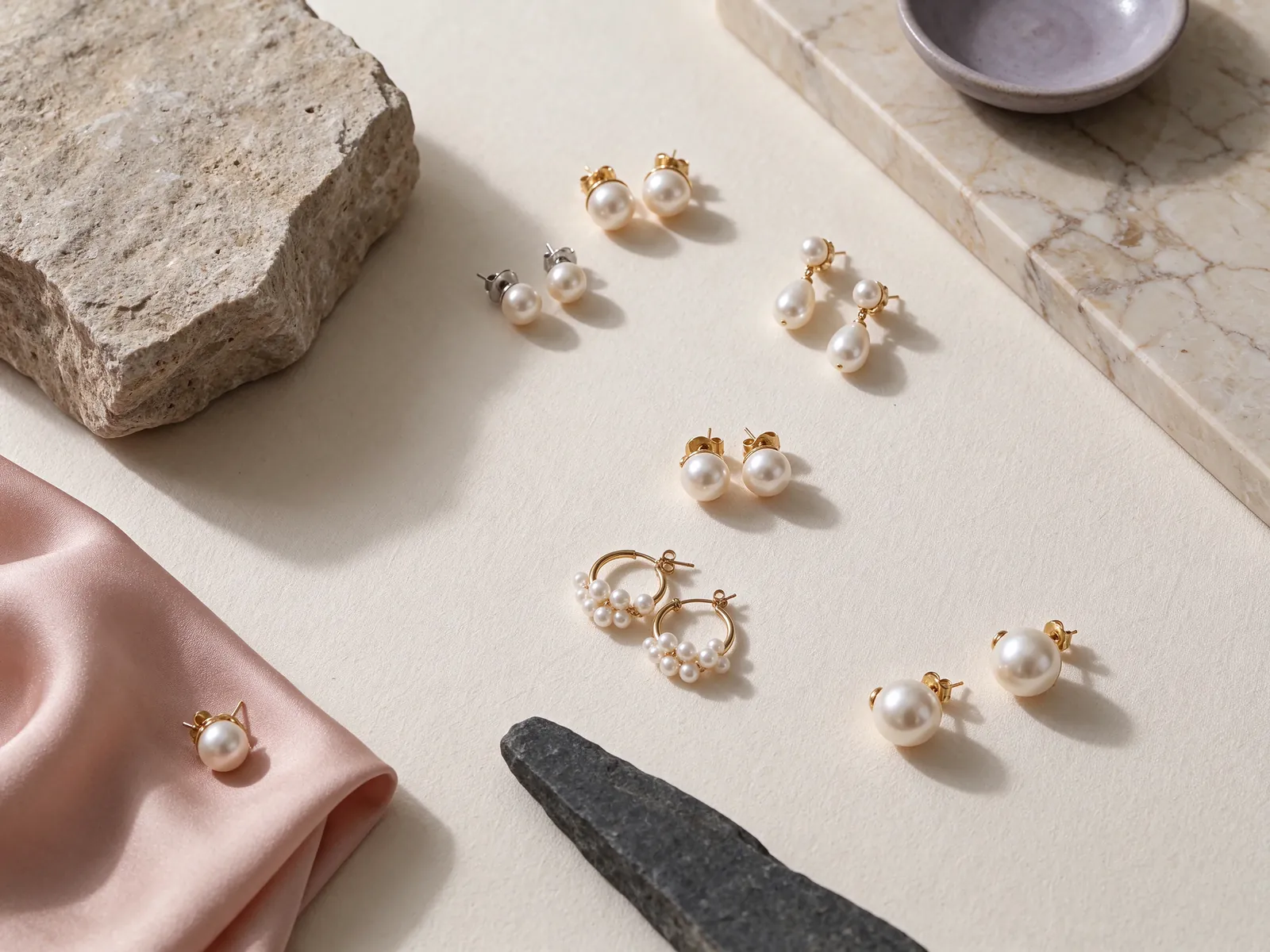
Evaluate the visible pearls without confusing design with quality
A compact pearl point and a longer pearl line make different statements. The first can preserve the ear's outline; the second can lead the eye along it. Compare how much open space the setting leaves, where the pearl faces point, and whether projecting elements obscure each other. More pearls do not automatically make an arrangement more refined. If hair usually covers the upper ear, consider whether the feature you like will actually remain visible. Proportion is about the relationship with the wearer and surrounding details, not just apparent size in an isolated image.
GIA uses seven pearl value factors: size, shape, color, luster, surface quality, nacre quality, and matching. That framework allows a more specific comparison than relying on an unexplained grade. Examine the visible surfaces under comparable lighting and, for several pearls, look at their coordination. Photographic exposure and reflected colors affect appearance. A round shape or white-looking surface does not establish origin, natural-versus-cultured identity, or certification. Keep those identity questions separate from the design features you can directly observe.
Look for intentional rhythm in a multi-pearl arrangement
An even line can create continuity, while changing outlines can produce a more varied rhythm. Decide which result suits your style before treating every difference as a defect. The matching factor is useful for assessing how pearls work together, but does not mean all jewelry must contain identical shapes. Look at the complete arrangement and the individual visible surfaces as two related tasks. This keeps an intentional design variation from being confused with the condition or identity of a pearl.
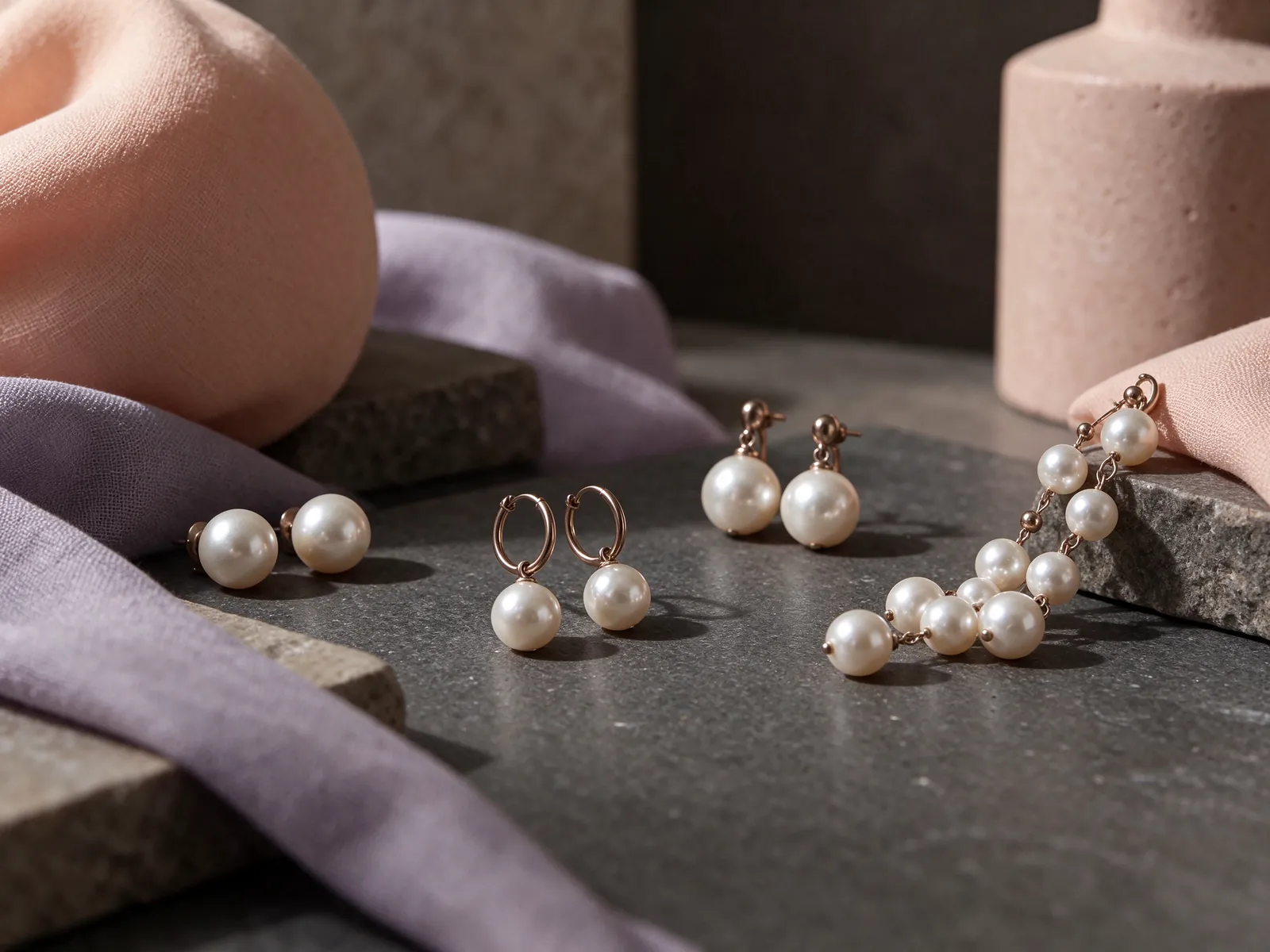
Use asymmetry to establish a focal point, not competing details
Wearing a cuff on one side gives you a choice about how the opposite ear responds. The idea behind a single pearl earring can help: a one-sided accent can be deliberate without requiring every other area to be bare. If the same ear also carries a lobe piece, choose which height should lead. Two strongly projecting decorations can overlap from the front even when they seem separated in profile. Judge the entire face and shoulder line from a normal viewing distance before deciding that an additional piece improves the balance.
A curved cuff and pearl hoop earrings can echo one another, but their arcs sit at different heights. The hoop may extend below the lobe while the cuff follows the outer ear. When combining them, check physical contact as well as visual repetition. Several circles near eyeglass frames can feel busy even when each piece is simple on its own. With hair, choose a naturally exposed ear area or tuck one side back; repeatedly shifting the cuff to chase visibility can distract from finding a dependable wearing position.
Test the arrangement with the neckline you plan to wear
A structured collar, a high neck, and an open neckline leave different amounts of space around the face. Look at the cuff together with your collar, hair, and glasses instead of treating the outfit as an unrelated background. To change the look later, try a different hair arrangement or a quieter lobe accent before adding more upper-ear decoration. The goal is to make the chosen outline readable, not to fill every available gap.
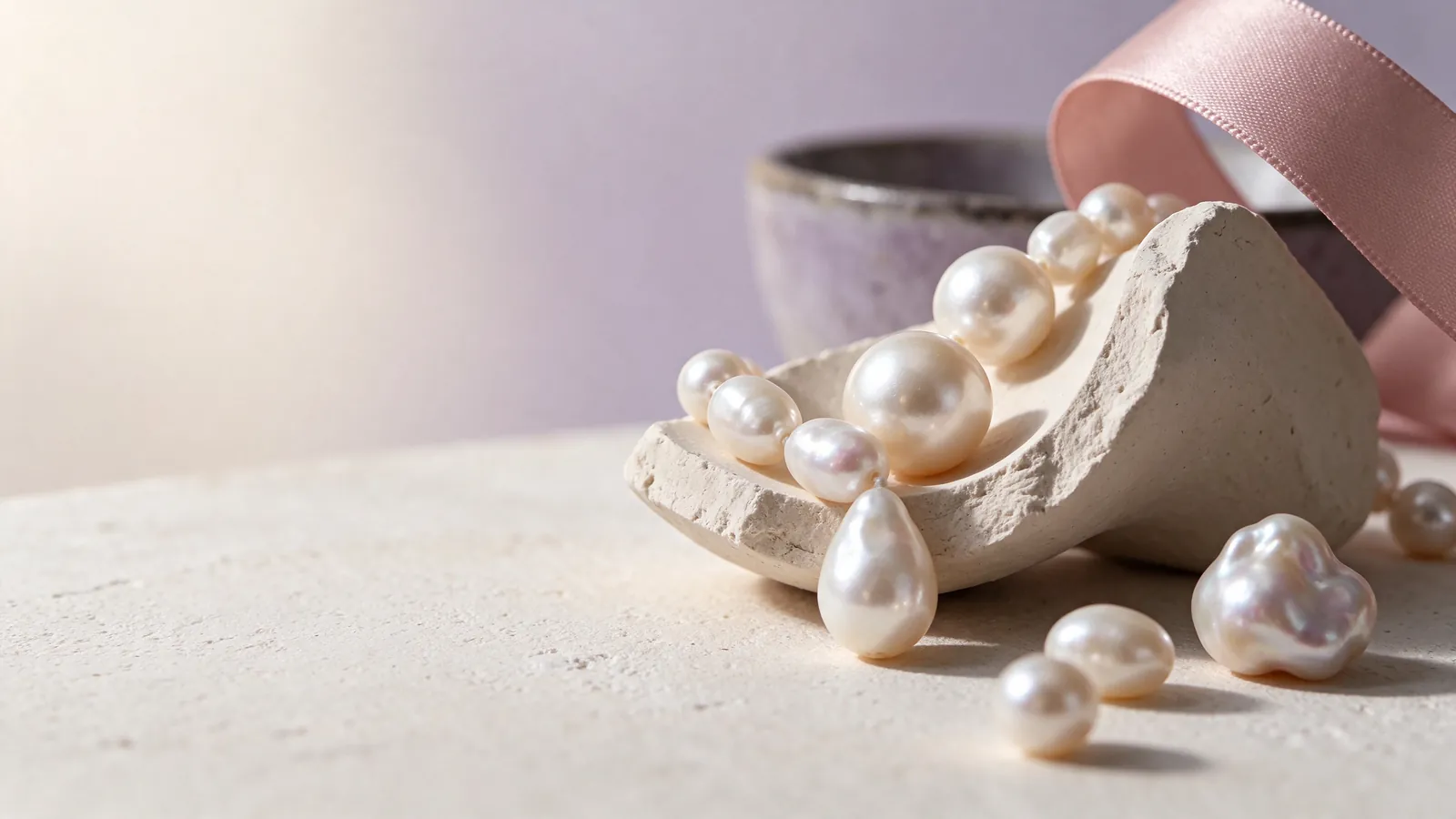
Layer pearl jewelry with a clear direction and room to move
Combining a cuff with multi-pearl earrings creates more than one possible route for the eye. Let one route lead: an upward contour can pair with a compact lobe detail, while a longer lobe line can work with a restrained upper-ear point. If both have projecting pearls, pronounced curves, and swinging elements, their outlines may compete. Look for enough open space to identify each piece's direction. A layered arrangement is successful when its relationships are clear, not simply when it contains a larger number of components.
A still arrangement also needs a movement check. Watch whether a hanging lobe element swings toward the cuff, touches its lower edge, or catches an opening as you turn. A necklace may add another line in the same area, and a high collar can reduce the available visual space. Simplifying the neck can make the cuff more prominent; a fuller look can instead spread emphasis across separate heights. Do not assume that pieces shown together in a photograph will move independently on your ear.
Keep removable elements on compatible jewelry
Exploring detachable pearl earring charms can suggest ways to vary a lobe look, but removability is not universal compatibility. A charm's connector, weight direction, and movement need an appropriate attachment point. Avoid slipping one onto a cuff's arc just because an opening appears large enough. Added movement can change how the cuff is supported. Keep the cuff in its intended configuration and use removable components with the jewelry designed for them, rather than improvising a connection at the upper ear.
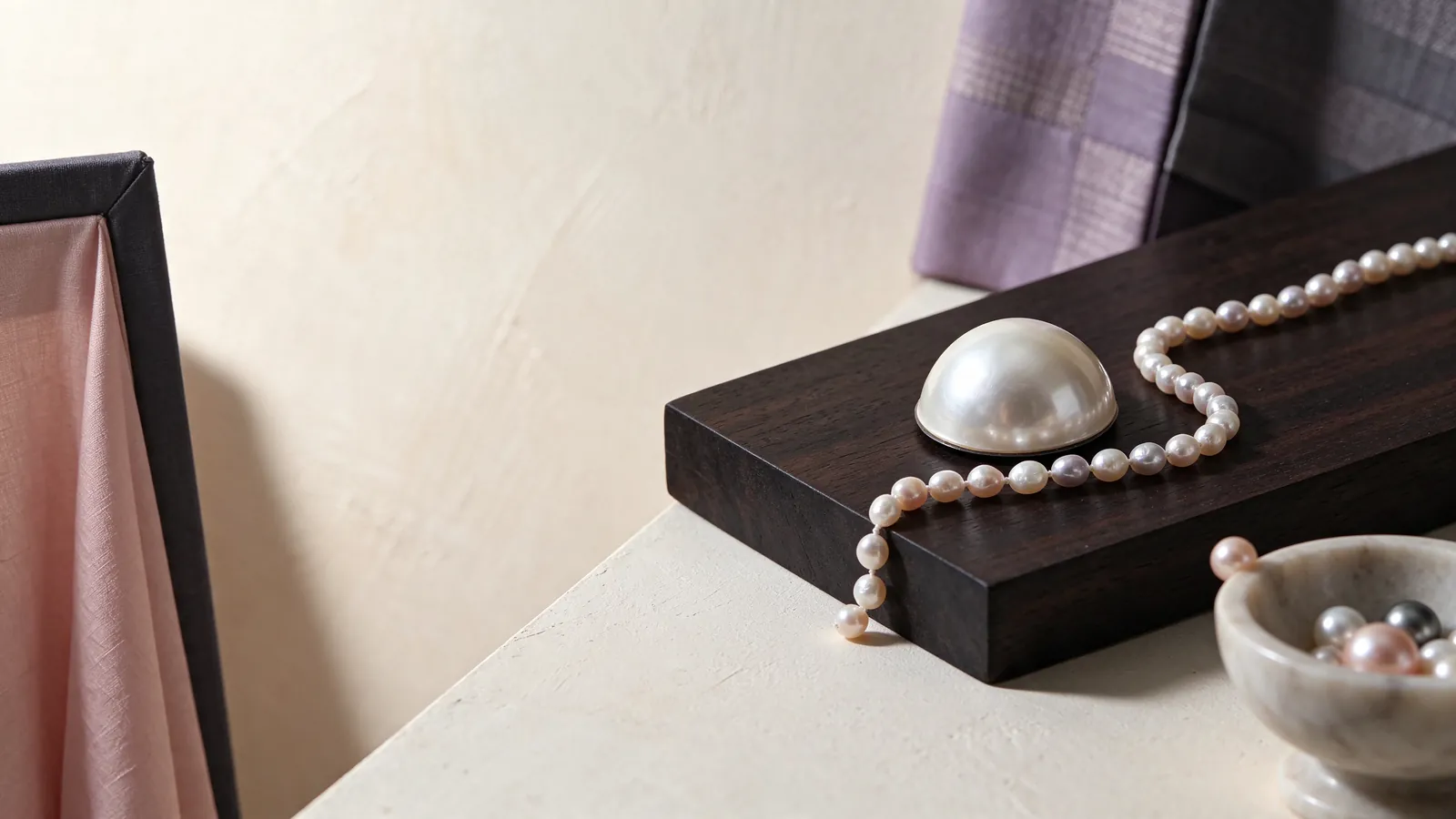
Make gentle removal and pearl care part of the routine
Finish hair styling and perfume application before putting on the cuff, allowing relevant products to dry to reduce direct spray contact with the pearls. When taking it off, support the metal and use the intended fastening route. A pearl is not a handle for rotating or bending the structure. If removal feels obstructed, pause and locate the cause: hair, a mechanism that has not opened, or an incorrect direction. Pulling without identifying the obstruction can put unnecessary force on both the decorative and supporting parts.
GIA rates pearl at 2.5 on the Mohs hardness scale and states that pearls should not be cleaned in ultrasonic or steam cleaners. Routine care uses a very soft, clean cloth after wear, with avoidance of acids, perfume, hair spray, and excessive heat. An ear cuff combines pearl surfaces with metal and attachment points; do not assume a cleaning method suited to the metal is appropriate for everything. Avoid prolonged soaking when you do not understand the construction. A moving pearl, distorted arc, or difficult fastening is a reason to stop wearing the piece and seek suitable advice.
Store the outline without squeezing it
A soft separate pouch or compartment keeps pearl surfaces away from harder jewelry edges. Remove any trapped hair before storage and make sure moving parts rest in a stable position. Do not pack other earrings inside the cuff's curve or compress it to fit a crowded case. During travel, securing separate pieces is more useful than letting them roll together in a rigid container. Protecting the shape is also relevant to the wearing position, since a changed arc may no longer sit as it did during fitting.
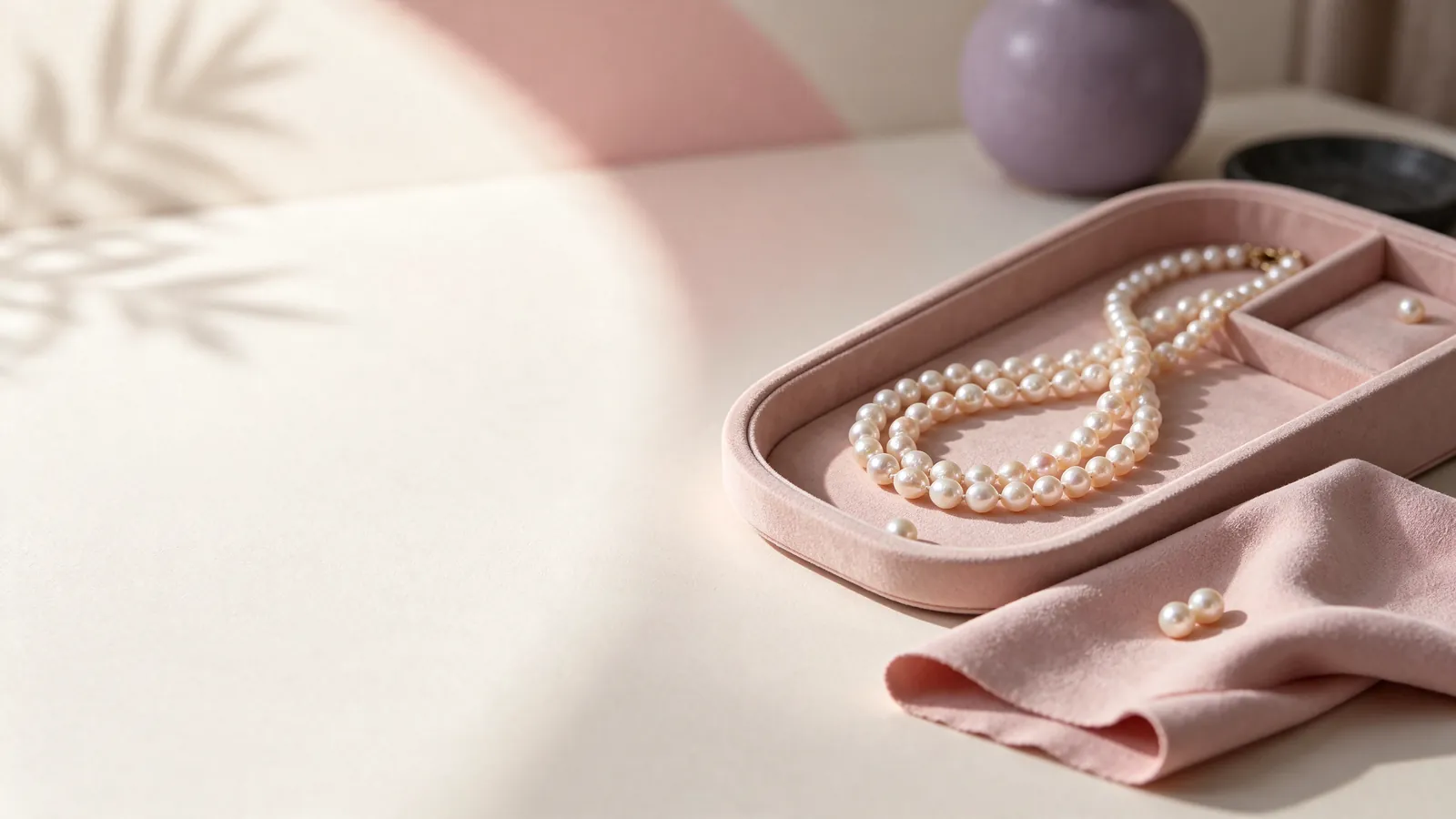
Compare alternative formats by the effect and routine they support
If the upper-ear location repeatedly interferes with daily accessories, another format of pearl earrings may express the same style more comfortably in practice. Identify what you actually like: a luminous point, a rounded outline, or a longer line framing the face. Then compare suitable positions rather than insisting that the decoration must sit on the ear's outer contour. Glasses, headphones, and frequent hair adjustments are useful starting criteria. An alternative location can be a deliberate styling decision, not a failure to achieve the photographed cuff look.
For an extended pearl effect, pearl fringe earrings offer a downward direction instead of tracing the upper ear. Decide whether you want attention close to the ear's contour or traveling toward the shoulder. Although both formats may display several pearls, their attachment and motion are different. For a gift, this matters more than resemblance in a photograph: the recipient may wear different accessories, prefer another side, or have different piercing requirements. A recognizable pearl motif alone does not establish that two formats serve the same everyday purpose.
For questions about earring position and styling, contact Flint Jewelry on WhatsApp or call +85260106207. Describe your everyday glasses, headphone use, and hairstyle so that the discussion can focus on the silhouette, clearance, and handling details most relevant to your routine.
Clarify what is included and how it is oriented
Before deciding, establish whether the purchase contains one ornament or a pair and whether a specific left or right ear is intended. A styled image can show more than the unit being sold, so read the item description instead of counting what appears in the scene. For gifting, ask whether the recipient likes a one-sided focal point or balanced decoration. Together with the fastening and removal method, these details make the choice concrete without assuming that every cuff is supplied or worn alike.
| Decision point | Practical check | What the check tells you |
|---|---|---|
| Location | Inspect the pearl direction from the front and support from the side | Whether the outline suits a naturally supported part of your ear |
| Construction | Identify openings, moving fastenings, and any post | Whether the individual design requires a piercing and how it is operated |
| Accessory clearance | Try your glasses, hair arrangement, and normal removal actions | Whether the cuff leaves room for your everyday routine |
| Pearl composition | Compare visible surfaces, open space, and coordination | Whether you prefer a compact point or a continuing line, separate from quality |
| Care and storage | Hold the metal support and reserve a soft separate space | How to avoid using pearls as handles or crowding the arc |
Pearl knowledge and authoritative references
GIA places pearl at 2.5 on the Mohs hardness scale and advises against ultrasonic and steam cleaning. Pearl surfaces on an ear cuff therefore call for gentle care rather than aggressive jewelry-cleaning methods.
Read the reference for this factFrequently asked questions
Are all pearl ear cuffs worn without a piercing?
No universal rule follows from the name. Inspect whether the individual ornament uses an opening, a moving fastening, or a post. A non-pierced description also does not establish how well the construction will suit your ear's contour.
Why does a cuff look straight in a photo but rotate when I wear it?
A still image does not show your ear's support, everyday movement, or contact with accessories. Observe whether the decoration tips outward, shifts behind the ear, or meets your glasses. Do not assume that extra pressure will solve the cause.
Can a pearl charm be added to any ear cuff?
No. A removable charm needs a compatible attachment point and support direction. Hanging it from an unintended part of the cuff can change weight and movement. Use each component with the structure designed to accept it.
Does a white, round pearl identify the pearl type?
Shape and photographed color alone do not establish type, origin, or natural-versus-cultured identity. Treat those as questions requiring actual descriptive information, separate from the outline and visible surface features you can compare.
How should I pack a pearl ear cuff for travel?
Use a soft separate compartment or pouch, clear any caught hair, and avoid squeezing the metal arc. Keep harder jewelry edges from rubbing against the pearls and do not nest loose items inside the cuff's curve.
Updated: