
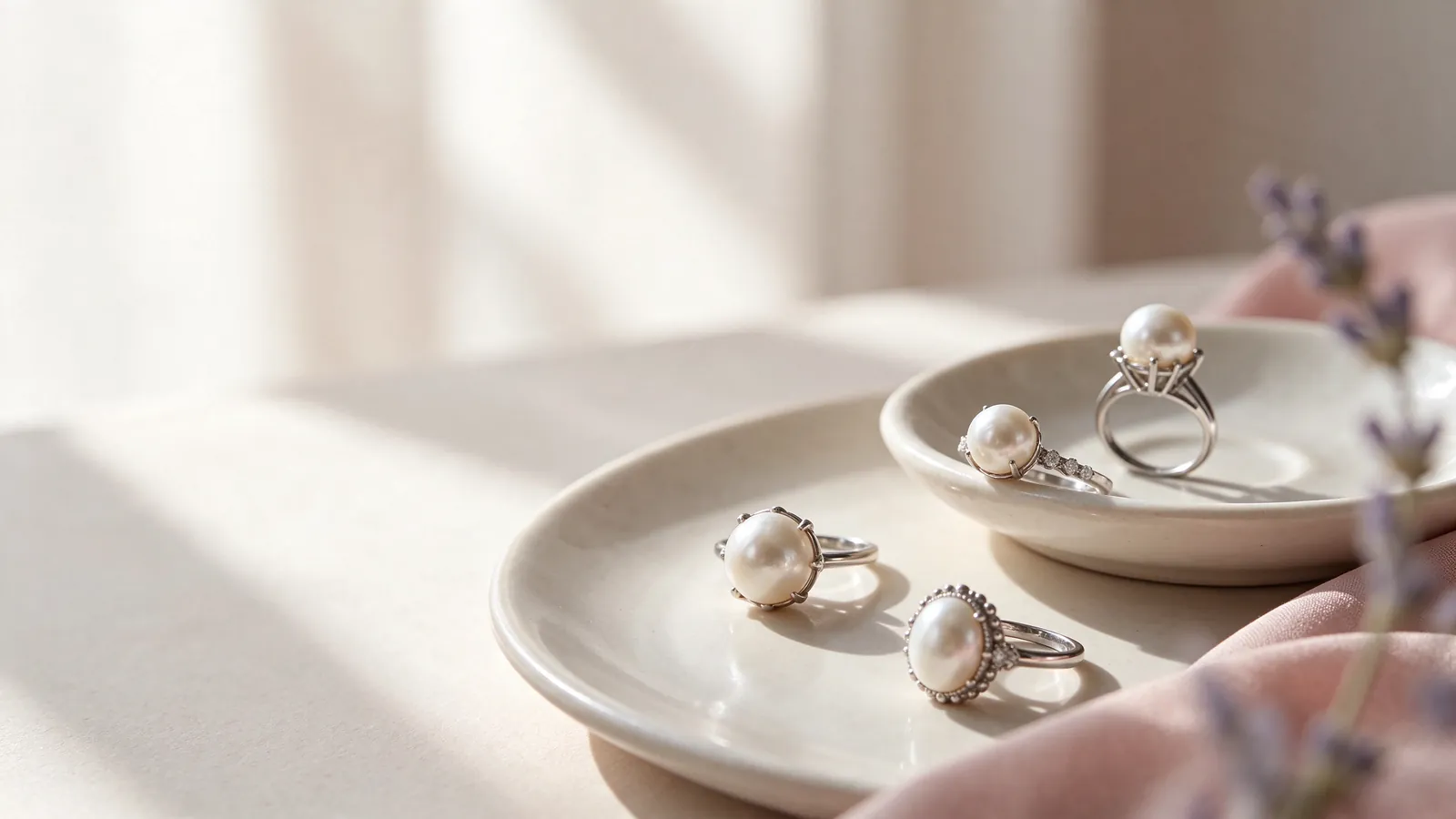
Which Setting Heights and Band Shapes Should You Compare in stackable pearl rings and pearl stacking rings for a pearl ring stack?
Before building a stack, look beneath the pearl. The support and the neighboring band's path matter as much as the height visible in a photograph. A raised pearl may appear to leave room, yet the second ring can still strike its setting or approach the pearl when it turns. Inspect the pair from the side with your hand relaxed, rather than judging compatibility from a top view alone.
Compare straight, curved and angled band outlines according to how they actually meet. A clean interval between rings can make the composition look intentional; complete contact is not a requirement. When considering pearl rings, start with the setting-to-band relationship and decide whether you prefer close lines or more open spacing. If one shape pushes the other sideways, pressing harder will not create a sound pairing.
How Can You Check the Fit and Contact Points of stackable pearl rings and pearl stacking rings When Trying a pearl ring stack?
Establish how each ring feels on its own, then add the companion in the order you intend to wear. Take your other hand away and let the pair settle. Gently bring fingertips toward your thumb and bend the finger, watching the bands, skin and pearl support. A pair that stays attractive only while held in place needs another layout, especially if movement produces pressure or contact with the pearl.
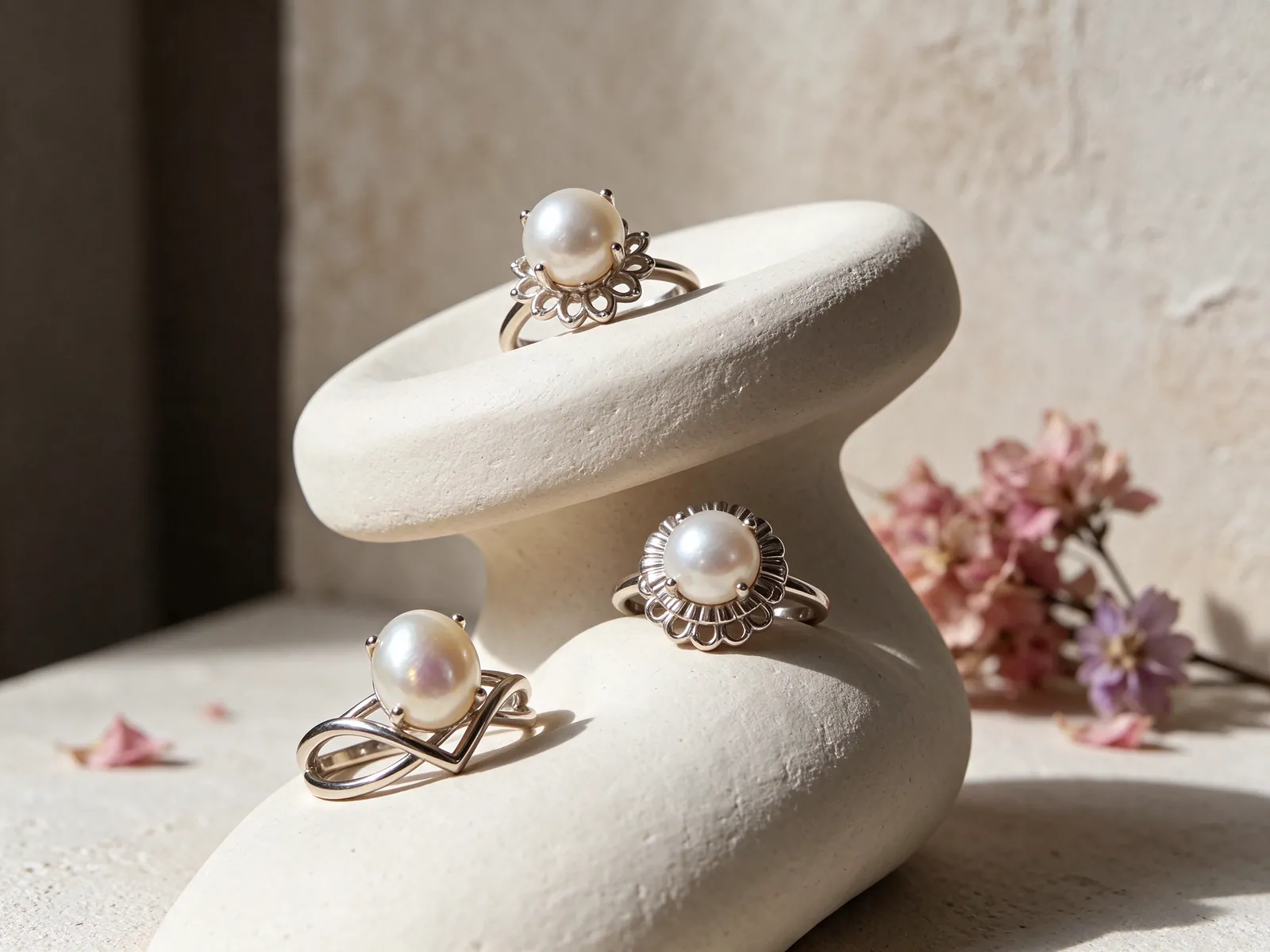
Build the composition around a main ring
Decide which ring should draw attention first. With a pearl solitaire ring, the surrounding band can act like a frame or a supporting line, leaving the pearl visually distinct. Do not choose by thinness alone: a fine companion with an unrelated outline may look accidental. Compare the space around the focal point and the way the lines connect across the whole finger.
If both pieces carry pearls, choose between a paired focal point and a staggered arrangement before assessing their clearance. Rotation can bring pearls together even when they begin apart. A multi pearl ring already creates repetition, so a second detailed ring may crowd that rhythm. Try a simpler neighboring line or put the companion on another finger, where both designs remain easier to read.
Use a full-hand view, not only a close-up
Stand back from the mirror and assess the hand as someone else would normally see it. Remove a ring if all the bands merge into one dense area. Change the order if another outline hides the pearl. Close-ups are useful for studying construction and contact, but bright reflections should not be mistaken for a complete quality assessment or evidence of a pearl's species or origin.
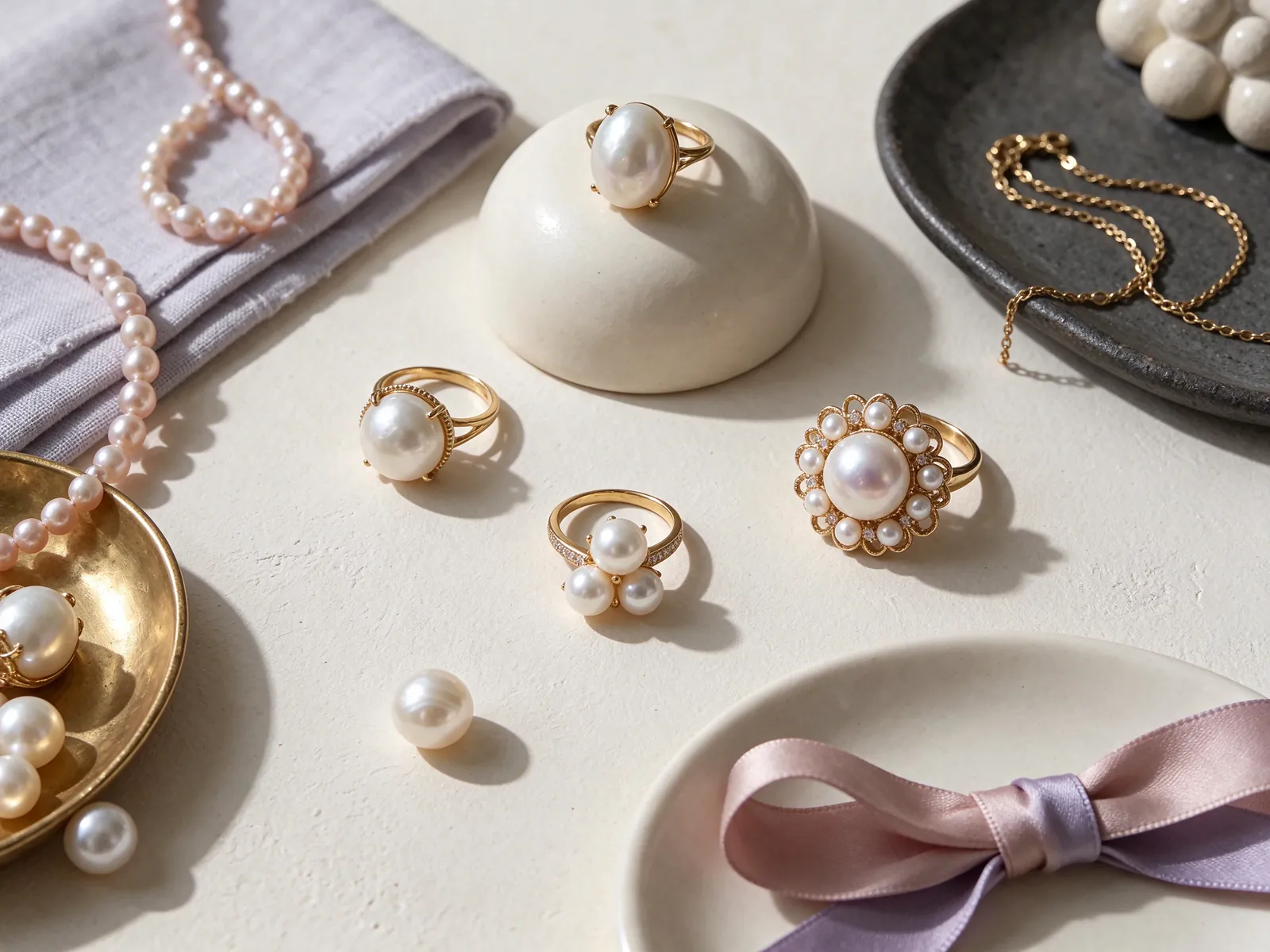
Evaluate combined fit without a fixed sizing shortcut
A size marking describes only part of the wearing experience. Band width, the inner shape and where each ring rests on the finger affect the feel of the pair. A stack covers more of the finger than a single ring and can feel snugger. Automatically sizing up is not the answer, because an overly loose piece may rotate toward the pearl or its support.
Check both the knuckle and the final position at the finger base. Then reverse the wearing order and compare stability, pressure and the direction of the setting. The wider band may sit differently in each arrangement. Do not force a tight pair over the knuckle or continue if it pinches, causes pressure or cannot be removed normally. The right look should not depend on ignoring those signals.
Test the motions your hand actually makes
Pretend to type, hold a phone and pull back a sleeve. See whether the setting touches an adjacent finger or catches a cuff. A layout suitable for one finger may not transfer comfortably to another. If it works only in an extended-hand pose, use separate fingers or hands to create layers instead of keeping all the metal in one place.
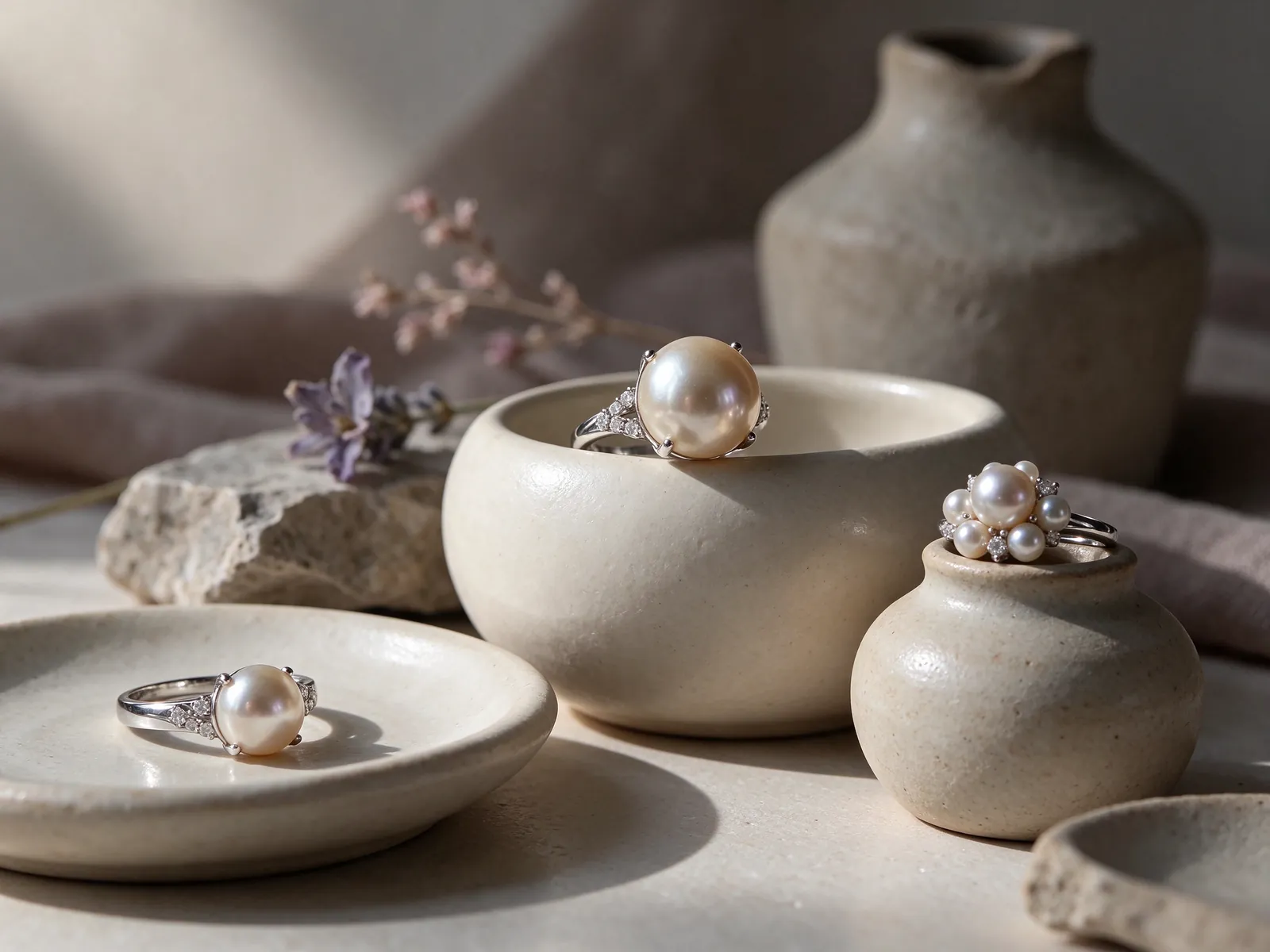
Make color choices in consistent light
Choose the color relationship with your usual clothing in mind. Contrasting a cool shirt with a warmer metal tone can look deliberate, while a quieter combination may suit a softer outfit. These are styling options rather than universal rules. Place the pearls under the same light when comparing them; a window and a nearby lamp can create misleading differences if each ring is viewed separately.
Different metal colors can connect through a shared curve, a repeated line or a detail elsewhere in the outfit. For customization with Flint Jewelry, the metal options are 18K 750 white gold, 18K 750 yellow gold, 18K 750 rose gold, PT950 platinum and PT900 platinum. Selecting a color does not determine whether the band shapes fit together or whether the pearl has enough clearance.
Separate matching from pearl identification
GIA considers seven pearl value factors: size, shape, color, luster, surface quality, nacre quality and matching. Matching helps describe the relationship between pearls, while purposeful differences can create contrast in a stack. Examine how their outlines and luster work visually together. Neither a color label nor a photograph establishes origin, natural-versus-cultured identity, a grade or whether a certificate accompanies a particular piece.
Create layers across the hand when profiles conflict
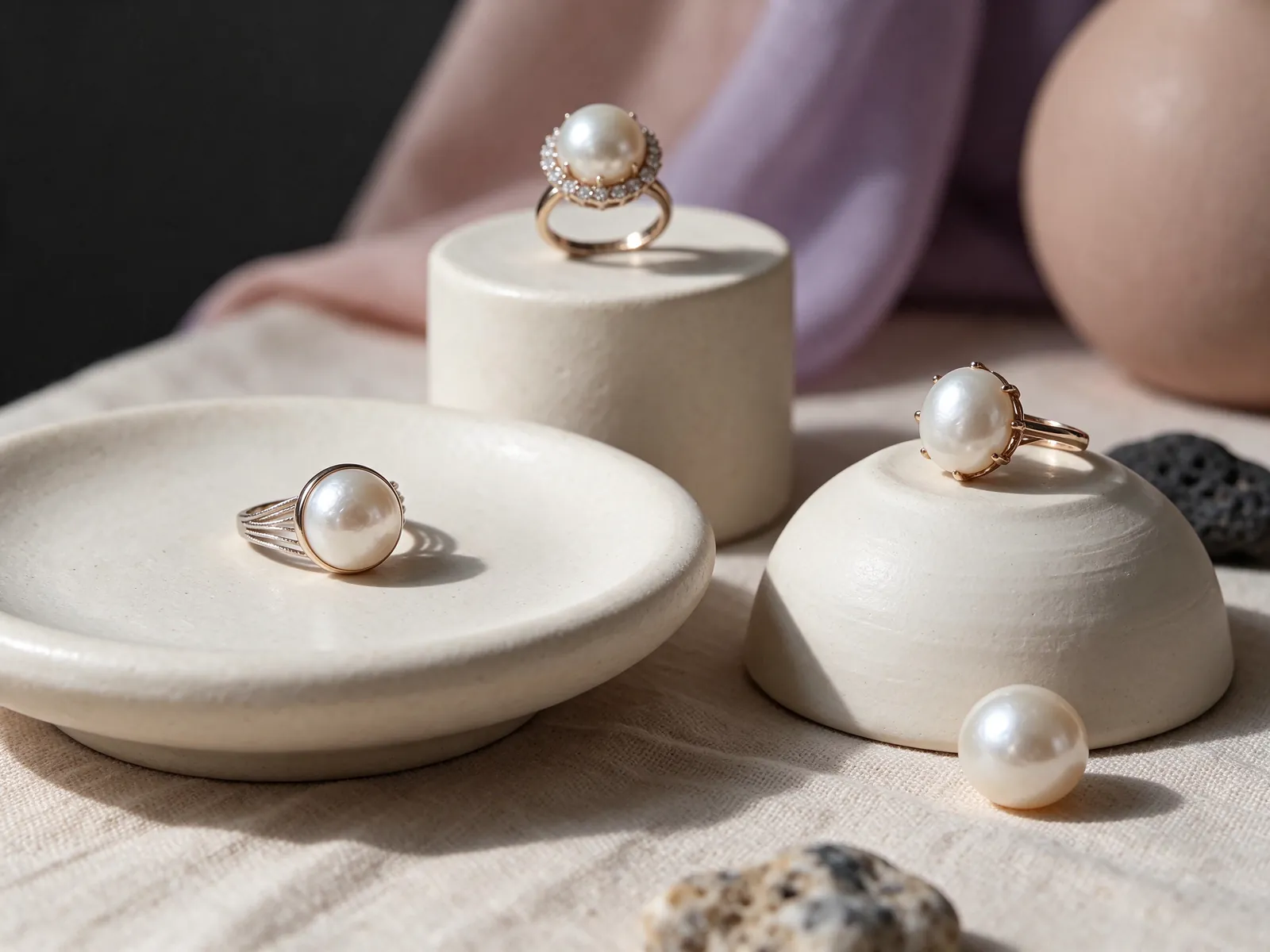
An open pearl ring changes the direction of the composition, but its open area should not be treated as a slot for another band. Watch the ends in relation to the pearl, setting and skin as the hand moves. Do not repeatedly bend an open profile to adjust the fit. If its shape conflicts with a companion, adjacent fingers may preserve the desired contrast more comfortably.
A pearl signet ring brings a distinct face outline that can work as the main visual anchor. Let another ring support it rather than competing at the same finger base. A pearl pinky ring can move a highlight toward the edge of the hand. Check that placement while gripping, not just with fingers spread, and consider which hand handles bags, tools or other daily objects.
Use an empty finger as part of the design
Keep the main ring where you like it and move the companion to the other hand. Then compare the arrangement alongside a watch or bracelet. Leaving an area quiet can make both focal points clearer and the entire look lighter. This approach lets you wear two meaningful pieces without demanding that settings with different spatial needs share the same finger.
Choose a stack for the outfit and the activity
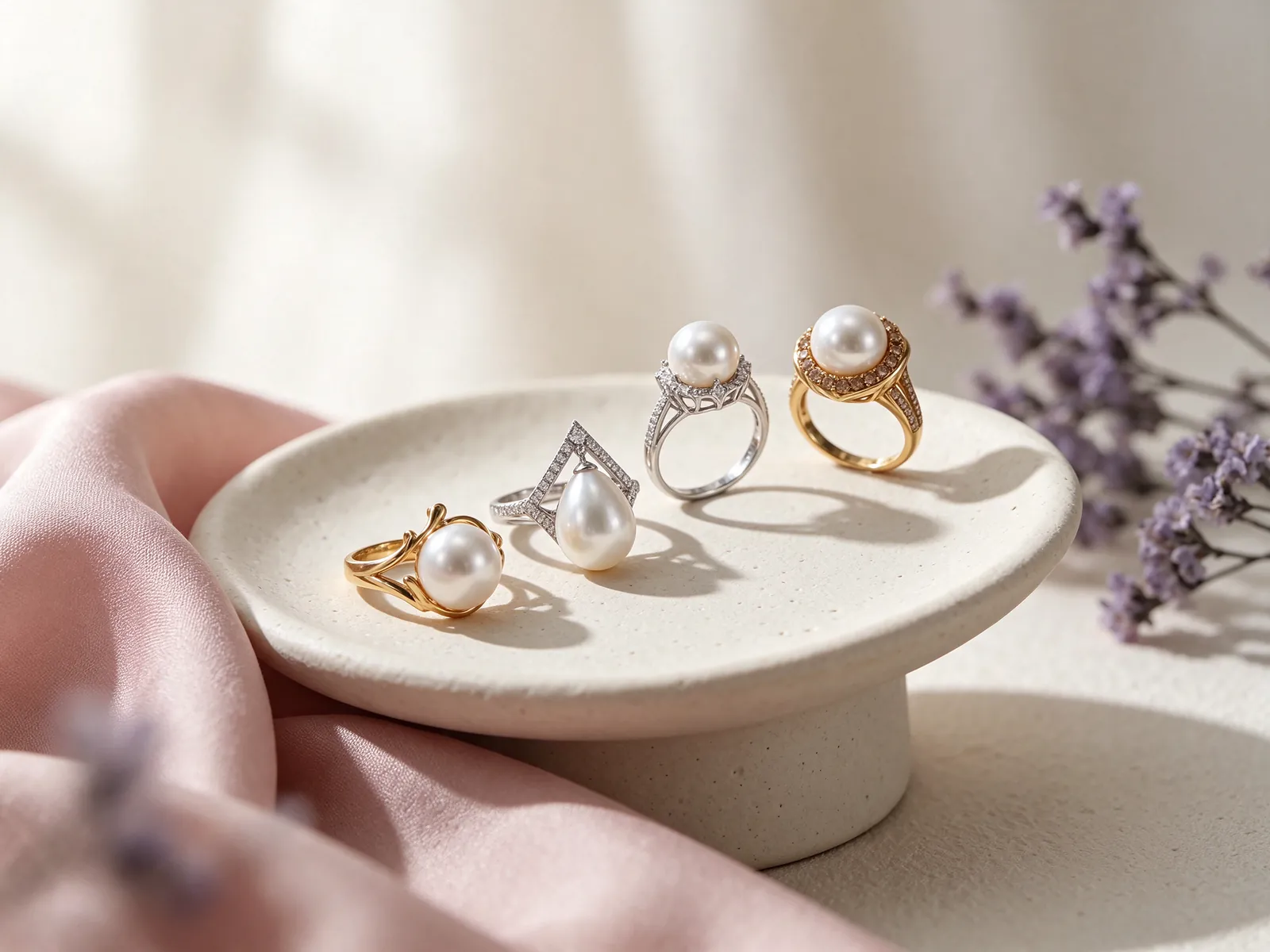
Try your rings with a shirt, knit or jacket rather than looking only at a bare hand. A fitted cuff and a loose sleeve meet the setting in different ways, and fabric may catch on a projecting shape. For a dressier occasion, change the balance between hands before adding another band. More layers are useful only when they support the overall outfit and remain comfortable to wear.
Everyday tasks can push one ring toward another, so mimic carrying a bag and handling papers during a fitting. Remove pearl rings for heavy gripping, impact-prone activities or work with tools. When coordinating Pearl Jewelry, a necklace or earrings can provide another point of interest while the hands stay simpler. You do not need the same density of detail in every part of an outfit.
Describe the pairing you want in practical terms
Bring the existing ring you want to wear alongside the pearl and explain its usual finger position. Include side views and a relaxed bending view when sharing a visual idea. Mention daily movements and whether a sentimental piece needs to stay in its customary place. That information makes a design conversation about real spacing and use, rather than relying entirely on a styled photograph.
Keep neighboring bands away from the pearl surface
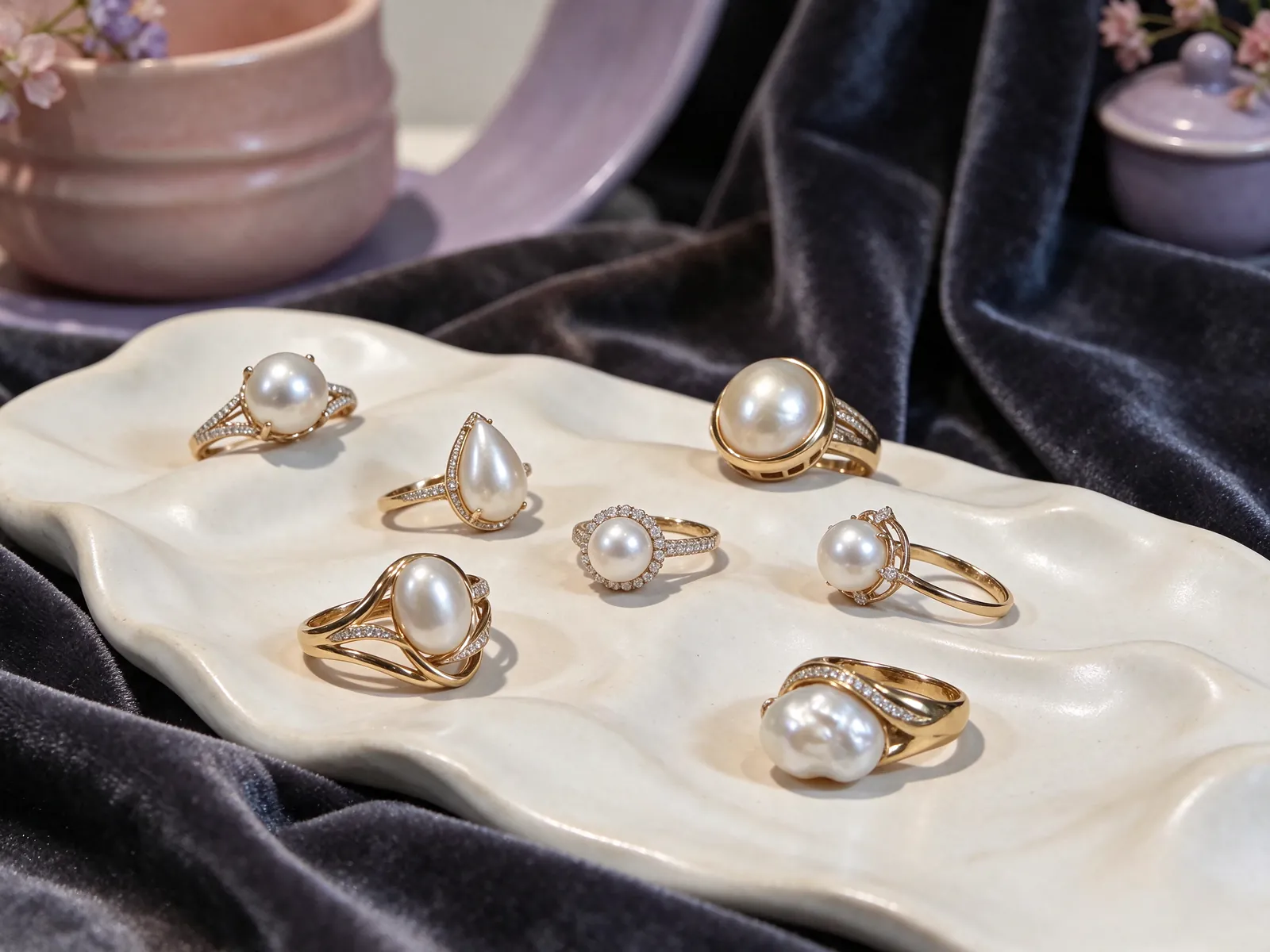
GIA lists pearl at 2.5 on the Mohs hardness scale. In a stack, this makes repeated contact with another ring an important concern. A band should not rub the pearl simply to achieve a closer arrangement. No immediate visible mark does not mean ongoing friction is acceptable. After wearing, inspect the contact areas and stop using the pair if you notice a new mark, a loose support or a distorted shape.
For routine care, gently wipe the pearl with a very soft, clean cloth after wear. GIA says pearls should never go into ultrasonic or steam cleaners and should be kept away from acids, perfume, hair spray and excessive heat. A method suitable for another part of the ring may still be unsuitable for its pearl. Store rings separately rather than letting them rub together loose in a pouch.
Recheck clearance whenever the stack changes
A new companion, a reversed order or a different finger can introduce contact that the previous layout avoided. Let the rings settle and repeat the bending check each time. If a piece requires constant turning back into position, reduce the stack or separate the rings. The best arrangement for your hand combines a clear visual structure with movement that feels natural, not a pose that needs continual maintenance.
Share the rings you want to pair and your everyday wearing needs with Flint Jewelry on WhatsApp at +85260106207 to discuss the proportions and spacing of your preferred arrangement.
| Layout | Styling goal | Physical check | Alternative if it conflicts |
|---|---|---|---|
| Pearl focal ring plus a simple band | Give the pearl a clear frame | Space below and beside the pearl | Choose another contour or separate fingers |
| Two pearl-bearing pieces | Paired or staggered focal points | Clearance after natural rotation | Move one piece to another finger |
| Multi-pearl design and a companion | Support an existing rhythm | Visible pearls and finger-base pressure | Reduce the companion's visual density |
| Open profile beside a band | Add direction and negative space | Ends against pearl, support and skin | Avoid forcing the band into the opening |
| Main ring with a pinky accent | Distribute interest across the hand | Contact during ordinary gripping | Change the hand or finger placement |
Pearl knowledge and authoritative references
GIA lists pearl at 2.5 on the Mohs hardness scale; a pearl ring stack should be checked for neighboring bands that rub the pearl surface.
Read the reference for this factFrequently asked questions
Can I choose a stack using ring size markings alone?
No. The width and inner profile of each band, together with the area covered by the pair, affect comfort. Try each piece alone and then together in the intended order. Check movement, pressure and normal removal instead of assuming that equal markings or a fixed size increase will work.
Must stackable pearl rings sit completely flush?
No. Deliberate spacing can clarify the pearl's outline and the separate bands. What matters is whether the arrangement remains stable and avoids pinching or unwanted contact during movement. Forcing incompatible shapes together is less useful than choosing another contour or wearing the rings on different fingers.
How should I test a pearl ring beside a wedding band?
Wear the actual pieces together and look at the setting from the side. Compare the support area, band widths and both wearing orders, then bend your finger. If the pieces interfere, wearing them on adjacent fingers or separate hands can preserve their personal significance without forcing a close stack.
Will rotating the pearl outward make the stack suitable?
Only if clearance remains when the rings settle and your hand moves naturally. An angle that works while you hold the ring is not enough. If you have to keep correcting it, change the order, reduce the layers or separate the pieces rather than overlooking an unstable contact point.
Is a simple companion band enough for a pearl ring stack?
Yes. A single pearl can remain the main focal point while a quieter band supplies another line. A companion on a different finger can also create a layered composition. Start with the ring you want to emphasize and how you wear it daily, rather than a required number of pearls.
Updated: