
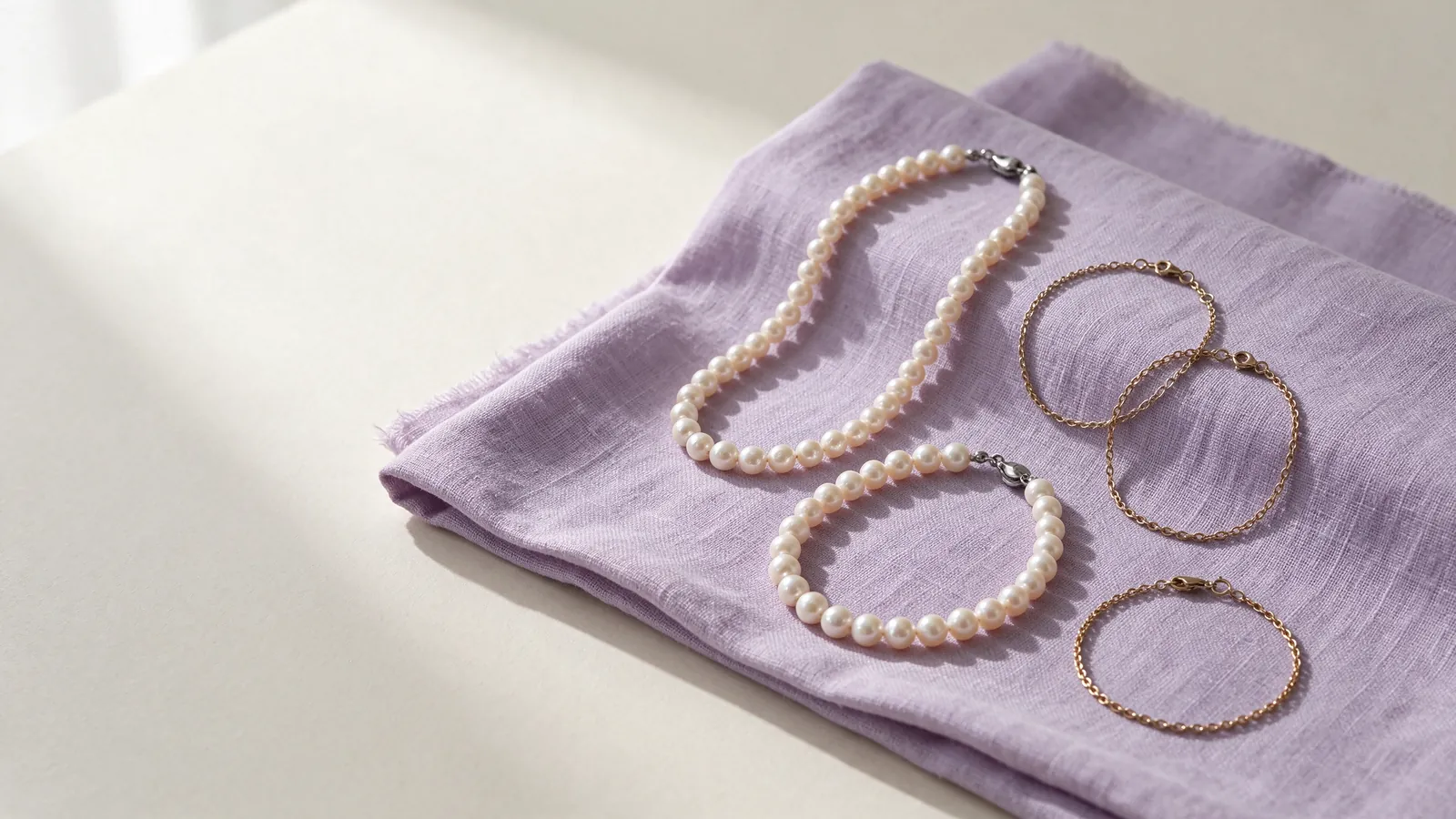
How should a stainless steel pearl bracelet or a SUS316L pearl bracelet fit around your wrist?
Measure the wrist at your intended wearing position, keeping a flexible tape flat and close without compressing the skin. Note the position as well as the measurement: a bracelet near the wrist bone is not being tested in the same way as one worn farther up the arm. The number gives you a starting point, not an automatic finished length. When comparing a pearl bracelet, consider how its clasp and pearl arrangement occupy space after fastening rather than relying only on the length of the piece laid straight.
Use a short sequence of ordinary movements during a fitting. Turn your palm up and down, make a gentle fist, reach for an object and rest your forearm on a table. Watch for a focal pearl group sliding out of view, a clasp meeting the wrist bone or an adjustment tail moving beneath the palm. Decide whether you prefer a close outline or a looser drape before comparing alternatives. Neither preference is a universal fit rule, and an adjustable mechanism still needs to be tested at the setting you intend to use.
When comparing a stainless steel pearl bracelet with a SUS316L pearl bracelet, what should you check at the clasp before judging the fit?
Look at the clasp's position, its connecting parts and where the unused chain points once fastened. Try opening and closing it with your usual hand, then let the bracelet settle naturally instead of holding the clasp in place. If you often rest your wrist on a laptop or desk, repeat that position. The local contact at the clasp can be more informative than the overall outline alone.
Read material labeling and adjustment features as different information
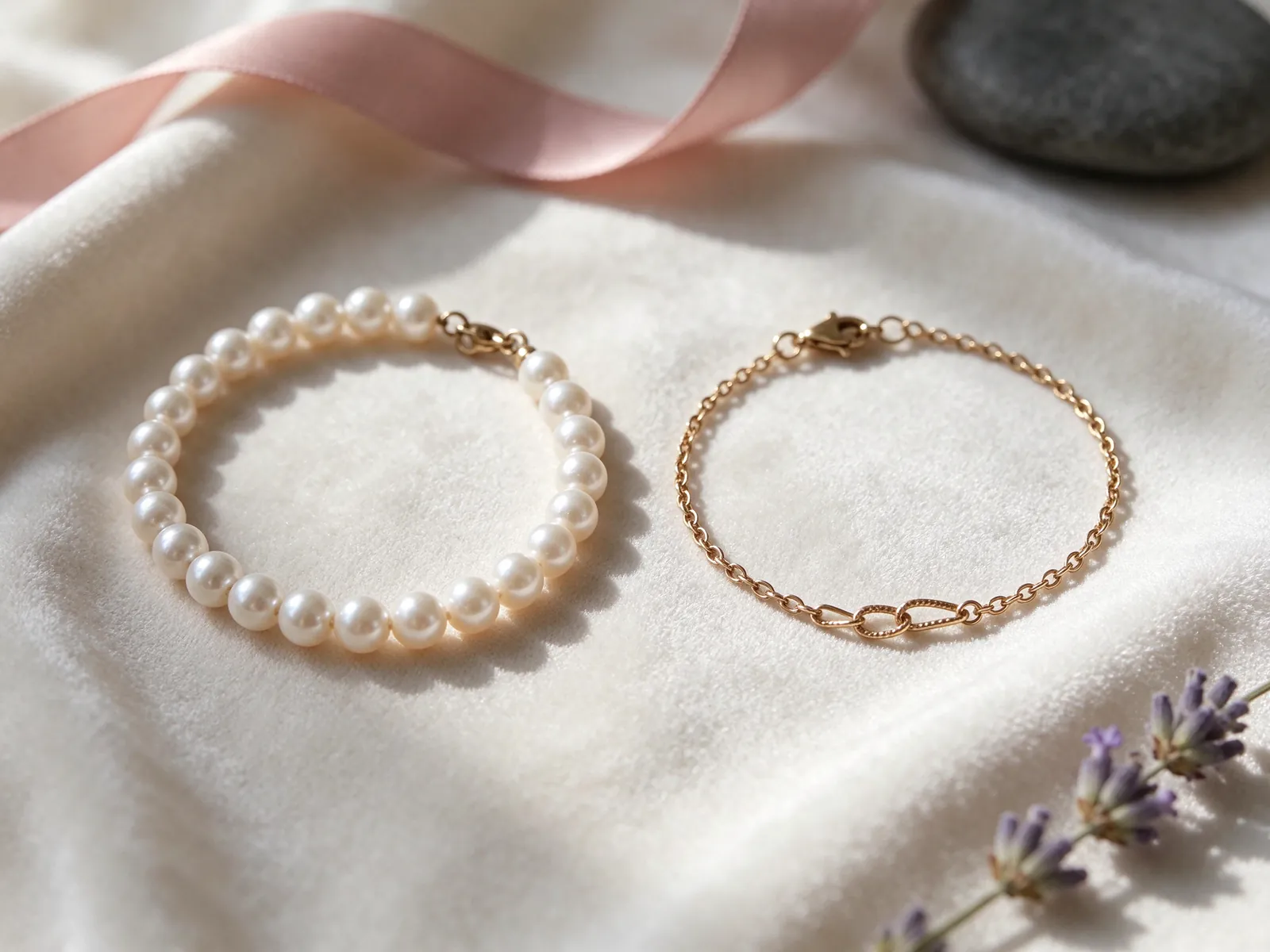
A stainless steel pearl bracelet is a broad search description, while a SUS316L pearl bracelet query focuses on a specific material label. WSP uses SUS316L in its pearl bracelet listings, including a relevant item name describing an adjuster. The material term and the adjustment feature answer different questions: one is the label in that listing, while the other concerns how the design adjusts. An adjustable bracelet is not necessarily stainless steel, and the phrase stainless steel does not tell you which clasp a particular bracelet uses. If you search for a steel pearl bracelet, read the written description of the chain, fastening and pearl attachments rather than inferring the material from a white-metal appearance.
Flint Jewelry's metal choices are 18K 750 white gold, 18K 750 yellow gold, 18K 750 rose gold, PT950 platinum and PT900 platinum. These are distinct from WSP's SUS316L labeling. Start by naming the metal you want to discuss, then describe the color relationship and proportions you prefer. Reading the 18k gold pearl bracelet guide can help separate these questions from wrist size and clasp operation. A similar-looking metal color is a styling comparison; it is not a reason to treat two labels as the same material.
Identify which component a description covers
A title may focus on the chain without explaining every connection. Look for information about the clasp, the linking parts and how the pearls are held, and ask the relevant retailer specific questions. Pearl placement also matters: a central group and pearls distributed around the wrist behave as different visual arrangements. The material name cannot describe all of that construction.
Decide between a pearl focal point and a continuous wrist outline
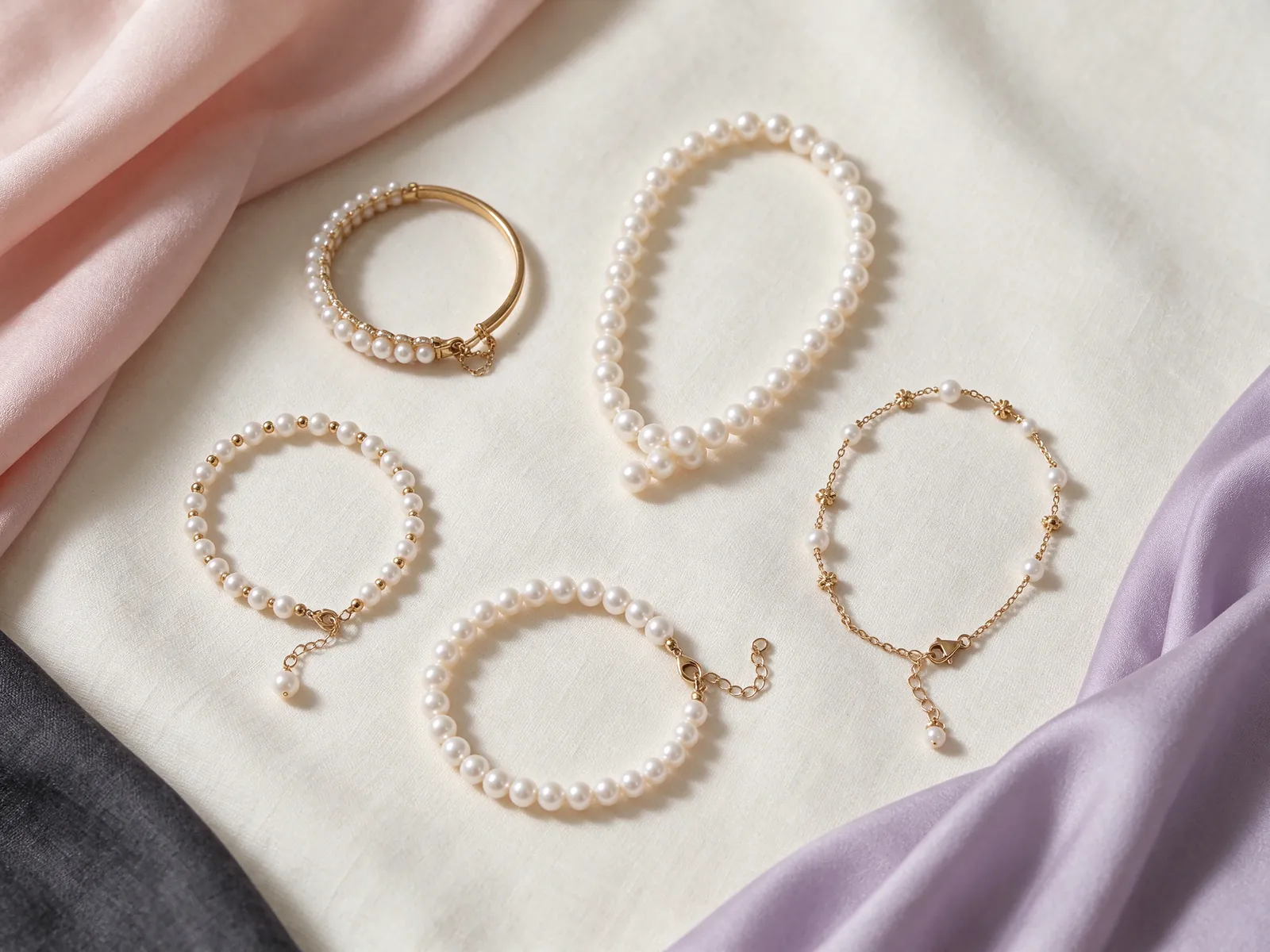
Visible chain between pearls introduces open space, while pearls arranged continuously create a more sustained band of color and reflection. Ask whether you want one accent at the front of the wrist or an outline that remains visible from several angles. A pearl strand bracelet is useful reading for understanding the continuous arrangement, not a substitute label for a steel chain design. Avoid assuming that visible chain automatically makes a piece lighter, stronger or easier to wear; actual proportions and the fastening still need individual consideration.
For a broader silhouette, a multi strand pearl bracelet raises questions about how neighboring rows sit and whether they overlap as the wrist bends. Compare that width with the space below your usual cuff. A patterned sleeve may already provide a strong visual element, while a plain blouse can leave room for a wider bracelet to become the focus. Use the contrast to understand your preferred outline, rather than classifying every pearl arrangement under the chain material that started your search.
Observe the bracelet from the side while wearing a familiar sleeve
Turn the wrist and check where the pearls move. A centered arrangement in a flat photograph may shift when worn, and a chain may twist instead of keeping its original orientation. Try the bracelet with a shirt or knit you use often and look from a normal mirror distance. The visible portion below your sleeve is a practical styling detail, not just an enlarged product-photo effect.
Build a daily combination around sleeves, a watch and desk work
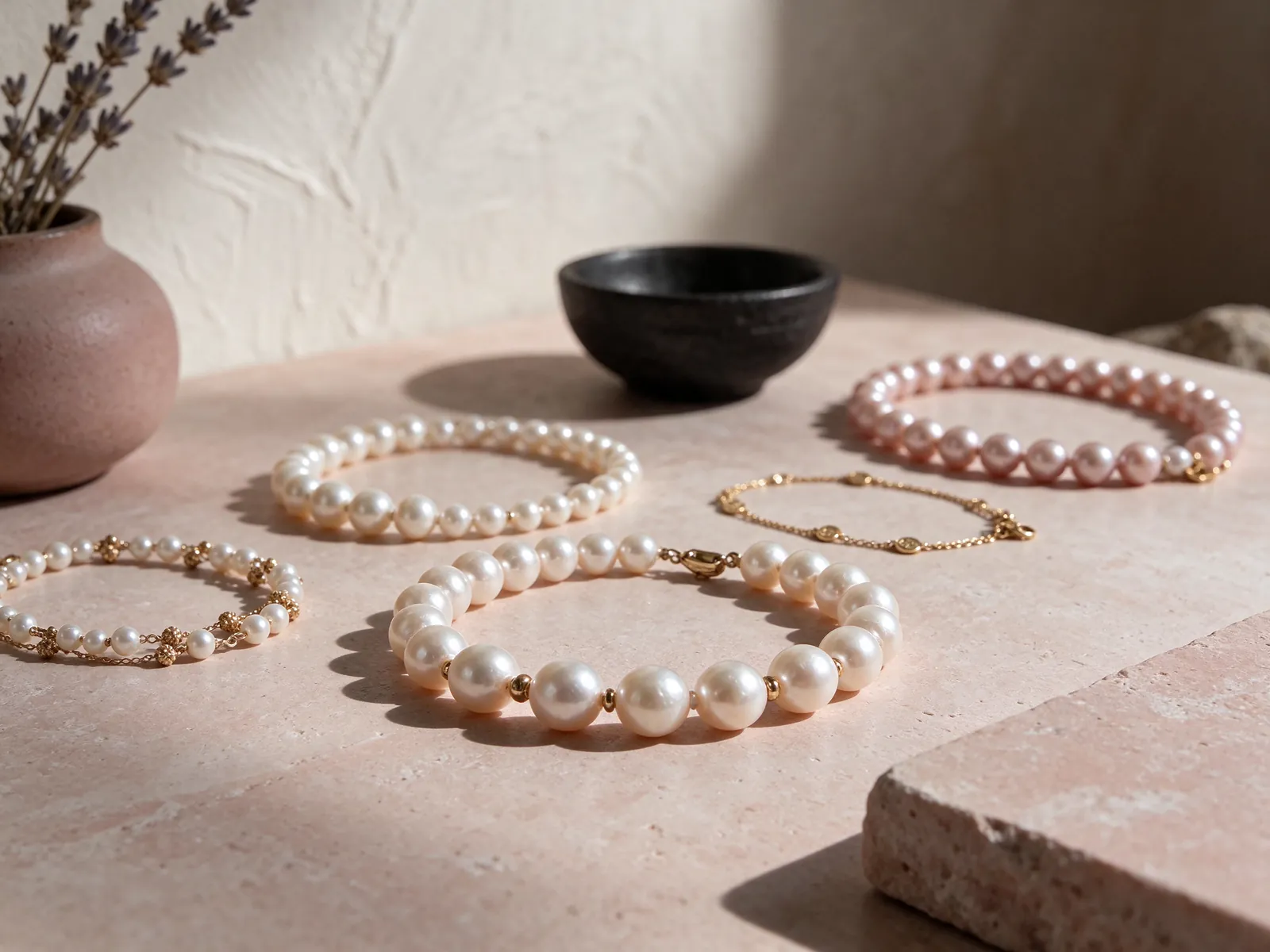
A bracelet for everyday wear should be compared during everyday actions. Type briefly, move a mouse and pick up a folder to see which part touches the work surface. Check the position with your sleeve down as well as pulled back; a fitted cuff may cover the focal point or meet the adjustment tail. The aim is to understand your routine, not to declare a particular chain style suitable for everyone. Minimal decoration can still create a noticeable contact point when the wrist rests on a desk.
Try a watch and bracelet on separate wrists before deciding to stack them. If you prefer one wrist, watch for the case, buckle or strap hardware moving against the pearls. Let either the watch or the bracelet lead the composition and keep other accessories secondary. A neutral knit, a dark blazer and a plain shirt offer different visual backgrounds for the same outline. Color coordination is useful for styling, but it does not replace checking how hard edges and pearl surfaces meet during movement.
A gift conversation should include how the recipient wears jewelry
Ask whether the recipient uses a watch, favors a close fit or normally fastens bracelets alone. An existing bracelet can help describe the preferred position and outline, but its straight length does not automatically translate to a new construction. Knowing the recipient's usual cuffs and fastening habits gives the discussion more substance than wrist size alone.
Look beyond the chain to the pearls' appearance and quality questions
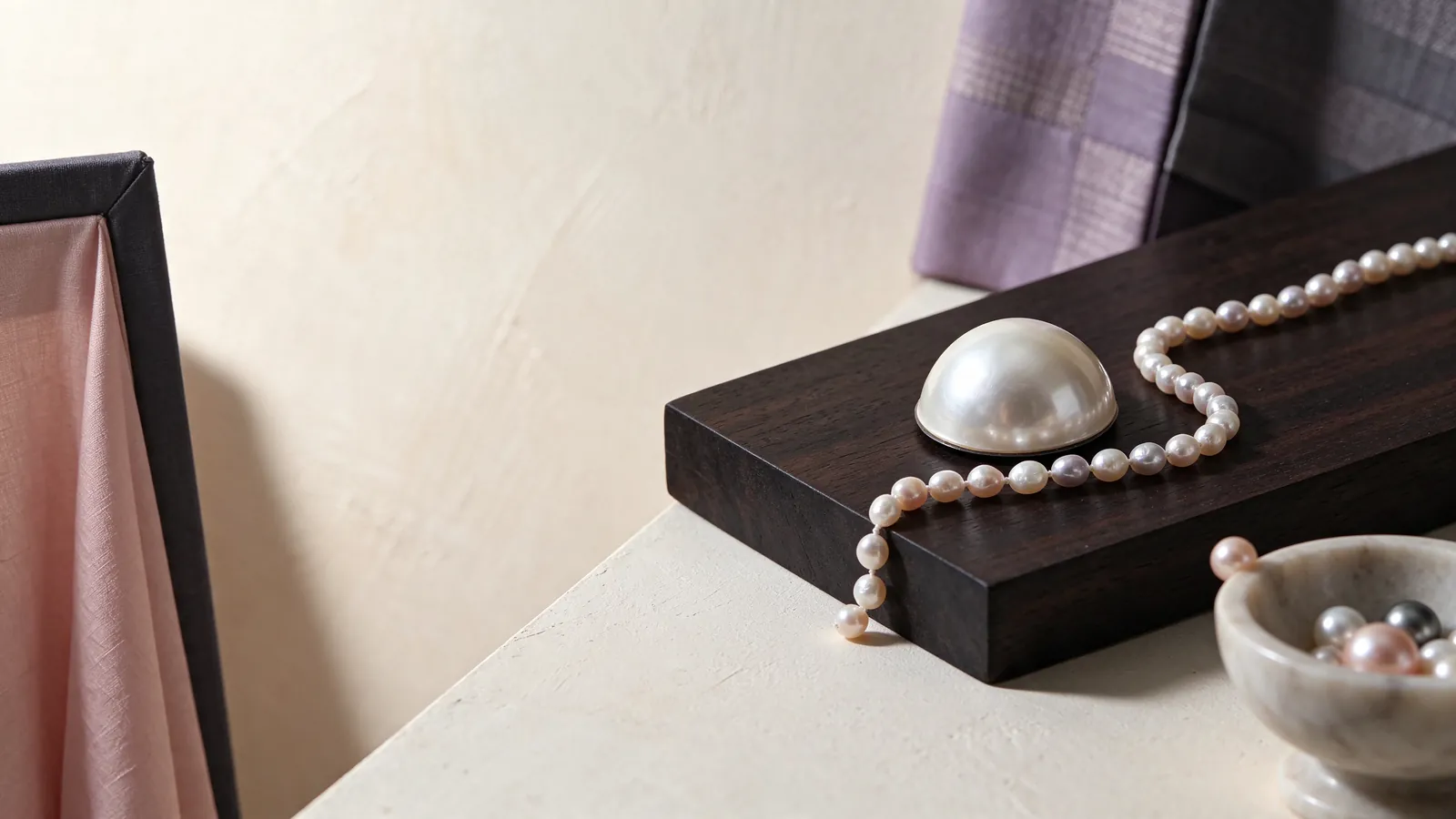
GIA describes seven pearl value factors: size, shape, color, luster, surface quality, nacre quality and matching. In a bracelet, compare neighboring pearls for their visual relationship in color, shape and proportion. Look at the clarity of reflections and the overall consistency of luster, while remembering that personal preference and quality questions are not identical. A photo can help you describe an appearance, but it cannot establish a nacre measurement, origin or natural-versus-cultured identity. The metal term should not take the place of considering the pearls.
Where possible, compare color under the same lighting and against the same background. Differences between warm indoor light and a cool photograph can complicate what you see. If the appearance of a 10k gold pearl bracelet or a sterling silver pearl bracelet appeals to you, identify whether the attraction is the metal color, pearl spacing or clasp outline. These are comparison topics, not Flint metal choices. An unusual shade or a round shape also does not, by itself, establish a particular pearl type, origin or certificate.
Describe what you like before asking what accompanies a piece
Soft color, an irregular outline or a rhythmic size arrangement may be your design preference. Questions about luster, surface quality and matching can then be discussed separately. Ask what pearl information accompanies the particular piece you are considering. GIA's educational framework supports clearer vocabulary, not an inference that a Flint design has been certified by GIA.
Care for the entire bracelet, not just the named chain metal
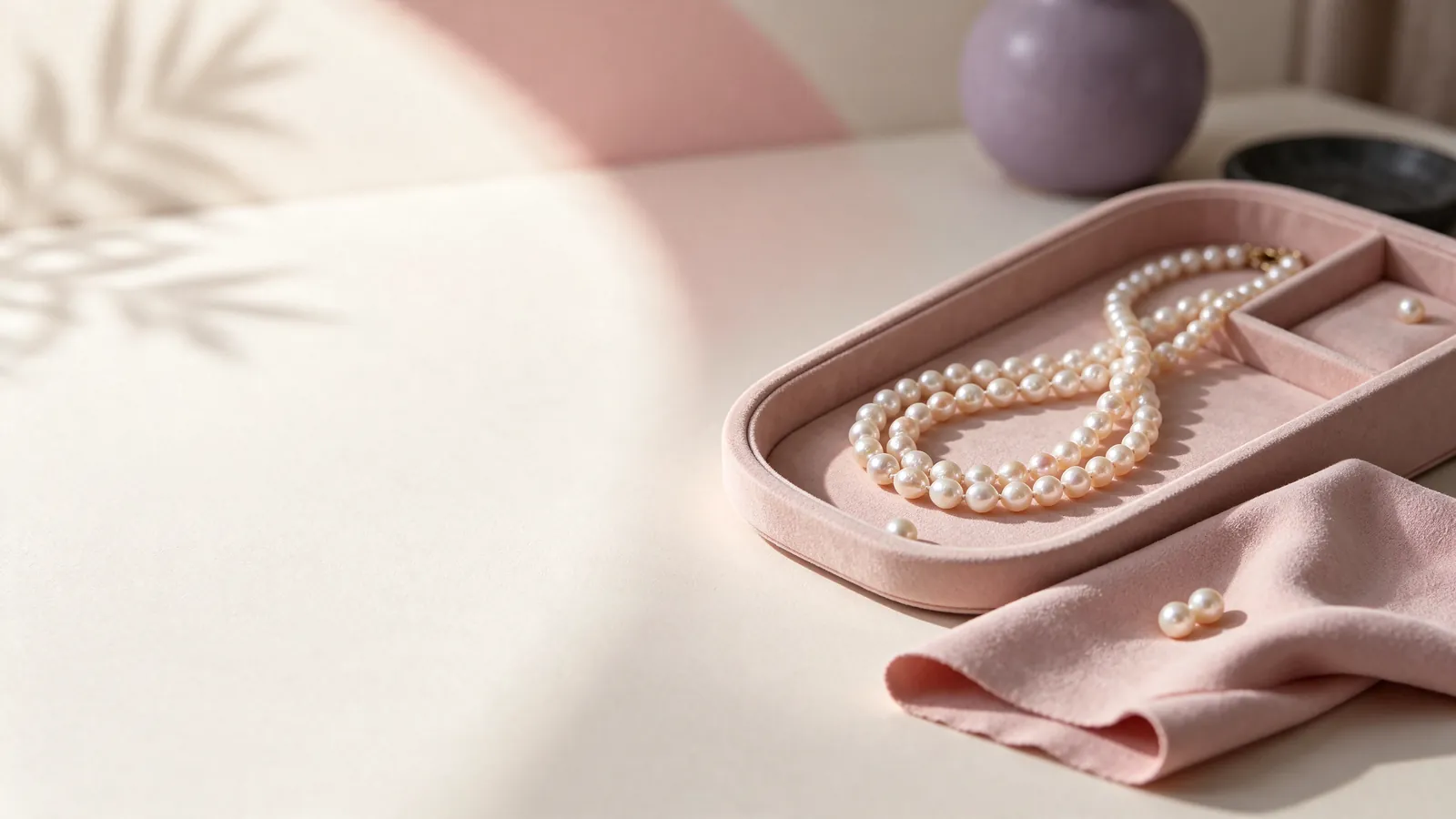
GIA gives pearl a Mohs hardness of 2.5. For wrist jewelry, this is a useful reminder to protect pearl surfaces from hard edges and avoidable friction, regardless of how the chain is described. Bracelets can come close to a sink, cleaning products or loose objects inside a bag. Remove the piece before activities involving chemical exposure or unnecessary knocks and keep it in a safe place. The hardness number does not predict the finished bracelet's lifespan or measure the performance of its chain.
Use a very soft, clean cloth after wearing, and keep pearls away from perfume, hair spray, acids and excessive heat. GIA says pearls should never be cleaned in ultrasonic or steam cleaners. Do not apply another metal accessory's cleaning routine simply because the chain looks similar. Store the bracelet apart from sharp or hard-edged jewelry. If pearls are strung and cleaned with water, the string must be completely dry before wear; other attachment systems should be considered according to their own construction rather than treated as a thread-strung bracelet.
Check connections before you wipe the bracelet
Notice any loose pearl, exposed thread or change in a connecting part. If something appears altered, stop wearing the bracelet and explain the location to the relevant retailer. Avoid tightening it with tools or applying adhesive yourself. Wiping the surfaces is routine care; it does not resolve a loose connection or establish that the piece is ready to wear again.
Bring a focused set of preferences to a Flint discussion
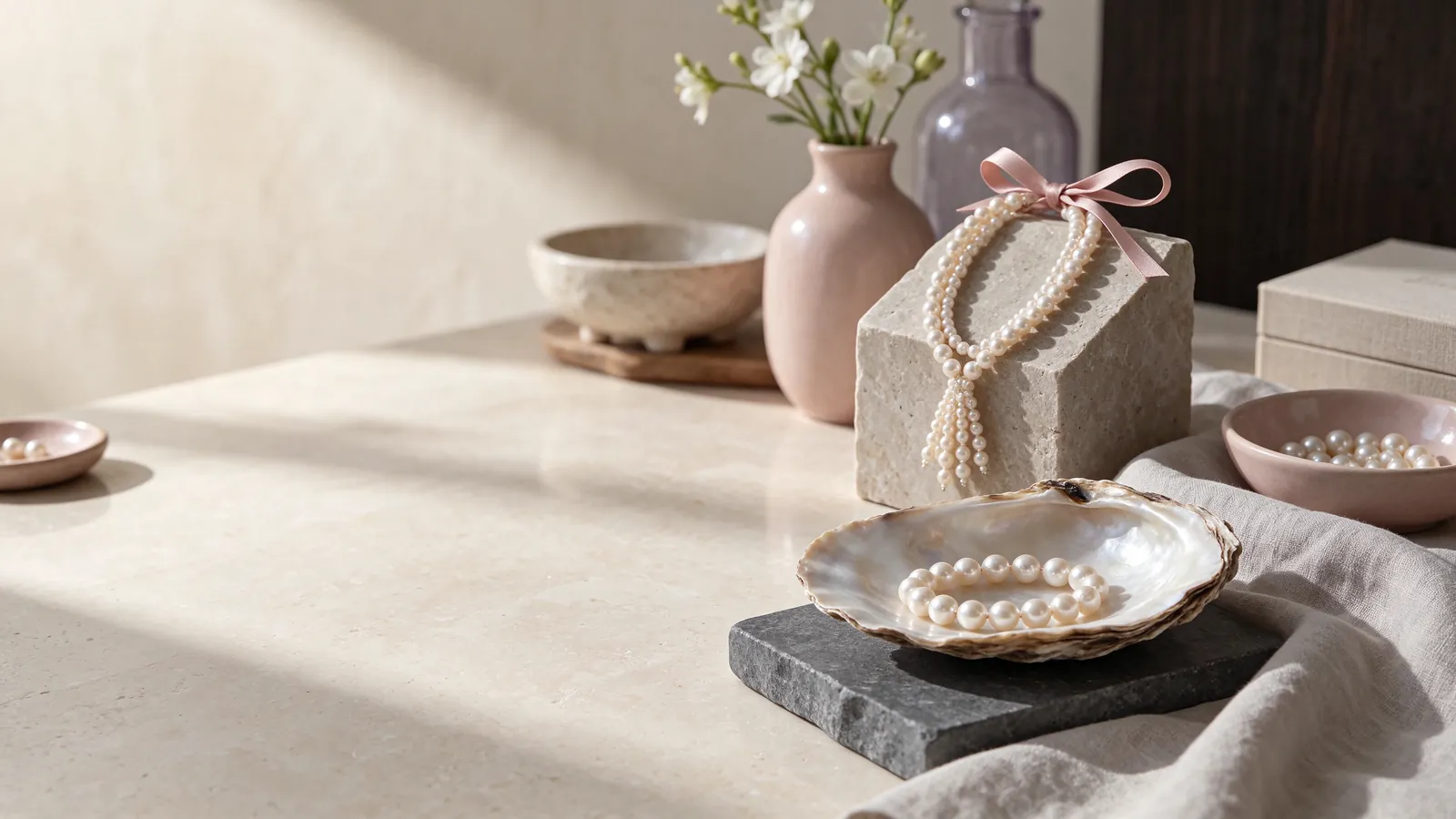
Summarize your comparison under three headings: material, visual outline and practical use. Name the metal you want to discuss, describe the pearl placement you favor and record the wearing position. Add whether you need to fasten it yourself and how it will sit near a watch or sleeve. If your original query was a PT850 pearl bracelet, distinguish that comparison label from Flint's PT950 and PT900 platinum options. Similar white-metal appearance should not blur the actual material designation.
Flint Jewelry discussions become more useful when you describe a specific need: a pearl accent visible below a cuff, an adjustment tail away from the palm or a color relationship with an existing ring. Share the wrist measurement and its location rather than a number without context. Message Flint Jewelry on WhatsApp at +85260106207 to discuss Flint's metal choices and wrist requirements. If another brand's image helps explain your taste, identify the visual element you like without treating that item's material description or specifications as a Flint product offer.
Translate an appealing image into design questions
Open chain space, a continuous pearl line and a clasp you can operate are useful things to describe. Another retailer's item name is less useful than explaining why the appearance suits your routine. Keep the discussion centered on those details and the metal choices available for conversation with Flint, rather than asking a search phrase to determine the whole bracelet.
| Comparison point | Description to read | Wearing check | Styling question | Limit of the information |
|---|---|---|---|---|
| Material labeling | WSP's SUS316L label is distinct from Flint's metal choices | Ask about material separately from wrist length | How does the color relate to your existing jewelry? | Appearance alone does not identify the material |
| Clasp and adjuster | Fastening positions and unused chain | Test the position you will actually use | Does the tail meet your cuff? | An adjuster does not establish a fit result |
| Pearl arrangement | A central focal point, a strand or multiple rows | Compare front and side views | How much is visible below the sleeve? | Arrangement does not establish pearl identity |
| Daily contact | Which component touches a desk or another accessory | Recreate wrist movements and keyboard use | Would separate wrists work better with a watch? | A minimal outline does not remove contact |
| Care and storage | Pearls and attachments as well as the chain | Look for changed connections before wiping | Keep hard-edged jewelry separate | The chain label cannot determine whole-piece care |
Pearl knowledge and authoritative references
GIA lists pearl at 2.5 on the Mohs hardness scale, making pearl-surface care relevant even when a bracelet is described by its chain metal.
Read the reference for this factFrequently asked questions
Is a SUS316L pearl bracelet a stainless steel product from Flint?
SUS316L is a label used in WSP pearl bracelet listings, not a Flint stainless steel option. Flint Jewelry's metal choices are 18K 750 white, yellow and rose gold, and PT950 or PT900 platinum. The descriptions belong to separate choices.
Why can two bracelets feel different with a similar listed length?
Clasp placement, pearl arrangement and where you wear the bracelet all influence the experience. Compare at the same wrist position and move your hand naturally. A straight length alone does not explain how each construction sits after fastening.
What matters most when styling a bracelet with a fitted shirt cuff?
Check the portion visible with the sleeve in its normal position and whether the cuff meets the pearls, clasp or adjustment tail. Look at the side view as well as the front. A rolled-up sleeve can hide the issues that arise during ordinary wear.
Can a steel chain justify steam cleaning a pearl bracelet?
No. GIA says pearls should never be cleaned in steam or ultrasonic cleaners. Care must consider the pearl surfaces and attachments, not only the metal name. Routine wiping uses a very soft, clean cloth after wear.
How should I use another brand's bracelet picture in a Flint conversation?
Explain the visual feature that appeals to you, such as pearl spacing, a central accent or an uncluttered wrist outline. Discuss that preference within Flint's metal choices rather than transferring the other item's label, specifications or brand identity to a Flint design.
Updated: