
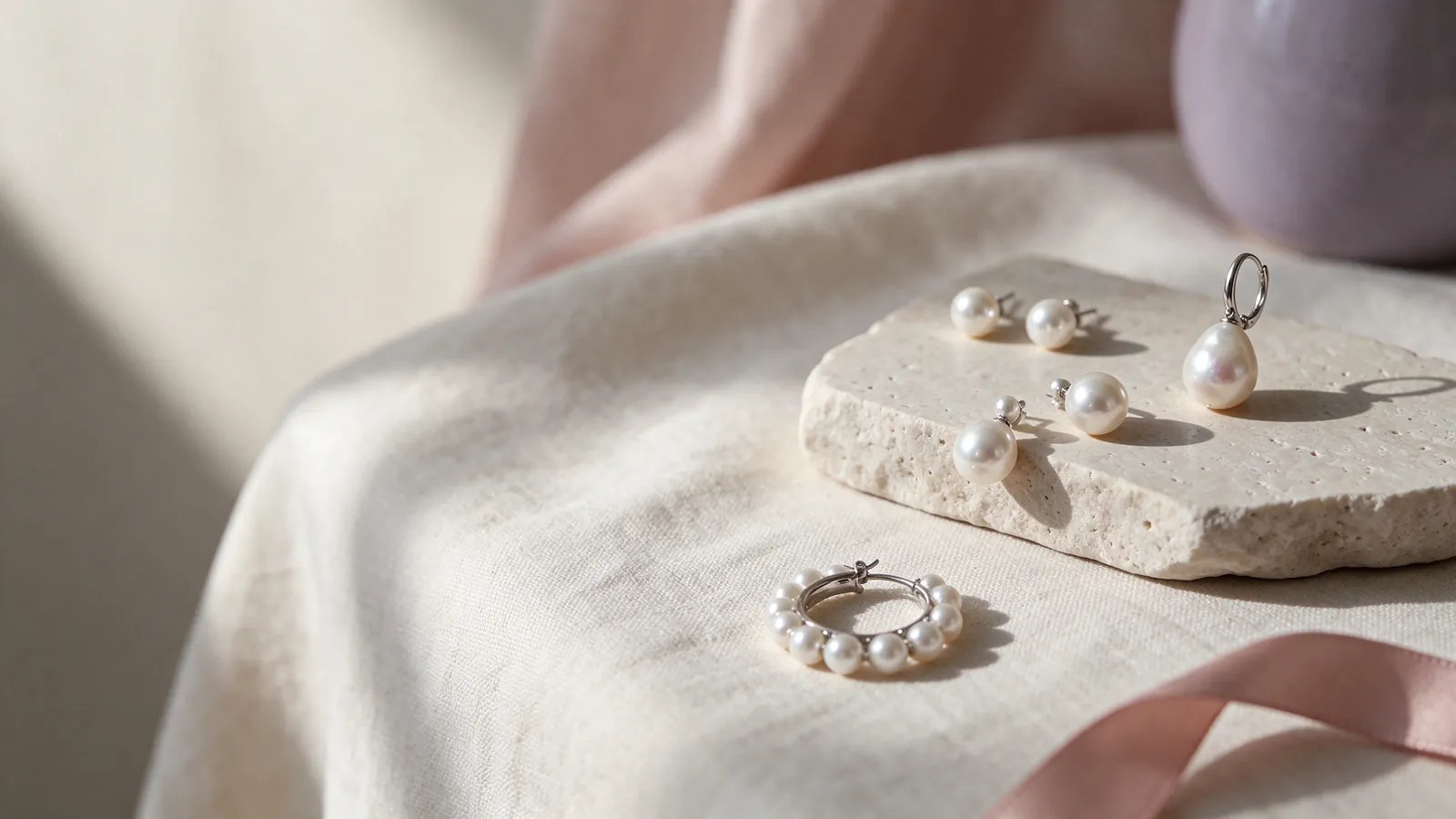
How Can 12mm pearl earrings and large pearl stud earrings Balance Bold Design and Personal Fit in statement pearl earrings?
The appeal of a large pearl is its clear presence beside the face. That presence comes from more than diameter: the post location, setting and back determine the position of the entire earring. Before deciding that the size is right, check whether the pearl faces the way you want and whether its side profile feels appropriate on your ear.
Ask how the complete weight is reported. A figure for a pair cannot be compared directly with a figure for one earring, and pearl-only weight leaves out the setting and back. Reading about earlobe support backs for pearl earrings can help you assess fastening and contact area, but a larger back should never be assumed to guarantee a comfortable result.
When Trying On 12mm pearl earrings and large pearl stud earrings, What Should You Check About the Weight and Backs of statement pearl earrings?
Begin with a normal fastening position, not one made unusually tight to lift the pearl. Observe the front and side, turn your head gently and look down. Distinguish an acceptable amount of movement from pressure or pulling. If comfort requires loosening the back but the earring then becomes unstable, reconsider the overall fit. Remove earrings that cause pain or persistent discomfort rather than expecting yourself to adjust to them.
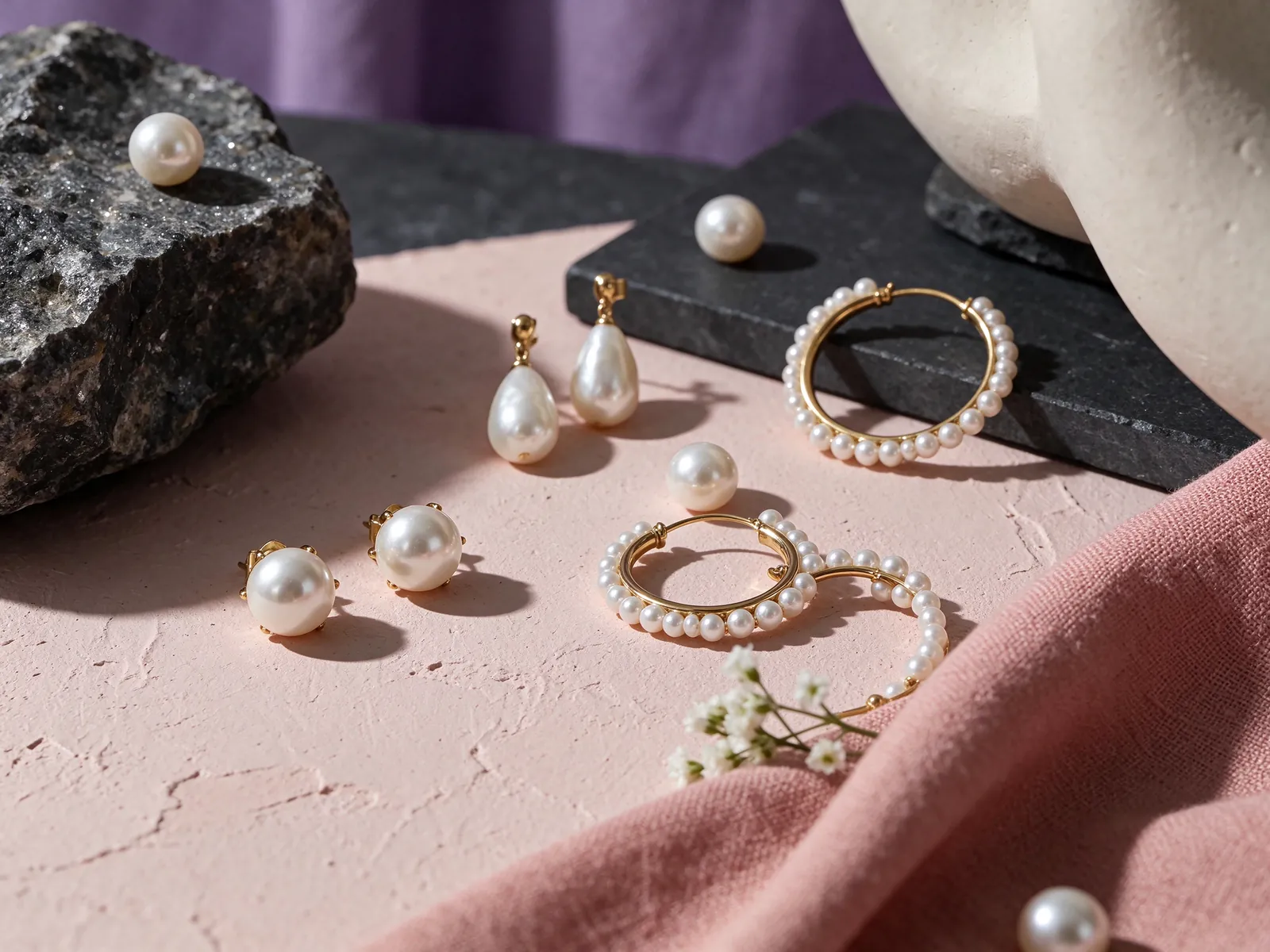
Understand What the Size Label Does and Does Not Describe
A diameter label is not a complete description of the finished silhouette. A rim around the pearl can add visible width, while a non-round shape may require measurements that explain more than one direction. When comparing pearl stud earrings, distinguish the pearl measurements from the finished setting so you can ask about the outline of a specific earring.
Product close-ups emphasize details and can make almost any earring look substantial. On-ear photographs add context, but hair, camera angle and distance still affect the impression. Use the pearl earring size guide to organize your options, then relate the size to your own ear instead of assuming that a model's proportions predict how the earrings will look on you.
Use a Paper Preview Only for Flat Coverage
Holding a paper circle of the stated diameter near the lobe can show approximately how much area it covers in a mirror. Do not put paper into a piercing. This preview cannot reproduce weight, curvature or a setting's depth. Try it with your hair both pulled back and loose so you can distinguish the size preference from the effect of one hairstyle.
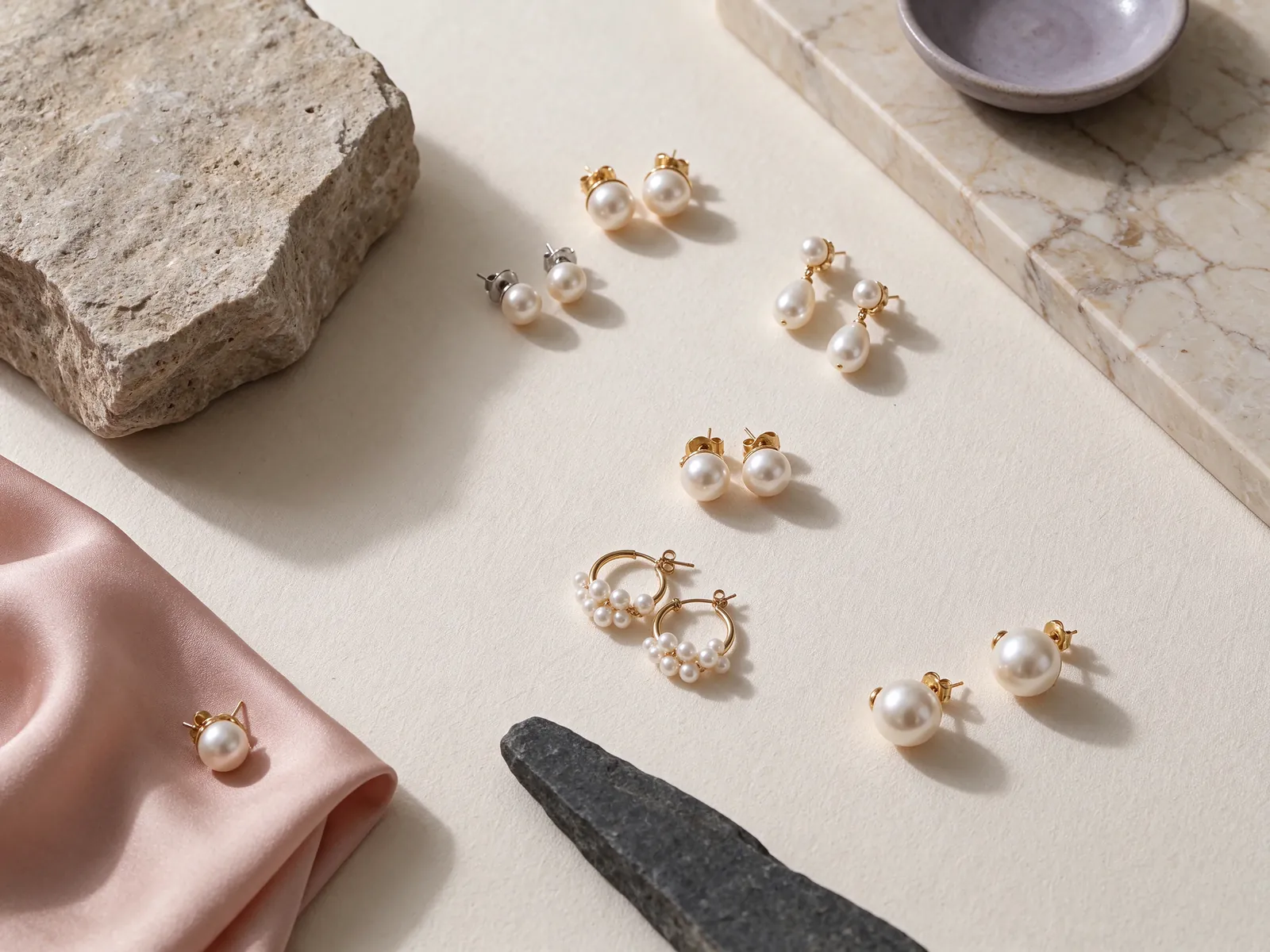
Use Your Piercing Position as a More Personal Reference
Generic face-shape advice overlooks the area where the earring actually rests. Your piercing's distance from the bottom of the lobe, the angle of the hole and the space next to your cheek affect placement more directly. You may enjoy a pearl that covers much of the lobe, or prefer more visible skin around it. Neither preference is a universal rule.
The discussion of pearl earring size for small earlobes helps you evaluate coverage without declaring large studs unsuitable in advance. Compare the two sides together and allow for natural differences in ear shape. Look for a relationship between the earrings that feels balanced to you rather than expecting identical placement on ears that are not perfectly symmetrical.
Check the Space Beside the Cheek and Behind the Ear
Include normal facial movement in the assessment: smiling and talking can reveal contact that a still pose misses. Wear your glasses during the try-on if they are part of your routine, and notice crowding around the back. Projection can be an attractive design feature, but it should be considered alongside the space you actually have and the objects you regularly wear.
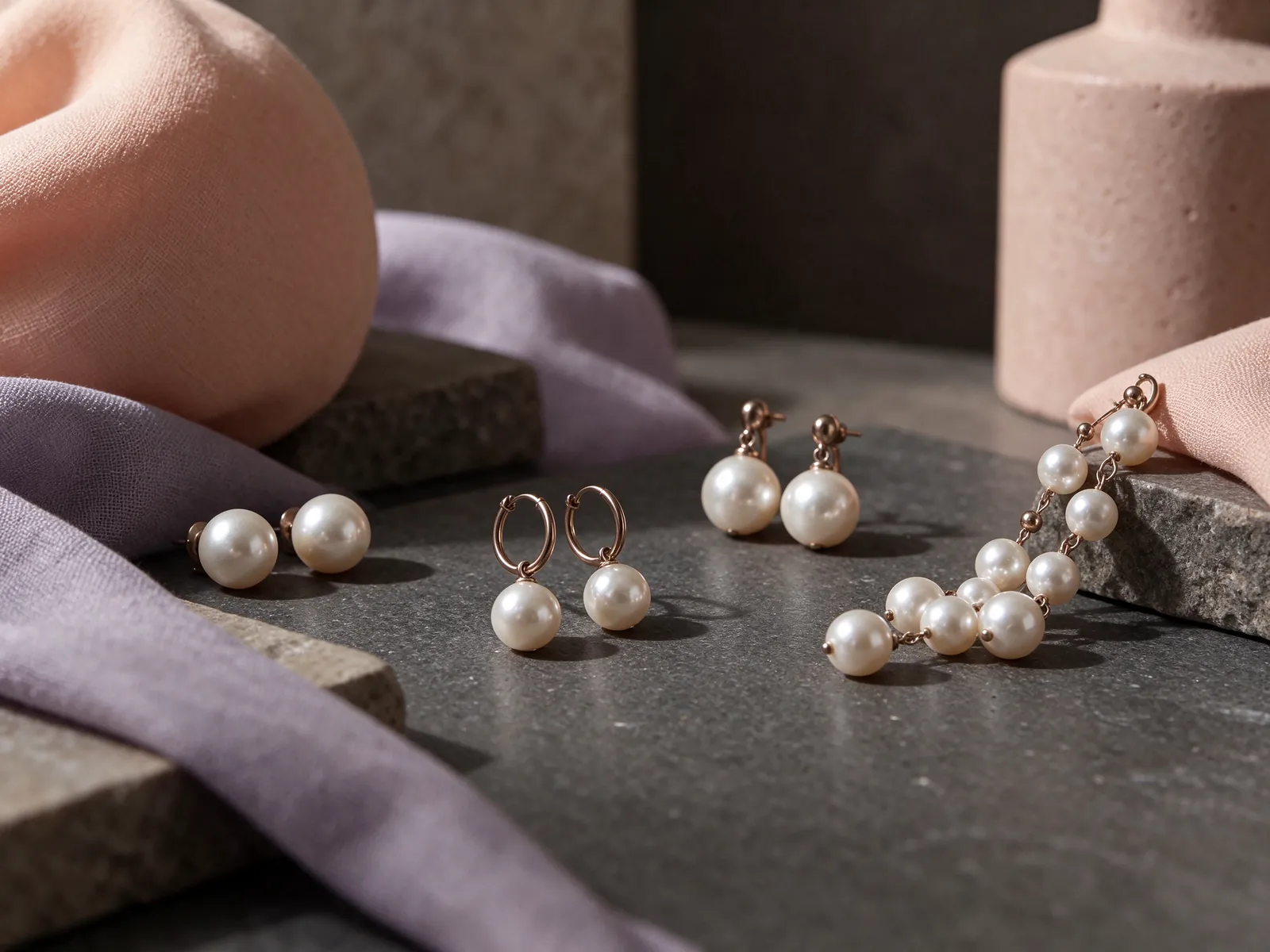
Choose Between Concentrated Volume and a Vertical Line
Large pearl stud earrings can make a strong impression without an elaborate frame. A restrained setting keeps attention on the pearl's outline, color and reflections. An exposed border adds another visual element and may make the completed earring appear broader. Compare the amount of visible metal from the front with the setting's depth from the side before deciding what simplicity means to you.
If you want a statement but prefer a longer line, consider how a drop changes the composition. The guide to pearl studs vs drops vs dangles separates close-to-the-lobe volume from added length and movement. Length does not establish lighter weight, since connecting pieces and settings contribute too. Notice whether the moving pearl approaches your collar when you turn your head.
Decide Whether the Metal Should Frame or Recede
White, yellow and rose-colored metal produce different visual contrasts, but the exposed area matters as well as the color. Compare against a similar background and under similar lighting. A visible edge can be intentional; a quieter one can keep the pearl dominant. Think about that relationship with your neckline rather than choosing on a material name alone.
Style Around the Pearl Instead of Enlarging Every Accessory
At work, an uncomplicated neckline or a solid-color top can let the earrings provide the main detail near your face. Practical contact with a phone, headphones or glasses matters just as much as the outfit. The approach to everyday pearl earrings connects appearance with routine, helping you decide whether a bolder pair fits an ordinary day rather than only a posed photograph.
For a dressier occasion, a statement earring does not require an equally prominent necklace. Reflective fabric, embroidery or a detailed shoulder can already supply visual activity. Pulled-back hair reveals the full pearl outline, while loose hair may show it only as you move. Decide which part of the look should lead before adding other jewelry around the neckline or face.
Give Adjacent Piercings Their Own Space
When wearing more than one ear accessory, check whether pieces touch or overlap visually. The options in pearl studs for a second piercing can provide a smaller accent, but the available spacing comes from your actual piercing positions. An empty adjacent piercing is also a valid styling choice: it can clarify the large pearl's role and prevent the ear from feeling unnecessarily crowded.
Keep Pearl Quality Separate from the Statement Effect
GIA identifies seven pearl quality factors: size, shape, color, luster, surface quality, nacre quality and matching. The list is a reminder that diameter is one part of an assessment, not an overall quality score. For earrings, look at both pearls in the same light and consider how their reflections, outlines and visible surface features work together.
A bright spot in a photograph can reflect the lighting setup, so do not judge luster from a single highlight alone. Look at different sides where possible and avoid comparing pictures made under unrelated conditions. Neither a large size nor a particular color proves species, origin, natural-versus-cultured identity or certification. Those details belong in the individual description and applicable documentation.
Reconsider Scale Without Giving Up a Clear Focal Point
A smaller pearl can still stand out through reflections, contrast and an uncluttered background. If the large outline feels too dominant, compare small pearl stud earrings to see whether they deliver the cleaner effect you wanted. That is a change in design direction, not automatically a lesser choice. Your preferred visual balance and everyday wearing experience deserve equal weight.

Finish with Specific Observations and Gentle Care
Make a short record of what you actually notice: front-view coverage, side projection, movement and any contact with routine accessories. Try both sides, since the experience can differ between ears. Include a typical collar or your intended hairstyle. Separating appearance from physical feel helps you identify why a design works, rather than allowing an impressive first glance to answer every question.
Larger pearls do not need more forceful cleaning. GIA advises that pearls should never be cleaned with ultrasonic or steam cleaners. Use a very soft clean cloth after wearing, keep perfume and hair spray off the pearl surface, and store earrings separately from jewelry that may scratch them. Arrange settings and backs so that pieces do not rub against one another unnecessarily.
Turn Your Preferences into Useful Buying Questions
Ask about finished measurements, whether the weight includes backs, how the fastening works and whether side views are available. Explain any regular glasses or phone use and the neckline you have in mind. These details make the discussion more useful than simply asking for a large pearl. If a practical concern remains unresolved after trying, pause rather than overlooking it for the sake of size. To discuss earring size, backs and your personal wearing routine, contact Flint Jewelry on WhatsApp at +85260106207.
| Decision area | Information to compare | Front-view check | Side or movement check | What it helps decide |
|---|---|---|---|---|
| Overall silhouette | Pearl size and completed setting outline | How much of the lobe is covered | How far the earring projects | Whether the scale suits your preferred balance |
| Wearing weight | One earring versus a pair; inclusion of backs | Position of both earrings | Pulling, shifting or tilting | How appearance relates to personal feel |
| Back and post | Fastening method and contact area | Direction of the pearl | Pressure without overtightening | Whether the complete arrangement suits your ear |
| Styling space | Neckline, hair and nearby accessories | Clarity of the main focal point | Contact with collars and daily items | Which other elements to simplify |
| Pair relationship | Luster, surface and matching | Both pearls under the same lighting | Different sides of the pearl surface | Quality beyond the diameter label |
Pearl knowledge and authoritative references
GIA describes seven pearl quality factors: size, shape, color, luster, surface quality, nacre quality and matching. A statement-size pearl still needs to be considered alongside the other factors.
Read the reference for this factFrequently asked questions
Does a large diameter tell me the complete earring's weight?
No. The pearl, setting and back all contribute to wearing weight. Ask whether a reported figure is for one earring or a pair and whether it includes the backs before comparing different designs.
Should I rule out 12mm pearl earrings if my earlobes are small?
Not solely on that basis. Look at the piercing position, coverage and side profile on your own ears. A large outline may be a style you enjoy, but it should not require excessive tightening or cause uncomfortable pulling.
Does the 12mm description mean the earrings come with certification?
No. A size description does not establish certification, species, origin or pearl identity. Any such information should be stated for the individual earrings and supported by the relevant documentation, not inferred from their appearance.
How can I wear statement pearl earrings without a crowded look?
Start with a clear neckline and decide whether the earrings should be the main detail near your face. Consider leaving adjacent piercings empty and simplifying a necklace or hair accessory, especially when the outfit already has a strong pattern or texture.
Is replacing the back enough to correct a forward-tilting stud?
It is not a guaranteed fix. Piercing angle, post placement, setting construction and total weight also matter. Compare the complete fit, and do not rely on excessive pressure to keep the pearl upright.
Updated: