
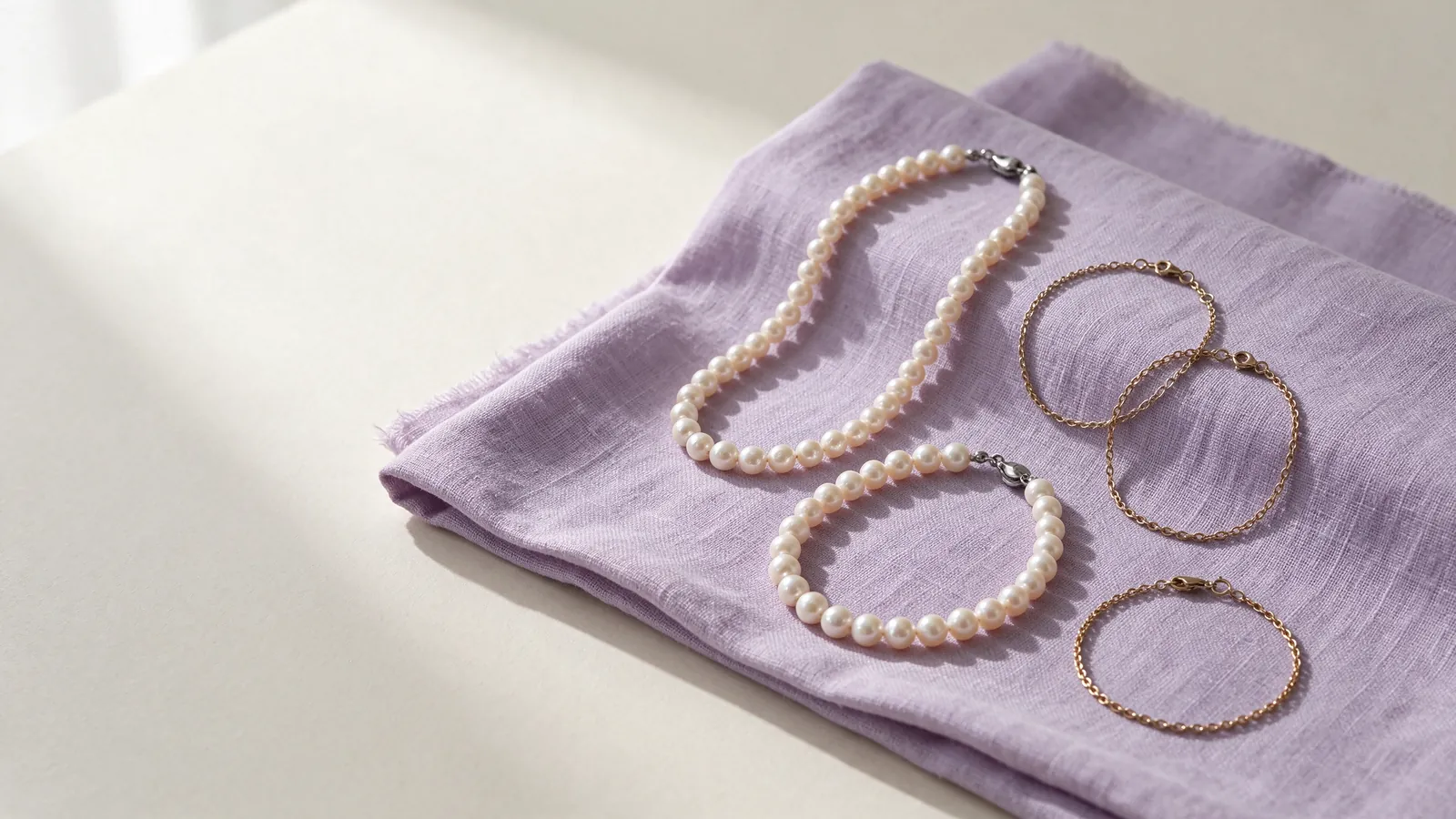
What fit should you look for in a platinum pearl bracelet, a PT900 pearl bracelet or a platinum pearl station bracelet?
Decide first where on your wrist you want the bracelet to rest. A measurement taken near the hand describes a different wearing position from one taken above the wrist bone. Wrap a flexible tape around the chosen position without squeezing, and record that location along with your preference for a close or moving fit. Do not assume the wrist measurement should become the finished bracelet length. The pearls, chain curve and clasp arrangement occupy space differently, so a useful discussion begins with your wrist and habits rather than a number copied from another bracelet.
A platinum pearl bracelet needs to work through movement as well as look attractive at rest. Let your hand relax, rotate your forearm and bend your wrist as if reaching for a bag handle. Note any repeated slide toward the palm or uncomfortable pressure underneath. The PT900 pearl bracelet description does not tell you how loose a particular design will feel. For a platinum pearl station bracelet, check where the interval pearls settle as the chain turns. Try it with a shirt or sweater cuff you wear often; bare-wrist balance is only part of everyday fit.
When trying on a platinum pearl bracelet, a PT900 pearl bracelet or a platinum pearl station bracelet, how do the clasp and wrist movement feel?
Place the clasp at the side of the wrist and then underneath it. Use your normal fastening hand to see whether the opening stays visible and the chain end is easy to hold. If your nails obstruct the action or the bracelet must be pulled tightly to close, discuss the fit and clasp position together.
Choose the chain's visual presence before refining the details
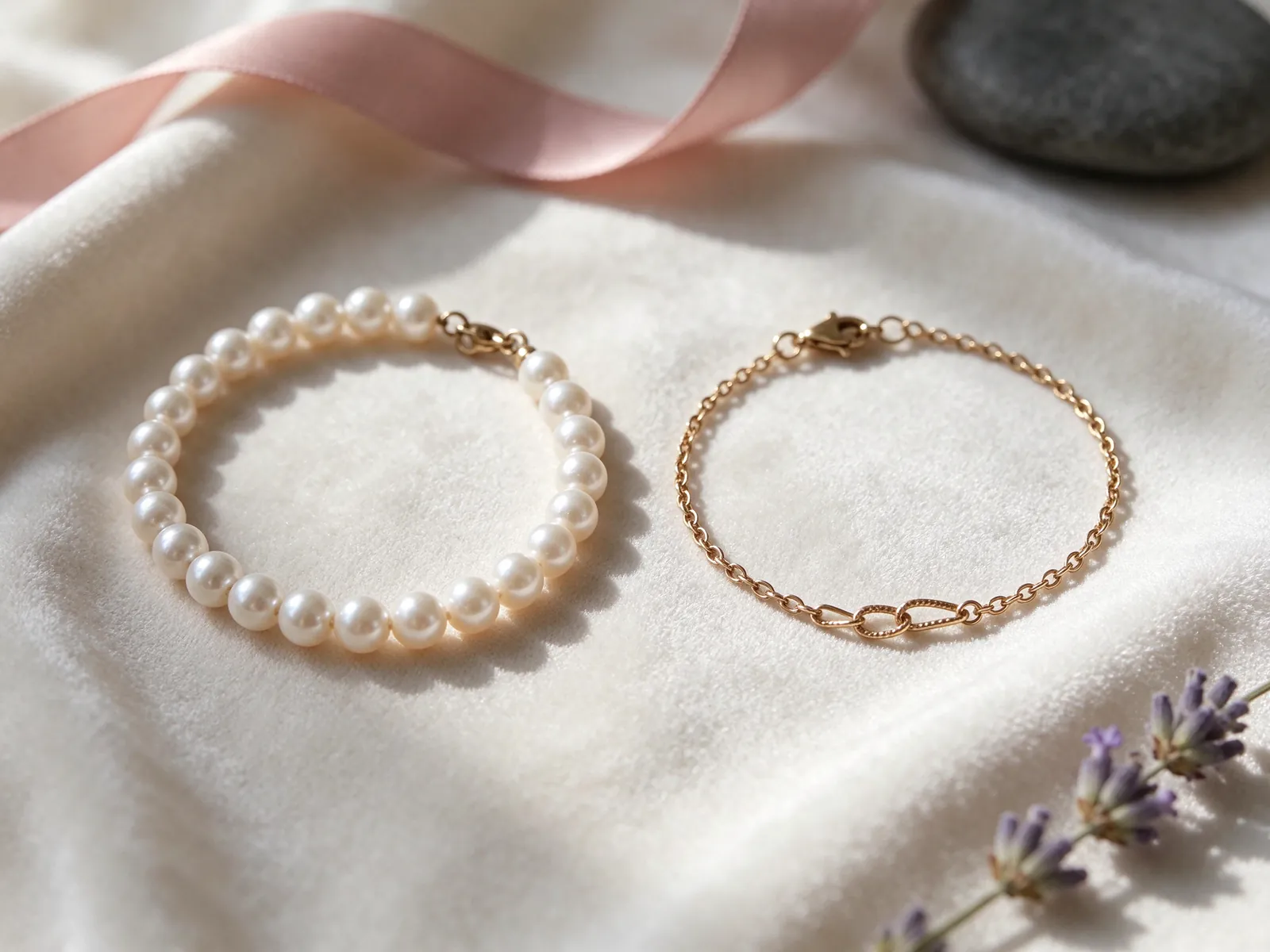
PT900 and PT950 are platinum options you can discuss with Flint Jewelry. Beyond that material choice, decide how much attention the chain should receive. A clearly visible metal line can frame the pearl arrangement, while a quieter chain appearance directs attention toward the pearls and the spaces between them. Look at the entire outline, including connecting points and the clasp, rather than choosing from a close-up of one pearl. A material label alone cannot establish the weight, comfort or security of the completed design; those questions belong to the individual bracelet being considered.
Use your existing jewelry to narrow the color direction. An 18k gold pearl bracelet offers a separate visual comparison with the platinum direction. Keep white gold and platinum names distinct rather than treating them as synonyms. Place the proposed combination beside clothes you actually wear, such as a pale shirt, neutral knit or dark blazer. This helps distinguish a preference for the metal line from a preference for the pearl color, and it avoids selecting a look that only appeals against one photographic background.
Turn a style preference into a specific description
Describe whether you want noticeable chain segments, more open space around each pearl or a pearl-led outline. Compare a chain-only section with the pearl arrangement to clarify what attracts you. A customization conversation benefits from these observable proportions more than from broad terms such as elegant or luxurious.
Use pearl spacing to create a rhythm that survives movement
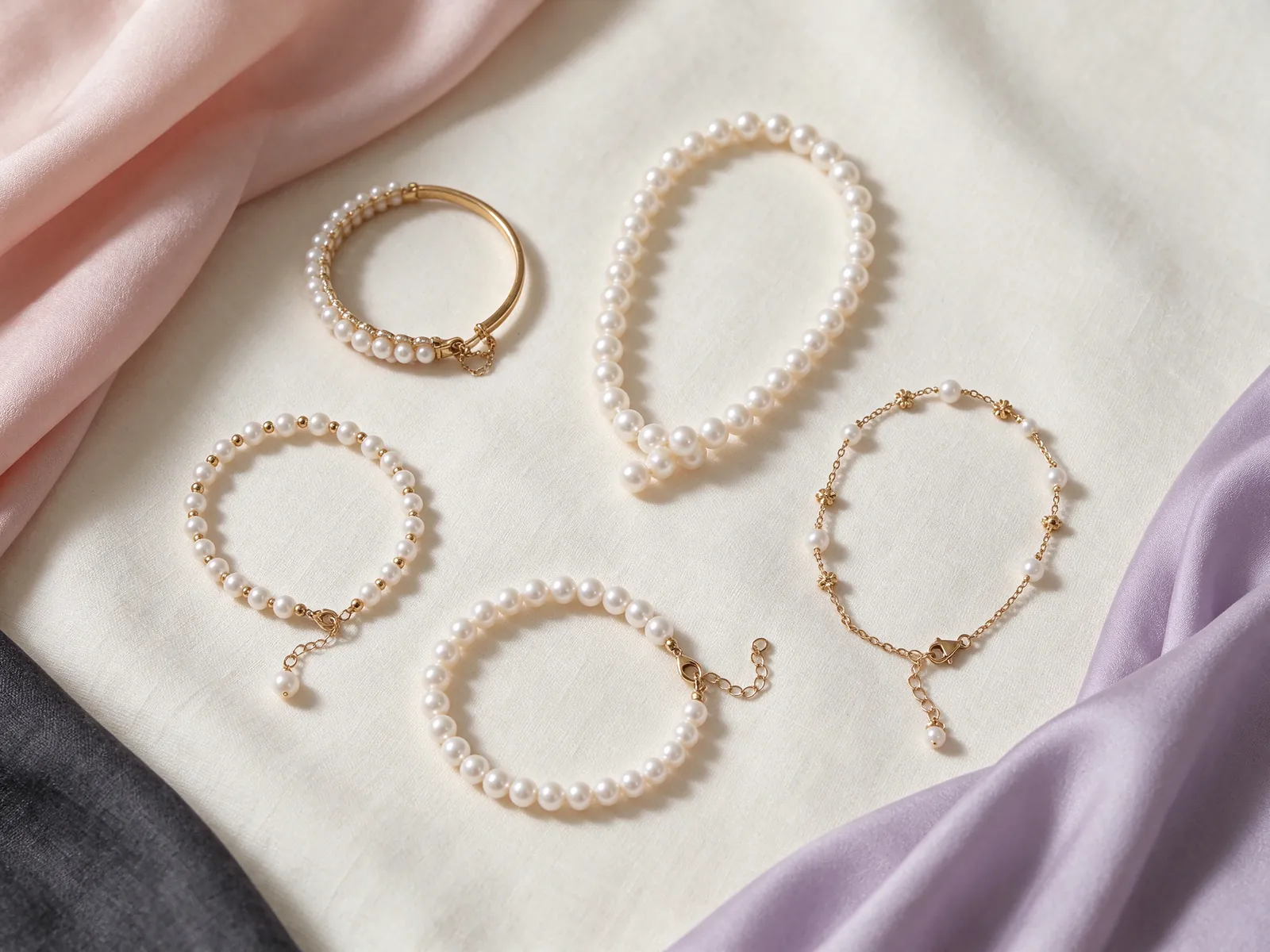
In a station style, pearls sit at intervals along a chain. Those intervals are part of the design, not simply unused space. A layout with more visible chain allows the metal and skin to contribute to the pattern; closer spacing creates a more continuous pearl impression. Examine the side and underside of the wrist as carefully as the top. A flat arrangement may appear regular but redistribute visually when wrapped around the arm. The useful question is whether the rhythm you enjoy remains apparent when your hand moves naturally, without being repeatedly adjusted for a front-facing view.
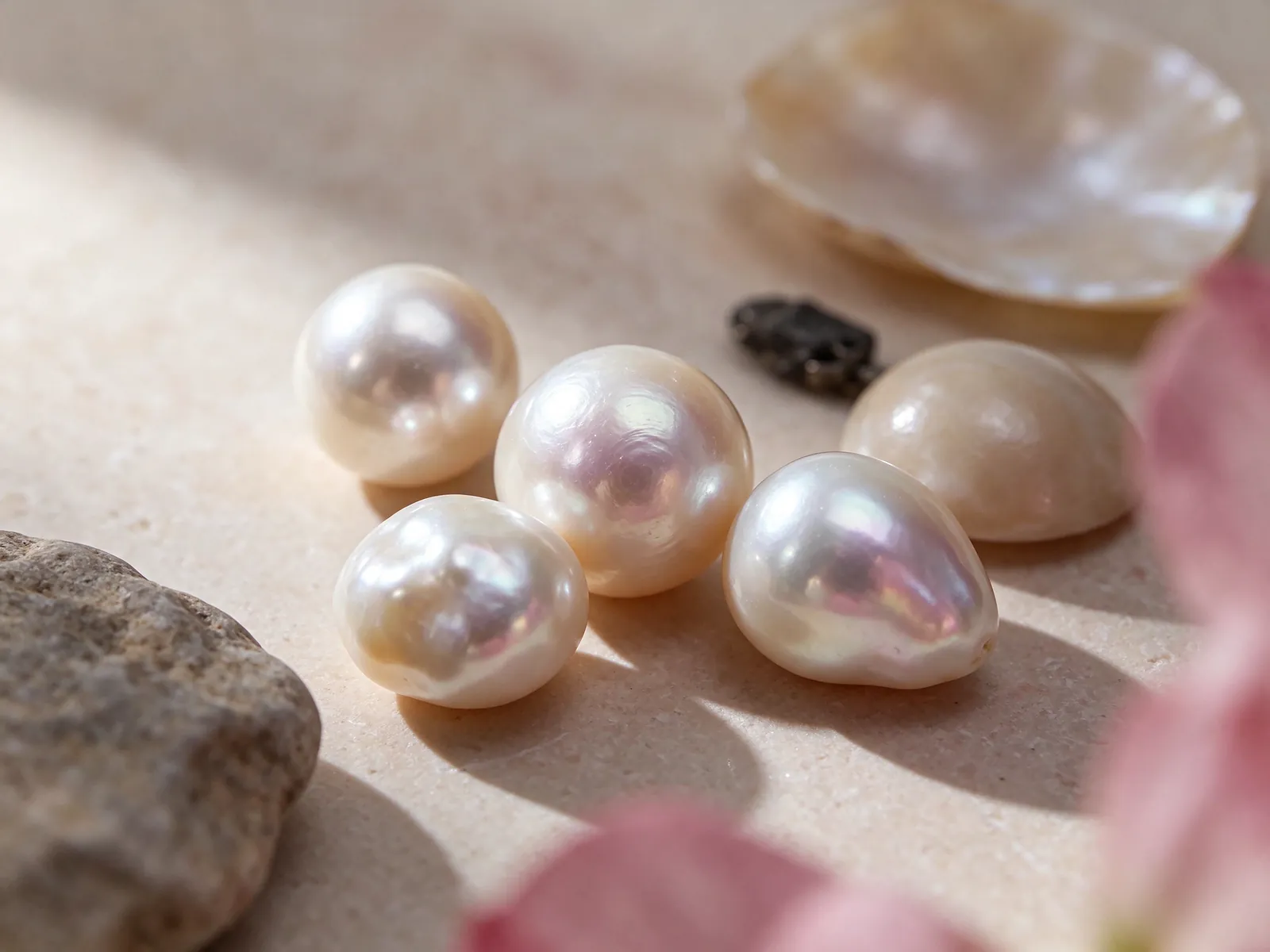
Pearl outlines can reinforce a regular rhythm or introduce variation. If you enjoy less uniform contours, a baroque pearl bracelet guide can help you consider how individual shapes contribute to the overall arrangement. Keep that styling interest separate from identifying the pearls. Shape by itself does not establish species, origin or natural-versus-cultured status, and an irregular outline should not be treated as proof of any of those details. Explain whether you want consistent spacing, distinctive individual shapes or a combination, then address the pearl information relevant to any specific selection.
Check the arrangement in the gestures you actually use
Hold a cup, turn a page and rest a hand near a desk edge. Notice whether a projecting pearl reaches an uncomfortable pressure point or a chain segment twists. The spacing shown with a carefully straightened hand is not necessarily what you will see with relaxed fingers and an ordinary seated posture.
Compare pearl quality without letting the metal label dominate
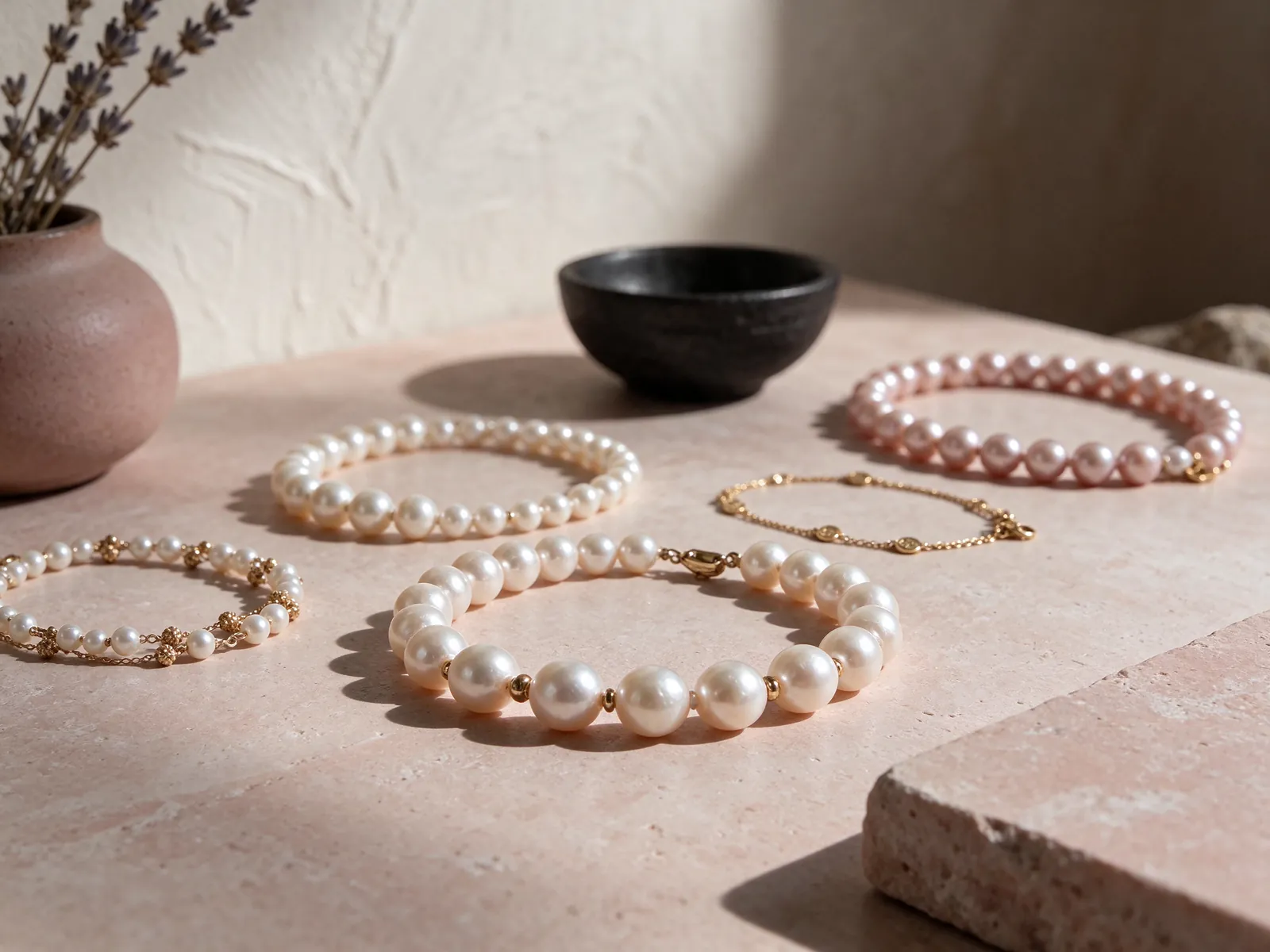
GIA identifies seven pearl value factors: size, shape, color, luster, surface quality, nacre quality and matching. A bracelet brings several pearls into a small viewing area, so the relationship between neighboring pearls deserves attention. In consistent lighting, look at the clarity of reflections, visible surface features and how the arrangement changes as it turns. Decide which variations appeal to you and which distract from the design. Neither the platinum label nor a broad grade term should replace this practical comparison of the pearls themselves and their coordination within the bracelet.
An Akoya pearl bracelet and a freshwater pearl bracelet are useful subjects for learning about different pearl categories, not identities you can assign from a station-style photograph. Read those guides to develop questions about the pearls in an individual design. Color also has separate components: bodycolor, overtone and orient are not interchangeable, and not every pearl displays all three. Keep the documented pearl information distinct from the visual harmony you observe. A pleasing color or a familiar shape alone cannot establish origin, natural-versus-cultured identity or a certificate.
Choose which kind of variation should lead
For a coordinated look, compare adjacent pearls as a group. For a more varied arrangement, decide whether contour or color should be the main point of contrast. Altering every feature at once can make your preference difficult to communicate. The aim is a coherent design intention, not a demand that every pearl look identical at every angle.
Treat the clasp as a daily-use feature, not a hidden detail
Think through the process of putting the bracelet on before focusing on how discreet the clasp looks. Consider whether you usually fasten jewelry independently, which hand you use and whether nail length limits small movements. A pearl bracelet clasp guide helps separate handling questions from appearance. During a trial, see whether you can find the opening, hold the chain end and close the clasp without prolonged pulling. Then check whether the closed shape interferes with a cuff. Front-view delicacy is only useful if the everyday fastening process also suits your routine.
Look at the connections between chain and pearls while the wrist turns. Observe whether nearby parts crowd together, whether a chain segment folds awkwardly or whether the clasp repeatedly touches a pearl surface. Avoid pulling on pearls or twisting fittings as a strength test. If an already worn bracelet begins catching the skin or becomes unusually difficult to close, stop wearing it and arrange an inspection rather than bending components yourself. This separates sensible observation from handling that could damage the jewelry while trying to assess it.
Try taking it off as carefully as putting it on
Practice above a soft, level surface so you can catch the bracelet when it opens. Sleeves, rings or a watch may obscure the clasp differently during removal. When choosing a gift direction, the recipient's fastening habits matter more than whether the giver finds the clasp convenient.
Plan styling around the places where the bracelet may touch
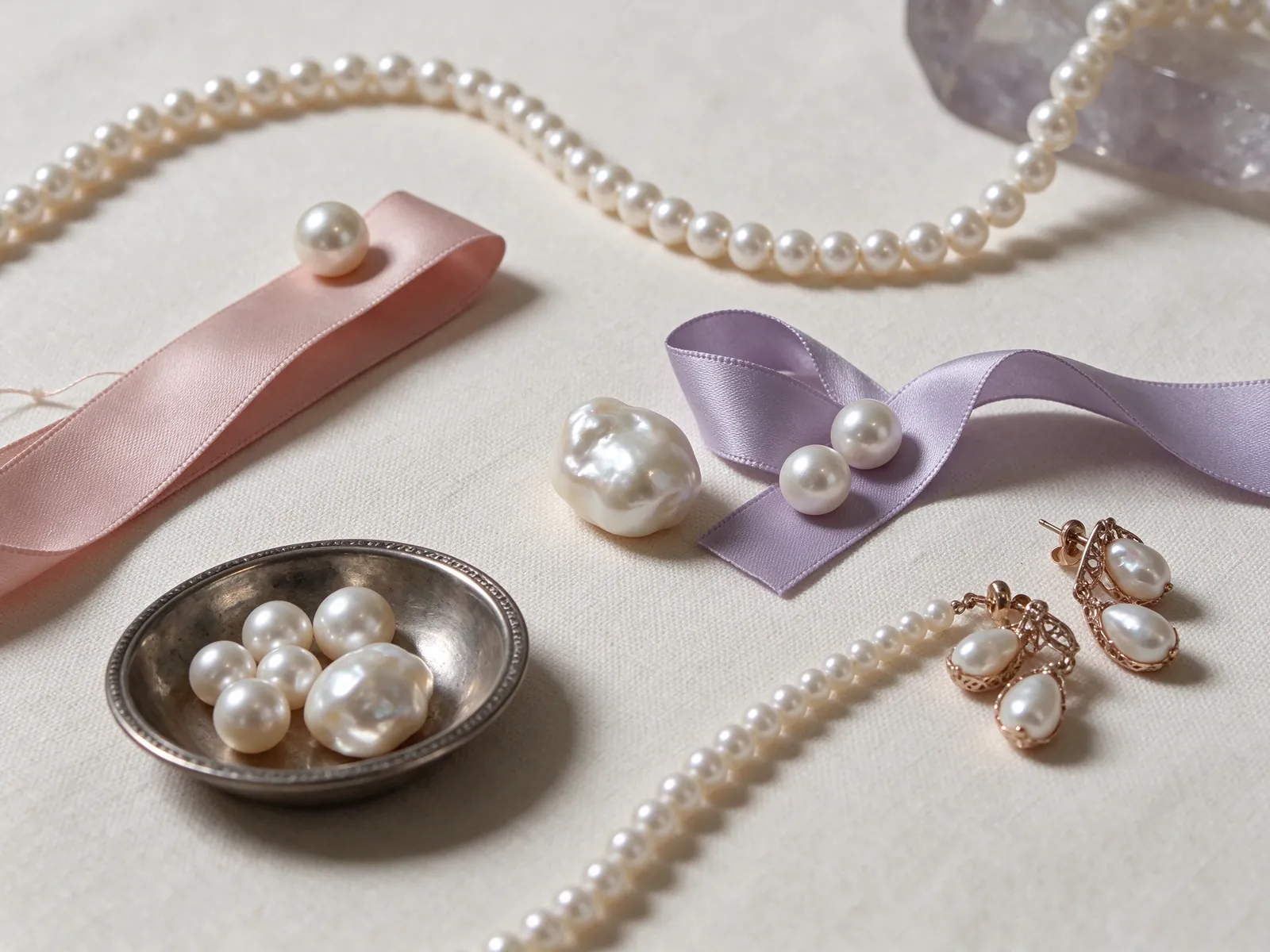
Start an everyday outfit with the bracelet alone and observe how the chain intervals read beside your usual cuff. If a watch is part of your routine, separate wrists make direct contact easier to avoid. For a same-wrist combination, check reaching, typing and carrying movements instead of relying on a still mirror image. Pearl surfaces should not repeatedly rub against a hard watch case or other jewelry. Layering is a practical choice about activity and available space as well as color coordination; a more crowded wrist is not automatically a more successful outfit.
For an evening outfit, the bracelet can echo the outline of earrings or the metal color of a ring without duplicating the same pearl layout everywhere. Beading, sequins or a busy clothing pattern may leave less visual room for a complex wrist arrangement. A plain sleeve can make the gaps between pearls a stronger detail. Include a seated view when trying combinations: see whether the cuff hides the bracelet or places it against a table edge. These observations often reveal more about dinner and desk wear than a standing pose with the wrist held away from clothing.
Use familiar clothing rather than a fixed color rule
A favorite jacket or a photograph of a regularly worn outfit provides a concrete comparison. Metal lines and pearl color can either echo the clothing or create contrast. There is no need to reduce the choice to a rigid wearer category; focus on a combination you would comfortably use in your own wardrobe.
Connect pearl care with a clear design brief
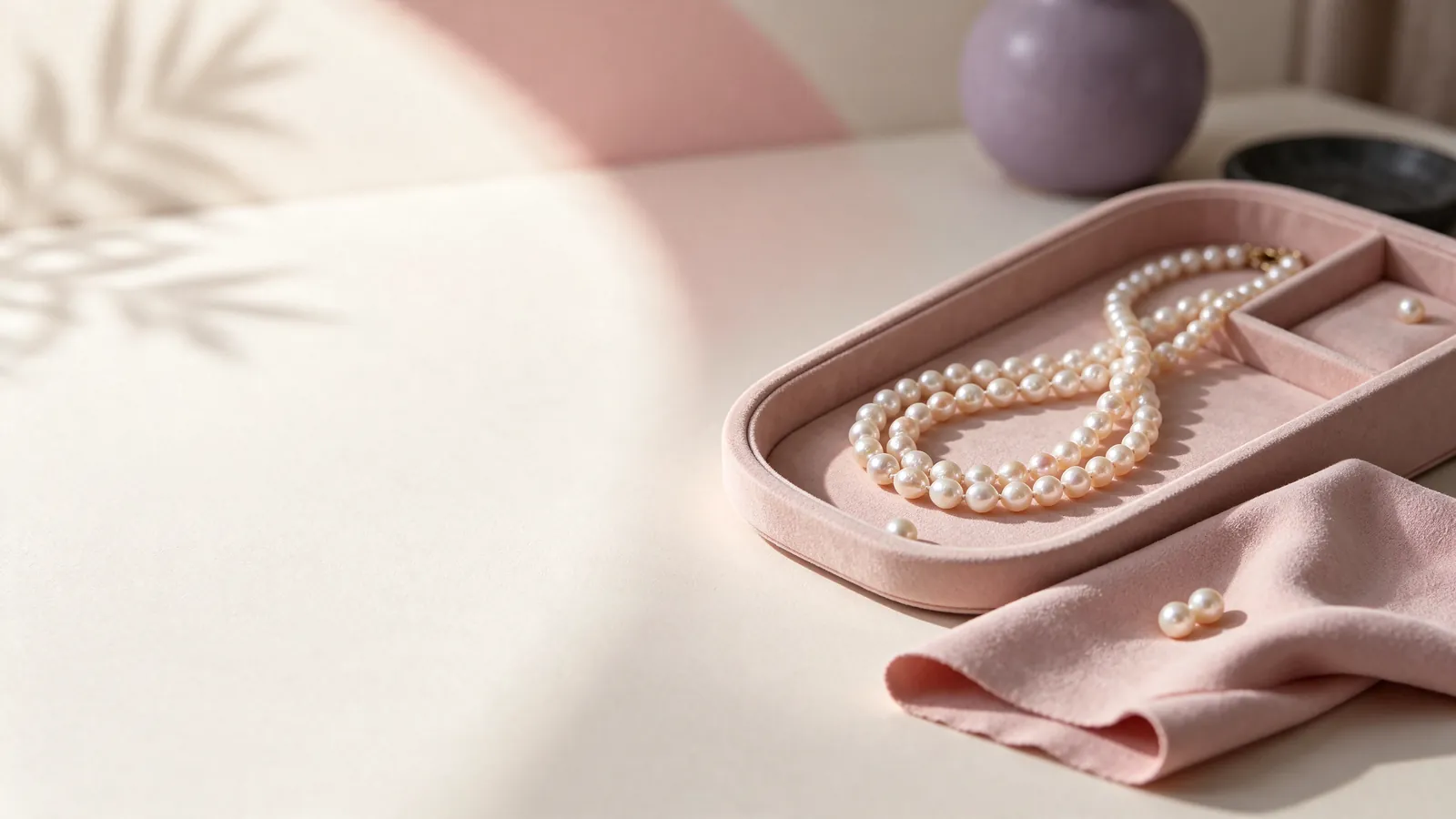
The metal chain does not determine how the pearls should be cleaned. GIA gives pearl hardness as 2.5 on the Mohs scale and explicitly advises never using ultrasonic or steam cleaners for pearls. After wear, use a very soft, clean cloth to wipe them gently. Avoid contact with acids, perfume, hair spray and excessive heat. Make the sequence easy to remember: finish grooming before putting the bracelet on, and remove it before handling cleaning products. This keeps care connected to ordinary routines rather than assuming the platinum option makes the whole bracelet suitable for metal-only treatment.
Keep the bracelet separate from hard jewelry in storage and avoid winding the chain tightly around other pieces. If a design has strung pearls and water is used in cleaning, GIA says the string must be completely dry before the pearls are worn again. The individual construction matters. When speaking with Flint Jewelry, bring the location of your wrist measurement, preferred looseness, usual sleeve styles and fastening habits. Explain whether the visual goal is clearly separated pearls or a more continuous arrangement. A brief grounded in those details communicates your needs better than an appearance photograph without wearing context.
Explain the routine before deciding the trade-offs
Working at a computer, wearing long sleeves and wanting independent fastening are useful starting situations. From there, discuss chain presence, pearl spacing and clasp placement. If the bracelet is intended as a gift, distinguish a measured wrist size from a guess about preferred looseness so the design conversation begins with a clear account of what you know. Contact Flint Jewelry on WhatsApp at +85260106207 to discuss platinum options, pearl spacing and wrist fit around your everyday wearing habits.
| Feature | Practical check | Preference to clarify | Wearing consideration |
|---|---|---|---|
| Wrist fit | Record the measurement location and try natural movement | Closer fit or more visible movement | Test with a familiar cuff |
| Station spacing | View the wrist from the top, side and underside | A continuous impression or more chain between pearls | Check where pearls settle during gestures |
| Metal outline | Look at chain-only areas and the pearl arrangement separately | Chain-led detail or pearl-led emphasis | Use existing rings and earrings as context |
| Clasp handling | Try both closing and opening with your usual hand | Visual discretion or easier access | Allow for nails, sleeves and a watch |
| Pearl contact | Observe desk work, reaching and layered styling | Added layers or fewer contact points | Avoid repeated rubbing against hard jewelry |
Pearl knowledge and authoritative references
GIA states that pearls have a Mohs hardness of 2.5. Even with a platinum chain, a pearl bracelet needs care around hard jewelry, and pearls should never be cleaned in ultrasonic or steam cleaners.
Read the reference for this factFrequently asked questions
Why isn't my wrist measurement automatically the bracelet length?
It describes the wrist at a particular location, while pearl volume, chain curve and clasp construction affect the space inside the worn bracelet. Discuss the measurement with your preferred looseness and movement rather than treating the numbers as identical.
Does the PT900 or PT950 label answer a clasp-access question?
No. Access depends on the individual clasp arrangement and your handling habits. Check the opening, chain-end position, fastening hand and nail clearance separately from discussing the platinum option.
What should I watch for when the station arrangement moves?
See where the pearls settle underneath and beside the wrist during ordinary gestures. Check whether the gaps remain visually pleasing and whether a projecting pearl repeatedly reaches a pressure point, rather than relying only on the front view.
How can I decide whether to wear the bracelet with a watch?
Observe physical contact during movement first. Different wrists make direct contact easier to avoid. If both are worn together, do not let the pearl surfaces repeatedly rub against the hard watch case simply to achieve a layered look.
Is ultrasonic cleaning appropriate because the bracelet has a metal chain?
No. GIA says pearls should never be cleaned in ultrasonic or steam cleaners. Gently wipe them after wearing with a very soft, clean cloth and use care suited to the bracelet's individual construction.
Updated: