
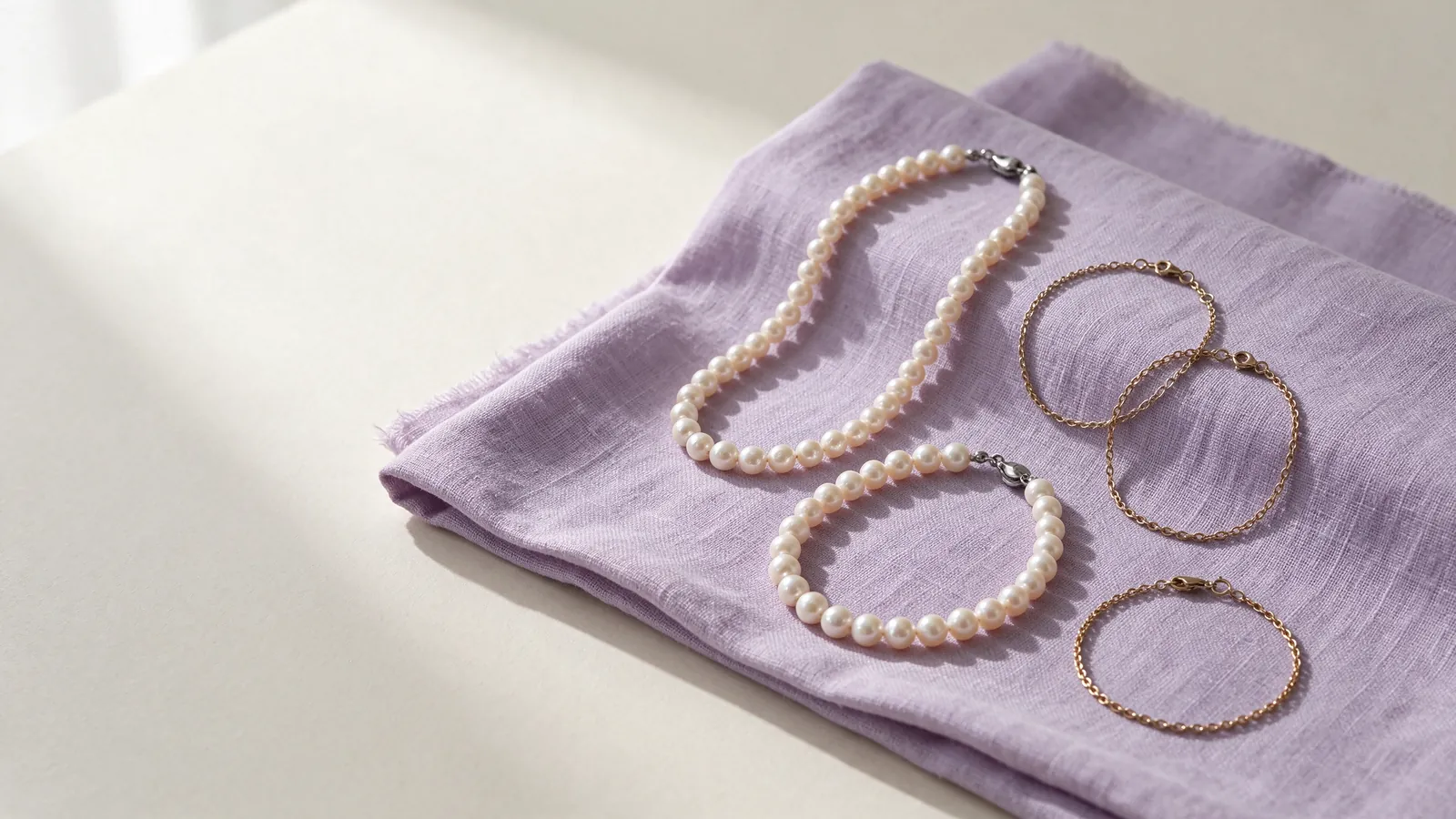
What fit should you look for in a platinum pearl bracelet, a PT900 pearl bracelet or a platinum pearl station bracelet?
Begin with where you intend to wear the bracelet, rather than a length seen in a photograph. Use a flexible tape around that part of the wrist without pulling it tight, and note whether the measurement sits above the wrist bone or closer to the hand. The measurement describes your wrist, not automatically the required finished bracelet length. Pearl volume, the curve of the chain and the clasp arrangement can all affect the usable space inside a bracelet. Explain whether you prefer a close outline or visible movement before discussing the final fit.
When trying a platinum pearl bracelet, let your arm hang naturally, then bend the wrist and turn the forearm as you would when carrying a bag. Check whether the bracelet stays comfortable without sliding repeatedly into the palm area. A PT900 pearl bracelet still needs the same practical assessment: its name does not establish the right amount of looseness. With a platinum pearl station bracelet, watch what happens when an interval pearl moves underneath the wrist. Include a familiar shirt cuff in the trial, because a design that looks balanced on a bare arm may behave differently under a sleeve.
When trying on a platinum pearl bracelet, a PT900 pearl bracelet or a platinum pearl station bracelet, how do the clasp and wrist movement feel?
Move the clasp towards the side and then the underside of the wrist. Try opening it with the hand you normally use, noting whether nails obstruct the opening or the chain end is hard to hold. If fastening requires sustained pulling, revisit the fit and clasp placement rather than treating a slimmer appearance as the only objective.
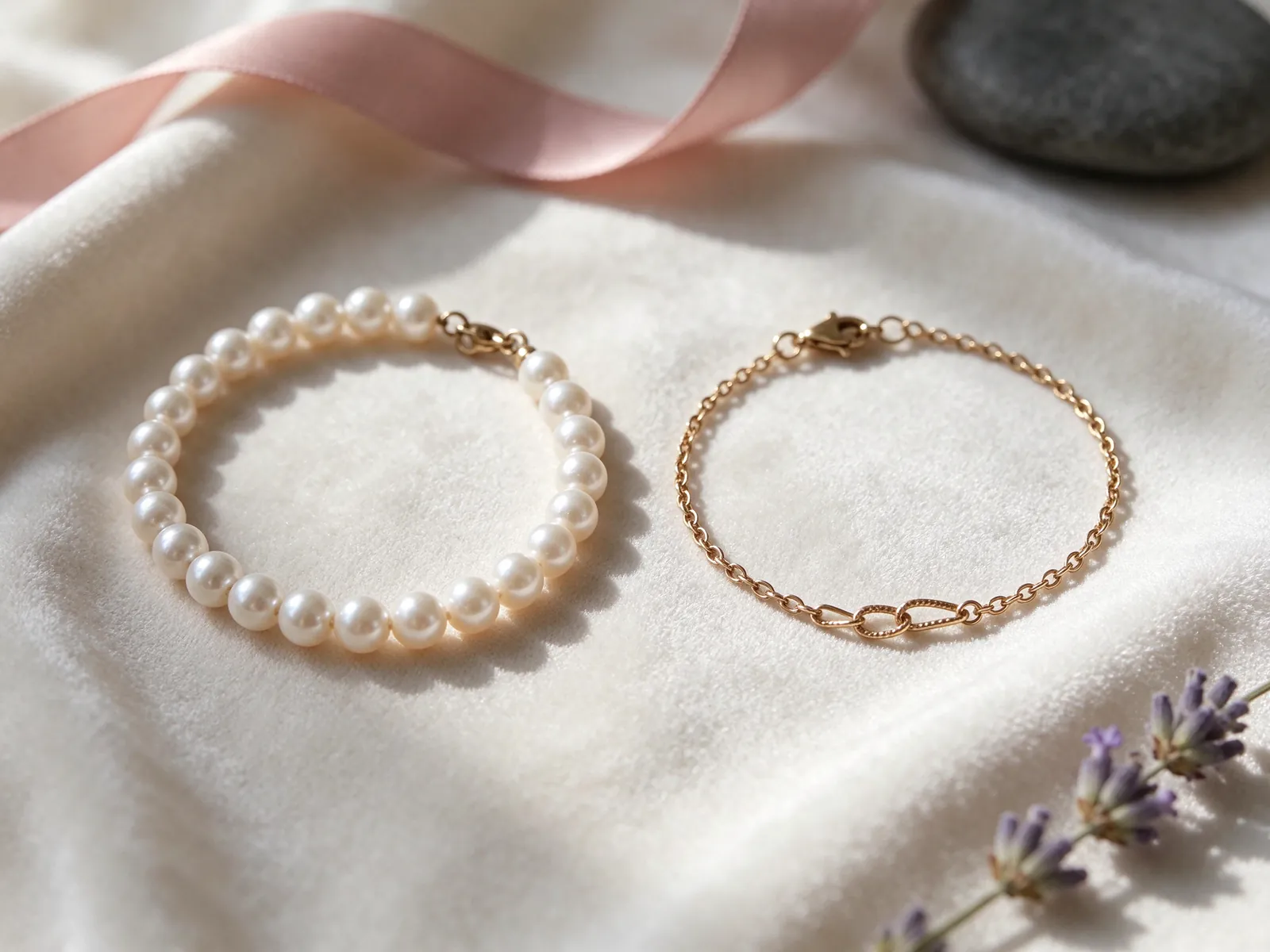
Separate the platinum option from the visual role of the chain
PT900 and PT950 are platinum options to discuss with Flint Jewellery. That choice is only one part of a bracelet design. Ask whether you want the chain to make a visible line around the wrist or to act as a quieter background for the pearls. A more noticeable chain outline changes the balance between metal and pearl, while a visually delicate arrangement relies more on spacing. Neither preference tells you the actual weight, comfort or security of an individual design. Look at the clasp and connecting areas as part of the whole silhouette, not as details separate from the material decision.
If you already wear jewellery in different metal colours, use your existing pieces to organise the visual comparison. Consider an 18k gold pearl bracelet alongside the platinum direction to decide which tone works with your earrings, rings and clothes. Keep the names distinct: white gold and platinum should not be treated as interchangeable terms. Compare the proposed visual direction beside a white shirt, a cream knit and a darker jacket. Changing the fabric background helps you identify whether you enjoy the contrast of the chain, the pearl colour or their combination.
Describe proportion rather than asking for a vague effect
A useful description might be that you want more visible chain between pearls, or that the pearls should remain the main focus. Looking at the pearl arrangement and an unadorned chain section separately makes these preferences easier to explain. This gives a customisation conversation a clearer starting point than an undefined request for luxury.
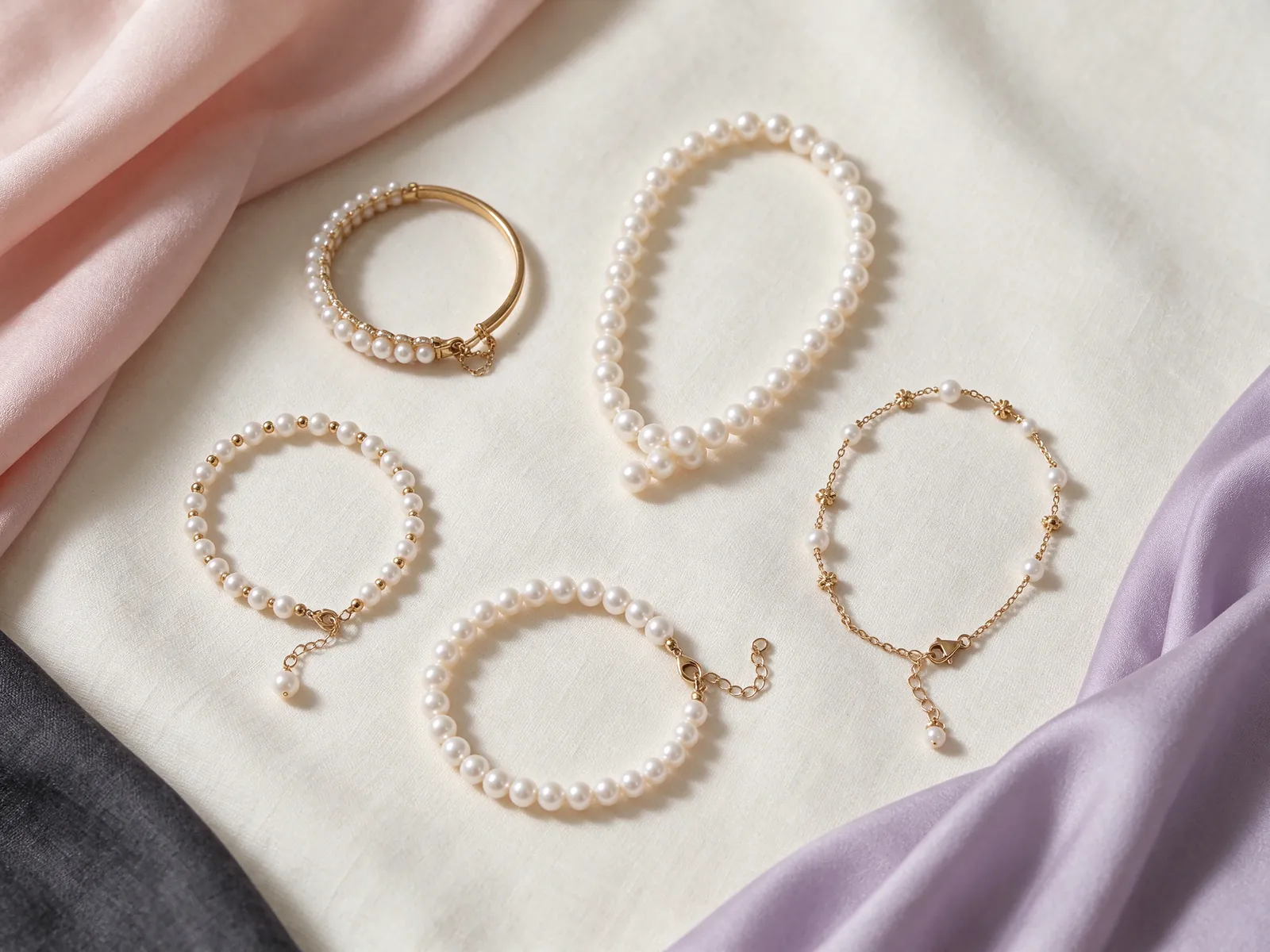
Judge station spacing on a moving wrist
A station arrangement places pearls at intervals along a chain. The intervals create visible space, so counting pearls alone does not explain its appearance. More noticeable gaps let the chain and skin participate in the overall pattern; a closer arrangement gives a stronger sense of continuity. Look at the top, side and underside of the wrist before choosing a direction. An arrangement can appear evenly distributed when laid flat yet look different when it curves around the arm. Decide whether the rhythm you like remains visible during ordinary gestures, rather than judging only a carefully positioned front view.
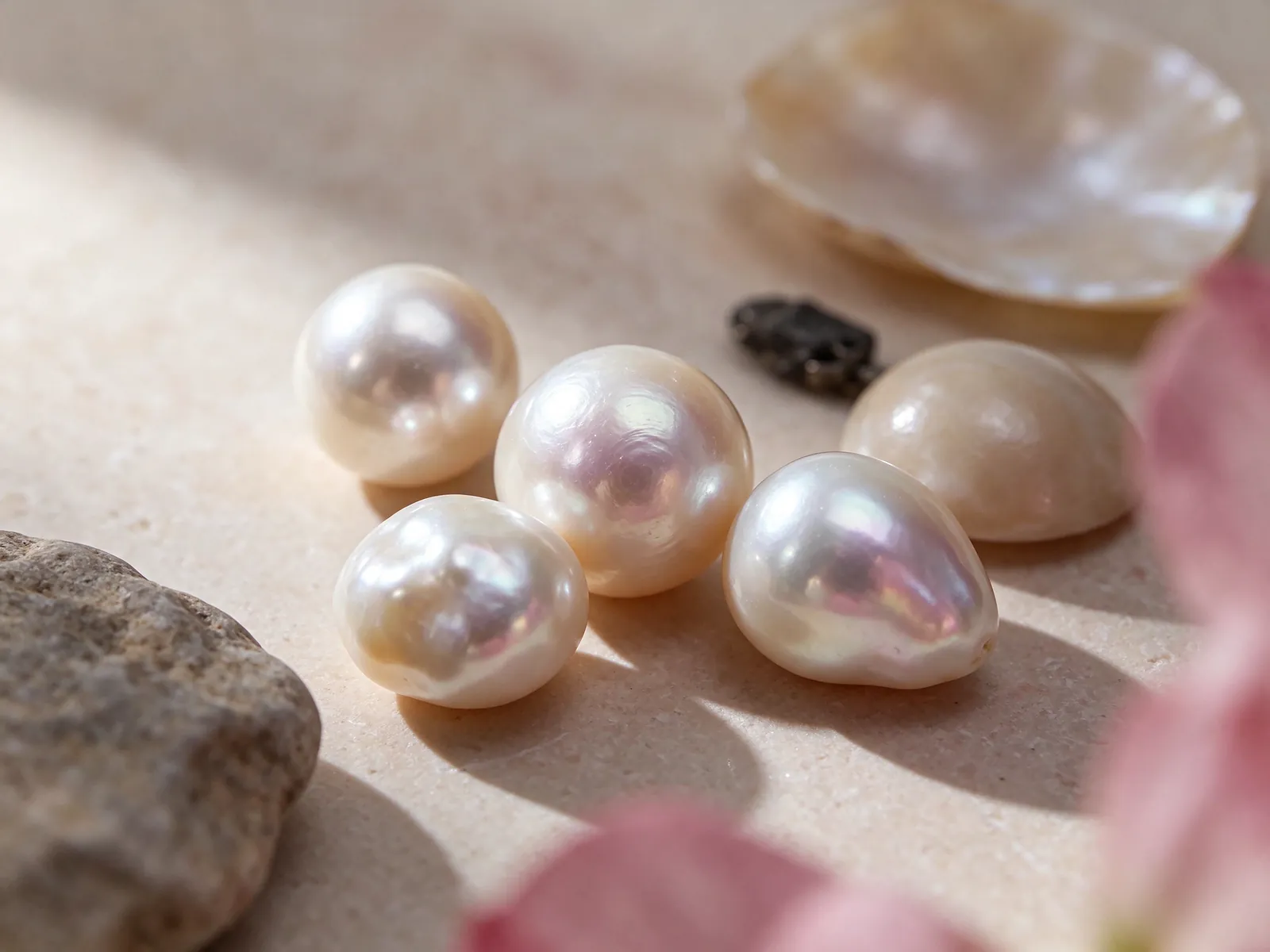
Shape introduces another layer to that rhythm. A more consistent outline can emphasise regularity, whereas varied contours can draw attention to individual pearls. The styling questions in a baroque pearl bracelet guide are useful if you prefer an arrangement with visible variation. Keep a shape preference separate from an identity claim: an irregular outline does not establish pearl species, origin or natural-versus-cultured status. In a design discussion, first explain the pattern you want to see, then ask about the actual pearl information for any individual selection being considered.
Use everyday gestures to check where pearls settle
Try holding a cup, turning a page and resting your hand beside a desk. Watch for a projecting pearl settling into a pressure point or a chain section twisting awkwardly. A deliberately straightened arrangement in a photograph is not necessarily the arrangement you will see when your hand relaxes.
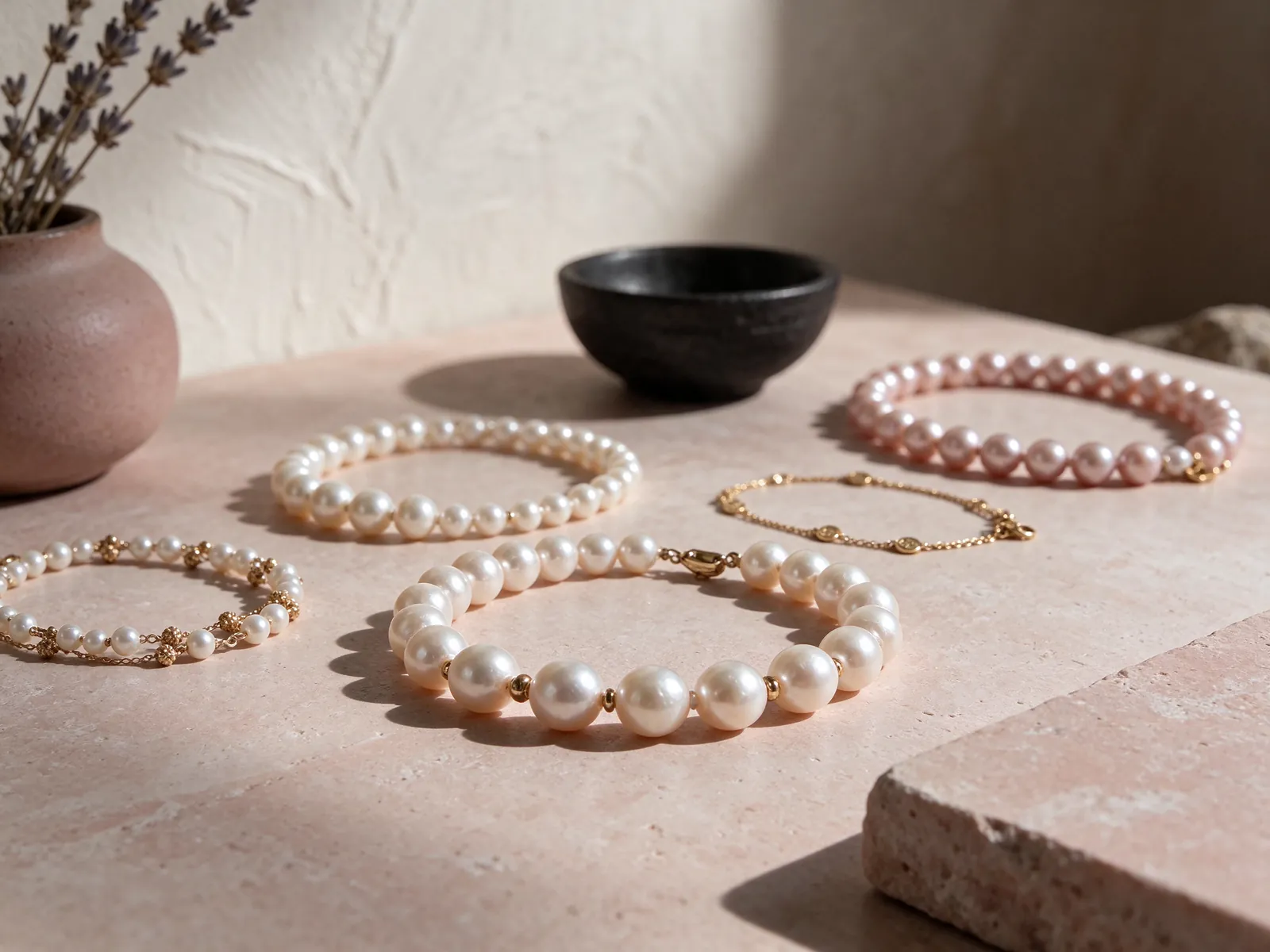
Look beyond the metal name when comparing pearls
GIA describes seven pearl value factors: size, shape, colour, lustre, surface quality, nacre quality and matching. On a bracelet, neighbouring pearls are readily seen together, making visual coordination worth careful attention. Compare them in the same lighting and turn the arrangement to inspect reflections and visible surface features. Consider what level of variation you personally enjoy rather than allowing a broad grade description or the platinum name to replace observation. A pleasing overall design involves the relationship between the pearls as well as the details of each pearl.
For category knowledge, read about an Akoya pearl bracelet and a freshwater pearl bracelet as separate learning topics. They can help you form questions about pearl identity and matching, but the station layout itself cannot identify the pearls used in a particular bracelet. Colour also needs a careful vocabulary: bodycolour, overtone and orient describe different components, and not every pearl exhibits all three. When discussing an individual selection, distinguish the information supplied about the pearls from the colour balance you can actually observe. Neither shape nor colour alone establishes origin or a certificate.
Make variation intentional rather than accidental
If you like coordinated pearls, concentrate on how adjacent pieces look together. If you prefer variation, decide whether shape or colour should lead that effect. Changing several features at once makes it harder to explain your preference. Matching should support a clear design intention; it need not mean every pearl looks identical from every angle.
Give clasp access the same attention as the front view
Think about how the bracelet will be put on and removed on an ordinary morning. Do you usually fasten jewellery without help, and do your nails make small openings difficult? A pearl bracelet clasp guide provides a focused way to consider access, placement and visual proportion. During a trial, check whether the opening is visible, whether the chain end is manageable and whether the closed clasp catches on a cuff. A discreet clasp can be attractive, but appearance should not obscure the practical movements needed to use it with the hand you normally choose.
Also observe the places where pearls meet the chain. As the wrist turns, look for neighbouring parts pressing together, a chain segment folding awkwardly or a pearl surface repeatedly meeting the clasp. These are visual observations, not an invitation to pull on pearls or twist fittings to test their strength. If a bracelet starts scratching the skin or becomes unexpectedly difficult to fasten, stop wearing it and arrange an inspection instead of bending the parts back by hand. Practical handling matters more than trying to prove durability through force.
Practise both fastening and removal
Try both actions above a soft, level surface where the bracelet can be caught if released. A design that is easy to fasten may be less easy to remove under a sleeve or beside a watch. For a gift, the recipient's usual hand movements are more relevant than the giver's fastening habits.
Style the bracelet around sleeves, watches and desk work
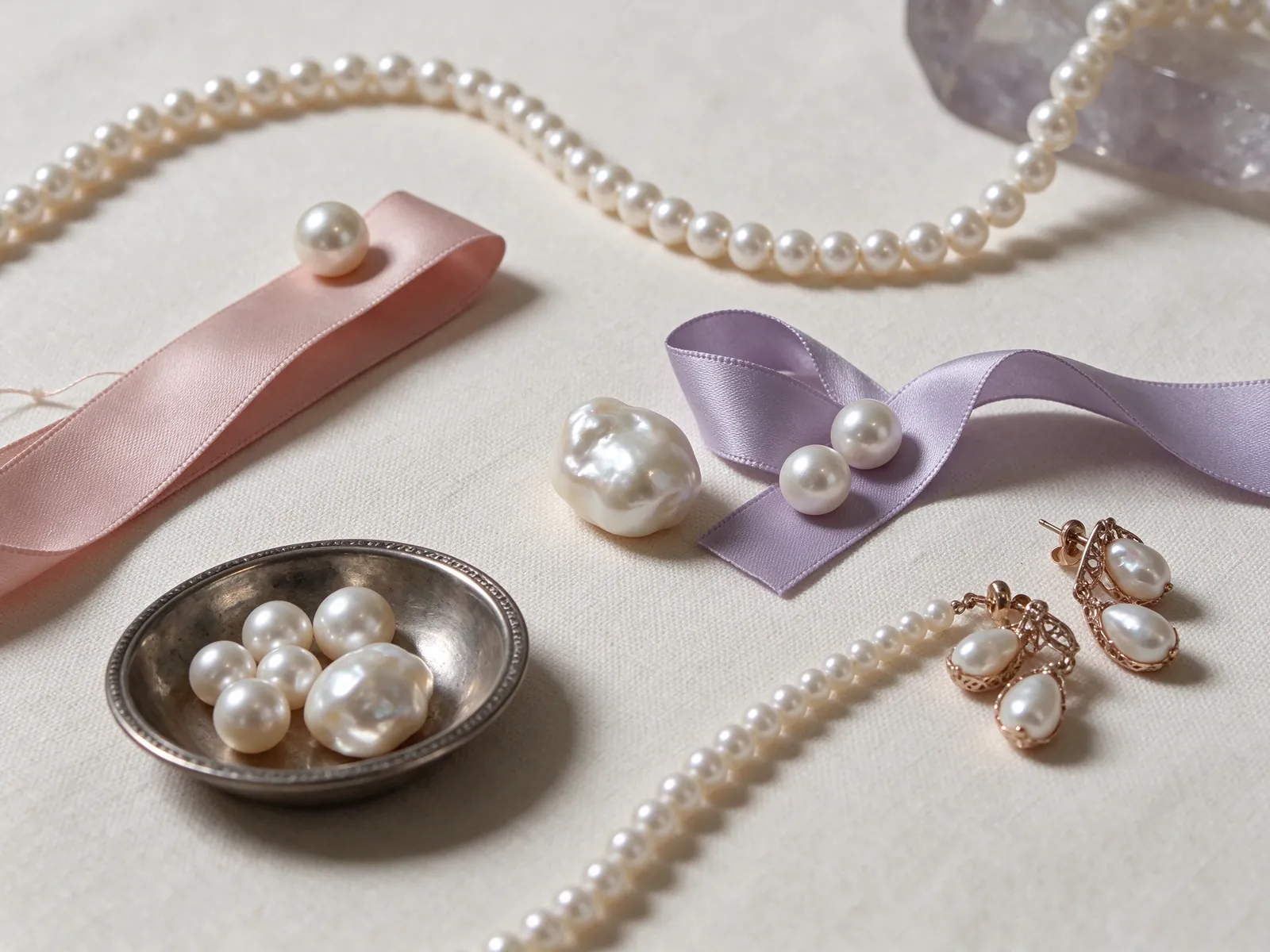
For a working day, start with the bracelet on its own so you can judge the chain spacing against a familiar shirt or knit. If you also wear a watch, placing them on different wrists makes direct contact easier to avoid. For same-wrist styling, observe typing and reaching movements rather than checking only a still mirror view. Pearl surfaces should not repeatedly rub against a hard watch case or other jewellery. The useful amount of layering depends on your activities and the space available, not on filling every part of the wrist with accessories.
For dinner or a more formal outfit, let the bracelet echo an earring outline or a ring's metal colour without requiring identical pearl arrangements throughout. A garment with beading, sequins or a busy pattern may look clearer beside a simpler wrist rhythm. With a plain outfit, the intervals between pearls can become a more noticeable detail. Sit down during a styling trial and check whether the sleeve covers the arrangement or presses it against the table edge. That seated position is often more relevant to dinner and office wear than a standing photograph.
Use your wardrobe as a practical colour reference
Bring a regularly worn jacket or an everyday outfit photograph into the conversation. This is more specific than relying on a broad skin-tone category. Pearl colour and metal lines can echo a garment or offer contrast; the important question is whether you enjoy the combination in clothes you genuinely wear.

Build pearl care and wearing habits into the design discussion
A platinum chain does not make the pearls suitable for metal-jewellery cleaning methods. GIA lists pearl hardness as 2.5 on the Mohs scale and says pearls should never be cleaned in ultrasonic or steam cleaners. After wearing, gently wipe them with a very soft, clean cloth. Keep perfume, hair spray, acids and excessive heat away from the pearls. Putting the bracelet on after your grooming routine, and taking it off before using cleaning products, helps make this care part of the day's sequence rather than an occasional task remembered only when a mark appears.
Store the bracelet separately from hard jewellery without tightly winding the chain around other pieces. If a design includes strung pearls and water is used for cleaning, GIA advises allowing the string to become completely dry before wearing. Care should follow the individual structure rather than an assumption based on the metal name. To discuss a design with Flint Jewellery, prepare your measurement position, preferred looseness, usual sleeves and fastening habits. Explain whether you want the pearls clustered visually or separated by visible chain. Those details communicate everyday needs more effectively than a single photograph alone.
Start with a situation, then explain the trade-off
Statements such as working at a computer, wearing long sleeves or wanting to fasten the bracelet independently give a useful context. Follow them with preferences for spacing, chain presence and clasp position. For a gift, keep an actual wrist measurement distinct from assumptions about how loosely the recipient likes to wear jewellery. Contact Flint Jewellery on WhatsApp at +85260106207 to discuss platinum options, pearl spacing and wrist fit in the context of your everyday wearing habits.
| Design point | What to observe | Decision to make | Everyday context |
|---|---|---|---|
| Wrist space | Measure the intended position, then bend and turn the wrist | Close outline or more movement | Include a familiar sleeve cuff |
| Pearl intervals | Look at the top, side and underside | Continuity or visible open space | Watch the arrangement during gestures |
| Chain profile | Compare chain sections separately from the pearls | Visible metal line or pearl-led emphasis | Coordinate with existing jewellery |
| Clasp access | Try fastening and removal with your usual hand | Discreet appearance or easier handling | Consider nails, sleeves and a watch |
| Surface contact | Observe typing, reaching and layering | Extra styling layers or less contact | Keep pearls away from a hard watch case |
Pearl knowledge and authoritative references
GIA lists pearl hardness as 2.5 on the Mohs scale. Pearl surfaces therefore still deserve attention when a platinum pearl bracelet is worn beside hard jewellery; GIA also advises against ultrasonic and steam cleaning for pearls.
Read the reference for this factFrequently asked questions
Does a wrist measurement equal the finished bracelet length?
Not automatically. The measurement position, pearl volume, chain curve and clasp structure affect the space available when worn. Use the measurement alongside your preferred movement and a practical trial, rather than converting it directly into a finished length.
Can PT900 or PT950 tell me which clasp will be easier to use?
Neither material name answers the handling question. The opening, chain-end position, your usual fastening hand and nail length are more useful observations. Discuss the platinum option and the clasp arrangement as separate design decisions.
How should I assess a station bracelet that turns on the wrist?
Inspect more than the front view. Turn the wrist and try holding a cup or typing to see where the pearls settle. Check whether the visible spacing remains appealing and whether a pearl repeatedly reaches a pressure point.
Is a watch a useful companion for this style?
Consider physical contact before colour coordination. Different wrists make direct contact easier to avoid. If you want both on the same wrist, observe movement and avoid repeated rubbing between pearls and the hard watch case.
Can the metal chain justify ultrasonic cleaning of the whole bracelet?
No. GIA specifically says pearls should never be cleaned with ultrasonic or steam cleaners. Wipe pearls gently with a very soft, clean cloth after wear, and follow care appropriate to the bracelet's individual structure.
Updated: