
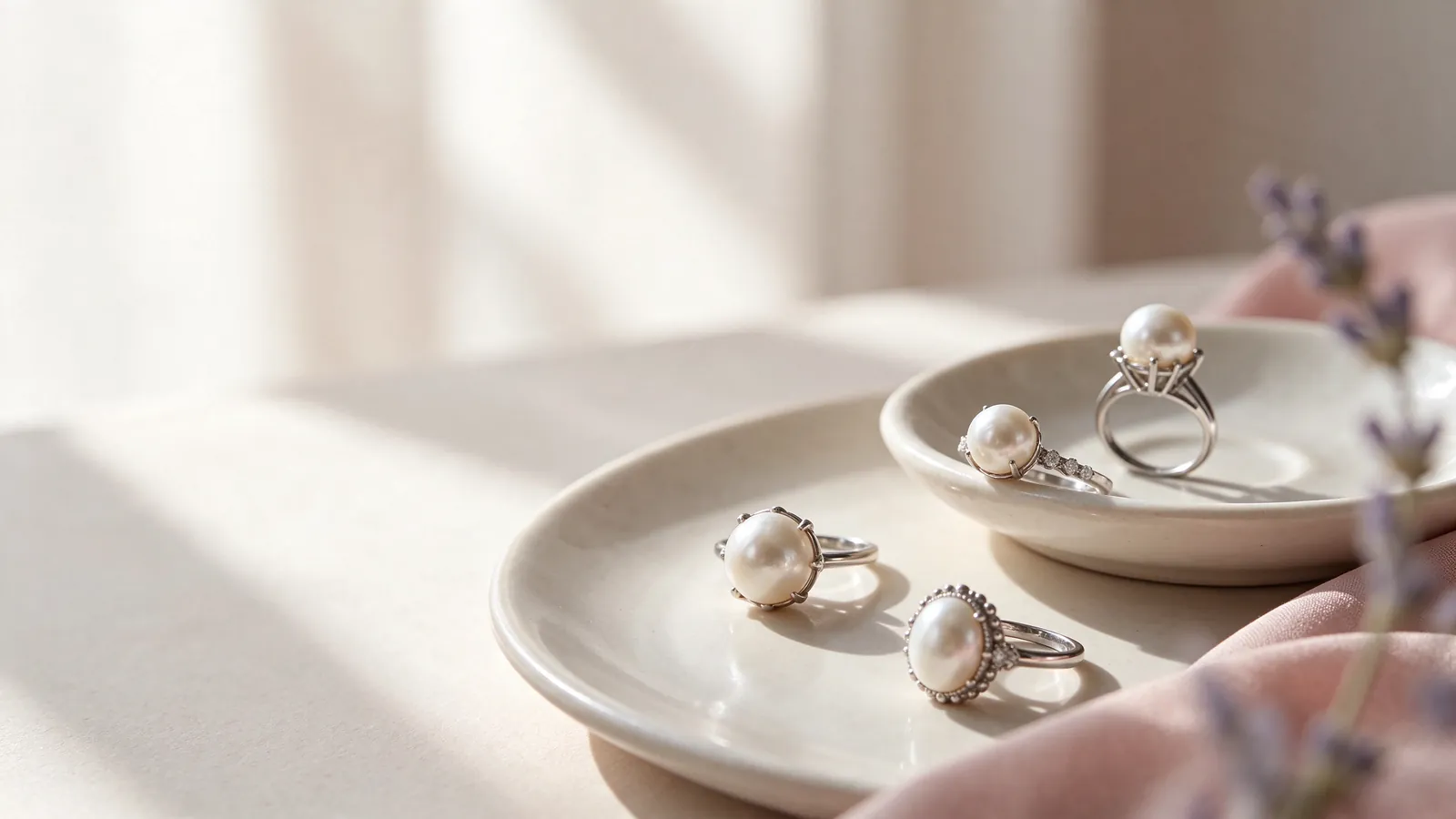
How do silhouette and pearl arrangement shape the proportions of a pearl tiara ring, a pearl crown ring or a tiara shaped pearl ring?
A tiara outline is a pattern of rises and falls along the upper edge of a ring. Start by looking at the centre, then follow the line towards each side. A pronounced central rise directs attention along the finger, while an extended row draws attention across it. Neither effect is automatically more flattering. The useful question is whether the complete outline looks balanced on your own hand, rather than whether a close-up photograph makes the details appear impressive.
Pearls can define that upper edge or sit within a crown suggested mainly by metal curves. Notice which element catches your eye first and whether the spaces between elements feel deliberate. An open outline and a closely grouped arrangement can have quite different visual weight even when their overall shapes seem similar. Browsing pearl rings Hong Kong as a wider style category helps separate a preference for a crown motif from a preference for a large or particularly detailed setting.
When trying a pearl tiara ring, a pearl crown ring or a tiara shaped pearl ring, how do ring size and edge contact affect the fit?
Relax your hand, bring the fingers together and bend them gently. Note exactly where the crown edge touches. A wider ring size does not necessarily solve a projecting edge, and extra looseness may allow more turning. Compare band fit and setting width as separate issues before deciding what needs to change.
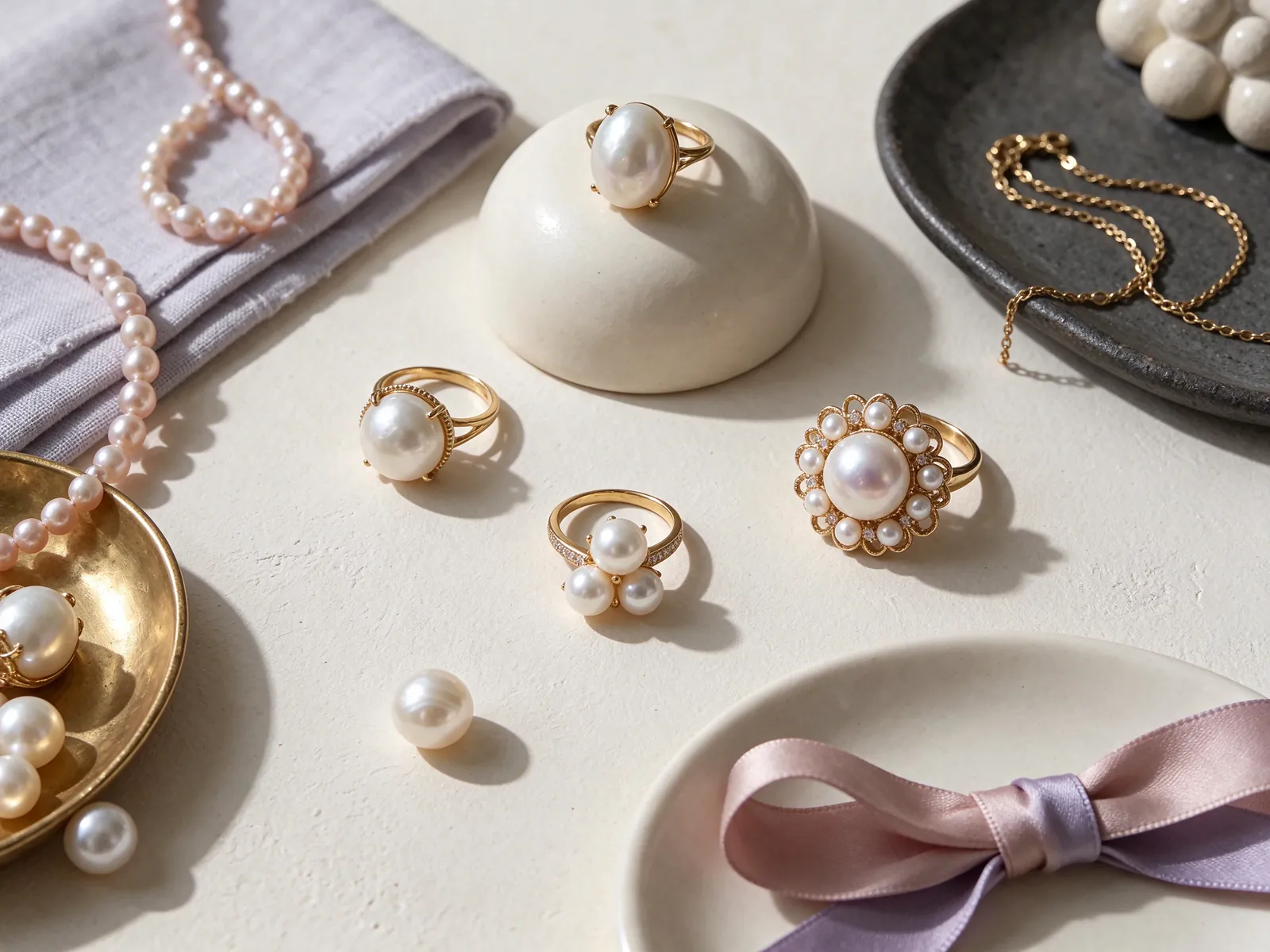
Use curves, points and open spaces to describe the look you want
Rather than asking only for something delicate or ornate, identify the line that appeals to you. Rounded arches create a different rhythm from sharp peaks; closely repeated rises look different again. Look beneath the pearls as well as above them. Open spaces can lighten the visual effect, but their edges still need consideration around sleeves and loose fibres. If knitwear is part of your usual wardrobe, think about how a cuff passes over your hand without deliberately pulling fabric against the setting.
Other motifs provide useful comparisons without being interchangeable. A pearl flower ring organises attention around a centre, a pearl butterfly ring emphasises the spread of two sides, and a crescent moon pearl ring follows a curved direction. A crown outline instead relies on the changing height of its upper edge. Comparing those structures can reveal whether you really enjoy repeated peaks or simply want a light, decorative outline. Describe that distinction before concentrating on fine surface details.
Which photographs help with proportion?
Use a front view for arrangement and a side view for projection above the band. An on-hand image gives context, but camera distance and finger position can distort scale. Compare similar viewing angles and ask about overall width and height instead of treating the photograph as a measurement.
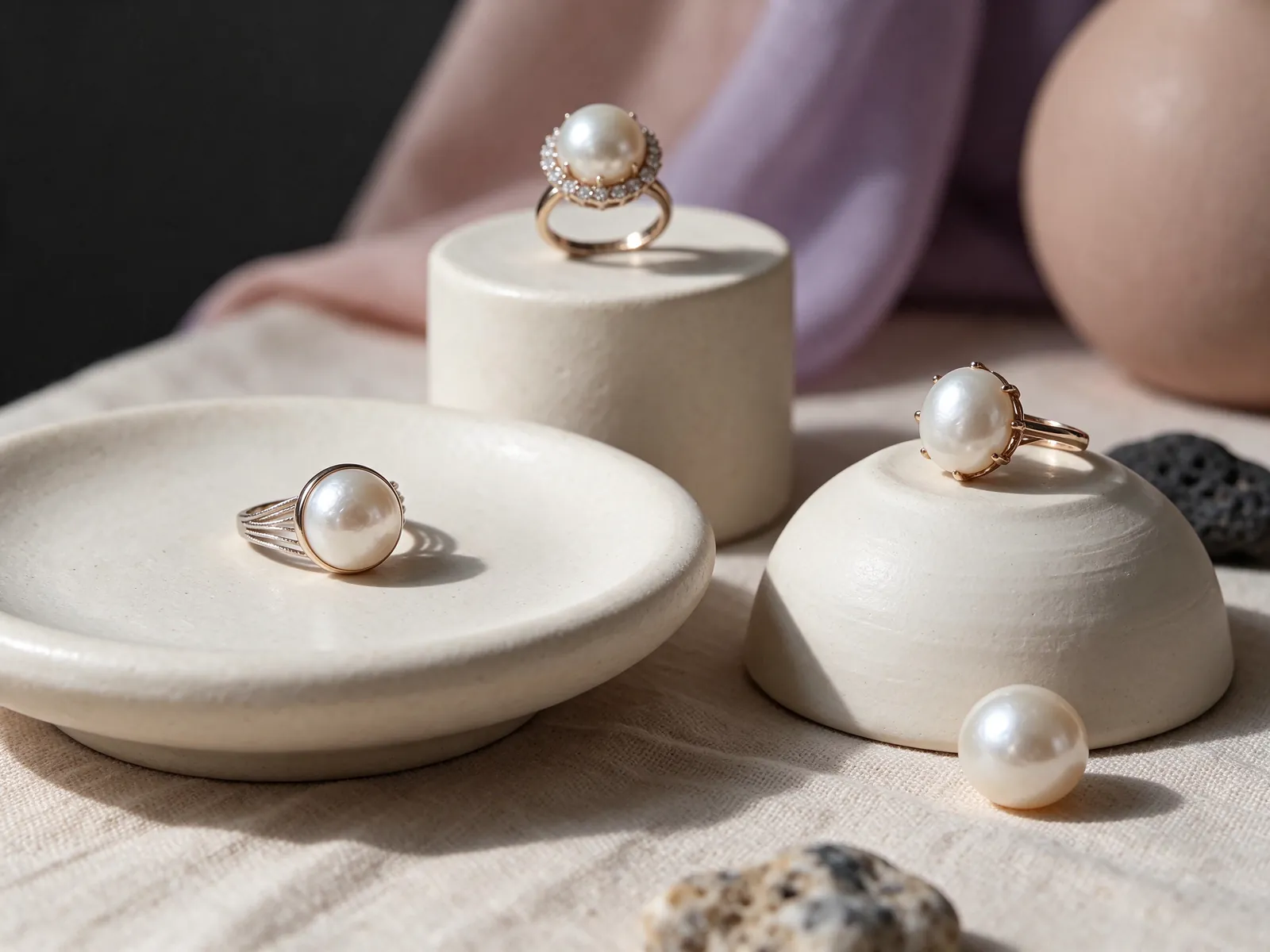
Assess height and balance through ordinary hand movements
The side profile often explains why two similarly shaped rings feel different. Observe how far the pearls rise above the band, where the supports sit and whether the outer points extend towards adjacent fingers. Let the ring settle naturally before checking whether it turns. Turning is not proof of an incorrect size on its own: the setting's balance, the band shape and the shape of the finger may all affect where it comes to rest.
A still hand is only the beginning of a fitting. Try the gentle movements you normally make when holding a phone, typing or picking up a light item. Look for contact at the sides and beneath the setting as the finger bends. A lower outline may suit some routines better, but it does not make a pearl ring resistant to knocks. Choose around your activities and willingness to remove jewellery when necessary, rather than expecting a decorative silhouette to suit every task.
Separate knuckle clearance from fit at the base
Notice the resistance as the ring passes the knuckle, then assess how it sits at the finger's base. Those sensations may differ. Hand conditions also change, so one short fitting cannot represent every moment. Explain both sensations rather than reducing the experience to a single comment that the ring feels large or small.
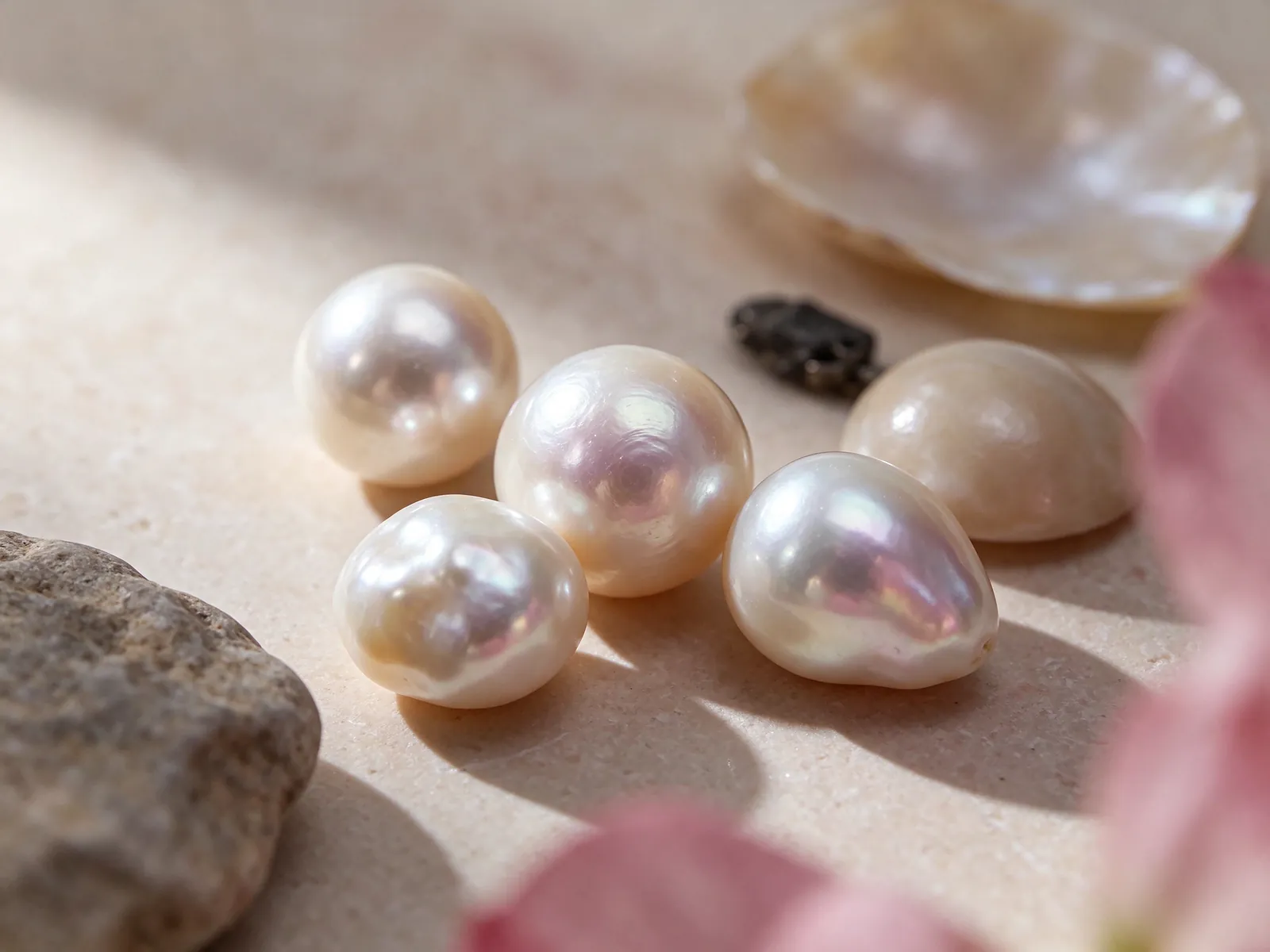
Read a pearl row through lustre, surface and matching
In a crown-like row, neighbouring pearls are seen together, making differences easy to notice. Under gentle lighting, compare the clarity of reflections, visible surface features and the way colours relate. Matching does not always mean identical appearance. A deliberate progression can create the intended rhythm, provided the differences feel ordered rather than distracting. Look at the whole arrangement and then at individual pearls; neither view should replace the other when you are deciding what you enjoy.
GIA describes seven pearl quality factors: size, shape, colour, lustre, surface quality, nacre quality and matching. This gives a broader framework than judging a row only by neatness. Shape or colour alone cannot establish origin or natural-versus-cultured identity, and a style photograph does not establish a certificate. When reading a description, keep the crown motif, the pearl information and the metal information distinct. A design term describes a look, not a complete statement of what the pearls are.
Why a small-pearl description is not a pearl identity
A small-looking pearl can contribute to a fine crown edge, but an adjective about size does not identify its type. The term Baby should not automatically be treated as seed or Keshi. If pearl identity matters to your choice, use an explicit written description rather than deductions from scale or silhouette.
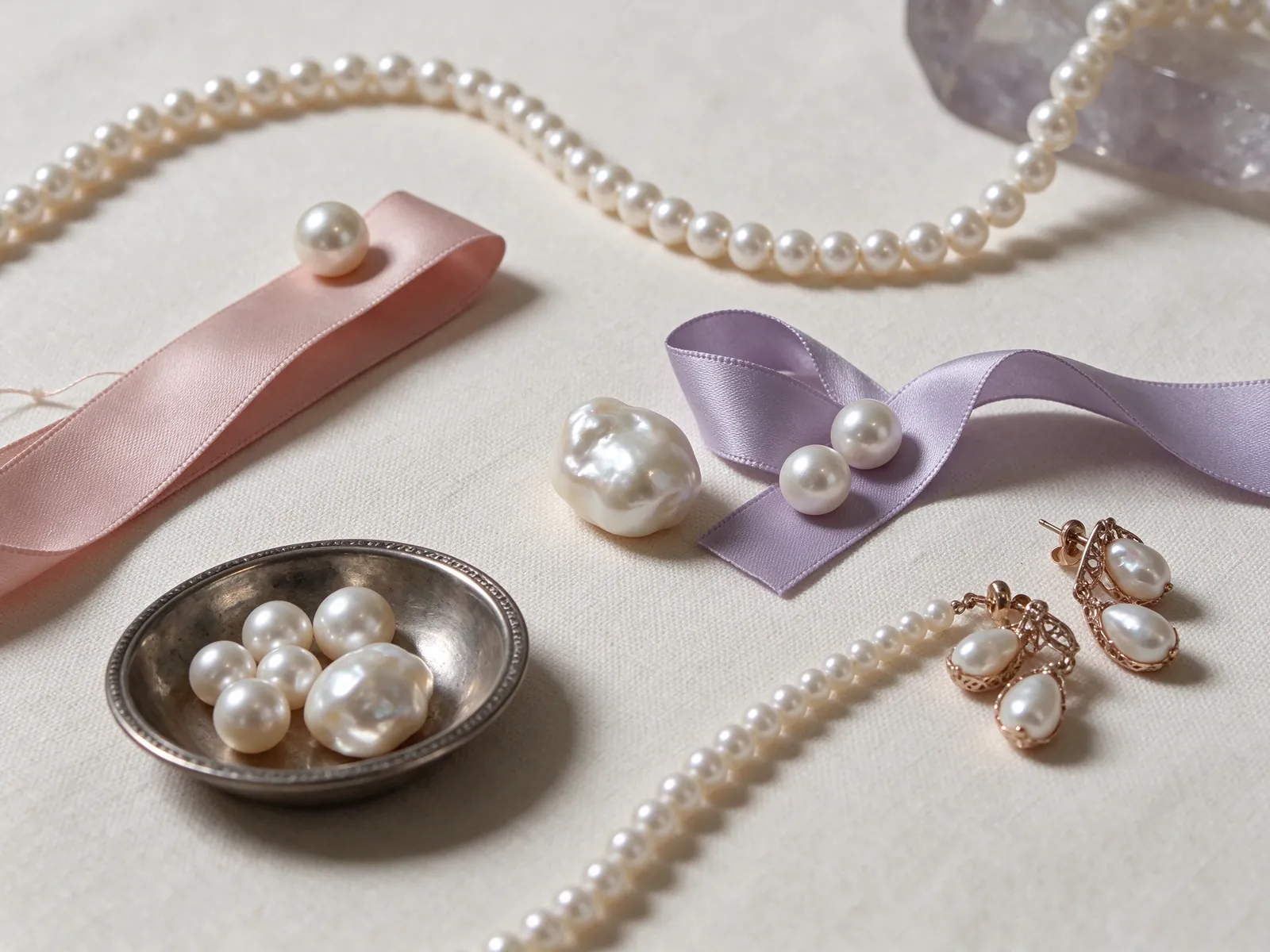
Give the crown room when styling or stacking
Worn alone, a changing crown edge can already provide a clear focal point. Consider the space shared with a cuff, bracelet or another ring before adding more detail. If you want a stronger overall presence, compare a statement pearl ring and decide whether your priority is a larger face or an intricate edge within a smaller outline. Those are different styling choices. A clear view of the crown often works better than surrounding it with several competing settings.
For stacking, a pleasing front view is not enough. Inspect the side to see whether the other band reaches a pearl, a support or a projecting point, and repeat the check with a gently bent finger. A pearl and diamond ring offers another way to compare concentrated sparkle with the softer rhythm of a pearl row, but attractive contrast does not make direct contact safe. If the settings rub, use separate fingers or hands instead of forcing them together to close a visual gap.
Try both crown directions before choosing one
Turn the crown towards the fingertips and then towards the palm. Compare the view you see yourself with edge contact during bending. There is no need to invent a wedding rule or symbolic promise to choose a direction. Personal preference can guide the decision when the construction and fit allow it.
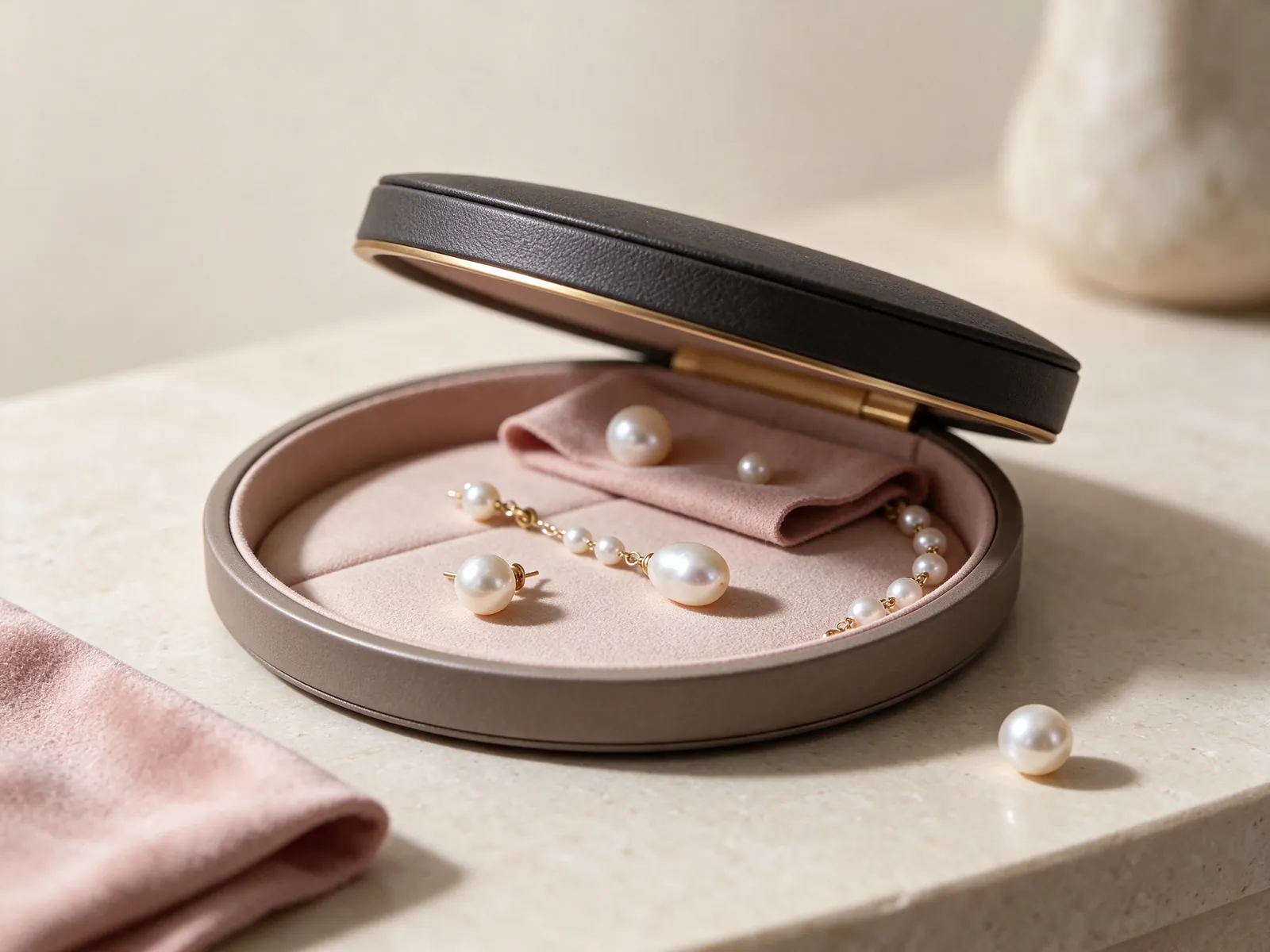
Protect the raised edge and avoid unsuitable cleaning
GIA places pearl at 2.5 on the Mohs hardness scale. That makes care habits relevant to the buying decision, especially where a crown presents raised contact points. Remove the ring before tasks likely to involve knocks or abrasion, including moving objects and exercise. Avoid acids, perfume, hair spray and excessive heat around pearls. These precautions reduce unnecessary exposure; they do not establish that any setting will retain its appearance permanently or tolerate repeated impacts.
After wearing, wipe the pearls gently with a very soft, clean cloth and look for residue between the elements. Do not probe a narrow crown opening with a sharp tool or pull at a pearl to test its attachment. GIA says pearls should never be cleaned with ultrasonic or steam cleaners. Store the ring separately from pieces that could press hard surfaces against the pearls. If a pearl moves or a support changes shape, stop wearing the ring and ask about suitable handling.
Fixed arrangements and moving ornaments need different attention
A fixed crown row calls for protection of its supports and outline. A pearl charm ring also requires attention to the space through which an ornament moves. Compare the structures if movement appeals to you, but do not treat fixed pearls as charms to be pushed or pulled, or use movement alone as a quality test.
Prepare a useful style and fitting conversation
Write down the features that matter: the direction of the crown, its width, side profile, open spaces and whether another ring will share the finger. Then describe your routine, including typing, sleeves and the hand you use most. These details make a discussion more useful than asking for an exact copy of a photograph. If a clearly bounded face matters more than a peaked edge, a pearl signet ring provides a helpful comparison of how a ring can organise its visual focus.
After a fitting, separate the features you liked from the places that felt awkward. For example, you may enjoy the central rise but find the outer ends too close to neighbouring fingers, or like the pearl rhythm but prefer less height. That description identifies a practical preference without confusing appearance with comfort. Keep material names separate from colour impressions, and pearl identity separate from matching. Each question addresses a different aspect of a ring and deserves a clear answer. For material discussions, use the full names 18K 750 white gold, 18K 750 yellow gold, 18K 750 rose gold, PT950 platinum and PT900 platinum; the crown motif does not specify a metal.
For a gift, understand habits before relying on the motif
A crown outline does not guarantee an occasion or meaning. Learn which finger the recipient uses, whether they stack rings and how they feel about projecting edges. Knowing a usual ring size is helpful but incomplete, because band width and the setting's outline can change the experience of wearing it.
To discuss crown-inspired outlines or the fit questions you have noted, contact Flint Jewellery on WhatsApp at +85260106207 for a pearl ring style and sizing enquiry.
| Area | Selection question | Fitting check | Styling consideration |
|---|---|---|---|
| Upper edge | Do you prefer curves, peaks or repeated rises? | Let the hand relax and observe the ends | Leave room around cuffs |
| Overall width | Does the full outline suit your finger? | Bring fingers together gently | Avoid crowding neighbouring settings |
| Side profile | How far does the setting project? | Try holding a phone naturally | Keep a stacked band away from pearls |
| Pearl arrangement | Are differences deliberate and balanced? | Compare reflections in gentle light | Choose a uniform or graduated rhythm |
| Band and knuckle | Are clearance and resting fit different? | Assess both putting on and wearing | Do not substitute loose sizing for a narrower outline |
Pearl knowledge and authoritative references
GIA identifies seven pearl quality factors: size, shape, colour, lustre, surface quality, nacre quality and matching. A continuous crown arrangement makes matching easy to compare, but it remains only part of the assessment.
Read the reference for this factFrequently asked questions
Does a tiara name mean the ring has identical pearls in one row?
No. It describes a crown-inspired outline, which can involve pearl placement, metal arches or changing heights. The name does not establish pearl count, measurements or identity.
Should I increase ring size if a crown point touches another finger?
Not automatically. The contact may come from the setting's width or an outward point. More looseness can also permit turning. Compare the outline and band fit separately during gentle movements.
Can the crown serve as a fitted border around another ring?
Only assess the combination by checking both front and side clearance. Another band should not rub against pearls or their supports when the finger bends. Separate fingers are a practical alternative when settings touch.
Is an evenly matched row enough to judge pearl quality?
Matching is one factor, not a complete assessment. GIA's framework also includes size, shape, colour, lustre, surface quality and nacre quality. A neat photograph cannot establish identity or a certificate.
How should I deal with residue inside the crown openings?
Do not use sharp tools, ultrasonic cleaning or steam. Wipe gently with a very soft, clean cloth after wearing. If residue is difficult to reach, ask about cleaning suitable for the particular construction rather than forcing access.
Updated: