
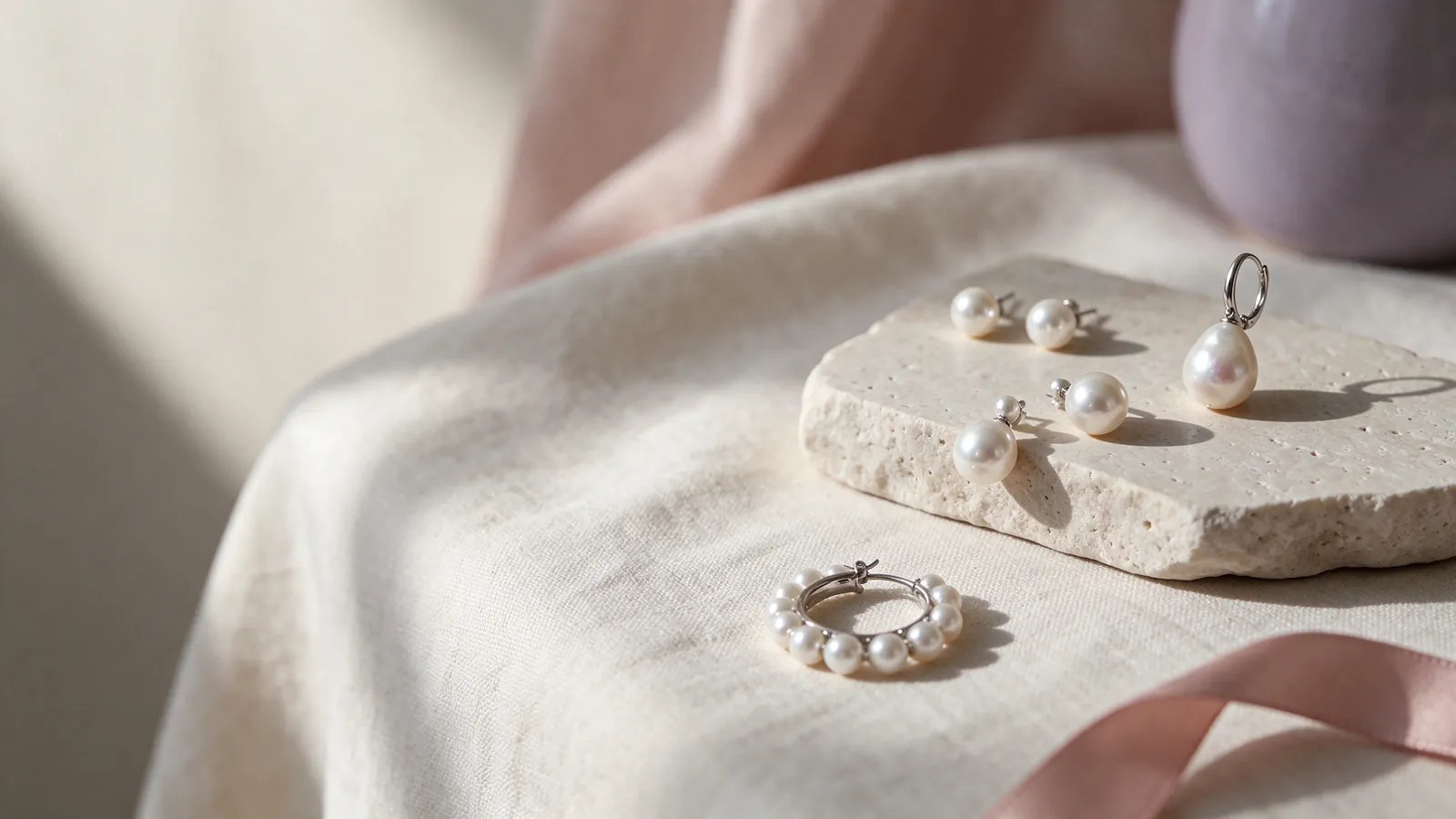
For secure backs for pearl earrings, how should pearl earring catch selection match pearl earring back types to the post?
Begin with the post rather than the size of the catch. A smooth post and a threaded post work differently, and a small opening that looks suitable does not establish compatibility. The post diameter, usable fastening length and the catch's contact structure all matter. When browsing pearl earrings Hong Kong, make the back view part of the conversation alongside the front design. Ask how the actual pair fastens and releases, rather than choosing a backing from a photograph alone.
Inspect removable parts over a clear table with a soft cloth beneath them. Keep each earring beside its own catch so that a working pair is not accidentally mixed with another. Support the metal structure while handling the earring; do not use the pearl as a handle for pushing or pulling. A bent post or distorted opening can affect fit, so changing the catch style may not address the cause.
When checking pearl earring back types, how can looseness or resistance affect pearl earring catch selection for secure backs for pearl earrings?
Describe what happens: does the catch slide after fastening, resist at the entrance or stop partway along the post? These are more useful observations than simply calling it loose. Remove the earring before examining a problem. Avoid forcing the parts together, squeezing the catch with pliers or straightening the post yourself; these actions can alter the fit you are trying to understand.
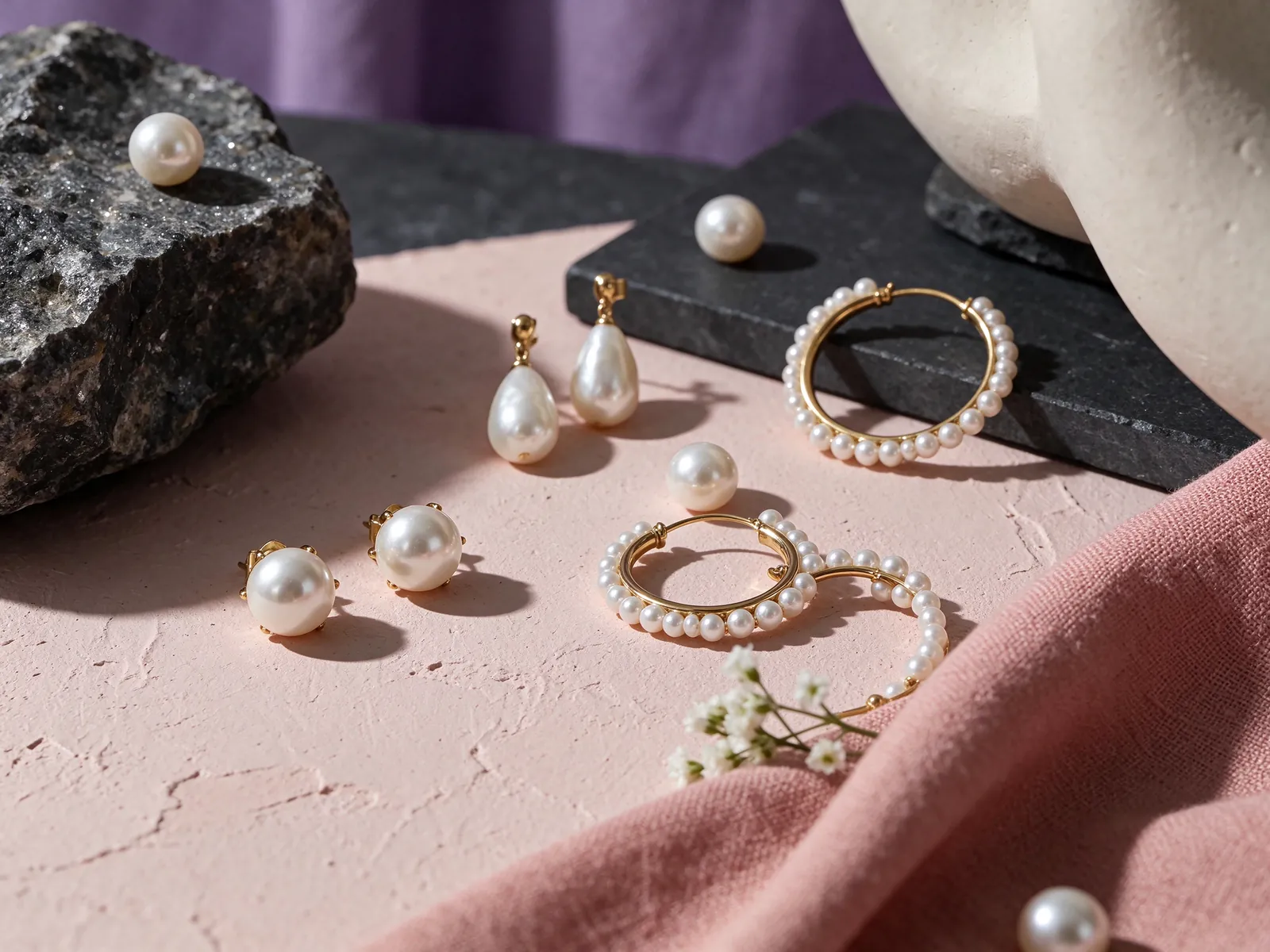
Compare the fastening action before comparing the names
A push-back catch moves along the post and relies on its internal contact structure. A screw-back needs compatible threads to engage through rotation. The latter is not a push-back with extra resistance: forcing it straight onto a post is not an alternative to threading it correctly. Nor should any threaded back be assumed to match any threaded post. Uneven rotation, difficulty starting or visible misalignment are reasons to stop and examine the parts.
With a silicone-covered catch, separate the outer grip surface from the mechanism inside. Appearance alone does not tell you which component provides retention. If a catch has a release feature, ask for a demonstration of fastening and removal on the complete earring. Then try the action yourself at the table. A mechanism that you cannot comfortably release is not automatically a better everyday choice.
Bring the complete pair when discussing a replacement
Take both earrings and any remaining catches, even if only one side seems affected. Their use histories may differ. Explain whether a catch was dropped, pressed in a bag or borrowed from another pair. Comparing the complete components is more informative than matching the shape of the one backing you still have.
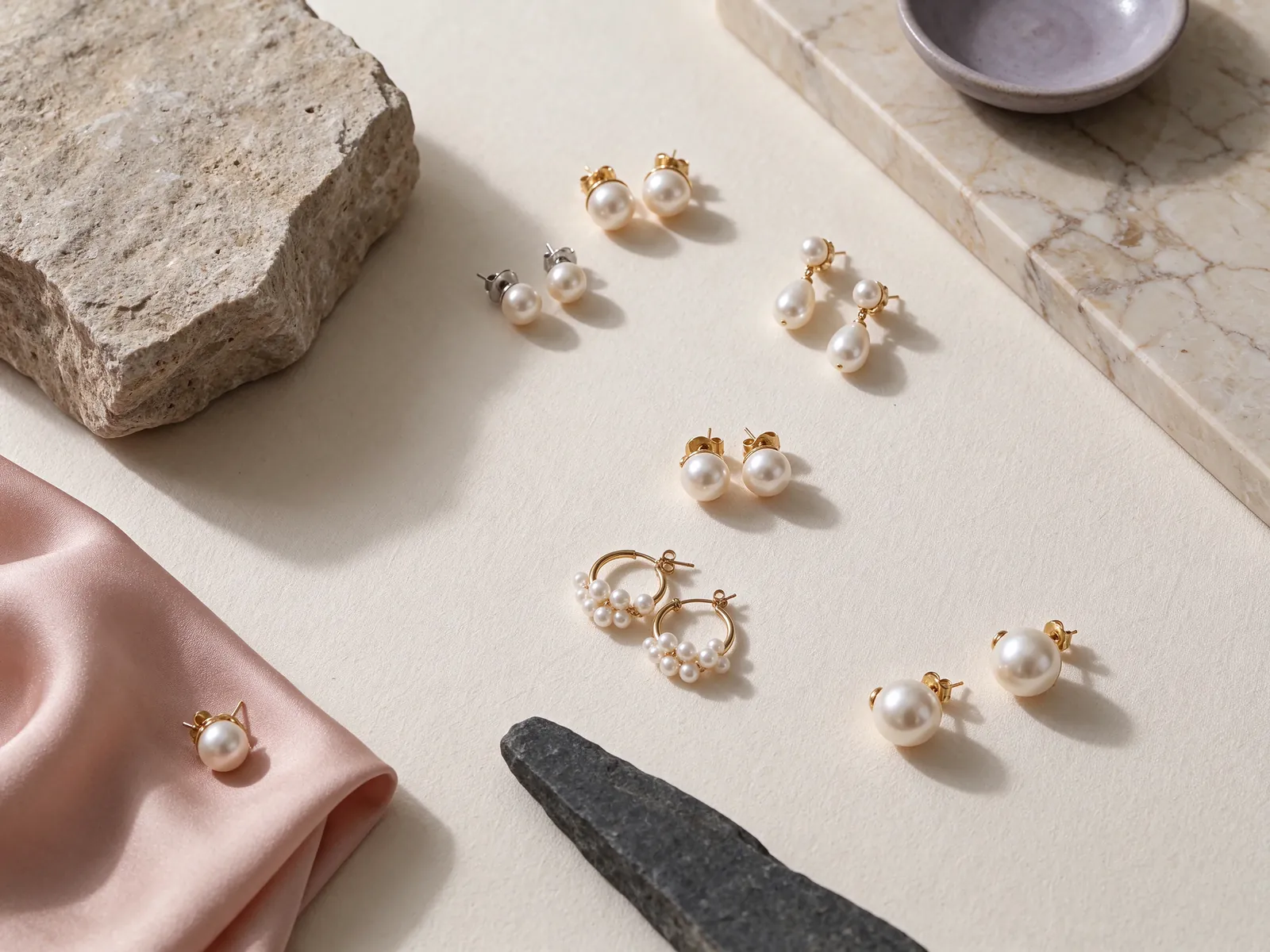
Holding the post and supporting the lobe are different jobs
A catch can hold the post while the earring still tips forward. The front structure, its projection, the piercing position and the shape of the lobe all influence the wearing angle. A larger contact area at the back may help some arrangements, but it can also press against an ear crease. Consider earlobe support backs for pearl earrings when the main concern is the front angle, rather than assuming that stronger friction is the answer.
Look from the front and side while sitting naturally, then turn your head gently to check contact with the jaw or collar. The pearl earring size guide helps organise visual proportions, but front diameter does not describe the whole structure. For geometric pearl earrings, consider where the metal outline extends and how far the design projects. Judge support with the whole earring in place, not from the backing's width alone.
Use a side view to explain tipping
A natural side-view photograph can help show whether the pearl points down or the entire front sits away from the lobe. Avoid deliberately tilting your head to improve the angle. Photographs can explain appearance, but they cannot measure post diameter or establish catch grip; those questions require the actual components.
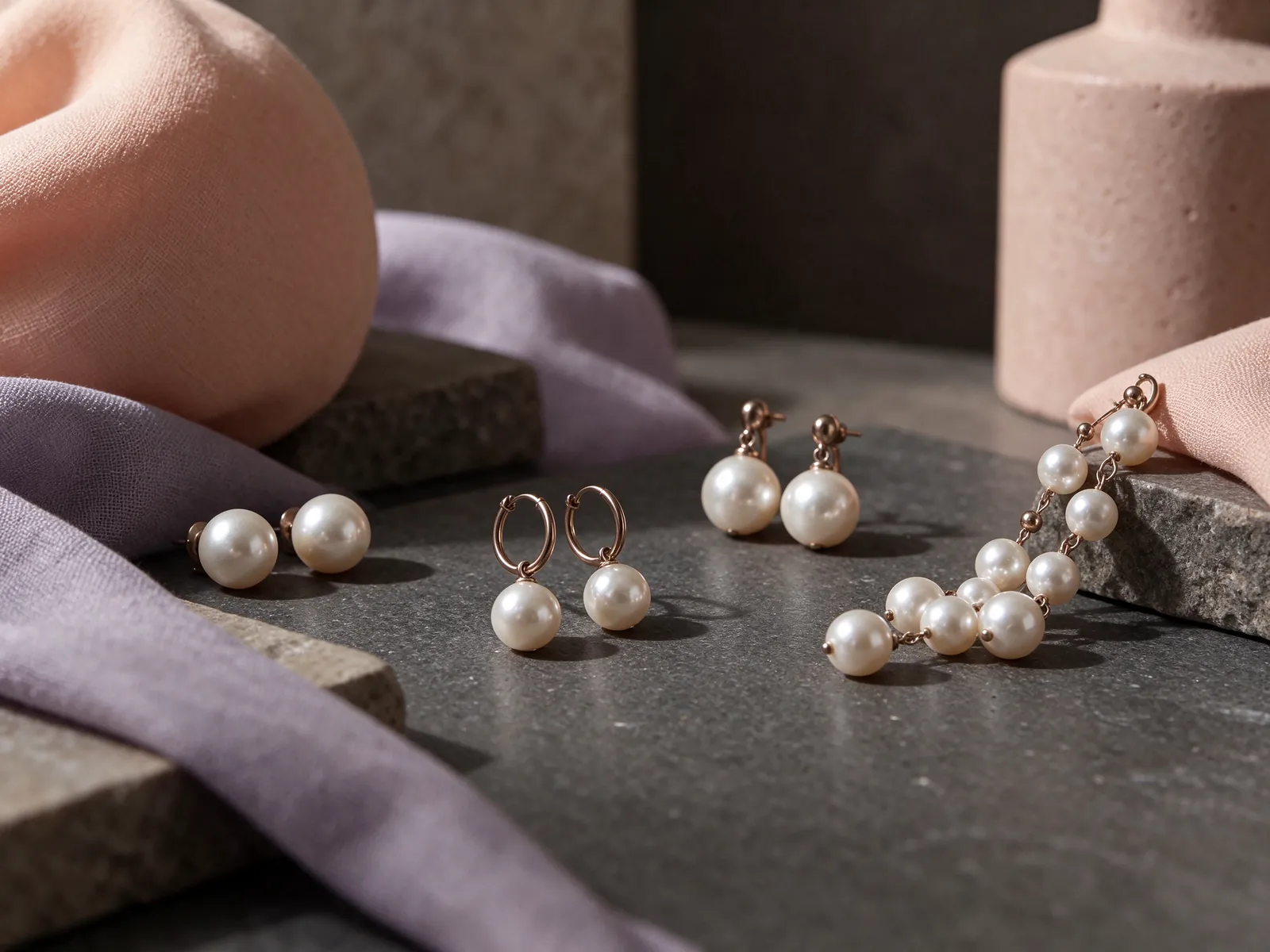
Try the catch with your glasses, collar and daily routine
Ear jewellery shares space with spectacle arms, mask straps, hair and scarves. During a fitting, wear your usual glasses and collar and make your normal, gentle hair-adjusting movements. Do not tug at the catch as a test. If a strap repeatedly loops around the earring or a collar turns it, consider the projection of the entire design rather than simply requesting a tighter back. Check for entanglement before removing a mask or scarf.
Handling matters if you change uniforms, use headphones or often get ready in a hurry. Practise holding, fastening and releasing the small parts over the table. If your fingers struggle to keep hold of a catch, an easier action may be more useful than a complicated mechanism. Comparing small pearl stud earrings can also help you assess a less projecting front profile, although smaller earrings still need compatible backs.
Plan removal and storage as well as fastening
Remove earrings before sleep, swimming or activities likely to pull or press on them. Taking them off before changing a close-fitting top also avoids fabric catching the front or backing. Store each earring and its corresponding catch together in a separate compartment, instead of leaving loose catches in a mixed pouch.
Check ear-side contact, not just the visible metal
Ask about the post, catch and lobe-contacting structure separately. The metal description of the front does not necessarily describe every component. Choosing pearl earrings for sensitive ears involves contact positions, personal history and the actual wearing experience. Pressure from an overly close catch and skin discomfort are not automatically the same problem. If pain or persistent irritation develops, stop wearing the earrings and seek healthcare advice when needed.
For pearl stud earrings with a silicone-covered catch, the cover does not establish that all metal contact is prevented: the post may still touch the piercing. Inspect the cover for separation, changed shape or an unusually sticky surface. If the silicone cover comes off, retain the detached piece and the catch rather than gluing them together. The role of the cover depends on the complete structure, so the remaining metal alone is not a reason to continue wearing it.
Avoid using pressure to make an earring stand upright
Fasten the back as its mechanism requires, not until the lobe is immobilised. Notice any local pressure or edge digging behind the ear. There is no single gap measurement that suits every combination of lobe thickness, post length and catch design. If the desired front angle requires uncomfortable pressure, revisit the support or the earring silhouette.
Protect the pearl while caring for the catch
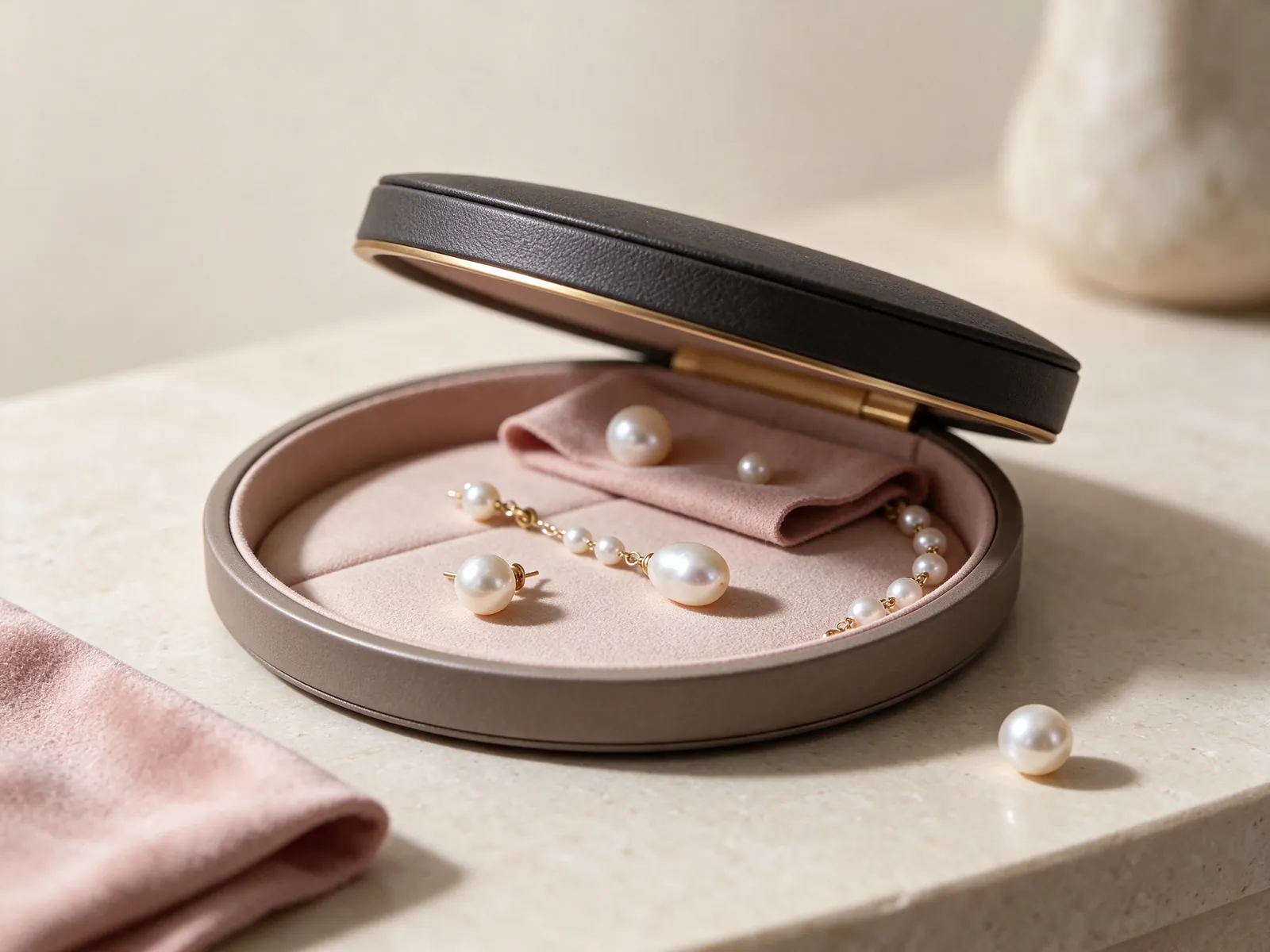
Check the catch opening and post contact area when the fastening feel changes. Wash and dry your hands before handling the pair, and wipe the pearls after wear with a very soft, clean cloth. Apply perfume and hair spray before putting the earrings on, rather than spraying towards them. Avoid scraping a catch opening with a sharp point, adding oil or flooding a covered component with cleaning liquid.
GIA lists pearl hardness as 2.5 on the Mohs scale and says pearls should never be cleaned with ultrasonic or steam cleaners. This is relevant even when the part attracting attention is metal: do not place a complete pearl earring in a machine because its backing looks robust. A catch with stubborn residue, a damaged cover or difficult removal needs appropriate inspection, not stronger heat or more aggressive cleaning.
Cleaning does not substitute for correcting fit
Removing surface residue and changing mechanical grip are different tasks. If a catch remains loose after appropriate care, more scrubbing is not a fitting solution. Separate parts only by their normal release method, follow care instructions appropriate to the mechanism and avoid prolonged soaking of the pearl. Do not put damp components straight into storage.
Make a fitting discussion specific and practical
Prepare a short account of the fastening action, when movement occurs, whether both sides behave alike and whether your concern is retention or forward tipping. Bring the complete earrings, remaining catches and detached covers. Mention previous changes to the posts or backs. This gives a clearer starting point than asking for the most secure name, and allows discussion of the actual parts together.
Before deciding, ask to see fastening and normal removal, then try both actions yourself. Check the side angle and ear-side comfort afterwards. An attractive front need not be accommodated by an increasingly tight back. If its silhouette repeatedly clashes with your routine, reconsidering the whole design can be more sensible than continually mixing catches from other earrings.
Resolve fit first, then compare convenience and appearance
A useful choice lets you explain how the parts engage and how to release them without unnecessary pulling. Once looseness or resistance is addressed, compare grip area, visibility and contact with hair or clothing. Remember the demonstrated removal action. If the feel later changes substantially, assess the same components rather than compensating with more force.
To discuss the catch on your existing earrings, contact Flint Jewellery on WhatsApp at +85260106207. Describe the fastening action and the specific difficulty, and explain whether your priority is retention, support or easier handling. This gives your fitting enquiry a practical starting point.
| Comparison | What to establish | Practical fitting check | Reason to stop |
|---|---|---|---|
| Push-back | Post and internal contact compatibility | Hold and release normally over a table | Unexpected sliding or forced entry |
| Screw-back | Compatible post and catch threads | Start aligned and rotate smoothly | Misalignment or uneven rotation |
| Silicone-covered catch | Cover condition and underlying mechanism | Distinguish outer grip from retention | Separation, distortion or unusual stickiness |
| Broader support back | Ear-side contact and wearing angle | Check side view, glasses and collar | Edges dig in or upright wear requires pressure |
| Replacement catch | Fit with the complete actual earring | Compare both sides and practise removal | Appearance is the only basis for matching |
Pearl knowledge and authoritative references
GIA places pearls at 2.5 on the Mohs hardness scale and advises against ultrasonic or steam cleaning; protect the pearl when caring for its catch.
Read the reference for this factFrequently asked questions
Is a screw-back always a better everyday choice?
No. It needs compatible threads and an action you can manage comfortably. Compare real fastening, release and wearing comfort rather than ranking mechanisms by name. A catch that is difficult for you to remove is not automatically the more practical option.
Can I borrow a catch from another pair after losing one?
Matching appearance does not establish matching post diameter, contact structure or threads. Keep the affected earring unworn until its compatibility can be assessed, and bring the complete pair with the remaining catch.
Does forward tipping mean the catch is loose?
Not necessarily. A secured post can still sit at an angle because of the front structure, projection, piercing position or lobe shape. Distinguish sliding along the post from a stable earring that tips, then consider support and the complete silhouette.
Should I glue a detached silicone cover back on?
Do not improvise a glued repair. Retain both parts and stop wearing the affected earring. The cover's function depends on the complete mechanism, and adhesive can change the component's condition rather than restore its intended fit.
What should I bring to discuss a difficult catch?
Bring both earrings, remaining catches and any detached cover. Explain where resistance or sliding occurs and whether it affects both sides. A natural side-view photograph can illustrate tipping, but does not replace assessment of the actual post and catch.
Updated: