
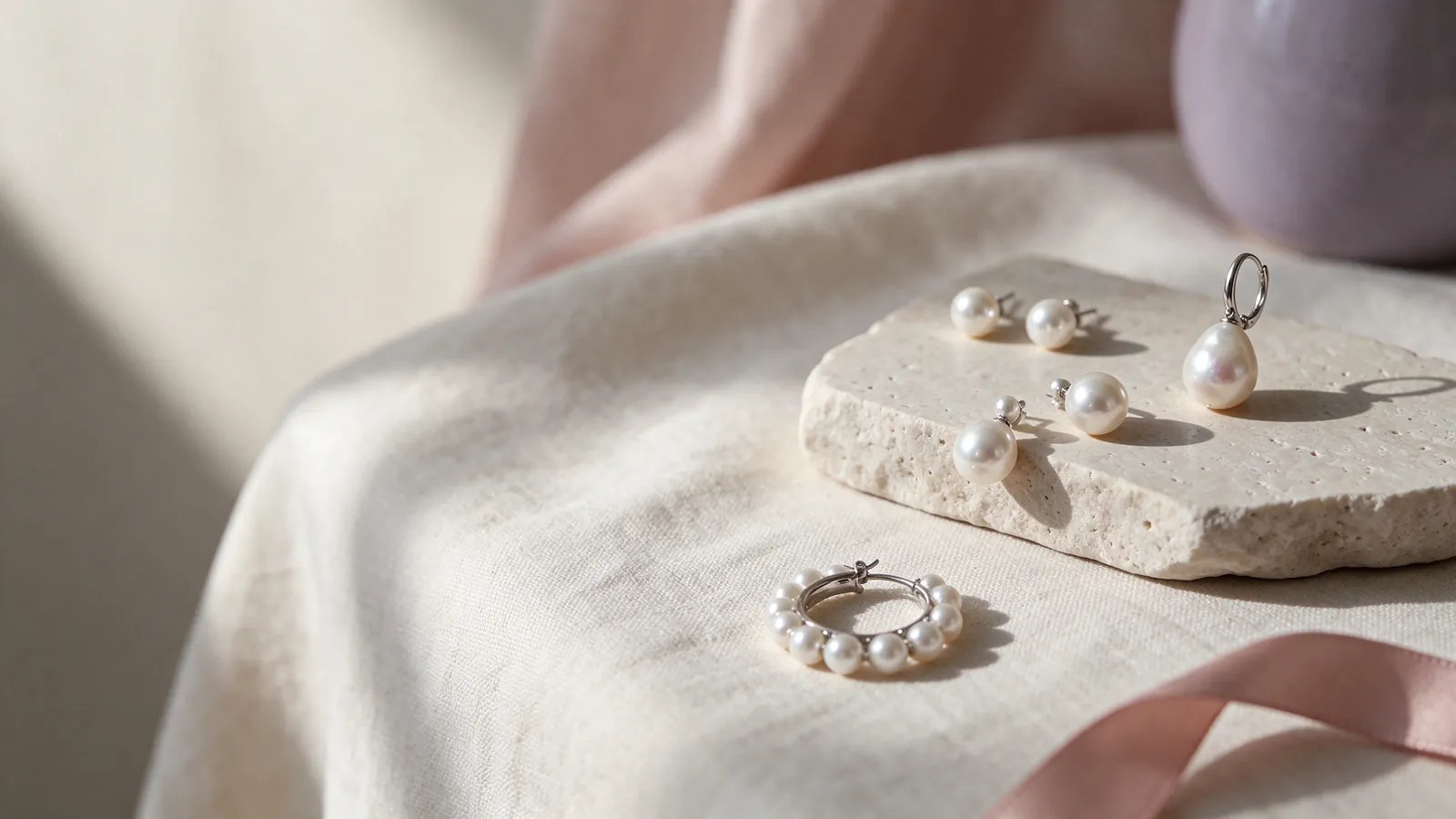
Earlobe proportions in the pearl earring size guide: a pearl stud size comparison for 7–9mm pearl earrings
Begin by looking at the pearl within the outline of your earlobe. Notice how much of the lobe remains visible underneath and around it, and where the piercing sits in relation to the lower edge. A diameter that looks restrained on one ear may look more prominent on another. The useful question is not whether the number is correct, but whether that balance matches the impression you want.
Treat 7–9mm pearl earrings as a sequence to compare rather than a rule tied to age, height or a particular occasion. If you prefer a defined edge of visible earlobe, look for that effect during the comparison. If the pearl is intended as the main accent near your face, consider its relationship with other jewellery. The guide to pearl earring size for small earlobes explores this balance through placement and available space.
How do hairstyles and necklines shape a pearl stud size comparison of 7–9mm pearl earrings in the pearl earring size guide?
Use the hairstyle you actually wear most often. Tied-back hair exposes the outline of the pearl and ear, while loose hair may reveal only a brief reflection. Try your usual shirt or knitwear too: a busy collar, necklace and visible studs can compete for attention. Keeping one clear focal point may work better than increasing the pearl diameter to make it stand out.
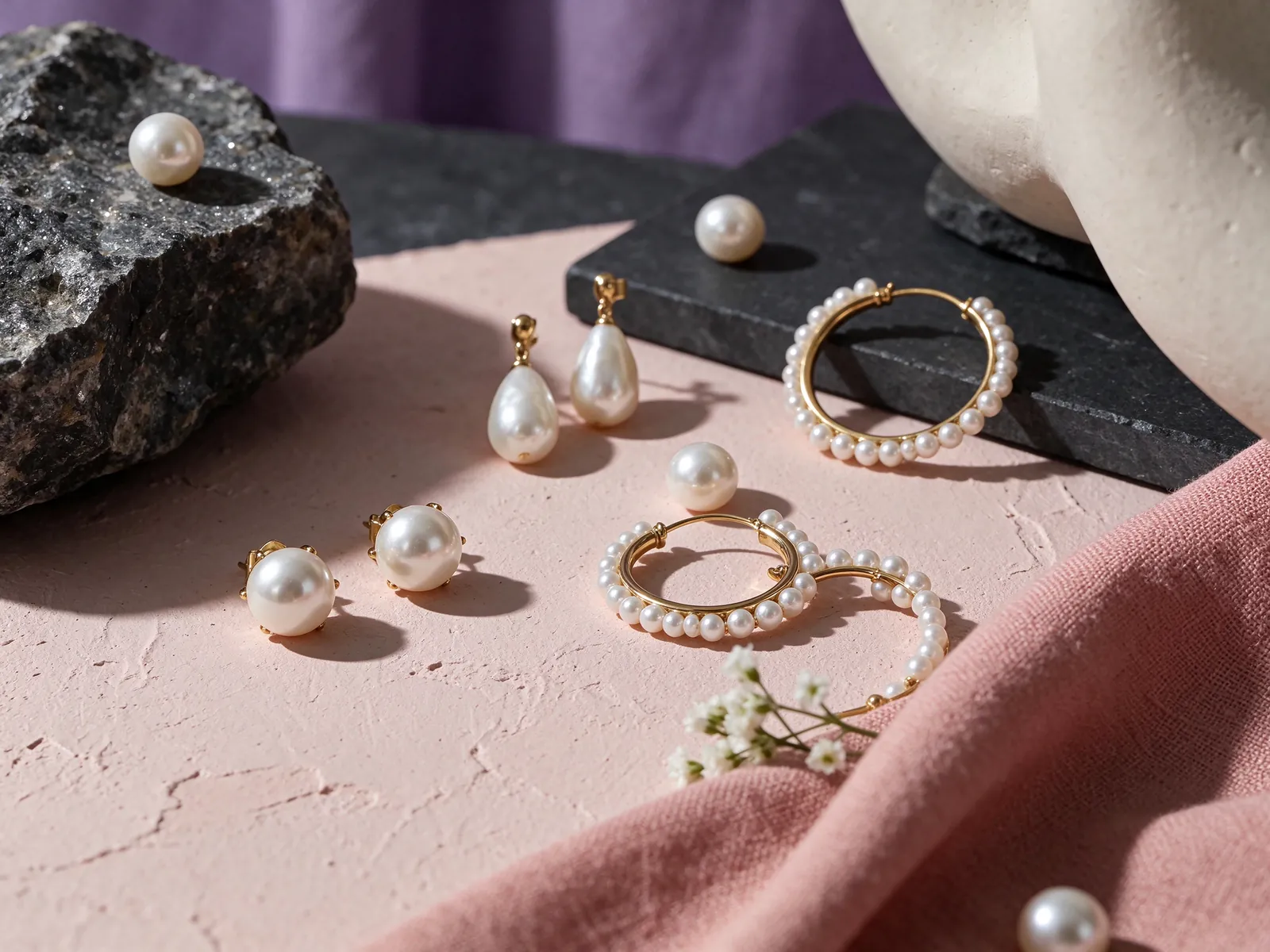
Read diameter separately from the size of a photograph
A close-up has no reliable scale unless the relevant dimensions are stated. Different crops, camera angles and screen magnification can make similar pearls look very different. To understand the outline of a seven, eight or nine millimetre circle, draw the diameters on paper and compare them on the same plane. This is a simple visual exercise, not a prediction of the earring’s weight, projection or fit.
For worn comparisons, keep the distance, lighting and head position as consistent as possible. A full-face view shows whether the earrings provide the presence you want; a close-up shows the space around the pearl. Neither view replaces the other. When exploring pearl stud earrings, consider the pearl separately from its setting; the visual weight of a pendant or necklace should not be transferred directly to an ear stud.
Ask what the measurement describes
Pearl diameter and the overall dimensions of an earring are different measurements. A surround, setting or drop can change the outline even when the pearl itself is the same size. For an irregular shape, consider visible width, orientation and projection instead of imagining a perfect circle from a single number. Knowing which element has been measured makes comparisons between designs more useful.
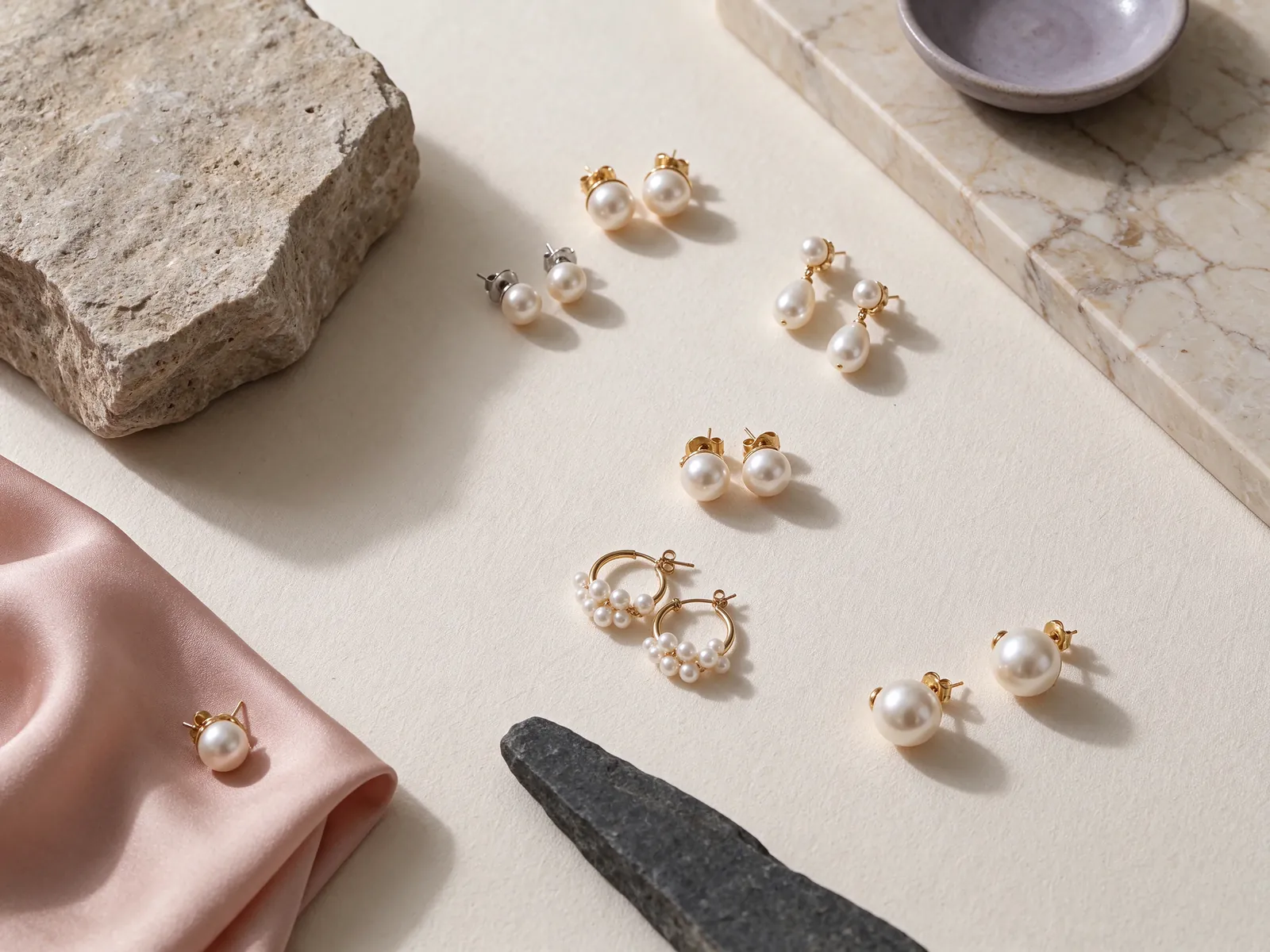
Choose the role of the earring before choosing a size
A discreet accent can still be visible; it simply does not need to lead the entire outfit. If you enjoy a small point of pearl light close to the lobe, compare small pearl stud earrings with the middle sizes. For multiple piercings, include the neighbouring earrings in the view. Available space and the rhythm of the complete arrangement matter more than treating the main stud as an isolated circle.
If a more visible pearl is your aim, compare neighbouring diameters before moving to a substantially different look. The styling discussion around 12mm pearl earrings can help you explore a stronger focal point, but it also calls for a fresh look at lobe space and support. A larger diameter is a change in visual direction, not evidence that an earring is more formal, more comfortable or of better quality.
Let your wardrobe test the decision
Choose a familiar work outfit, a casual outfit and something you wear for a dressier occasion. Assess the same visual size against all of them. A plain shirt does not require a small pearl, and evening clothing does not require a large one. Collar shape, fabric texture and the amount of other jewellery give you more practical information than a fixed occasion label.
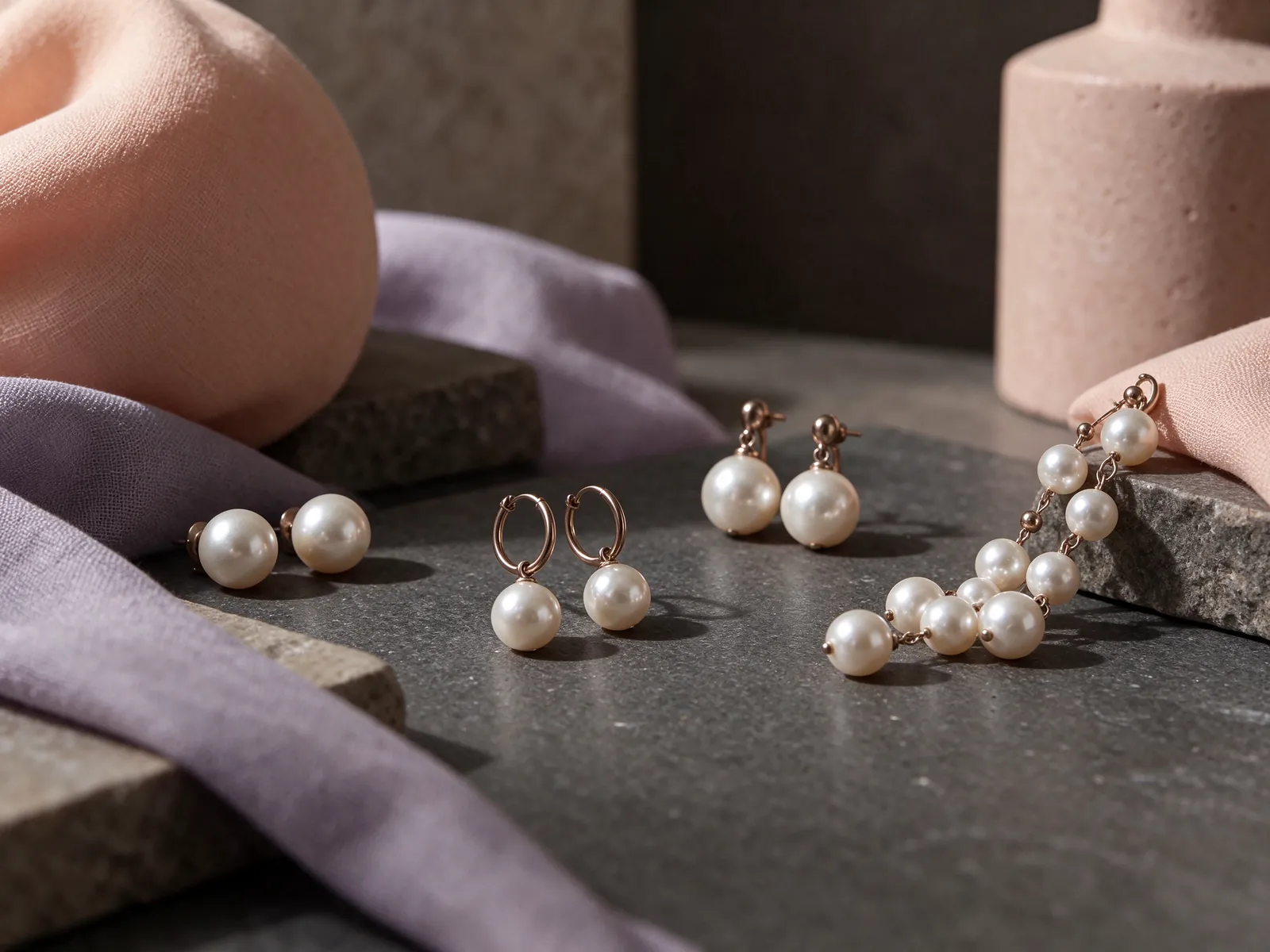
Separate a pleasing front view from a stable side view
After looking at the front, turn to the side and observe whether the pearl points forward or downwards. Diameter alone cannot explain that position. Piercing placement, the earlobe, the complete earring structure and the back all contribute to how it sits. A look you enjoy in a still photograph should not take priority over pulling or pressure when you wear it.
Learning about earlobe support backs for pearl earrings brings the rear contact into the comparison, while pearl earring back types explains a separate question: how the earring is secured and handled. When discussing a design, ask about the complete weight, front-to-back balance and back arrangement as well as the pearl diameter. Do not assume that tightening a back firmly will resolve every tilt or support concern.
Check movement with the things you regularly use
Turn your head naturally and look down rather than holding only a posed angle. Notice contact with collars, spectacle arms or your usual headphones. Let long hair fall normally to see whether it catches on the earring structure. If there is discomfort, stop wearing the earrings rather than asking your ears to accommodate a preferred number. Practical fit belongs in the size decision.
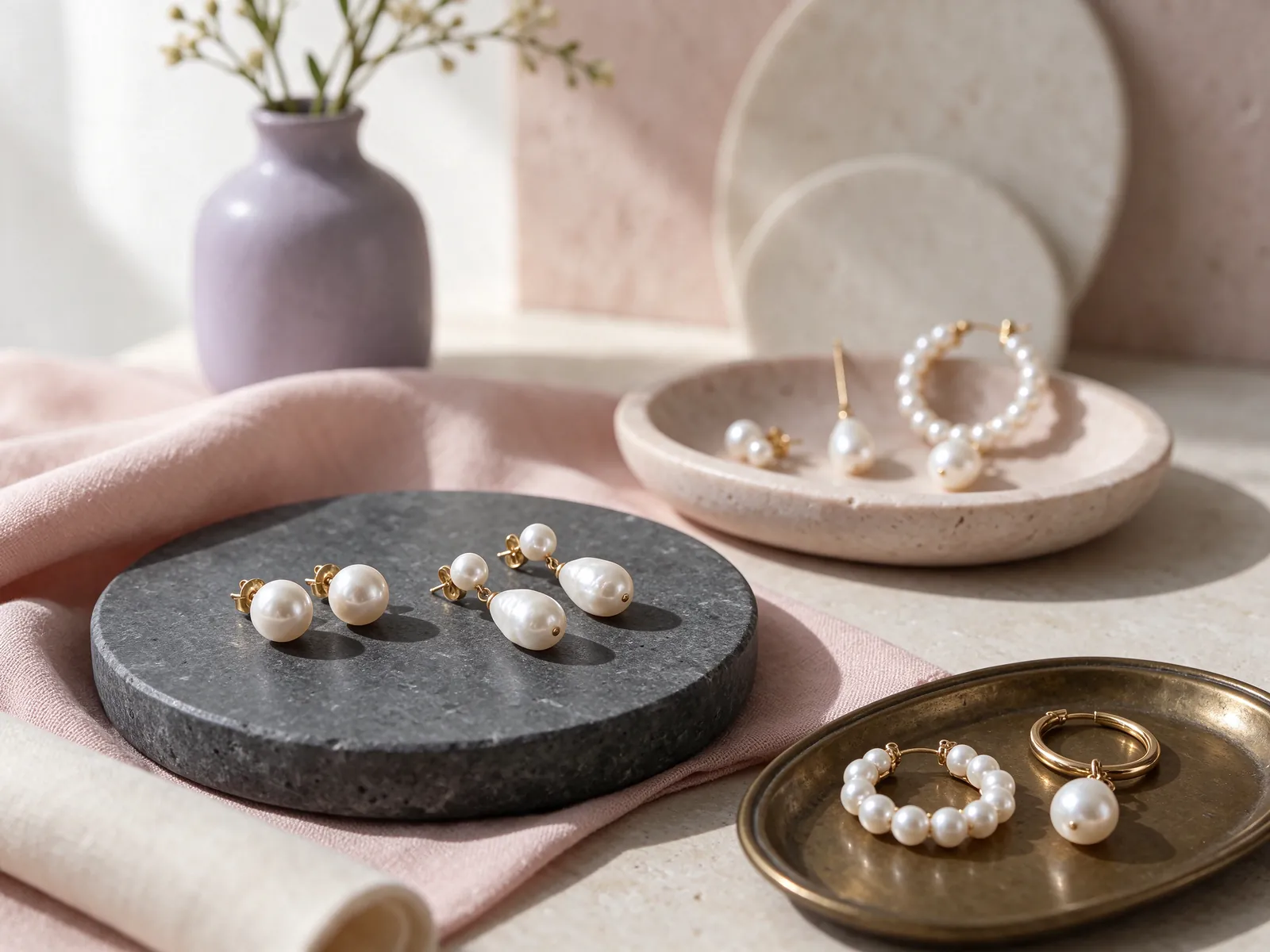
Similar diameters can have different visual character
Diameter does not describe everything you notice in a pearl. The clarity of reflections, its colour and its outline can change the impression of a stud, and different lighting can alter that impression again. Compare these characteristics under similar conditions. Decide whether you prefer a softer or more clearly defined appearance without treating brightness in a photograph as a complete assessment of quality.
GIA identifies seven pearl quality factors: size, shape, colour, lustre, surface quality, nacre quality and matching. Size is therefore only one part of the picture. For a pair of earrings, also look at whether the outlines, colours and light response work together. Appearance or a diameter alone cannot establish origin, natural-versus-cultured identity or the contents of a certificate.
Assess a pair both together and on the ears
Compare the two earrings beside each other in the same light, then consider their front and side views when worn. Earlobes and piercing positions need not be identical, so the pair may sit differently even when the pearls look similar off the ear. If you want an asymmetric look, make that an intentional styling choice. If balance is your aim, judge the complete face rather than demanding identical reflection points.
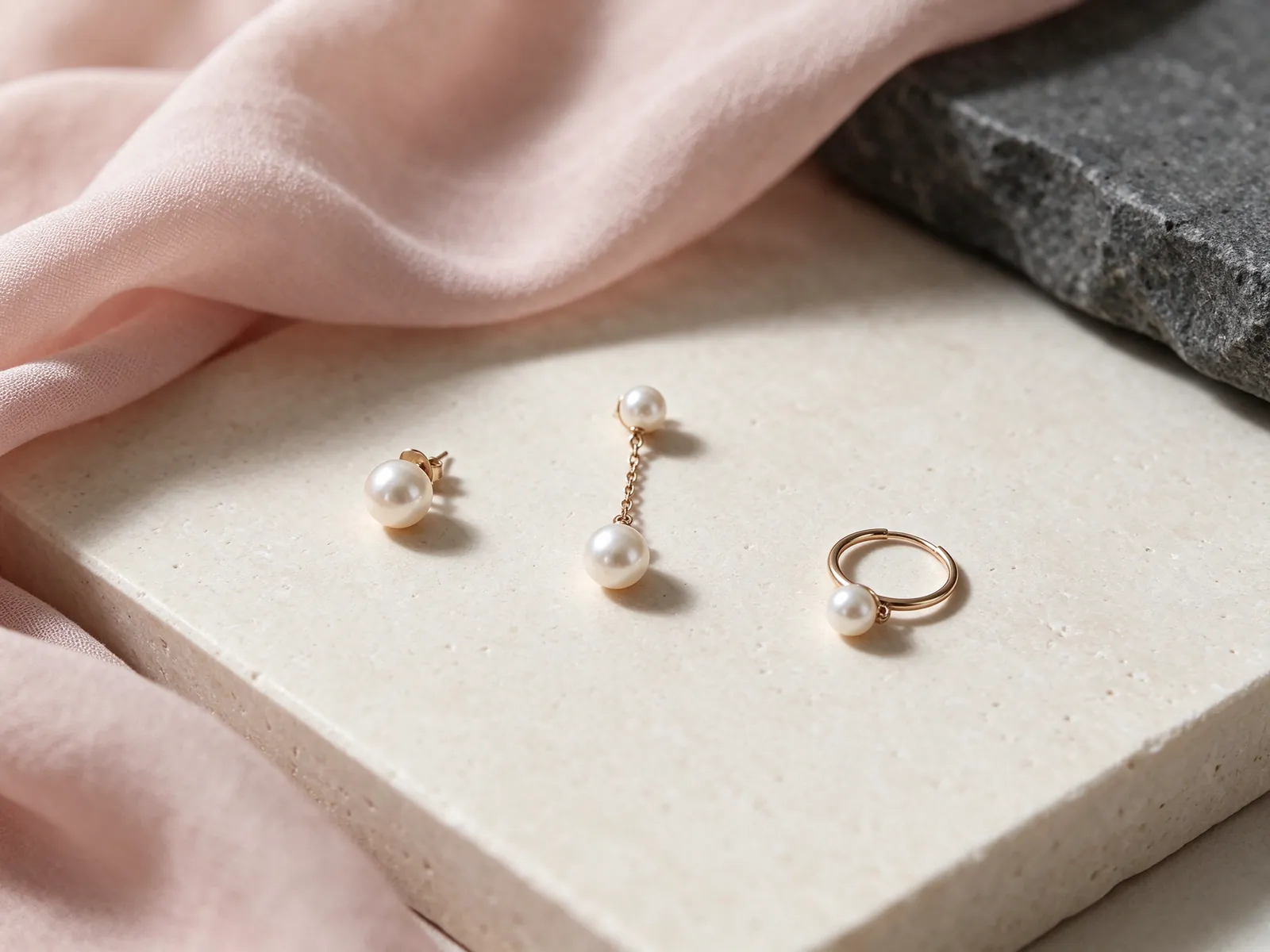
Build a comparison around your real hairstyle and neckline
Loose hair can turn an earring into a small flash of pearl, whereas a short cut or tucked-back style makes its full outline visible. Both can be attractive. The important distinction is how often you wear each hairstyle. A size chosen only with all your hair swept aside may not create the presence you expected when you return to your everyday routine.
With a high neck, shirt collar or crew neck, observe the visual space between the earring and the clothing before adding a necklace. Spectacle frames also introduce lines near the face. If you enjoy several earrings, decide which pearl should lead and let the others supply the rhythm. The everyday pearl earrings guide develops these practical combinations without requiring you to redesign an entire outfit around one accessory.
Change one element at a time
Keep your hairstyle and top unchanged while comparing earring sizes, then try a different neckline after identifying a preferred presence. Changing everything at once makes it difficult to tell whether you liked the diameter or the whole new outfit. Record observations such as visible with loose hair or touches the collar in profile. Those descriptions are more useful than a note saying only too large.
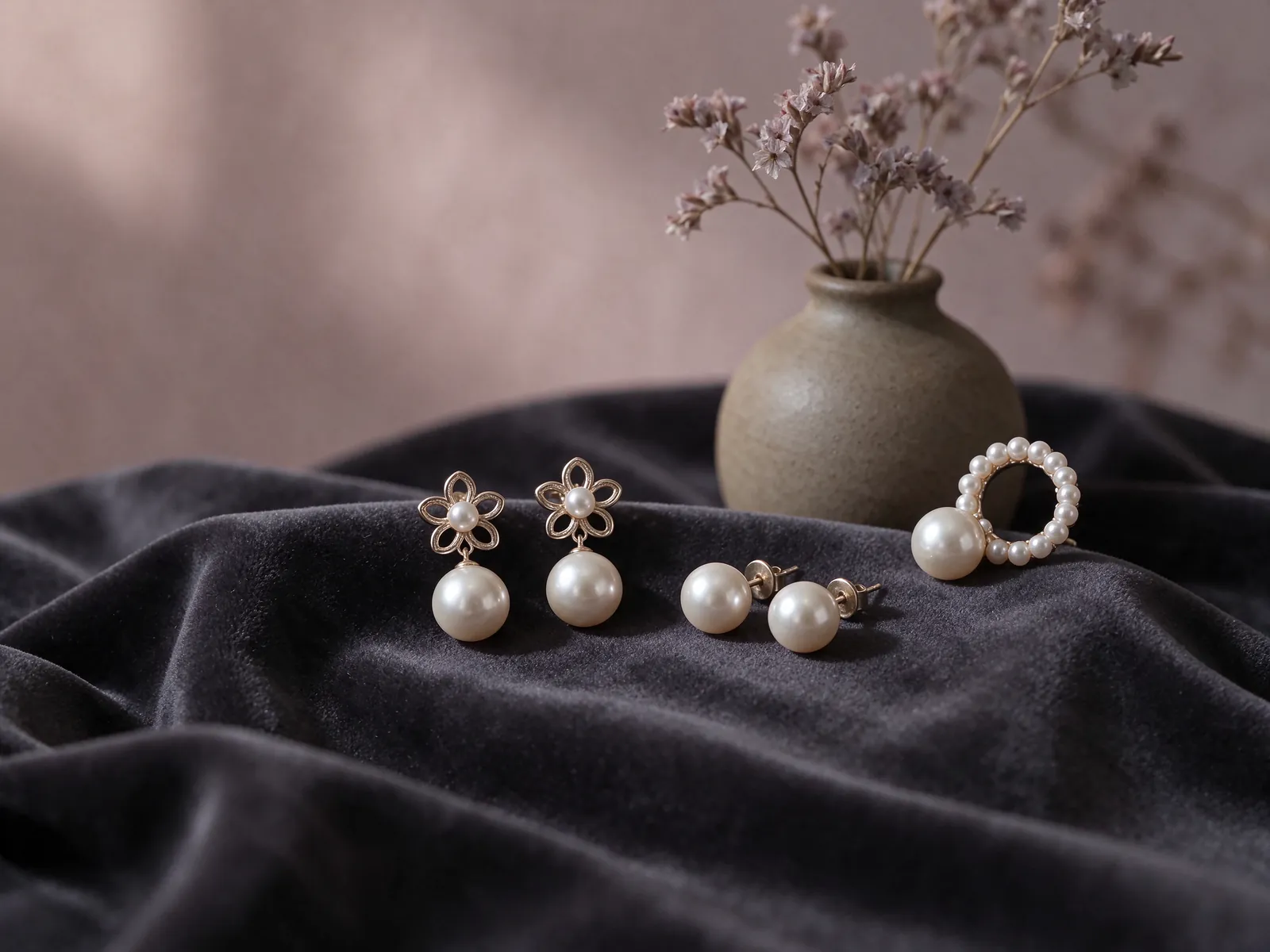
Turn your observations into a clear design conversation
Use a simple sequence: define the presence you want, compare the front outlines of neighbouring sizes, then assess the side view and movement. Write a specific observation at each stage. Perhaps you want the lower edge of your lobe to remain visible, or you regularly wear headphones. These details make a discussion more productive than asking which diameter is best for everyone.
For a conversation with Flint Jewellery, bring together your usual outfits, hairstyle, existing earrings and the size direction you would like to explore. Images can communicate a style preference, but they cannot determine actual diameter or complete weight. If you are undecided between seven, eight and nine millimetres, describe the balance between pearl and visible earlobe first. This keeps the discussion grounded in your preferences rather than a preset recommendation.
Keep appearance and wearing feel as separate notes
A pearl that looks right from the front but tilts in profile raises a different question from one whose visual scale you dislike. The first calls for attention to structure and support; the second may suggest a different size direction. Keep a quieter and a more noticeable option if both appeal, and revisit them with familiar clothes instead of forcing an immediate answer. Discuss your observations and preferred pearl earring size with Flint Jewellery on WhatsApp (+85260106207).
| Comparison direction | Front-view check | Lobe and profile | Styling test | Question to resolve |
|---|---|---|---|---|
| Smaller pearl outline | Does it give the discreet accent you want? | Observe the visible space around it | Check visibility with loose hair | Does it leave room for neighbouring earrings? |
| 7mm comparison point | Record the outline against the ear | Look at piercing placement and the lower edge | Use a familiar top as the baseline | Is the presence clear in a full-face view? |
| 8mm comparison point | Compare at the same viewing distance | Check the side view again | Keep hair and neckline unchanged | Is your preference about size or light response? |
| 9mm comparison point | Assess whether the focal point feels stronger | Consider visible space and wearing feel | Include glasses and other jewellery | Is there contact during normal movement? |
| Larger pearl direction | Decide whether the earring should lead | Include structure and support | Reduce competing focal points and compare | How does overall outline differ from pearl diameter? |
Pearl knowledge and authoritative references
GIA identifies seven pearl quality factors: size, shape, colour, lustre, surface quality, nacre quality and matching. Diameter is one factor, not a complete assessment of a pair of earrings.
Read the reference for this factFrequently asked questions
Is a two-millimetre difference worth comparing on the ear?
Yes. The difference between seven and nine millimetres describes diameter, but its significance depends on the space around the pearl and the presence you want. Compare the same hairstyle, light and viewing distance rather than relying on unrelated close-ups.
Which ear should guide the choice if my earlobes are different?
Assess both ears and finish with a full-face view. Look closely at the side with less visible space or more obvious tilt, then check whether the other side still gives the balance you enjoy. Piercing placement can matter as much as the outline of the lobe.
Can I use the main piercing size for a second piercing?
Do not assume it will create the same result. A second piercing needs its own space assessment, including nearby earrings and the hierarchy of the complete arrangement. Check for visual overlap and contact during normal movement.
Must I choose a smaller pearl if a stud tilts downwards?
Not necessarily. The complete structure, piercing placement and back arrangement need consideration before attributing the tilt to diameter. Do not use a tightly pressed back as a universal solution. Stop wearing earrings that cause pulling or discomfort and reassess the fit.
Does a larger pearl automatically have better lustre?
No. GIA lists size and lustre as separate factors among seven pearl quality factors. Shape, colour, surface quality, nacre quality and matching also matter. A diameter comparison cannot represent the entire quality assessment or establish pearl identity.
Updated: