
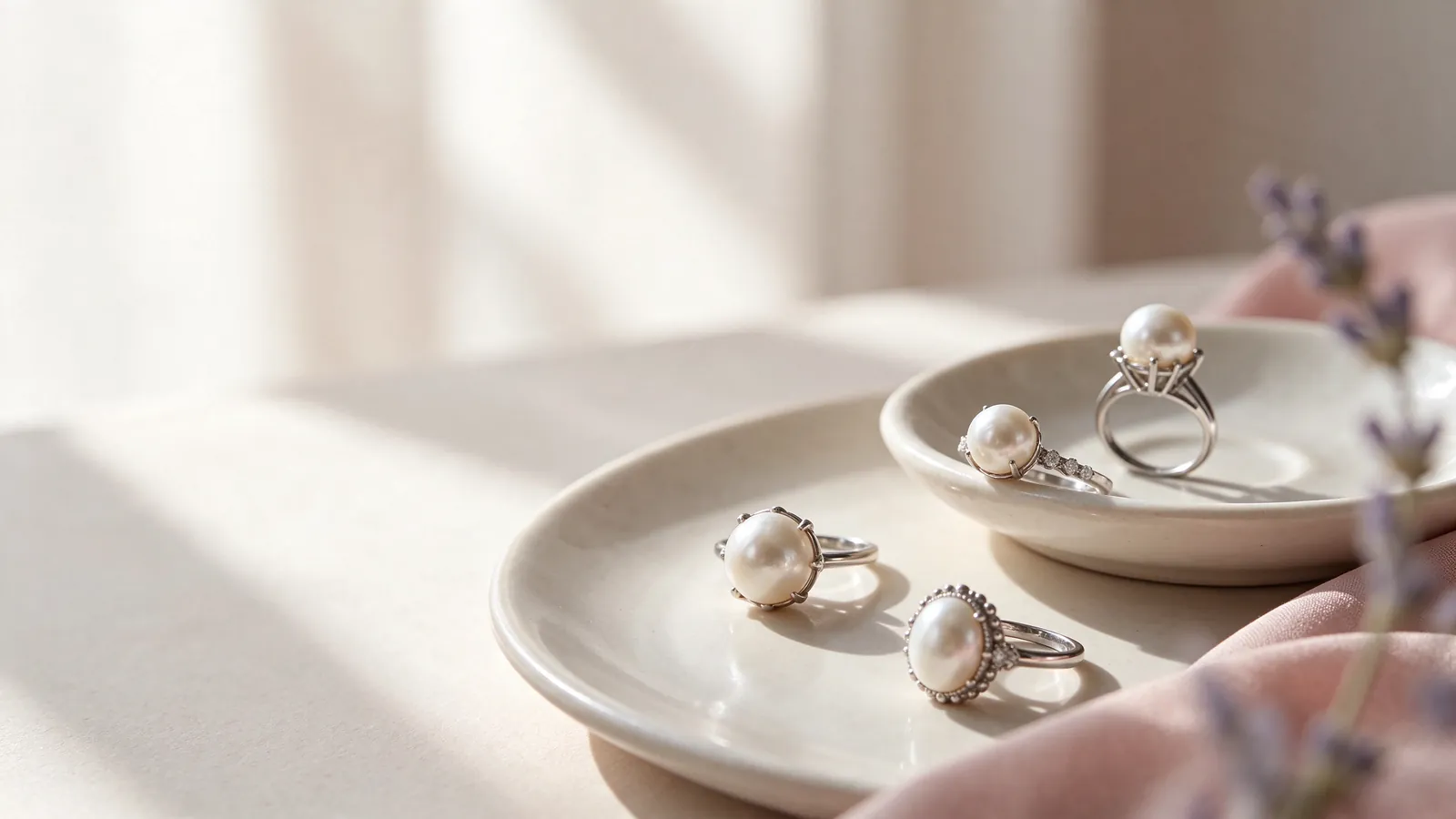
Beyond the gap: are open pearl rings adjustable, and can an open pearl ring be resized? Why structure matters in open pearl ring size selection
The gap can create negative space, separate two decorative ends or give a pearl room to stand out. None of those visual choices establishes a permitted adjustment method. When comparing an open pearl ring, look for the stated ring size and instructions for that particular design. A ring described as open may still be intended to keep its original shape at a fixed size.
Adjustability and professional resizing answer different questions. An adjustable design needs clear guidance about whether adjustment is allowed, how it should be done and any limits. Resizing requires a separate assessment of the band and setting. Do not treat a flexible-looking end as an invitation to squeeze the ring each morning, or assume a visible gap provides spare sizing capacity.
When open pearl ring size selection leaves a loose or tight fit, are open pearl rings adjustable, and can an open pearl ring be resized? Seek a design assessment before any alteration
If you must pull the ends apart to clear your knuckle or press them together to keep the ring on, stop before changing the shape. Note the stated size, intended hand and finger, and where the fit fails. This gives a jeweller useful information for discussing another size, another finger or an alteration assessment, without using the pearl as a lever.
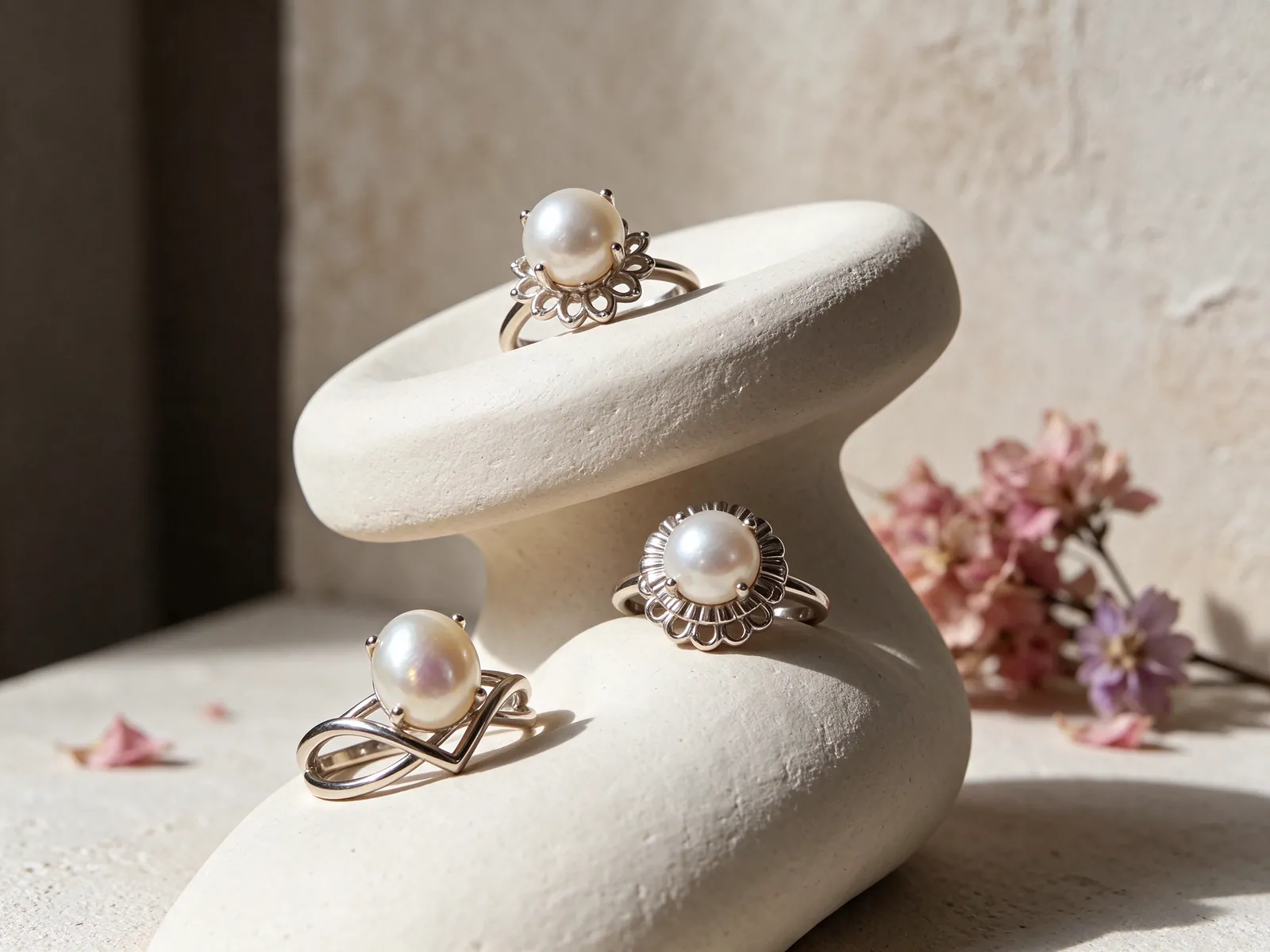
Measure the intended finger and identify the sizing system
Begin with the finger you will actually use, rather than the size of a ring worn elsewhere. Your left and right hands may not feel identical in the same design. A guide to how to measure ring size should help you distinguish the finger base from the knuckle. Keep a measuring strip straight and comfortably fitted, not loose enough to slide away or tight enough to leave a pronounced indentation.
Ask whether the number is a Japanese size, a US size or a measurement in millimetres. An inside diameter and an inside circumference describe different dimensions; neither is the width of the open gap. Use Japanese to US ring size conversion only after identifying the original system. Comparing numbers without their labels can lead to a poor choice even when the chart itself is accurate.
A familiar ring is a reference, not a guaranteed match
Bring a ring that fits the intended finger and explain how you normally wear it. Its size is helpful, but a narrow rounded band may feel different from an open design with a broader contact area or an off-centre top. Compare the inner profile and band width as well as the number. The new ring still needs its own fit check.
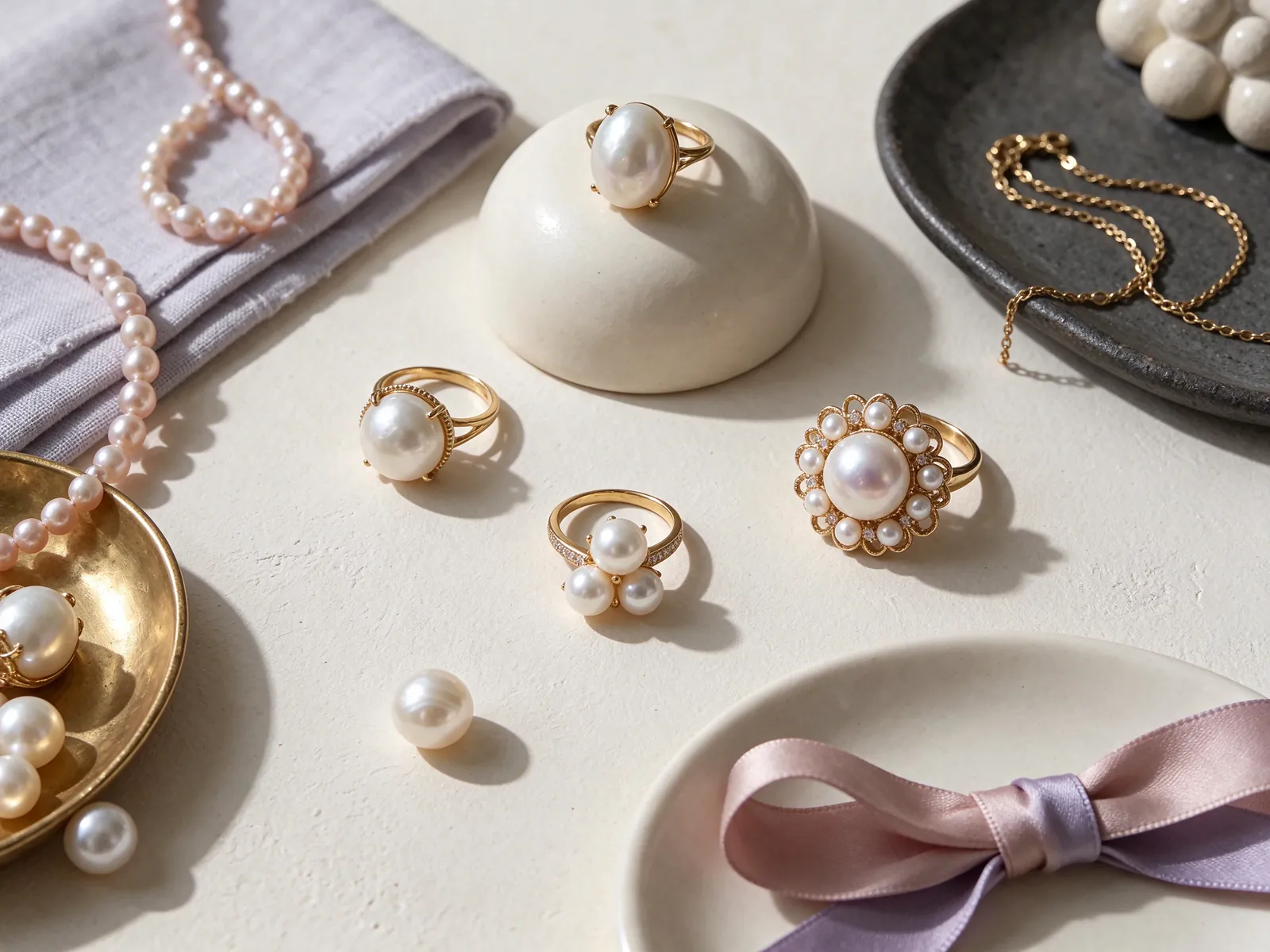
Check movement, not just whether the ring goes on
Once the ring is at the finger base, relax your hand and gently close it. Notice whether an end presses into the skin, touches the neighbouring finger or directs the pearl towards your palm. Take the ring off using the band rather than pulling the pearl. A still photograph can show the styling, but it cannot show how comfortably the design behaves during ordinary hand movement.
An open gap does not cancel the effect of band width. For a more substantial silhouette, consider wide band pearl ring sizing alongside the inner curve and position of the ends. Local pressure may come from the shape rather than simply a small size number. Bending the gap wider can change the silhouette without addressing the particular point that is uncomfortable.
Do not solve rotation by accepting excessive tightness
A pearl placed to one side makes its position worth checking, but not every asymmetrical ring will rotate. If the top keeps turning, compare the space at the finger base, the contact area and the intended orientation. Choosing an uncomfortably tight fit to stop movement can create another problem. If the ring causes clear pain or sustained pressure during a fitting, remove it and reconsider the fit.
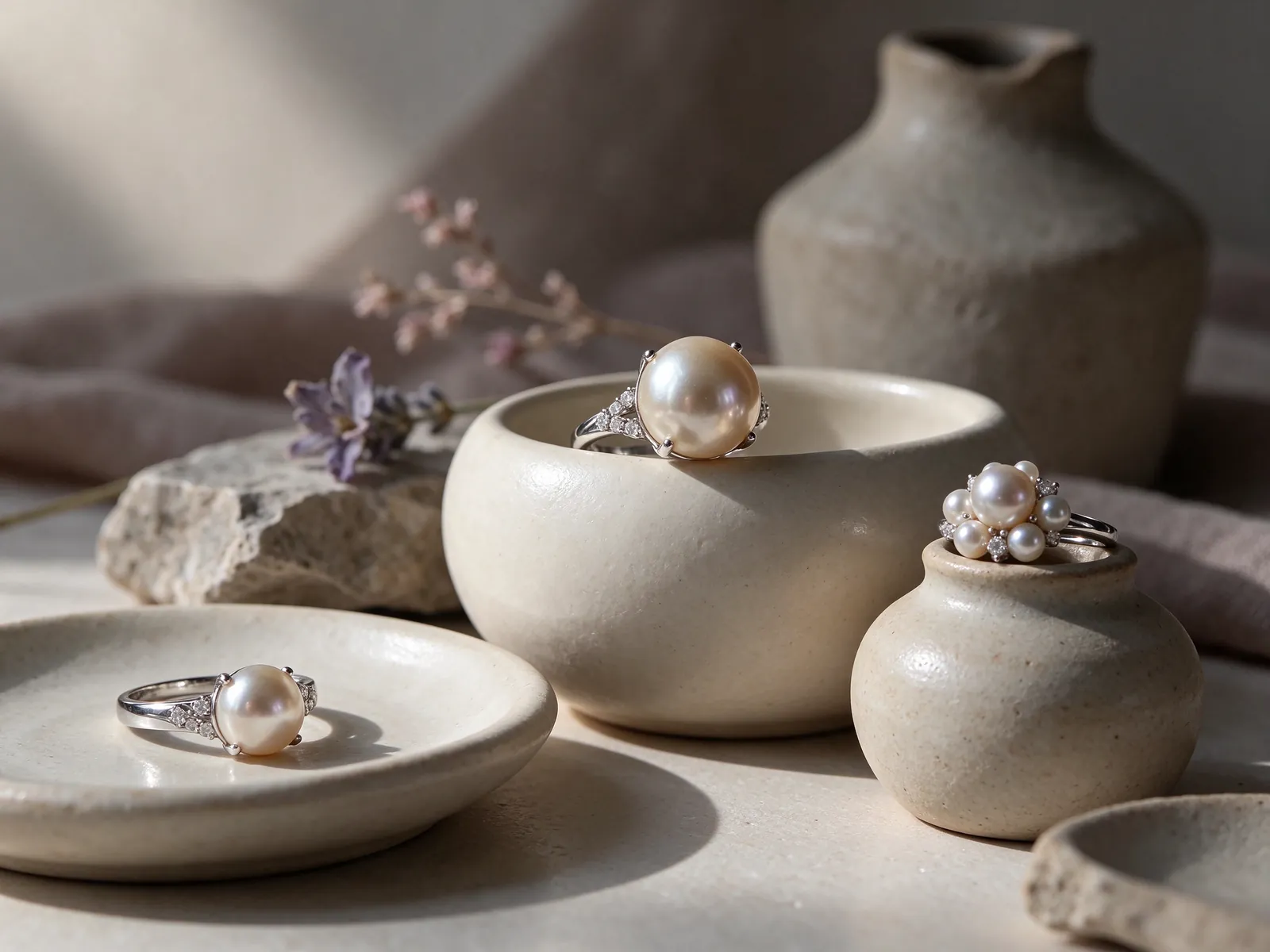
Consider the pearl profile and your everyday clothes
A suitable band size is only part of a practical choice. Look from the side to see how far the pearl and setting project, and from above to see their relationship with adjacent fingers. Comparing a single pearl ring helps you consider visual proportions, but pearl diameter is not the same as overall setting height. Do not infer either measurement from a product photograph without a stated dimension.
For knitted sleeves or delicate cuffs, observe whether the ends or setting interfere with the fabric during gentle movement; do not deliberately snag the ring to test it. Think about holding a handbag, handling papers or using a keyboard. The aim is to select a design that suits your routine, not to prove that the pearl can withstand knocks or rough handling.
Trying another finger requires another fit check
Moving the ring to another finger can be an alternative to changing it, but it is not automatically a solution. Check the knuckle, finger base, neighbouring fingers and end positions again. If the pearl still presses against another finger or the band obstructs movement, consider a different structure rather than forcing your hand to accommodate a shape that does not work for you.
Ask precise questions before choosing a size
Separate the purchase questions: Which sizing system is used? Is the design fixed-size? If adjustment is expressly permitted, who should make it and how are its limits described? What are the options if the fit is wrong? A general resizing statement from a shop does not establish that every pearl setting or open band can be altered. Get the answer for the specific design.
When browsing pearl rings Hong Kong, use front, side and underside views to discuss the gap direction, contact area and setting position. These views can clarify the design but cannot establish adjustability or replace trying it on. For an online purchase, ask for clear size information and the relevant arrangements before deciding, rather than buying an obviously unsuitable size with the intention of bending it later.
An open ring is not a shortcut for a surprise gift
If you do not know the recipient's size, establish the intended finger or plan a fitting together. A borrowed ring helps only if it genuinely fits that finger. To preserve a surprise, ask about size selection and the conditions for dealing with an unsuitable fit before purchasing. The open appearance itself does not promise an exchange, resizing service or a universal fit.
Style the negative space without changing the gap
With a simple blouse or shirt, wearing the ring alone lets the pearl and open lines remain the focal point. If you add a ring on a neighbouring finger, leave enough room to prevent contact. A visually attractive orientation still needs to be stable and comfortable; do not rotate the design into an awkward position just because it looks effective in a photograph.
Stacking on the same finger can bring another band against the pearl setting or press on an open end. Two rings that fit individually may feel different together because the combined contact area changes. Try a non-adjacent finger or coordinate with earrings instead of pulling the gap wider to create stacking room. Keep the original design shape separate from your styling choices.
Match wearing occasions to hand activity
An evening meal and a day of frequent lifting make different demands on your hands. Consider sleeves, bags and the day's tasks before wearing the ring, and remove it before housework, exercise or moving bulky items. If a size feels comfortable only in one carefully held position, reassess the fit rather than repeatedly squeezing the band to make it suit each activity.
Respond carefully to distortion or a changed fit
If the gap looks different, an end has shifted or the pearl sits at a new angle, do not bend it in the opposite direction as a remedy. Stop wearing it, store it separately and keep earlier photographs for comparison. Tell a jeweller where force was applied and whether there was a drop or impact. An apparently small change does not identify the condition of the whole structure.
GIA lists pearl at 2.5 on the Mohs hardness scale and advises against ultrasonic or steam cleaning. That figure concerns pearl care, not a permitted bend in the metal or a durability rating for the complete ring. After wearing, wipe gently with a very soft, clean cloth. Keep perfume, hair spray, acids and excessive heat away from the pearl rather than attempting a harsh cleaning treatment.
Let the assessment determine whether alteration is suitable
A useful assessment considers the band, open ends, setting and current fit together. Ask how a proposed change might affect orientation, contact points and comfort, then compare the available options. Another size, finger or structure may be preferable. Avoid home heating, pliers or removing the pearl yourself; the appropriate next step depends on the actual ring, not the fact that it has a gap. For a conversation about pearl ring fit, contact Flint Jewellery on WhatsApp at +85260106207. Share your intended finger, sizing system and where the ring feels uncomfortable so the enquiry is specific; any alteration still needs an assessment of the individual ring.
| Check | Information to obtain | What to observe | What to avoid | Useful next step |
|---|---|---|---|---|
| Open shape | Fixed size or explicit adjustment instructions | Fit in the original shape | Assuming the gap grants permission to bend | Ask about design limits |
| Size notation | Japanese, US, diameter or circumference | Correct system for the intended finger | Comparing unlabelled numbers | Confirm the size with its system |
| Knuckle and base | Measurement position and intended hand | Passage over the knuckle and comfort at the base | Squeezing the ends to hold it on | Repeat the fitting or compare sizes |
| Pearl and clothing | Setting profile and end direction | Contact with fingers, cuffs or other rings | Widening the gap to accommodate a stack | Choose a non-contact combination |
| Changed shape | Original appearance and any applied force | Shifted ends or a tilted top | Reverse bending or home heating | Stop wearing and seek an assessment |
Pearl knowledge and authoritative references
GIA lists pearl at 2.5 on the Mohs hardness scale. This informs care of the pearl surface; it does not describe an allowable adjustment range for an open band or rate the durability of the whole ring.
Read the reference for this factFrequently asked questions
Does a free-size description mean I can squeeze the ring myself?
Not by itself. Ask what wearing sizes the description covers and whether adjustment is expressly permitted, including who should carry it out. If the instructions are unclear, select by actual fit rather than treating the ends as a routine adjustment mechanism.
Should I make the gap smaller if the ring is loose below a large knuckle?
Do not bend it yourself. The knuckle and finger base need to be considered together, alongside the band shape. A fitting can compare passage over the knuckle, rotation and contact points before discussing another size or a different structure.
Can a side photograph show whether resizing will be easy?
It can help explain the silhouette and setting position, but it cannot establish how the complete structure will respond to alteration. A slim appearance is not proof of adjustability. Suitability needs a design-specific assessment of the actual ring.
Is it sensible to pull on the pearl when taking the ring off?
Avoid using the pearl as a handle. Handle the band without levering the open ends or tugging the setting. If removal requires forceful pulling, reconsider the fit rather than repeating the same action or trying to spread the gap.
Does persistent rotation automatically mean the ring must be resized?
No. Fit, contact area, top position and finger choice can all be relevant. Compare those factors in a fitting and consider another arrangement. A tighter size is not a good solution if it causes discomfort, and resizing requires its own assessment.
Updated: