
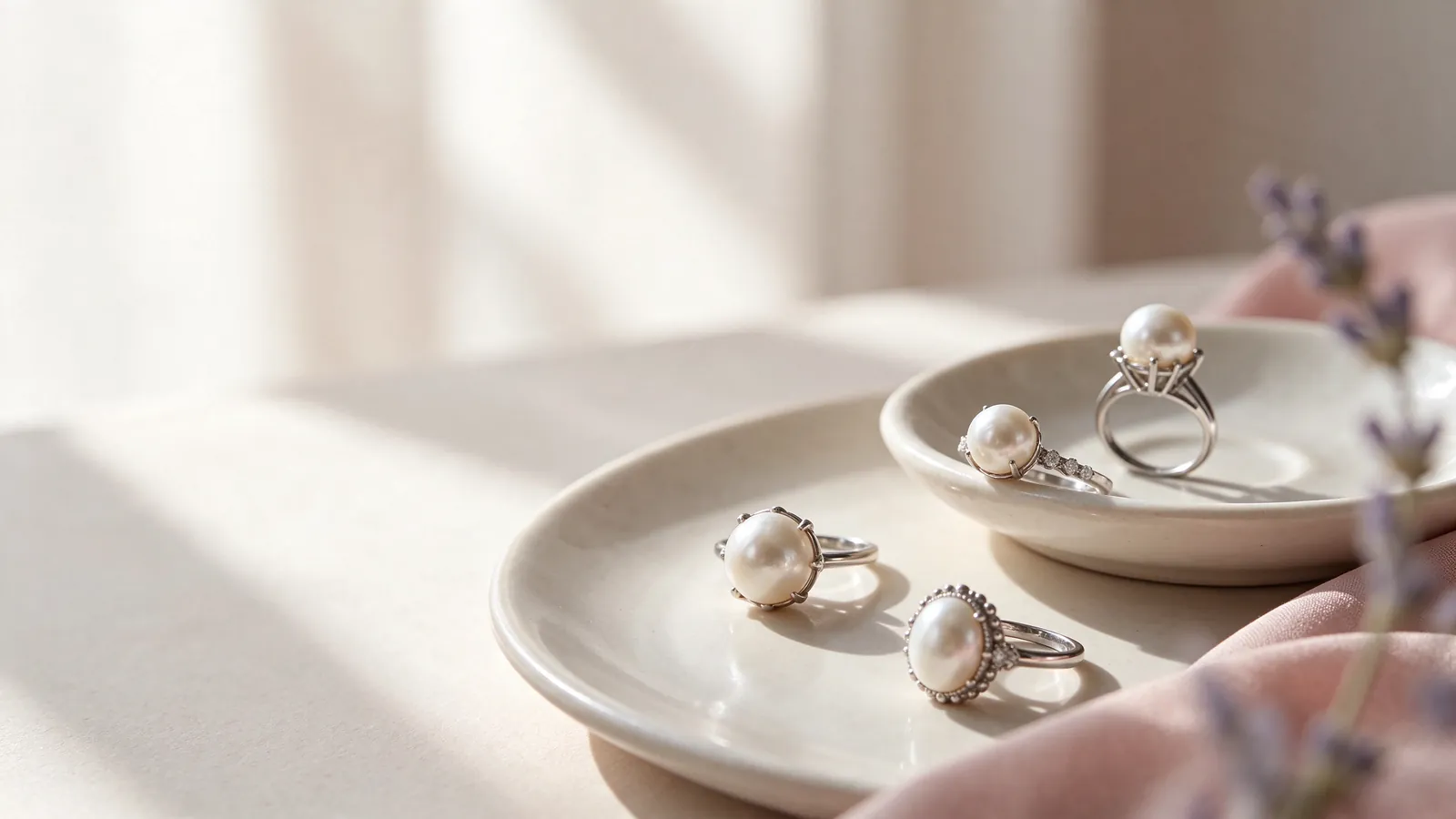
Which setting proportions suit your style in a platinum pearl ring, whether a PT900 pearl ring or PT950 pearl ring?
Begin with the space around the pearl. From above, notice how much of the band remains visible, whether the shoulders look delicate or substantial, and how the outline relates to your finger. A fine band can draw attention towards the pearl, while broader shoulders give the setting a stronger presence. Neither is automatically the better choice. If you wear a prominent watch, a restrained outline may leave more visual breathing room; if the ring will be your main accessory, a bolder silhouette might suit your intention.
Next, turn your hand sideways. Check the pearl's height, the profile of the shoulders and any contact with neighbouring fingers. Gently close your hand and handle your usual handbag rather than judging only a still photograph. A less projecting outline can feel visually discreet, but it does not make the pearl resistant to knocks. When comparing a PT900 pearl ring with a PT950 pearl ring, keep the design proportions similar where possible so that the shape is not mistaken for a difference caused by the metal label.
How should you confirm ring size for your chosen platinum pearl ring setting, whether a PT900 pearl ring or PT950 pearl ring?
Identify the intended hand and finger first. If you have a comfortable ring, record its band width as well as its size system or measured inner diameter. A fitting ring close to the proposed width is more informative than a much finer band. The guide to how to measure ring size can help organise your measurements; also describe how the ring passes the knuckle and rests at the finger base.
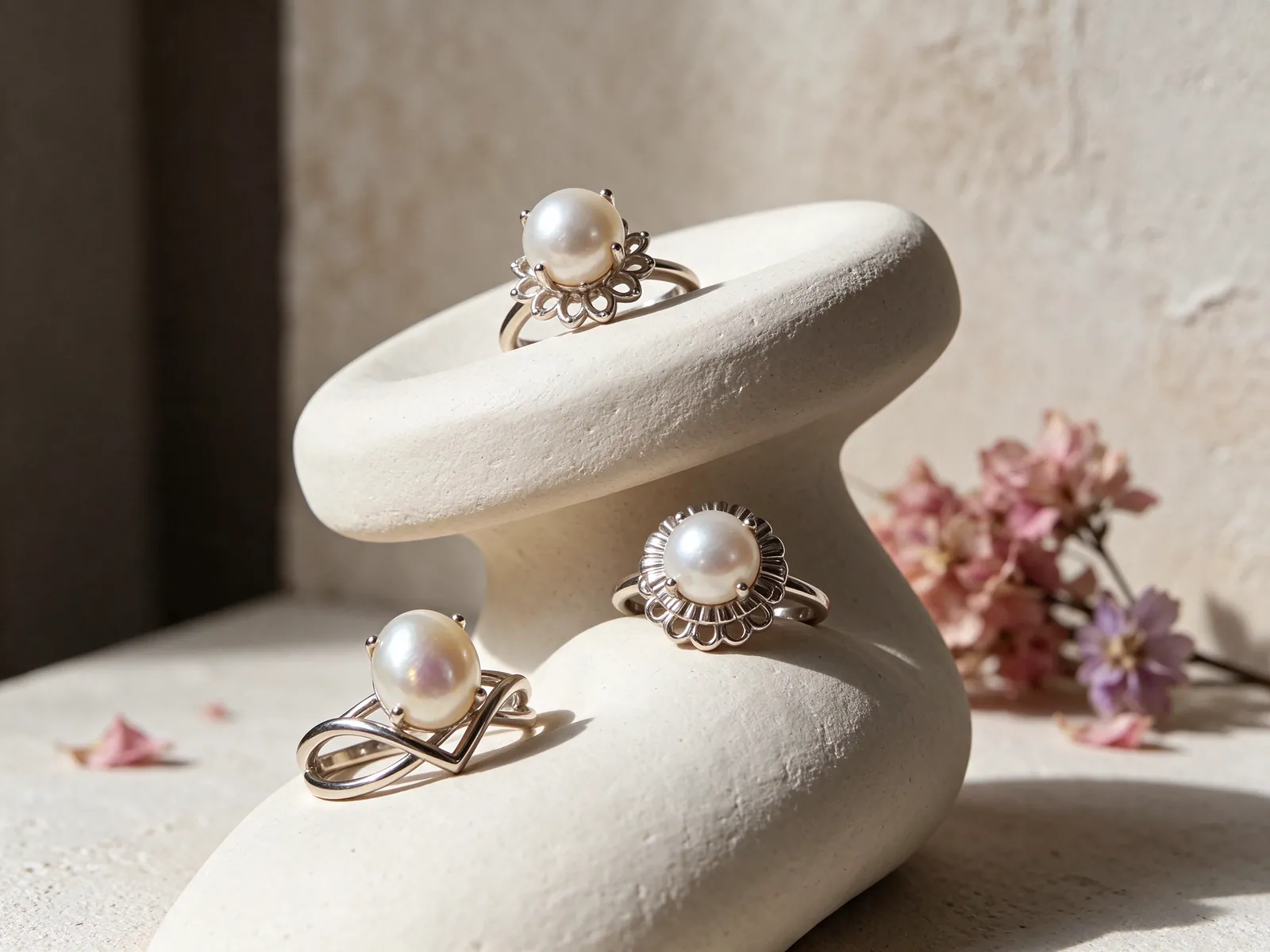
Separate the metal name from the white-coloured appearance
Platinum and 18K white gold are different material names, even when both create a white-coloured setting. Keep PT900 and PT950 platinum separate from 18K 750 white gold in your notes. Choosing by a photograph alone can blur that distinction. For another white-coloured setting to compare, the sterling silver pearl ring guide is an independent material comparison. Sterling silver is not a selectable material option; a similar colour does not make it interchangeable with platinum.
If most of your accessories have warmer tones, place a white-coloured ring beside them and decide whether you enjoy the contrast. An 18K gold pearl ring discussion can include 18K 750 white gold, 18K 750 yellow gold and 18K 750 rose gold as alternative styling directions. Colour harmony is personal, not a universal ranking of metals. Equally, a preference for platinum does not settle the shoulder shape, the amount of metal visible or the fit you will find comfortable.
Compare like with like before deciding
Write down the features you want to hold constant: a simple shoulder, a particular band width or space beside an existing wedding ring. Then ask what can be discussed within each material option. If two designs have very different outlines, do not attribute every difference in feel or outline to PT900 versus PT950; the individual structure and amount of material also belong in the conversation.
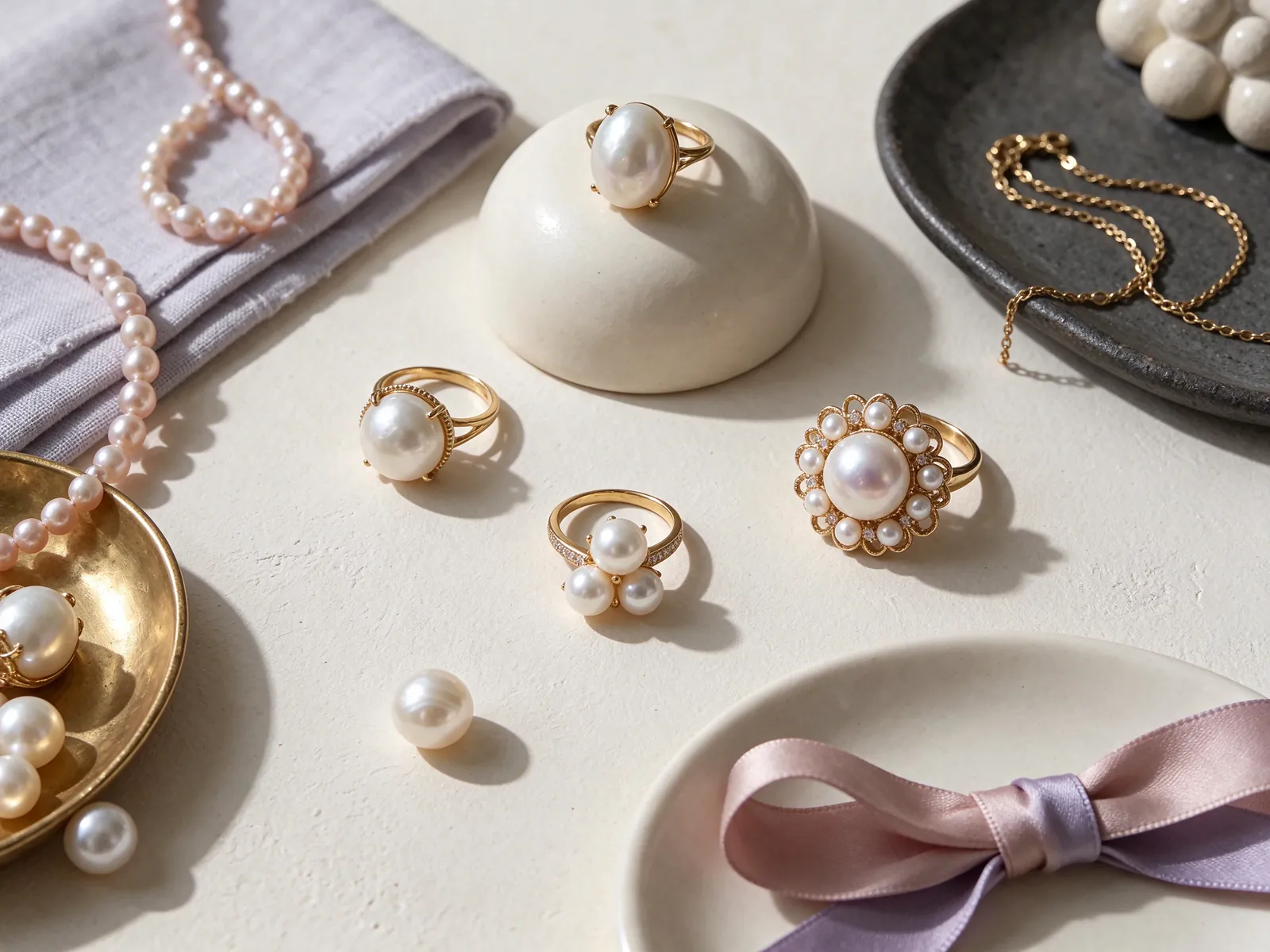
Assess the pearl in the lighting you actually use
A close-up can reveal detail, but it does not show how the pearl sits on your hand. Look at the ring under soft daylight and ordinary indoor lighting, then rotate it slowly. Notice the clarity of reflections, the transition between light and dark areas, and surface features visible from different directions. Include your hand in a comparison photograph. This makes it easier to judge the balance between the pearl and the platinum outline without relying on a brightly lit image alone.
GIA describes seven pearl value factors: size, shape, colour, lustre, surface quality, nacre quality and matching. For a single-pearl ring, lustre, surface appearance and shape can be practical starting points; matching becomes relevant when you want a coordinated pair of earrings or another piece. These factors help you ask focused questions. A platinum setting, a round outline or a pleasing colour does not establish the pearl's species, origin, natural-versus-cultured identity or certification.
Distinguish a preferred viewing angle from pearl identity
If you particularly like one face of the pearl, describe how you would like that face presented when wearing the ring. Keep that visual preference separate from the pearl's written description and any associated documents. Pinkish reflections or a white appearance can guide styling, but they are not a shortcut to identifying the pearl. Ask about the actual pearl being discussed rather than inferring details from the setting.
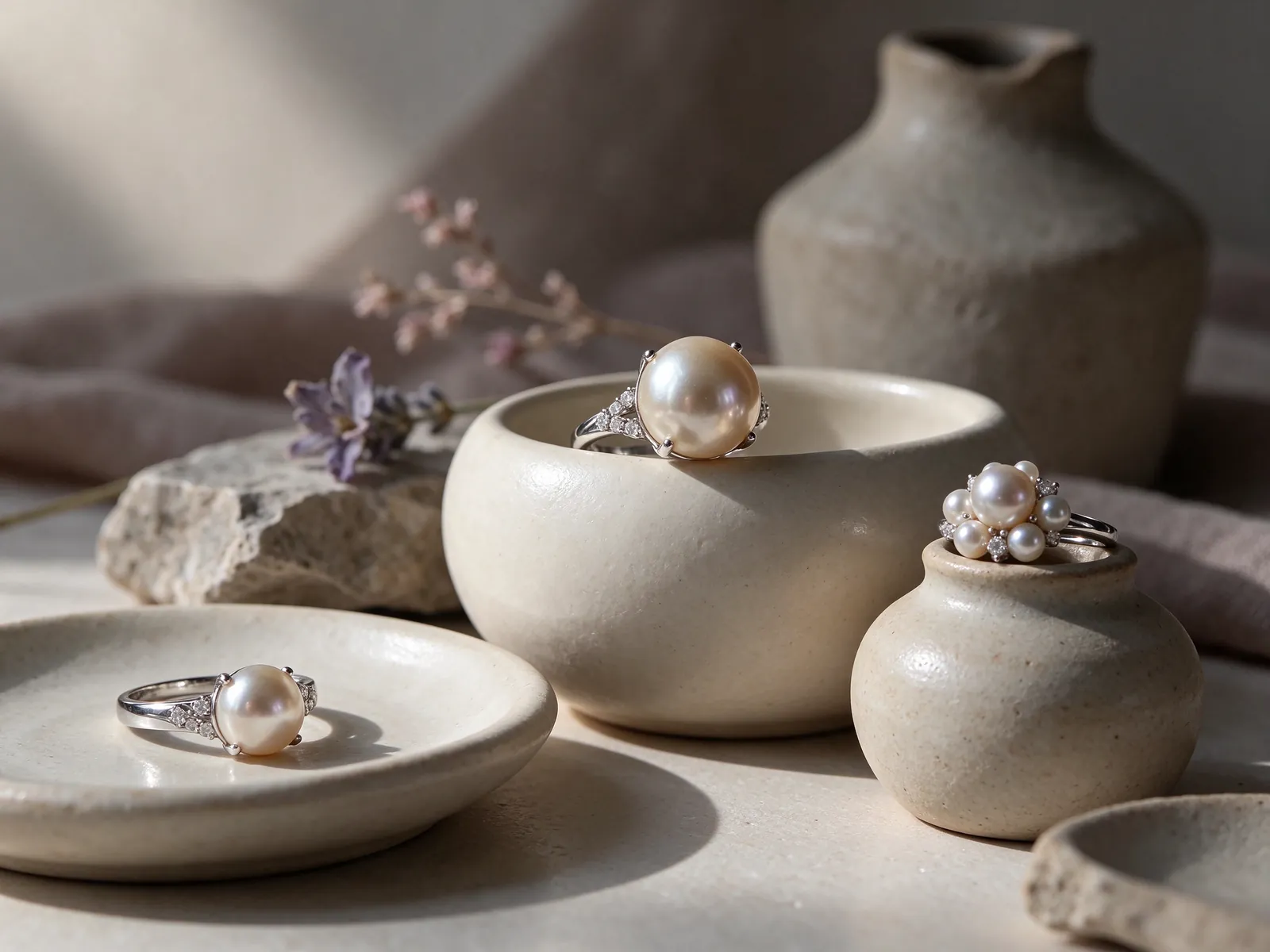
Band width and size systems deserve their own check
A wider band makes contact with more of the finger than a narrow one, so an old size number may not explain the whole wearing experience. Try a similar-width fitting ring and check comfort when bending your fingers, passing the knuckle and removing it. The guide to wide band pearl ring sizing offers a useful extension to this discussion. Avoid automatically adding a fixed amount to your usual size: the inside contour and your individual finger shape also matter.
Always name the size system alongside the number. If your existing ring uses Japanese sizing and the design discussion uses US sizing, Japanese to US ring size conversion can help you communicate clearly. Send the original size and system, not just a converted result. A chart cannot test comfort, and a pearl setting concentrated above the finger also deserves an assessment of balance when your hand moves.
Keep measurement context, not only the smallest reading
Record when you measured and whether you used a fitting ring, an existing ring's inner diameter or a strip around the finger. If readings differ, keep the observations rather than selecting the smallest number. Let your hands return to a comfortable temperature before comparing fit. The aim is a balanced assessment of the knuckle and finger base, not a size that simply looks tidy on a chart.
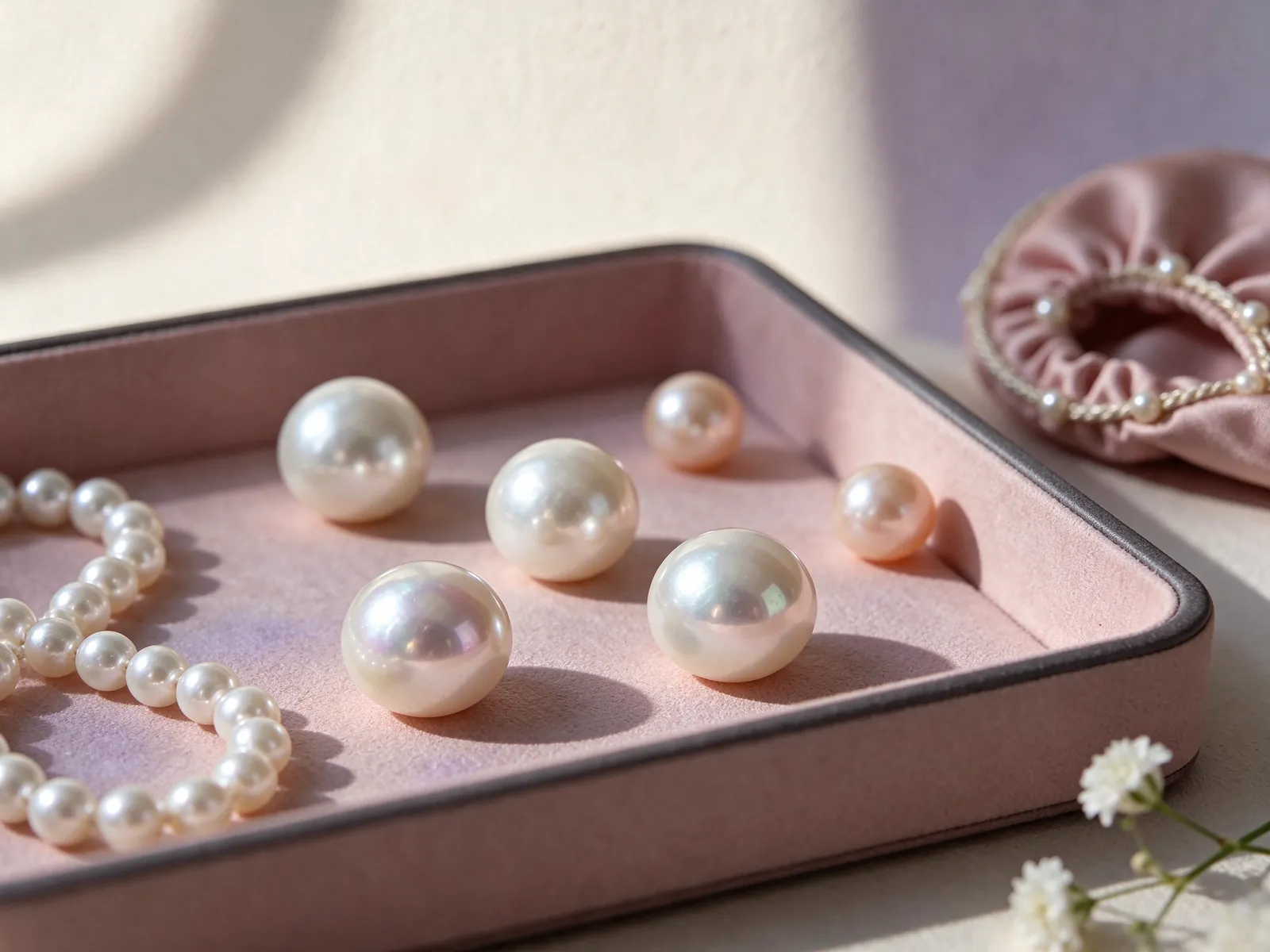
Style around sleeves, watches and the colour of your outfit
For workwear, start with the cuff of a shirt or jacket. Check whether the ring catches loose fabric or presses against a stiff edge when you reach for something. A clean shoulder line can sit comfortably in the visual space beside patterned sleeves. If your watch and bracelet already have strong outlines, try the pearl ring without several additional rings first. You can then decide which piece should lead the look rather than asking every accessory to compete.
For an evening outfit, coordination need not mean an identical colour in every piece. Similar curves or a restrained overall palette may provide a more natural connection. If you enjoy pink and lavender clothing, the styling ideas around a pink freshwater pearl ring can help you explore soft colour contrasts with a white-coloured setting. That is a styling connection, not a claim that a pearl seen in a photograph has a particular identity.
Stack only after checking the side profiles
When pairing the ring with a wedding band, look from the side as well as above. Check whether the band meets a shoulder, a pearl support or the pearl itself as you move. A pleasing photograph does not show repeated rubbing. If the rings crowd each other, wearing them on different fingers can preserve the colour connection while giving the pearl a clearer outline and reducing direct contact.
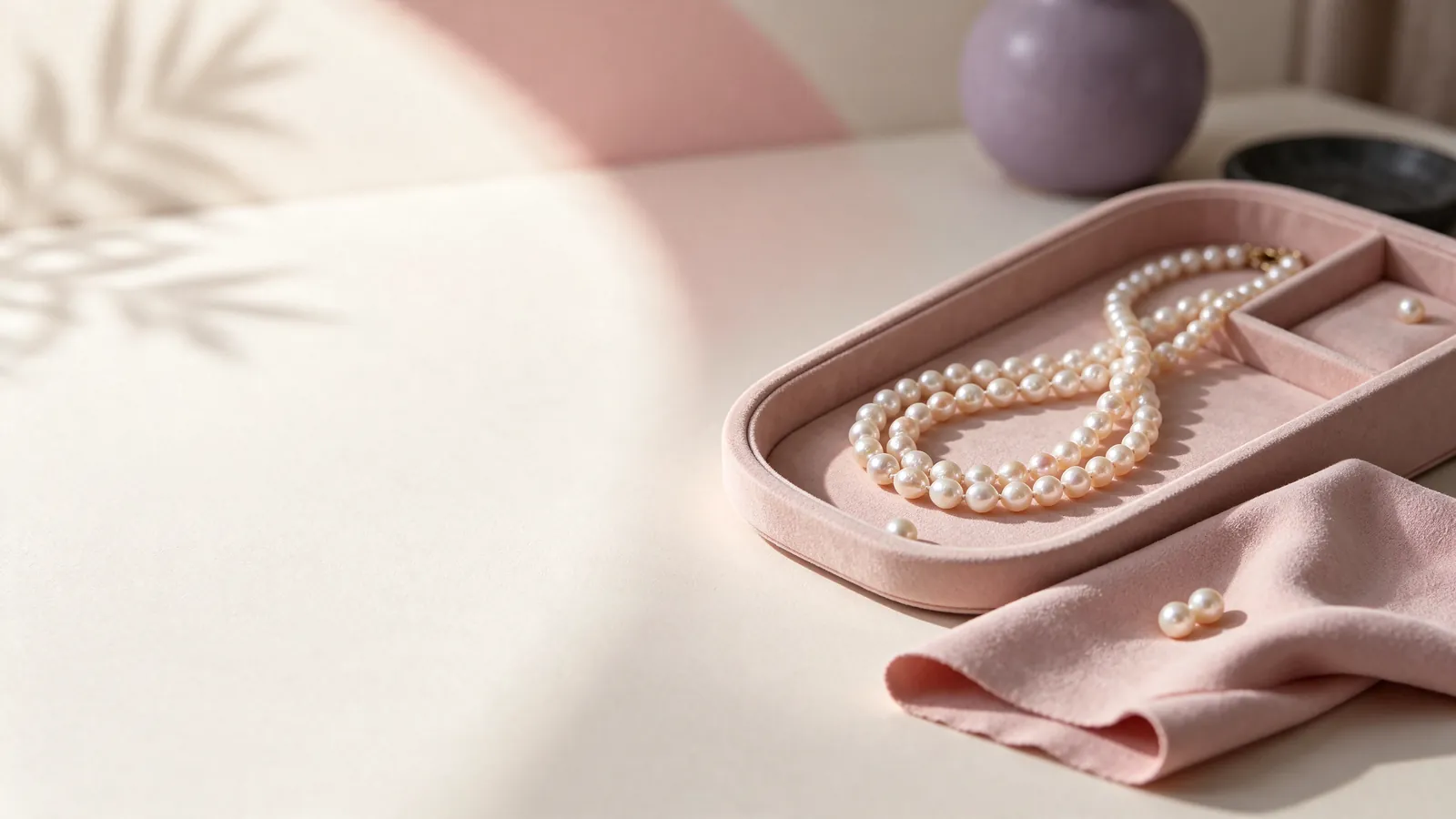
Care for the pearl, not just the platinum setting
GIA lists pearl at 2.5 on the Mohs hardness scale. The setting material does not increase the pearl's own hardness, so think about your routine before deciding when to wear the ring. Remove it for household cleaning or handling heavy objects. Apply perfume, cosmetics and hair products before putting jewellery on, and avoid exposing the pearl to acids or excessive heat. A discreet setting is still a pearl ring, not permission to press the pearl against hard surfaces.
After wearing, gently wipe the pearl with a very soft, clean cloth and store the ring separately from pieces that could rub against it. GIA advises that pearls should never be cleaned in ultrasonic or steam cleaners. If the setting needs attention, make clear that the piece contains a pearl rather than assuming a process suitable for a plain metal ring is appropriate for the whole piece.
Pause wearing if something starts to move or catch
If the pearl changes position unexpectedly, a part feels loose or the setting begins catching fabric, put the ring aside rather than twisting or pressing it back yourself. Note when you noticed the change and whether a knock preceded it. Those observations can support an inspection discussion; they do not establish the condition of the structure from a photograph or guarantee a particular repair outcome.
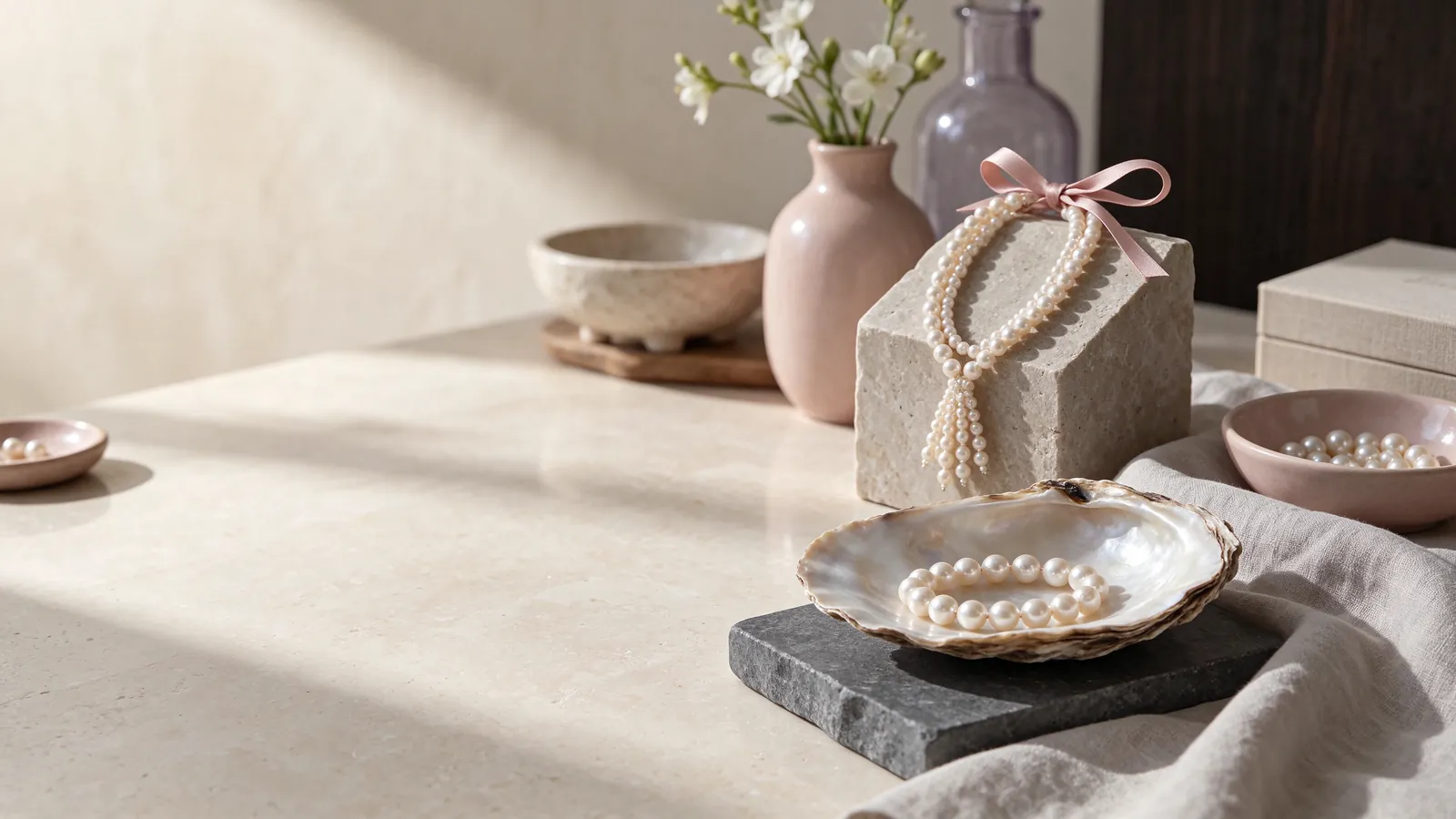
Turn your preferences into a clear design conversation
Before speaking with Flint Jewellery, prepare the intended finger, the sizing system and the width of a comfortable ring you already wear. Add a few descriptions of the outline you enjoy, such as open space beside the pearl or shoulders that do not dominate the hand. Use pictures to explain proportions rather than requesting a copy of another brand's design. If you plan to pair the ring with a wedding band, a side-view photograph can help explain the space and contact you are concerned about.
Separate essential needs from flexible preferences. Comfort on the intended finger might be essential, while the shoulder outline or presentation of the pearl may remain open to discussion. Explain the activities that matter to you: regular typing, occasional evening wear or a wish to coordinate with existing jewellery. A useful design conversation connects these habits to the setting and pearl choices instead of treating a platinum designation as the entire decision.
Start WhatsApp with the details you already know
A concise opening message can mention PT900 or PT950, the intended finger, your current size system, preferred band width and whether another ring will be worn beside it. Use the page's WhatsApp button to discuss these points with Flint Jewellery. You do not need every detail settled beforehand; clear priorities make it easier to explore the individual setting and pearl together.
| Decision | Where to look | What to try | Question to ask | Styling connection |
|---|---|---|---|---|
| Setting proportions | Visible band and shoulders | View an open and gently closed hand | Can the shoulders be more restrained? | Balance with a watch or cuff |
| Side profile | Pearl height and neighbouring fingers | Bend fingers and handle a handbag | Where could the setting make contact? | Check loose or textured sleeves |
| Material name | Written setting description | Compare similar outlines | Is this PT900, PT950 or 18K 750 white gold? | Try beside existing jewellery |
| Width and size | Knuckle and finger base | Use a similar-width fitting ring | Which size system is being used? | Assess stacking separately |
| Pearl appearance | Lustre, surface and shape | Rotate under familiar lighting | What does the individual description say? | Judge with the whole outfit |
Pearl knowledge and authoritative references
GIA lists pearl at 2.5 on the Mohs hardness scale. A platinum setting does not raise the pearl's own hardness, so avoiding abrasion remains part of choosing how and when to wear the ring.
Read the reference for this factFrequently asked questions
Does PT950 automatically give a pearl ring a more elegant outline than PT900?
No. Elegance is a design preference involving the band, shoulders, pearl proportions and side profile. Compare similar outlines before discussing the individual material options; the platinum label alone does not describe the shape.
Can a platinum pearl ring coordinate with my warm-coloured watch?
Try them together before deciding. You may enjoy the contrast, particularly if the ring's outline is simple. Let one accessory lead visually and assess the whole hand rather than assuming all metal colours must match.
Should I send only my converted US ring size if I know a Japanese size?
Send the original number and its system as well as any converted result. Include band width and measurement method where available. Conversion supports communication, but it cannot replace checking fit on the intended finger.
Can I judge pearl quality from a bright close-up on my phone?
A close-up can help you notice details, but lighting and angle affect the view. Compare under familiar lighting, include the hand for proportion, and use the pearl's actual description for identity information rather than inferring it from appearance.
Is cleaning the platinum enough to care for the complete ring?
No. The pearl has its own care needs. GIA advises against ultrasonic and steam cleaning for pearls; use a very soft clean cloth after wearing and identify the pearl when discussing any work on the setting.
Updated: