
How do pearl spacing and wrist fit shape a small pearl bracelet, baby pearl bracelet or mini pearl bracelet?
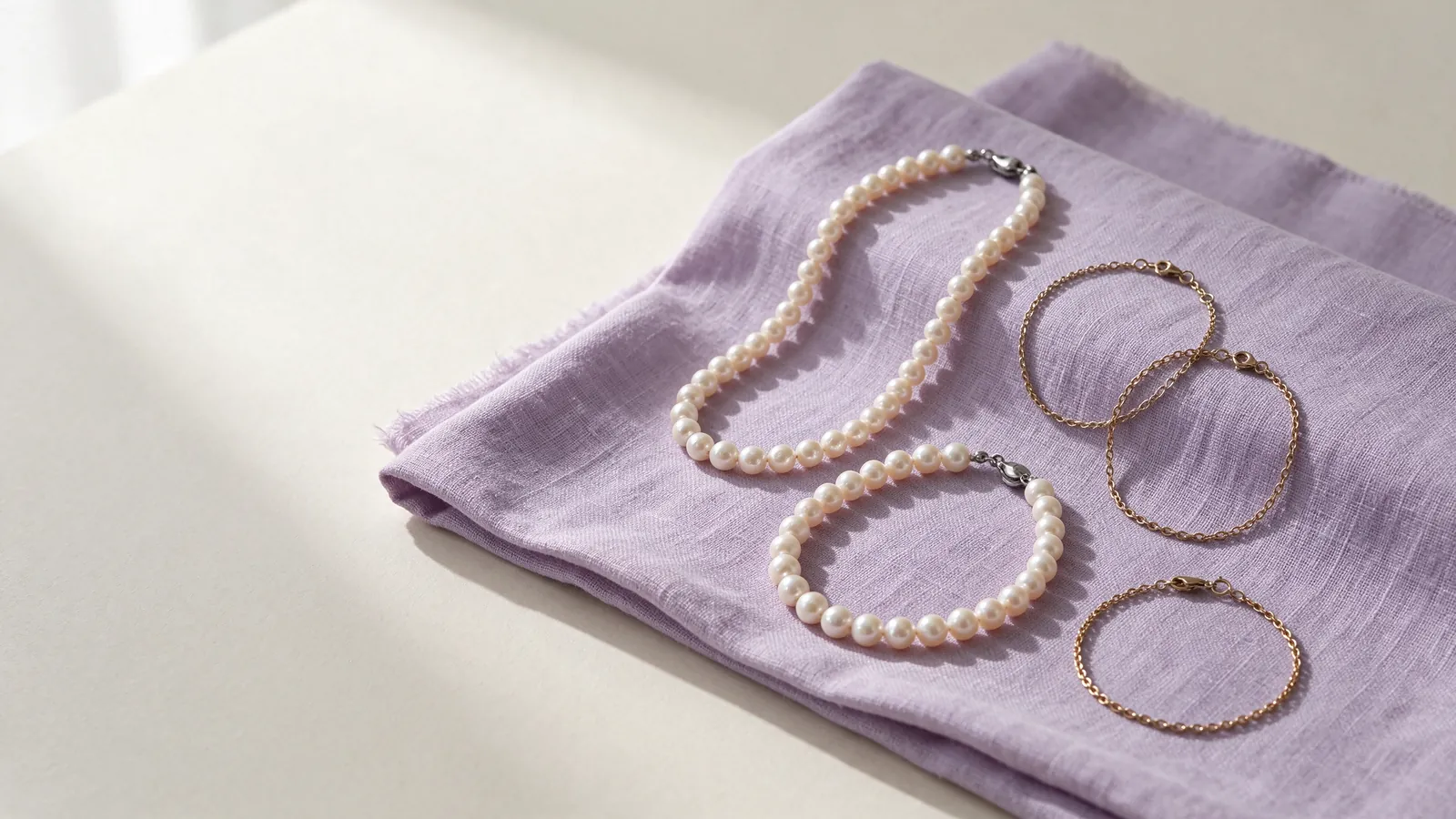
A fine-scale bracelet can create either a continuous line of pearl light or a lighter sequence of separate accents. Closely arranged pearls place more visual emphasis on the pearl line; an open arrangement lets the wrist and chain become part of the composition. Neither approach is automatically more delicate. When comparing a pearl bracelet, look at what occupies the front of your wrist, what continues around the side and where the fastening sits. This gives you a more useful starting point than judging a tightly cropped photograph of individual pearls.
Wrist width does not dictate a single correct pearl size. A narrow wrist may suit a clear, continuous line, while a broader wrist may look balanced with generous spacing. Rest your arm naturally and then lift your hand to a desk to see how the arrangement moves. Notice whether the pearls remain visible, collect underneath the wrist or turn beside the clasp. Decide whether you want a discreet detail or a recognisable pearl outline before making smallness itself the main buying criterion.
How can you balance a small pearl bracelet, baby pearl bracelet or mini pearl bracelet with a watch?
Begin with movement rather than a fixed-looking gap in a photograph. Check the watch crown, case edge and strap against the bracelet while typing, bending your wrist and reaching for a bag. If the bracelet repeatedly slides into the watch, wearing them on opposite wrists can separate their outlines and reduce contact. A small pearl does not make a close-fitting stack harmless; the fastening and chain position matter as much as the scale of the pearls.
Read the style name separately from pearl identity and dimensions
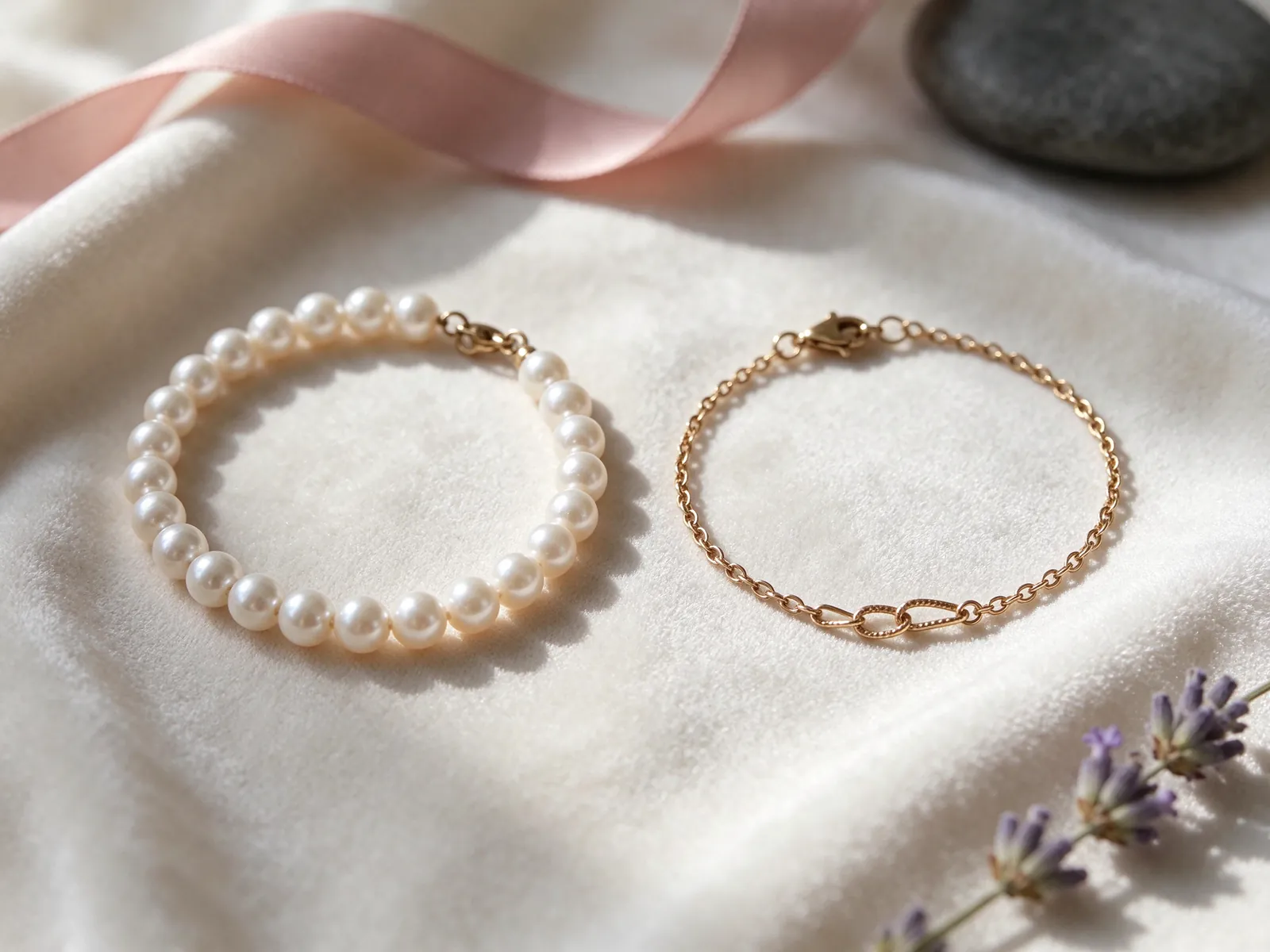
The names small pearl bracelet, baby pearl bracelet and mini pearl bracelet describe a visual intention, not a universally defined diameter. These words alone cannot establish pearl species, natural-versus-cultured identity, origin or treatment status. A listing may use a delicate-sounding name for a continuous strand or for pearls placed at intervals along a chain. Read the actual dimensions and construction description separately so that the name does not substitute for the information needed to understand the piece.
A freshwater pearl bracelet follows a pearl-category question rather than a size question. If freshwater pearls interest you, distinguish that preference from your wish for a fine-scale outline. One concerns pearl identity; the other concerns proportion, spacing and appearance on the wrist. Similarly, do not automatically replace baby with seed and assume identical specifications. Describing the outline you want, then asking about pearl information independently, makes a clearer conversation than treating several style labels as technical equivalents.
What should you ask when a photograph looks unusually delicate?
Ask how pearl dimensions are stated, how wearable length is measured and whether the clasp and reverse are shown clearly. Close-up photography enlarges details, while distant styling photographs can hide spacing. If the pearls vary in size, establish whether the arrangement deliberately changes along the bracelet or whether a stated range describes the whole strand. That distinction helps you compare the actual rhythm with the uniform line you may have imagined.
Assess lustre and matching across the whole pearl line
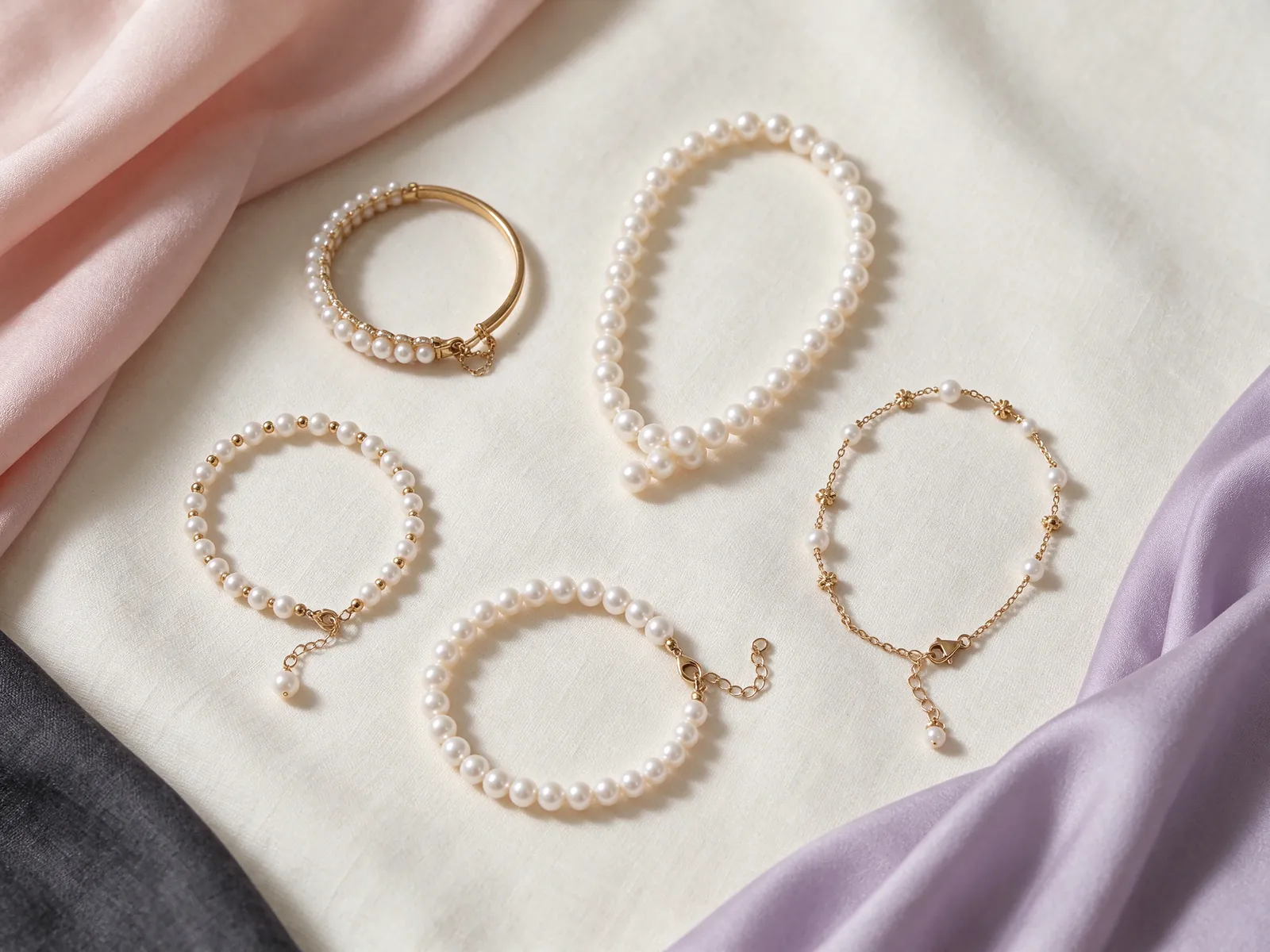
Small proportions do not remove the need to consider pearl quality. GIA describes seven value factors: size, shape, colour, lustre, surface quality, nacre quality and matching. For a bracelet, matching deserves particular attention because the eye follows neighbouring pearls rather than viewing each one in isolation. Begin with the complete arrangement under soft light, then inspect individual details. A bright reflection and a smooth-looking surface answer different questions, so neither should stand in for the entire quality assessment.
When exploring a white pearl bracelet, compare its appearance beside a neutral sleeve and decide whether a warmer or cooler impression suits your wardrobe. Bodycolour, overtone and orient are distinct colour components, and not every pearl displays all three. Brightness or whiteness cannot establish origin, pearl identity or a certificate. For a fair visual comparison, keep the background and lighting similar rather than ranking bracelets photographed with very different levels of contrast or exposure.
Does a coordinated strand require every pearl to look identical?
Coordination is about the effect of the arrangement, not a promise that every pearl has no variation. Decide whether subtle differences in shape or colour appeal to you, then view them at an ordinary wearing distance. If varied shapes are intentional, consider whether the changes create a pleasing rhythm. Do not apply an expectation of identical round beads to a design whose character comes from irregular outlines.
Compare pearl shape as carefully as overall scale
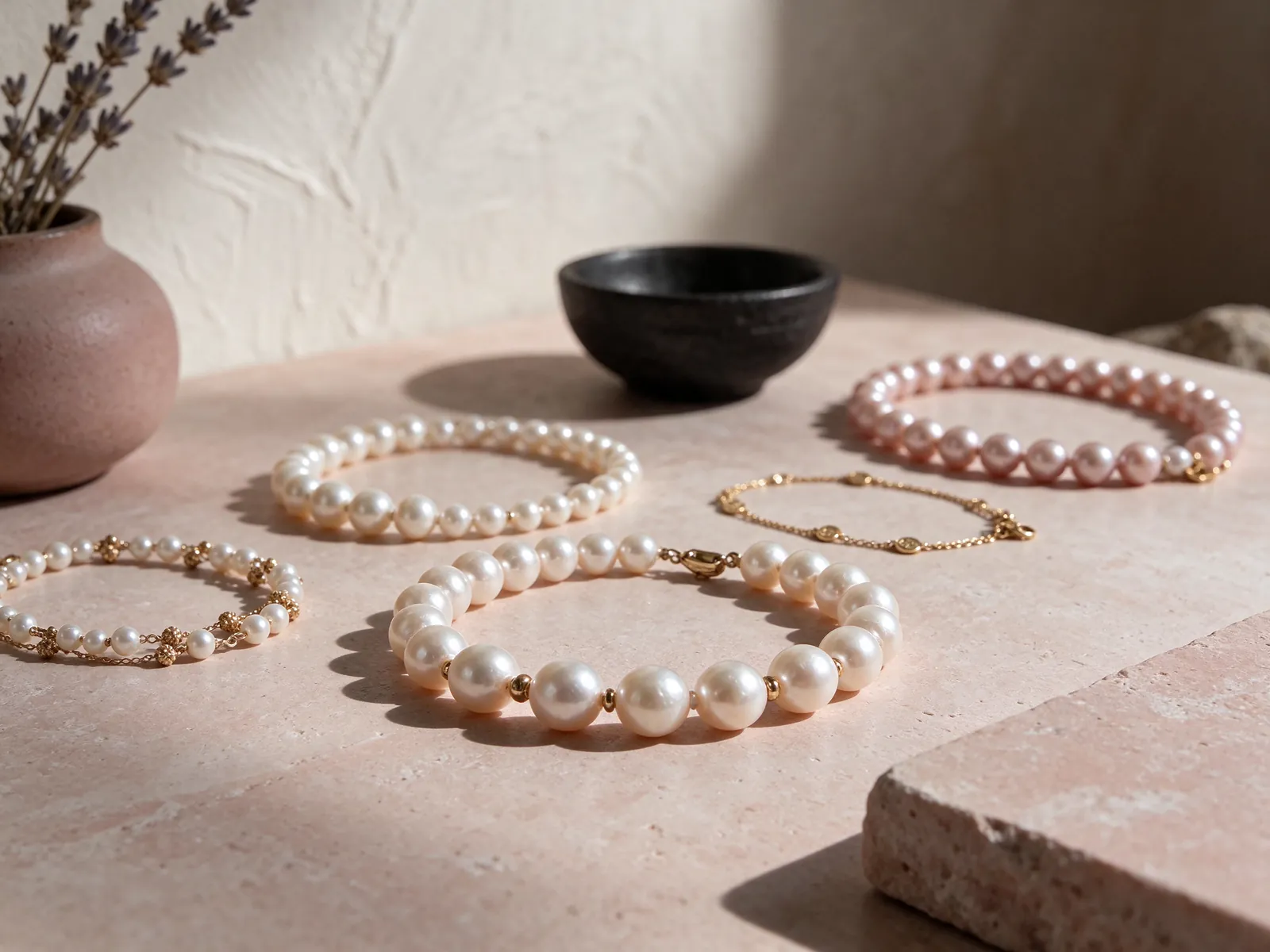
Rounded pearls can create a bead-by-bead line, elongated outlines can emphasise direction, and irregular contours can introduce changes in reflection and silhouette. These effects remain relevant even when the overall bracelet is fine in scale. Think about whether your clothes and other jewellery lean towards geometric lines, softness or relaxed asymmetry. Also inspect the fastening: a prominent clasp can become the visual centre of a bracelet even when its pearls appear very understated.
The styling ideas behind a baroque pearl bracelet can help if you enjoy a less uniform outline. Irregular shape is not proof of natural-versus-cultured identity, and it does not guarantee a narrow profile. Look at the most projecting parts and the side of the wrist, especially if you regularly wear close-fitting cuffs. The way the bracelet meets your clothing is often more useful than deciding how interesting one pearl appears in a close-up.
How can you compare spaced and continuous arrangements fairly?
Use the same relaxed wrist position for both, then bend your hand and observe where each arrangement settles. For spaced pearls, check whether the accents turn underneath; for a continuous strand, check whether it feels restrictive or slips lower than you prefer. Return your sleeve to its normal position and see whether pearls, chain or clasp remain visible. This makes the comparison about daily wear rather than display-board presentation.
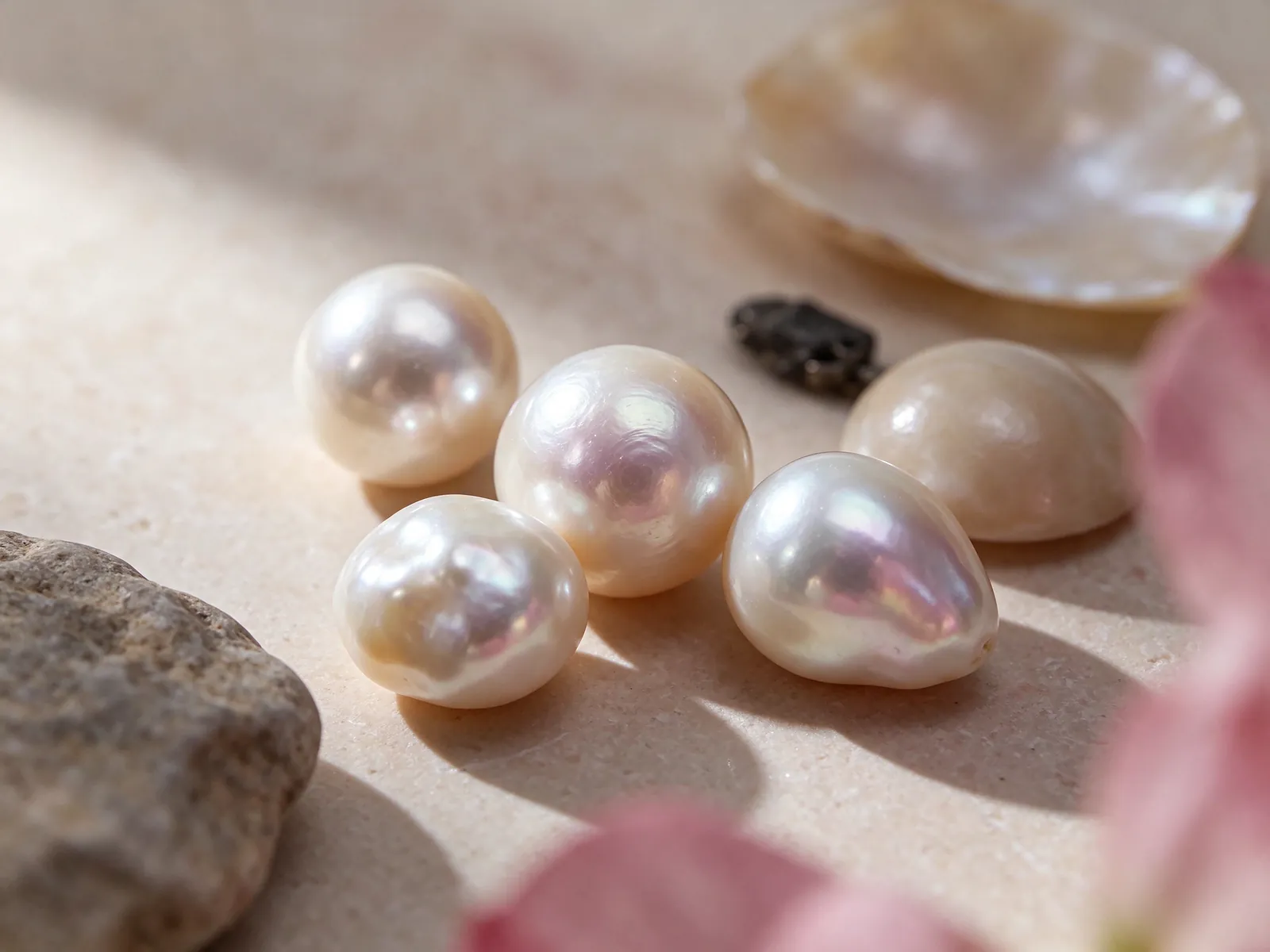
Measure your wrist, then check usable space and fastening
Use a flexible tape around the position where you intend to wear the bracelet, keeping it against the skin without pulling tightly. If you use paper or a non-stretching cord, mark the overlap and measure it flat. Keep your wrist relaxed. This records your wrist circumference, not the final length of every bracelet that might fit you. Pearls, links and clasp shapes occupy space differently, so identical stated lengths can feel different on the wrist.
During a fitting, separate comfort from ease of operation. Check whether bending your wrist creates tension and whether the bracelet slides into places you find inconvenient. Then see whether you can fasten it comfortably and whether the clasp sits against a desk edge or watch strap. Avoid adding one universal length allowance to every construction. For a gift, information about how the recipient wears an existing bracelet is more useful than estimating wrist size from height or a photograph.
Which movements matter for desk-based days?
Try ordinary typing, writing, holding your phone and lifting your usual bag. Notice contact underneath the wrist as well as the visible front. Put on and remove a familiar jacket gently to check the cuff. These are comfort observations, not strength tests: there is no need to pull the bracelet or deliberately knock it against anything. Frequent desk contact is a practical reason to reconsider fit or wearing position.
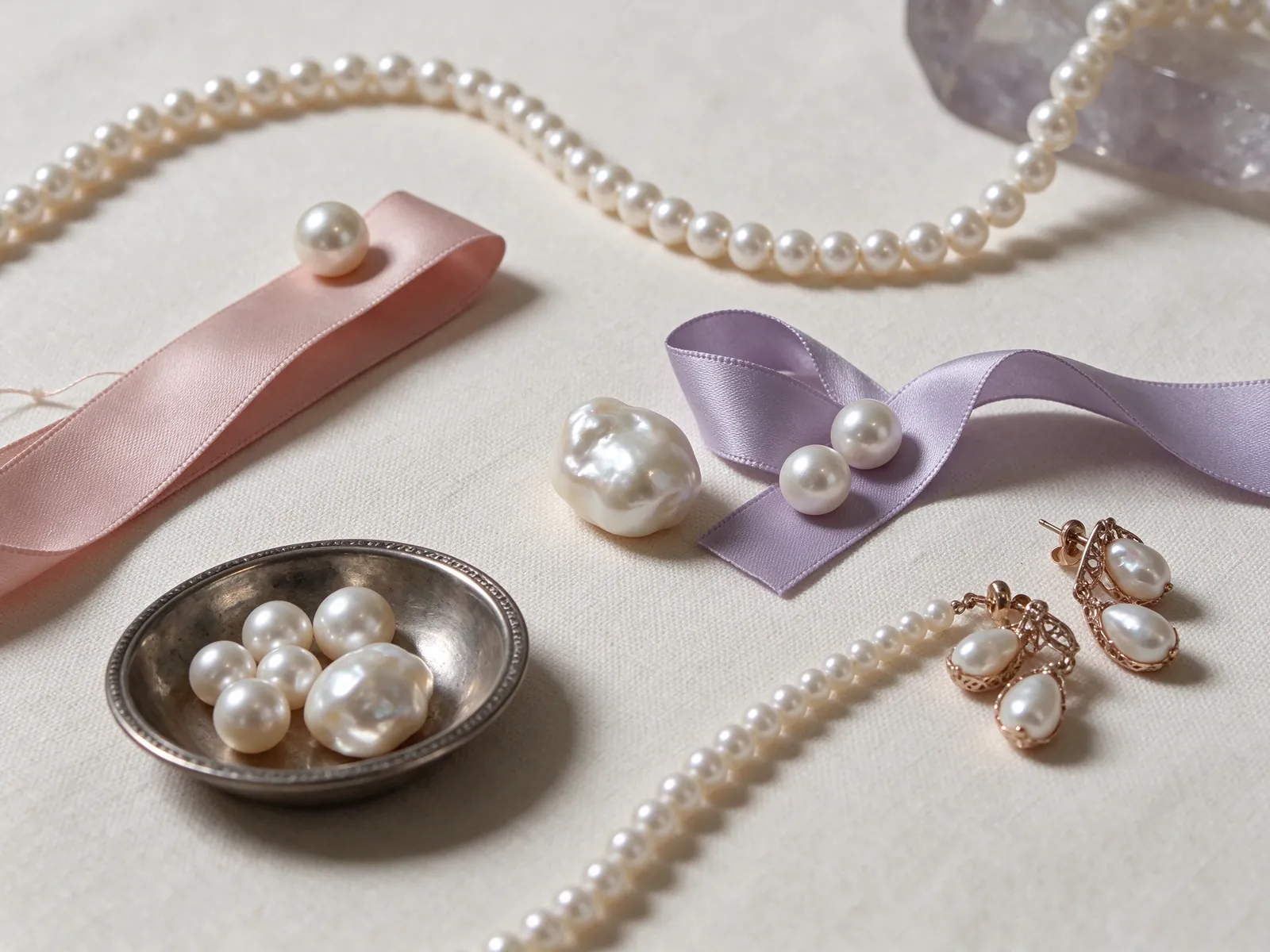
Build an outfit around sleeves, contrast and a clear focal point
Start with the sleeve you actually wear rather than rolling it higher solely to reveal the bracelet. A continuous pearl line can echo the softness of knitwear, while an open arrangement can leave more visible space beside a crisp cuff. These are styling directions, not rules. If a delicate bracelet disappears visually, try a simpler cuff or stronger contrast with the fabric before assuming that larger pearls or several layers are necessary.
A black Akoya pearl bracelet offers a separate colour topic to explore when you want to consider darker pearl accents beside a sleeve or watch face. Colour preference and small-scale proportion are different questions; a dark appearance alone does not explain pearl identity or treatment. When layering, choose the main visual element first and examine the contact between pieces. If hard accessories repeatedly rub the pearls, separating them is more sensible than preserving a tightly packed look.
Can a fine bracelet feel distinctive for an evening occasion?
Yes: visual clarity need not come from stacking. A clean sleeve edge, fewer neighbouring accessories or darker fabric can make a single pearl line easier to notice. If you also wear earrings or a necklace, let one piece lead the outfit. Where you do combine bracelets, check their positions again after moving your wrist; the separation seen while standing still may disappear during ordinary activity.
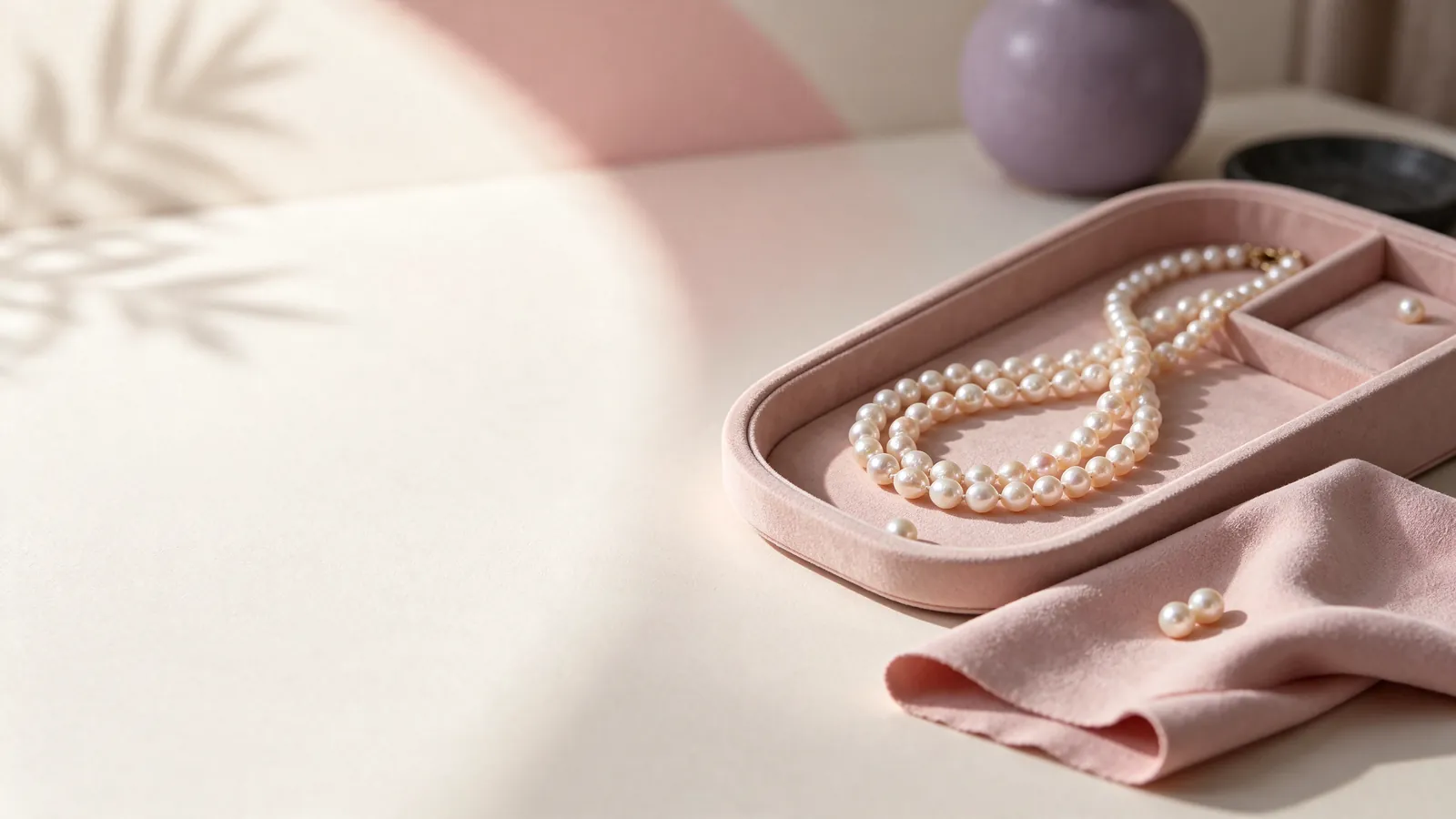
Make gentle care part of choosing a wrist accessory
GIA lists pearl at 2.5 on the Mohs hardness scale. For bracelets, that makes contact with desks, bag fittings and other jewellery an important consideration. The number is not a prediction of a bracelet's lifespan. Finish perfume and hair styling before putting pearls on, and avoid spraying those products directly onto them. Consider removing the bracelet for work or activities that involve frequent knocks, rather than treating its small size as protection against abrasion.
After wearing, wipe pearls gently with a very soft, clean cloth and store the bracelet separately from objects that could scratch or press against it. GIA advises against ultrasonic and steam cleaners for pearls, and against acids and excessive heat. If a strung bracelet is cleaned with water, the string must be completely dry before wearing it again. Do not pull pearls apart to scrub narrow spaces; the appropriate handling depends on the construction, not simply on how small the pearls look.
What should you notice before putting the bracelet away?
Look for a clasp that no longer closes normally, an obviously distorted link or changes in string tension. If the fit suddenly changes, stop forcing the bracelet into use rather than pulling it back into position or gluing a pearl yourself. Note what changed and where contact occurred so you can describe the issue clearly. A visual check provides useful warning signs, but it is not a complete assessment of structural condition. To discuss wrist fit and styling with Flint Jewellery, contact us on WhatsApp at +85260106207 and share your preferred pearl spacing, cuff style and watch-wearing habits.
| Feature | Where to look | Selection question | Styling consideration | Practical fitting check |
|---|---|---|---|---|
| Continuous pearls | The full pearl line and wrist side | Does the matching create the rhythm you prefer? | Check what remains visible beneath your normal cuff | Relax your arm, then bend your wrist |
| Spaced pearls | Pearls, links and open areas | Do the accents remain where you want them? | Allow movement without repeated watch contact | Observe position while typing and lifting your hand |
| Pearl shape | Projecting contours and the outer edge | Do you prefer regularity or deliberate variation? | Consider how the outline meets a close-fitting sleeve | Put on a familiar jacket gently |
| Fit and clasp | Underside, fastening and inner space | Does the construction suit your movement? | Avoid clasp pressure beside a desk or strap | Try fastening, writing and holding a phone |
| Care | Contact points with hard objects | Pearl has Mohs hardness 2.5; reduce scratching contact | Do not use tight hard-accessory stacks as the default | Wipe gently after wear and store separately |
Pearl knowledge and authoritative references
GIA lists pearl at 2.5 on the Mohs hardness scale. When pairing a small pearl bracelet with a watch or other jewellery, consider repeated scratching contact with cases, clasps and hard surfaces; the hardness figure does not specify a wearing lifespan.
Read the reference for this factFrequently asked questions
Will a small pearl bracelet always look more understated than a larger-pearl style?
Not necessarily. A continuous line, prominent clasp or strong contrast with clothing can make fine-scale pearls noticeable. Consider the complete outline and how much of it shows beside your sleeve rather than comparing pearl size alone.
Does the term mini pearl bracelet identify a particular pearl type?
No. Mini describes visual scale in this context and does not establish species, origin, natural-versus-cultured identity or treatment status. Read those details separately, together with actual dimensions and construction.
Why can the clasp matter so much on a delicate bracelet?
Its position can affect both the visual balance and practical comfort. A clasp may become the focal point, press against a desk or settle beside a watch strap. Check fastening and wrist movement, not only the front-facing pearls.
Should I add the same length allowance to every wrist measurement?
No universal allowance suits every bracelet. Pearl size, links and fastening shape affect the space inside the bracelet. Use your relaxed wrist measurement as a starting point and assess the actual construction and movement during fitting.
Can I use steam to clean between tightly arranged small pearls?
No. GIA advises that pearls should never be cleaned with steam or ultrasonic cleaners. Gentle wiping with a very soft, clean cloth is part of routine care. If a strung piece is cleaned with water, its string must dry completely before wear.
Updated: