
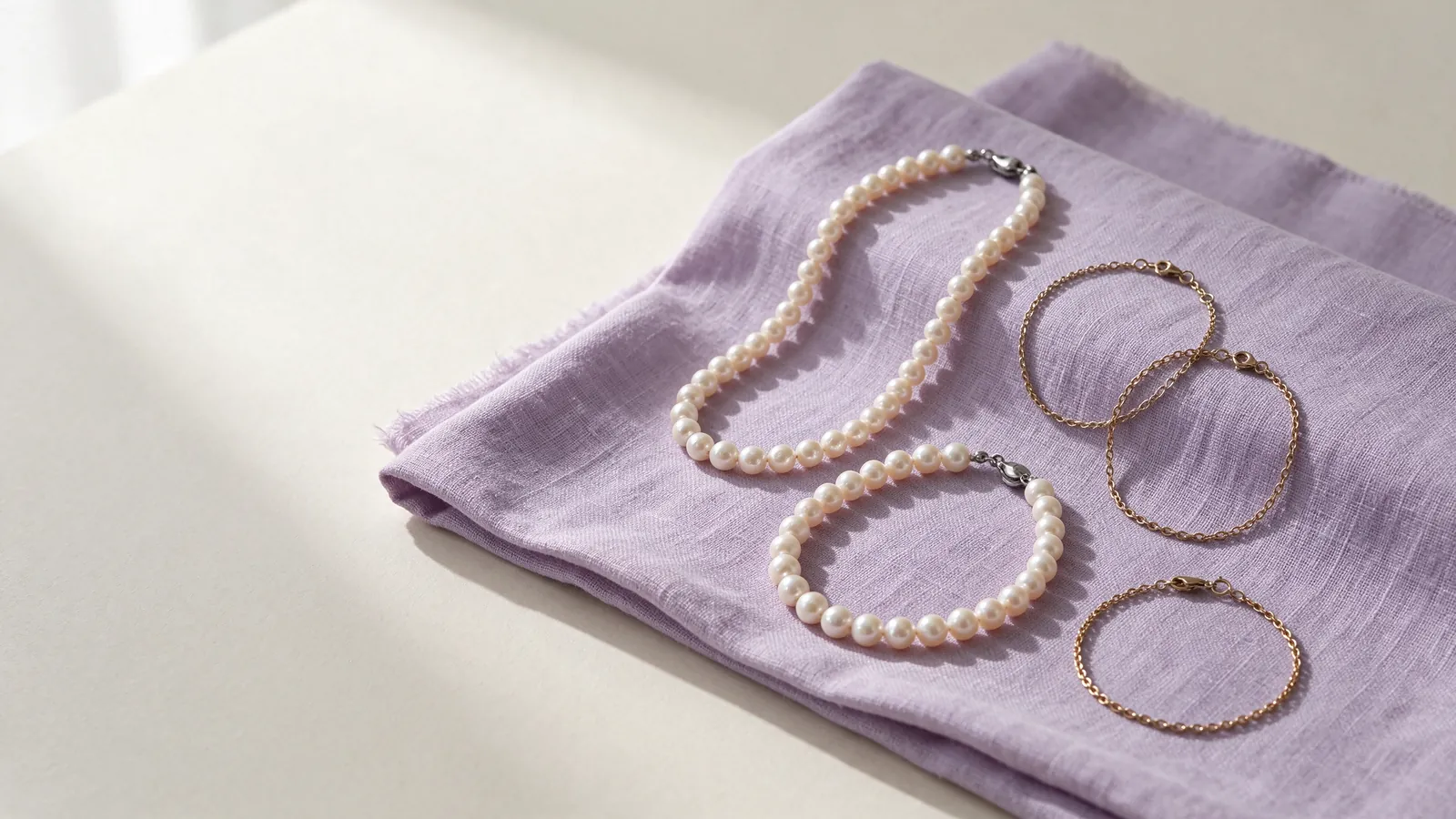
How can pearl and chain proportions shape the look of a half chain pearl bracelet compared with a half station pearl bracelet or a half pearl half chain bracelet?
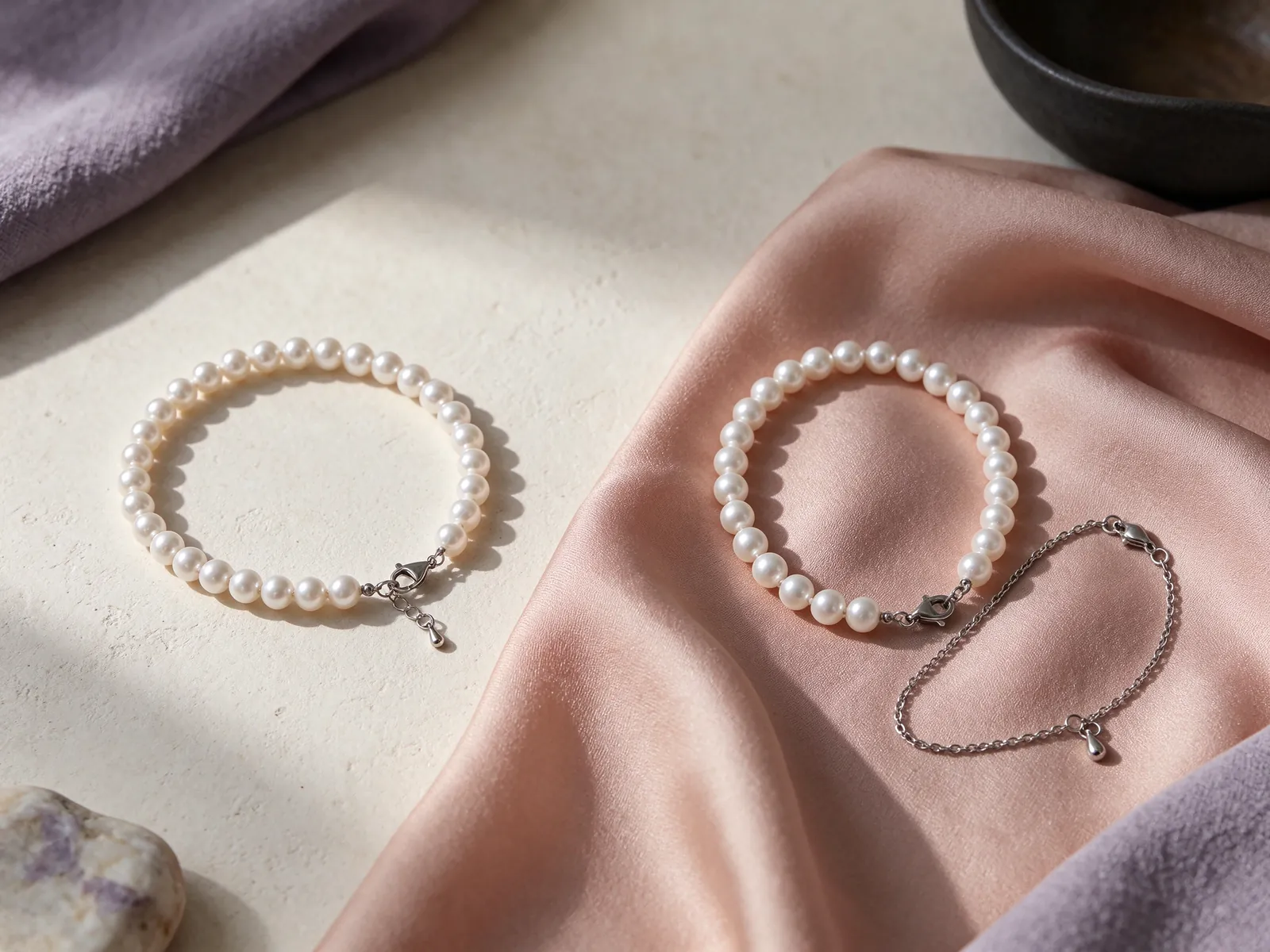
A half chain pearl bracelet brings a rounded pearl outline and a flowing chain line into the same composition. The names half station pearl bracelet and half pearl half chain bracelet do not, by themselves, tell you whether the pearls form a continuous group or how much chain is visible. Lay the piece flat and follow the arrangement from the clasp through each join. The broader pearl bracelet guide provides a useful starting point for comparing this divided look with other layouts.
A concentrated pearl section creates a focal area, while a more exposed chain section gives the metal line a greater role. Neither arrangement guarantees a particular effect on the apparent width of your wrist. Look at the bracelet with your arm relaxed, resting on a table and turned towards you. Decide whether you enjoy each view, rather than choosing solely because the pearls are centred in one carefully positioned photograph.
How should you assess clasp position and room for movement in a half chain pearl bracelet compared with a half station pearl bracelet or a half pearl half chain bracelet?
Begin with the clasp in a position you can operate comfortably, then relax your hand and observe the pearl section. Gently bend your wrist and turn your palm. Notice whether the clasp presses against a wrist bone, a join catches the skin or the chain slides into an unwanted position. Useful movement room allows ordinary gestures without requiring a tight fastening simply to keep the pearls facing upwards.
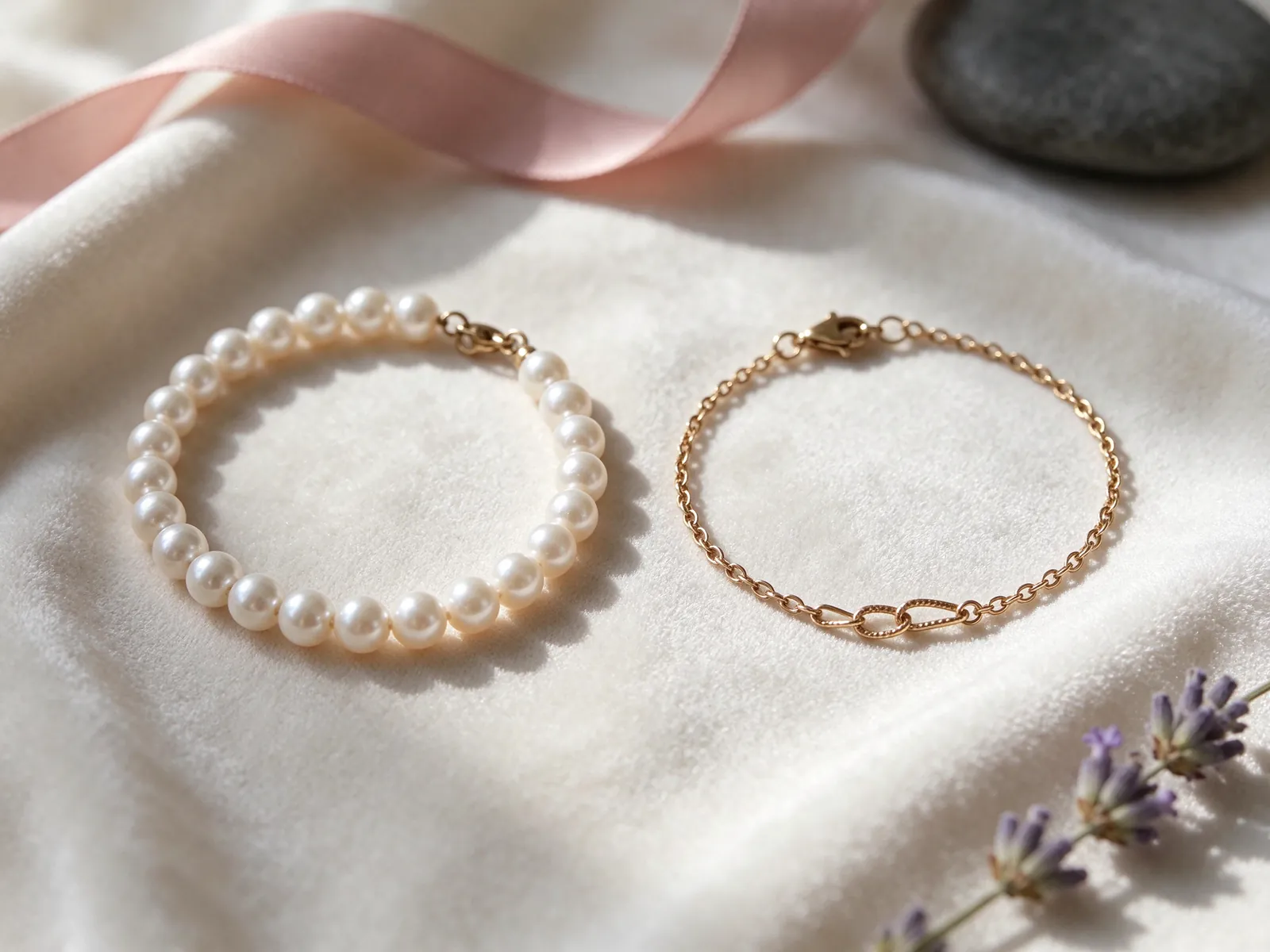
Separate wrist measurement from the bracelet's wearing space
Use a flexible tape at the position where you expect to wear the bracelet, keeping it close to the skin without pulling it tight. This records wrist circumference, not the ideal finished length. The volume of pearls, flexibility of the chain and shape of the clasp can all affect the space inside the worn bracelet. Two pieces with similar overall lengths may therefore feel different. Measure and try them at the same wrist position for a more useful comparison.
A close fit should still let the arrangement follow your wrist naturally; a looser fit should be considered from the underside as well as the top. If you wear shirts or knitwear regularly, test how the cuff moves across the chain and clasp. The adjustable pearl bracelet topic explains why adjustment is worth considering, but changing chain length can also shift the visual centre of the pearl section. Treat positioning and looseness as related questions, not interchangeable measurements.
Use familiar movements rather than a forceful security test
Recreate typing, holding your phone and reaching for a handbag. These movements reveal desk contact and sliding that a still fitting may miss. Do not pull hard on the pearls or shake your arm forcefully to test strength. Instead, identify the amount of movement you enjoy and the positions you would find distracting. That description makes a fit discussion more precise than simply asking for a bracelet that never moves.
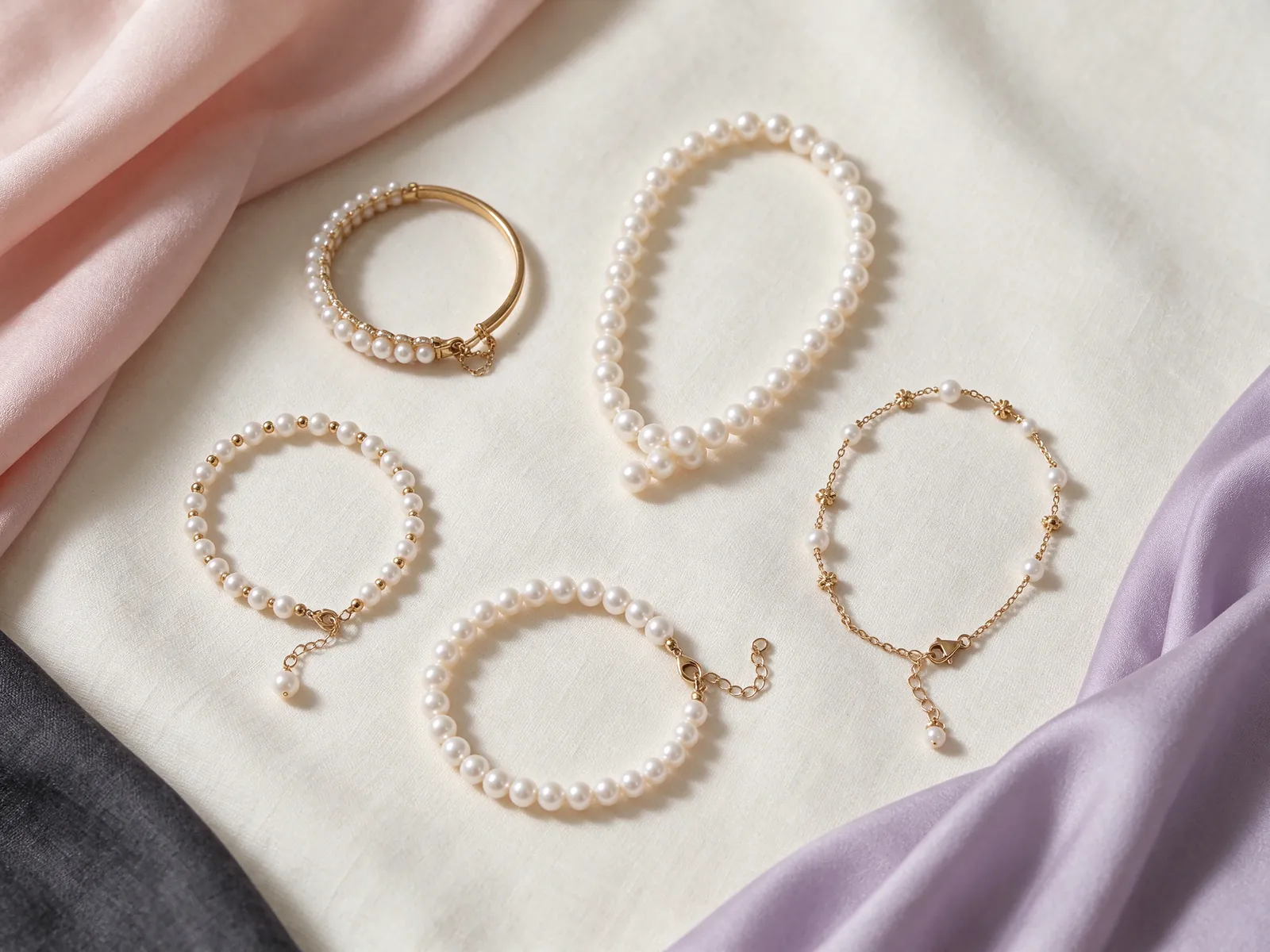
Inspect the clasp and the transitions between pearl and chain
The main clasp is only one point to examine. Look at where each pearl section meets the chain, checking the outline from the front, side and reverse. Consider whether a projecting element could meet a sleeve or your skin during an ordinary movement. A delicate-looking construction is not automatically convenient to fasten. If you normally put on jewellery with one hand, practise that operation rather than relying on how neatly the clasp disappears in a photograph.
A clasp that rests beneath the wrist may feel different when you sit at a desk. Equally, a chain beside a watch strap can make contact as your wrist turns. Try the bracelet on its own first to understand its natural movement, then introduce your usual accessories. Hiding a clasp under the pearl section does not remove the need for accessible operation, and tightening the bracelet solely to hold a particular orientation can create a different wearing problem.
Identify when rotation happens before changing the fit
Notice whether the pearl section turns when your arm hangs down, after your palm rotates or when a cuff pushes against it. These are different situations, and shortening the bracelet may not address all of them. A more dispersed layout may suit someone who wants pearls visible from several angles. A concentrated layout may suit someone who enjoys a changing pearl-and-chain view. The name alone cannot promise a fixed position throughout the day.
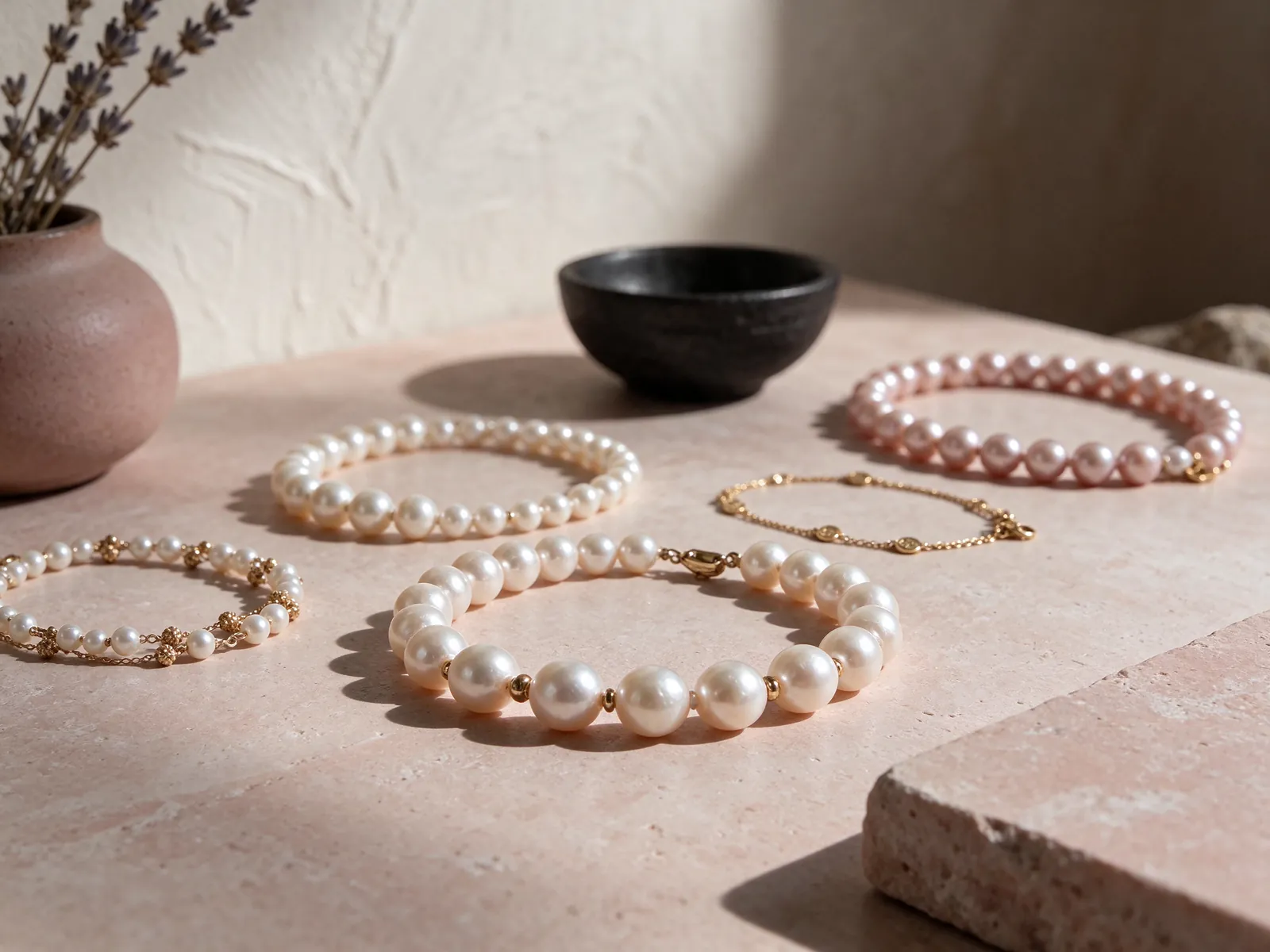
Read the pearl section as a group, then inspect individual details
Adjacent pearls are easy to compare directly, so matching matters to the appearance of a concentrated section. Under gentle light, look across the group before inspecting individual reflections, surface features and outlines. Decide whether any differences work with the intended rhythm. A regular row and a deliberately varied arrangement can express different visual preferences. Bright white highlights in a photograph are reflections, not a reliable description of the pearls' bodycolour.
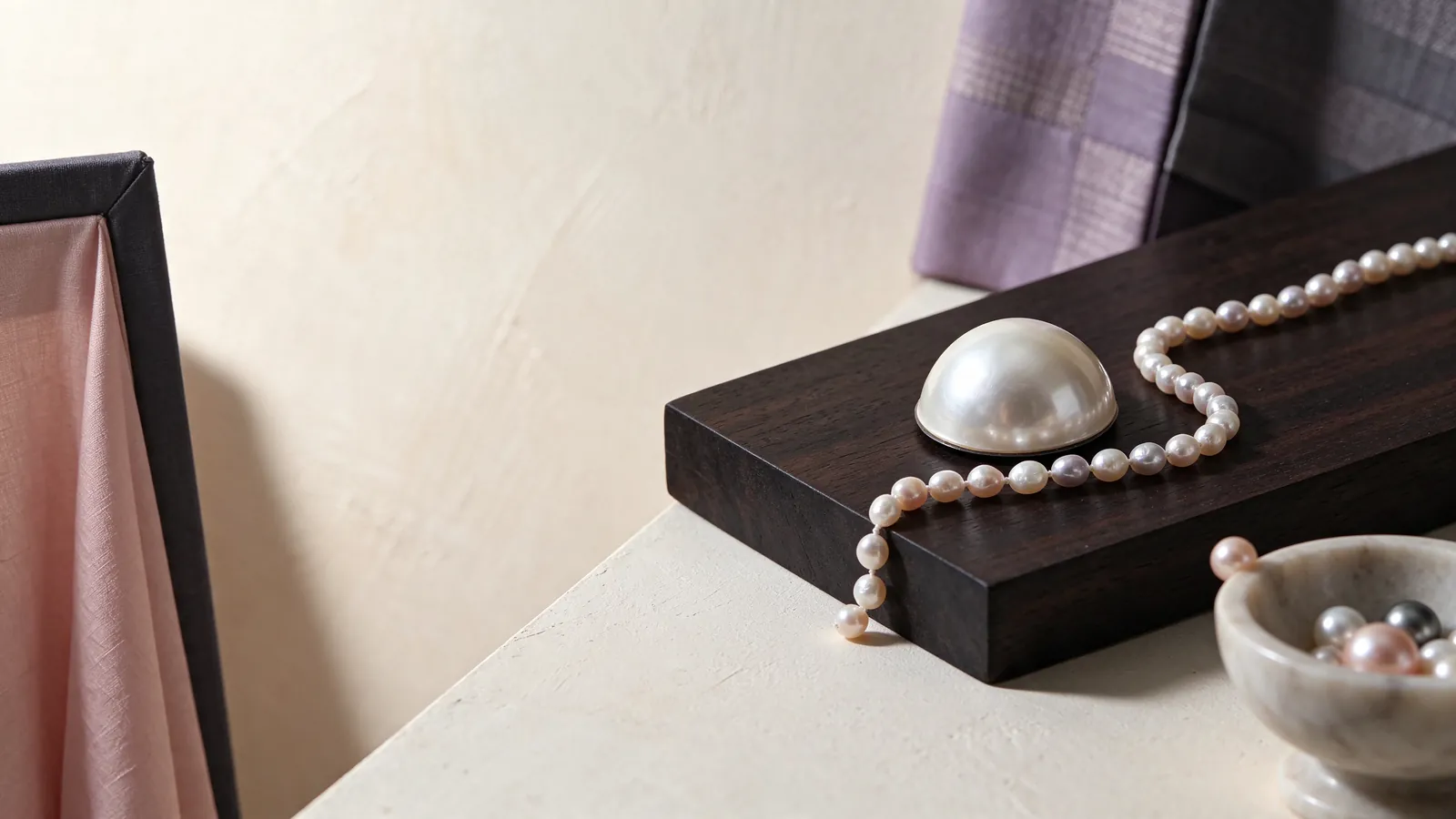
GIA describes seven pearl quality factors: size, shape, colour, lustre, surface quality, nacre quality and matching. Matching and lustre are especially useful questions when judging visual continuity, but they do not replace the remaining information. Shape or colour alone cannot establish species, origin or natural-versus-cultured identity. Separate what attracts your eye from what a written description actually states. A rounded outline is an appearance observation, not a substitute for identification or a certificate.
Keep photography useful without making it the final judge
For a personal comparison, photograph the pearl and chain sections under the same light and avoid filters that change skin tone or colour. A strong flash and a different background can alter your impression of both materials. Use photographs to remember the styling, then return to direct observation for the details. If one pearl draws attention, ask whether you enjoy that focal point rather than assuming every visible difference must be removed.
Compare grouped pearls with spaced pearls and continuous strands
A pearl station bracelet offers a useful comparison because spacing can distribute pearl accents along the chain. A half-chain approach may instead emphasise distinct pearl and chain areas. Terminology can overlap, so follow the actual arrangement rather than imposing a rigid definition. If you prefer some pearls to remain visible as the wrist turns, a dispersed design is worth examining. If you prefer an obvious pearl focal area beside an exposed metal line, compare the grouped sections more closely.
A pearl strand bracelet creates a different reference point, with a continuing pearl line rather than the same contrast between divided sections. A multi strand pearl bracelet introduces additional rows and a broader composition. Compare these with the same outfit to determine whether you prefer pearl density, chain visibility or layered width. Sleeve space, desk contact and the underside view are practical distinctions, not simply measures of how formal a style looks.
Translate a style name into an arrangement you can describe
When reading half station or half-chain terminology, establish whether pearls touch, whether chain appears between them and what is visible on the reverse. These observations give the name practical meaning. If the wording and imagery suggest different structures, clarify the arrangement and intended wearing direction first. Comparing clasp details and overall length is more useful once you understand what the pearl section actually consists of.
Plan the visible section around sleeves and other jewellery
A short sleeve or simple cuff lets the pearl-and-chain contrast remain visible. A loose long sleeve may reveal only a fragment during movement. Decide whether you want the bracelet to lead the outfit or offer an occasional glimmer. For a focal accessory, restrained sleeve decoration makes the structure easier to see. For a subtle accent, make sure you also enjoy the exposed chain view. Coordinating with a favourite ring can help, without requiring every piece to have an identical colour.
For a motif-led look, compare how a heart pearl bracelet draws attention and whether that focus would compete with the pearl section. If you enjoy moving accents, a pearl charm bracelet raises different questions about dangling elements, cuffs and desk contact. When wearing a watch, consider placing it on the other wrist to reduce direct contact before deciding on the overall balance. More accessories do not necessarily make the two-part structure clearer.
Judge an evening look in motion as well as in a photograph
You can gently turn the pearls towards a camera, but that pose need not become the only acceptable position for an entire evening. Holding cutlery, carrying a bag and adjusting a jacket all change the view. Consider whether the moving arrangement remains attractive. If you must repeatedly reset it to enjoy the look, decide whether that attention suits your habits rather than treating the posed image as proof of effortless wear.

Care for the mixed construction with the pearls in mind
Do not clean the whole bracelet as though it were only a metal chain. GIA ranks pearl at 2.5 on the Mohs hardness scale and says pearls should never be cleaned with ultrasonic or steam cleaners. After wearing, use a very soft, clean cloth on the pearls. Avoid acids, perfume, hair spray and excessive heat. A chain section that appears to need stronger cleaning does not make that treatment suitable for the pearl section beside it.
Store the bracelet so the chain does not tangle around or press against the pearls, and separate it from jewellery that could scratch it. Open the clasp when removing it rather than pulling the pearl section over your hand. For strung pearls cleaned with water, GIA says the string must be completely dry before wearing. This applies to strung construction; the half-chain name alone does not establish how any particular pearl section is connected.
To discuss pearl placement, chain proportions and wrist fit, contact Flint Jewellery on WhatsApp or call +85260106207. Share your usual sleeve style, preferred looseness and watch-wearing habits so the conversation can focus on the details that matter to your everyday choices.
Pause wearing when a connection changes unexpectedly
If a clasp becomes difficult to operate, a join visibly changes shape or the pearl section develops unusual looseness, stop wearing the bracelet and store it securely. Do not twist the connection back or repeatedly tug it as a test. Note the location and what happened immediately beforehand, then describe those details to a jewellery professional. Caring for this design includes the places where its two different lines meet, not just the appearance of the pearls.
| Area | What to observe | Useful fitting check | Styling consideration |
|---|---|---|---|
| Pearl section | Grouping and direction of the focal area | Relax the arm and turn the palm | Concentrated focus or several visible pearl accents |
| Chain section | Exposed line and direction of movement | Bend the wrist with your usual cuff | A simple sleeve reveals the divided structure |
| Clasp | Operating space and wrist-bone contact | Fasten it using your usual hand | Keep watch contact in mind |
| Transitions | Projecting outlines and movement at joins | Inspect front, side and reverse | Check contact with knitted cuffs |
| Overall fit | Internal space and rotation | Recreate typing and reaching | Finished length does not describe the entire wearing feel |
Pearl knowledge and authoritative references
GIA describes seven pearl quality factors: size, shape, colour, lustre, surface quality, nacre quality and matching. Matching helps explain the visual continuity of adjacent pearls; the seven factors are not a bracelet certificate or a fixed grade.
Read the reference for this factFrequently asked questions
Does half-chain mean exactly equal pearl and chain lengths?
No. The name alone does not establish the proportion or whether the pearls sit together. Follow the complete arrangement, including each chain section and the clasp, before comparing the wearing view.
Can a shorter length stop the pearl section turning?
Not necessarily. Identify whether movement comes from a cuff, wrist rotation or the overall distribution. A length change affects looseness and can shift the focal area; do not tighten it excessively simply to hold a pose.
What separates a half-chain look from a station layout?
Look for a concentrated pearl area versus pearls dispersed with chain between them. Names can overlap, so the visible arrangement is more useful than treating either term as a universal construction standard.
How should I compare it with a watch?
Try the bracelet alone first, then observe where the watch strap, clasp and pearls meet during movement. Wearing them on different wrists is an option when you want to reduce direct contact without losing the overall combination.
Can the metal section and pearls go into an ultrasonic cleaner together?
No. GIA's pearl care guidance excludes ultrasonic and steam cleaning for pearls. Mixed construction still needs pearl-appropriate care; gently wiping with a very soft, clean cloth after wearing is a routine care step.
Updated: